Skip to Content
  • Standorte

    Standorte

    North & Latin America
    • Atlanta
    • Austin
    • Bogota
    • Boston
    • Buenos Aires
    • Chicago
    • Dallas
    • Denver
    • Houston
    • Lisbon
    • Los Angeles
    • Mexico City
    • Minneapolis
    • Monterrey
    • Montreal
    • New York
    • Rio de Janeiro
    • San Francisco
    • Santiago
    • São Paulo
    • Seattle
    • Silicon Valley
    • Toronto
    • Washington, DC
    Europe & Africa
    • Amsterdam
    • Athens
    • Berlin
    • Brussels
    • Copenhagen
    • Düsseldorf
    • Frankfurt
    • Helsinki
    • Istanbul
    • Johannesburg
    • Kyiv
    • Lisbon
    • London
    • Madrid
    • Milan
    • München
    • Oslo
    • Paris
    • Rome
    • Stockholm
    • Warsaw
    • Wien
    • Zürich
    Middle East
    • Doha
    • Dubai
    • Riyadh
    Asia & Australia
    • Bangkok
    • Beijing
    • Bengaluru
    • Brisbane
    • Ho Chi Minh City
    • Hong Kong
    • Jakarta
    • Kuala Lumpur
    • Manila
    • Melbourne
    • Mumbai
    • New Delhi
    • Perth
    • Seoul
    • Shanghai
    • Singapore
    • Sydney
    • Tokyo
    Alle Standorte Anzeigen
  • Alumni
  • Presse
  • Newsletter
  • Kontakt
  • DACH-Region | Deutsch

    Wählen Sie Ihre Region und Sprache

    Global
    • Global (English)
    North & Latin America
    • Brazil (Português)
    • Argentina (Español)
    • Canada (Français)
    • Chile (Español)
    • Colombia (Español)
    Europe, Middle East, & Africa
    • France (Français)
    • DACH-Region (Deutsch)
    • Italy (Italiano)
    • Spain (Español)
    • Greece (Elliniká)
    Asia & Australia
    • China (中文版)
    • Korea (한국어)
    • Japan (日本語)
  • Saved items (0)
    Saved items (0)

    You have no saved items.

    Inhalte, für die Sie sich interessieren, werden hier gespeichert und können später gelesen oder weitergeleitet werden.

    Explore Bain Insights
  • Branchenkompetenzen
    Hauptmenü

    Branchenkompetenzen

    • Luft- und Raumfahrt, Verteidigung
    • Agrarwirtschaft
    • Chemieindustrie
    • Infrastruktur und Bauwirtschaft
    • Konsumgüter
    • Finanzdienstleistungen
    • Gesundheitswesen
    • Maschinen- und Anlagenbau
    • Medienwirtschaft
    • Metallindustrie
    • Bergbau
    • Öl und Gas
    • Papier- und Verpackungsindustrie
    • Private Equity
      Branchenkompetenzen
      Private Equity
      • Due Diligence
      • Exit Planning
      • Firm Strategy & Operations
      • Portfolio Value Creation
    • Öffentlicher Sektor und Sozialwesen
    • Einzelhandel
    • Technologie
    • Telekommunikation
    • Transportwesen
    • Reise- und Freizeitbranche
    • Versorgung und erneuerbare Energien
  • Managementkompetenzen
    Hauptmenü

    Managementkompetenzen

    • Customer Experience
    • ESG
    • Innovation
    • M&A
    • Operations
    • People & Organization
    • Private Equity
    • Sales & Marketing
    • Strategie
    • KI, Einblicke und Lösungen
    • Technologie
    • Transformation
  • Digital
  • Publikationen
    Hauptmenü

    Publikationen

    • Branchenthemen
    • Managementthemen
    • Bain-Bücher
    Alle Publikationen
    Ausgewählte Themen
    • Resilienz in der globalen Krise
    • M&A Report
    • Private Equity Podcast
    • Midyear Private Equity Report
    • Agile
    • Engineering Report
    • Digital Transformation
    • Elements of Value®
    • Firm of the Future
    • Nachhaltigkeitsstudie
    • Macro Trends
    • Future of Consumption
    • Weltwirtschaftsforum (WEF)
  • Über uns
    Hauptmenü

    Über uns

    • Was wir bieten
    • Unser Ansatz
    • Unser Team
    • Game Changer Award
    • Female Allstar Board
    • Messbare Ergebnisse (EN)
    • Auszeichnungen
    • Globale Partnerschaften
    • The Mission
    Further: Our global responsibility
    • Vielfalt & Chancengleichheit
    • Soziale Verantwortung
    • Sustainability
    Erfahren Sie mehr zu "Further"
  • Karriere
    Hauptmenü

    Karriere

    • Dein Einstieg
      Karriere
      Dein Einstieg
      • Find Your Place
      • Unsere Arbeitsbereiche
      • Unsere Teams
      • Angebote für Studierende
      • Praktika & Programme
      • Recruiting-Events
    • Arbeiten bei Bain
      Karriere
      Arbeiten bei Bain
      • Karriere Stories
      • Unsere Bainies
      • Office-Standorte
      • Weiterentwicklung
      • Affinity Groups
      • Deine Benefits
    • Impact Stories
    • Deine Bewerbung
      Karriere
      Deine Bewerbung
      • Das erwartet dich
      • Der Interviewprozess
    FIND JOBS
  • Standorte
    Hauptmenü

    Standorte

    • North & Latin America
      Standorte
      North & Latin America
      • Atlanta
      • Austin
      • Bogota
      • Boston
      • Buenos Aires
      • Chicago
      • Dallas
      • Denver
      • Houston
      • Lisbon
      • Los Angeles
      • Mexico City
      • Minneapolis
      • Monterrey
      • Montreal
      • New York
      • Rio de Janeiro
      • San Francisco
      • Santiago
      • São Paulo
      • Seattle
      • Silicon Valley
      • Toronto
      • Washington, DC
    • Europe & Africa
      Standorte
      Europe & Africa
      • Amsterdam
      • Athens
      • Berlin
      • Brussels
      • Copenhagen
      • Düsseldorf
      • Frankfurt
      • Helsinki
      • Istanbul
      • Johannesburg
      • Kyiv
      • Lisbon
      • London
      • Madrid
      • Milan
      • München
      • Oslo
      • Paris
      • Rome
      • Stockholm
      • Warsaw
      • Wien
      • Zürich
    • Middle East
      Standorte
      Middle East
      • Doha
      • Dubai
      • Riyadh
    • Asia & Australia
      Standorte
      Asia & Australia
      • Bangkok
      • Beijing
      • Bengaluru
      • Brisbane
      • Ho Chi Minh City
      • Hong Kong
      • Jakarta
      • Kuala Lumpur
      • Manila
      • Melbourne
      • Mumbai
      • New Delhi
      • Perth
      • Seoul
      • Shanghai
      • Singapore
      • Sydney
      • Tokyo
    Alle Standorte Anzeigen
  • Alumni
  • Presse
  • Newsletter
  • Kontakt
  • DACH-Region | Deutsch
    Hauptmenü

    Wählen Sie Ihre Region und Sprache

    • Global
      Wählen Sie Ihre Region und Sprache
      Global
      • Global (English)
    • North & Latin America
      Wählen Sie Ihre Region und Sprache
      North & Latin America
      • Brazil (Português)
      • Argentina (Español)
      • Canada (Français)
      • Chile (Español)
      • Colombia (Español)
    • Europe, Middle East, & Africa
      Wählen Sie Ihre Region und Sprache
      Europe, Middle East, & Africa
      • France (Français)
      • DACH-Region (Deutsch)
      • Italy (Italiano)
      • Spain (Español)
      • Greece (Elliniká)
    • Asia & Australia
      Wählen Sie Ihre Region und Sprache
      Asia & Australia
      • China (中文版)
      • Korea (한국어)
      • Japan (日本語)
  • Saved items  (0)
    Hauptmenü
    Saved items (0)

    You have no saved items.

    Inhalte, für die Sie sich interessieren, werden hier gespeichert und können später gelesen oder weitergeleitet werden.

    Explore Bain Insights
  • Branchenkompetenzen
    • Branchenkompetenzen

      • Luft- und Raumfahrt, Verteidigung
      • Agrarwirtschaft
      • Chemieindustrie
      • Infrastruktur und Bauwirtschaft
      • Konsumgüter
      • Finanzdienstleistungen
      • Gesundheitswesen
      • Maschinen- und Anlagenbau
      • Medienwirtschaft
      • Metallindustrie
      • Bergbau
      • Öl und Gas
      • Papier- und Verpackungsindustrie
      • Private Equity
      • Öffentlicher Sektor und Sozialwesen
      • Einzelhandel
      • Technologie
      • Telekommunikation
      • Transportwesen
      • Reise- und Freizeitbranche
      • Versorgung und erneuerbare Energien
  • Managementkompetenzen
    • Managementkompetenzen

      • Customer Experience
      • ESG
      • Innovation
      • M&A
      • Operations
      • People & Organization
      • Private Equity
      • Sales & Marketing
      • Strategie
      • KI, Einblicke und Lösungen
      • Technologie
      • Transformation
  • Digital
  • Publikationen
    • Publikationen

      • Branchenthemen
      • Managementthemen
      • Bain-Bücher
      Alle Publikationen
      Ausgewählte Themen
      • Resilienz in der globalen Krise
      • M&A Report
      • Private Equity Podcast
      • Midyear Private Equity Report
      • Agile
      • Engineering Report
      • Digital Transformation
      • Elements of Value®
      • Firm of the Future
      • Nachhaltigkeitsstudie
      • Macro Trends
      • Future of Consumption
      • Weltwirtschaftsforum (WEF)
  • Über uns
    • Über uns

      • Was wir bieten
      • Unser Ansatz
      • Unser Team
      • Game Changer Award
      • Female Allstar Board
      • Messbare Ergebnisse (EN)
      • Auszeichnungen
      • Globale Partnerschaften
      • The Mission
      Further: Our global responsibility
      • Vielfalt & Chancengleichheit
      • Soziale Verantwortung
      • Sustainability
      Erfahren Sie mehr zu "Further"
  • Karriere
    Häufige Suchanfragen
    • Agil
    • Digital
    • Strategie
    Vorherige Suchanfragen
      Zuletzt besuchte Seiten

      Content added to saved items

      Saved items (0)

      Removed from saved items

      Saved items (0)

      Brief

      Digital Disruption: New Face, Same Brutal Pace

      Digital Disruption: New Face, Same Brutal Pace

      Even digital pioneers are having to adapt to a wave of disruptive emerging technologies.

      Von James Anderson und Laura Polasek

      • Min. Lesezeit
      }

      Brief

      Digital Disruption: New Face, Same Brutal Pace
      en
      Auf einen Blick
      • Our latest digital benchmarking survey pinpoints the strengths of today’s disrupters, including their ability to lure scarce talent and nurture “Engine 2” businesses.
      • The research also highlights six digital transformation challenges that all companies must confront amid new disruptive technologies.
      • Businesses that step up their digital transformation in this way are likely to become more resilient to other forms of turbulence, such as supply chain shocks and labor shortages.

      The astonishing outperformance of tech stocks may have eased, but don’t expect a corresponding slowdown in digital disruption.

      That’s one of the key messages from Bain & Company’s fifth annual benchmarking survey of corporate digital transformation. Of the 1,400 business leaders we surveyed across 13 countries and all major industries, 70% are already experiencing significant digital disruption, and 85% believe disruption will maintain its blistering pace or even accelerate over the next five years.

      The beginnings of a fresh wave of disruption are visible today. New digital business models are increasingly being enabled by emerging technologies such as deep-learning artificial intelligence, the metaverse, web3, advanced robotics, and connected devices supported by edge computing and 5G networks.

      Even early disrupters are having to respond to this nascent evolution. Take Meta. After changing its name from Facebook in a metaverse-inspired move, it’s overhauling its products to counter TikTok and other new rivals. Similarly, pioneering online fashion retailers are contending with the rise of Shein and its use of automation and artificial intelligence to accelerate apparel production further.

      With no company invulnerable, all executive teams need to know what cutting-edge digital looks like now. To help with this task, we used this year’s benchmarking survey to pinpoint how today’s disrupters stand out.

      Our research also highlighted six digital transformation challenges that are likely to determine tomorrow’s winners and losers: committing to the cause, refactoring tech architecture, extracting full value from data, making Agile the norm, igniting innovation, and becoming a talent magnet.

      How today’s disrupters stand out

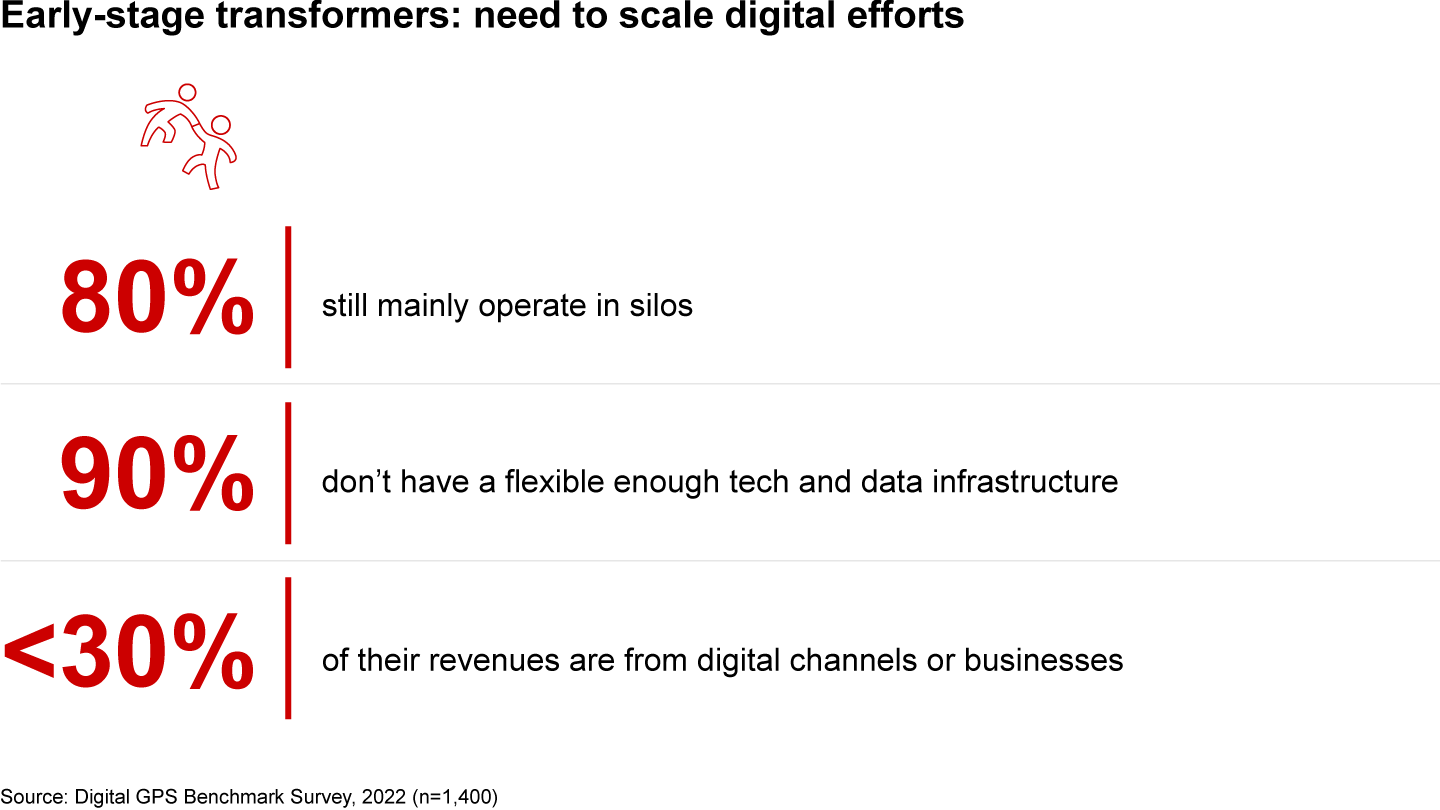
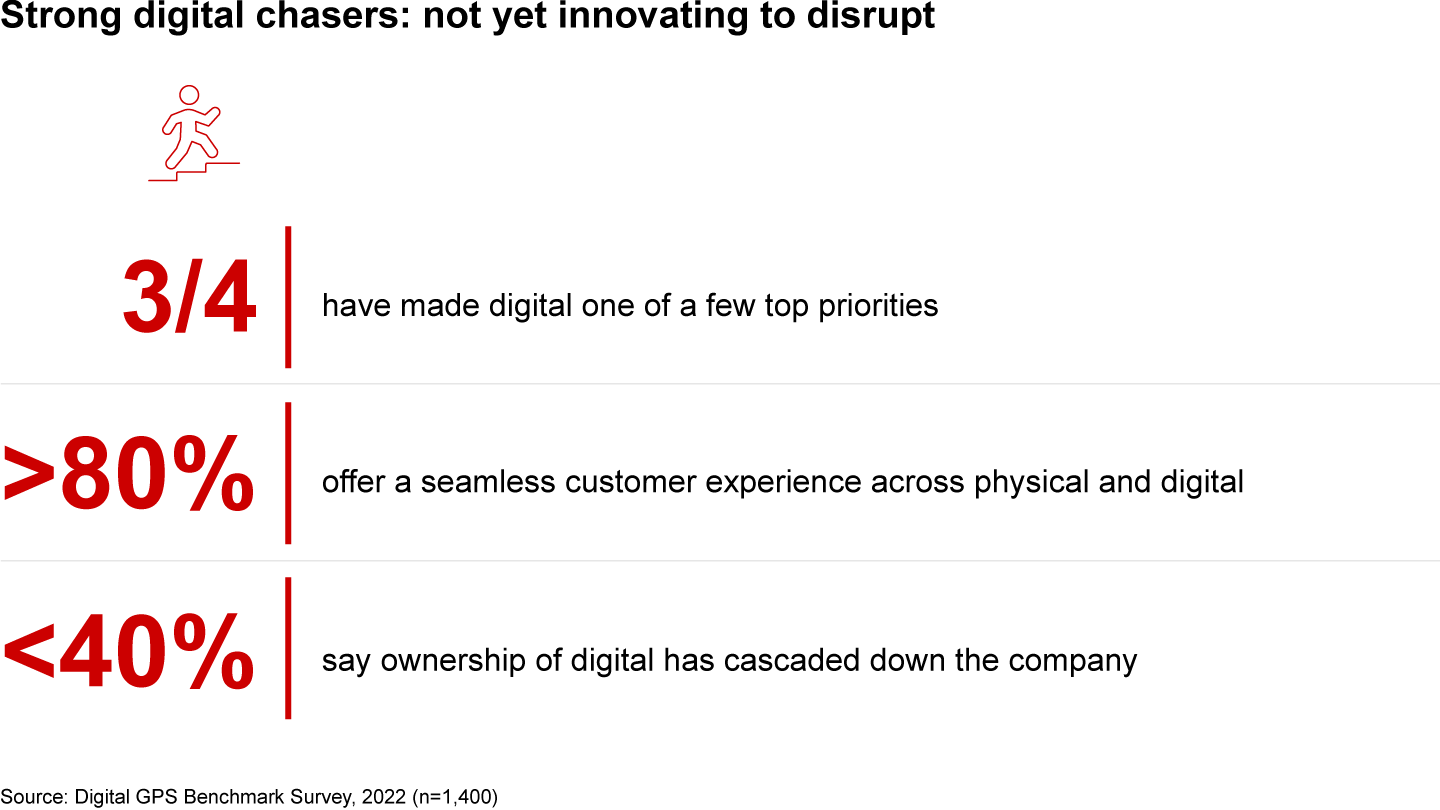
      There’s no doubt that disrupters have been changing over the five years we’ve run the Digital GPS Benchmark Survey. In that period, we’ve seen four categories of digital maturity steadily emerge (see Figure 1). At one end sit the late digital adopters, still only beginning their transformation from analog business models. Early-stage transformers are more advanced but behind the strong digital chasers. All are lagging the digital disrupters at the forefront of today’s transformation efforts.

      Figure 1
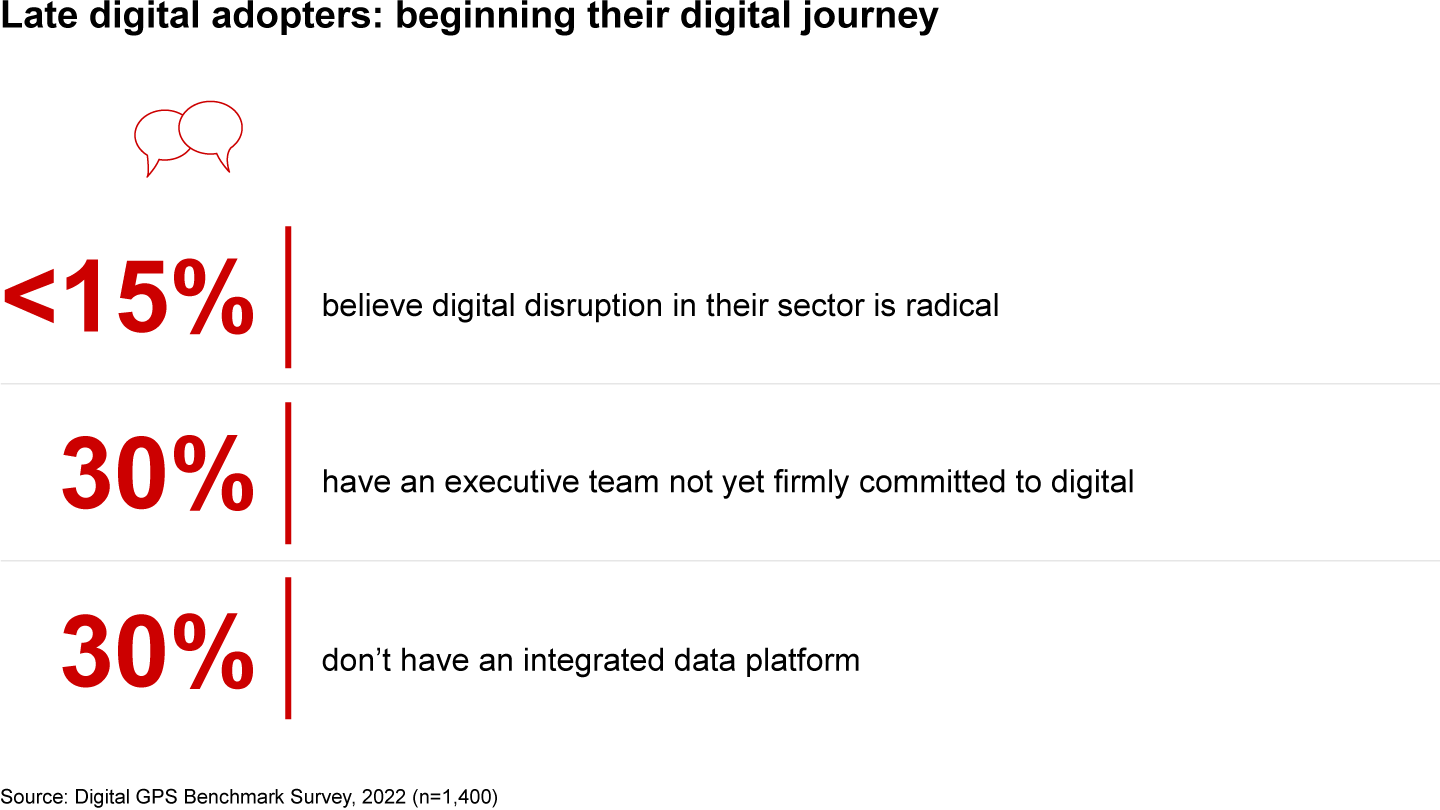
      Four categories of digital maturity have emerged from our annual Digital GPS Benchmark Survey
      Four categories of digital maturity have emerged from our annual Digital GPS Benchmark Survey
      Four categories of digital maturity have emerged from our annual Digital GPS Benchmark Survey
      Figure 1
      Four categories of digital maturity have emerged from our annual Digital GPS Benchmark Survey
      Four categories of digital maturity have emerged from our annual Digital GPS Benchmark Survey
      Four categories of digital maturity have emerged from our annual Digital GPS Benchmark Survey
      Figure 1
      Four categories of digital maturity have emerged from our annual Digital GPS Benchmark Survey
      Four categories of digital maturity have emerged from our annual Digital GPS Benchmark Survey
      Four categories of digital maturity have emerged from our annual Digital GPS Benchmark Survey
      Figure 1
      Four categories of digital maturity have emerged from our annual Digital GPS Benchmark Survey
      Four categories of digital maturity have emerged from our annual Digital GPS Benchmark Survey
      Four categories of digital maturity have emerged from our annual Digital GPS Benchmark Survey

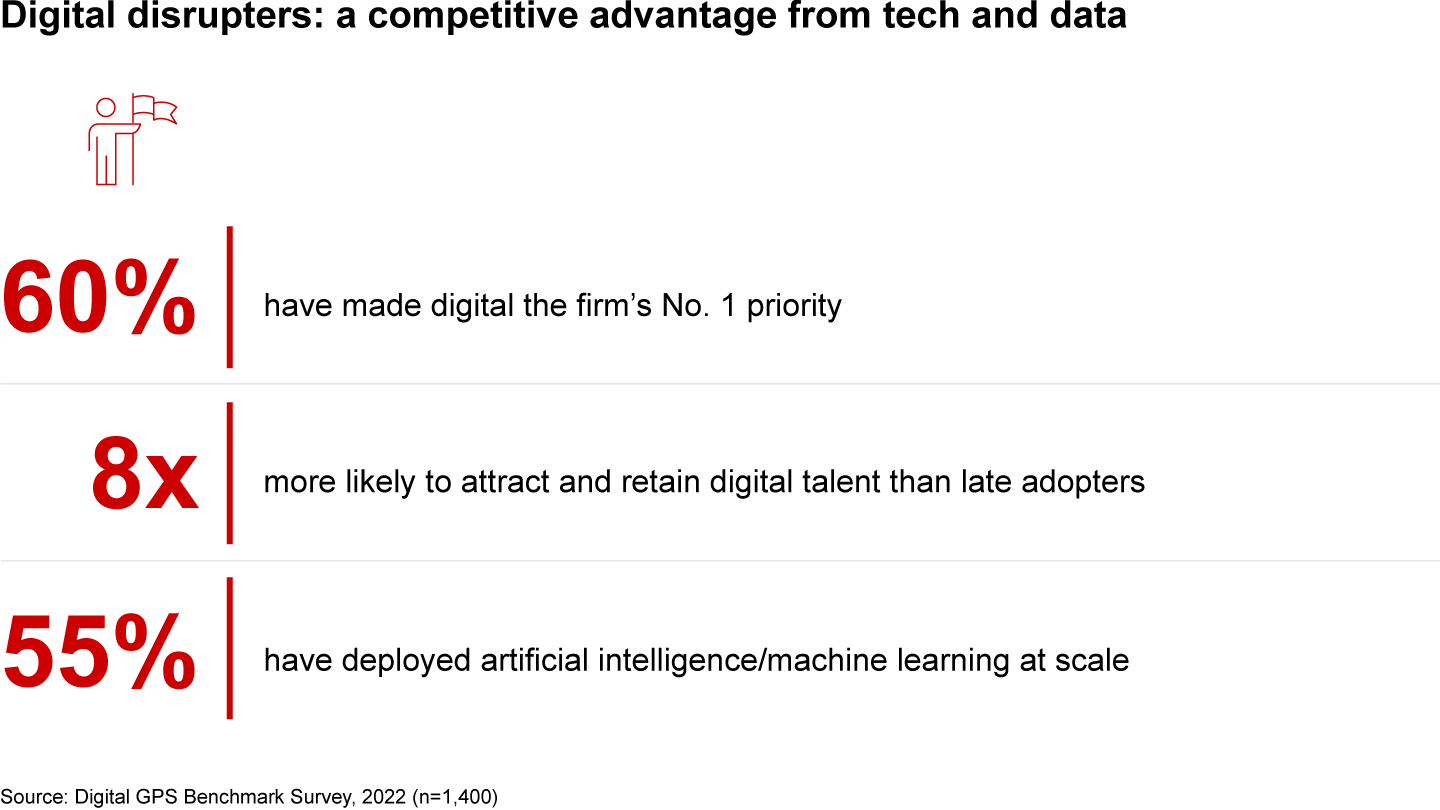
      Digital disrupters stood out in numerous ways in 2022’s Digital GPS Benchmark Survey. For instance, rather than making digital one of several priorities, as most companies do, almost 60% of them put digital at the very top of their strategic agenda (compared with only 10% of late digital adopters, 19% of early-stage transformers, and 35% of strong digital chasers).

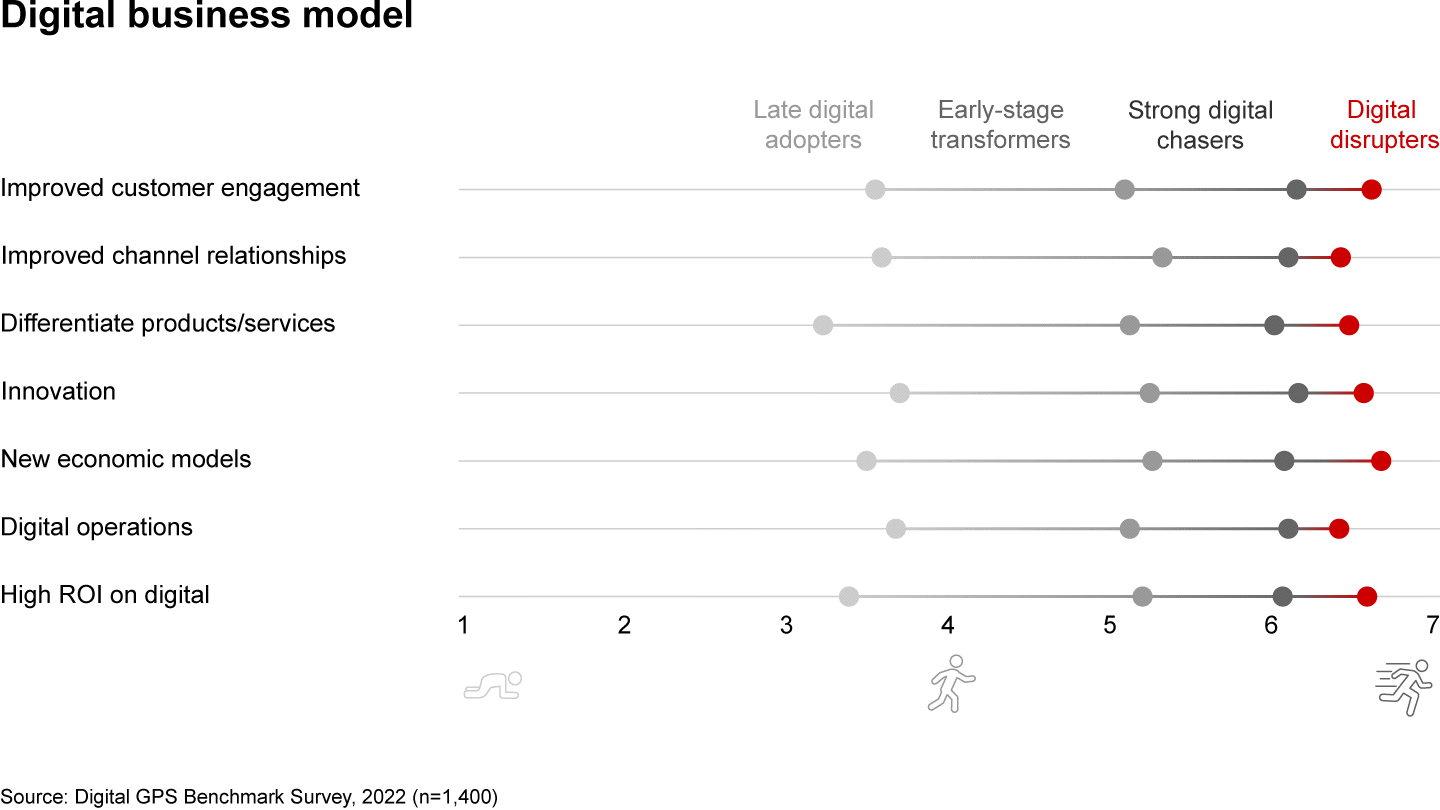
      Disrupters believe we are living through a profound shift in how business operates: They are twice as likely as strong digital chasers to say that digital technologies will radically alter their sector. That conviction shines through in their personalized customer experiences, differentiated products and services, high returns from digital investments, and new digital revenue streams. Almost 80% of disrupters gained market share over the last two years.

      One thing that really stands out about digital disrupters today is how their offensive qualities double as resilience-boosting defensive traits.

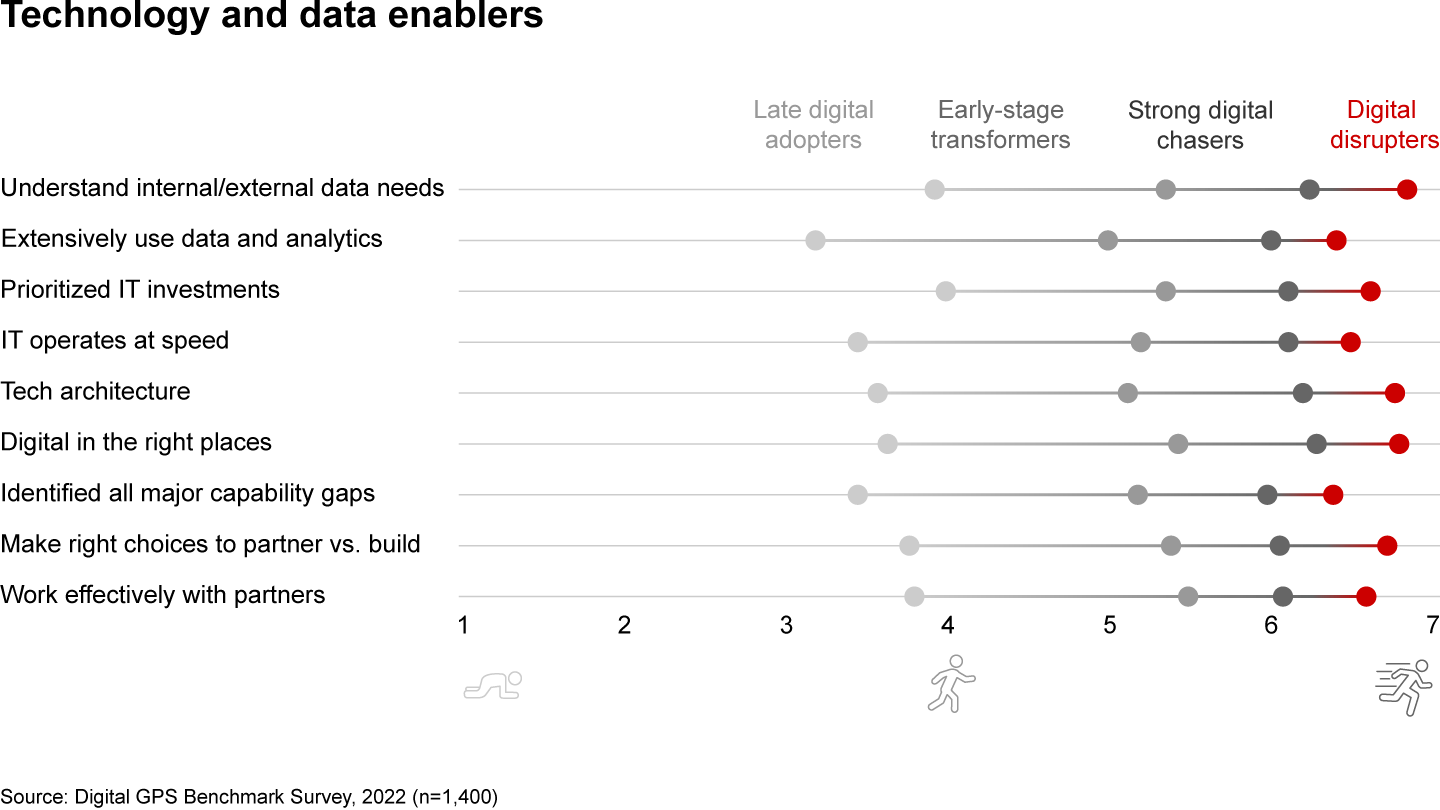
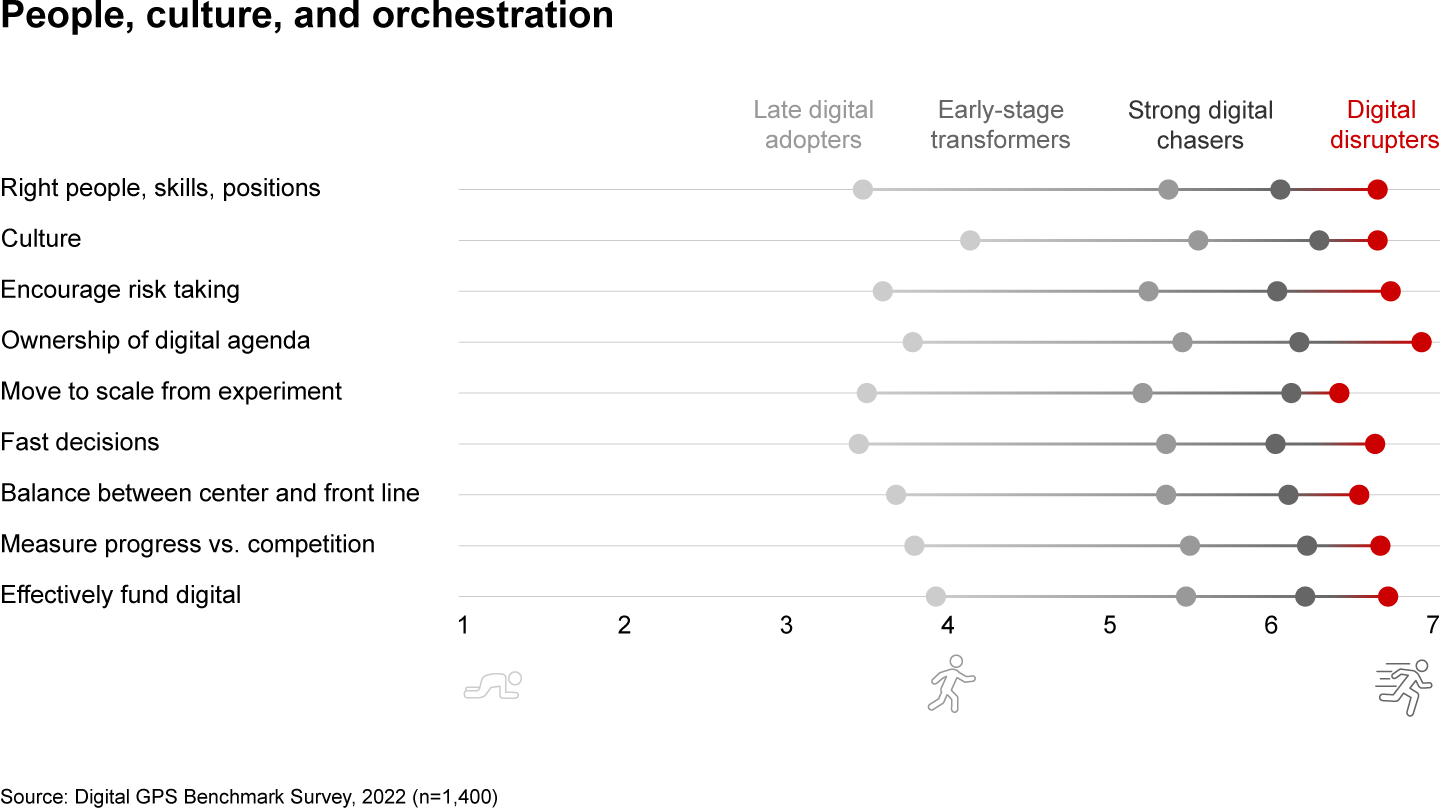
      Digital disrupters are talent magnets, thanks to their ambition and purpose. We found they are eight times more likely than late digital adopters to attract and retain the right people, with the right skills, in the right roles to realize their digital ambitions. Having that problem-solving and creativity on tap is a great way to avoid getting disrupted yourself.

      What’s more, almost two-thirds of them are also building “Engine 2” digital businesses outside their core as a response to both opportunity and disruption. This is another source of both resilience and growth.

      Most disrupters also view environmental, social, and governance (ESG) initiatives as being intertwined with their digital activity; about 60% consider ESG a primary criterion in the prioritization of their digital initiatives, and about 90% clearly track the role of digital initiatives in ESG progress. This approach has the potential to keep disrupters relevant to rising generations of digitally native and eco-savvy consumers, further protecting their businesses.

      Figure 2
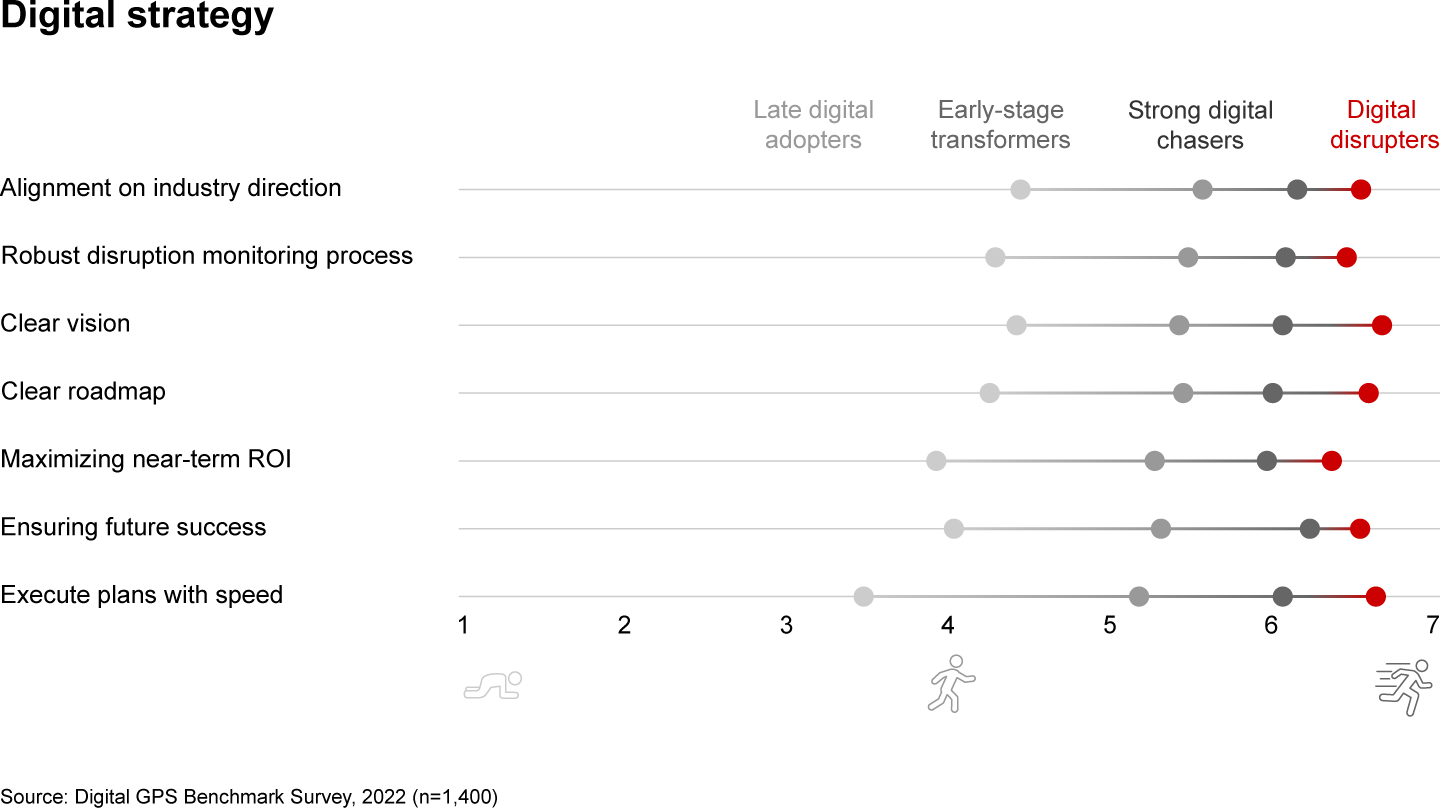
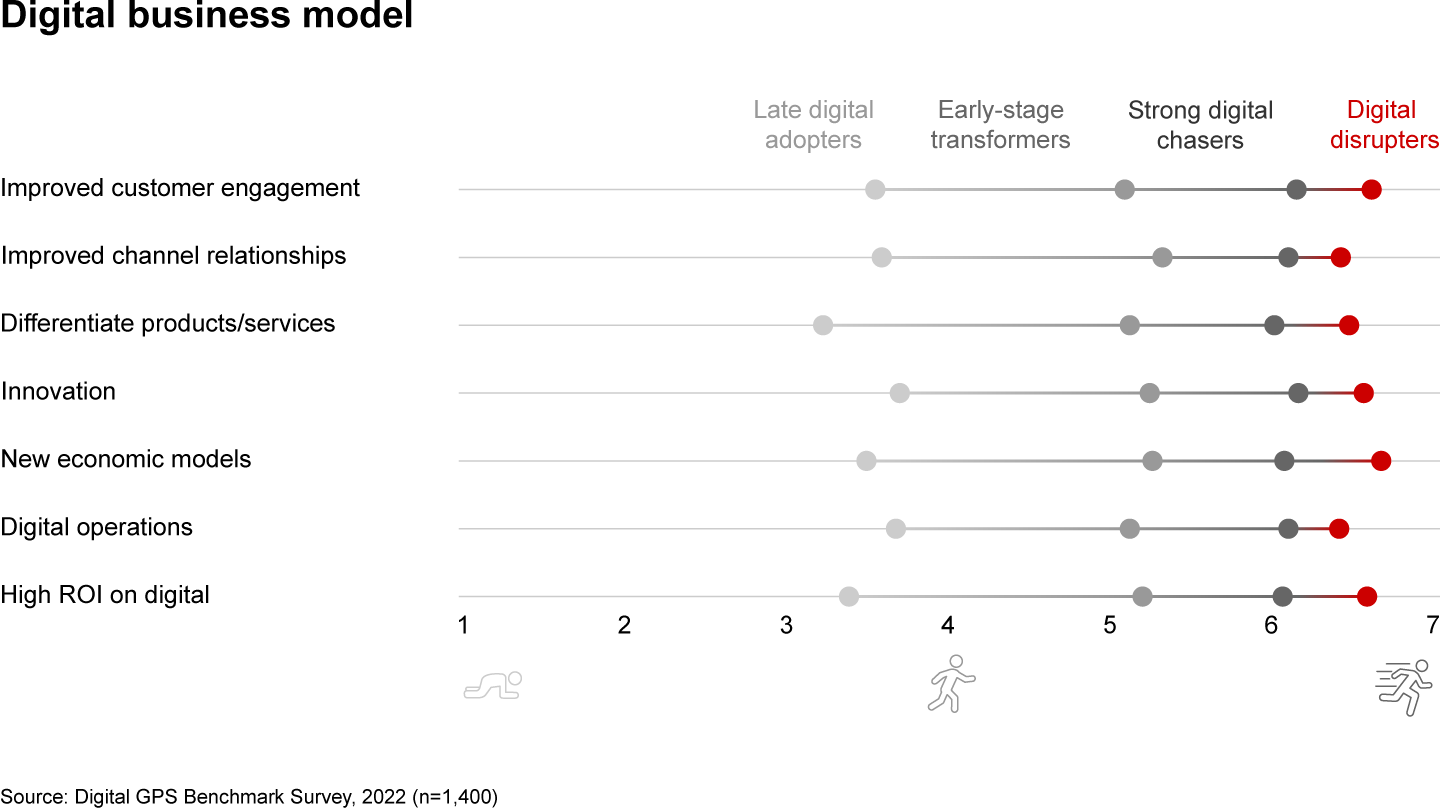
      Digital disrupters outperform their peers across all dimensions of digital maturity
      Digital disrupters outperform their peers across all dimensions of digital maturity
      Digital disrupters outperform their peers across all dimensions of digital maturity
      Figure 2
      Digital disrupters outperform their peers across all dimensions of digital maturity
      Digital disrupters outperform their peers across all dimensions of digital maturity
      Digital disrupters outperform their peers across all dimensions of digital maturity
      Figure 2
      Digital disrupters outperform their peers across all dimensions of digital maturity
      Digital disrupters outperform their peers across all dimensions of digital maturity
      Digital disrupters outperform their peers across all dimensions of digital maturity
      Figure 2
      Digital disrupters outperform their peers across all dimensions of digital maturity
      Digital disrupters outperform their peers across all dimensions of digital maturity
      Digital disrupters outperform their peers across all dimensions of digital maturity

      The six key digital transformation challenges

      Executives don’t need any more lecturing on the general need for digital transformation. Our survey found that it’s already a priority (albeit not necessarily the priority) for 97% of them. But fewer than 20% believe that their company has achieved more than 80% of their digital transformation goals, so the scale of the remaining task at hand is clear. Six priority areas for action emerged from our research:

      1. Committing to the cause. If you strip out late digital adopters, almost all companies in our survey showed strong commitment to digital transformation at board and executive level. Nondisrupters struggle lower down the organization, however. For instance, more than 80% of early-stage transformers said their top-level commitment to change hadn’t yet cascaded through the ranks or been fully codified into compensation and career management. That has to change to avert a gradual fragmentation of digital efforts.
      2. Refactoring tech architecture. During the pandemic, many nondisrupters worked miracles with creaking legacy technology stacks and systems as they rapidly moved operations online. But there are limits to how much further they can go without accelerating their shift to the cloud and investing in a modular and flexible enterprise technology stack. While most nondisrupters feel they are at least making progress on this flexible modularity, almost 80% of disrupters say they already have the tech architecture they need to meet their digital goals.
      3. Extracting full value from data. Globally, companies are forecast to spend $253 billion on big data and business analytics solutions in 2022, according to market researcher IDC. That outlay on hardware, software, and services is rapidly increasing the quantity of data collected and the sophistication of data-processing algorithms. Yet few are reaping the full value of all that investment. Our survey showed that nondisrupters are battling with data integration and quality issues, and almost half of disrupters are missing out by not yet deploying AI and machine learning at scale in this area. Securing buy-in from more employees and customers is one priority. Embedding repeatable processes for scaling advanced analytics can help, too.
      4. Making Agile the norm. More than 80% of today’s disrupters boast a cross-functional operating model in which technology enables nimble collaboration, but only half of strong digital chasers (and 1 in 20 late digital adopters) can say the same. That’s a big obstacle to scaling digital transformation. Nondisrupters need to ditch siloed operating models faster, while ensuring that Agile and other new ways of working extend beyond the IT department. Disrupters need to ensure their rapid growth doesn’t make their operations over-complex.
      5. Igniting innovation. Covid-19 kick-started a wave of digital products and services. However, amid rampant inflation and supply chain disruption, many companies are struggling to retain that innovative spirit. For instance, only 1 in 10 early-stage transformers currently feel they have the risk-taking culture (and effective risk management) that is commonplace at disrupters. It’s time for a fresh burst of digital evangelism and frontline digital adoption. Partnerships could also help companies to scale digital products and businesses quicker.
      6. Becoming a talent magnet. We’ve already mentioned how today’s disrupters are digital talent magnets. However, the tightening of labor markets during the Covid-19 pandemic and the ensuing “great resignation” has exacerbated the hiring challenges facing nondisrupters. Measures that can improve their pull include investing more in employee training, giving employees room to pursue experimental side projects, and searching internally for the “digital dreamers” able to visualize the company’s future a decade hence.

      Digital transformation vs. today’s physical turbulence

      Not all disruption is driven by digital technology, of course. Geopolitical and economic turbulence is increasing, the climate emergency is escalating, and pressure is building on other ESG fronts. In this uncertain environment, the tools deployed during digital transformation programs can be a broader source of resilience than they first appear, defending companies against physical threats, too.

      For instance, recent advances in real-time monitoring (powered by the Internet of Things, 5G connectivity, and blockchain technology) will also help companies detect and respond to emerging disruptions of all types. The deployment of machine learning will improve scenario planning for supply chain shocks. The productivity gains unlocked by automation can help companies overcome labor shortages. Likewise, the modularity shown by today’s disrupters is a source of all-around resilience, as is their embrace of the latest tech architecture and Agile working methods.

      With such a comprehensive opportunity still in front of them, it’s vital that executive teams don’t succumb to digital transformation fatigue. Digital transformation has unlocked significant value already for most companies. But with a new wave of technological evolution only just beginning to exert its disruptive power, this is no time for any company to ease up.

      Autoren
      • Headshot of James Anderson
        James Anderson
        Partner, London
      • Headshot of Laura Polasek
        Laura Polasek
        Alumni, Milan
      Kontaktieren Sie uns
      Ähnliche Beratungsangebote
      • Digitalisierung
      Digitale Transformation
      Is Türkiye Ready for Generative AI?

      A new study, in collaboration with TÜSİAD, investigates the AI readiness of Turkish business and the biggest barriers to achieving scale and maturity.

      Mehr erfahren
      Digitalisierung
      Retailers Have a Secret Weapon in AI-Powered Shopping: Trust

      US consumers would be more comfortable with AI buying on their behalf if a familiar retailer were involved.

      Mehr erfahren
      Digitale Transformation
      Choose to Win: The Five Decisions That Make or Break Banking Modernization

      Banking modernization involves more nuance than the binary-bet caricature of an existential “rip-and-replace” gamble versus a cosmetic refresh.

      Mehr erfahren
      Digitalisierung
      What Business Leaders Need to Know About AI Sovereignty

      Aligning business strategy with national AI priorities is necessary to compete and scale.

      Mehr erfahren
      Digitale Transformation
      Top Digital Use Cases by Industry

      Bain’s research identifies the most useful digital applications, including those that offer the best opportunities for competitive advantage.

      Mehr erfahren
      First published in September 2022
      Markierungen
      • Digitale Transformation
      • Digitalisierung

      Wie wir unsere Kunden unterstützt haben

      Digitalisierung A Traditional Bank Pursues Digital in a Nontraditional Way

      Kundenbeispiel lesen

      Digitalisierung A Chemical Company’s Transformation Reduces Support Function Costs by 25%

      Kundenbeispiel lesen

      Digitalisierung Omnichannel strategy boosts fashion company

      Kundenbeispiel lesen

      Möchten Sie mit uns in Kontakt bleiben?

      Wir unterstützen Führungskräfte weltweit, die kritischen Themen in ihrem Unternehmen zu adressieren. Gemeinsam schaffen wir nachhaltige Veränderungen und Ergebnisse.

      Bain Insights. Unsere Perspektive auf die kritischen Themen, mit denen sich international agierende Unternehmen konfrontiert sehen, finden Sie monatlich in Ihrem Postfach.

      *Ich habe die Datenschutzerklärung gelesen und akzeptiere sie.
      Bitte lesen Sie die Datenschutzerklärung und akzeptieren Sie diese.
      Bain & Company
      Contact us Sustainability Accessibility Rechtliche Hinweise Impressum Datenschutz Cookie-Richtlinie Sitemap Log In

      © 1996-2026 Bain & Company, Inc.

      Kontaktieren Sie Bain

      Wie können wir Ihnen helfen?

      • Business inquiry
      • Career information
      • Press relations
      • Partnership request
      • Speaker request
      Alle weltweiten Büros