
Skip to Content
  • Standorte

    Standorte

    North & Latin America
    • Atlanta
    • Austin
    • Bogota
    • Boston
    • Buenos Aires
    • Chicago
    • Dallas
    • Denver
    • Houston
    • Lisbon
    • Los Angeles
    • Mexico City
    • Minneapolis
    • Monterrey
    • Montreal
    • New York
    • Rio de Janeiro
    • San Francisco
    • Santiago
    • São Paulo
    • Seattle
    • Silicon Valley
    • Toronto
    • Washington, DC
    Europe & Africa
    • Amsterdam
    • Athens
    • Berlin
    • Brussels
    • Copenhagen
    • Düsseldorf
    • Frankfurt
    • Helsinki
    • Istanbul
    • Johannesburg
    • Kyiv
    • Lisbon
    • London
    • Madrid
    • Milan
    • München
    • Oslo
    • Paris
    • Rome
    • Stockholm
    • Warsaw
    • Wien
    • Zürich
    Middle East
    • Doha
    • Dubai
    • Riyadh
    Asia & Australia
    • Bangkok
    • Beijing
    • Bengaluru
    • Brisbane
    • Ho Chi Minh City
    • Hong Kong
    • Jakarta
    • Kuala Lumpur
    • Manila
    • Melbourne
    • Mumbai
    • New Delhi
    • Perth
    • Seoul
    • Shanghai
    • Singapore
    • Sydney
    • Tokyo
    Alle Standorte Anzeigen
  • Alumni
  • Presse
  • Newsletter
  • Kontakt
  • DACH-Region | Deutsch

    Wählen Sie Ihre Region und Sprache

    Global
    • Global (English)
    North & Latin America
    • Brazil (Português)
    • Argentina (Español)
    • Canada (Français)
    • Chile (Español)
    • Colombia (Español)
    Europe, Middle East, & Africa
    • France (Français)
    • DACH-Region (Deutsch)
    • Italy (Italiano)
    • Spain (Español)
    • Greece (Elliniká)
    Asia & Australia
    • China (中文版)
    • Korea (한국어)
    • Japan (日本語)
  • Saved items (0)
    Saved items (0)

    You have no saved items.

    Inhalte, für die Sie sich interessieren, werden hier gespeichert und können später gelesen oder weitergeleitet werden.

    Explore Bain Insights
  • Branchenkompetenzen
    Hauptmenü

    Branchenkompetenzen

    • Luft- und Raumfahrt, Verteidigung
    • Agrarwirtschaft
    • Chemieindustrie
    • Infrastruktur und Bauwirtschaft
    • Konsumgüter
    • Finanzdienstleistungen
    • Gesundheitswesen
    • Maschinen- und Anlagenbau
    • Medienwirtschaft
    • Metallindustrie
    • Bergbau
    • Öl und Gas
    • Papier- und Verpackungsindustrie
    • Private Equity
      Branchenkompetenzen
      Private Equity
      • Due Diligence
      • Exit Planning
      • Firm Strategy & Operations
      • Portfolio Value Creation
    • Öffentlicher Sektor und Sozialwesen
    • Einzelhandel
    • Technologie
    • Telekommunikation
    • Transportwesen
    • Reise- und Freizeitbranche
    • Versorgung und erneuerbare Energien
  • Managementkompetenzen
    Hauptmenü

    Managementkompetenzen

    • Customer Experience
    • ESG
    • Innovation
    • M&A
    • Operations
    • People & Organization
    • Private Equity
    • Sales & Marketing
    • Strategie
    • KI, Einblicke und Lösungen
    • Technologie
    • Transformation
  • Digital
  • Publikationen
    Hauptmenü

    Publikationen

    • Branchenthemen
    • Managementthemen
    • Bain-Bücher
    Alle Publikationen
    Ausgewählte Themen
    • Resilienz in der globalen Krise
    • M&A Report
    • Private Equity Podcast
    • Midyear Private Equity Report
    • Agile
    • Engineering Report
    • Digital Transformation
    • Elements of Value®
    • Firm of the Future
    • Nachhaltigkeitsstudie
    • Macro Trends
    • Future of Consumption
    • Weltwirtschaftsforum (WEF)
  • Über uns
    Hauptmenü

    Über uns

    • Was wir bieten
    • Unser Ansatz
    • Unser Team
    • Game Changer Award
    • Female Allstar Board
    • Messbare Ergebnisse (EN)
    • Auszeichnungen
    • Globale Partnerschaften
    • The Mission
    Further: Our global responsibility
    • Vielfalt & Chancengleichheit
    • Soziale Verantwortung
    • Sustainability
    Erfahren Sie mehr zu "Further"
  • Karriere
    Hauptmenü

    Karriere

    • Dein Einstieg
      Karriere
      Dein Einstieg
      • Find Your Place
      • Unsere Arbeitsbereiche
      • Unsere Teams
      • Angebote für Studierende
      • Praktika & Programme
      • Recruiting-Events
    • Arbeiten bei Bain
      Karriere
      Arbeiten bei Bain
      • Blog: Inside Bain
      • Karriere Stories
      • Unsere Bainies
      • Office-Standorte
      • Weiterentwicklung
      • Affinity Groups
      • Deine Benefits
    • Impact Stories
    • Deine Bewerbung
      Karriere
      Deine Bewerbung
      • Das erwartet dich
      • Der Interviewprozess
    FIND JOBS
  • Standorte
    Hauptmenü

    Standorte

    • North & Latin America
      Standorte
      North & Latin America
      • Atlanta
      • Austin
      • Bogota
      • Boston
      • Buenos Aires
      • Chicago
      • Dallas
      • Denver
      • Houston
      • Lisbon
      • Los Angeles
      • Mexico City
      • Minneapolis
      • Monterrey
      • Montreal
      • New York
      • Rio de Janeiro
      • San Francisco
      • Santiago
      • São Paulo
      • Seattle
      • Silicon Valley
      • Toronto
      • Washington, DC
    • Europe & Africa
      Standorte
      Europe & Africa
      • Amsterdam
      • Athens
      • Berlin
      • Brussels
      • Copenhagen
      • Düsseldorf
      • Frankfurt
      • Helsinki
      • Istanbul
      • Johannesburg
      • Kyiv
      • Lisbon
      • London
      • Madrid
      • Milan
      • München
      • Oslo
      • Paris
      • Rome
      • Stockholm
      • Warsaw
      • Wien
      • Zürich
    • Middle East
      Standorte
      Middle East
      • Doha
      • Dubai
      • Riyadh
    • Asia & Australia
      Standorte
      Asia & Australia
      • Bangkok
      • Beijing
      • Bengaluru
      • Brisbane
      • Ho Chi Minh City
      • Hong Kong
      • Jakarta
      • Kuala Lumpur
      • Manila
      • Melbourne
      • Mumbai
      • New Delhi
      • Perth
      • Seoul
      • Shanghai
      • Singapore
      • Sydney
      • Tokyo
    Alle Standorte Anzeigen
  • Alumni
  • Presse
  • Newsletter
  • Kontakt
  • DACH-Region | Deutsch
    Hauptmenü

    Wählen Sie Ihre Region und Sprache

    • Global
      Wählen Sie Ihre Region und Sprache
      Global
      • Global (English)
    • North & Latin America
      Wählen Sie Ihre Region und Sprache
      North & Latin America
      • Brazil (Português)
      • Argentina (Español)
      • Canada (Français)
      • Chile (Español)
      • Colombia (Español)
    • Europe, Middle East, & Africa
      Wählen Sie Ihre Region und Sprache
      Europe, Middle East, & Africa
      • France (Français)
      • DACH-Region (Deutsch)
      • Italy (Italiano)
      • Spain (Español)
      • Greece (Elliniká)
    • Asia & Australia
      Wählen Sie Ihre Region und Sprache
      Asia & Australia
      • China (中文版)
      • Korea (한국어)
      • Japan (日本語)
  • Saved items  (0)
    Hauptmenü
    Saved items (0)

    You have no saved items.

    Inhalte, für die Sie sich interessieren, werden hier gespeichert und können später gelesen oder weitergeleitet werden.

    Explore Bain Insights
  • Branchenkompetenzen
    • Branchenkompetenzen

      • Luft- und Raumfahrt, Verteidigung
      • Agrarwirtschaft
      • Chemieindustrie
      • Infrastruktur und Bauwirtschaft
      • Konsumgüter
      • Finanzdienstleistungen
      • Gesundheitswesen
      • Maschinen- und Anlagenbau
      • Medienwirtschaft
      • Metallindustrie
      • Bergbau
      • Öl und Gas
      • Papier- und Verpackungsindustrie
      • Private Equity
      • Öffentlicher Sektor und Sozialwesen
      • Einzelhandel
      • Technologie
      • Telekommunikation
      • Transportwesen
      • Reise- und Freizeitbranche
      • Versorgung und erneuerbare Energien
  • Managementkompetenzen
    • Managementkompetenzen

      • Customer Experience
      • ESG
      • Innovation
      • M&A
      • Operations
      • People & Organization
      • Private Equity
      • Sales & Marketing
      • Strategie
      • KI, Einblicke und Lösungen
      • Technologie
      • Transformation
  • Digital
  • Publikationen
    • Publikationen

      • Branchenthemen
      • Managementthemen
      • Bain-Bücher
      Alle Publikationen
      Ausgewählte Themen
      • Resilienz in der globalen Krise
      • M&A Report
      • Private Equity Podcast
      • Midyear Private Equity Report
      • Agile
      • Engineering Report
      • Digital Transformation
      • Elements of Value®
      • Firm of the Future
      • Nachhaltigkeitsstudie
      • Macro Trends
      • Future of Consumption
      • Weltwirtschaftsforum (WEF)
  • Über uns
    • Über uns

      • Was wir bieten
      • Unser Ansatz
      • Unser Team
      • Game Changer Award
      • Female Allstar Board
      • Messbare Ergebnisse (EN)
      • Auszeichnungen
      • Globale Partnerschaften
      • The Mission
      Further: Our global responsibility
      • Vielfalt & Chancengleichheit
      • Soziale Verantwortung
      • Sustainability
      Erfahren Sie mehr zu "Further"
  • Karriere
    Häufige Suchanfragen
    • Agil
    • Digital
    • Strategie
    Vorherige Suchanfragen
      Zuletzt besuchte Seiten

      Content added to saved items

      Saved items (0)

      Removed from saved items

      Saved items (0)

      Brief

      Field Service Is Changing Rapidly. Can You Keep Up?

      Field Service Is Changing Rapidly. Can You Keep Up?

      New commercial models, data, and a reenergized front line are helping leaders outperform.

      Von Prashant Iyer, Rahul Shah, und Juan Kaiser

      • Min. Lesezeit
      }

      Brief

      Field Service Is Changing Rapidly. Can You Keep Up?
      en
      Auf einen Blick
      • Bain research signals 17 important trends transforming field service.
      • Big data is transforming the way industrial companies design services.
      • Service champions outperform followers by more than 20% on many critical metrics such as first-time-right rates.

      For capital-intensive industries, field service has become critical to growth and profitability. Leading companies are harnessing new pricing models, data, and savvier frontline teams to transform the way they deliver service in the field—and significantly improve their performance.

      Written in collaboration with

      Written in collaboration with

      ServiceMaxLogo-Primary-Blue-Green-250x55.png

      Though field service has been evolving for years, disruptions caused by Covid-19 have accelerated companies’ investment in technology and their shift to new commercial models. Bain research shows more than 60% of field technicians grappled with significant change in their working environment the last three to five years, and 93% believe change will continue at the same rapid clip or increase in the next three to five years (see Figure 1).

      Figure 1
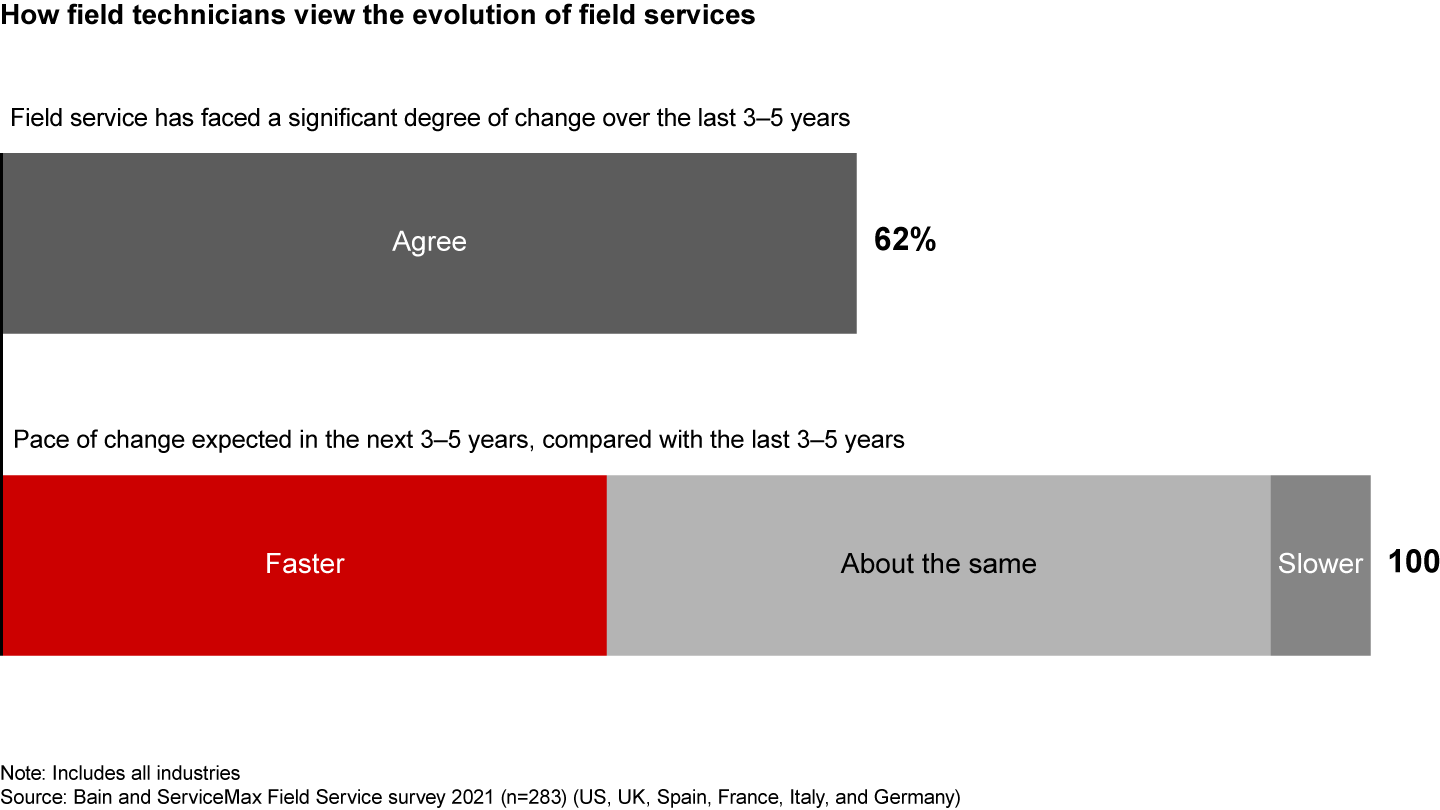
      Field service is changing, and the pace of change is likely to accelerate
      Field service is changing, and the pace of change is likely to accelerate
      Field service is changing, and the pace of change is likely to accelerate

      That’s raising the stakes for companies that have been slow to rethink their service strategy. Service leaders outperform laggards on multiple dimensions. Our research shows, on average, that service leaders deliver higher service revenues (11 percentage points) and margins (16 percentage points) than followers. They also score 18 percentage points higher in customer satisfaction.

      And when it comes to field service performance—a key success factor—service champions outperform followers by more than 20% across many critical metrics, such as mean time to repair, first-time-right rates, customer satisfaction, and cost to deliver. The performance gap between leaders and followers is likely to increase in the coming decade as a growing number of companies reshape their field service capabilities for a new era.

      Key trends

      Many leadership teams in capital-intensive industries are understandably feeling overwhelmed by the number of commercial, operational, technological, and talent factors demanding their attention. Our research points to 17 important trends that are transforming field service (see Figure 2). While companies need to understand all these forces, some trends are more pressing. In our view three matter most: a shifting commercial landscape, the ability to harness vast amounts of data, and the increasing complexity of frontline work.

      Figure 2
      Many trends are transforming field service, but some have bigger impact

      Why are these trends so critical? On the commercial front, increased cost pressure has made traditional pricing models (based on billed man-hours) less attractive for customers. Increasingly, companies want solutions that minimize their risk and provide more predictability, including outcome-based offerings.

      At the same time, big data is transforming the way companies design services. New technologies, connected equipment, and cloud-based platforms generate and exchange data continuously, creating a valuable trove of information about customers and their equipment. Leading companies analyze the data to derive insights and design more competitive service models, including optimal service schedules and offerings tailored to customers’ needs.

      Finally, frontline service work has become increasingly complex, requiring executives to rapidly rethink talent management. Many workers will need retraining as digital tools proliferate, and in some cases, companies will need to recruit fresh talent to address the growing demand for new skills. Some frontline workers already perceive the proliferation of digital tools as a threat. Overall, growing uncertainty related to this shift has left 57% of technicians feeling unmotivated (see Figure 3).

      Figure 3
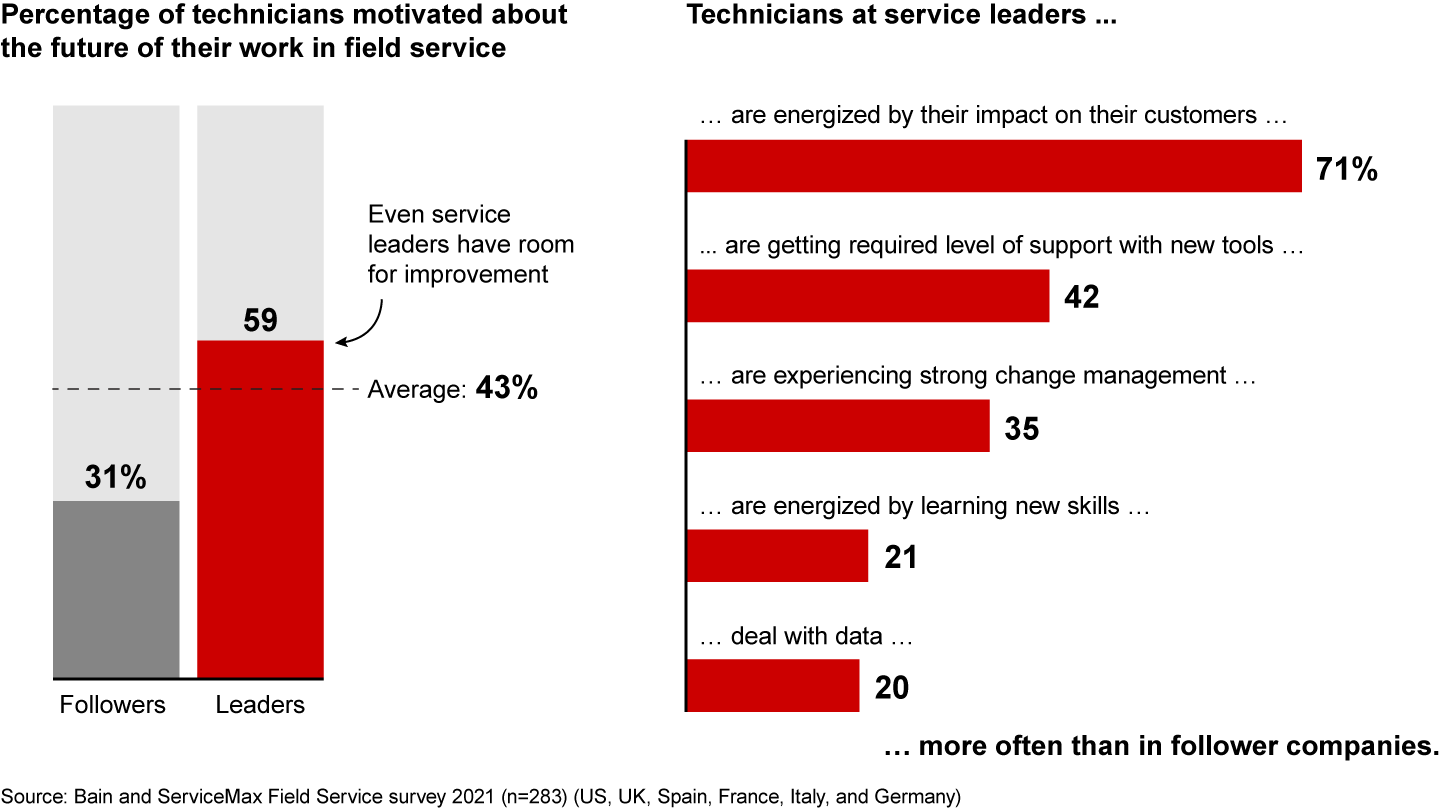
      Frontline technicians at service leaders are more motivated
      Frontline technicians at service leaders are more motivated
      Frontline technicians at service leaders are more motivated

      Getting started

      Service leaders are setting themselves apart from the competition by making service a key component of their strategy and a primary source of value for the company. For companies with a heavy focus on equipment sales, the shift to a new generation of services may require a significant change in the company’s culture. As a result, many firms have not ventured beyond basic service that addresses fundamental customer needs, such as repairing equipment when it breaks down.

      Specifically, leaders implement four key changes in their service strategy. They improve basic capabilities, develop new commercial models, wield data to optimize service offerings, and make service talent a top priority. These strategic steps are interrelated. Gathering the right data helps companies understand their costs and determine the price right for service. That knowledge, in turn, helps them figure out the right commercial model. Once the leadership team has the optimum commercial model, frontline workers deliver service more efficiently.

      To highlight just how beneficial a new service strategy can be, let’s take a closer look at how a couple of successful global companies are implementing these changes.

      Renewed focus on service basics. Service leaders excel at the basic foundations of good service, such as safety, compliance, and getting the job right the first time. They also challenge themselves to do even better. In the wake of Covid-19 disruptions, leaders are putting a new focus on service basics.

      Take the case of a global technology company with an impressive first-time-right rate of more than 95%. Despite its winning performance, the service team was determined to improve its own track record in areas particularly relevant to the customer, such as the time needed to complete a repair. Their effort was so successful that the leadership team added a speed element to its service offering. Two-thirds of the company’s contracts now guarantee a resolution within four hours for a price premium. Customers rewarded the company’s commitment to first time right and speed, with a best-in-class Net Promoter Score℠ of more than 80%.

      New commercial models. Successful companies are launching outcome-based services to increase service revenues and profits. One global engineering firm that builds and maintains industrial plants overcame slow service revenue growth by incorporating outcome-based offerings into its service portfolio. Wielding data collected from its installed based, the company identified important ways to improve plant efficiency. That paved the way for service contracts that guarantee an improvement in operating efficiency and pay the engineering firm a percentage of the savings (for example, from the reduction in energy consumption). The outcome-based offerings triggered significant growth in service revenue and profitability.

      Harnessing data to design new services offerings. Most companies rely on data from the installed base of machinery to improve their own performance. But service leaders make use of this data to create additional services, tailored to customers’ needs. Take the example of a global industrial engineering and manufacturing company seeking to upgrade an underdeveloped service business that lagged the competition. The leadership team launched an ambitious program to double the service revenue of one of its largest divisions in five years. The flagship initiative of the program depended on harnessing data and constantly monitoring the performance of customer equipment.

      Applying artificial intelligence to data produced by the equipment, the service team developed valuable insights on wrong usage, factors that increase the risk of breakdown, and timing service visits to avoid breakdowns. Those insights helped customers reduce maintenance cost and improve equipment performance. At the same time, they helped the engineering company continually improve product design and manufacturing processes. The data-based service initiative has quickly become one of the largest revenue and margin contributors to the program and is expected to double service revenue for the division in the next few years.

      Making service talent a priority. Frontline workers are bearing the brunt of the change in field services. Our research shows nearly 50% of technicians on average find their tools and technology difficult to use. And that’s just one factor transforming work on the front line (see Figure 4). To ensure technicians have the resources they need and remain motivated, service leaders are making frontline talent a priority, including hiring, development, and retraining.

      Figure 4
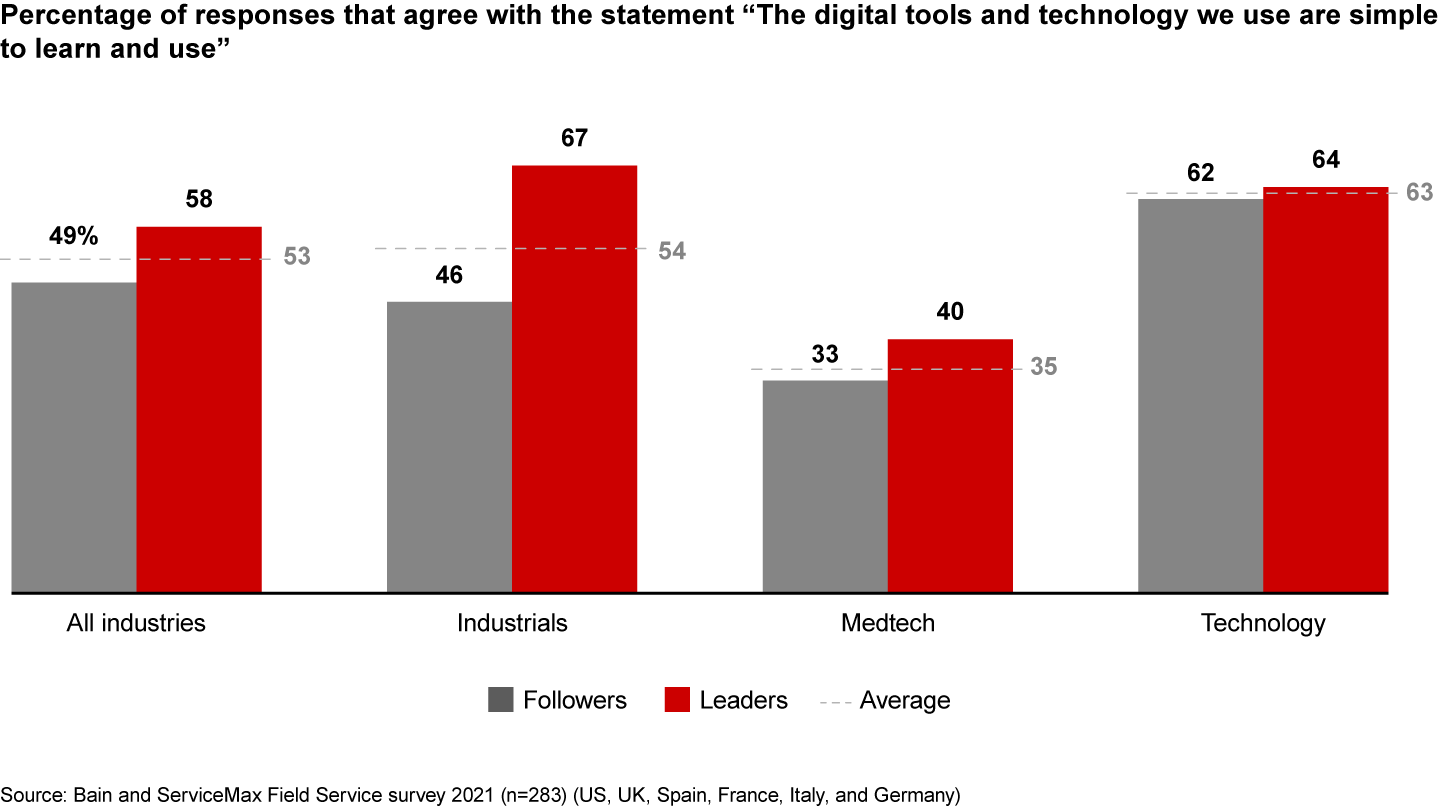
      Many technicians say the tools and technology they use are not simple
      Many technicians say the tools and technology they use are not simple
      Many technicians say the tools and technology they use are not simple

      To increase motivation and engagement on the front line, a global industrial components company invested in a battery of initiatives to provide the field force with critical new capabilities and attractive compensation packages. It also launched initiatives to inspire the field service team. One involved publishing success stories and news from the front line internally—a move that generated strong enthusiasm and positive feedback from workers. It also helped technicians take a more active role in the selling process.

      Monday morning 8 AM

      In capital-intensive industries, field service will play an increasingly important role in commercial performance. Companies that develop outcome-based pricing models, make the most of new technologies and data, and make service talent a top priority will build a strong competitive advantage.

      Each company will chart an individual path as it adapts to changes in the service landscape. But four high-gain questions can help leadership teams get started developing a field service strategy that will strengthen performance.

      • What capabilities do we need to develop new pricing models?
      • Does our data strategy include gathering and analyzing information to optimize processes and service offerings?
      • Do we need additional operational capabilities to support our service strategy?
      • Have we assessed what it will take for our field force organization to succeed in a rapidly changing market?

      Net Promoter®, NPS® und die NPS-bezogenen Emoticons sind eingetragene Marken von Bain & Company, Inc., Satmetrix Systems, Inc. und Fred Reichheld. Net Promoter Score℠ und Net Promoter System℠ sind Service Marks von Bain & Company, Inc., Satmetrix Systems, Inc. und Fred Reichheld.

      ServiceMax’s mission is to help customers keep the world running with software to manage mission-critical industrial assets in the field. ServiceMax’s mobile apps and cloud-based software provide field service teams a complete view of equipment. By optimizing field service operations, companies can better manage service complexity, support faster growth, and run more profitable businesses.

      Autoren
      • Headshot of Prashant Iyer
        Prashant Iyer
        Partner, Chicago
      • Headshot of Rahul Shah
        Rahul Shah
        Alumni, Copenhagen
      • Juan Kaiser
        Practice Senior Manager, Frankfurt
      Kontaktieren Sie uns
      Verwandte Branchen
      • Industriegüter und -services
      • Maschinen und Anlagen
      • Technologie
      Ähnliche Beratungsangebote
      • Operations
      • Service Operations
      COO insights
      Industrial Service: Digital Tools Speed Change

      Leading companies are retraining workers and hiring new talent to fill a skills gap.

      Mehr erfahren
      COO insights
      How AI Is Starting to Transform Circular Packaging

      There are 15 AI use cases companies across the value chain can use today to accelerate circularity.

      Mehr erfahren
      Industriegüter und -services
      Humanoid Robots at Work: What Executives Need to Know

      The convergence of AI, cost, and dexterity is putting humanoid robots on a fast track to adoption.

      Mehr erfahren
      Service Operations
      Total Quality Management

      Total Quality Management (TQM) is an organization-wide, customer-focused mindset and data-driven approach to eliminating, reducing, or preventing errors.

      Mehr erfahren
      COO insights
      It’s Time to Rethink Every Link in Your Supply Chain

      A function that once got little attention is now becoming a key differentiator.

      Mehr erfahren
      First published in September 2021
      Markierungen
      • COO insights
      • Industriegüter und -services
      • Maschinen und Anlagen
      • Operations
      • Service Operations
      • Technologie

      Wie wir unsere Kunden unterstützt haben

      Strategie A Steel Company Seeks to Regain Market Leadership

      Kundenbeispiel lesen

      Strategie A Conglomerate Charts a New Global Strategy

      Kundenbeispiel lesen

      Organisation A global manufacturer's reorganization restores high profits

      Kundenbeispiel lesen

      Möchten Sie mit uns in Kontakt bleiben?

      Wir unterstützen Führungskräfte weltweit, die kritischen Themen in ihrem Unternehmen zu adressieren. Gemeinsam schaffen wir nachhaltige Veränderungen und Ergebnisse.

      Bain Insights. Unsere Perspektive auf die kritischen Themen, mit denen sich international agierende Unternehmen konfrontiert sehen, finden Sie monatlich in Ihrem Postfach.

      *Ich habe die Datenschutzerklärung gelesen und akzeptiere sie.
      Bitte lesen Sie die Datenschutzerklärung und akzeptieren Sie diese.
      Bain & Company
      Contact us Sustainability Accessibility Rechtliche Hinweise Impressum Datenschutz Cookie-Richtlinie Sitemap Log In

      © 1996-2026 Bain & Company, Inc.

      Kontaktieren Sie Bain

      Wie können wir Ihnen helfen?

      • Business inquiry
      • Career information
      • Press relations
      • Partnership request
      • Speaker request
      Alle weltweiten Büros