
Skip to Content
  • Standorte

    Standorte

    North & Latin America
    • Atlanta
    • Austin
    • Bogota
    • Boston
    • Buenos Aires
    • Chicago
    • Dallas
    • Denver
    • Houston
    • Lisbon
    • Los Angeles
    • Mexico City
    • Minneapolis
    • Monterrey
    • Montreal
    • New York
    • Rio de Janeiro
    • San Francisco
    • Santiago
    • São Paulo
    • Seattle
    • Silicon Valley
    • Toronto
    • Washington, DC
    Europe & Africa
    • Amsterdam
    • Athens
    • Berlin
    • Brussels
    • Copenhagen
    • Düsseldorf
    • Frankfurt
    • Helsinki
    • Istanbul
    • Johannesburg
    • Kyiv
    • Lisbon
    • London
    • Madrid
    • Milan
    • München
    • Oslo
    • Paris
    • Rome
    • Stockholm
    • Warsaw
    • Wien
    • Zürich
    Middle East
    • Doha
    • Dubai
    • Riyadh
    Asia & Australia
    • Bangkok
    • Beijing
    • Bengaluru
    • Brisbane
    • Ho Chi Minh City
    • Hong Kong
    • Jakarta
    • Kuala Lumpur
    • Manila
    • Melbourne
    • Mumbai
    • New Delhi
    • Perth
    • Seoul
    • Shanghai
    • Singapore
    • Sydney
    • Tokyo
    Alle Standorte Anzeigen
  • Alumni
  • Presse
  • Newsletter
  • Kontakt
  • DACH-Region | Deutsch

    Wählen Sie Ihre Region und Sprache

    Global
    • Global (English)
    North & Latin America
    • Brazil (Português)
    • Argentina (Español)
    • Canada (Français)
    • Chile (Español)
    • Colombia (Español)
    Europe, Middle East, & Africa
    • France (Français)
    • DACH-Region (Deutsch)
    • Italy (Italiano)
    • Spain (Español)
    • Greece (Elliniká)
    Asia & Australia
    • China (中文版)
    • Korea (한국어)
    • Japan (日本語)
  • Saved items (0)
    Saved items (0)

    You have no saved items.

    Inhalte, für die Sie sich interessieren, werden hier gespeichert und können später gelesen oder weitergeleitet werden.

    Explore Bain Insights
  • Branchenkompetenzen
    Hauptmenü

    Branchenkompetenzen

    • Luft- und Raumfahrt, Verteidigung
    • Agrarwirtschaft
    • Chemieindustrie
    • Infrastruktur und Bauwirtschaft
    • Konsumgüter
    • Finanzdienstleistungen
    • Gesundheitswesen
    • Maschinen- und Anlagenbau
    • Medienwirtschaft
    • Metallindustrie
    • Bergbau
    • Öl und Gas
    • Papier- und Verpackungsindustrie
    • Private Equity
      Branchenkompetenzen
      Private Equity
      • Due Diligence
      • Exit Planning
      • Firm Strategy & Operations
      • Portfolio Value Creation
    • Öffentlicher Sektor und Sozialwesen
    • Einzelhandel
    • Technologie
    • Telekommunikation
    • Transportwesen
    • Reise- und Freizeitbranche
    • Versorgung und erneuerbare Energien
  • Managementkompetenzen
    Hauptmenü

    Managementkompetenzen

    • Customer Experience
    • ESG
    • Innovation
    • M&A
    • Operations
    • People & Organization
    • Private Equity
    • Sales & Marketing
    • Strategie
    • KI, Einblicke und Lösungen
    • Technologie
    • Transformation
  • Digital
  • Publikationen
    Hauptmenü

    Publikationen

    • Branchenthemen
    • Managementthemen
    • Bain-Bücher
    Alle Publikationen
    Ausgewählte Themen
    • Resilienz in der globalen Krise
    • M&A Report
    • Private Equity Podcast
    • Midyear Private Equity Report
    • Agile
    • Engineering Report
    • Digital Transformation
    • Elements of Value®
    • Firm of the Future
    • Nachhaltigkeitsstudie
    • Macro Trends
    • Future of Consumption
    • Weltwirtschaftsforum (WEF)
  • Über uns
    Hauptmenü

    Über uns

    • Was wir bieten
    • Unser Ansatz
    • Unser Team
    • Game Changer Award
    • Female Allstar Board
    • Messbare Ergebnisse (EN)
    • Auszeichnungen
    • Globale Partnerschaften
    • The Mission
    Further: Our global responsibility
    • Vielfalt & Chancengleichheit
    • Soziale Verantwortung
    • Sustainability
    Erfahren Sie mehr zu "Further"
  • Karriere
    Hauptmenü

    Karriere

    • Dein Einstieg
      Karriere
      Dein Einstieg
      • Find Your Place
      • Unsere Arbeitsbereiche
      • Unsere Teams
      • Angebote für Studierende
      • Praktika & Programme
      • Recruiting-Events
    • Arbeiten bei Bain
      Karriere
      Arbeiten bei Bain
      • Blog: Inside Bain
      • Karriere Stories
      • Unsere Bainies
      • Office-Standorte
      • Weiterentwicklung
      • Affinity Groups
      • Deine Benefits
    • Impact Stories
    • Deine Bewerbung
      Karriere
      Deine Bewerbung
      • Das erwartet dich
      • Der Interviewprozess
    FIND JOBS
  • Standorte
    Hauptmenü

    Standorte

    • North & Latin America
      Standorte
      North & Latin America
      • Atlanta
      • Austin
      • Bogota
      • Boston
      • Buenos Aires
      • Chicago
      • Dallas
      • Denver
      • Houston
      • Lisbon
      • Los Angeles
      • Mexico City
      • Minneapolis
      • Monterrey
      • Montreal
      • New York
      • Rio de Janeiro
      • San Francisco
      • Santiago
      • São Paulo
      • Seattle
      • Silicon Valley
      • Toronto
      • Washington, DC
    • Europe & Africa
      Standorte
      Europe & Africa
      • Amsterdam
      • Athens
      • Berlin
      • Brussels
      • Copenhagen
      • Düsseldorf
      • Frankfurt
      • Helsinki
      • Istanbul
      • Johannesburg
      • Kyiv
      • Lisbon
      • London
      • Madrid
      • Milan
      • München
      • Oslo
      • Paris
      • Rome
      • Stockholm
      • Warsaw
      • Wien
      • Zürich
    • Middle East
      Standorte
      Middle East
      • Doha
      • Dubai
      • Riyadh
    • Asia & Australia
      Standorte
      Asia & Australia
      • Bangkok
      • Beijing
      • Bengaluru
      • Brisbane
      • Ho Chi Minh City
      • Hong Kong
      • Jakarta
      • Kuala Lumpur
      • Manila
      • Melbourne
      • Mumbai
      • New Delhi
      • Perth
      • Seoul
      • Shanghai
      • Singapore
      • Sydney
      • Tokyo
    Alle Standorte Anzeigen
  • Alumni
  • Presse
  • Newsletter
  • Kontakt
  • DACH-Region | Deutsch
    Hauptmenü

    Wählen Sie Ihre Region und Sprache

    • Global
      Wählen Sie Ihre Region und Sprache
      Global
      • Global (English)
    • North & Latin America
      Wählen Sie Ihre Region und Sprache
      North & Latin America
      • Brazil (Português)
      • Argentina (Español)
      • Canada (Français)
      • Chile (Español)
      • Colombia (Español)
    • Europe, Middle East, & Africa
      Wählen Sie Ihre Region und Sprache
      Europe, Middle East, & Africa
      • France (Français)
      • DACH-Region (Deutsch)
      • Italy (Italiano)
      • Spain (Español)
      • Greece (Elliniká)
    • Asia & Australia
      Wählen Sie Ihre Region und Sprache
      Asia & Australia
      • China (中文版)
      • Korea (한국어)
      • Japan (日本語)
  • Saved items  (0)
    Hauptmenü
    Saved items (0)

    You have no saved items.

    Inhalte, für die Sie sich interessieren, werden hier gespeichert und können später gelesen oder weitergeleitet werden.

    Explore Bain Insights
  • Branchenkompetenzen
    • Branchenkompetenzen

      • Luft- und Raumfahrt, Verteidigung
      • Agrarwirtschaft
      • Chemieindustrie
      • Infrastruktur und Bauwirtschaft
      • Konsumgüter
      • Finanzdienstleistungen
      • Gesundheitswesen
      • Maschinen- und Anlagenbau
      • Medienwirtschaft
      • Metallindustrie
      • Bergbau
      • Öl und Gas
      • Papier- und Verpackungsindustrie
      • Private Equity
      • Öffentlicher Sektor und Sozialwesen
      • Einzelhandel
      • Technologie
      • Telekommunikation
      • Transportwesen
      • Reise- und Freizeitbranche
      • Versorgung und erneuerbare Energien
  • Managementkompetenzen
    • Managementkompetenzen

      • Customer Experience
      • ESG
      • Innovation
      • M&A
      • Operations
      • People & Organization
      • Private Equity
      • Sales & Marketing
      • Strategie
      • KI, Einblicke und Lösungen
      • Technologie
      • Transformation
  • Digital
  • Publikationen
    • Publikationen

      • Branchenthemen
      • Managementthemen
      • Bain-Bücher
      Alle Publikationen
      Ausgewählte Themen
      • Resilienz in der globalen Krise
      • M&A Report
      • Private Equity Podcast
      • Midyear Private Equity Report
      • Agile
      • Engineering Report
      • Digital Transformation
      • Elements of Value®
      • Firm of the Future
      • Nachhaltigkeitsstudie
      • Macro Trends
      • Future of Consumption
      • Weltwirtschaftsforum (WEF)
  • Über uns
    • Über uns

      • Was wir bieten
      • Unser Ansatz
      • Unser Team
      • Game Changer Award
      • Female Allstar Board
      • Messbare Ergebnisse (EN)
      • Auszeichnungen
      • Globale Partnerschaften
      • The Mission
      Further: Our global responsibility
      • Vielfalt & Chancengleichheit
      • Soziale Verantwortung
      • Sustainability
      Erfahren Sie mehr zu "Further"
  • Karriere
    Häufige Suchanfragen
    • Agil
    • Digital
    • Strategie
    Vorherige Suchanfragen
      Zuletzt besuchte Seiten

      Content added to saved items

      Saved items (0)

      Removed from saved items

      Saved items (0)

      Gaming Report

      Gamer Survey: Young Players Reshape the Industry

      Gamer Survey: Young Players Reshape the Industry

      Players want more immersive games and more interoperability.

      Von Anders Christofferson, Anders Videbaek, Alex Egan, Tom Rowland, und Matt Madden

      • Min. Lesezeit
      }

      Report

      Gamer Survey: Young Players Reshape the Industry
      en
      Auf einen Blick
      • The video game market reported $196 billion in revenue for 2023, outpacing streaming and box-office revenue combined; Bain forecasts 6% annual growth through 2028.
      • Almost 80% of 2- to 18-year-olds are gamers, spending 30% of their entertainment time gaming, driving industry growth.
      • Gamers do more than play games in the game setting: They socialize, shop, and watch video; those that do more tend to spend more.
      • Gamers are co-creating the experience: 79% have played games with user-generated content, and 16% have made content for games.

      This article is part of Bain's 2024 Gaming Report

      Explore the report

      Four years after what was assumed to be a pandemic-induced boost in popularity, the video game market continues to grow in all age groups, taking share of entertainment time and revenue from other media. The global market for video game revenue reached $196 billion in 2023, more than the combined revenue from streaming video ($114 billion), streaming music ($38 billion), and global box-office receipts ($34 billion). Bain estimates that the global market for video games could grow by about 6% annually through 2028, buoyed by tailwinds from mobile and stealing share from other media types (see Figure 1).

      Figure 1
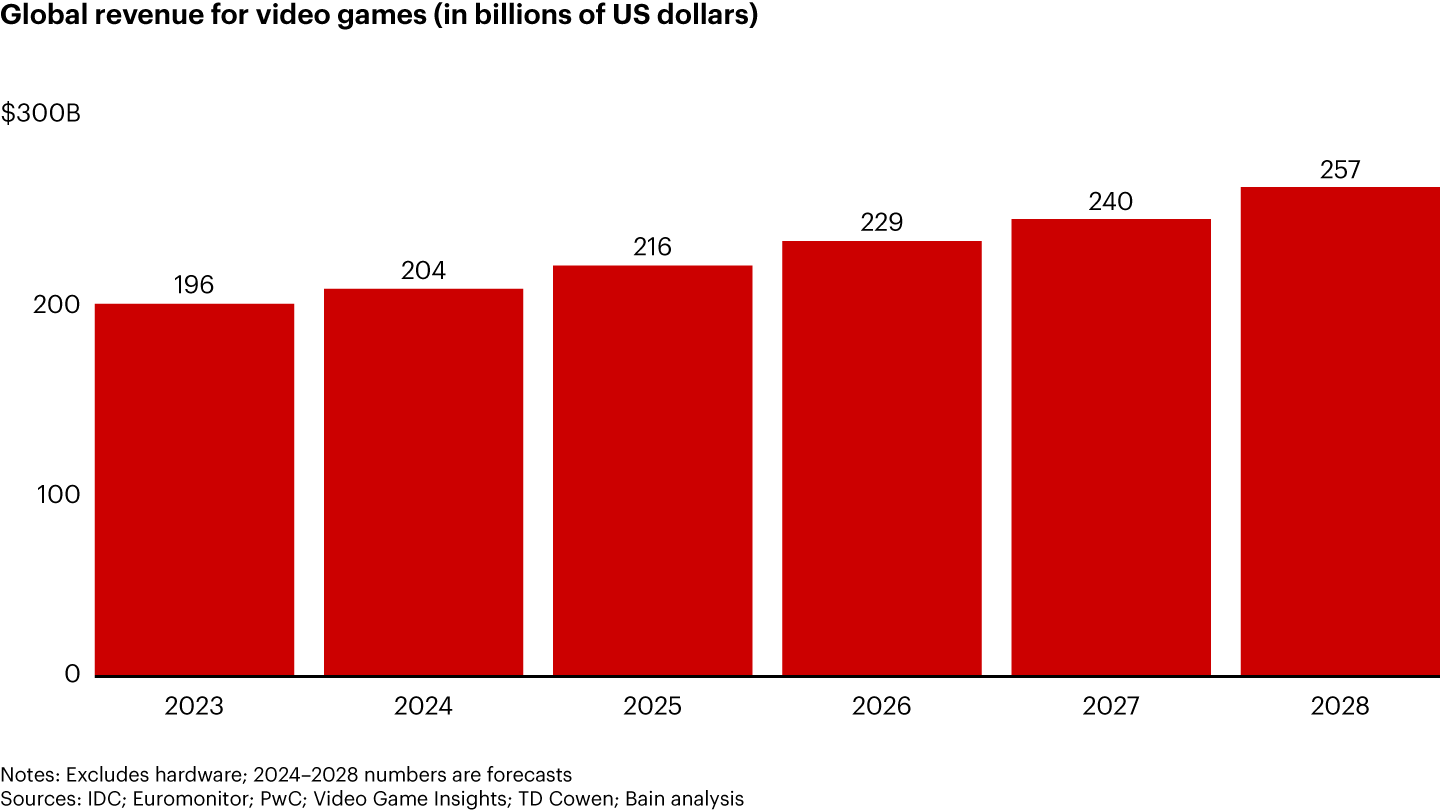
      Video games’ global revenue could climb by 6% a year, reaching $257 billion by 2028

      To learn more about the habits and expectations of gamers, we surveyed more than 5,000 people across six countries. From these insights, we’ve identified five key themes that game developers and publishers, device makers, and marketplace operators should understand in order to see where the industry and its consumer audience are moving:

      • Young gamers drive growth.
      • Gaming is about more than gameplay.
      • Gamers are cocreating the experience.
      • Gamers want to play across platforms and devices.
      • Gaming IP is taking share in other media.

      Young gamers drive growth

      Gaming has broad appeal: 52% of people surveyed play video games on a regular basis. But the clearest source of future growth comes from the youngest players (2 to 18 years old), 80% of whom identified as gamers in our survey. Young gamers spend nearly 30% of their entertainment time in video game environments.

      This isn’t a new phenomenon: Our 2022 survey found that half of teen gamers preferred spending time with friends in gaming environments rather than in the physical world. For this generation, video games are the modern mall, a place to hang out, see friends, and take in a variety of entertainment options. This audience expects video game companies to allow access from any platform, provide a diversity of experiences to consume, and enable them with the ability to create.

      Older players (45 or older) are a smaller market with big potential, with 31% identifying as gamers. Those that do play tend to spend less time on average (2.5 hours per week compared with 9.5 hours for 13- to 17-year-olds) and mostly on mobile phones. TV remains a strong competitor for this audience, capturing almost 40% of their entertainment time. In contrast with young gamers, this cohort prefers a lower level of engagement, such as casual genres or video embedded in the game environment. As gaming becomes more accessible and consumers age, this demographic could be an important source of growth given their potential to spend more (see Figure 2).

      Figure 2
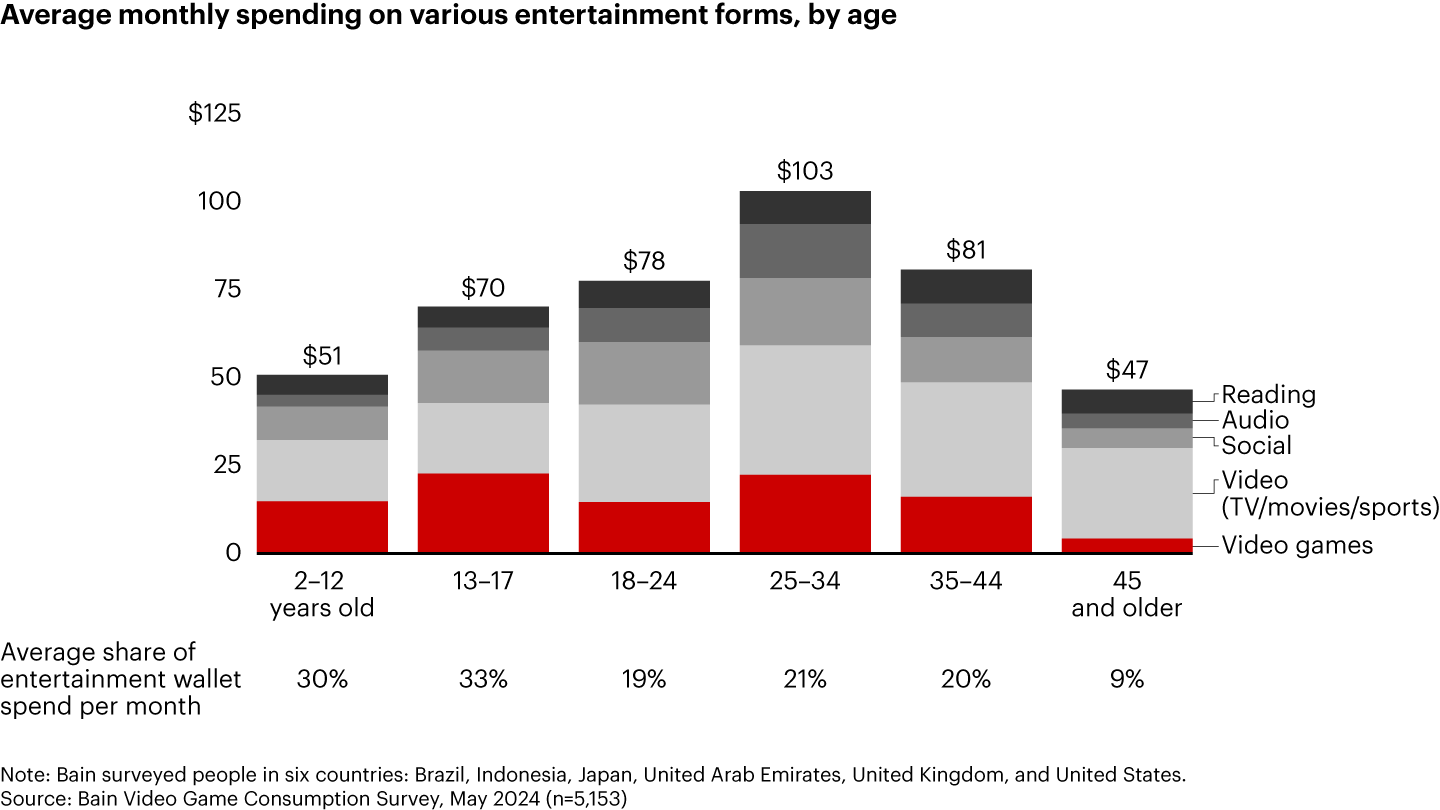
      Younger consumers spend a greater share of their entertainment budget on video games than older players

      Gaming is about more than gameplay

      Gamers’ preference for immersive games—that is, those with expansive virtual environments, where players can socialize and play an active role in generating content—was accelerated by pandemic lockdowns, and it has continued to grow in the years since. Nearly half of the top 30 games can be considered immersive, and a third of gamers surveyed by Bain listed an immersive game as their top game. For gamers younger than 18, that percentage was closer to half. Many of these younger players consider gaming platforms such as Roblox or Fortnite a social community, similar to the way adults view WhatsApp or Facebook.

      Immersive gamers are more engaged, spending about one and a half hours more per week in the game compared with non-immersive gamers. On average, they spend about one-third of that time on things other than gameplay, including socializing, creating, and shopping. They also spend more money on games, and the more things they do other than playing, the more they spend overall and on an hourly basis. In fact, players who engage in at least three activities other than gameplay spend about five times more per hour than gamers who just play (see Figure 3).

      Figure 3
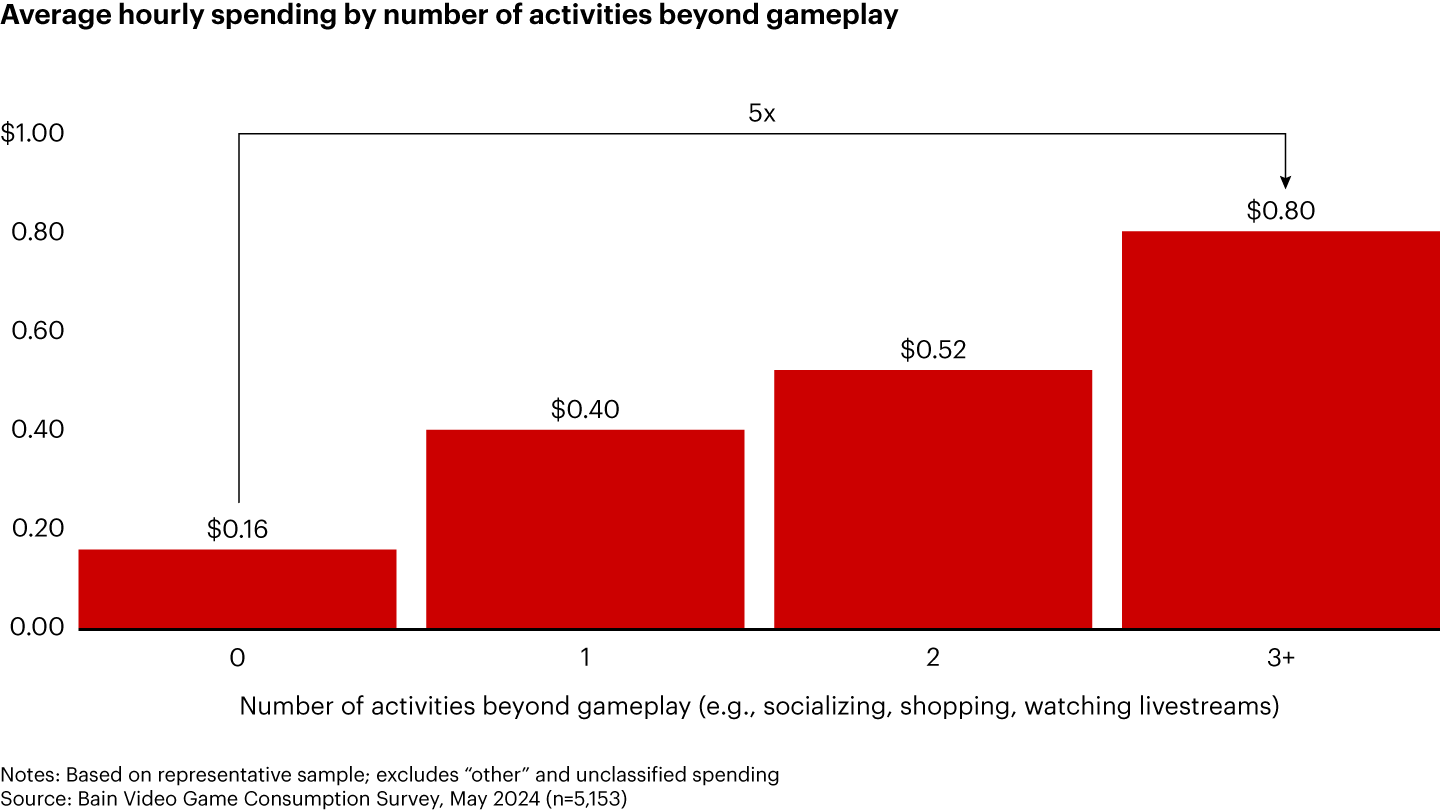
      Gamers who do more than play games also spend more

      The combination of these trends suggests that this heightened engagement among young gamers represents more than just kids having more time for games. Immersive gaming environments are becoming the center of social and entertainment activity for a group of consumers that will enter adulthood over the next few years. Given the heightened importance of these environments, we wouldn’t expect these consumers to abandon them as they mature—and grow richer. Instead, we expect that these gamers will continue to devote their time and spend their money and that they will demand more from the developers and publishers who provide these environments and experiences.

      Gamers are cocreating the experience

      Video has been dramatically changed over the past two decades by the rise of user-generated content (UGC). YouTuber MrBeast now has more subscribers than Netflix, and video platforms that depend on user content (including Twitch, YouTube, and TikTok) capture about 14% to 19% of total entertainment time in the prime 13 to 44 age group. The same shift is well underway in video games: 80% of gamers have played a game with UGC, and one in seven have created content in a video game (see Figure 4). About 80% of UGC creators say that they create content to express themselves creatively and for their friends to use and enjoy.

      Figure 4
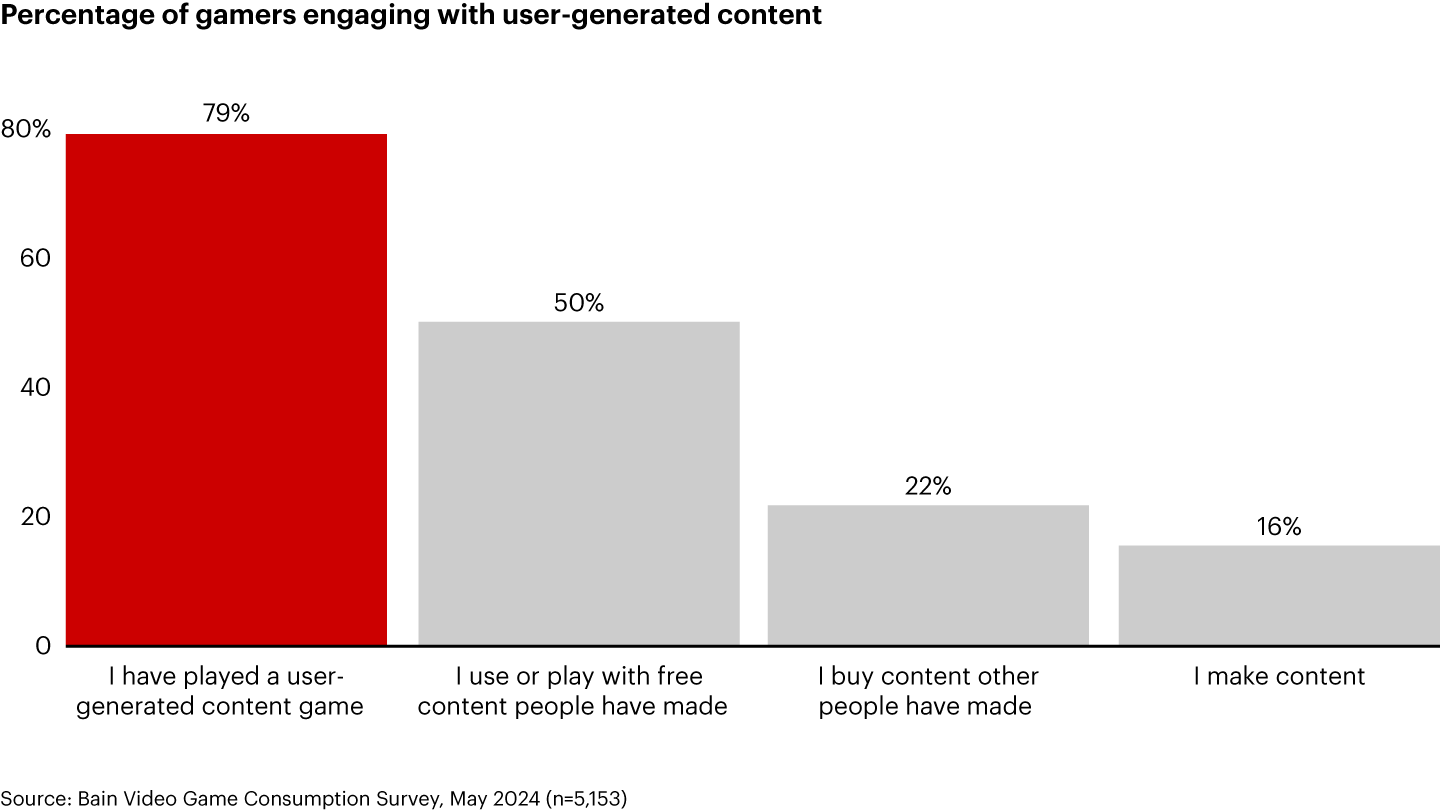
      Most gamers have played games with user-generated content, and 16% have made content for games

      Games offer creators different ways to engage. Minecraft’s objectives revolve around building and creating new parts of the world; creation is the game. In Roblox, gamers contribute to game development, creating new maps or games that other players can enjoy. In Grand Theft Auto V, gamers can personalize and customize items that they use in the game. Some games pay users to generate content, including Fortnite’s “Island Creator.”

      Generative AI will accelerate this trend by empowering players with tools to fine-tune their gaming experience. Some players have become influencers or celebrities by streaming or commenting on games on platforms that rely on user-generated content, such as TikTok, Twitch, or YouTube. These influencers can generate more engagement in their gaming communities, increasing gameplay and spending.

      Gamers want to play across platforms and devices

      Social play beats solo play, and most gamers want to play with friends, whatever platform they’re on (see Figure 5). As gamers spend more time doing more in gaming environments, cross-device ubiquity becomes even more important as they want to engage with friends regardless of what device they’re on.

      Nearly 70% of gamers play on at least two devices, and half said that they would like to see more accessibility across devices in future games. Cross-platform solutions are gaining traction: 95% of game development studios with more than 50 people are working on cross-platform games.

      Figure 5
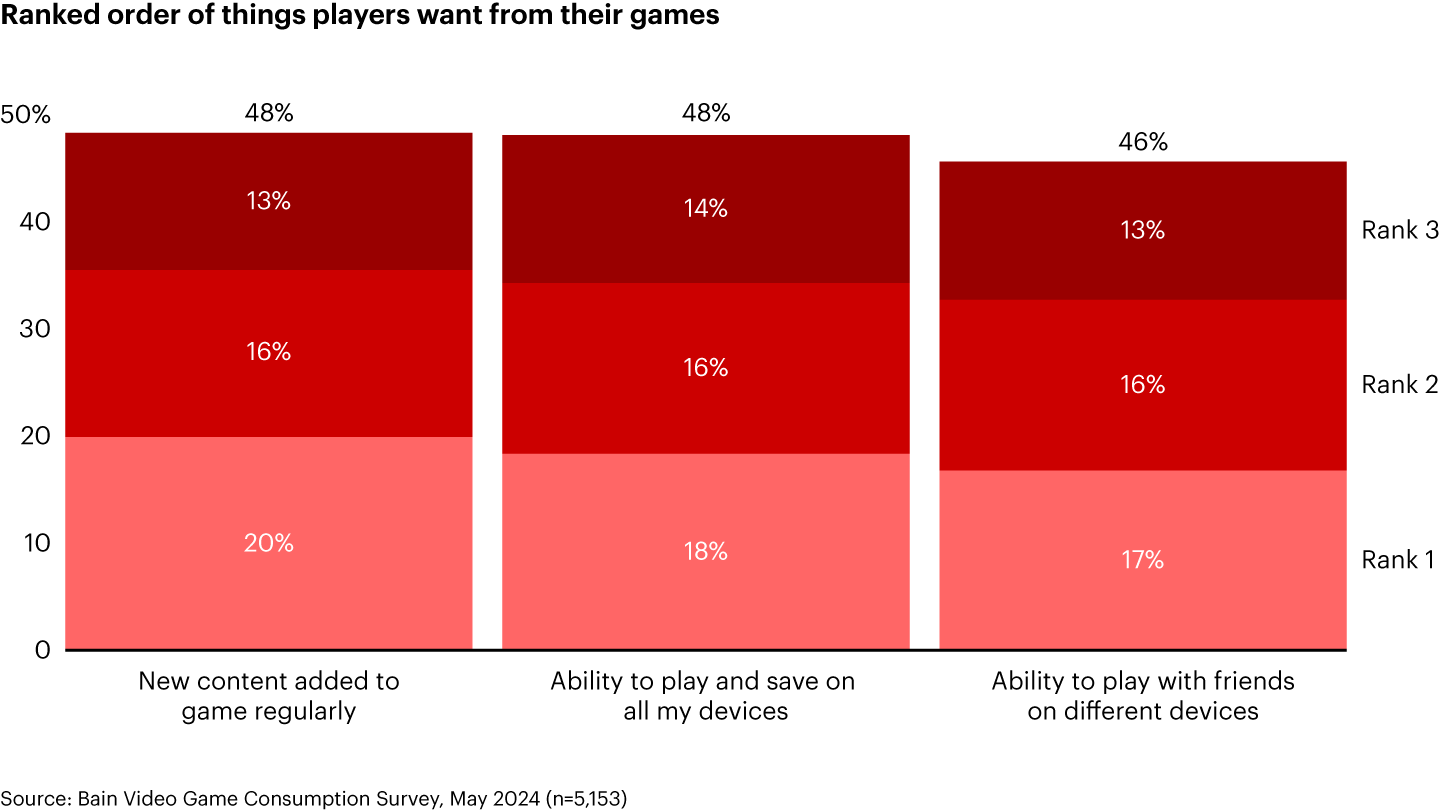
      Interoperability across devices was a factor in two of the top three features gamers wanted

      Gaming IP is taking share in other media

      More than half of gamers watched a show or movie based on a video game over the past year, an increase of 10 percentage points over 2022, reflecting higher demand and greater supply. Game-related shows and movies have a big impact on gameplay, with an average 28% lift in average concurrent users (ACUs) six months after their release. Resident Evil, for example, has a longstanding game and movie franchise dating back to the 1990s. The release of a Resident Evil show on Netflix in July 2022 boosted the ACU of the PC game Resident Evil 2 by 62% six months after the show’s debut. The 2020 movie Sonic the Hedgehog brought in more than $300 million at the box office and boosted the ACU of PC game Sonic Adventure 2 by 56% five months after its release. And the blurring goes both ways: Netflix says that it will bring its most popular stories to video games through its own Netflix Game Studio and that it’s partnering with Roblox to create a digital theme park: Nextworld.

      Four imperatives for long-term success

      These consumer trends are tailwinds indicating strong market growth ahead for the video game industry. However, rising competition from big tech and other media, as well as funding pressures, mean that not every gaming company will share the gains. A clearly defined growth strategy is critical to ensure long-term success. Our work with leaders in the industry suggests four imperatives that will help executives define their long-term strategies:

      • Understand the customer.
      • Expand the in-game world, including into the real world.
      • Meet gamers where they want to be.
      • Create new experiences to keep gamers engaged.

      Understand the customer. Every group of gamers requires its own product and engagement strategy, and game companies should be conducting ongoing research and testing to refine their understanding of them. Determine the appropriate ways to reach them—be it through prelaunch research during game development, during soft launch trials, or through live operations updates throughout the game’s life cycle.

      Game companies also need to consider a broader range of players as the definition of a gamer changes. Our survey results identified the important potential of older gamers on their mobiles. Some companies focus on the prime demographic of 12- to 24-year-olds, but they may be missing opportunities if they don’t expand their lens to consider how their games and IP could help them reach a wider audience.

      Expand the in-game world, including into the real world. Given the trend of gamers wanting to spend time in immersive environments doing more than just playing the game, publishers and developers should think more broadly about the whole game experience. While they continue to build out the game, they may want to place more emphasis on aspects other than play, including social experiences, other media, opportunities for cocreation, trading, and locker management.

      They should also be looking for opportunities to extend the game experience into the physical world, including partnerships that capitalize on game IP in movies, TV shows, theme parks, or other events and experiences. This opens up new commercial opportunities, such as the ability for a gamer to buy objects or clothing in the physical world and also get a digital version in the game.

      Meet gamers where they want to be. As gamers increasingly want to play across platforms and devices, cross-platform games are becoming table stakes. Most game companies will need to make new investments in development and partnerships to make this possible. As distribution becomes more complex, it will become more important for developers to stay on top of developments in distribution so that they can stay close to their audience.

      Create new experiences to keep gamers engaged. A strong core is essential, but live games need to progress to remain challenging. In doing so, they rely on new or existing IP to build out the story. Few franchises enjoy the wealth of IP that more than a hundred Star Wars games have had access to, with nearly 50 years of broad IP development to draw upon. But the example stands as a high-water mark for other franchises to emulate.

      Beyond updates to the game itself, leading game companies find other ways for their customers to participate. Cocreation tops the list as it also keeps users deeply invested in the game. Other engagement opportunities abound, from online forums to cross-media entertainment such as shows or movies featuring gameplay or characters.

      Getting to the next level

      Game developers and publishers face these imperatives at a critical moment in the evolution of their industry, when game companies of all sizes are making concerted efforts to scale up and build more mature capabilities that can see them thrive in the next wave of growth. The market has grown quickly, faster than most companies have been able to keep pace with. More than in almost any other industry, many game companies have depended on passion for the product as much as professional management to deliver the goods. Now, as game companies face the prospect of competing more directly with big tech and big media players, they are rethinking their operating models to become more efficient and make the most of their intellectual property. (For more on this, read the chapter “Level Unlocked: How Video Game Companies Can Evolve Operating Models for Growth.”)

      The authors would like to thank Nyla Brewster, Katie Chung, and Brandon Rogers for their contributions to this work.

      Read the Next Section

      The Next Big Disruption in Video Games: Distribution

      More from the report

      • Gaming Survey

      • Distribution

      • Mobile Game Marketing

      • Operating Models

      Read our 2024 Gaming Report

      Explore the report Download the PDF
      Autoren
      • Headshot of Anders Christofferson
        Anders Christofferson
        Partner, Denver
      • Headshot of Anders Videbaek
        Anders Videbaek
        Partner, Copenhagen
      • Headshot of Alex Egan
        Alex Egan
        Partner, Los Angeles
      • Headshot of Tom Rowland
        Tom Rowland
        Partner, Los Angeles
      • Matt Madden
        Associate Partner, Los Angeles
      Kontaktieren Sie uns
      Verwandte Branchen
      • Gaming
      • Medienwirtschaft
      Gaming Report
      Gamer Survey: Great Gameplay Is No Longer Enough

      Top games are winning with community building, user-generated content, and innovative revenue models.

      Mehr erfahren
      Medienwirtschaft
      Not Yet, Robots: How to Win in Media’s Flooded Era

      As AI floods the market with cheap content, human creativity will stand out—and new tech tools might even help.

      Mehr erfahren
      Gaming Report
      Winning Beyond the Game

      For companies with a hit video game, building a long-term strategy to extend IP beyond gameplay is the next frontier of competitive advantage.

      Mehr erfahren
      Gaming Report
      Squeezed in the Middle: AAA Gaming Studios Must Adapt

      Indies and “games-as-a-platform” are gaining share. Here’s how AAA studios can win in the reshaped gaming landscape.

      Mehr erfahren
      Gaming Report
      Skipping the Storefront: Direct Distribution’s Growth in Gaming

      Today’s top game developers are going direct-to-consumer to boost margins, build loyalty, and own their relationships with players.

      Mehr erfahren
      First published in August 2024
      Markierungen
      • Gaming
      • Gaming Report
      • Medienwirtschaft

      Wie wir unsere Kunden unterstützt haben

      Organisation A Video Game Company Levels Up With a New Operating Model

      Kundenbeispiel lesen

      Performance Improvement A Global Media Company Unlocks Hundreds of Millions in Working Capital

      Kundenbeispiel lesen

      Advanced Analytics Analytics guide an entertainment company's growth strategy

      Kundenbeispiel lesen

      Möchten Sie mit uns in Kontakt bleiben?

      Wir unterstützen Führungskräfte weltweit, die kritischen Themen in ihrem Unternehmen zu adressieren. Gemeinsam schaffen wir nachhaltige Veränderungen und Ergebnisse.

      Bain Insights. Unsere Perspektive auf die kritischen Themen, mit denen sich international agierende Unternehmen konfrontiert sehen, finden Sie monatlich in Ihrem Postfach.

      *Ich habe die Datenschutzerklärung gelesen und akzeptiere sie.
      Bitte lesen Sie die Datenschutzerklärung und akzeptieren Sie diese.
      Bain & Company
      Contact us Sustainability Accessibility Rechtliche Hinweise Impressum Datenschutz Cookie-Richtlinie Sitemap Log In

      © 1996-2026 Bain & Company, Inc.

      Kontaktieren Sie Bain

      Wie können wir Ihnen helfen?

      • Business inquiry
      • Career information
      • Press relations
      • Partnership request
      • Speaker request
      Alle weltweiten Büros