
Skip to Content
  • Standorte

    Standorte

    North & Latin America
    • Atlanta
    • Austin
    • Bogota
    • Boston
    • Buenos Aires
    • Chicago
    • Dallas
    • Denver
    • Houston
    • Lisbon
    • Los Angeles
    • Mexico City
    • Minneapolis
    • Monterrey
    • Montreal
    • New York
    • Rio de Janeiro
    • San Francisco
    • Santiago
    • São Paulo
    • Seattle
    • Silicon Valley
    • Toronto
    • Washington, DC
    Europe & Africa
    • Amsterdam
    • Athens
    • Berlin
    • Brussels
    • Copenhagen
    • Düsseldorf
    • Frankfurt
    • Helsinki
    • Istanbul
    • Johannesburg
    • Kyiv
    • Lisbon
    • London
    • Madrid
    • Milan
    • München
    • Oslo
    • Paris
    • Rome
    • Stockholm
    • Warsaw
    • Wien
    • Zürich
    Middle East
    • Doha
    • Dubai
    • Riyadh
    Asia & Australia
    • Bangkok
    • Beijing
    • Bengaluru
    • Brisbane
    • Ho Chi Minh City
    • Hong Kong
    • Jakarta
    • Kuala Lumpur
    • Manila
    • Melbourne
    • Mumbai
    • New Delhi
    • Perth
    • Seoul
    • Shanghai
    • Singapore
    • Sydney
    • Tokyo
    Alle Standorte Anzeigen
  • Alumni
  • Presse
  • Newsletter
  • Kontakt
  • DACH-Region | Deutsch

    Wählen Sie Ihre Region und Sprache

    Global
    • Global (English)
    North & Latin America
    • Brazil (Português)
    • Argentina (Español)
    • Canada (Français)
    • Chile (Español)
    • Colombia (Español)
    Europe, Middle East, & Africa
    • France (Français)
    • DACH-Region (Deutsch)
    • Italy (Italiano)
    • Spain (Español)
    • Greece (Elliniká)
    Asia & Australia
    • China (中文版)
    • Korea (한국어)
    • Japan (日本語)
  • Saved items (0)
    Saved items (0)

    You have no saved items.

    Inhalte, für die Sie sich interessieren, werden hier gespeichert und können später gelesen oder weitergeleitet werden.

    Explore Bain Insights
  • Branchenkompetenzen
    Hauptmenü

    Branchenkompetenzen

    • Luft- und Raumfahrt, Verteidigung
    • Agrarwirtschaft
    • Chemieindustrie
    • Infrastruktur und Bauwirtschaft
    • Konsumgüter
    • Finanzdienstleistungen
    • Gesundheitswesen
    • Maschinen- und Anlagenbau
    • Medienwirtschaft
    • Metallindustrie
    • Bergbau
    • Öl und Gas
    • Papier- und Verpackungsindustrie
    • Private Equity
      Branchenkompetenzen
      Private Equity
      • Due Diligence
      • Exit Planning
      • Firm Strategy & Operations
      • Portfolio Value Creation
    • Öffentlicher Sektor und Sozialwesen
    • Einzelhandel
    • Technologie
    • Telekommunikation
    • Transportwesen
    • Reise- und Freizeitbranche
    • Versorgung und erneuerbare Energien
  • Managementkompetenzen
    Hauptmenü

    Managementkompetenzen

    • Customer Experience
    • ESG
    • Innovation
    • M&A
    • Operations
    • People & Organization
    • Private Equity
    • Sales & Marketing
    • Strategie
    • KI, Einblicke und Lösungen
    • Technologie
    • Transformation
  • Digital
  • Publikationen
    Hauptmenü

    Publikationen

    • Branchenthemen
    • Managementthemen
    • Bain-Bücher
    Alle Publikationen
    Ausgewählte Themen
    • Resilienz in der globalen Krise
    • M&A Report
    • Private Equity Podcast
    • Midyear Private Equity Report
    • Agile
    • Engineering Report
    • Digital Transformation
    • Elements of Value®
    • Firm of the Future
    • Nachhaltigkeitsstudie
    • Macro Trends
    • Future of Consumption
    • Weltwirtschaftsforum (WEF)
  • Über uns
    Hauptmenü

    Über uns

    • Was wir bieten
    • Unser Ansatz
    • Unser Team
    • Game Changer Award
    • Female Allstar Board
    • Messbare Ergebnisse (EN)
    • Auszeichnungen
    • Globale Partnerschaften
    • The Mission
    Further: Our global responsibility
    • Vielfalt & Chancengleichheit
    • Soziale Verantwortung
    • Sustainability
    Erfahren Sie mehr zu "Further"
  • Karriere
    Hauptmenü

    Karriere

    • Dein Einstieg
      Karriere
      Dein Einstieg
      • Find Your Place
      • Unsere Arbeitsbereiche
      • Unsere Teams
      • Angebote für Studierende
      • Praktika & Programme
      • Recruiting-Events
    • Arbeiten bei Bain
      Karriere
      Arbeiten bei Bain
      • Blog: Inside Bain
      • Karriere Stories
      • Unsere Bainies
      • Office-Standorte
      • Weiterentwicklung
      • Affinity Groups
      • Deine Benefits
    • Impact Stories
    • Deine Bewerbung
      Karriere
      Deine Bewerbung
      • Das erwartet dich
      • Der Interviewprozess
    FIND JOBS
  • Standorte
    Hauptmenü

    Standorte

    • North & Latin America
      Standorte
      North & Latin America
      • Atlanta
      • Austin
      • Bogota
      • Boston
      • Buenos Aires
      • Chicago
      • Dallas
      • Denver
      • Houston
      • Lisbon
      • Los Angeles
      • Mexico City
      • Minneapolis
      • Monterrey
      • Montreal
      • New York
      • Rio de Janeiro
      • San Francisco
      • Santiago
      • São Paulo
      • Seattle
      • Silicon Valley
      • Toronto
      • Washington, DC
    • Europe & Africa
      Standorte
      Europe & Africa
      • Amsterdam
      • Athens
      • Berlin
      • Brussels
      • Copenhagen
      • Düsseldorf
      • Frankfurt
      • Helsinki
      • Istanbul
      • Johannesburg
      • Kyiv
      • Lisbon
      • London
      • Madrid
      • Milan
      • München
      • Oslo
      • Paris
      • Rome
      • Stockholm
      • Warsaw
      • Wien
      • Zürich
    • Middle East
      Standorte
      Middle East
      • Doha
      • Dubai
      • Riyadh
    • Asia & Australia
      Standorte
      Asia & Australia
      • Bangkok
      • Beijing
      • Bengaluru
      • Brisbane
      • Ho Chi Minh City
      • Hong Kong
      • Jakarta
      • Kuala Lumpur
      • Manila
      • Melbourne
      • Mumbai
      • New Delhi
      • Perth
      • Seoul
      • Shanghai
      • Singapore
      • Sydney
      • Tokyo
    Alle Standorte Anzeigen
  • Alumni
  • Presse
  • Newsletter
  • Kontakt
  • DACH-Region | Deutsch
    Hauptmenü

    Wählen Sie Ihre Region und Sprache

    • Global
      Wählen Sie Ihre Region und Sprache
      Global
      • Global (English)
    • North & Latin America
      Wählen Sie Ihre Region und Sprache
      North & Latin America
      • Brazil (Português)
      • Argentina (Español)
      • Canada (Français)
      • Chile (Español)
      • Colombia (Español)
    • Europe, Middle East, & Africa
      Wählen Sie Ihre Region und Sprache
      Europe, Middle East, & Africa
      • France (Français)
      • DACH-Region (Deutsch)
      • Italy (Italiano)
      • Spain (Español)
      • Greece (Elliniká)
    • Asia & Australia
      Wählen Sie Ihre Region und Sprache
      Asia & Australia
      • China (中文版)
      • Korea (한국어)
      • Japan (日本語)
  • Saved items  (0)
    Hauptmenü
    Saved items (0)

    You have no saved items.

    Inhalte, für die Sie sich interessieren, werden hier gespeichert und können später gelesen oder weitergeleitet werden.

    Explore Bain Insights
  • Branchenkompetenzen
    • Branchenkompetenzen

      • Luft- und Raumfahrt, Verteidigung
      • Agrarwirtschaft
      • Chemieindustrie
      • Infrastruktur und Bauwirtschaft
      • Konsumgüter
      • Finanzdienstleistungen
      • Gesundheitswesen
      • Maschinen- und Anlagenbau
      • Medienwirtschaft
      • Metallindustrie
      • Bergbau
      • Öl und Gas
      • Papier- und Verpackungsindustrie
      • Private Equity
      • Öffentlicher Sektor und Sozialwesen
      • Einzelhandel
      • Technologie
      • Telekommunikation
      • Transportwesen
      • Reise- und Freizeitbranche
      • Versorgung und erneuerbare Energien
  • Managementkompetenzen
    • Managementkompetenzen

      • Customer Experience
      • ESG
      • Innovation
      • M&A
      • Operations
      • People & Organization
      • Private Equity
      • Sales & Marketing
      • Strategie
      • KI, Einblicke und Lösungen
      • Technologie
      • Transformation
  • Digital
  • Publikationen
    • Publikationen

      • Branchenthemen
      • Managementthemen
      • Bain-Bücher
      Alle Publikationen
      Ausgewählte Themen
      • Resilienz in der globalen Krise
      • M&A Report
      • Private Equity Podcast
      • Midyear Private Equity Report
      • Agile
      • Engineering Report
      • Digital Transformation
      • Elements of Value®
      • Firm of the Future
      • Nachhaltigkeitsstudie
      • Macro Trends
      • Future of Consumption
      • Weltwirtschaftsforum (WEF)
  • Über uns
    • Über uns

      • Was wir bieten
      • Unser Ansatz
      • Unser Team
      • Game Changer Award
      • Female Allstar Board
      • Messbare Ergebnisse (EN)
      • Auszeichnungen
      • Globale Partnerschaften
      • The Mission
      Further: Our global responsibility
      • Vielfalt & Chancengleichheit
      • Soziale Verantwortung
      • Sustainability
      Erfahren Sie mehr zu "Further"
  • Karriere
    Häufige Suchanfragen
    • Agil
    • Digital
    • Strategie
    Vorherige Suchanfragen
      Zuletzt besuchte Seiten

      Content added to saved items

      Saved items (0)

      Removed from saved items

      Saved items (0)

      Brief

      Understanding Value: How to Capture the Pricing Opportunity in Chemicals

      Understanding Value: How to Capture the Pricing Opportunity in Chemicals

      Improving pricing management can be a source of significant untapped value for chemical companies.

      Von David Burns, Jason McLinn and Mark Porter

      • Min. Lesezeit
      }

      Brief

      Understanding Value: How to Capture the Pricing Opportunity in Chemicals
      en

      Why is pricing such an underdeveloped opportunity in chemicals? Companies that dedicate enormous resources to reducing costs or selling greater volumes give pricing far less attention than it deserves. Some executives think they cannot control pricing because they sell through partners or cannot control price leakage within their own salesforce. Many see chemicals as a commoditized market and believe they have to accept the price the market gives them. Others view pricing as a one-time exercise, a box to be ticked. "We sorted out pricing a few years ago," they say.

      However, this passive approach is costly because these companies are foregoing a huge upside opportunity (see Figure 1). Unrealized prices are one of the biggest opportunities available to companies in the chemicals industry, but most need a new perspective before they can set out to improve their pricing capabilities. The best exponents of pricing recognize the potential at hand, and they are continually trying to find ways to do better.
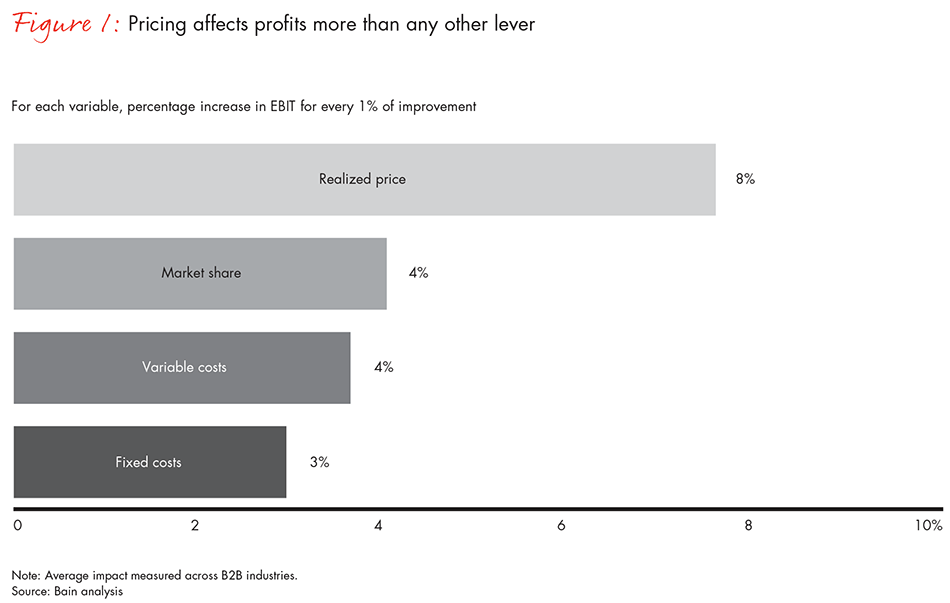
      Pricing affects profits more than any other lever

      Pricing affects profits more than any other lever

      Pricing is largely about starting with the right mindset and developing the right skills in-house to capture the unrealized price. Customers, even when they buy so-called commodities, take other things into account: their relationship with the supplier, how reliable the seller is and the value-added services they provide. Sometimes customers buy from a particular company just so that they can work with certain technical experts who can teach them ways to improve their business.

      Most chemical companies can build better pricing capabilities within 12 to 18 months, with some benefits accruing within one or two quarters. But it requires a focused effort with ongoing support from senior leadership. The first step is understanding their profitability and how their actual price differs from the one they set. Once they start working through all of the aspects of pricing—understanding the customer value, preventing price leakage, responding to disruptive competitors—companies begin to develop better pricing capabilities, putting them in a position to earn a more consistent premium and setting them on a course of continuous improvement. In our experience, chemical companies that master this can add 200 to 300 basis points to their margin over the same period.

      Pricing is more important than ever

      Three trends make pricing even more critical today for chemical companies than it was just a few years ago. First, purchasing departments have become more aggressive and sophisticated, and in many cases, they expand the spending categories that they closely manage, often including the smaller-volume specialty chemical categories. Also, it’s relatively easy for buyers to get price information through an Internet search, even in traditionally niche areas, which can knock a supplier out of consideration before it can even meet potential customers. Innovative digital competitors take advantage of this behavior to disrupt traditional pricing norms. Finally, pricing is critical during a time of energy and feedstock price volatility because of the need to maintain stable margins amid such uncertainty. (For more on this, read "Responding to Oil Price Volatility in the Chemical Industry.")

      Understandably, many chemical companies are focused on other priorities, including improving their products, increasing operational efficiency or selling out their production inventory. Even the companies that try to improve pricing often fail to do so in a sustained way. Some invest in new pricing tools or projects for a quarter or a year but then lose focus due to different priorities. Others simply fail to make pricing a long-term priority for their commercial organization and decide not to resource it appropriately. Still others have the ambition but fail to either build support across the commercial organization (marketing, sales and technical) or create the right incentives to encourage ongoing behaviors and accountability.

      As companies begin a more determined approach, they need to prioritize carefully. If short-term results are the goal, they can move quickly by identifying pockets of underpriced product and taking a test-and-learn approach to adjust prices. Those that are more interested in building long-term capabilities define the end state, then choose the right tools and build discipline from the ground up. Both approaches can improve the bottom line.

      Whatever the goal, any effort to improve pricing has to address the two main aspects of pricing: price setting and price getting.

      • Price setting includes structuring and defining the target prices for each customer product or service for each market segment—that is, determining the list, net and final prices the company wants to realize, as well as the types of discounts it will use to achieve those price points.
      • Price getting requires managing the difference between the price you want and the price you get. To succeed here, companies must develop capabilities to offer the right discounts and put tools in place to control limits. To ensure a sustainable pricing program, companies need to put in place the processes, tools and accountability measures to make sure all this happens naturally across the organization.

      Setting your price

      Three things are important for setting prices effectively: understanding your true costs and margins, understanding the real value of your product to customers, and getting a clear picture of the competitive environment (see Figure 2).
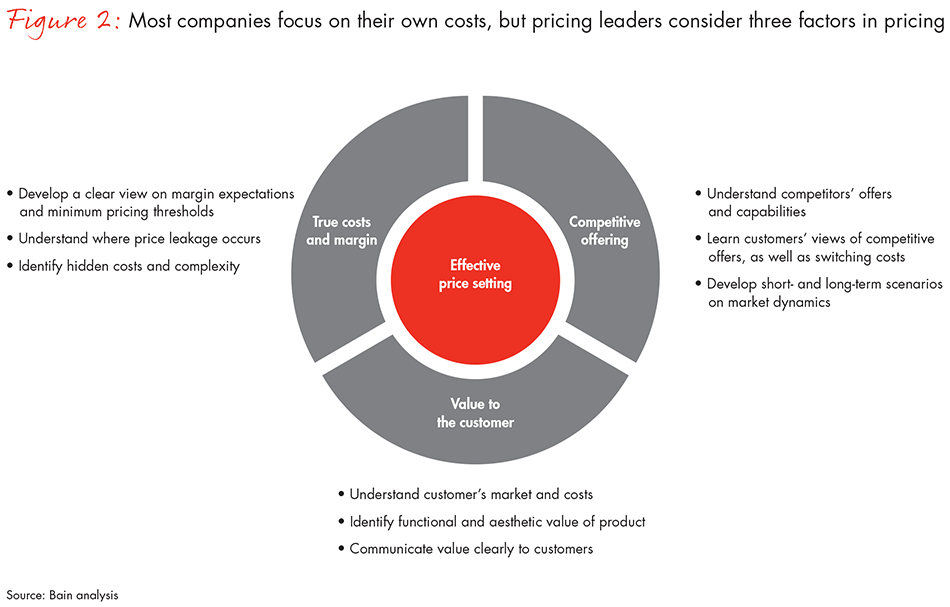
      Most companies focus on their own costs, but pricing leaders consider three factors in pricing

      Most companies focus on their own costs, but pricing leaders consider three factors in pricing

      True costs and margins. Most chemical companies have a clear understanding of their fixed costs. By forecasting their production volumes, they can determine the average cost for what they produce and get a general idea of what they need to charge in order to deliver steady returns. However, when volumes differ widely from forecasts, some companies struggle to adapt their pricing regimes.

      Leaders develop a more dynamic perspective on costs by asset and by customer so that they can adjust their prices to reflect changes over time. An adhesives company identified hidden costs not reflected in standard financial reporting (such as custom packaging and palletization, and higher technical service levels and credit terms) and adjusted their prices to make up for it.

      The product’s value to customers. Chemical companies develop a better understanding of their product’s value by identifying the uses of the product, especially those that are critical to customers and so may be more highly valued. This allows them to set price floors that vary from one market or application to another.

      Leaders go further, creating a more detailed view of the functional or aesthetic impact that their product has on the customer’s product or production process and how that compares to competitive offerings. They understand customers’ margin profiles and the factors contributing to success, and they incorporate this information into their pricing approach. Finally, a sales team that can communicate this value in a clear and compelling way is the critical step to getting their price.

      One polymer company developed a new grade that could be extruded at higher speeds. It was able to quantify the benefit to its customers—and in doing so, recognized that the proposition was worth disproportionately more to one specific customer segment and also that the value varied with the underlying market. These insights led the company to change its entire selling approach—including pricing.

      Competitive offers. Closely related companies need to develop a comprehensive perspective on the competitive landscape. Most have databases that capture and aggregate competitive quotes from customers along with anecdotes and other details on market trends.

      Leaders also invest time understanding their main competitors’ capabilities and offers to get a picture of their true costs and performance. They learn what customers think about the competition, especially compared with their own products and services. They also monitor market volumes so that they can price dynamically, and they understand how their competitors’ vertical integration affects their pricing schemes. Finally, true excellence in this area requires scenario planning or the application of game theory to determine how to respond to pricing moves by competitors. For example, one oilfield chemical company was able to learn more about its comparative cost advantages in some countries and the high service levels demanded by important customers. It used those insights to identify strategic locations where it could place product ahead of sales, which helped it win more business and realize its price goals.

      Getting your price

      Table stakes for getting your price include building and implementing the right capabilities, processes, and tools to manage pricing over the long term while monitoring prices and margins over time to ensure you are holding steady against variable input costs.

      Leaders go further.

      • They make sure they have well-documented roles and processes, and well-defined pricing decision rights along with business rules to manage exceptions.
      • Pricing specialists focus full time on setting and getting prices, often with a particular expertise in a region or business line, rather than at the center of a global organization. This expertise may extend to a comprehensive understanding of customers’ costs, including shipping, favored terms, rebates and other hidden costs.
      • They involve the sales team early, making sure they understand the economics of price leakage and profitability, and their options within that structure. Sales incentive programs motivate the salesforce on the same metrics that measure company growth and profitability.
      • They also invest in pricing tools that allow information to be aggregated and displayed in a user-friendly way. These can be very sophisticated tools that communicate closely with SAP and Salesforce (such as Vendavo) or one of the many cloud-based tools on the market that can be much quicker and easier to get up and running (such as KiniMetrix).

      As pricing programs take root, leaders measure their success by setting up mechanisms that tell them whether they are capturing the prices they intend and where to intervene if they are not. To do this, they need to see where price leakage occurs so that they can take corrective action—capabilities provided by most pricing tools, assuming that teams know how to use them. Leading companies also set regular check-ins with commercial leadership to review progress over time and deal with the inevitable outliers and exceptions. Typically, these are monthly scans that take an in-depth look at several product categories, reviewing the entire line over the course of a year.

      No program to improve pricing will succeed without ongoing support from top management. And while it’s natural that any change program will have promoters and detractors at the outset, it will become important for management to bring the team together behind the vision and reinforce critical pricing behavior with role modeling and the right incentives.

      Executives should think about three other traits of a pricing program before they begin.

      • Sequence the program. Not everything needs to happen at once. Prioritization will be essential, not only to direct focus but also to draw lessons in early stages that can be applied throughout.
      • Focus on early wins. As with any new initiative, putting a premium on measurable results early can improve the case for change. Momentum builds as detractors see the benefits of new programs.
      • Make it tangible and practical. None of this will work unless the salesforce buys in and changes behavior. Most companies will require a significant investment in training, tools and new processes to ensure a successful rollout and ongoing change.

      David Burns and Jason McLinn are partners with Bain & Company in Chicago. Mark Porter is a partner in Bain’s London office. All three work with Bain’s Global Chemicals practice, which Mark leads.

      Autoren
      • Headshot of David Burns
        David Burns
        Partner, Chicago
      • Headshot of Jason McLinn
        Jason McLinn
        Partner, Chicago
      • Headshot of Mark Porter
        Mark Porter
        Partner, London
      Kontaktieren Sie uns
      Verwandte Branchen
      • Chemieindustrie
      • Energiewirtschaft
      Ähnliche Beratungsangebote
      • Kundenstrategie und Marketing
      • Pricing
      Chemieindustrie
      Pricing Excellence in Turbulent Times

      Bain experts discuss pricing challenges and opportunities for chemical companies coming out of the pandemic.

      Mehr erfahren
      Chemieindustrie
      Sustaining Capital: From Chaos to Discipline

      Fragmented budgets, poor visibility, and missed forecasts are fixable with the right approach.

      Mehr erfahren
      Kundenstrategie und Marketing
      Per-Seat Software Pricing Isn’t Dead, but New Models Are Gaining Steam

      AI features force vendors to rethink pricing models, raising several tough challenges.

      Mehr erfahren
      Chemieindustrie
      How Sustainability Is Creating B2B Growth

      Our survey of B2B buyers and sellers finds growth leaders using sustainability to create commercial value while laggards focus on compliance.

      Mehr erfahren
      Kundenstrategie und Marketing
      Expanding Profit Margin Through Intelligent Pricing

      How leading firms use technology to strategically set prices and master the value story.

      Mehr erfahren
      First published in Mai 2016
      Markierungen
      • Chemieindustrie
      • Energiewirtschaft
      • Kundenstrategie und Marketing
      • Pricing

      Wie wir unsere Kunden unterstützt haben

      Informationstechnologie An Energy and Chemical Company Rebuilds Its Technology Foundation

      Kundenbeispiel lesen

      Performance Improvement Revitalizing profits and performance by transforming a manufacturer's shop floor

      Kundenbeispiel lesen

      Strategie Transforming a leading polymers maker into a profit powerhouse

      Kundenbeispiel lesen

      Möchten Sie mit uns in Kontakt bleiben?

      Wir unterstützen Führungskräfte weltweit, die kritischen Themen in ihrem Unternehmen zu adressieren. Gemeinsam schaffen wir nachhaltige Veränderungen und Ergebnisse.

      Bain Insights. Unsere Perspektive auf die kritischen Themen, mit denen sich international agierende Unternehmen konfrontiert sehen, finden Sie monatlich in Ihrem Postfach.

      *Ich habe die Datenschutzerklärung gelesen und akzeptiere sie.
      Bitte lesen Sie die Datenschutzerklärung und akzeptieren Sie diese.
      Bain & Company
      Contact us Sustainability Accessibility Rechtliche Hinweise Impressum Datenschutz Cookie-Richtlinie Sitemap Log In

      © 1996-2026 Bain & Company, Inc.

      Kontaktieren Sie Bain

      Wie können wir Ihnen helfen?

      • Business inquiry
      • Career information
      • Press relations
      • Partnership request
      • Speaker request
      Alle weltweiten Büros