Skip to Content
  • Standorte

    Standorte

    North & Latin America
    • Atlanta
    • Austin
    • Bogota
    • Boston
    • Buenos Aires
    • Chicago
    • Dallas
    • Denver
    • Houston
    • Lisbon
    • Los Angeles
    • Mexico City
    • Minneapolis
    • Monterrey
    • Montreal
    • New York
    • Rio de Janeiro
    • San Francisco
    • Santiago
    • São Paulo
    • Seattle
    • Silicon Valley
    • Toronto
    • Washington, DC
    Europe & Africa
    • Amsterdam
    • Athens
    • Berlin
    • Brussels
    • Copenhagen
    • Düsseldorf
    • Frankfurt
    • Helsinki
    • Istanbul
    • Johannesburg
    • Kyiv
    • Lisbon
    • London
    • Madrid
    • Milan
    • München
    • Oslo
    • Paris
    • Rome
    • Stockholm
    • Warsaw
    • Wien
    • Zürich
    Middle East
    • Doha
    • Dubai
    • Riyadh
    Asia & Australia
    • Bangkok
    • Beijing
    • Bengaluru
    • Brisbane
    • Ho Chi Minh City
    • Hong Kong
    • Jakarta
    • Kuala Lumpur
    • Manila
    • Melbourne
    • Mumbai
    • New Delhi
    • Perth
    • Seoul
    • Shanghai
    • Singapore
    • Sydney
    • Tokyo
    Alle Standorte Anzeigen
  • Alumni
  • Presse
  • Newsletter
  • Kontakt
  • DACH-Region | Deutsch

    Wählen Sie Ihre Region und Sprache

    Global
    • Global (English)
    North & Latin America
    • Brazil (Português)
    • Argentina (Español)
    • Canada (Français)
    • Chile (Español)
    • Colombia (Español)
    Europe, Middle East, & Africa
    • France (Français)
    • DACH-Region (Deutsch)
    • Italy (Italiano)
    • Spain (Español)
    • Greece (Elliniká)
    Asia & Australia
    • China (中文版)
    • Korea (한국어)
    • Japan (日本語)
  • Saved items (0)
    Saved items (0)

    You have no saved items.

    Inhalte, für die Sie sich interessieren, werden hier gespeichert und können später gelesen oder weitergeleitet werden.

    Explore Bain Insights
  • Branchenkompetenzen
    Hauptmenü

    Branchenkompetenzen

    • Luft- und Raumfahrt, Verteidigung
    • Agrarwirtschaft
    • Chemieindustrie
    • Infrastruktur und Bauwirtschaft
    • Konsumgüter
    • Finanzdienstleistungen
    • Gesundheitswesen
    • Maschinen- und Anlagenbau
    • Medienwirtschaft
    • Metallindustrie
    • Bergbau
    • Öl und Gas
    • Papier- und Verpackungsindustrie
    • Private Equity
      Branchenkompetenzen
      Private Equity
      • Due Diligence
      • Exit Planning
      • Firm Strategy & Operations
      • Portfolio Value Creation
    • Öffentlicher Sektor und Sozialwesen
    • Einzelhandel
    • Technologie
    • Telekommunikation
    • Transportwesen
    • Reise- und Freizeitbranche
    • Versorgung und erneuerbare Energien
  • Managementkompetenzen
    Hauptmenü

    Managementkompetenzen

    • Customer Experience
    • ESG
    • Innovation
    • M&A
    • Operations
    • People & Organization
    • Private Equity
    • Sales & Marketing
    • Strategie
    • KI, Einblicke und Lösungen
    • Technologie
    • Transformation
  • Digital
  • Publikationen
    Hauptmenü

    Publikationen

    • Branchenthemen
    • Managementthemen
    • Bain-Bücher
    Alle Publikationen
    Ausgewählte Themen
    • Resilienz in der globalen Krise
    • M&A Report
    • Private Equity Podcast
    • Midyear Private Equity Report
    • Agile
    • Engineering Report
    • Digital Transformation
    • Elements of Value®
    • Firm of the Future
    • Nachhaltigkeitsstudie
    • Macro Trends
    • Future of Consumption
    • Weltwirtschaftsforum (WEF)
  • Über uns
    Hauptmenü

    Über uns

    • Was wir bieten
    • Unser Ansatz
    • Unser Team
    • Game Changer Award
    • Female Allstar Board
    • Messbare Ergebnisse (EN)
    • Auszeichnungen
    • Globale Partnerschaften
    • The Mission
    Further: Our global responsibility
    • Vielfalt & Chancengleichheit
    • Soziale Verantwortung
    • Sustainability
    Erfahren Sie mehr zu "Further"
  • Karriere
    Hauptmenü

    Karriere

    • Dein Einstieg
      Karriere
      Dein Einstieg
      • Find Your Place
      • Unsere Arbeitsbereiche
      • Unsere Teams
      • Angebote für Studierende
      • Praktika & Programme
      • Recruiting-Events
    • Arbeiten bei Bain
      Karriere
      Arbeiten bei Bain
      • Blog: Inside Bain
      • Karriere Stories
      • Unsere Bainies
      • Office-Standorte
      • Weiterentwicklung
      • Affinity Groups
      • Deine Benefits
    • Impact Stories
    • Deine Bewerbung
      Karriere
      Deine Bewerbung
      • Das erwartet dich
      • Der Interviewprozess
    FIND JOBS
  • Standorte
    Hauptmenü

    Standorte

    • North & Latin America
      Standorte
      North & Latin America
      • Atlanta
      • Austin
      • Bogota
      • Boston
      • Buenos Aires
      • Chicago
      • Dallas
      • Denver
      • Houston
      • Lisbon
      • Los Angeles
      • Mexico City
      • Minneapolis
      • Monterrey
      • Montreal
      • New York
      • Rio de Janeiro
      • San Francisco
      • Santiago
      • São Paulo
      • Seattle
      • Silicon Valley
      • Toronto
      • Washington, DC
    • Europe & Africa
      Standorte
      Europe & Africa
      • Amsterdam
      • Athens
      • Berlin
      • Brussels
      • Copenhagen
      • Düsseldorf
      • Frankfurt
      • Helsinki
      • Istanbul
      • Johannesburg
      • Kyiv
      • Lisbon
      • London
      • Madrid
      • Milan
      • München
      • Oslo
      • Paris
      • Rome
      • Stockholm
      • Warsaw
      • Wien
      • Zürich
    • Middle East
      Standorte
      Middle East
      • Doha
      • Dubai
      • Riyadh
    • Asia & Australia
      Standorte
      Asia & Australia
      • Bangkok
      • Beijing
      • Bengaluru
      • Brisbane
      • Ho Chi Minh City
      • Hong Kong
      • Jakarta
      • Kuala Lumpur
      • Manila
      • Melbourne
      • Mumbai
      • New Delhi
      • Perth
      • Seoul
      • Shanghai
      • Singapore
      • Sydney
      • Tokyo
    Alle Standorte Anzeigen
  • Alumni
  • Presse
  • Newsletter
  • Kontakt
  • DACH-Region | Deutsch
    Hauptmenü

    Wählen Sie Ihre Region und Sprache

    • Global
      Wählen Sie Ihre Region und Sprache
      Global
      • Global (English)
    • North & Latin America
      Wählen Sie Ihre Region und Sprache
      North & Latin America
      • Brazil (Português)
      • Argentina (Español)
      • Canada (Français)
      • Chile (Español)
      • Colombia (Español)
    • Europe, Middle East, & Africa
      Wählen Sie Ihre Region und Sprache
      Europe, Middle East, & Africa
      • France (Français)
      • DACH-Region (Deutsch)
      • Italy (Italiano)
      • Spain (Español)
      • Greece (Elliniká)
    • Asia & Australia
      Wählen Sie Ihre Region und Sprache
      Asia & Australia
      • China (中文版)
      • Korea (한국어)
      • Japan (日本語)
  • Saved items  (0)
    Hauptmenü
    Saved items (0)

    You have no saved items.

    Inhalte, für die Sie sich interessieren, werden hier gespeichert und können später gelesen oder weitergeleitet werden.

    Explore Bain Insights
  • Branchenkompetenzen
    • Branchenkompetenzen

      • Luft- und Raumfahrt, Verteidigung
      • Agrarwirtschaft
      • Chemieindustrie
      • Infrastruktur und Bauwirtschaft
      • Konsumgüter
      • Finanzdienstleistungen
      • Gesundheitswesen
      • Maschinen- und Anlagenbau
      • Medienwirtschaft
      • Metallindustrie
      • Bergbau
      • Öl und Gas
      • Papier- und Verpackungsindustrie
      • Private Equity
      • Öffentlicher Sektor und Sozialwesen
      • Einzelhandel
      • Technologie
      • Telekommunikation
      • Transportwesen
      • Reise- und Freizeitbranche
      • Versorgung und erneuerbare Energien
  • Managementkompetenzen
    • Managementkompetenzen

      • Customer Experience
      • ESG
      • Innovation
      • M&A
      • Operations
      • People & Organization
      • Private Equity
      • Sales & Marketing
      • Strategie
      • KI, Einblicke und Lösungen
      • Technologie
      • Transformation
  • Digital
  • Publikationen
    • Publikationen

      • Branchenthemen
      • Managementthemen
      • Bain-Bücher
      Alle Publikationen
      Ausgewählte Themen
      • Resilienz in der globalen Krise
      • M&A Report
      • Private Equity Podcast
      • Midyear Private Equity Report
      • Agile
      • Engineering Report
      • Digital Transformation
      • Elements of Value®
      • Firm of the Future
      • Nachhaltigkeitsstudie
      • Macro Trends
      • Future of Consumption
      • Weltwirtschaftsforum (WEF)
  • Über uns
    • Über uns

      • Was wir bieten
      • Unser Ansatz
      • Unser Team
      • Game Changer Award
      • Female Allstar Board
      • Messbare Ergebnisse (EN)
      • Auszeichnungen
      • Globale Partnerschaften
      • The Mission
      Further: Our global responsibility
      • Vielfalt & Chancengleichheit
      • Soziale Verantwortung
      • Sustainability
      Erfahren Sie mehr zu "Further"
  • Karriere
    Häufige Suchanfragen
    • Agil
    • Digital
    • Strategie
    Vorherige Suchanfragen
      Zuletzt besuchte Seiten

      Content added to saved items

      Saved items (0)

      Removed from saved items

      Saved items (0)

      Report

      Present Shock and Future Sensing

      Present Shock and Future Sensing

      When turbulence spikes, the ability to recognize patterns and develop options becomes vital.

      Von Andrew Schwedel, James Root, Karen Harris, Dunigan O'Keeffe, und Mike Haslett

      • Min. Lesezeit
      }

      Report

      Present Shock and Future Sensing
      en
      Auf einen Blick
      • A stream of disruptive events is reshaping the business environment through eight major trends, ranging from slower growth of financial capital to more activist governments.
      • The effects of these trends will be uneven across markets and industries, raising the value of capabilities around future sensing.
      • For most companies, navigating the new landscape will require increased flexibility, along with changes in strategy, financing, and talent.

      As disruptions and crises have piled up in recent years, business leaders might be forgiven for wondering, “Are we done yet?” Between Covid-19, inflation, political polarization, the rise of artificial intelligence (AI), wars in Ukraine and the Middle East, and recession fears across many countries, the macro environment is more uncertain than it has been for decades. Worse, traditional economic indicators seem to have lost their predictive power.

      Yet it is worth recalling that while previous eras with similar disruptions, such as the 1970s, were unsettling to live through, they ushered in some remarkable business success stories. In the face of even more intense turbulence and uncertainty, a new round of major business gains will hinge on companies understanding how their world is changing and how they must adapt.

      Shudders from a confluence of structural changes

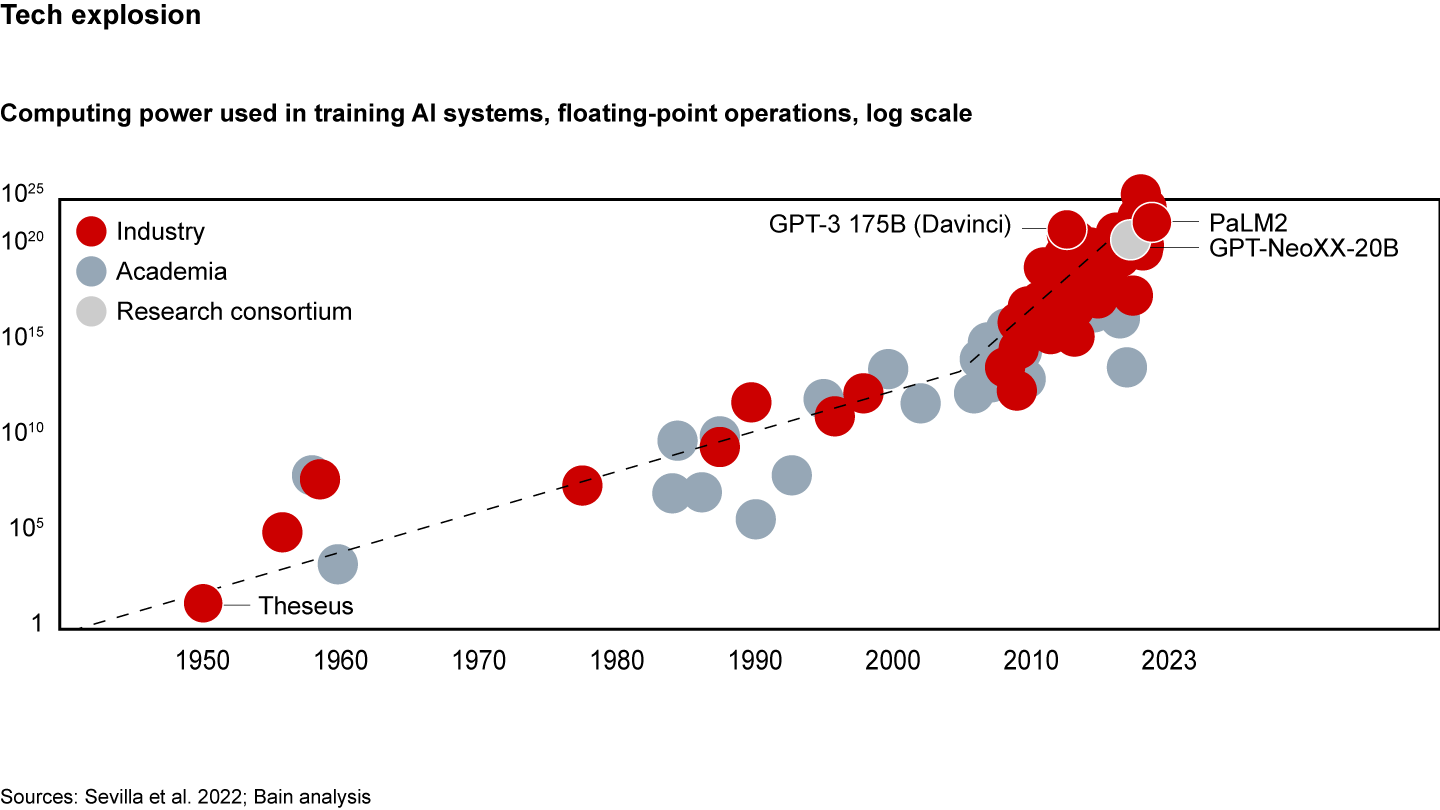
      Our new world will be shaped by both structural and cyclical changes in the macro environment and in business. The structural forces are well known but underappreciated in the magnitude of their combined effects. Consider changes in technology, which are occurring across a range of areas at an exponential rate. The usage and computational power of generative AI is growing even more rapidly than the capabilities of microprocessors under the longstanding rule of Moore’s Law.

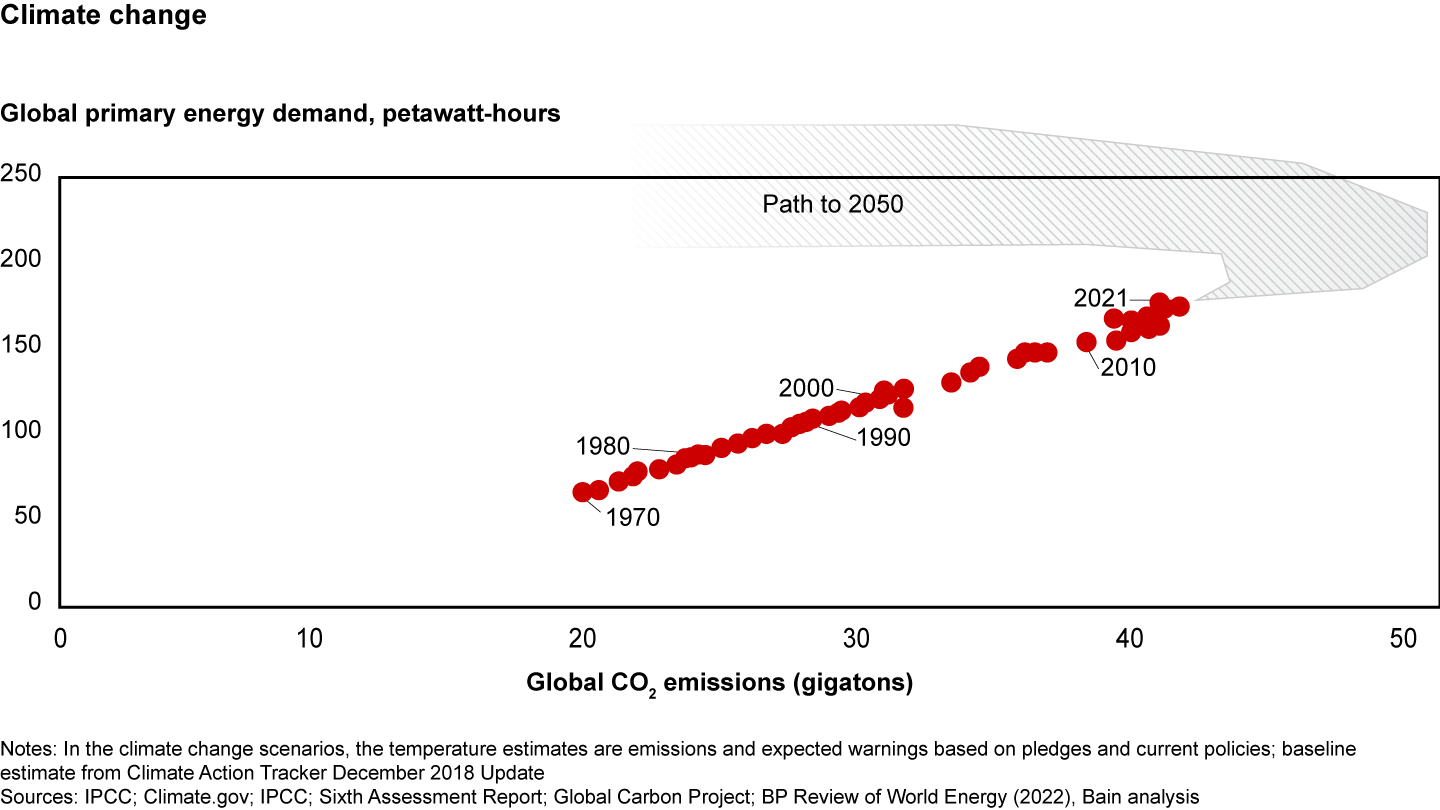
      While technology advances, so does the buildup of carbon and climate stress. Fortunately, carbon emissions have plateaued and even started to decline in developed nations. However, the demands of transitioning away from carbon while meeting the world’s growing energy needs will continue to stretch natural resources, resulting in more volatile markets and contributing to domestic and global tensions.

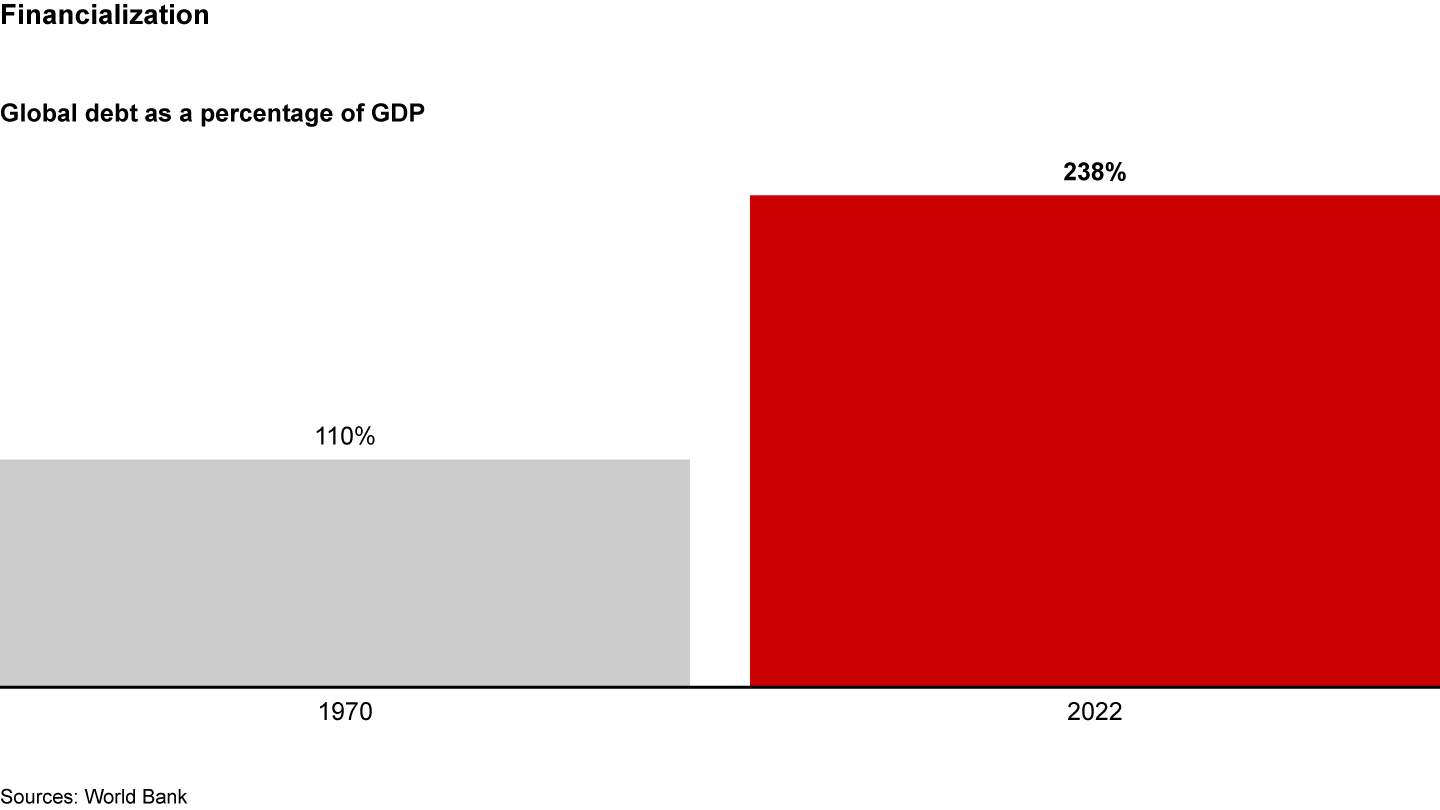
      Financial markets, too, face profound change as debt burdens reach levels that historically have proved to be unsustainable. In recent years, low interest rates eased these debt burdens while inflating a broader range of asset bubbles as global financial capital has more than tripled over the past three decades to roughly 10 times global GDP. Now, the current environment, with both higher inflation rates and higher real interest rates that are expected to remain elevated, will likely reverse this dynamic.

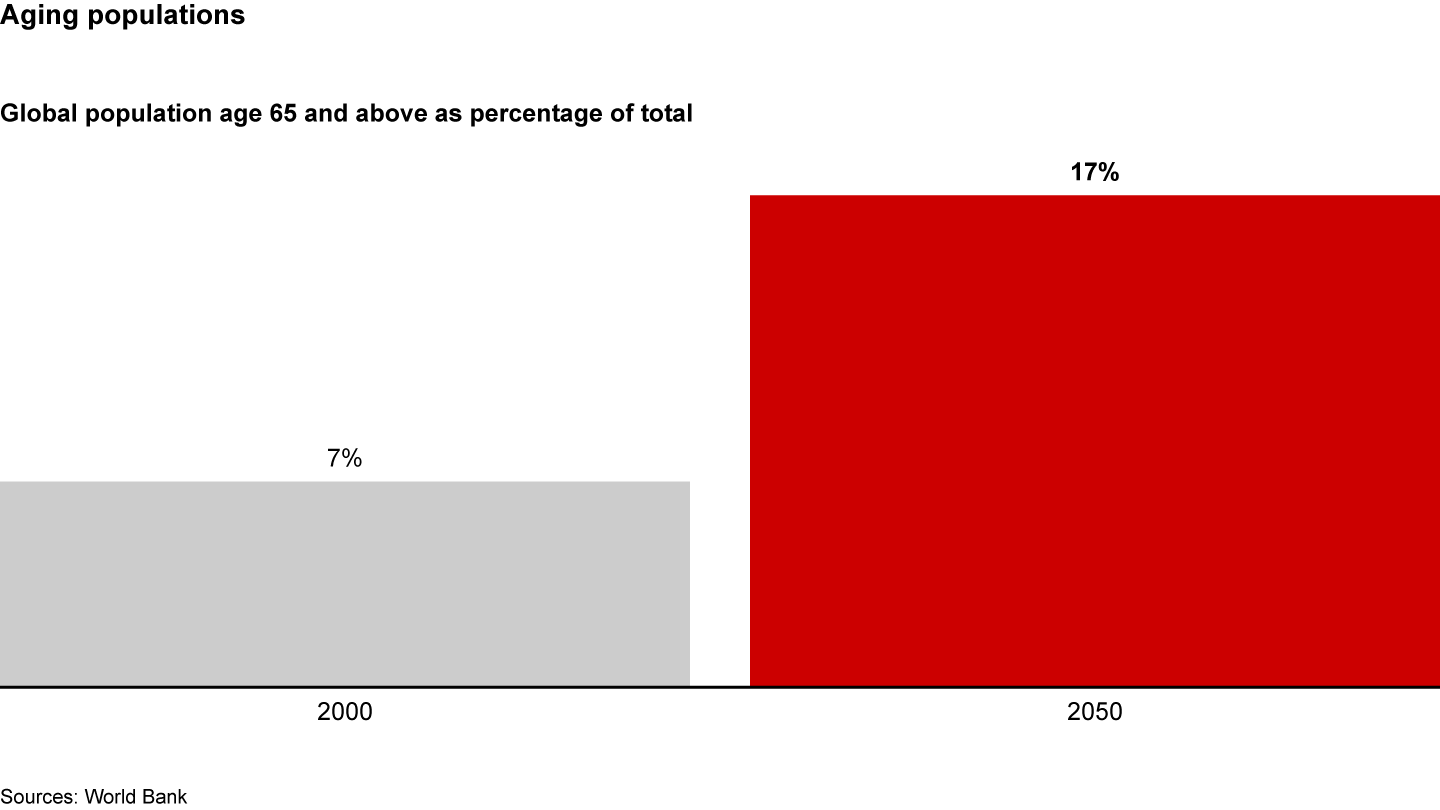
      One big driver of the steady rise in public debt, for instance, has been aging populations in many developed and developing countries. As populations age and shift from net savers to net consumers, global capital formation will slow even as demand for investment increases. Older workers’ share of global jobs will increase by 150 million by 2030, as overall workforce growth shrinks and goes negative in many markets (see Figure 1).

      Figure 1
      Macro forces are accelerating
      Macro forces are accelerating
      Macro forces are accelerating
      Figure 1
      Macro forces are accelerating
      Figure 1
      Macro forces are accelerating
      Figure 1
      Macro forces are accelerating

      This collision of forces has generated eight major trends that will reshape the business environment over the rest of this decade and beyond (see Figure 2):

      • Artificial intelligence: power and peril
      • The dual challenge of decarbonization and energy provision
      • Post-globalization
      • Capital rationalization
      • Rehumanizing work
      • Waving goodbye to the invisible hand
      • Twin focus on bytes and bricks
      • Seeking community among fragmented experiences
      Figure 2
      Eight trends will reshape business over at least the next decade

      Many of these themes connect with and reinforce each other. For example, capital rationalization may be more severe in a post-globalized world with more fragmented capital markets. While the themes touch every industry, they show up in different ways across different sectors and markets. On the policy front, AI, energy, and trade regulation vary greatly among countries. On the social and political fronts, fragmented agendas and disconnects between elite and mass public opinion dominate. Consumer segments are increasingly fragmenting and evolving in ways that have little overlap. Higher costs of capital will increase the relative cost of renewables and low carbon energy sources. Taken together, these themes will likely define a multispeed world, with each theme playing out very differently across industries and markets.

      What does all this mean for business leaders? We see three imperatives to navigate the coming turbulence.

      An earlier, clearer view of the future

      First, the combination of greater macroeconomic volatility with shorter and less synchronized business cycles demands an increased emphasis on “future sensing.” This has always been important, but in stable periods, conditions do not change as quickly and planning assumptions may stay relevant for longer. Developing a view of the future is tricky, but companies get an early read on emerging trends by focusing on the right signals to monitor, including patent filings, investment flows, and job creation. Based on a retrospective analysis of more than 200 trends, we see three typical patterns in how they progress: gradually, as with streaming video or telehealth; catalyzed, such as blockchain or remote work; and virally, as with non-fungible tokens or e-scooters) (see Figure 3). The sequence of leading indicators can vary across different trends, so it is important for companies to track a wide range of sources and incorporate diverse perspectives from within and outside the firm.

      Figure 3
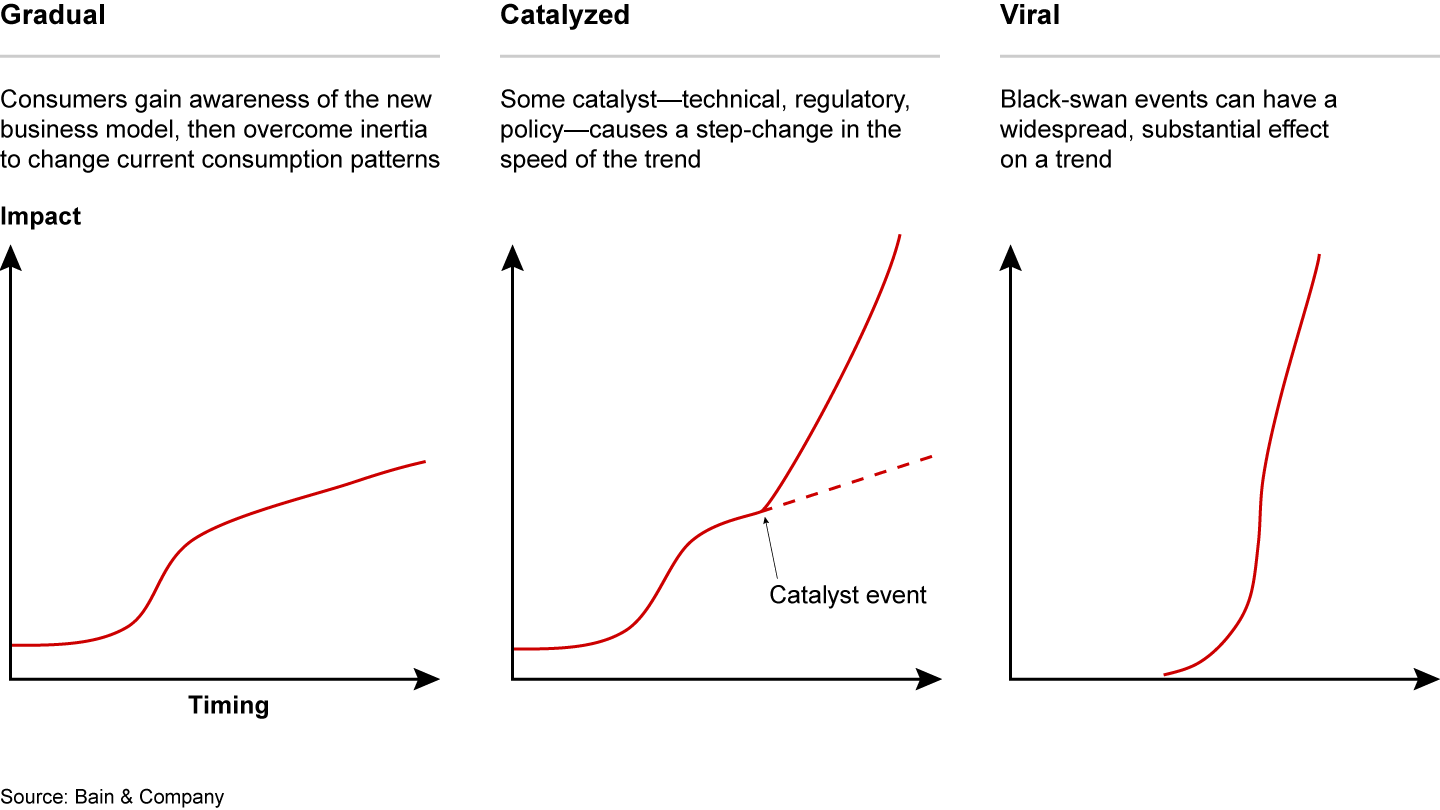
      Trends generally follow one of three growth paths
      Trends generally follow one of three growth paths
      Trends generally follow one of three growth paths

      Tracking signals in this way can help firms plan for a range of plausible but extreme scenarios, along with a menu of strategic options—from no-regret moves that would be robust in any scenario, to options and hedges against the different scenarios, to a handful of big bets where management has conviction. This in turn helps address not only the uncertainty of what might happen but also when, allowing firms to start preparing now even for developments that might not play out for several years.

      The gold standard for this sort of long-range planning has been practiced by large energy companies, which need to make multibillion-dollar bets that play out over decades. In recent years, we have seen divergent paths taken by European oil and gas giants, which have invested heavily in renewables to speed the energy transition, and their US counterparts, which have taken a more balanced approach. While the US energy companies have fared better from a market perspective so far, both paths may prove viable and appropriate given local market dynamics.

      More government intervention, at multiple levels

      This raises a second imperative: getting closer to the decisions and thinking of governments and other public sector stakeholders, especially in the home market, as the state gets more involved in market affairs. The goal here involves observing the momentum of greater demands on business from all corners of the political spectrum. While culture war issues have captured the lion’s share of attention to date, emerging battlegrounds will intensify around core economic issues such as labor practices and worker protection, anti-trust, and tax and subsidy policies.

      Increasingly, these battles will be fought at the local and multilocal level rather than globally, engaging with a broader range of stakeholders pursuing often divergent agendas. In turn, companies will have to fine-tune their activities to local conditions and the political landscape. Throughout the globalization era, multinational corporations were the apex predators of the business world, building global scale by integrating more and more parts of the enterprise. While global scale and breadth of capabilities will still hold sway in many industries, large parts of a company—from operations to data to talent and even funding—may need to be designed in a modular way to allow for redundancy and separability if required.

      Companies such as Uber and Airbnb have embodied the multilocal approach, with tailored leadership and regulatory engagement in different cities and regions. In recent years, they have taken this even further by shifting their business models. In India, for example, potential Uber drivers can lease vehicles from a financial partner, which both expands Uber’s driver base and helps diversify corporate income streams.

      Many energy companies are accustomed to local engagement. Duke Energy, a US utility, invested in a multiyear stakeholder process focused on the state of North Carolina’s transition to clean energy. Duke Energy worked with government officials to shape legislation to better serve its clients, helping to pass a bill that enabled utility-owned renewables and creating a pathway for the state to reduce its greenhouse gas emissions 70% by 2030.

      Supply-demand mismatches for financial and human capital

      A third imperative concerns financial and human capital. As demand for investment surges and global capital formation and mobility slow down, securing the right forms of capital from the right investors at the right cost will become more difficult. The recent rise in interest rates alone has changed the equation on how to balance current profitability and future revenue growth. In a world where the cost of capital was less than 6%, as in much of the past 15 years, future revenue growth was up to three times more valuable than current profits; at 9% cost of capital, the value of profits today will be the same as that of future growth, and at 12% cost of capital, the value of profits today will be five times that of future growth. While the eight trends highlighted above will offer enormous value creation opportunities, investors will have the power to be more discerning about what they fund and more demanding about the rigor of business-building capabilities required.

      Sources of funding will probably become more globally dispersed and less geographically mobile, particularly if multipolar economic blocs follow global politics– that is, countries that are political and military allies also start concentrating their economic ties to those allies.  These funding sources will also become more diversified by type of institution, as traditional financial intermediaries retrench in the face of increased regulatory requirements (banks now control only about 40% of financial assets held by all financial institutions globally, and only 20% in the US) and private capital providers fill the gap. Flexible capital models such as green bonds, blurring private-public ownership structures, and even vehicles that let investors fund specific projects, such as insurance-linked securities, will likely proliferate.

      In this environment, companies will need to devise creative balance sheet options. Leading energy companies, for instance, consider alternatives such as taking a development fee and transferring the asset to another advantaged source of capital, lowering overall project costs. Oil and gas companies could coinvest with infrastructure funds on lower-risk, lower-return projects; with development banks for projects in emerging markets; or with private capital investors willing to take on riskier, longer-term projects.

      Along with financial capital, human capital also faces a growing supply-demand mismatch. Even as AI and other technologies raise the prospect of rapid obsolescence for millions of jobs, the war for talent continues, particularly around specific high-growth skills. To meet this demand, firms will have to get much more creative about maximizing the value of their current talent base, moving from talent taker to talent maker. Besides greater investments in reskilling, this shift will also require looking beyond stated credentials on resumes to identify specific skills that might be leveraged in other settings. AI-enabled skills-mining software is a growing market, as demonstrated by start-ups such as eightfold.ai and investments made by established firms including SAP and Workday.

      Much remains uncertain about how these trends will evolve, and no doubt there will be further surprises. Nonetheless, much of what will occur can at least be imagined and to some extent planned for with the right approach to future sensing. Those companies that develop the right capabilities now will be better equipped to anticipate and thus deal with the shocks that materialize.

      Autoren
      • Headshot of Andrew Schwedel
        Andrew Schwedel
        Partner, New York
      • Headshot of James Root
        James Root
        Partner, Hong Kong
      • Headshot of Karen Harris
        Karen Harris
        Managing Director, Macro Trends Group, New York
      • Headshot of Dunigan O'Keeffe
        Dunigan O'Keeffe
        Partner, San Francisco
      • Mike Haslett
        Alumni, Perth
      Kontaktieren Sie uns
      Ähnliche Beratungsangebote
      • Business Strategy
      • Strategie
      CEO Agenda
      A Strategy for Embracing Uncertainty

      There are no crystal balls, but companies can get a lot smarter about envisioning future scenarios and knowing when to act on them.

      Mehr erfahren
      CEO Agenda
      From China to Trouble?

      Swapping supply chains doesn’t mean escaping risk.

      Mehr erfahren
      Strategie
      Lean Strategy: Make Smarter Moves, Faster

      Bain's Michael Mankins and Thomas Sweet, former CFO of Dell Technologies, share how a lean strategy framework accelerates smarter decision-making and enhances performance.

      Mehr erfahren
      CEO Agenda
      Beyond Tariffs: The Supply Chain Reinvention Imperative

      Tariffs are accelerating businesses’ operations overhaul. Winning in today’s disrupted world demands bold trade-offs and strategic transformation.

      Mehr erfahren
      Strategie
      Tariff Response: What You Need to Know

      Bain's Karen Harris and Hernan Saenz discuss the lasting impact of tariffs, what leading companies are doing to adapt, and the strategic moves to make for success.

      Mehr erfahren
      First published in Januar 2024
      Markierungen
      • Business Strategy
      • CEO Agenda
      • Resilience amid Global Crisis
      • Strategie

      Wie wir unsere Kunden unterstützt haben

      Strategie A Bold New Strategy Restores a Bank to a Leadership Position

      Kundenbeispiel lesen

      Strategie A Steel Company Seeks to Regain Market Leadership

      Kundenbeispiel lesen

      Strategie A Conglomerate Charts a New Global Strategy

      Kundenbeispiel lesen

      Möchten Sie mit uns in Kontakt bleiben?

      Wir unterstützen Führungskräfte weltweit, die kritischen Themen in ihrem Unternehmen zu adressieren. Gemeinsam schaffen wir nachhaltige Veränderungen und Ergebnisse.

      Bain Insights. Unsere Perspektive auf die kritischen Themen, mit denen sich international agierende Unternehmen konfrontiert sehen, finden Sie monatlich in Ihrem Postfach.

      *Ich habe die Datenschutzerklärung gelesen und akzeptiere sie.
      Bitte lesen Sie die Datenschutzerklärung und akzeptieren Sie diese.
      Bain & Company
      Contact us Sustainability Accessibility Rechtliche Hinweise Impressum Datenschutz Cookie-Richtlinie Sitemap Log In

      © 1996-2026 Bain & Company, Inc.

      Kontaktieren Sie Bain

      Wie können wir Ihnen helfen?

      • Business inquiry
      • Career information
      • Press relations
      • Partnership request
      • Speaker request
      Alle weltweiten Büros