
Skip to Content
  • Standorte

    Standorte

    North & Latin America
    • Atlanta
    • Austin
    • Bogota
    • Boston
    • Buenos Aires
    • Chicago
    • Dallas
    • Denver
    • Houston
    • Lisbon
    • Los Angeles
    • Mexico City
    • Minneapolis
    • Monterrey
    • Montreal
    • New York
    • Rio de Janeiro
    • San Francisco
    • Santiago
    • São Paulo
    • Seattle
    • Silicon Valley
    • Toronto
    • Washington, DC
    Europe & Africa
    • Amsterdam
    • Athens
    • Berlin
    • Brussels
    • Copenhagen
    • Düsseldorf
    • Frankfurt
    • Helsinki
    • Istanbul
    • Johannesburg
    • Kyiv
    • Lisbon
    • London
    • Madrid
    • Milan
    • München
    • Oslo
    • Paris
    • Rome
    • Stockholm
    • Warsaw
    • Wien
    • Zürich
    Middle East
    • Doha
    • Dubai
    • Riyadh
    Asia & Australia
    • Bangkok
    • Beijing
    • Bengaluru
    • Brisbane
    • Ho Chi Minh City
    • Hong Kong
    • Jakarta
    • Kuala Lumpur
    • Manila
    • Melbourne
    • Mumbai
    • New Delhi
    • Perth
    • Seoul
    • Shanghai
    • Singapore
    • Sydney
    • Tokyo
    Alle Standorte Anzeigen
  • Alumni
  • Presse
  • Newsletter
  • Kontakt
  • DACH-Region | Deutsch

    Wählen Sie Ihre Region und Sprache

    Global
    • Global (English)
    North & Latin America
    • Brazil (Português)
    • Argentina (Español)
    • Canada (Français)
    • Chile (Español)
    • Colombia (Español)
    Europe, Middle East, & Africa
    • France (Français)
    • DACH-Region (Deutsch)
    • Italy (Italiano)
    • Spain (Español)
    • Greece (Elliniká)
    Asia & Australia
    • China (中文版)
    • Korea (한국어)
    • Japan (日本語)
  • Saved items (0)
    Saved items (0)

    You have no saved items.

    Inhalte, für die Sie sich interessieren, werden hier gespeichert und können später gelesen oder weitergeleitet werden.

    Explore Bain Insights
  • Branchenkompetenzen
    Hauptmenü

    Branchenkompetenzen

    • Luft- und Raumfahrt, Verteidigung
    • Agrarwirtschaft
    • Chemieindustrie
    • Infrastruktur und Bauwirtschaft
    • Konsumgüter
    • Finanzdienstleistungen
    • Gesundheitswesen
    • Maschinen- und Anlagenbau
    • Medienwirtschaft
    • Metallindustrie
    • Bergbau
    • Öl und Gas
    • Papier- und Verpackungsindustrie
    • Private Equity
      Branchenkompetenzen
      Private Equity
      • Due Diligence
      • Exit Planning
      • Firm Strategy & Operations
      • Portfolio Value Creation
    • Öffentlicher Sektor und Sozialwesen
    • Einzelhandel
    • Technologie
    • Telekommunikation
    • Transportwesen
    • Reise- und Freizeitbranche
    • Versorgung und erneuerbare Energien
  • Managementkompetenzen
    Hauptmenü

    Managementkompetenzen

    • Customer Experience
    • ESG
    • Innovation
    • M&A
    • Operations
    • People & Organization
    • Private Equity
    • Sales & Marketing
    • Strategie
    • KI, Einblicke und Lösungen
    • Technologie
    • Transformation
  • Digital
  • Publikationen
    Hauptmenü

    Publikationen

    • Branchenthemen
    • Managementthemen
    • Bain-Bücher
    Alle Publikationen
    Ausgewählte Themen
    • Resilienz in der globalen Krise
    • M&A Report
    • Private Equity Podcast
    • Midyear Private Equity Report
    • Agile
    • Engineering Report
    • Digital Transformation
    • Elements of Value®
    • Firm of the Future
    • Nachhaltigkeitsstudie
    • Macro Trends
    • Future of Consumption
    • Weltwirtschaftsforum (WEF)
  • Über uns
    Hauptmenü

    Über uns

    • Was wir bieten
    • Unser Ansatz
    • Unser Team
    • Game Changer Award
    • Female Allstar Board
    • Messbare Ergebnisse (EN)
    • Auszeichnungen
    • Globale Partnerschaften
    • The Mission
    Further: Our global responsibility
    • Vielfalt & Chancengleichheit
    • Soziale Verantwortung
    • Sustainability
    Erfahren Sie mehr zu "Further"
  • Karriere
    Hauptmenü

    Karriere

    • Dein Einstieg
      Karriere
      Dein Einstieg
      • Find Your Place
      • Unsere Arbeitsbereiche
      • Unsere Teams
      • Angebote für Studierende
      • Praktika & Programme
      • Recruiting-Events
    • Arbeiten bei Bain
      Karriere
      Arbeiten bei Bain
      • Karriere Stories
      • Unsere Bainies
      • Office-Standorte
      • Weiterentwicklung
      • Affinity Groups
      • Deine Benefits
    • Impact Stories
    • Deine Bewerbung
      Karriere
      Deine Bewerbung
      • Das erwartet dich
      • Der Interviewprozess
    FIND JOBS
  • Standorte
    Hauptmenü

    Standorte

    • North & Latin America
      Standorte
      North & Latin America
      • Atlanta
      • Austin
      • Bogota
      • Boston
      • Buenos Aires
      • Chicago
      • Dallas
      • Denver
      • Houston
      • Lisbon
      • Los Angeles
      • Mexico City
      • Minneapolis
      • Monterrey
      • Montreal
      • New York
      • Rio de Janeiro
      • San Francisco
      • Santiago
      • São Paulo
      • Seattle
      • Silicon Valley
      • Toronto
      • Washington, DC
    • Europe & Africa
      Standorte
      Europe & Africa
      • Amsterdam
      • Athens
      • Berlin
      • Brussels
      • Copenhagen
      • Düsseldorf
      • Frankfurt
      • Helsinki
      • Istanbul
      • Johannesburg
      • Kyiv
      • Lisbon
      • London
      • Madrid
      • Milan
      • München
      • Oslo
      • Paris
      • Rome
      • Stockholm
      • Warsaw
      • Wien
      • Zürich
    • Middle East
      Standorte
      Middle East
      • Doha
      • Dubai
      • Riyadh
    • Asia & Australia
      Standorte
      Asia & Australia
      • Bangkok
      • Beijing
      • Bengaluru
      • Brisbane
      • Ho Chi Minh City
      • Hong Kong
      • Jakarta
      • Kuala Lumpur
      • Manila
      • Melbourne
      • Mumbai
      • New Delhi
      • Perth
      • Seoul
      • Shanghai
      • Singapore
      • Sydney
      • Tokyo
    Alle Standorte Anzeigen
  • Alumni
  • Presse
  • Newsletter
  • Kontakt
  • DACH-Region | Deutsch
    Hauptmenü

    Wählen Sie Ihre Region und Sprache

    • Global
      Wählen Sie Ihre Region und Sprache
      Global
      • Global (English)
    • North & Latin America
      Wählen Sie Ihre Region und Sprache
      North & Latin America
      • Brazil (Português)
      • Argentina (Español)
      • Canada (Français)
      • Chile (Español)
      • Colombia (Español)
    • Europe, Middle East, & Africa
      Wählen Sie Ihre Region und Sprache
      Europe, Middle East, & Africa
      • France (Français)
      • DACH-Region (Deutsch)
      • Italy (Italiano)
      • Spain (Español)
      • Greece (Elliniká)
    • Asia & Australia
      Wählen Sie Ihre Region und Sprache
      Asia & Australia
      • China (中文版)
      • Korea (한국어)
      • Japan (日本語)
  • Saved items  (0)
    Hauptmenü
    Saved items (0)

    You have no saved items.

    Inhalte, für die Sie sich interessieren, werden hier gespeichert und können später gelesen oder weitergeleitet werden.

    Explore Bain Insights
  • Branchenkompetenzen
    • Branchenkompetenzen

      • Luft- und Raumfahrt, Verteidigung
      • Agrarwirtschaft
      • Chemieindustrie
      • Infrastruktur und Bauwirtschaft
      • Konsumgüter
      • Finanzdienstleistungen
      • Gesundheitswesen
      • Maschinen- und Anlagenbau
      • Medienwirtschaft
      • Metallindustrie
      • Bergbau
      • Öl und Gas
      • Papier- und Verpackungsindustrie
      • Private Equity
      • Öffentlicher Sektor und Sozialwesen
      • Einzelhandel
      • Technologie
      • Telekommunikation
      • Transportwesen
      • Reise- und Freizeitbranche
      • Versorgung und erneuerbare Energien
  • Managementkompetenzen
    • Managementkompetenzen

      • Customer Experience
      • ESG
      • Innovation
      • M&A
      • Operations
      • People & Organization
      • Private Equity
      • Sales & Marketing
      • Strategie
      • KI, Einblicke und Lösungen
      • Technologie
      • Transformation
  • Digital
  • Publikationen
    • Publikationen

      • Branchenthemen
      • Managementthemen
      • Bain-Bücher
      Alle Publikationen
      Ausgewählte Themen
      • Resilienz in der globalen Krise
      • M&A Report
      • Private Equity Podcast
      • Midyear Private Equity Report
      • Agile
      • Engineering Report
      • Digital Transformation
      • Elements of Value®
      • Firm of the Future
      • Nachhaltigkeitsstudie
      • Macro Trends
      • Future of Consumption
      • Weltwirtschaftsforum (WEF)
  • Über uns
    • Über uns

      • Was wir bieten
      • Unser Ansatz
      • Unser Team
      • Game Changer Award
      • Female Allstar Board
      • Messbare Ergebnisse (EN)
      • Auszeichnungen
      • Globale Partnerschaften
      • The Mission
      Further: Our global responsibility
      • Vielfalt & Chancengleichheit
      • Soziale Verantwortung
      • Sustainability
      Erfahren Sie mehr zu "Further"
  • Karriere
    Häufige Suchanfragen
    • Agil
    • Digital
    • Strategie
    Vorherige Suchanfragen
      Zuletzt besuchte Seiten

      Content added to saved items

      Saved items (0)

      Removed from saved items

      Saved items (0)

      Brief

      Radical Thought: Infuse Account Planning with the Customer’s Perspective

      Radical Thought: Infuse Account Planning with the Customer’s Perspective

      Ignoring customers’ sentiment leaves money on the table.

      Von Siddhartha Karri, Laurens-Jan Olsthoorn, Mónica Oliver, und Sydney Doten

      • Min. Lesezeit
      }

      Brief

      Radical Thought: Infuse Account Planning with the Customer’s Perspective
      en
      Auf einen Blick
      • As few as 22% of B2B companies consistently measure and act on their customers’ experience.
      • The business case is clear. One B2B technology company that linked customer loyalty data to financials showed that customers who are promoters have a 10 percentage point higher renewal rate and a 2 percentage point higher revenue growth rate than detractors.
      • Companies can build more effective account plans by looking beyond account size or share of wallet and infusing account plans with customer sentiment.
      • Two otherwise similar accounts will have different perceptions of a company and thus require tailored sales and service motions.

      Most large business-to-business companies have long used account size to guide account planning efforts, focusing attention and resources on a few large clients. They tend to overlook the role that customer experience measurement can play in guiding account plans.

      Recent Bain & Company research finds that as few as 22% of B2B companies consistently measure and act on their customers’ experience. Among companies that do measure the experience, those metrics rarely connect with the sales process. For instance, most companies don’t marry readouts of satisfaction surveys or Net Promoter Score℠ results (a key metric of loyalty and advocacy) with account planning efforts. A team might examine customer sentiment in aggregate or for one step of the experience, but fail to connect these insights to individual buyers, opportunities with individual accounts, or particular sales campaigns.

      Consider a common situation where the head of sales at a telecommunications company asks for an account and share-of-wallet assessment in advance of the company’s quarterly leadership meeting. Her team uses a combination of customer relationship management and sales data to analyze performance and inform which areas to prioritize and which sales plays to deploy in those areas. On the surface, the output seems insightful (see Figure 1). It highlights the largest customers as well as a few midsized accounts with a low share of wallet.

      Figure 1
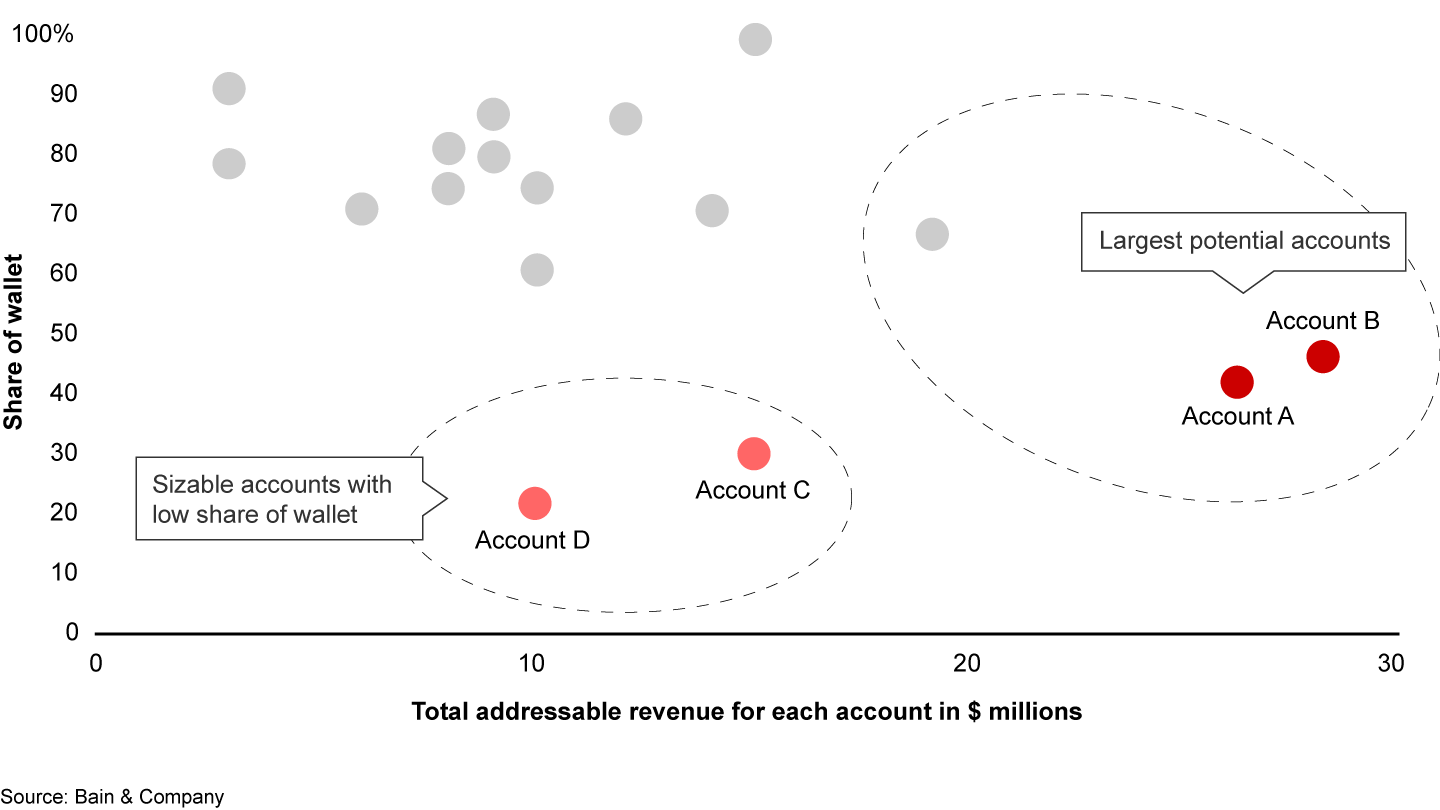
      Considering only company size and share of wallet gives limited information

      What this picture misses is each customer’s perception of the company, which informs willingness to buy and to recommend the company to others. As a result, the group is overlooking opportunities and leaving money on the table.

      Adding customer sentiment data to the equation creates a far more useful picture (see  Figure 2). Two accounts, roughly equal in current revenue, such as accounts A and B or C and D, have very different perceptions of the company and thus require tailored sales and service motions. Considering customer sentiment clarifies the opportunities across accounts.

      Figure 2
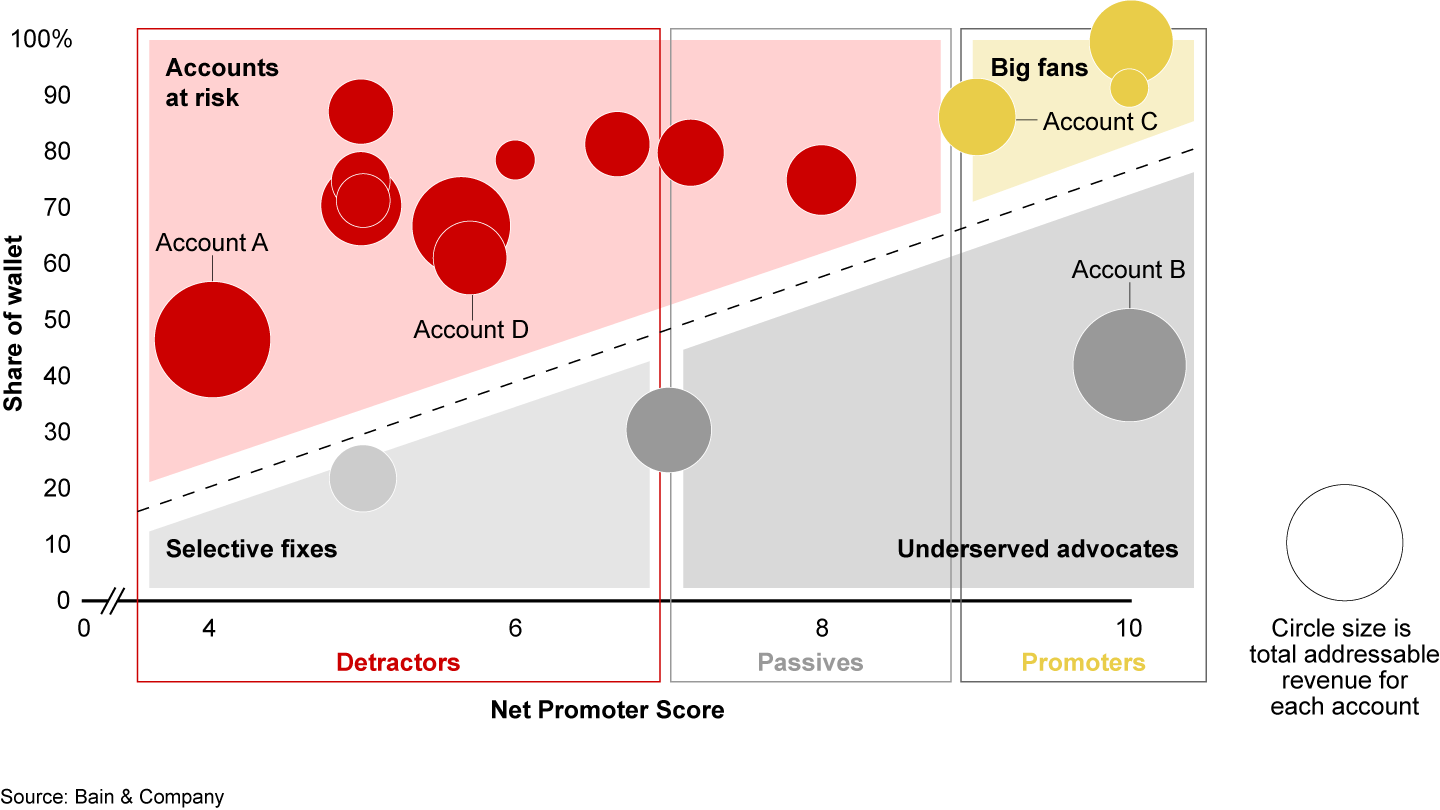
      Adding the customer perspective allows companies to sort commercial opportunities and risks at an account level

      A more useful taxonomy

      Armed with this information, companies across industries can sort accounts into several useful categories, lighting up the most promising opportunities:

      • Underserved advocates. These customers love the company and are open to buying more, but they don’t get much love or attention. Untapped accounts often are midsized or small accounts with huge potential, as sales representatives have not activated these promoters or exhausted chances to pitch products and services to another buyer at the account.

        That was the situation at one industrials company, which had a high-growth client with significant support and happy buyers. It wasn’t until the end of a client dinner years into their relationship that executives of the industrials company became aware of other lines of business they could pursue. One conversation, which could have happened earlier if the company possessed the right information, changed the nature of their relationship.

      • Accounts at risk. They are seemingly stable customers—until they can afford not to be. A long history or outwardly solid relationship may lull sales teams into complacency. This group could contain many large, highly penetrated accounts that are detractors or at best passives.

        Case in point: A communications service provider had a large global client with whom it enjoyed significant spending over the years. However, the provider failed to track that the relationship was eroding, especially beyond the primary buyer, due to complex processes and problems with operational quality. Over a short span of time, the customer shifted most of its spending to other vendors, which came as a shock to the provider’s financials.

        Mobilizing to address the problems and priorities of this segment may consume a lot of resources, because of the sheer size of the accounts and the executive-level conversations required. But the investment pays off when it repairs strategic relationships or prevents potential problems.

      • Selective fixes. Now we turn to customers that give the company low marks and spend little with it. Some of them may be won over, though converting them could be an uphill battle, especially if they are strongholds of competing providers.

        In these selective interventions, account teams should focus on accounts that have some urgency (such as an imminent contract renewal), offer higher odds of success (an account with strategic fit that’s clearly underserved), or represent a high upside for profitable revenues.

        One logistics company had an e-commerce customer with a low share of wallet and relatively low Net Promoter Scores. The company had underestimated the overall size of the account, as the account was part of a larger portfolio owned by a parent company. This insight led the logistics firm to intervene with this e-commerce account and gain a higher share of the business over time, as the customer shifted from dual-sourced to single-sourced.

      • Big fans. Sales leaders know this short list—the strongest advocates who buy more and frequently bring in referrals. High-performing companies actively rally their promoters to earn growth, by using them as a reference when selling to a new customer, having them provide testimonials, or featuring them in their annual conferences.

        In addition, companies must focus on continuing to delight customers, not only delivering on the basics but also deepening relationships over time. One medical technology provider brought its promoters onto a customer advisory board to help inform future product launches—expanding on a strategic partnership and adding value to each party.

      Owning and fixing the problems

      To see how this account prioritization informs practical actions, consider the recent experience of the services arm of a global technology firm. It enjoyed a market-leading customer experience but ran into problems while transitioning to a software-as-a-service model, including stagnant growth in the installed hardware customer base.

      The company used a deeper understanding of advocacy and share of wallet to improve its growth outlook. The assessment revealed untapped cross-selling opportunities to key accounts. In one instance, the account was a strong promoter with a low share of wallet. So the company firm mapped all the individuals it did business with at the account, which had decentralized purchasing across geographies. Two buyers were happy with the firm, but a third was using a competitor. Asking the two buyers to recommend the firm to the third, the company paved the path to roughly $20 million of new revenue.

      Next, customer feedback opened the door to upselling premium offers to certain customers that were most likely to be interested, such as those in a subset of industries that saw greater value in the solution. In those cases, premium offers earned higher customer loyalty, despite having a higher price. As part of the new upselling moves, the company used anecdotes from customer feedback to bring a clear story to decision makers at prioritized accounts.

      Analyzing customer feedback also highlighted opportunities to improve the experience. The technology company learned, for example, that several features in one product line caused problems for customers. Yet no group in the organization would take ownership for the problems, as Engineering and Service each blamed the other. By combining customer feedback with operational data on issues submitted to the contact center, the technology firm identified both a coding product design issue and a support issue. It could then address the issues from several angles. On the product front, the Engineering team fixed features in the next version of the product. Select customer support issues were rerouted to more experienced employees who could resolve them faster. And the company rolled out training for the entire support team.

      Finally, the company established a “CFO-certified” link between Net Promoter Scores and profitable growth, with tracking and accountability mechanisms to keep the relevant groups on task. For example, the customers who are promoters have a 10-percentage-point higher renewal rate and a 2-percentage point-higher revenue growth rate than detractors (see Figure 3). So far, the results have been encouraging. The firm identified opportunities representing up to 10% additional revenues in a previously declining business unit; it realized a 20-point improvement in its Net Promoter Score during the pilot phase; and it reduced support calls by more than 20%.

      Figure 3
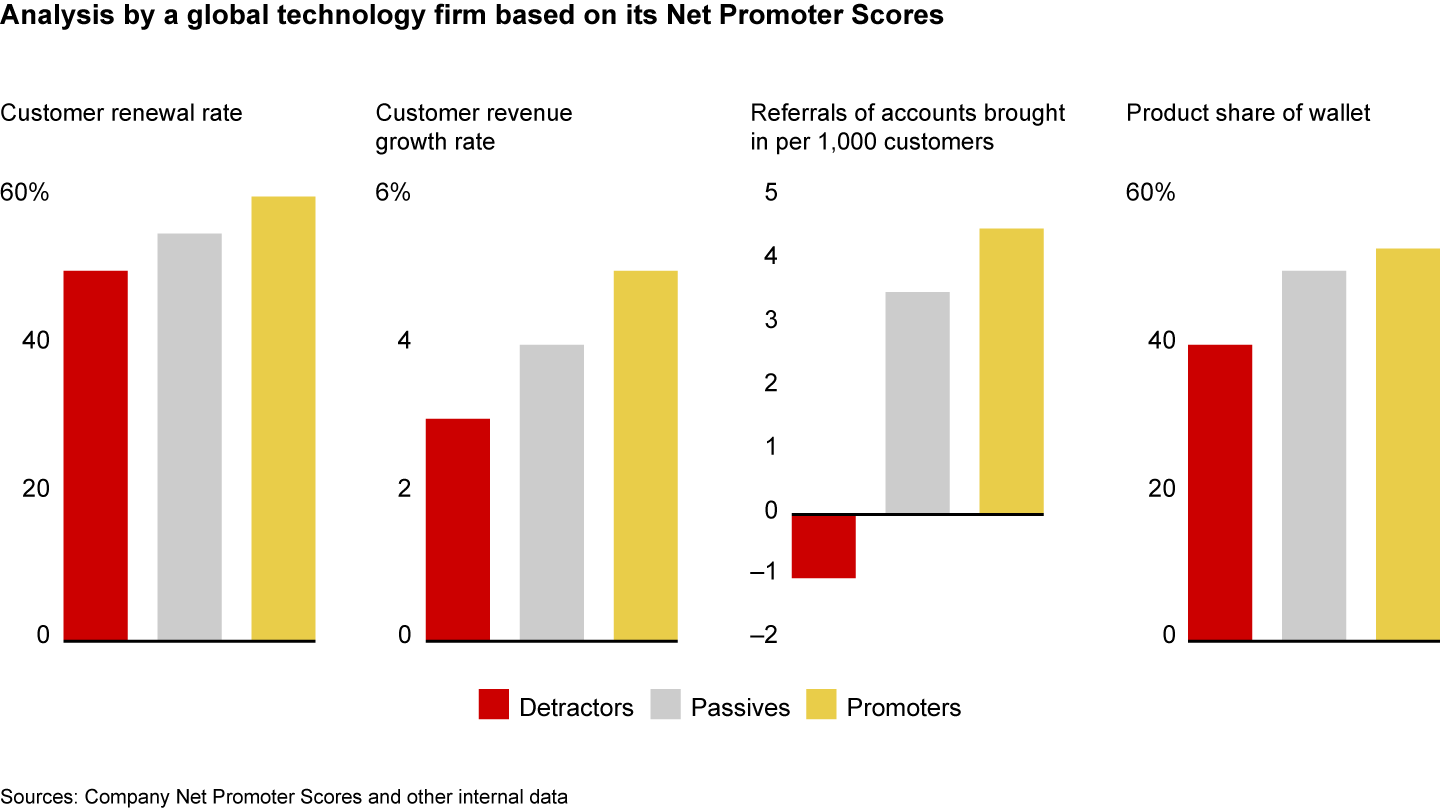
      Linking customer loyalty data to financial data helps build the business case for improving the customer experience

      Questions to shape a new account planning design

      Companies committed to building a nuanced view of the customer experience that will achieve the full potential of account planning can start by answering a set of high-gain questions: 

      • Do we have a clear perspective on who our highest-priority customers are, based not just on current revenue but also on untapped potential?
      • Do we know what our high-priority customers really value? Do we have robust, real-time feedback that produces insights on the customer experience?
      • Do we have CFO-certified measurement of the experience that links to financial value?
      • Have we equipped our sales team to embed insights about the experience into their account planning?
      • Which promoters will we activate today, especially within our most strategic accounts?
      • What short list of under-penetrated accounts will we select to develop?

      Companies that learn each customer’s priorities and perceptions in detail will be better positioned to uncover high-value opportunities, triage the rest, and allocate sales and marketing resources more effectively.

      Autoren
      • Headshot of Siddhartha Karri
        Siddhartha Karri
        Partner, Chicago
      • Headshot of Laurens-Jan Olsthoorn
        Laurens-Jan Olsthoorn
        Partner, Amsterdam
      • Headshot of Mónica Oliver
        Mónica Oliver
        Partner, Boston
      • Headshot of Sydney Doten
        Sydney Doten
        Partner, Chicago
      Kontaktieren Sie uns
      Verwandte Branchen
      • Fluggesellschaften und Logistik
      • Fracht & Logistik
      • Industriegüter und -services
      • Maschinen und Anlagen
      • Transportation
      Ähnliche Beratungsangebote
      • Customer Experience
      Wie wir Sie unterstützen können
      • B2B Marketing
      Industriegüter und -services
      Business Breakthrough Barometer 2024

      The annual pulse check from leading business on the net zero transition.

      Mehr erfahren
      CMO Insights
      The 2026 Retail Executive Agenda

      Here are letters to the C-suite to help strengthen strategy, catalyze collaboration, and expand value creation in the AI age.

      Mehr erfahren
      B2B Marketing
      Why Generative AI Exceeds Expectations in Marketing

      Generative AI accelerates content creation, personalization, and testing—empowering marketers to deliver better outcomes at lower cost.

      Mehr erfahren
      Customer Experience
      Weight-Loss Drug Users Spend Less on Groceries, Fast Food

      GLP-1 drugs result in notable drops in food spending. By 2030, as many as one in four Americans may have tried them.

      Mehr erfahren
      CMO Insights
      The New Growth Equation for Tech Services

      As AI and geopolitical change upend the status quo, service providers face a stark choice—transform or fall behind.

      Mehr erfahren
      First published in Juli 2022
      Markierungen
      • B2B Marketing
      • CMO Insights
      • Customer Experience
      • Fluggesellschaften und Logistik
      • Fracht & Logistik
      • Industriegüter und -services
      • Maschinen und Anlagen
      • Transportation

      Wie wir unsere Kunden unterstützt haben

      Improved Customer Focus Helps ParcelCo Grow Share and Reduce Costs

      Kundenbeispiel lesen

      Informationstechnologie A Global Port Authority Streamlines Operations with a Digital Solution

      Kundenbeispiel lesen

      Customer-Centricity Helps a Global Aviation Firm Reach New Heights

      Kundenbeispiel lesen

      Möchten Sie mit uns in Kontakt bleiben?

      Wir unterstützen Führungskräfte weltweit, die kritischen Themen in ihrem Unternehmen zu adressieren. Gemeinsam schaffen wir nachhaltige Veränderungen und Ergebnisse.

      Net Promoter®, NPS®, NPS Prism®, and the NPS-related emoticons are registered trademarks and Net Promoter Score℠ and Net Promoter System℠ are service marks of Bain & Company, Inc., Satmetrix Systems, Inc., and Fred Reichheld.

      Bain Insights. Unsere Perspektive auf die kritischen Themen, mit denen sich international agierende Unternehmen konfrontiert sehen, finden Sie monatlich in Ihrem Postfach.

      *Ich habe die Datenschutzerklärung gelesen und akzeptiere sie.
      Bitte lesen Sie die Datenschutzerklärung und akzeptieren Sie diese.
      Bain & Company
      Contact us Sustainability Accessibility Rechtliche Hinweise Impressum Datenschutz Cookie-Richtlinie Sitemap Log In

      © 1996-2026 Bain & Company, Inc.

      Kontaktieren Sie Bain

      Wie können wir Ihnen helfen?

      • Business inquiry
      • Career information
      • Press relations
      • Partnership request
      • Speaker request
      Alle weltweiten Büros