Skip to Content
  • Standorte

    Standorte

    North & Latin America
    • Atlanta
    • Austin
    • Bogota
    • Boston
    • Buenos Aires
    • Chicago
    • Dallas
    • Denver
    • Houston
    • Lisbon
    • Los Angeles
    • Mexico City
    • Minneapolis
    • Monterrey
    • Montreal
    • New York
    • Rio de Janeiro
    • San Francisco
    • Santiago
    • São Paulo
    • Seattle
    • Silicon Valley
    • Toronto
    • Washington, DC
    Europe & Africa
    • Amsterdam
    • Athens
    • Berlin
    • Brussels
    • Copenhagen
    • Düsseldorf
    • Frankfurt
    • Helsinki
    • Istanbul
    • Johannesburg
    • Kyiv
    • Lisbon
    • London
    • Madrid
    • Milan
    • München
    • Oslo
    • Paris
    • Rome
    • Stockholm
    • Warsaw
    • Wien
    • Zürich
    Middle East
    • Doha
    • Dubai
    • Riyadh
    Asia & Australia
    • Bangkok
    • Beijing
    • Bengaluru
    • Brisbane
    • Ho Chi Minh City
    • Hong Kong
    • Jakarta
    • Kuala Lumpur
    • Manila
    • Melbourne
    • Mumbai
    • New Delhi
    • Perth
    • Seoul
    • Shanghai
    • Singapore
    • Sydney
    • Tokyo
    Alle Standorte Anzeigen
  • Alumni
  • Presse
  • Newsletter
  • Kontakt
  • DACH-Region | Deutsch

    Wählen Sie Ihre Region und Sprache

    Global
    • Global (English)
    North & Latin America
    • Brazil (Português)
    • Argentina (Español)
    • Canada (Français)
    • Chile (Español)
    • Colombia (Español)
    Europe, Middle East, & Africa
    • France (Français)
    • DACH-Region (Deutsch)
    • Italy (Italiano)
    • Spain (Español)
    • Greece (Elliniká)
    Asia & Australia
    • China (中文版)
    • Korea (한국어)
    • Japan (日本語)
  • Saved items (0)
    Saved items (0)

    You have no saved items.

    Inhalte, für die Sie sich interessieren, werden hier gespeichert und können später gelesen oder weitergeleitet werden.

    Explore Bain Insights
  • Branchenkompetenzen
    Hauptmenü

    Branchenkompetenzen

    • Luft- und Raumfahrt, Verteidigung
    • Agrarwirtschaft
    • Chemieindustrie
    • Infrastruktur und Bauwirtschaft
    • Konsumgüter
    • Finanzdienstleistungen
    • Gesundheitswesen
    • Maschinen- und Anlagenbau
    • Medienwirtschaft
    • Metallindustrie
    • Bergbau
    • Öl und Gas
    • Papier- und Verpackungsindustrie
    • Private Equity
      Branchenkompetenzen
      Private Equity
      • Due Diligence
      • Exit Planning
      • Firm Strategy & Operations
      • Portfolio Value Creation
    • Öffentlicher Sektor und Sozialwesen
    • Einzelhandel
    • Technologie
    • Telekommunikation
    • Transportwesen
    • Reise- und Freizeitbranche
    • Versorgung und erneuerbare Energien
  • Managementkompetenzen
    Hauptmenü

    Managementkompetenzen

    • Customer Experience
    • ESG
    • Innovation
    • M&A
    • Operations
    • People & Organization
    • Private Equity
    • Sales & Marketing
    • Strategie
    • KI, Einblicke und Lösungen
    • Technologie
    • Transformation
  • Digital
  • Publikationen
    Hauptmenü

    Publikationen

    • Branchenthemen
    • Managementthemen
    • Bain-Bücher
    Alle Publikationen
    Ausgewählte Themen
    • Resilienz in der globalen Krise
    • M&A Report
    • Private Equity Podcast
    • Midyear Private Equity Report
    • Agile
    • Engineering Report
    • Digital Transformation
    • Elements of Value®
    • Firm of the Future
    • Nachhaltigkeitsstudie
    • Macro Trends
    • Future of Consumption
    • Weltwirtschaftsforum (WEF)
  • Über uns
    Hauptmenü

    Über uns

    • Was wir bieten
    • Unser Ansatz
    • Unser Team
    • Game Changer Award
    • Female Allstar Board
    • Messbare Ergebnisse (EN)
    • Auszeichnungen
    • Globale Partnerschaften
    • The Mission
    Further: Our global responsibility
    • Vielfalt & Chancengleichheit
    • Soziale Verantwortung
    • Sustainability
    Erfahren Sie mehr zu "Further"
  • Karriere
    Hauptmenü

    Karriere

    • Dein Einstieg
      Karriere
      Dein Einstieg
      • Find Your Place
      • Unsere Arbeitsbereiche
      • Unsere Teams
      • Angebote für Studierende
      • Praktika & Programme
      • Recruiting-Events
    • Arbeiten bei Bain
      Karriere
      Arbeiten bei Bain
      • Blog: Inside Bain
      • Karriere Stories
      • Unsere Bainies
      • Office-Standorte
      • Weiterentwicklung
      • Affinity Groups
      • Deine Benefits
    • Impact Stories
    • Deine Bewerbung
      Karriere
      Deine Bewerbung
      • Das erwartet dich
      • Der Interviewprozess
    FIND JOBS
  • Standorte
    Hauptmenü

    Standorte

    • North & Latin America
      Standorte
      North & Latin America
      • Atlanta
      • Austin
      • Bogota
      • Boston
      • Buenos Aires
      • Chicago
      • Dallas
      • Denver
      • Houston
      • Lisbon
      • Los Angeles
      • Mexico City
      • Minneapolis
      • Monterrey
      • Montreal
      • New York
      • Rio de Janeiro
      • San Francisco
      • Santiago
      • São Paulo
      • Seattle
      • Silicon Valley
      • Toronto
      • Washington, DC
    • Europe & Africa
      Standorte
      Europe & Africa
      • Amsterdam
      • Athens
      • Berlin
      • Brussels
      • Copenhagen
      • Düsseldorf
      • Frankfurt
      • Helsinki
      • Istanbul
      • Johannesburg
      • Kyiv
      • Lisbon
      • London
      • Madrid
      • Milan
      • München
      • Oslo
      • Paris
      • Rome
      • Stockholm
      • Warsaw
      • Wien
      • Zürich
    • Middle East
      Standorte
      Middle East
      • Doha
      • Dubai
      • Riyadh
    • Asia & Australia
      Standorte
      Asia & Australia
      • Bangkok
      • Beijing
      • Bengaluru
      • Brisbane
      • Ho Chi Minh City
      • Hong Kong
      • Jakarta
      • Kuala Lumpur
      • Manila
      • Melbourne
      • Mumbai
      • New Delhi
      • Perth
      • Seoul
      • Shanghai
      • Singapore
      • Sydney
      • Tokyo
    Alle Standorte Anzeigen
  • Alumni
  • Presse
  • Newsletter
  • Kontakt
  • DACH-Region | Deutsch
    Hauptmenü

    Wählen Sie Ihre Region und Sprache

    • Global
      Wählen Sie Ihre Region und Sprache
      Global
      • Global (English)
    • North & Latin America
      Wählen Sie Ihre Region und Sprache
      North & Latin America
      • Brazil (Português)
      • Argentina (Español)
      • Canada (Français)
      • Chile (Español)
      • Colombia (Español)
    • Europe, Middle East, & Africa
      Wählen Sie Ihre Region und Sprache
      Europe, Middle East, & Africa
      • France (Français)
      • DACH-Region (Deutsch)
      • Italy (Italiano)
      • Spain (Español)
      • Greece (Elliniká)
    • Asia & Australia
      Wählen Sie Ihre Region und Sprache
      Asia & Australia
      • China (中文版)
      • Korea (한국어)
      • Japan (日本語)
  • Saved items  (0)
    Hauptmenü
    Saved items (0)

    You have no saved items.

    Inhalte, für die Sie sich interessieren, werden hier gespeichert und können später gelesen oder weitergeleitet werden.

    Explore Bain Insights
  • Branchenkompetenzen
    • Branchenkompetenzen

      • Luft- und Raumfahrt, Verteidigung
      • Agrarwirtschaft
      • Chemieindustrie
      • Infrastruktur und Bauwirtschaft
      • Konsumgüter
      • Finanzdienstleistungen
      • Gesundheitswesen
      • Maschinen- und Anlagenbau
      • Medienwirtschaft
      • Metallindustrie
      • Bergbau
      • Öl und Gas
      • Papier- und Verpackungsindustrie
      • Private Equity
      • Öffentlicher Sektor und Sozialwesen
      • Einzelhandel
      • Technologie
      • Telekommunikation
      • Transportwesen
      • Reise- und Freizeitbranche
      • Versorgung und erneuerbare Energien
  • Managementkompetenzen
    • Managementkompetenzen

      • Customer Experience
      • ESG
      • Innovation
      • M&A
      • Operations
      • People & Organization
      • Private Equity
      • Sales & Marketing
      • Strategie
      • KI, Einblicke und Lösungen
      • Technologie
      • Transformation
  • Digital
  • Publikationen
    • Publikationen

      • Branchenthemen
      • Managementthemen
      • Bain-Bücher
      Alle Publikationen
      Ausgewählte Themen
      • Resilienz in der globalen Krise
      • M&A Report
      • Private Equity Podcast
      • Midyear Private Equity Report
      • Agile
      • Engineering Report
      • Digital Transformation
      • Elements of Value®
      • Firm of the Future
      • Nachhaltigkeitsstudie
      • Macro Trends
      • Future of Consumption
      • Weltwirtschaftsforum (WEF)
  • Über uns
    • Über uns

      • Was wir bieten
      • Unser Ansatz
      • Unser Team
      • Game Changer Award
      • Female Allstar Board
      • Messbare Ergebnisse (EN)
      • Auszeichnungen
      • Globale Partnerschaften
      • The Mission
      Further: Our global responsibility
      • Vielfalt & Chancengleichheit
      • Soziale Verantwortung
      • Sustainability
      Erfahren Sie mehr zu "Further"
  • Karriere
    Häufige Suchanfragen
    • Agil
    • Digital
    • Strategie
    Vorherige Suchanfragen
      Zuletzt besuchte Seiten

      Content added to saved items

      Saved items (0)

      Removed from saved items

      Saved items (0)

      Brief

      Robo Advice Has Stalled, but Wealth Technologies Still Hold Promise

      Robo Advice Has Stalled, but Wealth Technologies Still Hold Promise

      Wealthtech gains steam to better serve investment advisers.

      Von Mattias Memminger, Philipp Baecker, Paul Becker and Arne Zeising

      • Min. Lesezeit
      Robo Advice Has Stalled, but Wealth Technologies Still Hold Promise }

      Brief

      Robo Advice Has Stalled, but Wealth Technologies Still Hold Promise
      en
      Auf einen Blick
      • The wealth management industry has been under significant profit pressure since the global financial crisis. The disruptive threat from robo advisers has not occurred, and the promise of vastly more assets under management by robo programs has not materialized.
      • Instead, wealth technologies are starting to gain traction for the next generation of hybrid adviser-based solutions.
      • Most incumbent banks and insurance companies have started to partner with fintechs or large technology companies to complement their existing capabilities rather than build everything themselves.
      • An “Engine 1, Engine 2” approach of creating a new business that is organizationally distinct from the incumbent business has proven effective, but banks and insurers will still need to address the challenge of cannibalization.

      You would expect the wealth management industry to be thriving: Baby boomers in the US and many European countries are retiring in steady waves; savings accounts in some countries, such as Germany, are flush; and the middle class is expanding in China, India and other emerging markets. Yet while revenue growth has been strong, fees and profits in the industry have stalled since the financial crisis of 2007.

      The hoped-for boost from robo advising—namely, digital tools that automate or partly automate consumers’ investments—has not materialized. After the financial crisis, robo advisers started with the ambition to democratize wealth management through highly standardized asset-allocation models at very low cost, using low-fee passive products. Some companies aimed to build out wealth management ecosystems that would handle all aspects of personal finance for specific customer groups, such as the mass-affluent segment. For incumbent banks and investment management firms, robo advice held the promise of reducing costs to serve clients and, at the same time, still meeting steeper regulatory requirements. For challenger companies, robo advice held out an opportunity to scale up and disrupt the market.

      But the stars did not align, and the current robo-advice business model for self-directed investors has largely disappointed. Many of the offerings lacked a distinctive value proposition to customers and failed to scale up. That meant assets under management and fees per client remained low, even as acquiring clients remained costly. Weak brands did not engender trust among wealthy clients, and companies found it difficult to expand abroad because of different regulatory regimes and customer preferences as well as high marketing costs associated with launching in new markets.

      Technology did upend the wealth management business, just not in the way that many expected. As technology reduced the cost of servicing an investment portfolio, fees steadily eroded, barriers to entry dropped and many start-ups undercut incumbents with rock-bottom, transparent fees, such as Blooom in the US, which focuses on retirement savings.

      Regulation in some countries also exacerbated the decline. Investor-protection regulations cut down on commission revenues, while the need for heavier compliance created significant costs for client advisers. Capital requirements also put pressure on the lending side of the business.

      As a result, most current client-servicing models are not succeeding. The cost of servicing affluent clients has become excessively high, yet many banks still overserve this segment and lose money. High-net-worth clients, meanwhile, have outgrown the bank adviser model. Just as private jets have taken much of airlines’ first-class business, bespoke services for the plutocrats have taken full advantage of financial engineering and regulatory arbitrage to deliver custom-made investment products. Agile private banks and niche asset managers have developed digitally enabled offerings and have provided access to illiquid asset classes. Finally, lower- or middle-income households don’t have enough assets to allow banks to recoup the acquisition or servicing costs.

      To be sure, there are a few success stories of asset managers using digital advice models to enhance their distribution. Vanguard is one notable example, with $130 billion in assets under management in its Personal Advisor Services, a hybrid robo that is four years old. Vanguard’s long focus on passive investment through index mutual funds dovetails well with the robo model.

      When it comes to robo partnerships, however, most are being reevaluated, recast as low-touch portfolio investments or shut down entirely. UBS, for instance, closed its robo adviser after only 18 months and sold it to a fintech, saying that its resources would be better spent on other client-facing improvement.

      A pivot to serve investment advisers

      Although standalone digital advice has not delivered broadly on its initial promises of growth and efficiency, a business-to-business tack that caters to investment advisers has made better progress, with prominent fintechs pivoting away from individual investors (see Figure 1). Adviser solutions generally include the following features:

      • digital onboarding workflows that allow the adviser to define the client’s individual strategic asset allocation;
      • front-to-back processes, especially compliance for know-your-customer and anti-money-laundering regulations;
      • digital tax and performance reporting;
      • portfolio administration, including algorithmic portfolio rebalancing engines for liquid assets;
      • enhanced advice with smart portfolio analytics and intuitive reporting and diagnostics; and
      • tools and processes that enable small specialist companies to offer complete services to investors.
      Figure 1
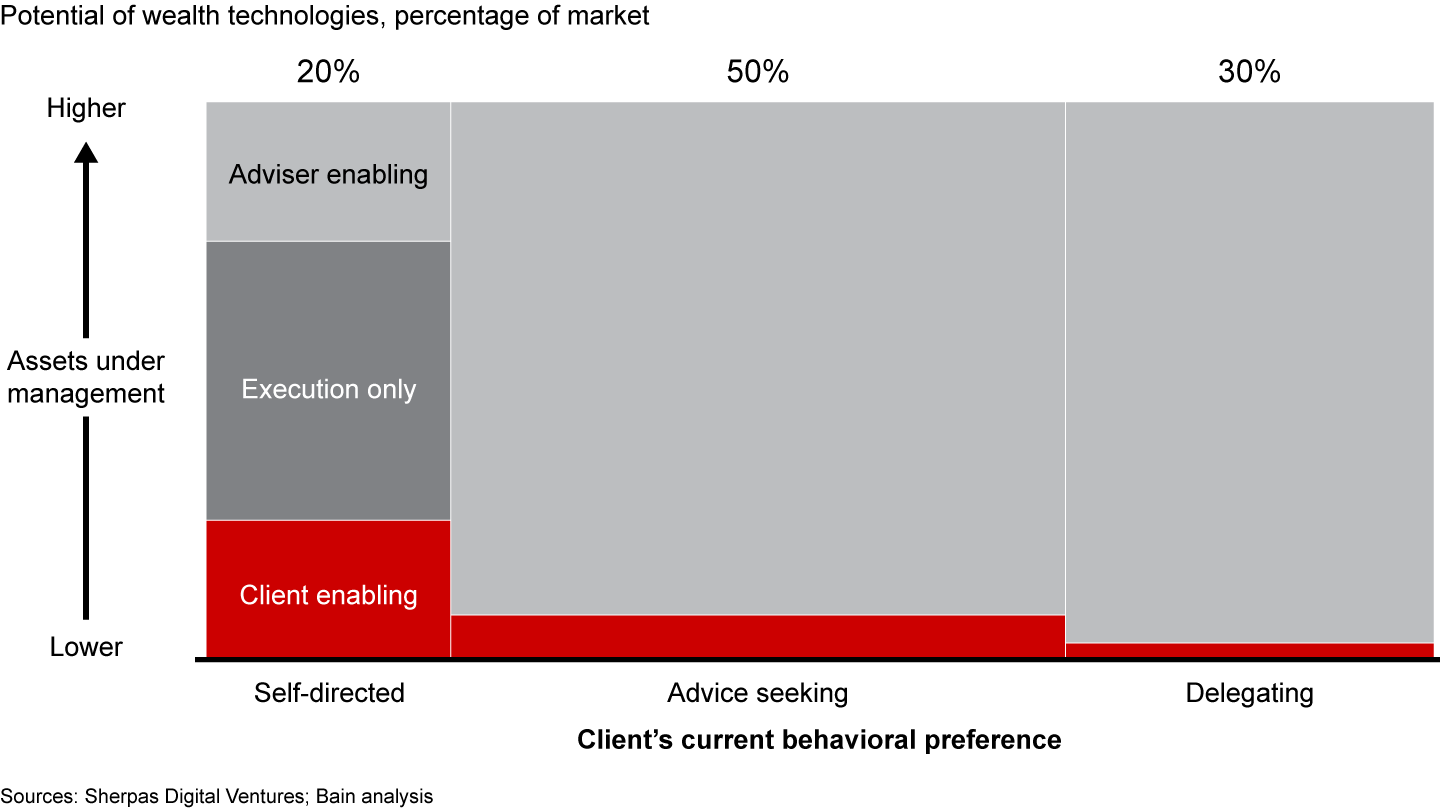
      Look to the adviser, not the investor
      Look to the adviser, not the investor
      Look to the adviser, not the investor

      Goldman Sachs followed this logic with its recent purchase of United Capital Financial Partners, getting a registered investment adviser with $25 billion in assets under management and FinLife CX, a digital platform that helps independent advisers grow their business and strengthen client relationships.

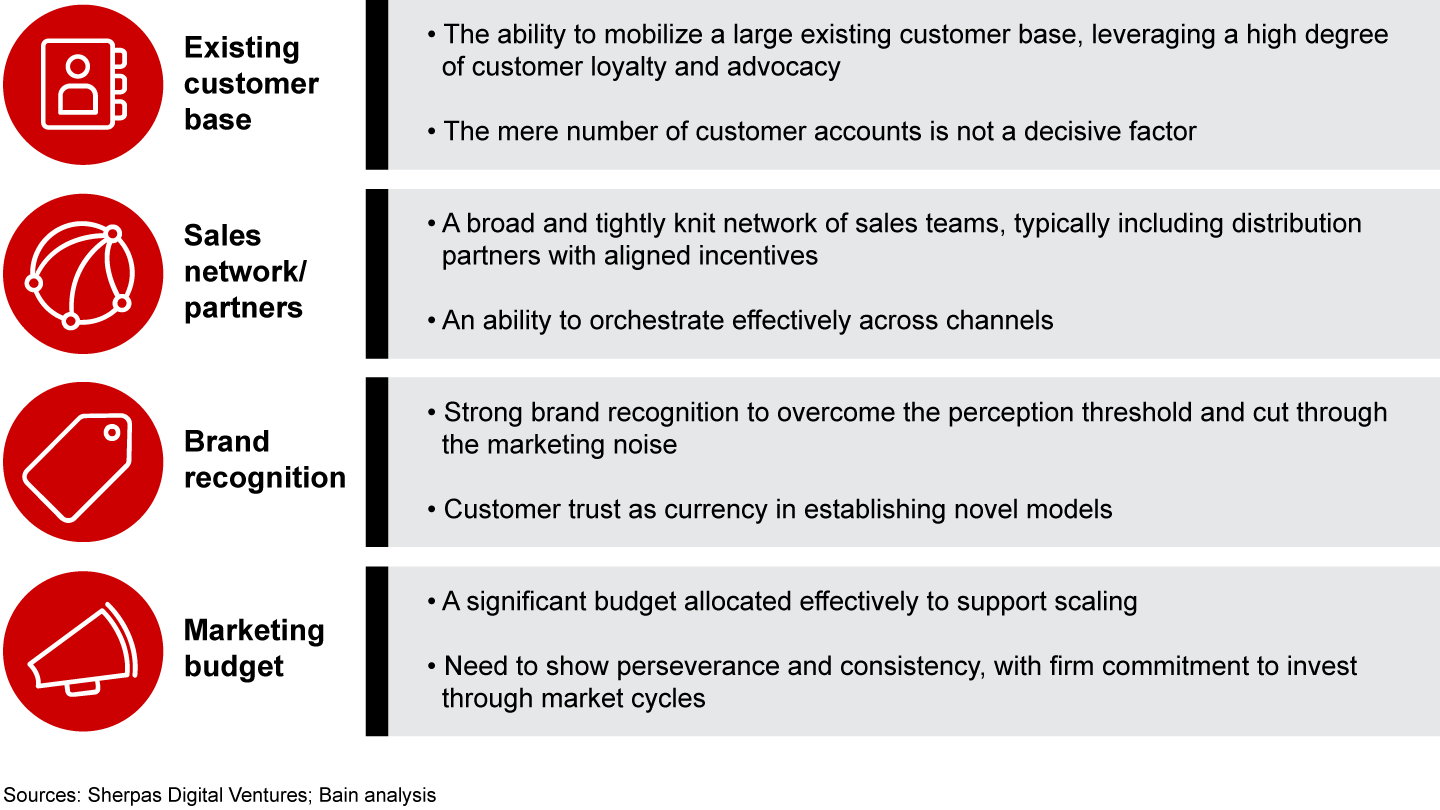
      Realizing the full potential of wealth technologies (wealthtech) will mean fully capitalizing on the scale advantages of a digitally enabled business model (see Figure 2). Many large banks and insurance companies do possess assets that could allow them to scale up efficiently: a large customer base; a broad, tightly knit network of sales teams, including distribution partners; strong brand recognition; and an ample marketing budget (see Figure 3). But leveraging these assets will involve bold moves, especially to navigate the challenges associated with disrupting traditional distribution channels, such as captive sales organizations.

      Figure 2
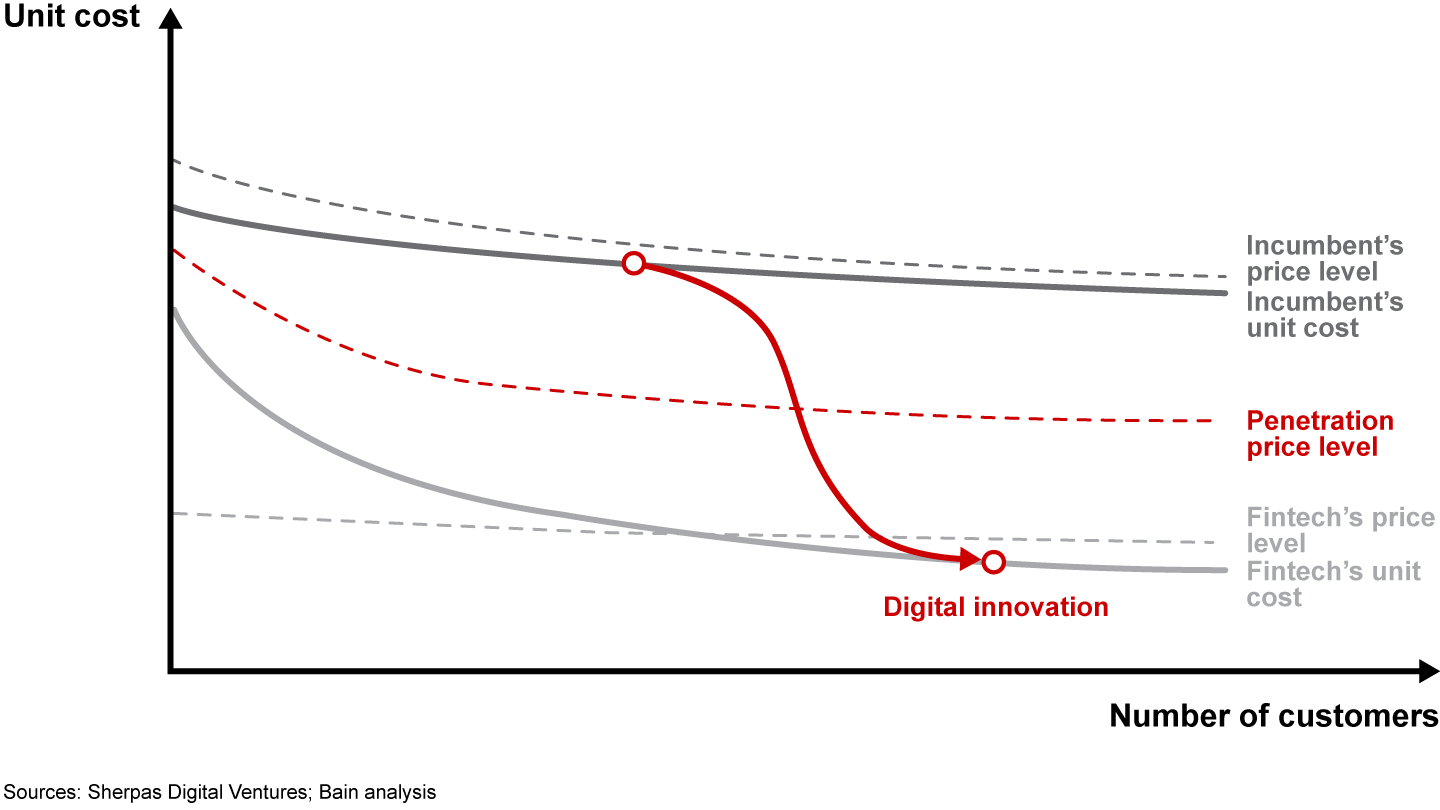
      Large-scale innovators can reap benefits with aggressive pricing through lower-cost operations
      Large-scale innovators can reap benefits with aggressive pricing through lower-cost operations
      Large-scale innovators can reap benefits with aggressive pricing through lower-cost operations
      Figure 3
      Incumbents can leverage their key assets to build scale
      Incumbents can leverage their key assets to build scale
      Incumbents can leverage their key assets to build scale

      Options for incumbents

      Incumbent companies have four options to pursue. They can build a greenfield technology firm, acquire one or more firms with complementary capabilities, enhance their technological capabilities from within, or partner with fintechs or large technology firms.

      Companies from adjacent industries, such as insurance, could logically enter the wealth management market because they do not face the challenge of cannibalizing their existing business. Most insurance companies will probably choose to partner with or acquire fintechs because they lack their own distribution capabilities and have avoided establishing them out of concern that doing so would antagonize current distribution networks. For most incumbent banks, partnering with fintechs that have complementary capabilities offers the best opportunity to accelerate adoption. Banks are typically struggling with legacy IT infrastructure that tends to be difficult to replace or work around, and they do not have a sterling track record at building businesses from scratch. Partnering with lower-cost, nimble fintechs could accelerate the transition to a new cost curve, which would allow higher margins despite aggressive pricing to gain customers.

      Effective partnering requires setting up an appropriate structure—that is, an operating model designed to develop and cultivate an ecosystem of partners, each of which demands a highly collaborative relationship. That environment is different from vendor management, in which you issue a request for proposal on a precisely defined offering. A cultural change may be in order as well, as partnering with small firms only succeeds through an openness to collaborative testing and learning.

      Incumbent banks will want to tread carefully to avoid cannibalization of existing profit pools by lower-margin digital offerings. The brutal truth, however, is that if they do not cannibalize themselves, competitors will come along to knock them aside. Most banks should seriously consider establishing an organizationally separate digital attacker that is shielded from the legacy bank. Granting a level of autonomy to the digital attacker helps to avoid conflict around budget and resources, and it short-circuits middle management, where resistance often is greatest.

      One engine for today, another for tomorrow

      To that end, “Engine 1, Engine 2” is a useful approach. Engine 1, the core current proposition, concerns today's customers and capabilities. Engine 2 focuses on tomorrow's customers and tomorrow's capabilities in new markets with new competition and cost structures (see Figure 4). 

      Figure 4
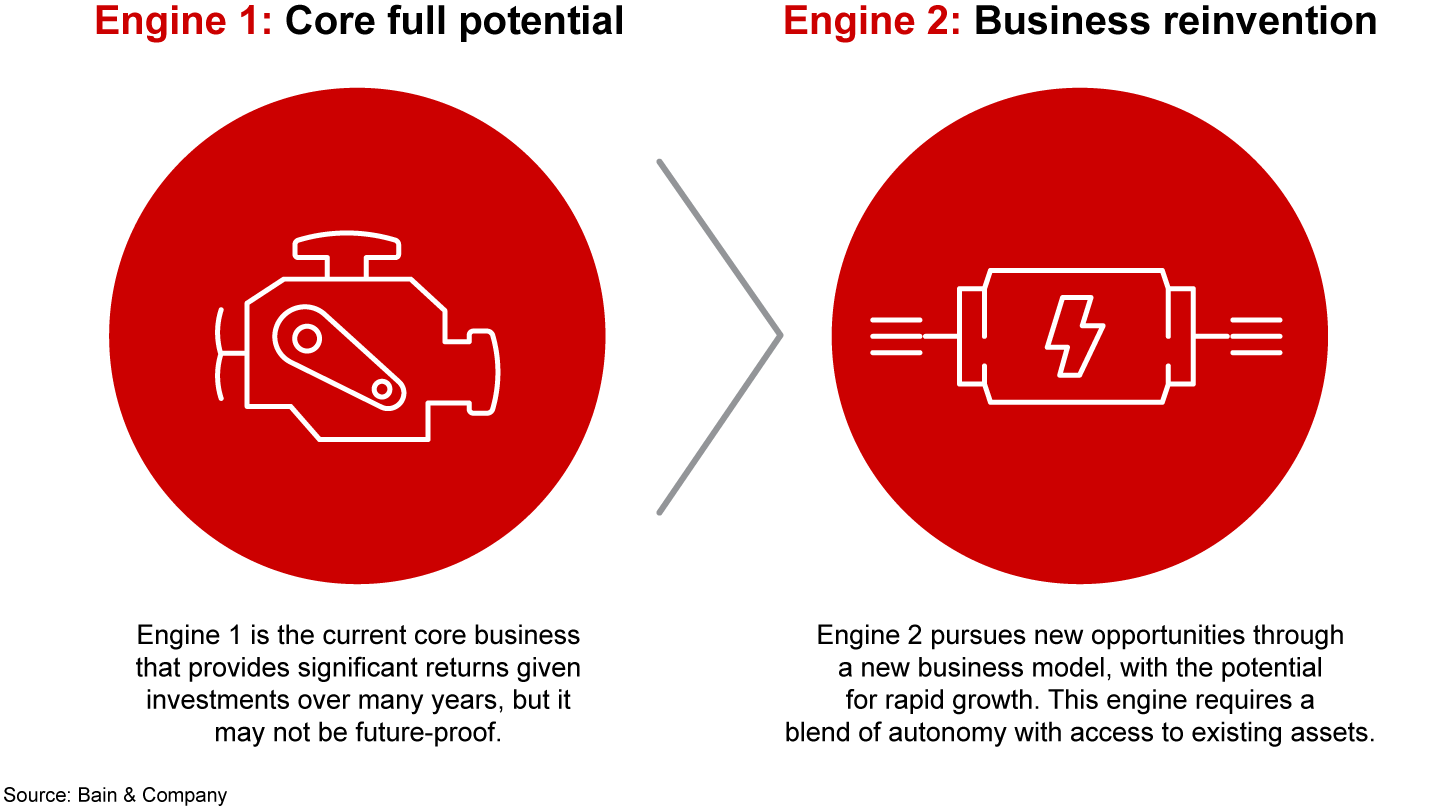
      An “Engine 1, Engine 2” approach reorients the business’s center of gravity
      An “Engine 1, Engine 2” approach reorients the business’s center of gravity
      An “Engine 1, Engine 2” approach reorients the business’s center of gravity

      The Engine 1, Engine 2 approach starts from the core everyday banking proposition, with wealthtech added later. In banking, Goldman Sachs has been revving up an Engine 2 by expanding Marcus, the digital attacker bank for mass-affluent customers that it launched in 2016. Marcus now is considering wealth management for the mass affluent, looking at partnerships with employers to lure customers to its investment platform.

      Engine 2’s initial wealth management offering might not be at the same level of quality as Engine 1, but it could be good enough to catch on with customers who cannot afford the current level of service. Eventually, it will raise its performance and could surpass the existing business. That was the path of digital cameras, which at first were inferior to high-end analog film cameras but then gradually improved in most ways to dominate the industry.

      Disruption is part of the game. The success of a digital attacker in wealth management could challenge the definition and strategy of the core incumbent business, which in turn could create strategic and organizational tensions. Rather than complaining about the challenges created by that new business, the incumbent leadership team should learn from what the challenger is doing and compete with it.

      No matter what organizational decision the leadership team makes, it will need to invest in mitigating the inevitable risks. The bigger risk, however, is to miss the opportunities that wealthtech affords for better serving advisers and select investors.

      Going forward, incumbents should formulate a clear strategy for using wealthtech, transform their operating model to cultivate an ecosystem of partnerships, enhance their analytics and technology capabilities, and set the rules of engagement for disrupting the existing business, possibly through an Engine 1, Engine 2 approach. Wealthtech is here to stay, and companies that deploy it appropriately stand to improve their own economics and help their customers flourish in the bargain.

      Mattias Memminger is a partner and Philipp Baecker is an expert vice president with Bain & Company’s Financial Services practice; both are based in Frankfurt. Paul Becker and Arne Zeising are managing partners with Sherpas, a digital consultancy; they are based in Berlin.

      Autoren
      • Matthias Memminger
        Former Partner, Frankfurt
      • Headshot of Philipp Baecker
        Philipp Baecker
        Alumni, Frankfurt
      Kontaktieren Sie uns
      Verwandte Branchen
      • Finanzdienstleistungen
      Ähnliche Beratungsangebote
      • Customer Experience
      Finanzdienstleistungen
      Stay Relevant, Spark Energy: Pedro Arnt, CEO dLocal

      How can a hyperscaler grow at lightning speed without losing its soul? 

      Mehr erfahren
      Finanzdienstleistungen
      Beyond Payments, the Real Prize in SME Commerce Is Ecosystem Control

      Choices on integration are reshaping how European commerce platforms and payments providers will thrive.

      Mehr erfahren
      Finanzdienstleistungen
      Six Threats Demand a New Playbook for Banks in Wealth and Asset Management

      AI, direct-to-consumer models, and the return of local priorities are redrawing industry lines.

      Mehr erfahren
      Customer Experience
      Weight-Loss Drug Users Spend Less on Groceries, Fast Food

      GLP-1 drugs result in notable drops in food spending. By 2030, as many as one in four Americans may have tried them.

      Mehr erfahren
      Finanzdienstleistungen
      Rethinking Transformation: Lawrence Lam on Leading Change at Prudential

      Frankie Leung speaks with Lawrence Lam, CEO of Prudential Hong Kong, about organizational transformation and sustaining change through a people-led approach.

      Mehr erfahren
      First published in Juli 2019
      Markierungen
      • Customer Experience
      • Finanzdienstleistungen

      Wie wir unsere Kunden unterstützt haben

      Nachhaltigkeit Voluntary Carbon Markets: A Bank Moves Early to Seize the Opportunity

      Kundenbeispiel lesen

      Performance Improvement Lean Six Sigma solves a commercial bank's growth problem

      Kundenbeispiel lesen

      Informationstechnologie Bridging the Gap Between Business and Technology

      Kundenbeispiel lesen

      Möchten Sie mit uns in Kontakt bleiben?

      Wir unterstützen Führungskräfte weltweit, die kritischen Themen in ihrem Unternehmen zu adressieren. Gemeinsam schaffen wir nachhaltige Veränderungen und Ergebnisse.

      Bain Insights. Unsere Perspektive auf die kritischen Themen, mit denen sich international agierende Unternehmen konfrontiert sehen, finden Sie monatlich in Ihrem Postfach.

      *Ich habe die Datenschutzerklärung gelesen und akzeptiere sie.
      Bitte lesen Sie die Datenschutzerklärung und akzeptieren Sie diese.
      Bain & Company
      Contact us Sustainability Accessibility Rechtliche Hinweise Impressum Datenschutz Cookie-Richtlinie Sitemap Log In

      © 1996-2026 Bain & Company, Inc.

      Kontaktieren Sie Bain

      Wie können wir Ihnen helfen?

      • Business inquiry
      • Career information
      • Press relations
      • Partnership request
      • Speaker request
      Alle weltweiten Büros