
Skip to Content
  • Standorte

    Standorte

    North & Latin America
    • Atlanta
    • Austin
    • Bogota
    • Boston
    • Buenos Aires
    • Chicago
    • Dallas
    • Denver
    • Houston
    • Lisbon
    • Los Angeles
    • Mexico City
    • Minneapolis
    • Monterrey
    • Montreal
    • New York
    • Rio de Janeiro
    • San Francisco
    • Santiago
    • São Paulo
    • Seattle
    • Silicon Valley
    • Toronto
    • Washington, DC
    Europe & Africa
    • Amsterdam
    • Athens
    • Berlin
    • Brussels
    • Copenhagen
    • Düsseldorf
    • Frankfurt
    • Helsinki
    • Istanbul
    • Johannesburg
    • Kyiv
    • Lisbon
    • London
    • Madrid
    • Milan
    • München
    • Oslo
    • Paris
    • Rome
    • Stockholm
    • Warsaw
    • Wien
    • Zürich
    Middle East
    • Doha
    • Dubai
    • Riyadh
    Asia & Australia
    • Bangkok
    • Beijing
    • Bengaluru
    • Brisbane
    • Ho Chi Minh City
    • Hong Kong
    • Jakarta
    • Kuala Lumpur
    • Manila
    • Melbourne
    • Mumbai
    • New Delhi
    • Perth
    • Seoul
    • Shanghai
    • Singapore
    • Sydney
    • Tokyo
    Alle Standorte Anzeigen
  • Alumni
  • Presse
  • Newsletter
  • Kontakt
  • DACH-Region | Deutsch

    Wählen Sie Ihre Region und Sprache

    Global
    • Global (English)
    North & Latin America
    • Brazil (Português)
    • Argentina (Español)
    • Canada (Français)
    • Chile (Español)
    • Colombia (Español)
    Europe, Middle East, & Africa
    • France (Français)
    • DACH-Region (Deutsch)
    • Italy (Italiano)
    • Spain (Español)
    • Greece (Elliniká)
    Asia & Australia
    • China (中文版)
    • Korea (한국어)
    • Japan (日本語)
  • Saved items (0)
    Saved items (0)

    You have no saved items.

    Inhalte, für die Sie sich interessieren, werden hier gespeichert und können später gelesen oder weitergeleitet werden.

    Explore Bain Insights
  • Branchenkompetenzen
    Hauptmenü

    Branchenkompetenzen

    • Luft- und Raumfahrt, Verteidigung
    • Agrarwirtschaft
    • Chemieindustrie
    • Infrastruktur und Bauwirtschaft
    • Konsumgüter
    • Finanzdienstleistungen
    • Gesundheitswesen
    • Maschinen- und Anlagenbau
    • Medienwirtschaft
    • Metallindustrie
    • Bergbau
    • Öl und Gas
    • Papier- und Verpackungsindustrie
    • Private Equity
      Branchenkompetenzen
      Private Equity
      • Due Diligence
      • Exit Planning
      • Firm Strategy & Operations
      • Portfolio Value Creation
    • Öffentlicher Sektor und Sozialwesen
    • Einzelhandel
    • Technologie
    • Telekommunikation
    • Transportwesen
    • Reise- und Freizeitbranche
    • Versorgung und erneuerbare Energien
  • Managementkompetenzen
    Hauptmenü

    Managementkompetenzen

    • Customer Experience
    • ESG
    • Innovation
    • M&A
    • Operations
    • People & Organization
    • Private Equity
    • Sales & Marketing
    • Strategie
    • KI, Einblicke und Lösungen
    • Technologie
    • Transformation
  • Digital
  • Publikationen
    Hauptmenü

    Publikationen

    • Branchenthemen
    • Managementthemen
    • Bain-Bücher
    Alle Publikationen
    Ausgewählte Themen
    • Resilienz in der globalen Krise
    • M&A Report
    • Private Equity Podcast
    • Midyear Private Equity Report
    • Agile
    • Engineering Report
    • Digital Transformation
    • Elements of Value®
    • Firm of the Future
    • Nachhaltigkeitsstudie
    • Macro Trends
    • Future of Consumption
    • Weltwirtschaftsforum (WEF)
  • Über uns
    Hauptmenü

    Über uns

    • Was wir bieten
    • Unser Ansatz
    • Unser Team
    • Game Changer Award
    • Female Allstar Board
    • Messbare Ergebnisse (EN)
    • Auszeichnungen
    • Globale Partnerschaften
    • The Mission
    Further: Our global responsibility
    • Vielfalt & Chancengleichheit
    • Soziale Verantwortung
    • Sustainability
    Erfahren Sie mehr zu "Further"
  • Karriere
    Hauptmenü

    Karriere

    • Dein Einstieg
      Karriere
      Dein Einstieg
      • Find Your Place
      • Unsere Arbeitsbereiche
      • Unsere Teams
      • Angebote für Studierende
      • Praktika & Programme
      • Recruiting-Events
    • Arbeiten bei Bain
      Karriere
      Arbeiten bei Bain
      • Karriere Stories
      • Unsere Bainies
      • Office-Standorte
      • Weiterentwicklung
      • Affinity Groups
      • Deine Benefits
    • Impact Stories
    • Deine Bewerbung
      Karriere
      Deine Bewerbung
      • Das erwartet dich
      • Der Interviewprozess
    FIND JOBS
  • Standorte
    Hauptmenü

    Standorte

    • North & Latin America
      Standorte
      North & Latin America
      • Atlanta
      • Austin
      • Bogota
      • Boston
      • Buenos Aires
      • Chicago
      • Dallas
      • Denver
      • Houston
      • Lisbon
      • Los Angeles
      • Mexico City
      • Minneapolis
      • Monterrey
      • Montreal
      • New York
      • Rio de Janeiro
      • San Francisco
      • Santiago
      • São Paulo
      • Seattle
      • Silicon Valley
      • Toronto
      • Washington, DC
    • Europe & Africa
      Standorte
      Europe & Africa
      • Amsterdam
      • Athens
      • Berlin
      • Brussels
      • Copenhagen
      • Düsseldorf
      • Frankfurt
      • Helsinki
      • Istanbul
      • Johannesburg
      • Kyiv
      • Lisbon
      • London
      • Madrid
      • Milan
      • München
      • Oslo
      • Paris
      • Rome
      • Stockholm
      • Warsaw
      • Wien
      • Zürich
    • Middle East
      Standorte
      Middle East
      • Doha
      • Dubai
      • Riyadh
    • Asia & Australia
      Standorte
      Asia & Australia
      • Bangkok
      • Beijing
      • Bengaluru
      • Brisbane
      • Ho Chi Minh City
      • Hong Kong
      • Jakarta
      • Kuala Lumpur
      • Manila
      • Melbourne
      • Mumbai
      • New Delhi
      • Perth
      • Seoul
      • Shanghai
      • Singapore
      • Sydney
      • Tokyo
    Alle Standorte Anzeigen
  • Alumni
  • Presse
  • Newsletter
  • Kontakt
  • DACH-Region | Deutsch
    Hauptmenü

    Wählen Sie Ihre Region und Sprache

    • Global
      Wählen Sie Ihre Region und Sprache
      Global
      • Global (English)
    • North & Latin America
      Wählen Sie Ihre Region und Sprache
      North & Latin America
      • Brazil (Português)
      • Argentina (Español)
      • Canada (Français)
      • Chile (Español)
      • Colombia (Español)
    • Europe, Middle East, & Africa
      Wählen Sie Ihre Region und Sprache
      Europe, Middle East, & Africa
      • France (Français)
      • DACH-Region (Deutsch)
      • Italy (Italiano)
      • Spain (Español)
      • Greece (Elliniká)
    • Asia & Australia
      Wählen Sie Ihre Region und Sprache
      Asia & Australia
      • China (中文版)
      • Korea (한국어)
      • Japan (日本語)
  • Saved items  (0)
    Hauptmenü
    Saved items (0)

    You have no saved items.

    Inhalte, für die Sie sich interessieren, werden hier gespeichert und können später gelesen oder weitergeleitet werden.

    Explore Bain Insights
  • Branchenkompetenzen
    • Branchenkompetenzen

      • Luft- und Raumfahrt, Verteidigung
      • Agrarwirtschaft
      • Chemieindustrie
      • Infrastruktur und Bauwirtschaft
      • Konsumgüter
      • Finanzdienstleistungen
      • Gesundheitswesen
      • Maschinen- und Anlagenbau
      • Medienwirtschaft
      • Metallindustrie
      • Bergbau
      • Öl und Gas
      • Papier- und Verpackungsindustrie
      • Private Equity
      • Öffentlicher Sektor und Sozialwesen
      • Einzelhandel
      • Technologie
      • Telekommunikation
      • Transportwesen
      • Reise- und Freizeitbranche
      • Versorgung und erneuerbare Energien
  • Managementkompetenzen
    • Managementkompetenzen

      • Customer Experience
      • ESG
      • Innovation
      • M&A
      • Operations
      • People & Organization
      • Private Equity
      • Sales & Marketing
      • Strategie
      • KI, Einblicke und Lösungen
      • Technologie
      • Transformation
  • Digital
  • Publikationen
    • Publikationen

      • Branchenthemen
      • Managementthemen
      • Bain-Bücher
      Alle Publikationen
      Ausgewählte Themen
      • Resilienz in der globalen Krise
      • M&A Report
      • Private Equity Podcast
      • Midyear Private Equity Report
      • Agile
      • Engineering Report
      • Digital Transformation
      • Elements of Value®
      • Firm of the Future
      • Nachhaltigkeitsstudie
      • Macro Trends
      • Future of Consumption
      • Weltwirtschaftsforum (WEF)
  • Über uns
    • Über uns

      • Was wir bieten
      • Unser Ansatz
      • Unser Team
      • Game Changer Award
      • Female Allstar Board
      • Messbare Ergebnisse (EN)
      • Auszeichnungen
      • Globale Partnerschaften
      • The Mission
      Further: Our global responsibility
      • Vielfalt & Chancengleichheit
      • Soziale Verantwortung
      • Sustainability
      Erfahren Sie mehr zu "Further"
  • Karriere
    Häufige Suchanfragen
    • Agil
    • Digital
    • Strategie
    Vorherige Suchanfragen
      Zuletzt besuchte Seiten

      Content added to saved items

      Saved items (0)

      Removed from saved items

      Saved items (0)

      Technology Report

      Technology Enters Its Post-Globalization Era

      Technology Enters Its Post-Globalization Era

      How tech companies are relocating manufacturing, R&D, and talent for resilience.

      Von Karen Harris, Anne Hoecker, Christopher Schorling, Balaji Thirumalai, und Jue Wang

      • Min. Lesezeit
      }

      Brief

      Technology Enters Its Post-Globalization Era
      en
      Auf einen Blick
      • Tech companies are diversifying their supply chains, R&D locations, and talent pools in order to build resilience against global shocks.
      • The semiconductor industry, for example, is responding to government incentives to make large, long-term investments in fabs in the US, Japan, and Germany.
      • These changes will create new technology hubs and shift the competitive landscape—partly as a result, the hiring of engineers is accelerating in India and Europe.
      • A decade from now, the global footprint of the technology value chain is likely to look very different, but companies should be evaluating their options today.

      This article is part of Bain's 2023 Technology Report.

      Explore the report

      The shocks of the past few years have awakened tech companies to the risks of restrictive policies and export controls. Most are now moving rapidly to build resilience into their supply chains, primarily by expanding their geographic footprints and creating more flexibility within their talent pools.

      Investing in resilience is costly and could take decades. But the good news is that resilience doesn’t mean 100% risk aversion—an approach that would be too expensive and inefficient. Practical resilience means diversifying the most critical aspects of your business while getting closer to end markets.

      Beyond supply chains: Disentangling talent and R&D

      The initial impulse to be closer to end markets, diversify geographically, and respond to pressures from local government and regulatory bodies led companies first to disentangle their supply chains. Now, they are extending those efforts to R&D, talent, and innovation centers.

      Relocating manufacturing and component suppliers. Tech manufacturers that have their facilities concentrated in one region or that sell to markets on the opposite side of the world are boosting resilience and improving efficiency by diversifying their manufacturing footprint to new locations in Asia, Europe, and North America. It will take time for companies to move production, and they will also need to balance the risk of oversupply as new sites come online. The semiconductor industry is incentivizing the build-out of new fabs outside of historical locations, primarily targeted at newer chips at smaller node geometries, but new fabs take three to five years to come online and produce chips in volume. Even downstream original equipment manufacturers and component suppliers that are moving production to new locations will require a few years to materialize and deliver the same standards as original factories.

      Apple, for example, has started to diversify its manufacturing base outside of China—and India and Vietnam have been the biggest winners. India is expected to become a major manufacturer of iPhones soon. The percentage of iPhones produced in India grew from 2% in 2021 to about 5% in 2022, and this number is expected to grow to 25%. Several of Apple’s contractors and component suppliers, including Foxconn and Foxlink, are also planning to invest in new capacity in India to support this expansion (see Figure 1).

      Figure 1
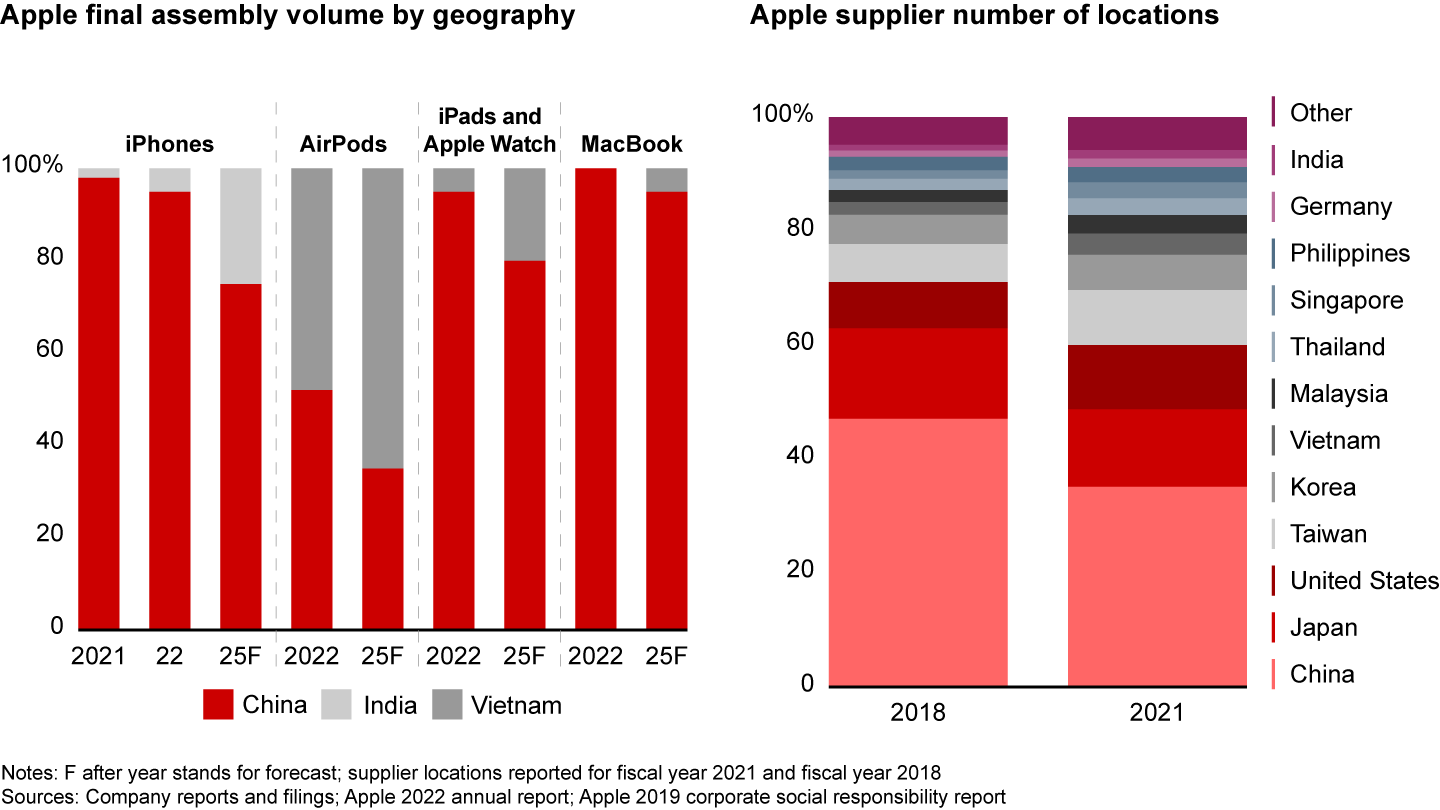
      Apple is assembling more iPhones outside of China and diversifying its supplier base
      Apple is assembling more iPhones outside of China and diversifying its supplier base
      Apple is assembling more iPhones outside of China and diversifying its supplier base

      Chipmaker TSMC has also started to expand its production capacity outside of Taiwan, with announcements to build multiple fabs in the US, Japan, and Germany, investing close to $65 billion. TSMC relies on local subsidies from recently passed legislation in those regions to cover 20% to 50% of the total cost.

      In 2021, Lenovo doubled its manufacturing footprint in Monterrey, Mexico, allowing the company to manufacture all data center products for North American customers within a Nafta country. This lets Lenovo manage its supply chain more effectively to better serve its North American customers.

      Foreign direct investment in China has gone down, with the notable exception of Tesla, which recently announced that it will open a second factory in Shanghai in 2024 to produce the Megapack battery. This is in addition to its Gigafactory that started production in 2019, which was built to provide local manufacturing for the company’s second biggest market outside of the US. This helps Tesla serve its large customer base in China, avoid tariffs, and source parts locally to reduce costs.

      Relocating R&D and talent. Restrictions moved faster than expected to impact talent and R&D. For example, in October 2022, the US Department of Commerce’s Bureau of Industry and Security added new rules restricting the ability of US persons to support the development or production of integrated circuits at certain fabs in China. Tech companies are avoiding single points of failure and tapping markets with concentrations of specific skills (see Figure 2). They are strategically relocating business-critical functions and roles to areas with lower geopolitical risk. Approaches include duplicating high-value capabilities in several locations, documenting at-risk processes in case they need to be replicated in new locations, and hiring more employees in safer geographies.

      Partly as a result of these strategies, India and Europe are seeing an acceleration in the hiring of engineers. India has become a thriving location for multinational companies to establish R&D centers in artificial intelligence (AI) because of its large talent pool, which offers vast potential for growth. Among other examples, Fujitsu launched a new AI R&D center, Fujitsu Research of India Private Limited, in 2022 as part of its global innovation strategy.

      Figure 2
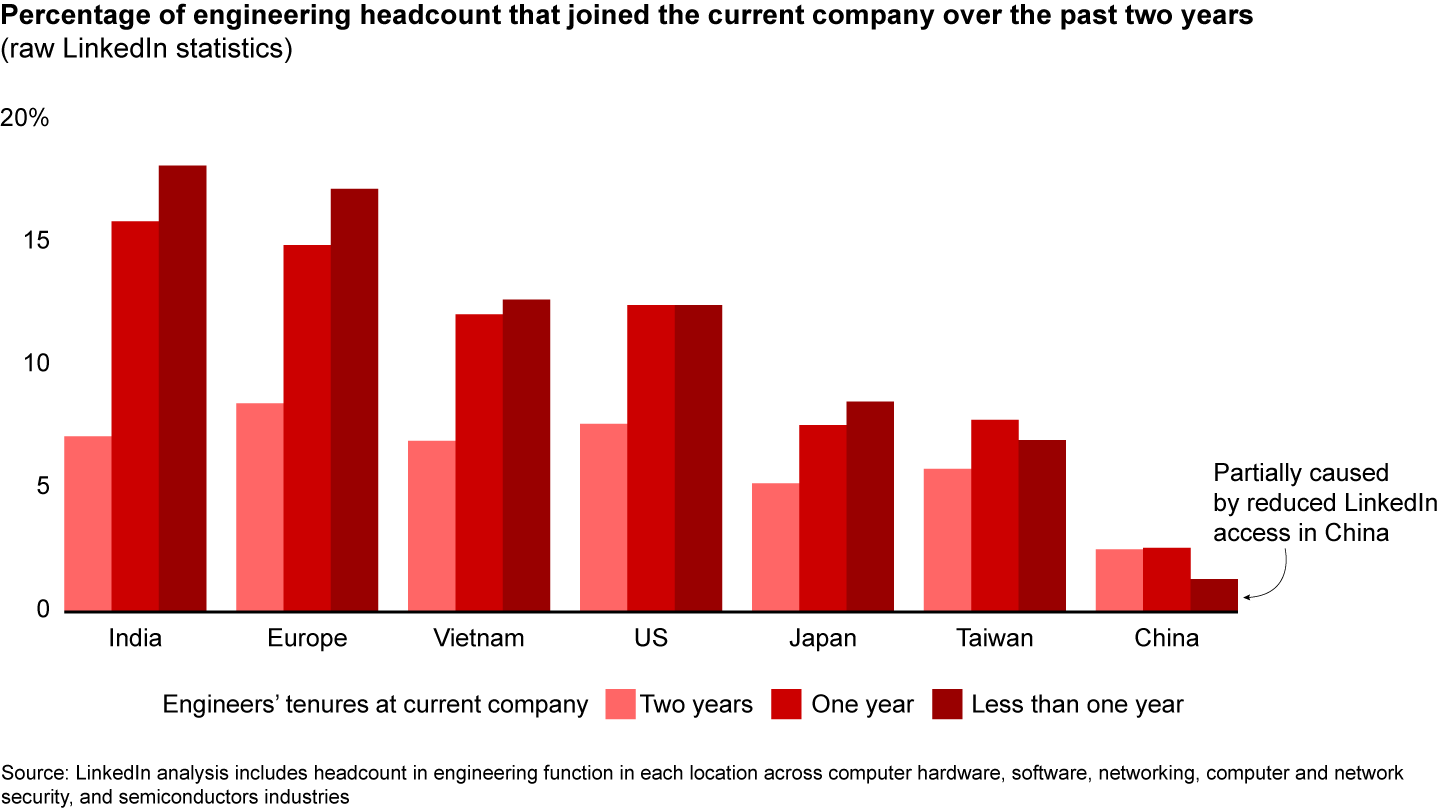
      R&D relocation and nearshoring are accelerating the hiring of engineers in India and Europe
      R&D relocation and nearshoring are accelerating the hiring of engineers in India and Europe
      R&D relocation and nearshoring are accelerating the hiring of engineers in India and Europe

      Implications for technology companies

      Given the high cost and time commitment to build resilience, some companies are waiting on the sidelines as others take the first step. While it’s not essential to be the first mover, it’s certainly critical not to be the last to act. The key is to have a plan in place.

      • Identify critical risk areas. Across the supply chain (manufacturing, component supplier, R&D, talent), companies should start by assessing which parts of the business are strategically most important and most susceptible to risks, along with identifying critical dependencies and where to build redundancy. Each business unit requires different types of resilience, with varying complexity and potential impact on earnings.
      • Evaluate options. In assessing complexity, companies should consider locations where governments are making it easier to do business. Several countries and trading blocs are putting new rules in place and offering subsidies to encourage new, local technology supply chains that use government investment dollars and tax credits. For example, recent regulatory initiatives in India are creating favorable grounds for manufacturing and talent relocation, and in the US and EU, regulations are paving the way for more semiconductor investments.
      • Be ready to invest. Tech companies will have to coinvest and share know-how to support the rebalancing of supply chains, aiding in the broader development of new local supplier ecosystems. Specifically, this could include helping key suppliers get approval to build sites in new countries as well as providing the talent, engineering, and management expertise needed to build products to the necessary standards.
      • Test the waters. Companies can start with smaller, less important products to assess markets, avoiding the risk of being a late mover. They can move to core products after gaining a foothold in new locations.

      A decade from now, the global footprint of the technology value chain will look very different. Today’s investments in resilience are likely to create new hubs and ecosystems while shifting the competitive landscape. Industries may fragment, and new local heroes will emerge. Now is the time to begin making early investments to ensure the resilience of talent and supply chains.

      Read the Next Chapter

      You’re Out of Time to Wait and See on AI

      Read our 2023 Technology Report

      Download the PDF Explore the report
      Autoren
      • Headshot of Karen Harris
        Karen Harris
        Managing Director, Macro Trends Group, New York
      • Headshot of Anne Hoecker
        Anne Hoecker
        Partner, Silicon Valley
      • Headshot of Christopher Schorling
        Christopher Schorling
        Alumni, Frankfurt
      • Headshot of Balaji Thirumalai
        Balaji Thirumalai
        Partner, Bengaluru
      • Headshot of Jue Wang
        Jue Wang
        Partner, Silicon Valley
      Kontaktieren Sie uns
      Verwandte Branchen
      • Technologie
      Technology Report
      Quantum Computing Moves from Theoretical to Inevitable

      Quantum will likely become part of a mosaic, working with classical computing to solve big problems.

      Mehr erfahren
      Technologie
      Software M&A

      The good news: Most deal best practices still apply to AI acquisitions.

      Mehr erfahren
      Technology Report
      Will AI Disrupt Tech’s Most Valuable Companies?

      Hyperscalers and other market leaders have adapted well to technology shifts, but generative AI poses new challenges.

      Mehr erfahren
      Technologie
      Exploring AI for Packaging Circularity

      AI is already creating value across the packaging lifecycle, from optimising design and reducing material use to improving sorting and traceability.

      Mehr erfahren
      Technology Report
      Sovereign Tech, Fragmented World

      In a post-globalized era of tariffs and decoupling, semiconductors and sovereign AI are realigning global power.

      Mehr erfahren

      Value Evolution

      • Creating Value in Tech Throughout the Life Cycle

      • Preparing for Exit: A Buyer’s Market Is Coming for Tech Assets

      • AI Investors: Act Fast, Act Wisely

      • Technology Enters Its Post-Globalization Era

      Strategic Battlegrounds

      • You’re Out of Time to Wait and See on AI

      • How AI Is Recoding the Software Business Model

      • Generative AI and Cybersecurity: Strengthening Both Defenses and Threats

      • Taking the Hyperbole Out of the Metaverse

      • The Untapped Value at the Intelligent Edge

      • After the Chip Shortage, Fears of a Capacity Glut Are Overblown

      Operational Transformations

      • Digital Innovation: Getting the Architecture Foundations Right

      • The Talent Implications of Generative AI

      • How Enterprise Sales Can Supercharge Product-Led Growth

      • How Your Revenue Can Grow Faster Than Your Salesforce

      • Decarbonizing Technology Supply Chains

      First published in September 2023
      Markierungen
      • Technologie
      • Technology Report

      Wie wir unsere Kunden unterstützt haben

      Helping a Midsize ERP Player Compete against the Giants

      Kundenbeispiel lesen

      Performance Improvement Aggressively growing an IT service provider with a high-performance culture

      Kundenbeispiel lesen

      Kundenstrategie und Marketing When the price is right, customers respond

      Kundenbeispiel lesen

      Möchten Sie mit uns in Kontakt bleiben?

      Wir unterstützen Führungskräfte weltweit, die kritischen Themen in ihrem Unternehmen zu adressieren. Gemeinsam schaffen wir nachhaltige Veränderungen und Ergebnisse.

      Bain Insights. Unsere Perspektive auf die kritischen Themen, mit denen sich international agierende Unternehmen konfrontiert sehen, finden Sie monatlich in Ihrem Postfach.

      *Ich habe die Datenschutzerklärung gelesen und akzeptiere sie.
      Bitte lesen Sie die Datenschutzerklärung und akzeptieren Sie diese.
      Bain & Company
      Contact us Sustainability Accessibility Rechtliche Hinweise Impressum Datenschutz Cookie-Richtlinie Sitemap Log In

      © 1996-2026 Bain & Company, Inc.

      Kontaktieren Sie Bain

      Wie können wir Ihnen helfen?

      • Business inquiry
      • Career information
      • Press relations
      • Partnership request
      • Speaker request
      Alle weltweiten Büros