
Skip to Content
  • Standorte

    Standorte

    North & Latin America
    • Atlanta
    • Austin
    • Bogota
    • Boston
    • Buenos Aires
    • Chicago
    • Dallas
    • Denver
    • Houston
    • Lisbon
    • Los Angeles
    • Mexico City
    • Minneapolis
    • Monterrey
    • Montreal
    • New York
    • Rio de Janeiro
    • San Francisco
    • Santiago
    • São Paulo
    • Seattle
    • Silicon Valley
    • Toronto
    • Washington, DC
    Europe & Africa
    • Amsterdam
    • Athens
    • Berlin
    • Brussels
    • Copenhagen
    • Düsseldorf
    • Frankfurt
    • Helsinki
    • Istanbul
    • Johannesburg
    • Kyiv
    • Lisbon
    • London
    • Madrid
    • Milan
    • München
    • Oslo
    • Paris
    • Rome
    • Stockholm
    • Warsaw
    • Wien
    • Zürich
    Middle East
    • Doha
    • Dubai
    • Riyadh
    Asia & Australia
    • Bangkok
    • Beijing
    • Bengaluru
    • Brisbane
    • Ho Chi Minh City
    • Hong Kong
    • Jakarta
    • Kuala Lumpur
    • Manila
    • Melbourne
    • Mumbai
    • New Delhi
    • Perth
    • Seoul
    • Shanghai
    • Singapore
    • Sydney
    • Tokyo
    Alle Standorte Anzeigen
  • Alumni
  • Presse
  • Newsletter
  • Kontakt
  • DACH-Region | Deutsch

    Wählen Sie Ihre Region und Sprache

    Global
    • Global (English)
    North & Latin America
    • Brazil (Português)
    • Argentina (Español)
    • Canada (Français)
    • Chile (Español)
    • Colombia (Español)
    Europe, Middle East, & Africa
    • France (Français)
    • DACH-Region (Deutsch)
    • Italy (Italiano)
    • Spain (Español)
    • Greece (Elliniká)
    Asia & Australia
    • China (中文版)
    • Korea (한국어)
    • Japan (日本語)
  • Saved items (0)
    Saved items (0)

    You have no saved items.

    Inhalte, für die Sie sich interessieren, werden hier gespeichert und können später gelesen oder weitergeleitet werden.

    Explore Bain Insights
  • Branchenkompetenzen
    Hauptmenü

    Branchenkompetenzen

    • Luft- und Raumfahrt, Verteidigung
    • Agrarwirtschaft
    • Chemieindustrie
    • Infrastruktur und Bauwirtschaft
    • Konsumgüter
    • Finanzdienstleistungen
    • Gesundheitswesen
    • Maschinen- und Anlagenbau
    • Medienwirtschaft
    • Metallindustrie
    • Bergbau
    • Öl und Gas
    • Papier- und Verpackungsindustrie
    • Private Equity
      Branchenkompetenzen
      Private Equity
      • Due Diligence
      • Exit Planning
      • Firm Strategy & Operations
      • Portfolio Value Creation
    • Öffentlicher Sektor und Sozialwesen
    • Einzelhandel
    • Technologie
    • Telekommunikation
    • Transportwesen
    • Reise- und Freizeitbranche
    • Versorgung und erneuerbare Energien
  • Managementkompetenzen
    Hauptmenü

    Managementkompetenzen

    • Customer Experience
    • ESG
    • Innovation
    • M&A
    • Operations
    • People & Organization
    • Private Equity
    • Sales & Marketing
    • Strategie
    • KI, Einblicke und Lösungen
    • Technologie
    • Transformation
  • Digital
  • Publikationen
    Hauptmenü

    Publikationen

    • Branchenthemen
    • Managementthemen
    • Bain-Bücher
    Alle Publikationen
    Ausgewählte Themen
    • Resilienz in der globalen Krise
    • M&A Report
    • Private Equity Podcast
    • Midyear Private Equity Report
    • Agile
    • Engineering Report
    • Digital Transformation
    • Elements of Value®
    • Firm of the Future
    • Nachhaltigkeitsstudie
    • Macro Trends
    • Future of Consumption
    • Weltwirtschaftsforum (WEF)
  • Über uns
    Hauptmenü

    Über uns

    • Was wir bieten
    • Unser Ansatz
    • Unser Team
    • Game Changer Award
    • Female Allstar Board
    • Messbare Ergebnisse (EN)
    • Auszeichnungen
    • Globale Partnerschaften
    • The Mission
    Further: Our global responsibility
    • Vielfalt & Chancengleichheit
    • Soziale Verantwortung
    • Sustainability
    Erfahren Sie mehr zu "Further"
  • Karriere
    Hauptmenü

    Karriere

    • Dein Einstieg
      Karriere
      Dein Einstieg
      • Find Your Place
      • Unsere Arbeitsbereiche
      • Unsere Teams
      • Angebote für Studierende
      • Praktika & Programme
      • Recruiting-Events
    • Arbeiten bei Bain
      Karriere
      Arbeiten bei Bain
      • Karriere Stories
      • Unsere Bainies
      • Office-Standorte
      • Weiterentwicklung
      • Affinity Groups
      • Deine Benefits
    • Impact Stories
    • Deine Bewerbung
      Karriere
      Deine Bewerbung
      • Das erwartet dich
      • Der Interviewprozess
    FIND JOBS
  • Standorte
    Hauptmenü

    Standorte

    • North & Latin America
      Standorte
      North & Latin America
      • Atlanta
      • Austin
      • Bogota
      • Boston
      • Buenos Aires
      • Chicago
      • Dallas
      • Denver
      • Houston
      • Lisbon
      • Los Angeles
      • Mexico City
      • Minneapolis
      • Monterrey
      • Montreal
      • New York
      • Rio de Janeiro
      • San Francisco
      • Santiago
      • São Paulo
      • Seattle
      • Silicon Valley
      • Toronto
      • Washington, DC
    • Europe & Africa
      Standorte
      Europe & Africa
      • Amsterdam
      • Athens
      • Berlin
      • Brussels
      • Copenhagen
      • Düsseldorf
      • Frankfurt
      • Helsinki
      • Istanbul
      • Johannesburg
      • Kyiv
      • Lisbon
      • London
      • Madrid
      • Milan
      • München
      • Oslo
      • Paris
      • Rome
      • Stockholm
      • Warsaw
      • Wien
      • Zürich
    • Middle East
      Standorte
      Middle East
      • Doha
      • Dubai
      • Riyadh
    • Asia & Australia
      Standorte
      Asia & Australia
      • Bangkok
      • Beijing
      • Bengaluru
      • Brisbane
      • Ho Chi Minh City
      • Hong Kong
      • Jakarta
      • Kuala Lumpur
      • Manila
      • Melbourne
      • Mumbai
      • New Delhi
      • Perth
      • Seoul
      • Shanghai
      • Singapore
      • Sydney
      • Tokyo
    Alle Standorte Anzeigen
  • Alumni
  • Presse
  • Newsletter
  • Kontakt
  • DACH-Region | Deutsch
    Hauptmenü

    Wählen Sie Ihre Region und Sprache

    • Global
      Wählen Sie Ihre Region und Sprache
      Global
      • Global (English)
    • North & Latin America
      Wählen Sie Ihre Region und Sprache
      North & Latin America
      • Brazil (Português)
      • Argentina (Español)
      • Canada (Français)
      • Chile (Español)
      • Colombia (Español)
    • Europe, Middle East, & Africa
      Wählen Sie Ihre Region und Sprache
      Europe, Middle East, & Africa
      • France (Français)
      • DACH-Region (Deutsch)
      • Italy (Italiano)
      • Spain (Español)
      • Greece (Elliniká)
    • Asia & Australia
      Wählen Sie Ihre Region und Sprache
      Asia & Australia
      • China (中文版)
      • Korea (한국어)
      • Japan (日本語)
  • Saved items  (0)
    Hauptmenü
    Saved items (0)

    You have no saved items.

    Inhalte, für die Sie sich interessieren, werden hier gespeichert und können später gelesen oder weitergeleitet werden.

    Explore Bain Insights
  • Branchenkompetenzen
    • Branchenkompetenzen

      • Luft- und Raumfahrt, Verteidigung
      • Agrarwirtschaft
      • Chemieindustrie
      • Infrastruktur und Bauwirtschaft
      • Konsumgüter
      • Finanzdienstleistungen
      • Gesundheitswesen
      • Maschinen- und Anlagenbau
      • Medienwirtschaft
      • Metallindustrie
      • Bergbau
      • Öl und Gas
      • Papier- und Verpackungsindustrie
      • Private Equity
      • Öffentlicher Sektor und Sozialwesen
      • Einzelhandel
      • Technologie
      • Telekommunikation
      • Transportwesen
      • Reise- und Freizeitbranche
      • Versorgung und erneuerbare Energien
  • Managementkompetenzen
    • Managementkompetenzen

      • Customer Experience
      • ESG
      • Innovation
      • M&A
      • Operations
      • People & Organization
      • Private Equity
      • Sales & Marketing
      • Strategie
      • KI, Einblicke und Lösungen
      • Technologie
      • Transformation
  • Digital
  • Publikationen
    • Publikationen

      • Branchenthemen
      • Managementthemen
      • Bain-Bücher
      Alle Publikationen
      Ausgewählte Themen
      • Resilienz in der globalen Krise
      • M&A Report
      • Private Equity Podcast
      • Midyear Private Equity Report
      • Agile
      • Engineering Report
      • Digital Transformation
      • Elements of Value®
      • Firm of the Future
      • Nachhaltigkeitsstudie
      • Macro Trends
      • Future of Consumption
      • Weltwirtschaftsforum (WEF)
  • Über uns
    • Über uns

      • Was wir bieten
      • Unser Ansatz
      • Unser Team
      • Game Changer Award
      • Female Allstar Board
      • Messbare Ergebnisse (EN)
      • Auszeichnungen
      • Globale Partnerschaften
      • The Mission
      Further: Our global responsibility
      • Vielfalt & Chancengleichheit
      • Soziale Verantwortung
      • Sustainability
      Erfahren Sie mehr zu "Further"
  • Karriere
    Häufige Suchanfragen
    • Agil
    • Digital
    • Strategie
    Vorherige Suchanfragen
      Zuletzt besuchte Seiten

      Content added to saved items

      Saved items (0)

      Removed from saved items

      Saved items (0)

      Energy & Natural Resources Report

      The Dual Challenge of the Energy Transition Is Urgent and Unprecedented

      The Dual Challenge of the Energy Transition Is Urgent and Unprecedented

      Meeting the growing demand for energy while also reducing greenhouse gas emissions is the central challenge of the 21st century.

      Von James Baird, Torsten Lichtenau, Alessandro Cadei, und Prashant Sarin

      • Min. Lesezeit
      }

      Report

      The Dual Challenge of the Energy Transition Is Urgent and Unprecedented
      en
      At a Glance
      • Energy security has moved up the global agenda over the past 18 months, magnifying the trade-offs and complexities involved in navigating the energy transition.
      • The tension between energy supply and climate change presents a dual challenge for the 21st century: breaking the historical link between energy and greenhouse gas emissions.
      • Solving the challenge will require change on an unprecedented scale and pace, including major infrastructure investments. By one measure, the world needs to nearly triple annual investment in clean energy to reach net-zero emissions by 2050.
      • Energy and natural resource companies are and will continue to be at the center of every aspect of the transition to come.

      This article is part of Bain’s Energy and Natural Resources Report 2023

      Explore the report

      The war in Ukraine and ensuing disruption to the global energy system have reminded us all that affordable, reliable energy is the foundation upon which modern civilization rests. From the electricity used to light our homes, to the liquid fuels powering cars and planes, to the energy needed to produce fertilizer for growing our food, energy is integral to everything we do.

      The massive expansion of primary energy supply since the 19th century has driven an unparalleled improvement in human longevity and prosperity. However, those benefits haven’t been equally distributed. There is still considerable energy poverty, concentrated primarily in the Global South. About 675 million people lack access to electricity, and 2.3 billion people—almost 30% of the world’s population—don’t have access to clean cooking fuels and technologies that prevent premature death from indoor air pollution. Fu­­­­­­ture population growth will be overwhelmingly concentrated in these regions, with the population of sub-Saharan Africa alone expected to almost double (see Figure 1).

      Figure 1
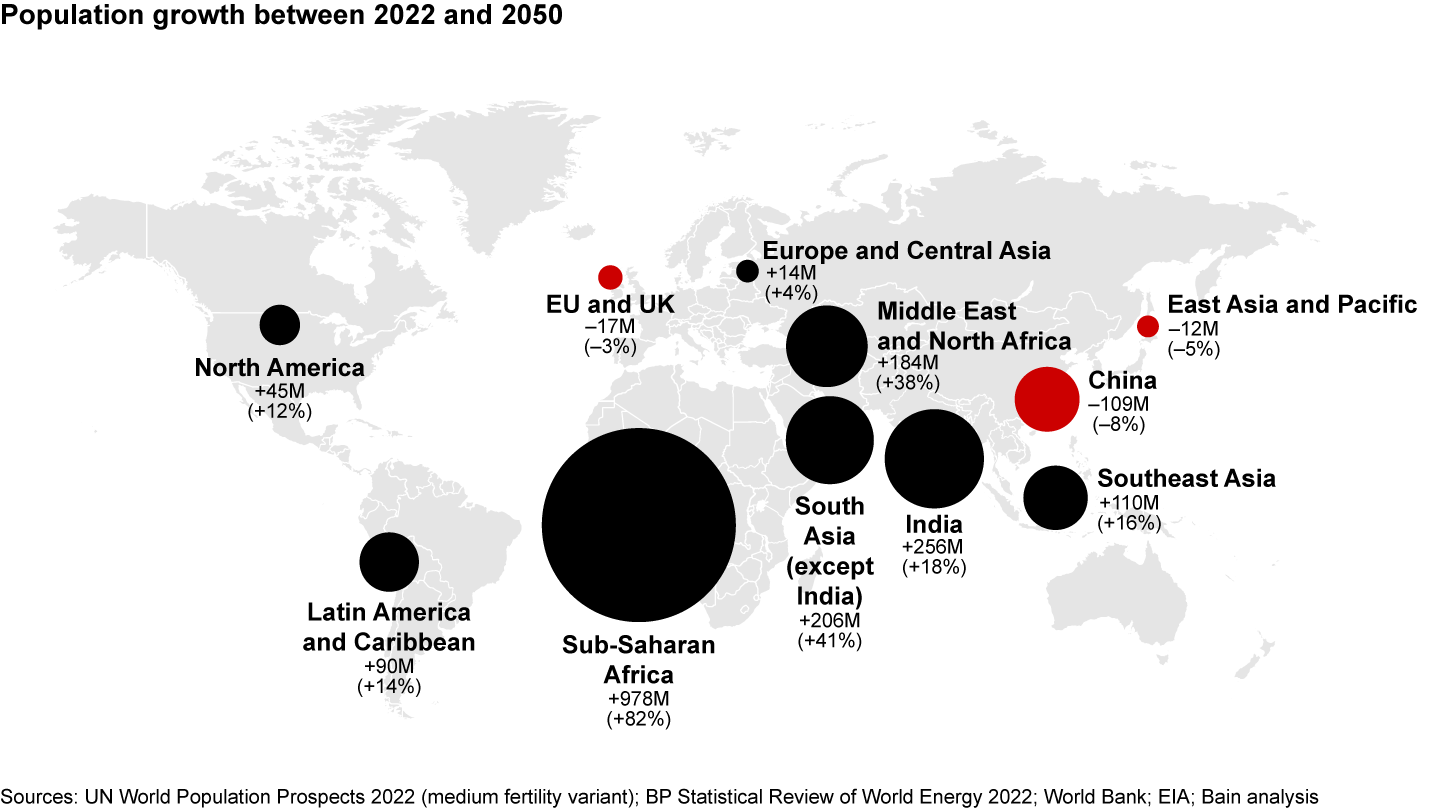
      The global population is expected to increase by 1.7 billion by 2050, mostly in the Global South

      The world needs more energy.

      Yet our largest primary energy sources, fossil fuels, are also the largest sources of anthropogenic greenhouse gas emissions. Fossil fuels account for around 80% of our primary energy supply, and our reliance on them has not changed appreciably in 30 years. Rising greenhouse gas concentration in the atmosphere, produced in large part by the production and combustion of fossil fuels, is causing the planet to warm, and there is now clear scientific consensus that adverse consequences for human prosperity and well-being will result if this warming trend continues.

      The tension between energy supply and climate change presents a dual challenge for the 21st century. How will the world increase energy supply while simultaneously curbing emissions?

      The scale and pace of change required to solve the challenge are unprecedented and extraordinary. By one well-known measure, the IEA’s Net Zero Emissions by 2050 Scenario, the world would need to approximately double its 2022 pace of total energy investment by 2030 and sustain this level, or slightly lower, through 2050 to achieve net-zero emissions. This includes nearly tripling annual investment in clean energy.

      Many energy and natural resource executives are acutely aware of these realities. But as energy security has moved up the global agenda over the past 18 months, the difficult road ahead for the energy transition has become even clearer.

      Energy and natural resource companies are and will continue to be at the center of every aspect of the unfolding transition, and how these companies navigate the accompanying opportunities and risks will have major implications for how the dual challenge ultimately plays out. (Read the next chapter of the report for more detail.)

      The need for more energy  

      The world must increase its energy supply to support human well-being and economic growth. Historically, global energy consumption, population, and gross domestic product have grown in tandem (see Figure 2). In less mature economies, small increases in energy consumption per capita are strongly associated with significant gains in the Human Development Index, a United Nations composite measure comprised of indicators for health, education, and income—supporting the notion that energy is critical to human prosperity.

      Figure 2
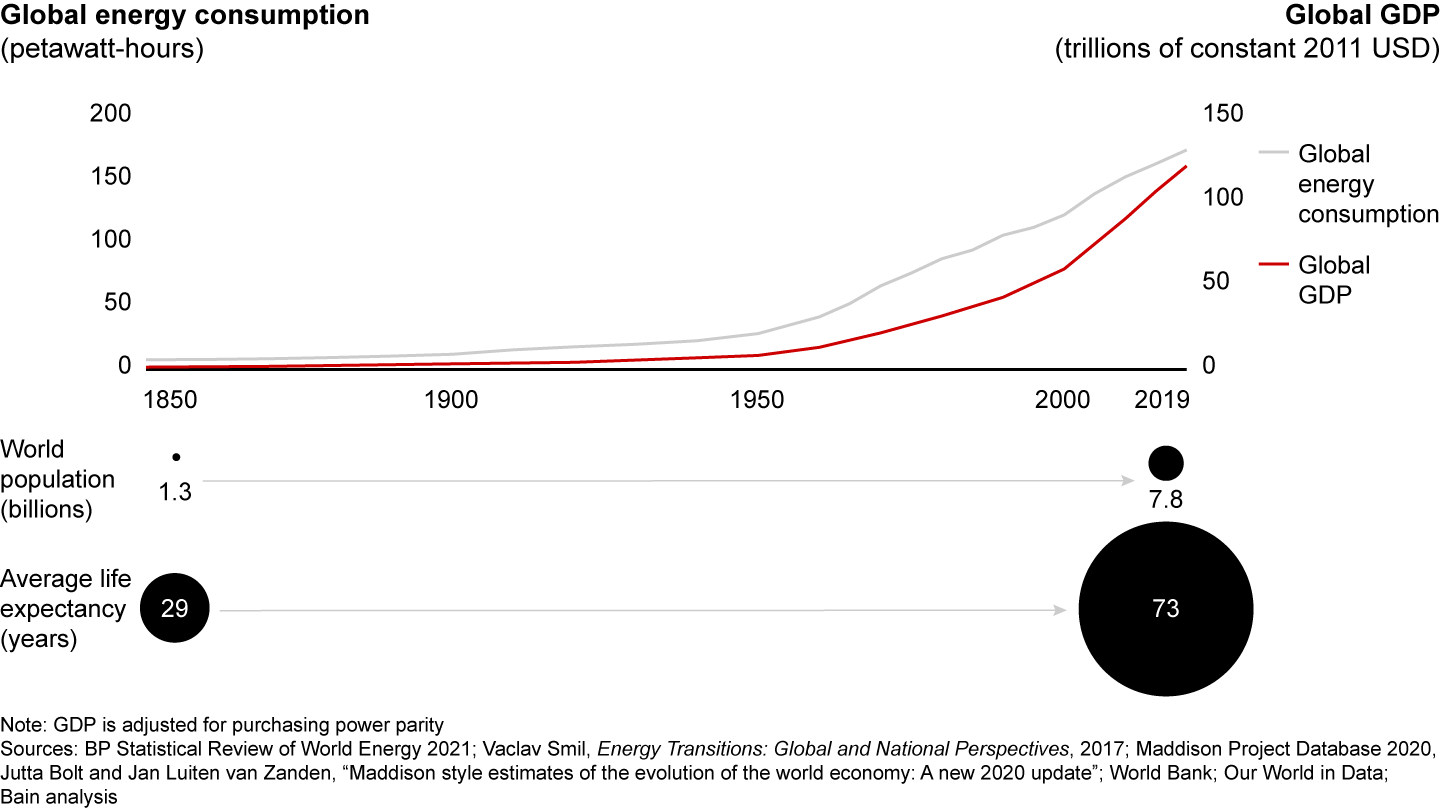
      Global energy use has always grown with the population and GDP

      Despite substantial growth in the world’s energy supply over the last 150 years, billions of people still don’t have access to enough affordable, reliable energy. Population growth over the next three decades will be overwhelmingly concentrated in these regions. Their populations and governments will continue to focus on expanding their energy supplies—including electricity generation and infrastructure, among other areas—to support economic development and improve living standards (see Figure 3).

      Figure 3
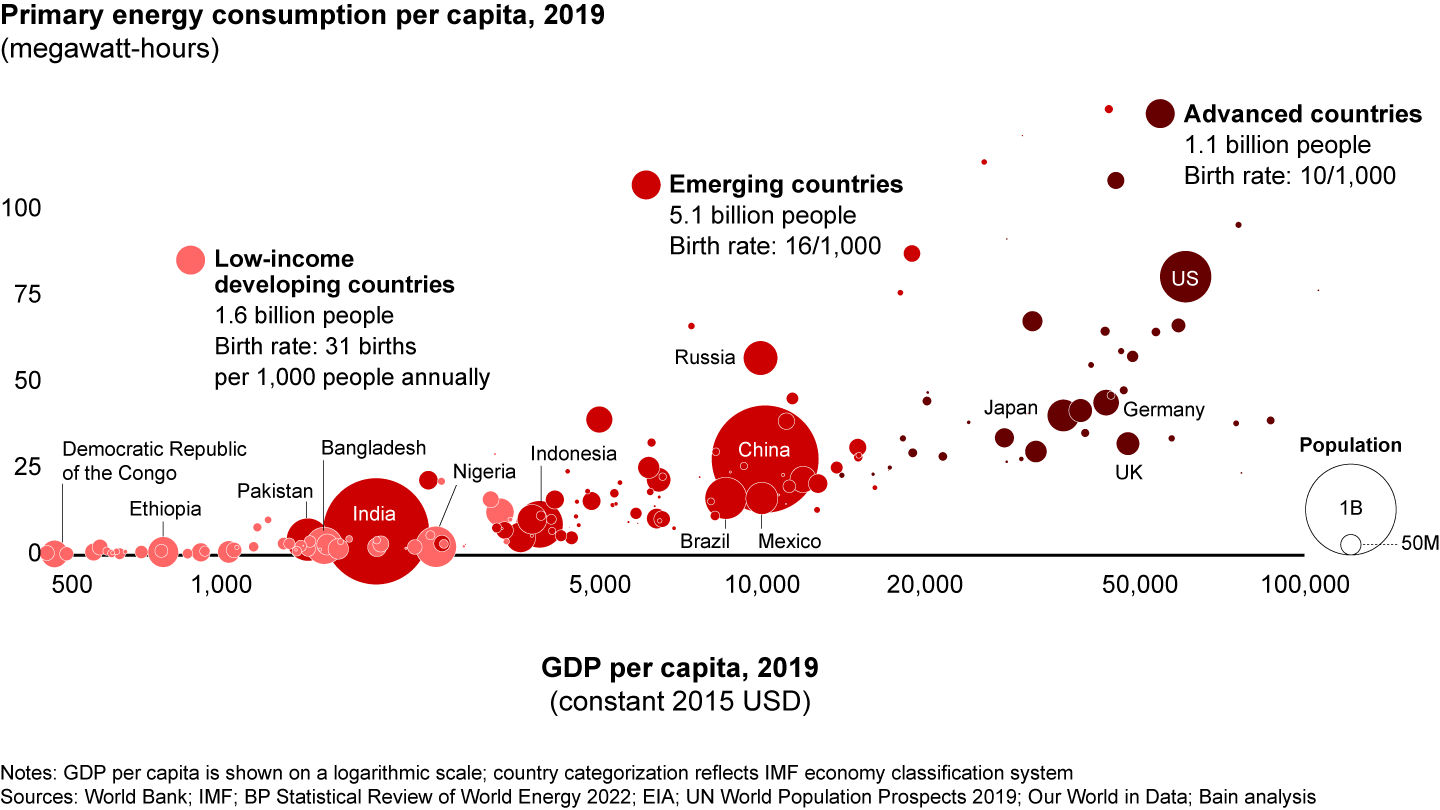
      Energy consumption is correlated with economic progress, and there is still considerable inequality

      To put the need for increasing the world’s energy supply in even starker terms, consider the following thought experiment. Say that India, Indonesia, Pakistan, Nigeria, and other countries with low or very low energy consumption per capita today were to increase per capita consumption by 2050 to the level of, for example, Mexico in pursuit of economic growth, a desirable goal. Global primary energy consumption would then grow by about 70 petawatt-hours, or approximately 45% of total global energy supply as of 2019.   

      Efficiency gains, including from electrification and increased renewable energy use, will offset some of the future demand. So far, however, only advanced economies comprising a minority of the global population have decoupled economic growth from energy consumption (see Figure 4).

      Figure 4
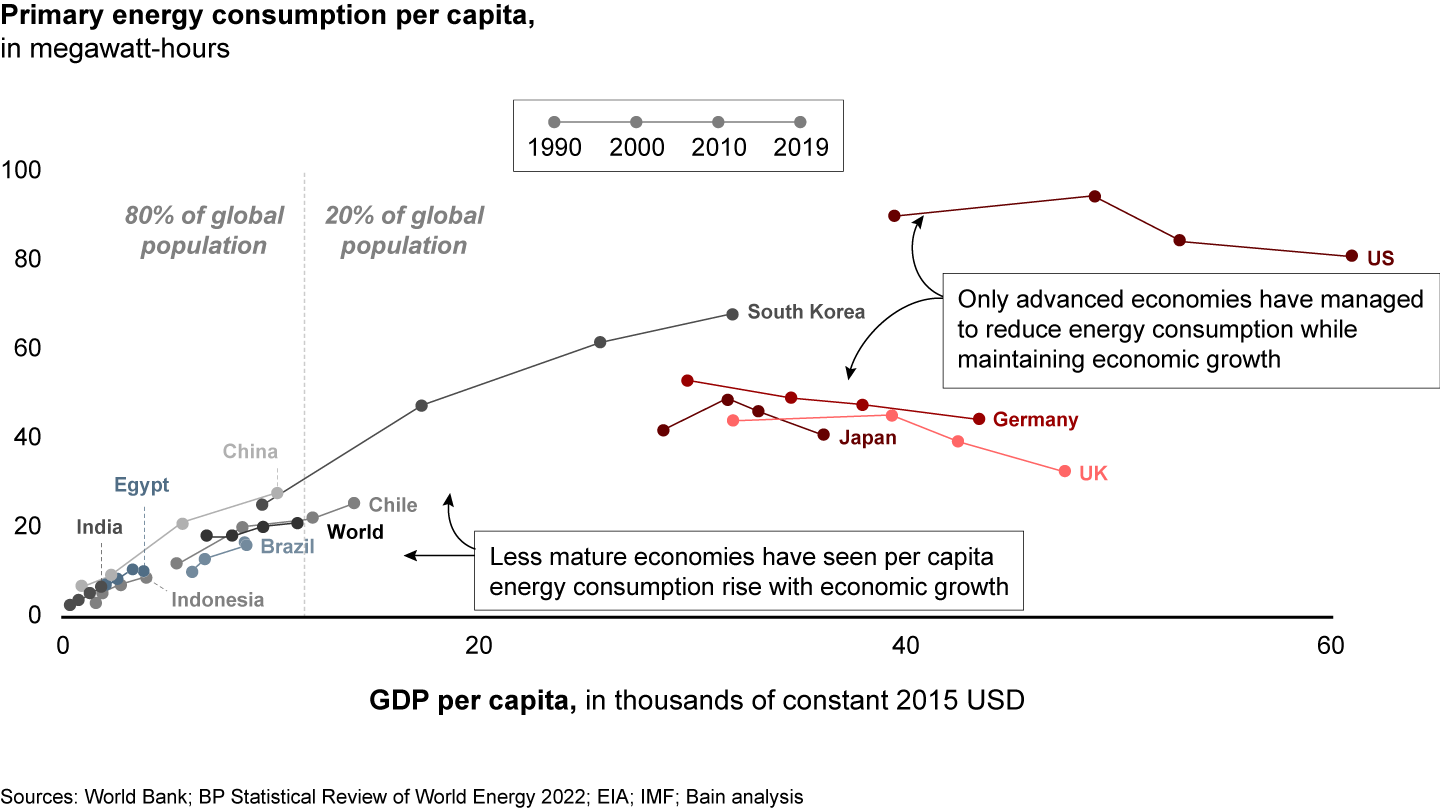
      So far, only advanced economies have decoupled economic growth from energy consumption

      Consequences of business as usual

      Absent action both to decarbonize our existing energy supply and to avoid further emissions as developing economies advance, significant risks emerge—and these risks aren’t uniformly shared across the world.

      As human-induced climate change is principally a function of the atmospheric concentration of gases like carbon dioxide, the cumulative emissions total over a period of decades matters. Human activity has caused the release of more than 2 trillion cumulative tons of carbon dioxide worldwide since 1850, and about 45% of that was emitted between 1990 and 2021 (see Figure 5).

      Figure 5
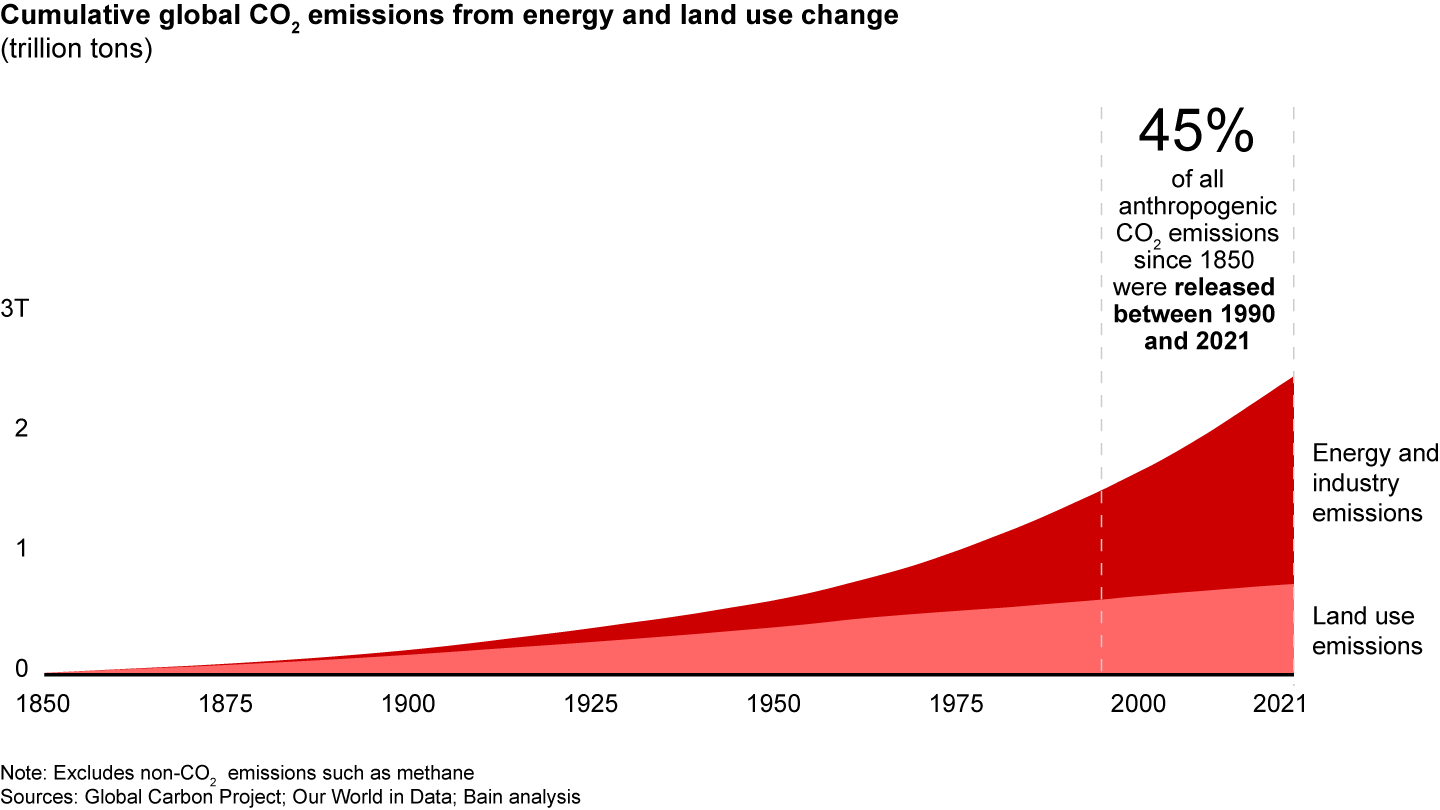
      Human activity has caused the release of more than 2 trillion cumulative tons of CO2 since 1850

      It’s worth noting that the world has made some progress toward climate targets in recent years. After the Paris Agreement in 2015 and ensuing policy commitments by national governments, the temperature estimates for end-of-century warming had fallen by around a half-degree Celsius as of 2020. Still, global CO2 emissions from fossil fuels reached a new high in 2022, and there’s no sign that emissions have peaked.

      Warming caused by human activity has already produced adverse impacts on both natural and human systems, including increased food and water insecurity; damage to terrestrial, freshwater, coastal, and ocean marine ecosystems; and species losses. Continued warming will very likely lead to higher frequency and intensity of certain types of extreme weather, such as extreme heat events, heavy precipitation events, and severe agricultural or ecological droughts.

      What’s more, future risks aren’t uniformly distributed, with Southeast Asia and sub-Saharan Africa disproportionately exposed to the negative consequences (see Figure 6).

      Figure 6
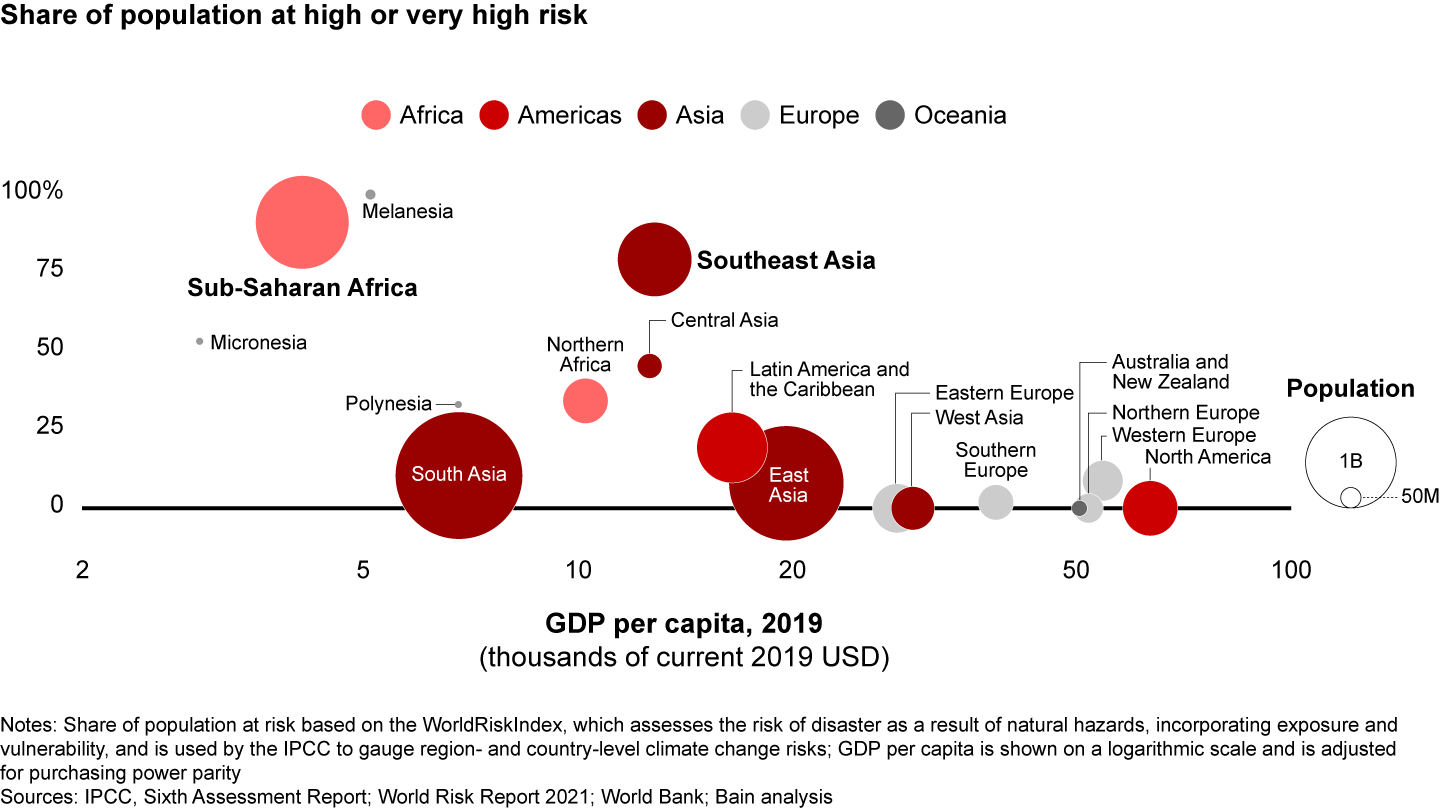
      Future climate change risk varies considerably by region, with Southeast Asia and sub-Saharan Africa disproportionately exposed

      The pace and frictions of change

      Avoiding the worst risks of climate change will require the world to reduce and eventually eliminate greenhouse gas emissions produced by human activity. Scenarios in which the average increase in global surface temperature is held below 2 degrees Celsius by 2100 imply massive, nearly immediate, and sustained emissions reductions; by 2050, the level of anthropogenic greenhouse gas emissions would need to be at least 60% lower than it is today.

      Achieving this would necessitate substantial, rapid changes to our energy system, which is responsible for about three-quarters of anthropogenic greenhouse gas emissions. Doing this in 27 years would be unprecedented. History suggests turning over even one-quarter of the global energy supply takes at least three decades, reflecting the asset intensity of the energy system. It’s notable that each time the world transitioned to a new primary energy source, from coal to crude oil to natural gas, the displaced primary fuel source didn’t disappear. In fact, the quantity of primary energy supplied by coal, oil, and gas is today at or near all-time highs.

      The physical scale of what must be addressed is hard to comprehend. Consider, as one example, our energy production and processing infrastructure, which is capable of handling more than 15 billion tons of coal, oil, and gas extraction, processing, and distribution each year. This infrastructure includes an oil and gas pipeline system that, if lined up end to end, would wrap around Earth nearly 30 times.

      Unsurprisingly, the amount of capital required to replace, repurpose, or otherwise mitigate the warming impact of our energy system so quickly is enormous. And that doesn’t include the significant capital required to build entirely new energy infrastructure to support rising demand in places currently experiencing energy poverty. In our view, very few components of the energy system are prepared for change at the scale and pace required.

      Defining the tension

      Putting these elements together, a picture emerges of the extraordinarily challenging path we must take to resolve the dual challenge (see Figure 7).

      First, it’s imperative that the world reduce anthropogenic greenhouse gas emissions to limit the negative impacts of climate change, but we’re not on track for a scenario in which the world warms less than 2 degrees Celsius above preindustrial levels (see first panel in the chart below). At the same time, energy supply will likely need to increase in the coming decades to support economic growth and enhance human well-being, though efficiency gains will provide some buffer (see second panel). Adding these factors together, we arrive at the target scenario in the third panel: bending the emissions curve while still serving higher energy demand. Breaking the relationship between energy and emissions is at the heart of the dual challenge. The essence of it is achieving “low carbon” without compromising “reliable, affordable, and secure” as the energy supply expands.

      Figure 7
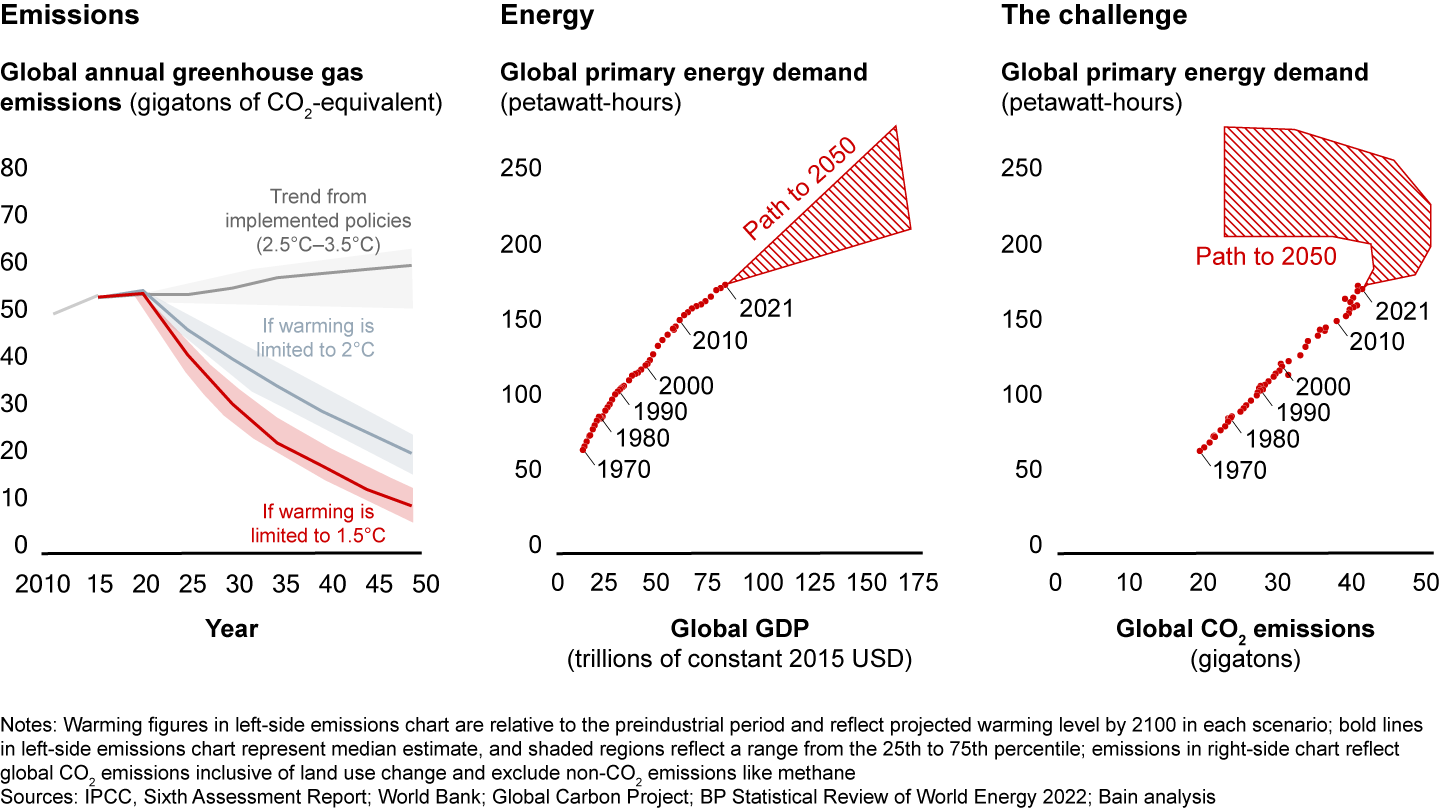
      Solving the dual challenge will require expanding affordable, reliable energy access while simultaneously reducing emissions

      Importantly, the journey will be different for every country. In low-income developing and emerging economies, the objective is to lift countries out of energy poverty and support industrialization in a low-carbon way, without erecting barriers to economic development (i.e., without following the historical trajectory of advanced economies). In advanced economies, it’s about reducing emissions while maintaining high living standards and economic growth. Companies that succeed will work in increasingly localized ways to support the energy and carbon journeys of different countries worldwide.

      Solving the dual challenge will be enormously difficult due to its colossal scale and complexity and the importance to society of what we must replace or augment. The cost of failure in either direction is high: a rapidly warming planet and the consequential environmental risks, or stifled economic progress and lingering quality-of-life concerns for the billions of people who lack access to sufficient energy. But the outcome is not predestined, and it will depend on the actions we take to address the challenge.

      Read the Next Section

      The Energy Transition: Fragmented, Disorderly, and Ripe with Opportunity

      More from the report

      • State of the Transition 2023: Global Energy and Natural Resource Executive Perspectives

      • The Energy Transition: Fragmented, Disorderly, and Ripe with Opportunity

      • Willing but Not Able? The Energy Transition Has a Scaling Problem

      • Four Imperatives for Building Resilience in Energy and Natural Resources

      • The Energy Transition’s Other Big Puzzle: Making the Math Work

      Read our Energy and Natural Resources Report 2023

      Explore the full report Download PDF
      Autoren
      • Headshot of James Baird
        James Baird
        Alumni, Houston
      • Headshot of Torsten Lichtenau
        Torsten Lichtenau
        Partner, London
      • Headshot of Alessandro Cadei
        Alessandro Cadei
        Partner, Milan
      • Headshot of Prashant Sarin
        Prashant Sarin
        Partner, New Delhi
      Kontaktieren Sie uns
      Verwandte Branchen
      • Agrarwirtschaft
      • Bergbau und Metall
      • Chemieindustrie
      • Energieversorgung
      • Energiewirtschaft
      • Öl und Gas
      Ähnliche Beratungsangebote
      • Nachhaltigkeit
      Wie wir Sie unterstützen können
      • Climate Change
      Energy and Natural Resources Report
      State of the Transition 2023: Global Energy and Natural Resource Executive Perspectives

      Bain’s third annual survey on the energy transition finds executives increasing investments in low-carbon businesses, but skeptical of consumers’ willingness to pay more.

      Mehr erfahren
      Energy and Natural Resources Report
      The Energy Transition’s Other Big Puzzle: Making the Math Work

      Strong investment returns are within reach for companies that focus on the fundamentals and aren’t afraid to get creative.

      Mehr erfahren
      Energiewirtschaft
      Sustaining Capital: From Chaos to Discipline

      Fragmented budgets, poor visibility, and missed forecasts are fixable with the right approach.

      Mehr erfahren
      Climate Change
      Financing Climate Solutions in Brazil

      A study conducted by Bain, in partnership with BNDES, highlights both the challenges and the opportunities to accelerate the climate transition.

      Mehr erfahren
      Nachhaltigkeit
      How AI Is Starting to Transform Circular Packaging

      There are 15 AI use cases companies across the value chain can use today to accelerate circularity.

      Mehr erfahren
      First published in September 2023
      Markierungen
      • Agrarwirtschaft
      • Bergbau und Metall
      • Chemieindustrie
      • Climate Change
      • Energieversorgung
      • Energiewirtschaft
      • Energy and Natural Resources Report
      • Nachhaltigkeit
      • Öl und Gas

      Wie wir unsere Kunden unterstützt haben

      Strategie New products propel profitability for metals manufacturer

      Kundenbeispiel lesen

      Mergers & Acquisitions An OFS captures post-merger growth synergies

      Kundenbeispiel lesen

      Mergers & Acquisitions Broader market plus tighter sales strategy equals big success for a portfolio company

      Kundenbeispiel lesen

      Möchten Sie mit uns in Kontakt bleiben?

      Wir unterstützen Führungskräfte weltweit, die kritischen Themen in ihrem Unternehmen zu adressieren. Gemeinsam schaffen wir nachhaltige Veränderungen und Ergebnisse.

      Bain Insights. Unsere Perspektive auf die kritischen Themen, mit denen sich international agierende Unternehmen konfrontiert sehen, finden Sie monatlich in Ihrem Postfach.

      *Ich habe die Datenschutzerklärung gelesen und akzeptiere sie.
      Bitte lesen Sie die Datenschutzerklärung und akzeptieren Sie diese.
      Bain & Company
      Contact us Sustainability Accessibility Rechtliche Hinweise Impressum Datenschutz Cookie-Richtlinie Sitemap Log In

      © 1996-2026 Bain & Company, Inc.

      Kontaktieren Sie Bain

      Wie können wir Ihnen helfen?

      • Business inquiry
      • Career information
      • Press relations
      • Partnership request
      • Speaker request
      Alle weltweiten Büros