
Skip to Content
  • Standorte

    Standorte

    North & Latin America
    • Atlanta
    • Austin
    • Bogota
    • Boston
    • Buenos Aires
    • Chicago
    • Dallas
    • Denver
    • Houston
    • Lisbon
    • Los Angeles
    • Mexico City
    • Minneapolis
    • Monterrey
    • Montreal
    • New York
    • Rio de Janeiro
    • San Francisco
    • Santiago
    • São Paulo
    • Seattle
    • Silicon Valley
    • Toronto
    • Washington, DC
    Europe & Africa
    • Amsterdam
    • Athens
    • Berlin
    • Brussels
    • Copenhagen
    • Düsseldorf
    • Frankfurt
    • Helsinki
    • Istanbul
    • Johannesburg
    • Kyiv
    • Lisbon
    • London
    • Madrid
    • Milan
    • München
    • Oslo
    • Paris
    • Rome
    • Stockholm
    • Warsaw
    • Wien
    • Zürich
    Middle East
    • Doha
    • Dubai
    • Riyadh
    Asia & Australia
    • Bangkok
    • Beijing
    • Bengaluru
    • Brisbane
    • Ho Chi Minh City
    • Hong Kong
    • Jakarta
    • Kuala Lumpur
    • Manila
    • Melbourne
    • Mumbai
    • New Delhi
    • Perth
    • Seoul
    • Shanghai
    • Singapore
    • Sydney
    • Tokyo
    Alle Standorte Anzeigen
  • Alumni
  • Presse
  • Newsletter
  • Kontakt
  • DACH-Region | Deutsch

    Wählen Sie Ihre Region und Sprache

    Global
    • Global (English)
    North & Latin America
    • Brazil (Português)
    • Argentina (Español)
    • Canada (Français)
    • Chile (Español)
    • Colombia (Español)
    Europe, Middle East, & Africa
    • France (Français)
    • DACH-Region (Deutsch)
    • Italy (Italiano)
    • Spain (Español)
    • Greece (Elliniká)
    Asia & Australia
    • China (中文版)
    • Korea (한국어)
    • Japan (日本語)
  • Saved items (0)
    Saved items (0)

    You have no saved items.

    Inhalte, für die Sie sich interessieren, werden hier gespeichert und können später gelesen oder weitergeleitet werden.

    Explore Bain Insights
  • Branchenkompetenzen
    Hauptmenü

    Branchenkompetenzen

    • Luft- und Raumfahrt, Verteidigung
    • Agrarwirtschaft
    • Chemieindustrie
    • Infrastruktur und Bauwirtschaft
    • Konsumgüter
    • Finanzdienstleistungen
    • Gesundheitswesen
    • Maschinen- und Anlagenbau
    • Medienwirtschaft
    • Metallindustrie
    • Bergbau
    • Öl und Gas
    • Papier- und Verpackungsindustrie
    • Private Equity
      Branchenkompetenzen
      Private Equity
      • Due Diligence
      • Exit Planning
      • Firm Strategy & Operations
      • Portfolio Value Creation
    • Öffentlicher Sektor und Sozialwesen
    • Einzelhandel
    • Technologie
    • Telekommunikation
    • Transportwesen
    • Reise- und Freizeitbranche
    • Versorgung und erneuerbare Energien
  • Managementkompetenzen
    Hauptmenü

    Managementkompetenzen

    • Customer Experience
    • ESG
    • Innovation
    • M&A
    • Operations
    • People & Organization
    • Private Equity
    • Sales & Marketing
    • Strategie
    • KI, Einblicke und Lösungen
    • Technologie
    • Transformation
  • Digital
  • Publikationen
    Hauptmenü

    Publikationen

    • Branchenthemen
    • Managementthemen
    • Bain-Bücher
    Alle Publikationen
    Ausgewählte Themen
    • Resilienz in der globalen Krise
    • M&A Report
    • Private Equity Podcast
    • Midyear Private Equity Report
    • Agile
    • Engineering Report
    • Digital Transformation
    • Elements of Value®
    • Firm of the Future
    • Nachhaltigkeitsstudie
    • Macro Trends
    • Future of Consumption
    • Weltwirtschaftsforum (WEF)
  • Über uns
    Hauptmenü

    Über uns

    • Was wir bieten
    • Unser Ansatz
    • Unser Team
    • Game Changer Award
    • Female Allstar Board
    • Messbare Ergebnisse (EN)
    • Auszeichnungen
    • Globale Partnerschaften
    • The Mission
    Further: Our global responsibility
    • Vielfalt & Chancengleichheit
    • Soziale Verantwortung
    • Sustainability
    Erfahren Sie mehr zu "Further"
  • Karriere
    Hauptmenü

    Karriere

    • Dein Einstieg
      Karriere
      Dein Einstieg
      • Find Your Place
      • Unsere Arbeitsbereiche
      • Unsere Teams
      • Angebote für Studierende
      • Praktika & Programme
      • Recruiting-Events
    • Arbeiten bei Bain
      Karriere
      Arbeiten bei Bain
      • Blog: Inside Bain
      • Karriere Stories
      • Unsere Bainies
      • Office-Standorte
      • Weiterentwicklung
      • Affinity Groups
      • Deine Benefits
    • Impact Stories
    • Deine Bewerbung
      Karriere
      Deine Bewerbung
      • Das erwartet dich
      • Der Interviewprozess
    FIND JOBS
  • Standorte
    Hauptmenü

    Standorte

    • North & Latin America
      Standorte
      North & Latin America
      • Atlanta
      • Austin
      • Bogota
      • Boston
      • Buenos Aires
      • Chicago
      • Dallas
      • Denver
      • Houston
      • Lisbon
      • Los Angeles
      • Mexico City
      • Minneapolis
      • Monterrey
      • Montreal
      • New York
      • Rio de Janeiro
      • San Francisco
      • Santiago
      • São Paulo
      • Seattle
      • Silicon Valley
      • Toronto
      • Washington, DC
    • Europe & Africa
      Standorte
      Europe & Africa
      • Amsterdam
      • Athens
      • Berlin
      • Brussels
      • Copenhagen
      • Düsseldorf
      • Frankfurt
      • Helsinki
      • Istanbul
      • Johannesburg
      • Kyiv
      • Lisbon
      • London
      • Madrid
      • Milan
      • München
      • Oslo
      • Paris
      • Rome
      • Stockholm
      • Warsaw
      • Wien
      • Zürich
    • Middle East
      Standorte
      Middle East
      • Doha
      • Dubai
      • Riyadh
    • Asia & Australia
      Standorte
      Asia & Australia
      • Bangkok
      • Beijing
      • Bengaluru
      • Brisbane
      • Ho Chi Minh City
      • Hong Kong
      • Jakarta
      • Kuala Lumpur
      • Manila
      • Melbourne
      • Mumbai
      • New Delhi
      • Perth
      • Seoul
      • Shanghai
      • Singapore
      • Sydney
      • Tokyo
    Alle Standorte Anzeigen
  • Alumni
  • Presse
  • Newsletter
  • Kontakt
  • DACH-Region | Deutsch
    Hauptmenü

    Wählen Sie Ihre Region und Sprache

    • Global
      Wählen Sie Ihre Region und Sprache
      Global
      • Global (English)
    • North & Latin America
      Wählen Sie Ihre Region und Sprache
      North & Latin America
      • Brazil (Português)
      • Argentina (Español)
      • Canada (Français)
      • Chile (Español)
      • Colombia (Español)
    • Europe, Middle East, & Africa
      Wählen Sie Ihre Region und Sprache
      Europe, Middle East, & Africa
      • France (Français)
      • DACH-Region (Deutsch)
      • Italy (Italiano)
      • Spain (Español)
      • Greece (Elliniká)
    • Asia & Australia
      Wählen Sie Ihre Region und Sprache
      Asia & Australia
      • China (中文版)
      • Korea (한국어)
      • Japan (日本語)
  • Saved items  (0)
    Hauptmenü
    Saved items (0)

    You have no saved items.

    Inhalte, für die Sie sich interessieren, werden hier gespeichert und können später gelesen oder weitergeleitet werden.

    Explore Bain Insights
  • Branchenkompetenzen
    • Branchenkompetenzen

      • Luft- und Raumfahrt, Verteidigung
      • Agrarwirtschaft
      • Chemieindustrie
      • Infrastruktur und Bauwirtschaft
      • Konsumgüter
      • Finanzdienstleistungen
      • Gesundheitswesen
      • Maschinen- und Anlagenbau
      • Medienwirtschaft
      • Metallindustrie
      • Bergbau
      • Öl und Gas
      • Papier- und Verpackungsindustrie
      • Private Equity
      • Öffentlicher Sektor und Sozialwesen
      • Einzelhandel
      • Technologie
      • Telekommunikation
      • Transportwesen
      • Reise- und Freizeitbranche
      • Versorgung und erneuerbare Energien
  • Managementkompetenzen
    • Managementkompetenzen

      • Customer Experience
      • ESG
      • Innovation
      • M&A
      • Operations
      • People & Organization
      • Private Equity
      • Sales & Marketing
      • Strategie
      • KI, Einblicke und Lösungen
      • Technologie
      • Transformation
  • Digital
  • Publikationen
    • Publikationen

      • Branchenthemen
      • Managementthemen
      • Bain-Bücher
      Alle Publikationen
      Ausgewählte Themen
      • Resilienz in der globalen Krise
      • M&A Report
      • Private Equity Podcast
      • Midyear Private Equity Report
      • Agile
      • Engineering Report
      • Digital Transformation
      • Elements of Value®
      • Firm of the Future
      • Nachhaltigkeitsstudie
      • Macro Trends
      • Future of Consumption
      • Weltwirtschaftsforum (WEF)
  • Über uns
    • Über uns

      • Was wir bieten
      • Unser Ansatz
      • Unser Team
      • Game Changer Award
      • Female Allstar Board
      • Messbare Ergebnisse (EN)
      • Auszeichnungen
      • Globale Partnerschaften
      • The Mission
      Further: Our global responsibility
      • Vielfalt & Chancengleichheit
      • Soziale Verantwortung
      • Sustainability
      Erfahren Sie mehr zu "Further"
  • Karriere
    Häufige Suchanfragen
    • Agil
    • Digital
    • Strategie
    Vorherige Suchanfragen
      Zuletzt besuchte Seiten

      Content added to saved items

      Saved items (0)

      Removed from saved items

      Saved items (0)

      Brief

      The Secret to B2B Pricing in a Digital World

      The Secret to B2B Pricing in a Digital World

      The tools are getting better, but they’re no substitute for strong pricing capabilities.

      Von David Burns und Justin Murphy

      • Min. Lesezeit
      }

      Brief

      The Secret to B2B Pricing in a Digital World
      en

      Pricing tools are getting better, bringing more intelligence to sales teams and helping them make better pricing decisions that protect margins. These tools help companies price more dynamically, capturing new revenue when market prices go up and preserving market share when prices go down. Sometimes, tools even enable companies to discover and explore new business models, based on usage, outcomes or a better understanding of how buyers value a product.

      Bain’s recent survey on pricing behavior found that nearly half of companies are using some form of dynamic pricing and that those companies are better at monitoring markets than those that don’t (see Figure 1). Our survey also found that companies that make good pricing decisions are more likely to have the right pricing tools and data to support them. Overall, one-third of respondents said that digital tools are important for their pricing work.

      Figure 1
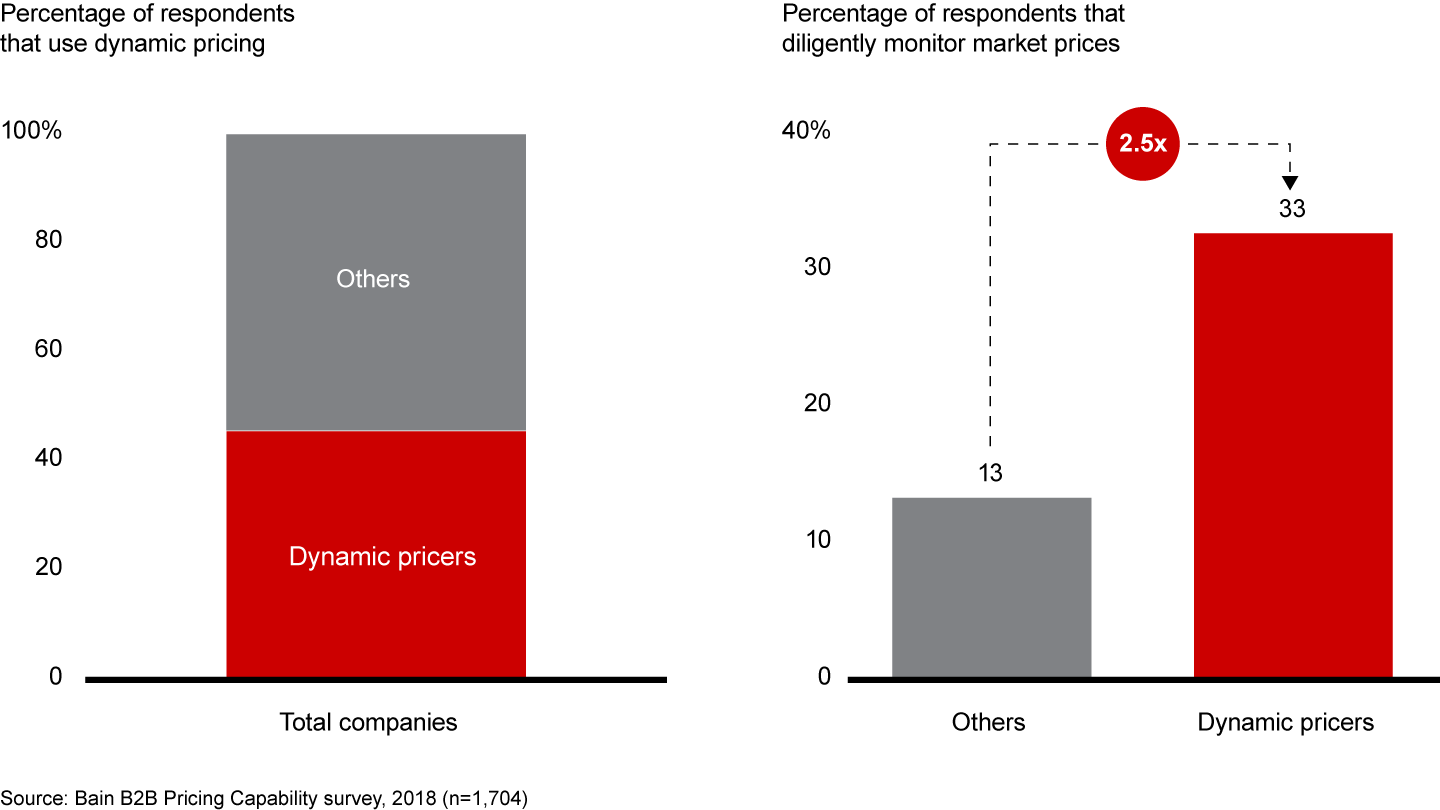
      Nearly half the companies we surveyed use some form of dynamic pricing, and those that do have stronger market-monitoring capabilities
      Nearly half the companies we surveyed use some form of dynamic pricing, and those that do have stronger market-monitoring capabilities
      Nearly half the companies we surveyed use some form of dynamic pricing, and those that do have stronger market-monitoring capabilities

      So the tools matter. But as with all things digital, the tools alone don’t add value. In our survey, executives who play a role in pricing decisions agreed that digital technology and advanced analytics can’t replace good pricing skills and a savvy sales team (see Figure 2). When the tools are used correctly, consistently, and in line with the broader pricing and product strategies, they can help good teams make better pricing decisions more quickly. They also can increase the transparency of the sales process for customers and deliver information to them in ways that they increasingly prefer. But tools need to be enablers of clear and powerful business logic to drive powerful results.

      Over the next five years, pricing tools will become increasingly sophisticated. The tools that are currently available already use data (internal and external) to support sales teams in making good pricing decisions. A second wave is likely to improve the customer experience, coming closer to the consumer online experiences to which we’ve all grown accustomed. More sophisticated data analysis will help sellers identify price-sensitive segments. A distinct third wave could bring new, disruptive modes of pricing (such as pay for outcomes) into more end markets and applications.

      Figure 2
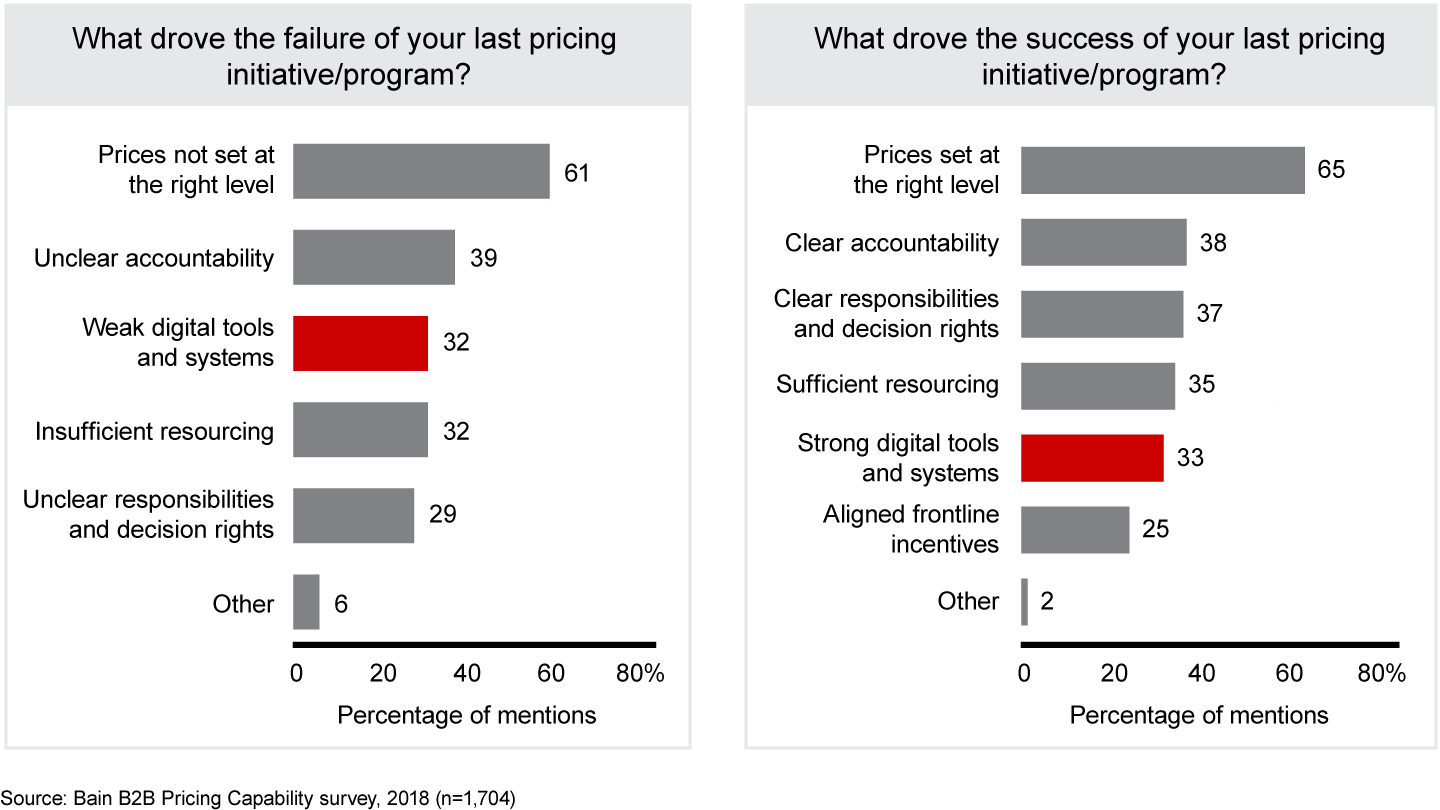
      Digital tools are important, but they're not the most important factor for success
      Digital tools are important, but they're not the most important factor for success
      Digital tools are important, but they're not the most important factor for success

      Trends in digital pricing tools

      Digital leaders are already seeing interesting themes emerge around digital technology in B2B pricing, including these four:

      The front line becomes “sales cyborgs.” Most sales reps still get their discount guidance at a high level, within a target price range, and they are asked to use their experience to negotiate an optimal deal. Experienced reps consider all the right factors—including deal size, products and visibility, customer segment, geography and tenure of the customer—but it’s hard for anyone to consider and analyze that many factors at once. While some sales reps excel at this, many more leave money on the table.

      Digital leaders take that process and add significantly more intelligence to it. Sales teams remain just as critical, but as they build the bid, they get real-time guidance that takes more data into account—not just deal size, location and customer segment but also:

      • whether this product draws in other sales or stands on its own;
      • how much the customer has spent in these categories over the past five years; and
      • which companies are offering competitive bids and whether they price aggressively.

      One enterprise technology company that has implemented this kind of data-rich real-time guidance saw discount reductions of 300 basis points to 400 basis points in the first six months, and they are seeing more reductions as they optimize the process. Another tech company built a tablet app that allowed sales reps to show customers a graphical representation of the difference in cost between two different pricing models. The app was based directly on real-time pricing data, and customers reacted enthusiastically to seeing the comparison in a clear and visual way.

      Customers demand a consumer-like experience in B2B purchasing, including pricing. Online consumer services have raised customers’ expectations about what they have a right to expect before, during and after a purchase. B2B transactions are no longer immune; their customers expect to be able to see comparisons, ratings, real-time inventory, shipping progress and an ongoing connection that makes follow-up transactions much easier.

      For B2B companies, online interactions represent both a cost-efficient way to serve smaller and midsize customers as well as a place to gather real-time pricing data. Doing this can require some new capability building, but the upside can be significant. Consider the case of an agribusiness company that, like most large B2B firms, concentrated its sales efforts on building direct sales relationships with its largest and most profitable customers. To tap into the smaller and midsize businesses that still make up a huge part of the total market, it created a portal to sell products at fixed prices. It not only found this a cost-effective way to grow its revenue from those segments of the market but it also learned to use the data from the portal to inform pricing decisions across the board. Through A/B testing, it was able to gauge price elasticity and customer responses to small changes in pricing and feed that data back to its sales team, arming them with more information about what customers were willing to pay and a nearly real-time view of the market.

      Internal friction decreases around pricing. Digital technology is making it much easier to coordinate pricing decisions with data about inventories and capacity. Increasingly, sales teams have visibility into the capacity available and are able to adjust pricing to keep a plant running at capacity, upgrade the sales mix or avoid bottlenecks. Real-time data also supports channel partners with information about relevant discounts for each customer, which is a better way to encourage behavior than tracking down discounts after the deal is made.

      New pricing models continue to disrupt industries. Increasingly, customers want to pay only for usage or outcomes rather than for complete ownership of a product. Software as a service may be the best-known example, with Salesforce.com being a leader in the space. Salesforce’s success depends on great technology, great products and a huge ecosystem. But one of the main catalysts for its growth was that it changed the pricing model. Previously, to acquire new technology, executives had to invest in big software license fees and often new hardware to run it. Salesforce turned that huge capital expenditure into a series of small operating expenses. And while this was obviously attractive to small and medium-sized businesses, it actually helped Salesforce break into the large enterprise market, too. Many of its early forays into Fortune 500 companies were from a single executive in a business unit using a credit card to try out Salesforce—small purchases that flew well below the CIO’s radar. Outcome- or consumption-based pricing is also becoming more popular in healthcare, chemicals and other industries.

      David Burns, a partner in Bain's Customer Strategy & Marketing practice, outlines three questions that can help companies asses and preserve their margin health.

      Beyond tools: Pricing fundamentals

      While digital tools and data sets are changing the way that companies make pricing decisions, they haven’t changed the fundamentals. Tools are most effective when they support strong existing pricing logic and capabilities. Four principles can help executives bring the right mindset to the process.

      Pricing cannot operate in a vacuum. There’s no better recipe for disaster than failing to think through the implications of pricing before entering a market. One maker of telecom equipment entered an adjacent market with products that were listed on the high end and for which it offered deep discounts. But customers of the market were accustomed to seeing lower list prices and receiving smaller discounts. The high list prices on the equipment maker’s products hurt sales, even though the final prices (after discounts) would have been very competitive. Leaders invest the time to connect pricing strategy to business, product and go-to-market strategies.

      Segmentation, segmentation, segmentation. Digital technologies can make it easier to segment the customer base and help companies better understand what customers value. But segmentation still requires the exercise of thinking through who your customers are and what their needs are. Understanding customers helps companies determine where a price premium can make a difference. A one-size-fits-all pricing approach always leaves money on the table.

      Garbage in, garbage out. Clean data trumps sexy analytics every time. We see a lot of focus on data science and data visualization—the presentation of results. But digital leaders spend a lot more time upstream, understanding the data engineering part of the equation, setting up the right data feeds and getting clean data that’s in a usable format.

      Cross-functional accountability. Pricing is an inherently cross-functional discipline, and typically, no single team owns all of the elements critical to effective pricing, including approval processes, capability roadmaps and pricing strategy. This lack of a single point of accountability can result in workarounds and inefficient handoffs between departments for key decisions. Pricing, however, is important enough to warrant a very clear articulation of decision rights and a detailed understanding of the ways those decisions are communicated throughout the organization—even if final decisions remain with product and market leads.

      Given the need to coordinate sales teams, resellers and other indirect distributors, pricing has been a challenging discipline for some B2B companies. Recent developments, digital or otherwise, have only increased the urgency for companies to get pricing right. Purchasing departments have become more aggressive, sophisticated and digitally savvy, and in many cases, they are expanding the spending categories they manage. Also, it’s relatively easy for buyers to get price information through an Internet search, which can knock out a supplier from consideration before it even has a chance to start conversations with potential customers.

      In this more fluid environment, companies are hard-pressed to capture the full value of their products and services. Digital pricing tools and harnessing digital data sets can help, but executives should always remember that they are only a part of the overall path to pricing full potential.

      David Burns is a partner with Bain & Company in Chicago, and Justin Murphy is a Bain partner in San Francisco. Both work with Bain’s Customer Strategy & Marketing practice and specialize in pricing solutions.

      Autoren
      • Headshot of David Burns
        David Burns
        Partner, Chicago
      • Headshot of Justin Murphy
        Justin Murphy
        Partner, San Francisco
      Kontaktieren Sie uns
      Verwandte Branchen
      • Technologie
      Ähnliche Beratungsangebote
      • Digitalisierung
      • Pricing
      Wie wir Sie unterstützen können
      • B2B Pricing KPI Database
      • Contract Optimizer
      Technologie
      Web3 Could Rewrite the Rules of User Identity

      A reimagined form of digital identity could disrupt some of today’s largest tech platforms.

      Mehr erfahren
      Technologie
      Why SaaS Stocks Have Dropped—and What It Signals for Software’s Next Chapter

      A sharp reset in valuations reflects AI-driven disruption, slowing retention, and a growing divide between incumbents and future winners.

      Mehr erfahren
      Contract Optimizer
      AI's Powerful Pricing Potential

      Generative AI-enhanced pricing can boost revenue growth, widening the gap between leaders and laggards.

      Mehr erfahren
      Digitalisierung
      Smarter Bank Pricing in the Age of AI

      Understanding each customer's price sensitivity helps banks balance discounting with sales conversions.

      Mehr erfahren
      Technologie
      Software M&A

      The good news: Most deal best practices still apply to AI acquisitions.

      Mehr erfahren
      First published in August 2018
      Markierungen
      • B2B Pricing KPI Database
      • Contract Optimizer
      • Digitalisierung
      • Pricing
      • Technologie

      Wie wir unsere Kunden unterstützt haben

      Nachhaltigkeit Can Microchips Turbocharge Sustainability Improvement?

      Kundenbeispiel lesen

      Kundenstrategie und Marketing Increased sales productivity frees selling time and saves millions

      Kundenbeispiel lesen

      Performance Improvement Aggressively growing an IT service provider with a high-performance culture

      Kundenbeispiel lesen

      Möchten Sie mit uns in Kontakt bleiben?

      Wir unterstützen Führungskräfte weltweit, die kritischen Themen in ihrem Unternehmen zu adressieren. Gemeinsam schaffen wir nachhaltige Veränderungen und Ergebnisse.

      Bain Insights. Unsere Perspektive auf die kritischen Themen, mit denen sich international agierende Unternehmen konfrontiert sehen, finden Sie monatlich in Ihrem Postfach.

      *Ich habe die Datenschutzerklärung gelesen und akzeptiere sie.
      Bitte lesen Sie die Datenschutzerklärung und akzeptieren Sie diese.
      Bain & Company
      Contact us Sustainability Accessibility Rechtliche Hinweise Impressum Datenschutz Cookie-Richtlinie Sitemap Log In

      © 1996-2026 Bain & Company, Inc.

      Kontaktieren Sie Bain

      Wie können wir Ihnen helfen?

      • Business inquiry
      • Career information
      • Press relations
      • Partnership request
      • Speaker request
      Alle weltweiten Büros