
Skip to Content
  • Uffici

    Uffici

    Nord e Sud America
    • Atlanta
    • Austin
    • Bogota
    • Boston
    • Buenos Aires
    • Chicago
    • Dallas
    • Denver
    • Houston
    • Los Angeles
    • Mexico City
    • Minneapolis
    • Monterrey
    • Montreal
    • New York
    • Rio de Janeiro
    • San Francisco
    • Santiago
    • São Paulo
    • Seattle
    • Silicon Valley
    • Toronto
    • Washington, DC
    Europa, Medio Oriente e Africa
    • Amsterdam
    • Athens
    • Berlin
    • Brussels
    • Copenhagen
    • Doha
    • Dubai
    • Dusseldorf
    • Frankfurt
    • Helsinki
    • Istanbul
    • Johannesburg
    • Kyiv
    • Lisbon
    • London
    • Madrid
    • Milan
    • Munich
    • Oslo
    • Paris
    • Riyadh
    • Rome
    • Stockholm
    • Vienna
    • Warsaw
    • Zurich
    Asia e Australia
    • Bangkok
    • Beijing
    • Bengaluru
    • Brisbane
    • Ho Chi Minh City
    • Hong Kong
    • Jakarta
    • Kuala Lumpur
    • Manila
    • Melbourne
    • Mumbai
    • New Delhi
    • Perth
    • Seoul
    • Shanghai
    • Singapore
    • Sydney
    • Tokyo
    Guarda tutti gli uffici
  • Alumni
  • Media Center
  • Iscriviti
  • Contattaci
  • Italy | Italiano

    Seleziona il tuo Paese e la tua lingua

    Global
    • Global (English)
    Nord e Sud America
    • Brazil (Português)
    • Argentina (Español)
    • Canada (Français)
    • Chile (Español)
    • Colombia (Español)
    Europa, Medio Oriente e Africa
    • France (Français)
    • DACH Region (Deutsch)
    • Italy (Italiano)
    • Spain (Español)
    • Greece (Elliniká)
    Asia e Australia
    • China (中文版)
    • Korea (한국어)
    • Japan (日本語)
  • Saved items (0)
    Saved items (0)

    You have no saved items.

    Contrassegna il contenuto che ti interessa e verrà salvato qui. Potrai leggerlo o condividerlo in seguito.

    Explore Bain Insights
  • Settori
    Menu principale

    Settori

    • Aerospazio e Difesa
    • Agribusiness
    • Chimica
    • Infrastrutture e Costruzioni
    • Beni di Largo Consumo
    • Servizi Finanziari
    • Sanità
    • Macchinari Industriali
    • Media & Intrattenimento
    • Industria Metallurgica
    • Industria Mineraria
    • Petrolio e Gas
    • Industria Cartaria e Packaging
    • Private Equity
    • Settore Sociale & Pubblico
    • Retail
    • Tecnologia
    • Telecomunicazioni
    • Compagnie Aeree & Trasporti
    • Viaggi e Svago
    • Utility e Rinnovabili
  • Servizi di Consulenza
    Menu principale

    Servizi di Consulenza

    • Customer Experience
    • ESG
    • Innovation
    • M&A and Divestitures
    • Operation
    • People & Organization
    • Private Equity
    • Sales & Marketing
    • Strategia
    • IA, Approfondimenti e Soluzioni
    • Tecnologia
    • Trasformazione
  • Digital
  • Tematiche
  • Informazioni su Bain
    Menu principale

    Informazioni su Bain

    • Che Cosa Facciamo
    • Quello in Cui Crediamo
    • Le Nostre Persone e la Leadership
    • Risultati
    • Premi e Riconoscimenti
    • Organizzazioni Globali
    Further: Our global responsibility
    • Diversità e Inclusione
    • Social Impact
    • Sustainability
    • World Economic Forum
    Learn more about Further
  • Careers
    Menu principale

    Careers

    • Work with Us
      Careers
      Work with Us
      • Find Your Place
      • Our Work Areas
      • Integrated Teams
      • Students
      • Internships & Programs
      • Recruiting Events
    • Life at Bain
      Careers
      Life at Bain
      • Blog: Inside Bain
      • Career Stories
      • Our People
      • Where We Work
      • Supporting Your Growth
      • Affinity Groups
      • Benefits
    • Impact Stories
    • Hiring Process
      Careers
      Hiring Process
      • What to Expect
      • Interviewing
    FIND JOBS
  • Uffici
    Menu principale

    Uffici

    • Nord e Sud America
      Uffici
      Nord e Sud America
      • Atlanta
      • Austin
      • Bogota
      • Boston
      • Buenos Aires
      • Chicago
      • Dallas
      • Denver
      • Houston
      • Los Angeles
      • Mexico City
      • Minneapolis
      • Monterrey
      • Montreal
      • New York
      • Rio de Janeiro
      • San Francisco
      • Santiago
      • São Paulo
      • Seattle
      • Silicon Valley
      • Toronto
      • Washington, DC
    • Europa, Medio Oriente e Africa
      Uffici
      Europa, Medio Oriente e Africa
      • Amsterdam
      • Athens
      • Berlin
      • Brussels
      • Copenhagen
      • Doha
      • Dubai
      • Dusseldorf
      • Frankfurt
      • Helsinki
      • Istanbul
      • Johannesburg
      • Kyiv
      • Lisbon
      • London
      • Madrid
      • Milan
      • Munich
      • Oslo
      • Paris
      • Riyadh
      • Rome
      • Stockholm
      • Vienna
      • Warsaw
      • Zurich
    • Asia e Australia
      Uffici
      Asia e Australia
      • Bangkok
      • Beijing
      • Bengaluru
      • Brisbane
      • Ho Chi Minh City
      • Hong Kong
      • Jakarta
      • Kuala Lumpur
      • Manila
      • Melbourne
      • Mumbai
      • New Delhi
      • Perth
      • Seoul
      • Shanghai
      • Singapore
      • Sydney
      • Tokyo
    Guarda tutti gli uffici
  • Alumni
  • Media Center
  • Iscriviti
  • Contattaci
  • Italy | Italiano
    Menu principale

    Seleziona il tuo Paese e la tua lingua

    • Global
      Seleziona il tuo Paese e la tua lingua
      Global
      • Global (English)
    • Nord e Sud America
      Seleziona il tuo Paese e la tua lingua
      Nord e Sud America
      • Brazil (Português)
      • Argentina (Español)
      • Canada (Français)
      • Chile (Español)
      • Colombia (Español)
    • Europa, Medio Oriente e Africa
      Seleziona il tuo Paese e la tua lingua
      Europa, Medio Oriente e Africa
      • France (Français)
      • DACH Region (Deutsch)
      • Italy (Italiano)
      • Spain (Español)
      • Greece (Elliniká)
    • Asia e Australia
      Seleziona il tuo Paese e la tua lingua
      Asia e Australia
      • China (中文版)
      • Korea (한국어)
      • Japan (日本語)
  • Saved items  (0)
    Menu principale
    Saved items (0)

    You have no saved items.

    Contrassegna il contenuto che ti interessa e verrà salvato qui. Potrai leggerlo o condividerlo in seguito.

    Explore Bain Insights
  • Settori
    • Settori

      • Aerospazio e Difesa
      • Agribusiness
      • Chimica
      • Infrastrutture e Costruzioni
      • Beni di Largo Consumo
      • Servizi Finanziari
      • Sanità
      • Macchinari Industriali
      • Media & Intrattenimento
      • Industria Metallurgica
      • Industria Mineraria
      • Petrolio e Gas
      • Industria Cartaria e Packaging
      • Private Equity
      • Settore Sociale & Pubblico
      • Retail
      • Tecnologia
      • Telecomunicazioni
      • Compagnie Aeree & Trasporti
      • Viaggi e Svago
      • Utility e Rinnovabili
  • Servizi di Consulenza
    • Servizi di Consulenza

      • Customer Experience
      • ESG
      • Innovation
      • M&A and Divestitures
      • Operation
      • People & Organization
      • Private Equity
      • Sales & Marketing
      • Strategia
      • IA, Approfondimenti e Soluzioni
      • Tecnologia
      • Trasformazione
  • Digital
  • Tematiche
  • Informazioni su Bain
    • Informazioni su Bain

      • Che Cosa Facciamo
      • Quello in Cui Crediamo
      • Le Nostre Persone e la Leadership
      • Risultati
      • Premi e Riconoscimenti
      • Organizzazioni Globali
      Further: Our global responsibility
      • Diversità e Inclusione
      • Social Impact
      • Sustainability
      • World Economic Forum
      Learn more about Further
  • Careers
    Ricerche più popolari
    • Agile
    • Digitale
    • Strategia
    La tue ricerche precedenti
      Pagine visitate

      Content added to saved items

      Saved items (0)

      Removed from saved items

      Saved items (0)

      Brief

      Escaping the Doom Loop in Contact Center Operations

      Escaping the Doom Loop in Contact Center Operations

      Many retail banks struggle to eliminate bad and avoidable calls, only to find that total call demand stubbornly remains high.

      Di Michael Woodbury and Corrie Carrigan

      • Tempo di lettura min.
      }

      Brief

      Escaping the Doom Loop in Contact Center Operations
      en

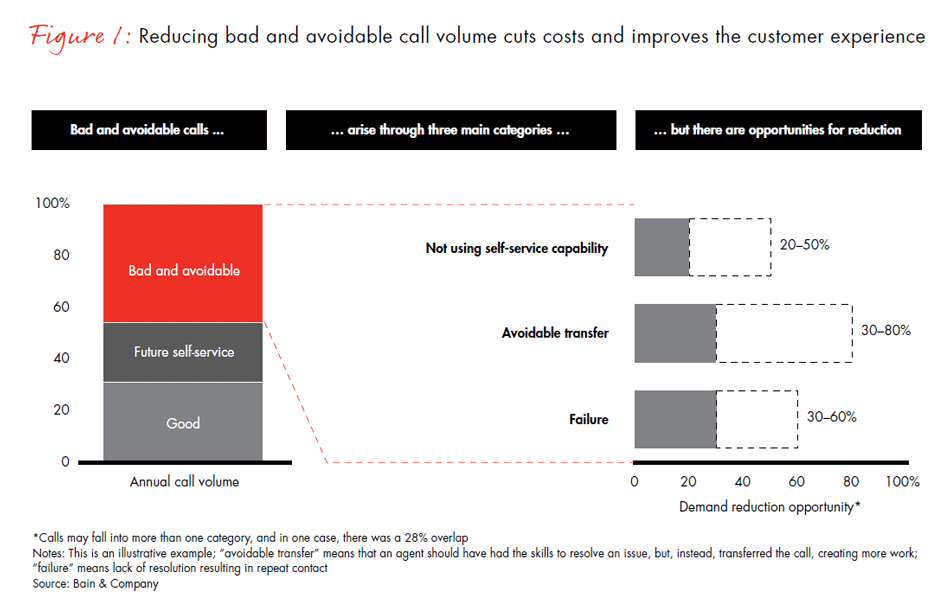
      Customer service at retail banks often resembles an arcade game called Whac-A-Mole, where players use a mallet to pound a mole popping up from different holes. Banks launch initiatives to eliminate the 50% to 70% of call volumes that typically are bad or avoidable—those generated by errors or that should go to lower-cost or higher-service channels—only to find that the total call demand stubbornly remains high. Take out call demands here and watch new call demands pop up there.

      Unlike the arcade game, this dynamic at banks is not fun. It creates a doom loop where an imbalance between workload and capacity triggers futile management interventions, degrades the customer experience and burns out frontline employees.

      Swinging more mallets—by adding initiatives and project teams—can be expensive and usually doesn’t work, because by the time the mallet comes down, the target has changed.

      Leading banks have taken a more effective approach that has produced sustainable reductions of 20% to 40% of total demand within two years, worth $20 million per year on a $100 million annual cost base (see Figure 1). Effective demand management can be achieved through four actions.

      contact-centers-fig01_embed


      Build a capacity plan that includes a realistic demand forecast

      Companies often overestimate the speed with which they can reduce call volumes, leading to an imbalance between incoming demand and the capacity to serve demand. When this occurs, companies may need to add staff temporarily, usually for months, not weeks.

      When one organization overestimated volume reductions, its contact center consistently ran at more than 90% of agents’ time talking to customers or in wrap-up. That resulted in high absenteeism and attrition, extra call time from agents extending calls and after-call time, as agents gave themselves a break. The company invested in more contact center staff—10% more over six months—which allowed it to contain the situation. And within four months, it had reduced the headcount to less than what it was originally.

      A few quick wins can build momentum to free up capacity. One Canadian bank’s fraud contact center, for instance, stopped requiring written affidavits for most fraud incidents and, with a couple of technical changes, made it easier for customers to authenticate their cards in the interactive voice response system, rather than with an agent.

      Michael Woodbury, a Bain partner with the Financial Services practice, discusses how banks can achieve sustainable and substantial call reductions that their executives are looking for.

      Learn what spurs demand, and build an ongoing demand management function

      For customer service operations, the shape of demand changes from week to week, sometimes dramatically. Installing a centralized hub of demand intelligence can reduce the time required to change policies, product design and agent training, in response to the latest demand trends. In most cases and with minimal added expense, banks can redeploy resources that currently spend time on low-value activities for call-quality checking.

      Engage frontline employees in the transformation

      Once you identify the categories of bad and avoidable call volumes, you can address the most costly or troublesome categories first. Daily and weekly feedback from customers, linked to the agents who served them and to the demand management hub, will surface insights about a problem and its root causes.

      An Asian retail bank’s initial transformation effort mostly focused on changing the schedule of when it would introduce new self-service capabilities. But a subsequent analysis showed that more than 50% of the bank’s customer calls resulted from a previous service failure or were serviceable through existing self-service channels. The bank changed its focus to equipping the front line with more effective conversations with customers about self-service. Within three months, the migration to self-service was well under way, and agents felt more accountable for the success of the transformation.

      Change what you measure

      Managing demand includes changing what you measure, so the organization can refocus on improving the customer experience—which leads to fewer calls from unhappy customers. For example, using the Net Promoter ScoreSM, a leading metric for customer loyalty, can replace measuring call quality. And “first-call-right” metrics can replace the obsession with average handle time. A bank could still monitor its average handle time to spot areas where agents need coaching, but overemphasizing this metric often results in fewer first-time resolutions and poor customer experience, which costs a bank more over the long run.

      Taking these four actions will require concerted effort by cross-functional teams, but the results surely will be more rewarding than another round of Whac-A-Mole.


      contact-centers-fig01_full
      Autori
      • Headshot of Michael Woodbury
        Michael Woodbury
        Executive Vice President, Global Talent Management, Houston
      • Headshot of Corrie Carrigan
        Corrie Carrigan
        Partner, Denver
      Contattaci
      Industry collegate
      • Banking
      Servizi di consulenza collegati
      • Customer Experience
      • Service Operations
      Sales and Marketing
      The Five Disciplines of Customer Experience Leaders

      A compelling experience is the surest means to delight customers, engage employees and stand out from competitors.

      Leggi di più
      Sales and Marketing
      Who Should Run Your Net Promoter System®?

      Gritty, passionate executives are key to implementing a Net Promoter System effectively.

      Leggi di più
      Servizi Finanziari
      Corrie Carrigan: Escaping the Doom Loop in Bank Contact Center Operations

      How banks can reduce avoidable calls to contact centers.

      Leggi di più
      Banking
      The Automation Advantage in Retail Banking

      It improves costs, cycle times, and the customer climate.

      Leggi di più
      Banking
      Six Threats Demand a New Playbook for Banks in Wealth and Asset Management

      AI, direct-to-consumer models, and the return of local priorities are redrawing industry lines.

      Leggi di più
      First published in settembre 2015
      Tags
      • Banking
      • Customer Experience
      • Service Operations

      Come abbiamo aiutato i nostri clienti

      Strategia A Bold New Strategy Restores a Bank to a Leadership Position

      Leggi un caso di studio

      Sostenibilità e Corporate Responsibility Redesigning a Bank’s Climate Strategy for Growth

      Leggi un caso di studio

      The change process unlocks potential and profits

      Leggi un caso di studio

      Vuoi continuare la conversazione?

      Aiutiamo i leader globali e le loro aziende ad affrontare problemi e a cogliere le opportunità. Sosteniamo cambiamenti e otteniamo risultati duraturi.

      Bain Insights. Le nostre idee e punti di vista sulle tematiche che le aziende globali affrontano ogni giorno, arrivano nella tua email tutti i mesi.

      *Ho letto l'Informativa sulla Privacy e accetto i termini e le condizioni.

      Si prega di leggere e accettare l’Informativa sulla Privacy
      Bain & Company
      Contattaci Sustainability Accessibility Condizioni d’uso Privacy Cookie Policy Sitemap Log In

      © 1996-2026 Bain & Company, Inc.

      Contatta Bain

      Come posso aiutarti?

      • Business inquiry
      • Career information
      • Press relations
      • Partnership request
      • Speaker request
      Guarda tutti gli uffici