
Skip to Content
  • Uffici

    Uffici

    Nord e Sud America
    • Atlanta
    • Austin
    • Bogota
    • Boston
    • Buenos Aires
    • Chicago
    • Dallas
    • Denver
    • Houston
    • Los Angeles
    • Mexico City
    • Minneapolis
    • Monterrey
    • Montreal
    • New York
    • Rio de Janeiro
    • San Francisco
    • Santiago
    • São Paulo
    • Seattle
    • Silicon Valley
    • Toronto
    • Washington, DC
    Europa, Medio Oriente e Africa
    • Amsterdam
    • Athens
    • Berlin
    • Brussels
    • Copenhagen
    • Doha
    • Dubai
    • Dusseldorf
    • Frankfurt
    • Helsinki
    • Istanbul
    • Johannesburg
    • Kyiv
    • Lisbon
    • London
    • Madrid
    • Milan
    • Munich
    • Oslo
    • Paris
    • Riyadh
    • Rome
    • Stockholm
    • Vienna
    • Warsaw
    • Zurich
    Asia e Australia
    • Bangkok
    • Beijing
    • Bengaluru
    • Brisbane
    • Ho Chi Minh City
    • Hong Kong
    • Jakarta
    • Kuala Lumpur
    • Manila
    • Melbourne
    • Mumbai
    • New Delhi
    • Perth
    • Seoul
    • Shanghai
    • Singapore
    • Sydney
    • Tokyo
    Guarda tutti gli uffici
  • Alumni
  • Media Center
  • Iscriviti
  • Contattaci
  • Italy | Italiano

    Seleziona il tuo Paese e la tua lingua

    Global
    • Global (English)
    Nord e Sud America
    • Brazil (Português)
    • Argentina (Español)
    • Canada (Français)
    • Chile (Español)
    • Colombia (Español)
    Europa, Medio Oriente e Africa
    • France (Français)
    • DACH Region (Deutsch)
    • Italy (Italiano)
    • Spain (Español)
    • Greece (Elliniká)
    Asia e Australia
    • China (中文版)
    • Korea (한국어)
    • Japan (日本語)
  • Saved items (0)
    Saved items (0)

    You have no saved items.

    Contrassegna il contenuto che ti interessa e verrà salvato qui. Potrai leggerlo o condividerlo in seguito.

    Explore Bain Insights
  • Settori
    Menu principale

    Settori

    • Aerospazio e Difesa
    • Agribusiness
    • Chimica
    • Infrastrutture e Costruzioni
    • Beni di Largo Consumo
    • Servizi Finanziari
    • Sanità
    • Macchinari Industriali
    • Media & Intrattenimento
    • Industria Metallurgica
    • Industria Mineraria
    • Petrolio e Gas
    • Industria Cartaria e Packaging
    • Private Equity
    • Settore Sociale & Pubblico
    • Retail
    • Tecnologia
    • Telecomunicazioni
    • Compagnie Aeree & Trasporti
    • Viaggi e Svago
    • Utility e Rinnovabili
  • Servizi di Consulenza
    Menu principale

    Servizi di Consulenza

    • Customer Experience
    • ESG
    • Innovation
    • M&A and Divestitures
    • Operation
    • People & Organization
    • Private Equity
    • Sales & Marketing
    • Strategia
    • IA, Approfondimenti e Soluzioni
    • Tecnologia
    • Trasformazione
  • Digital
  • Tematiche
  • Informazioni su Bain
    Menu principale

    Informazioni su Bain

    • Che Cosa Facciamo
    • Quello in Cui Crediamo
    • Le Nostre Persone e la Leadership
    • Risultati
    • Premi e Riconoscimenti
    • Organizzazioni Globali
    Further: Our global responsibility
    • Diversità e Inclusione
    • Social Impact
    • Sustainability
    • World Economic Forum
    Learn more about Further
  • Careers
    Menu principale

    Careers

    • Work with Us
      Careers
      Work with Us
      • Find Your Place
      • Our Work Areas
      • Integrated Teams
      • Students
      • Internships & Programs
      • Recruiting Events
    • Life at Bain
      Careers
      Life at Bain
      • Blog: Inside Bain
      • Career Stories
      • Our People
      • Where We Work
      • Supporting Your Growth
      • Affinity Groups
      • Benefits
    • Impact Stories
    • Hiring Process
      Careers
      Hiring Process
      • What to Expect
      • Interviewing
    FIND JOBS
  • Uffici
    Menu principale

    Uffici

    • Nord e Sud America
      Uffici
      Nord e Sud America
      • Atlanta
      • Austin
      • Bogota
      • Boston
      • Buenos Aires
      • Chicago
      • Dallas
      • Denver
      • Houston
      • Los Angeles
      • Mexico City
      • Minneapolis
      • Monterrey
      • Montreal
      • New York
      • Rio de Janeiro
      • San Francisco
      • Santiago
      • São Paulo
      • Seattle
      • Silicon Valley
      • Toronto
      • Washington, DC
    • Europa, Medio Oriente e Africa
      Uffici
      Europa, Medio Oriente e Africa
      • Amsterdam
      • Athens
      • Berlin
      • Brussels
      • Copenhagen
      • Doha
      • Dubai
      • Dusseldorf
      • Frankfurt
      • Helsinki
      • Istanbul
      • Johannesburg
      • Kyiv
      • Lisbon
      • London
      • Madrid
      • Milan
      • Munich
      • Oslo
      • Paris
      • Riyadh
      • Rome
      • Stockholm
      • Vienna
      • Warsaw
      • Zurich
    • Asia e Australia
      Uffici
      Asia e Australia
      • Bangkok
      • Beijing
      • Bengaluru
      • Brisbane
      • Ho Chi Minh City
      • Hong Kong
      • Jakarta
      • Kuala Lumpur
      • Manila
      • Melbourne
      • Mumbai
      • New Delhi
      • Perth
      • Seoul
      • Shanghai
      • Singapore
      • Sydney
      • Tokyo
    Guarda tutti gli uffici
  • Alumni
  • Media Center
  • Iscriviti
  • Contattaci
  • Italy | Italiano
    Menu principale

    Seleziona il tuo Paese e la tua lingua

    • Global
      Seleziona il tuo Paese e la tua lingua
      Global
      • Global (English)
    • Nord e Sud America
      Seleziona il tuo Paese e la tua lingua
      Nord e Sud America
      • Brazil (Português)
      • Argentina (Español)
      • Canada (Français)
      • Chile (Español)
      • Colombia (Español)
    • Europa, Medio Oriente e Africa
      Seleziona il tuo Paese e la tua lingua
      Europa, Medio Oriente e Africa
      • France (Français)
      • DACH Region (Deutsch)
      • Italy (Italiano)
      • Spain (Español)
      • Greece (Elliniká)
    • Asia e Australia
      Seleziona il tuo Paese e la tua lingua
      Asia e Australia
      • China (中文版)
      • Korea (한국어)
      • Japan (日本語)
  • Saved items  (0)
    Menu principale
    Saved items (0)

    You have no saved items.

    Contrassegna il contenuto che ti interessa e verrà salvato qui. Potrai leggerlo o condividerlo in seguito.

    Explore Bain Insights
  • Settori
    • Settori

      • Aerospazio e Difesa
      • Agribusiness
      • Chimica
      • Infrastrutture e Costruzioni
      • Beni di Largo Consumo
      • Servizi Finanziari
      • Sanità
      • Macchinari Industriali
      • Media & Intrattenimento
      • Industria Metallurgica
      • Industria Mineraria
      • Petrolio e Gas
      • Industria Cartaria e Packaging
      • Private Equity
      • Settore Sociale & Pubblico
      • Retail
      • Tecnologia
      • Telecomunicazioni
      • Compagnie Aeree & Trasporti
      • Viaggi e Svago
      • Utility e Rinnovabili
  • Servizi di Consulenza
    • Servizi di Consulenza

      • Customer Experience
      • ESG
      • Innovation
      • M&A and Divestitures
      • Operation
      • People & Organization
      • Private Equity
      • Sales & Marketing
      • Strategia
      • IA, Approfondimenti e Soluzioni
      • Tecnologia
      • Trasformazione
  • Digital
  • Tematiche
  • Informazioni su Bain
    • Informazioni su Bain

      • Che Cosa Facciamo
      • Quello in Cui Crediamo
      • Le Nostre Persone e la Leadership
      • Risultati
      • Premi e Riconoscimenti
      • Organizzazioni Globali
      Further: Our global responsibility
      • Diversità e Inclusione
      • Social Impact
      • Sustainability
      • World Economic Forum
      Learn more about Further
  • Careers
    Ricerche più popolari
    • Agile
    • Digitale
    • Strategia
    La tue ricerche precedenti
      Pagine visitate

      Content added to saved items

      Saved items (0)

      Removed from saved items

      Saved items (0)

      Brief

      Overseas Ambition: Asia-Pacific Consumer Products Companies Use M&A to Accelerate Growth

      Overseas Ambition: Asia-Pacific Consumer Products Companies Use M&A to Accelerate Growth

      A decade of M&A activity among Asia-Pacific’s 50 largest consumer products companies offers takeaways for firms looking to grow.

      Di Gino Dizon, Philip Leung, Hidenori Wakabayashi, e David Zehner

      • Tempo di lettura min.
      }

      Brief

      Overseas Ambition: Asia-Pacific Consumer Products Companies Use M&A to Accelerate Growth
      en
      At a Glance
      • The Asia-Pacific region’s 50 largest consumer products companies (CP companies) saw overseas revenue grow three times faster than domestic revenue between 2012 and 2021.
      • CP companies that expanded overseas through mergers and acquisitions grew much more quickly than CP companies that expanded organically.
      • CP companies used cross-border M&A to enter new markets, expand their portfolios and capabilities, and make insurgent plays.
      • In cross-border M&A, the investment thesis should drive the integration plan. Acquirers also need alignment on value creation and a plan to address cultural differences.


      The Asia-Pacific CP 50

      CP companies in the Asia-Pacific region have strong local market positions and ambitious growth agendas. We studied the region’s 50 biggest CP companies (based on 2021 revenue) to learn how they’ve grown over the past decade. For many, the answer was overseas expansion.

      Between 2012 and 2021, the “Asia-Pacific CP 50” increased revenue three times faster overseas than at home. Overseas revenue growth was 9% CAGR, compared to only 3% CAGR for domestic revenue (see Figure 1). In 2021, nine of the Asia-Pacific CP 50 generated more than half of their total revenue offshore, and another 15 generated more than a quarter of their total revenue offshore.

      Figure 1
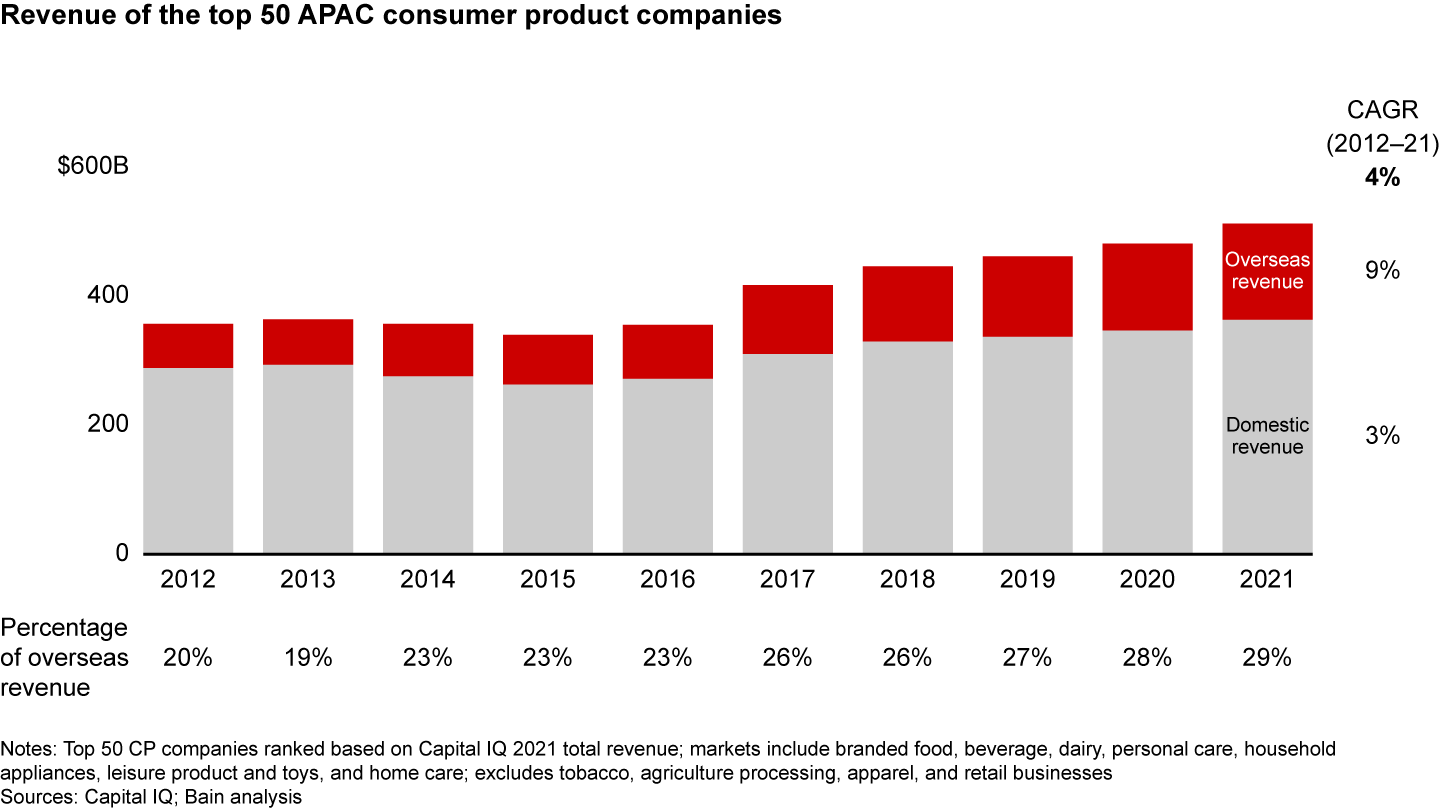
      The 50 biggest Asia-Pacific consumer products companies used offshore business to drive growth

      China-based CP companies experienced the fastest offshore growth at 17% CAGR between 2012 and 2021. In 2021, overseas revenue accounted for 20% of China-based CP companies’ total revenue (see Figure 2).

      Figure 2
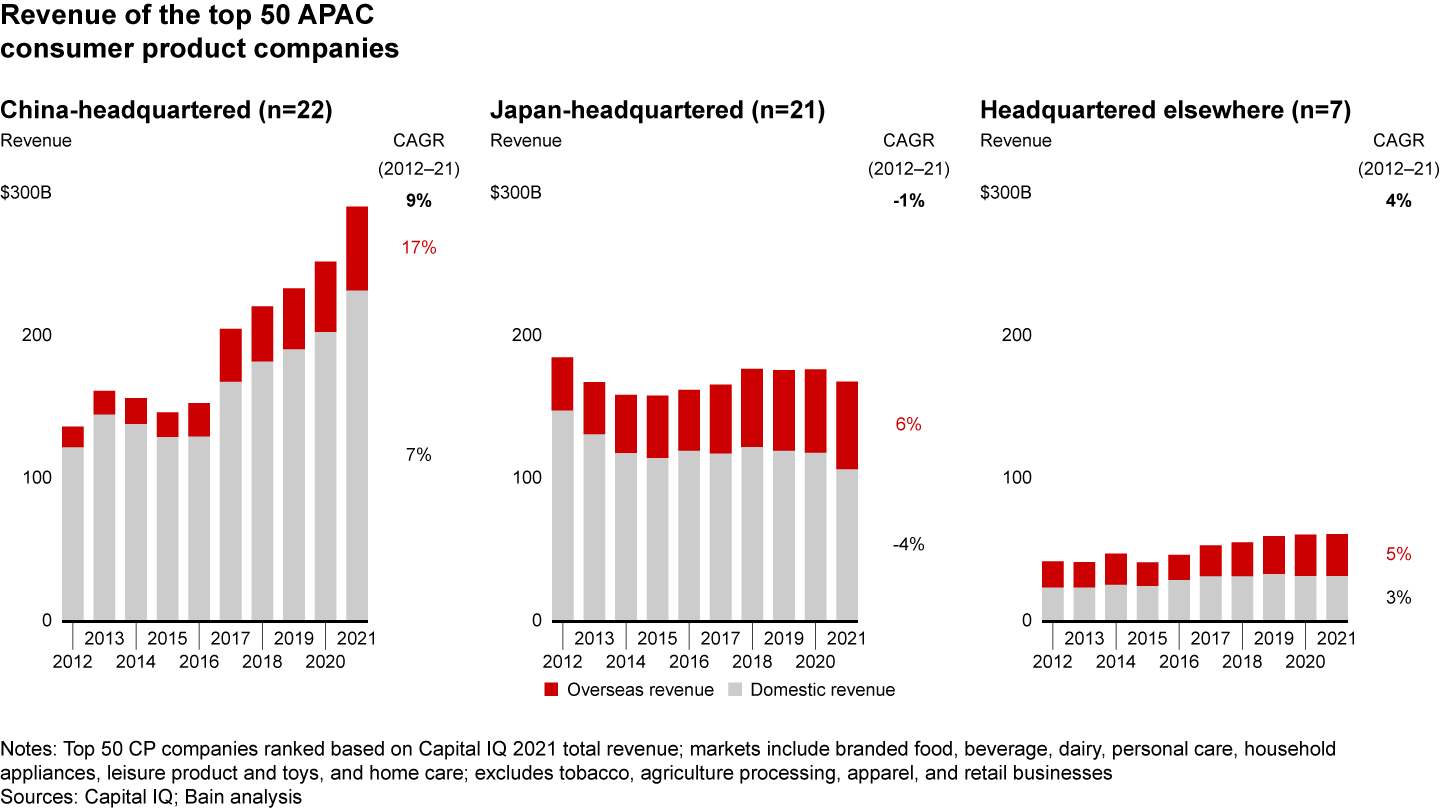
      China-based consumer products companies grew the fastest overseas while Japan-based consumer products companies used offshore business to drive top-line growth

      Over the past five years, domestic revenue was steady for Japan-based CP companies, while overseas revenue inched upward. For Japanese CP companies, the growth of overseas revenue has surpassed the growth of domestic revenue, becoming a primary top-line driver.

      Elsewhere in the Asia-Pacific region, overseas revenue was a significant contributor to overall revenue—nearly equal to domestic revenue.

      How did Asia-Pacific CP companies expand overseas so fast? We identified four strategic approaches to international growth (see Figure 3).

      Figure 3
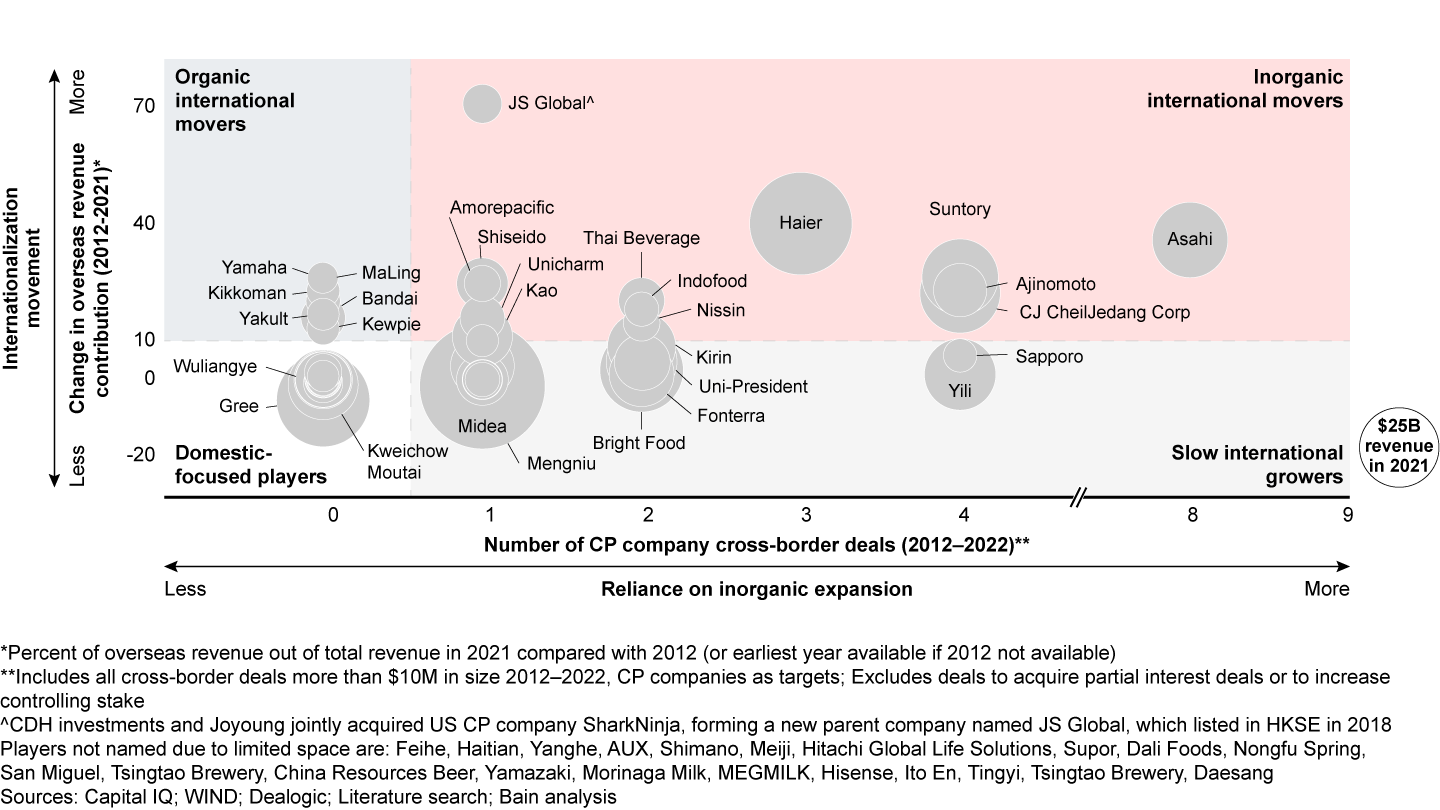
      Consumer products companies approach growth strategies differently

      Inorganic international movers (13 companies) and organic international movers (6 companies) both grew their overseas revenue contribution by more than 10 percentage points between 2012 and 2021. The key difference is that organic international movers grew without M&A while inorganic international movers closed 2.6 deals on average. Domestic-focused players (17 companies) did not complete any cross-border deals; their overseas revenue increased fewer than 10 percentage points. The fourth approach, slow international growers (14 companies), used M&A as a growth strategy but closed fewer and smaller deals than inorganic international movers. Their contribution to overseas revenue increased fewer than 10 percentage points.

      Among these approaches, cross-border M&A was the fastest way for Asia-Pacific CP companies to build business overseas.

      Between 2012 and 2021, Asia-Pacific CP companies that pursued international growth through M&A earned more in overseas revenue than companies that expanded organically. On average, inorganic international movers increased their overseas revenue contribution by 27%, eight percentage points more than organic international movers.

      Why Asia-Pacific CP companies are buying growth

      Traditionally, Asia-Pacific CP companies have struggled to grow overseas. Only one Chinese company is on Forbes’ list of the 100 most valuable global brands, and few Asia-Pacific-based companies have become popular in the West.

      The reason is twofold: First, brands developed for local audiences sometimes fail to resonate with overseas consumers. There are notable exceptions, of course, like Kikkoman, Yakult, and Yamaha. But often, brands have less relevance and power outside their local market.

      And second, overseas expansion creates challenges and uncertainty that some organizations aren’t willing to navigate. To expand overseas, Asia-Pacific CP companies may have to manage incompatible demands on data privacy, environmental responsibility, labor rights, accounting standards, and more.

      Because of these challenges, organic international growth can be slow. To expand faster, many Asia-Pacific CP companies pursue cross-border M&A.

      Among the Asia-Pacific CP 50, 19 companies were international movers. Of those, 68% leveraged cross-border deals to grow international businesses.

      While the average for inorganic international movers is 2.6 deals between 2012 and 2021 with mean deal size of $2 billion, there is wide variability in number of deals and change in overseas revenue in the CP companies evaluated. During the period we examined, Haier closed three deals and increased overseas revenue 1247%, from $1.3 billion to $18 billion. Asahi closed eight deals and CJ CheilJedang closed four, increasing their overseas revenue by $7.6 billion and $8.3 billion (551% and 337% increases), respectively. And they are only a few of the notable players.

      International M&A activity is still heating up among CP companies. Activity dipped during the Covid-19 pandemic but quickly rebounded. Sizable cross-border deals ($50M and above) accounted for 43% of Asia-Pacific CP company deal volume in 2022. Before 2020, on average, a third of strategic deals were cross-border.

      Four ways to grow through cross-border M&A

      Growth is the underlying motivation for overseas expansion, but CP companies can achieve it through different means. Deals fall under four archetypes:

      • Scale in a new or subscale market by acquiring an established production or distribution network.
      • Expand portfolios and add product segments to bring back to the current markets.
      • Make an insurgent play and buy into small or young brands with high-growth potential.
      • Expand capabilities up or down the value stream (or gain digital capabilities) to support the core business.

      Acquiring scale in the target market was the most frequent cross-border deal objective (approximately 55%) followed by deals for portfolio expansion (approximately 25%).

      The motive is important because it affects the integration approach and how CP companies derive value. Integration plans should always be tailored to the deal objective and original motive, even if a CP company is engaged in several deals that fall under the same archetype (e.g., multiple new market scale deals across various geographies require different integration approaches).

      Intent drives integration, value creation, and culture

      M&A is a fast way to grow—but it’s not simple. Acquirers need to focus on the intent of the deal, design a value creation plan, and navigate “fault lines” like culture and governance (see Figure 4).

      Figure 4
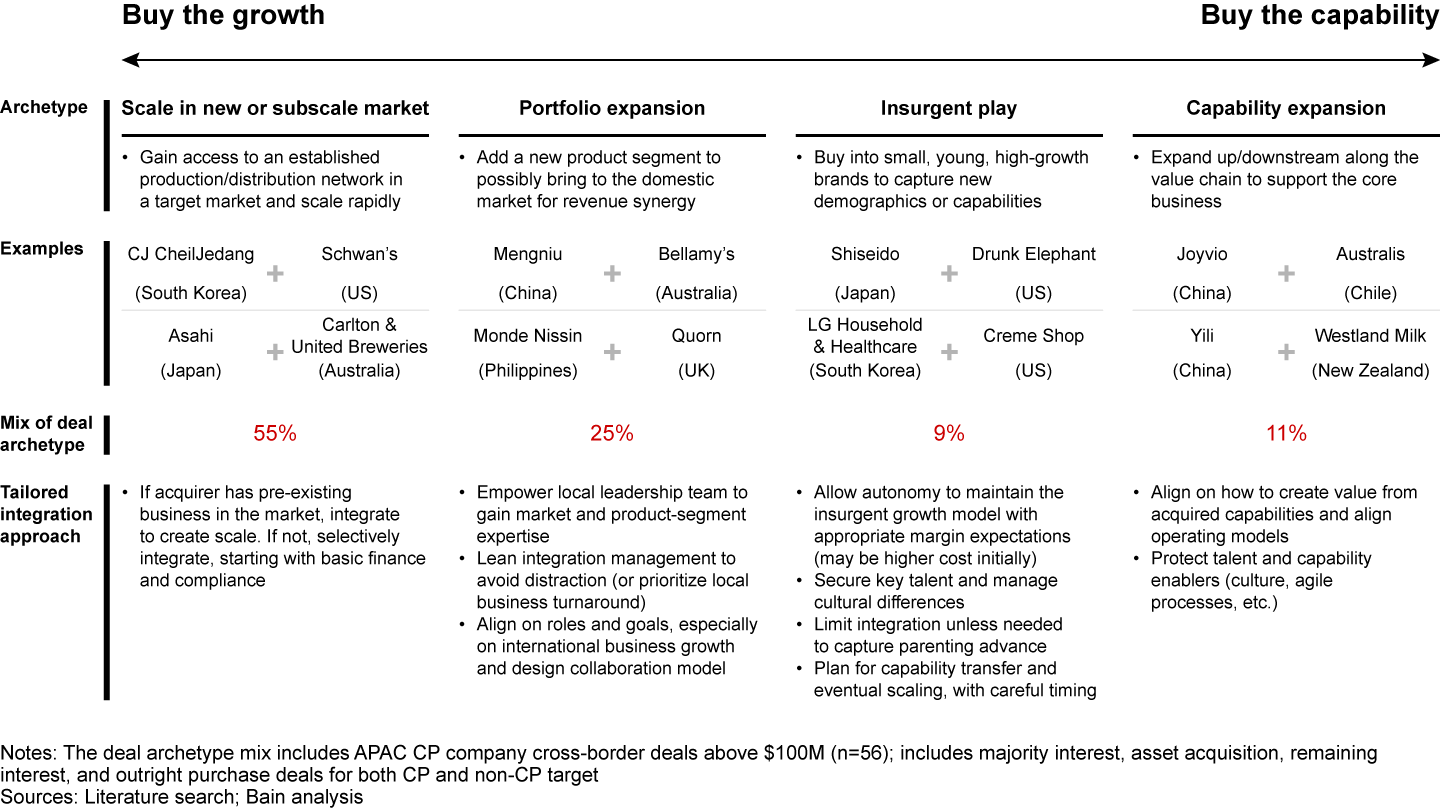
      M&A integration plans must be tailored to the deal intent

      Based on our analysis of the Asia-Pacific CP 50, acquirers need to focus on three aspects of cross-border M&A.

      1. The investment thesis should drive the integration plan.

      Parent organizations can choose to fully integrate acquirees, maintain separate operations, or selectively integrate functions. The key is to integrate what matters.

      For example, if the objective is to create cost and revenue synergies between a subscale overseas business and an acquired scale player, the company should quickly integrate synergistic functions. When Asahi acquired Carlton & United Breweries (CUB), an Australian beverage company, it integrated procurement and logistics to realize cost savings and make a “quantum jump” into the Oceania beverage market.

      Adding a young, fast-growing insurgent brand requires a different approach. Shiseido made an insurgent play when it acquired US start-up Drunk Elephant. Shiseido postponed integrating most functions, including procurement, where it could have achieved scale benefits. Instead, it decided to minimize formula changes and protect Drunk Elephant’s brand story. Shiseido focused on driving international expansion and channel negotiation.

      The integration approach should be deliberate, focused on sources of value, and aligned with the deal objective.

      2. Parties need to align on the value creation plan.

      M&A activity can be a force multiplier—if both parties align on the value creation plan. Each entity needs to understand the deal thesis and how the acquired company’s operations, people, or culture contribute to the parent company’s vision.

      In Korea, CJ CheilJedang wanted to penetrate the North American frozen-food market, but progress was slow. Even though its products were well-received, it didn’t have the shelf space or negotiation power to take off overseas. To scale in a new market, it acquired Schwan’s, a US-based company that had relationships with major grocery retailers. Leaders at CJ CheilJedang and Schwan’s co-developed a value creation plan to realize their combined potential. The plan included critical initiatives, key performance indicators, and goals. They also aligned the US-based management team’s incentives with the value creation plan.

      Local leaders add significant value. Acquiring companies must find the optimal balance between control and autonomy to maximize the M&A investment. One way to achieve this is by gaining early alignment on the value creation plan.

      3. Culture can make or break a deal.

      Difficulty integrating cultures is a common reason that M&A efforts fail. Differences in language, culture, and time zones exacerbate circumstances that are already challenging. Sophisticated cross border acquirers evaluate cultural differences early and tailor their integration approach to recognize (and often protect) existing cultures.

      Culture is a key reason that Shiseido delayed deeper integration with Drunk Elephant. The cosmetic brand was small (~120 team members), and employees had a strong personal attachment to the brand. Shiseido retained the brand’s founder to champion the brand and preserve its agile, start-up-like culture.

      Similarly, Philippines-based Monde Nissin took a light integration approach to preserve cultural elements at Quorn, a meat-alternative producer in the UK that it acquired. Monde Nissin recognized that Quorn’s culture was integral to its success thus far and planned to keep Quorn’s leaders, manufacturing, marketing, and innovation close to core consumers in the UK.

      Asahi and CUB also have a blended culture. The companies’ Oceania headquarters announced a set of core values and behaviors that support the group philosophy overall but are tailored regionally.

      Conclusion

      The CP companies we studied achieved exceptional growth through cross-border M&A because they tailored their integration plans around the deal intent, value creation, and culture.

      Leading CP companies engaged in frequent M&A activity, too. Because of accumulated deal experience, they were able to scale their M&A experience, infrastructure, and talent. Cross-border acquisition and integration became a powerful and repeatable capability.

      How and when should you start?

      Start at home. Make sure you understand the strengths and weaknesses in your core domestic business. Then, identify acquisition targets that can help you fill capability gaps or expand into desirable new markets.

      Be deliberate about the deal intent and stick to it, even if the payoff horizon seems far away. Some of the CP companies we studied took years to transfer key capabilities. Being intentional helped them retain value and avoid costly missteps.

      And don’t wait for “perfect” conditions. Companies that closed deals during the last recession outperformed their peers over the long term, according to prior Bain research on M&A. During downturns, M&A can create new strategic opportunities.

      Overseas M&A is a strong pathway for Asia-Pacific CP companies to enter new markets, expand their portfolios and capabilities, and make bold insurgent plays. CP companies that commit to the deal intent and tailor their integration plans will find a world of opportunity in cross-border M&A.

      • Methodology

        To inform this report, we examined publicly available data on the top 50 CP companies that are headquartered in the Asia-Pacific region. The top-50 ranking was based on total revenue in 2021, as published by S&P Capital IQ. We included companies in the following markets: branded food, beverage, dairy, personal care, household appliance, leisure products, toys, and home care. We excluded tobacco, agricultural processing, apparel, and retail businesses from our analysis. The deal archetype analysis is based on Dealogic data, which defines CP companies as beverages and food, apparel and related products, household and personal products, household durables, office supply products, and tobacco businesses.

        We looked at cross-border deals between 2012 and 2022, when deal values were available and more than $10 million. We did not study deals to acquire partial interest or increase controlling stake.

        This analysis was performed with 2021 data because financial results were available for all 50 of the largest Asia-Pacific CP companies. At the time of publication, 2022 results were available for 34 of the 50 companies. Among these 34 companies, overseas revenue grew at 8% CAGR for the 2012–22 period vs. domestic revenue growth at 1% CAGR. The difference in overseas vs. domestic revenue growth rates is more pronounced when 2022 is the final year in the series because of the slowdown in the domestic Chinese and Japanese markets in 2022.

      Autori
      • Gino Dizon
        Former Partner, Manila
      • Headshot of Philip Leung
        Philip Leung
        Advisory Partner, Hong Kong
      • Headshot of Hidenori Wakabayashi
        Hidenori Wakabayashi
        Partner, Tokyo
      • Headshot of David Zehner
        David Zehner
        Partner, Sydney
      Contattaci
      Industry collegate
      • Beni di Largo Consumo
      • Consumer-led Brand Growth
      Servizi di consulenza collegati
      • Corporate Strategy
      • Mergers and Acquisitions
      • Post-Merger Integration
      Come possiamo aiutarti
      • Firm Strategy & Operations
      • Investor Relations Strategy
      • Joint Ventures and Alliances
      • M&A Capability
      • M&A Strategy
      Beni di Largo Consumo
      Consumer Products M&A

      In their quest for profitable growth, more companies are divesting brands or buying insurgents.

      Leggi di più
      Beni di Largo Consumo
      LEAP to Win: A Playbook for Consumer Products Multinational Corporations in India

      Learn how to navigate—and win—in one of the world’s most promising emerging consumer products markets.

      Leggi di più
      Joint Ventures and Alliances
      Pharmaceuticals M&A

      Dealmaking in 2026 may redefine what it means to buy growth.

      Leggi di più
      M&A Capability
      Banking M&A

      As conditions shift, leading banks are fusing scale with scope to create future-ready organizations.

      Leggi di più
      Beni di Largo Consumo
      Insurgent Brands 2024

      Bain & Company’s eighth annual review recognizes 97 high-growth US consumer products brands, including 48 newcomers to the list.

      Leggi di più
      First published in maggio 2023
      Tags
      • Beni di Largo Consumo
      • Consumer-led Brand Growth
      • Corporate Strategy
      • Firm Strategy & Operations
      • Investor Relations Strategy
      • Joint Ventures and Alliances
      • M&A Capability
      • M&A Strategy
      • Mergers and Acquisitions
      • Post-Merger Integration

      Come abbiamo aiutato i nostri clienti

      An EPC Leader Transforms Itself Amid Intense Volatility

      Leggi un caso di studio

      A CPG Player Targets a Promising Adjacent Market for its Legacy Brand

      Leggi un caso di studio

      Strategia Food Co. jump-starts growth with return to core brands

      Leggi un caso di studio

      Vuoi continuare la conversazione?

      Aiutiamo i leader globali e le loro aziende ad affrontare problemi e a cogliere le opportunità. Sosteniamo cambiamenti e otteniamo risultati duraturi.

      Bain Insights. Le nostre idee e punti di vista sulle tematiche che le aziende globali affrontano ogni giorno, arrivano nella tua email tutti i mesi.

      *Ho letto l'Informativa sulla Privacy e accetto i termini e le condizioni.

      Si prega di leggere e accettare l’Informativa sulla Privacy
      Bain & Company
      Contattaci Sustainability Accessibility Condizioni d’uso Privacy Cookie Policy Sitemap Log In

      © 1996-2026 Bain & Company, Inc.

      Contatta Bain

      Come posso aiutarti?

      • Business inquiry
      • Career information
      • Press relations
      • Partnership request
      • Speaker request
      Guarda tutti gli uffici