
Skip to Content
  • Uffici

    Uffici

    Nord e Sud America
    • Atlanta
    • Austin
    • Bogota
    • Boston
    • Buenos Aires
    • Chicago
    • Dallas
    • Denver
    • Houston
    • Los Angeles
    • Mexico City
    • Minneapolis
    • Monterrey
    • Montreal
    • New York
    • Rio de Janeiro
    • San Francisco
    • Santiago
    • São Paulo
    • Seattle
    • Silicon Valley
    • Toronto
    • Washington, DC
    Europa, Medio Oriente e Africa
    • Amsterdam
    • Athens
    • Berlin
    • Brussels
    • Copenhagen
    • Doha
    • Dubai
    • Dusseldorf
    • Frankfurt
    • Helsinki
    • Istanbul
    • Johannesburg
    • Kyiv
    • Lisbon
    • London
    • Madrid
    • Milan
    • Munich
    • Oslo
    • Paris
    • Riyadh
    • Rome
    • Stockholm
    • Vienna
    • Warsaw
    • Zurich
    Asia e Australia
    • Bangkok
    • Beijing
    • Bengaluru
    • Brisbane
    • Ho Chi Minh City
    • Hong Kong
    • Jakarta
    • Kuala Lumpur
    • Manila
    • Melbourne
    • Mumbai
    • New Delhi
    • Perth
    • Seoul
    • Shanghai
    • Singapore
    • Sydney
    • Tokyo
    Guarda tutti gli uffici
  • Alumni
  • Media Center
  • Iscriviti
  • Contattaci
  • Italy | Italiano

    Seleziona il tuo Paese e la tua lingua

    Global
    • Global (English)
    Nord e Sud America
    • Brazil (Português)
    • Argentina (Español)
    • Canada (Français)
    • Chile (Español)
    • Colombia (Español)
    Europa, Medio Oriente e Africa
    • France (Français)
    • DACH Region (Deutsch)
    • Italy (Italiano)
    • Spain (Español)
    • Greece (Elliniká)
    Asia e Australia
    • China (中文版)
    • Korea (한국어)
    • Japan (日本語)
  • Saved items (0)
    Saved items (0)

    You have no saved items.

    Contrassegna il contenuto che ti interessa e verrà salvato qui. Potrai leggerlo o condividerlo in seguito.

    Explore Bain Insights
  • Settori
    Menu principale

    Settori

    • Aerospazio e Difesa
    • Agribusiness
    • Chimica
    • Infrastrutture e Costruzioni
    • Beni di Largo Consumo
    • Servizi Finanziari
    • Sanità
    • Macchinari Industriali
    • Media & Intrattenimento
    • Industria Metallurgica
    • Industria Mineraria
    • Petrolio e Gas
    • Industria Cartaria e Packaging
    • Private Equity
    • Settore Sociale & Pubblico
    • Retail
    • Tecnologia
    • Telecomunicazioni
    • Compagnie Aeree & Trasporti
    • Viaggi e Svago
    • Utility e Rinnovabili
  • Servizi di Consulenza
    Menu principale

    Servizi di Consulenza

    • Customer Experience
    • ESG
    • Innovation
    • M&A and Divestitures
    • Operation
    • People & Organization
    • Private Equity
    • Sales & Marketing
    • Strategia
    • IA, Approfondimenti e Soluzioni
    • Tecnologia
    • Trasformazione
  • Digital
  • Tematiche
  • Informazioni su Bain
    Menu principale

    Informazioni su Bain

    • Che Cosa Facciamo
    • Quello in Cui Crediamo
    • Le Nostre Persone e la Leadership
    • Risultati
    • Premi e Riconoscimenti
    • Organizzazioni Globali
    Further: Our global responsibility
    • Diversità e Inclusione
    • Social Impact
    • Sustainability
    • World Economic Forum
    Learn more about Further
  • Careers
    Menu principale

    Careers

    • Work with Us
      Careers
      Work with Us
      • Find Your Place
      • Our Work Areas
      • Integrated Teams
      • Students
      • Internships & Programs
      • Recruiting Events
    • Life at Bain
      Careers
      Life at Bain
      • Blog: Inside Bain
      • Career Stories
      • Our People
      • Where We Work
      • Supporting Your Growth
      • Affinity Groups
      • Benefits
    • Impact Stories
    • Hiring Process
      Careers
      Hiring Process
      • What to Expect
      • Interviewing
    FIND JOBS
  • Uffici
    Menu principale

    Uffici

    • Nord e Sud America
      Uffici
      Nord e Sud America
      • Atlanta
      • Austin
      • Bogota
      • Boston
      • Buenos Aires
      • Chicago
      • Dallas
      • Denver
      • Houston
      • Los Angeles
      • Mexico City
      • Minneapolis
      • Monterrey
      • Montreal
      • New York
      • Rio de Janeiro
      • San Francisco
      • Santiago
      • São Paulo
      • Seattle
      • Silicon Valley
      • Toronto
      • Washington, DC
    • Europa, Medio Oriente e Africa
      Uffici
      Europa, Medio Oriente e Africa
      • Amsterdam
      • Athens
      • Berlin
      • Brussels
      • Copenhagen
      • Doha
      • Dubai
      • Dusseldorf
      • Frankfurt
      • Helsinki
      • Istanbul
      • Johannesburg
      • Kyiv
      • Lisbon
      • London
      • Madrid
      • Milan
      • Munich
      • Oslo
      • Paris
      • Riyadh
      • Rome
      • Stockholm
      • Vienna
      • Warsaw
      • Zurich
    • Asia e Australia
      Uffici
      Asia e Australia
      • Bangkok
      • Beijing
      • Bengaluru
      • Brisbane
      • Ho Chi Minh City
      • Hong Kong
      • Jakarta
      • Kuala Lumpur
      • Manila
      • Melbourne
      • Mumbai
      • New Delhi
      • Perth
      • Seoul
      • Shanghai
      • Singapore
      • Sydney
      • Tokyo
    Guarda tutti gli uffici
  • Alumni
  • Media Center
  • Iscriviti
  • Contattaci
  • Italy | Italiano
    Menu principale

    Seleziona il tuo Paese e la tua lingua

    • Global
      Seleziona il tuo Paese e la tua lingua
      Global
      • Global (English)
    • Nord e Sud America
      Seleziona il tuo Paese e la tua lingua
      Nord e Sud America
      • Brazil (Português)
      • Argentina (Español)
      • Canada (Français)
      • Chile (Español)
      • Colombia (Español)
    • Europa, Medio Oriente e Africa
      Seleziona il tuo Paese e la tua lingua
      Europa, Medio Oriente e Africa
      • France (Français)
      • DACH Region (Deutsch)
      • Italy (Italiano)
      • Spain (Español)
      • Greece (Elliniká)
    • Asia e Australia
      Seleziona il tuo Paese e la tua lingua
      Asia e Australia
      • China (中文版)
      • Korea (한국어)
      • Japan (日本語)
  • Saved items  (0)
    Menu principale
    Saved items (0)

    You have no saved items.

    Contrassegna il contenuto che ti interessa e verrà salvato qui. Potrai leggerlo o condividerlo in seguito.

    Explore Bain Insights
  • Settori
    • Settori

      • Aerospazio e Difesa
      • Agribusiness
      • Chimica
      • Infrastrutture e Costruzioni
      • Beni di Largo Consumo
      • Servizi Finanziari
      • Sanità
      • Macchinari Industriali
      • Media & Intrattenimento
      • Industria Metallurgica
      • Industria Mineraria
      • Petrolio e Gas
      • Industria Cartaria e Packaging
      • Private Equity
      • Settore Sociale & Pubblico
      • Retail
      • Tecnologia
      • Telecomunicazioni
      • Compagnie Aeree & Trasporti
      • Viaggi e Svago
      • Utility e Rinnovabili
  • Servizi di Consulenza
    • Servizi di Consulenza

      • Customer Experience
      • ESG
      • Innovation
      • M&A and Divestitures
      • Operation
      • People & Organization
      • Private Equity
      • Sales & Marketing
      • Strategia
      • IA, Approfondimenti e Soluzioni
      • Tecnologia
      • Trasformazione
  • Digital
  • Tematiche
  • Informazioni su Bain
    • Informazioni su Bain

      • Che Cosa Facciamo
      • Quello in Cui Crediamo
      • Le Nostre Persone e la Leadership
      • Risultati
      • Premi e Riconoscimenti
      • Organizzazioni Globali
      Further: Our global responsibility
      • Diversità e Inclusione
      • Social Impact
      • Sustainability
      • World Economic Forum
      Learn more about Further
  • Careers
    Ricerche più popolari
    • Agile
    • Digitale
    • Strategia
    La tue ricerche precedenti
      Pagine visitate

      Content added to saved items

      Saved items (0)

      Removed from saved items

      Saved items (0)

      Brief

      Steering Through the Oil Storm

      Steering Through the Oil Storm

      Oil and gas industry executives cannot control prices, but they can take action to be in a better position when the upturn comes.

      Di Peter Parry

      • Tempo di lettura min.

      Brief

      Steering Through the Oil Storm
      en

      The decline in oil prices over the past several months and the continued weakness in gas prices have created a new structural challenge for the upstream oil and gas industry. We are well beyond the “price correction” that commentators cited as the reason for falling prices in the fourth quarter of 2014. As we were in 1998, 2001 and 2009, we are now in uncharted territory. A world of lower oil-price planning has become the common basis for the coming 12 to 18 months.

      While the industry tries to explain and understand the fall in oil prices and determine when reduced investments will ease the imbalance between supply and demand, executives need to form a concerted, positive reaction.

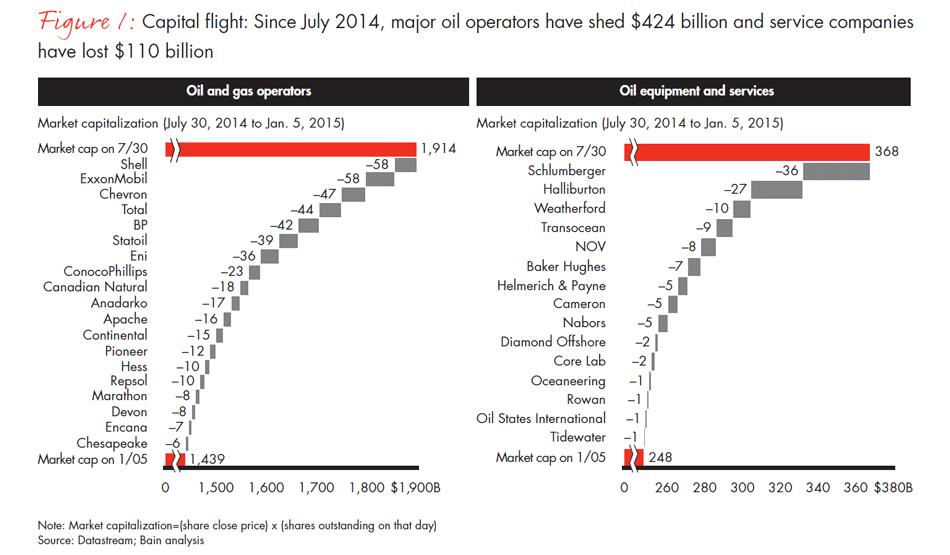
      Equity capital has rapidly exited the sector, and the declining values of oil and oilfield service companies add to the pressure (see Figure 1). The good news is that industry debt gearing levels for major players were generally healthy before August (around 20% to 50%), but borrowing costs will likely increase for those with lower earnings and fewer funding options from asset sales.


      steering-through-the-oil-storm-fig01_embed

      Putting aside speculation about when and to what extent oil prices will recover, how should producers, oilfield service providers and governments respond?

      The industry’s problems stem from three sources:

      • Production costs, which grew by half for major oil companies over the past five years;
      • Complexity, which rose as operators’ and service companies’ production and development businesses became more elaborate; and
      • Government policies, which have ranged from new, post-Macondo regulatory burdens to laissez-faire oversight (as seen in the liquefied natural gas sector in Australia and in onshore production in the US).

      Over the next 12 to 18 months, executives will need to redouble efforts to address cost and complexity in their businesses if they are to allow the industry to restructure and arrive in good shape when oil prices rebound—as we expect they will.

      The 2015 agenda

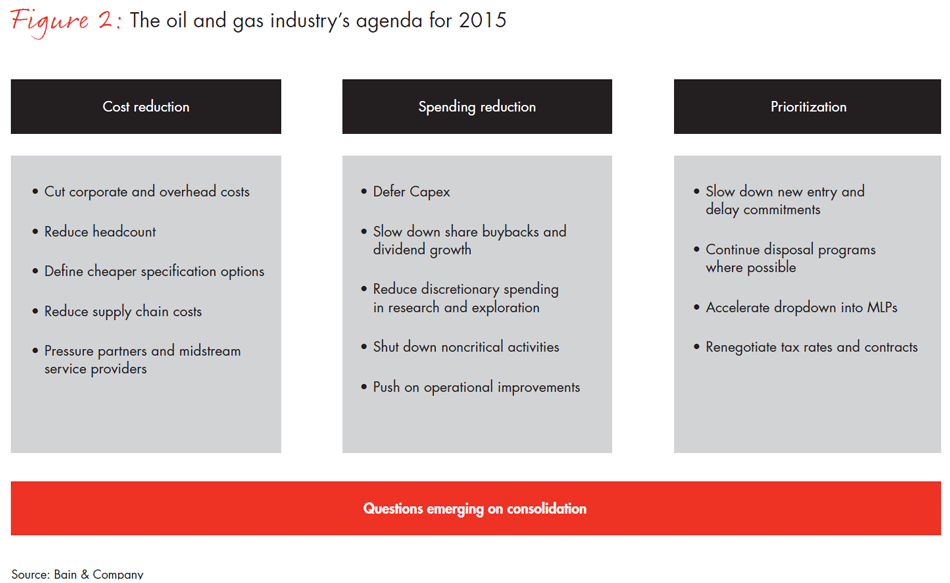
      For commercial oil companies, the immediate imperative in the first quarter is to restore shareholder confidence with a clear set of initiatives to improve performance and reduce costs (see Figure 2). National oil companies must show they can continue to operate effectively within tighter capital constraints while still meeting national budget priorities.

      steering-through-the-oil-storm-fig02_embed

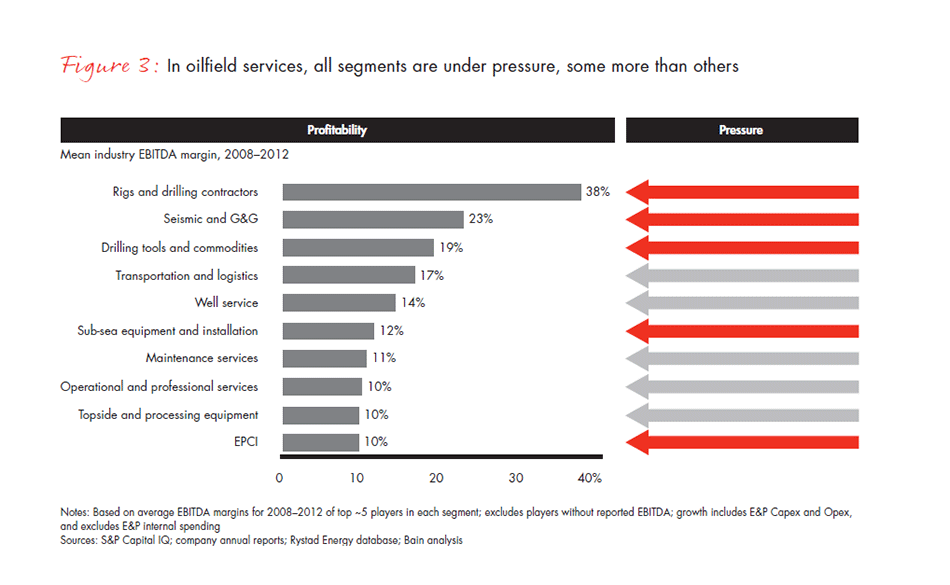
      The reactions of oilfield service companies will depend on their revenue exposure to major projects (Capex) and production operations (Opex), as well as on the degree of flexibility they have to move their resources to the geographic areas and the types of projects where activities are less affected (see Figure 3). Some segments are already hit hard; we see rig rate pressure, reduced spending on exploration and many projects slowing down or being canceled.

      steering-through-the-oil-storm-fig3_embed

      Beyond the first quarter of 2015, the industry and governments will need to work together to quickly rebalance the terms of trade. Mechanisms that drive the oil industry are complex and often situationally specific. We can expect to see pressure on fiscal terms, production shares and tax rates to sustain investment levels. Rates for rigs, equipment and engineering are already adjusting to new norms. As customers reset their expectations about oil and gas prices, many may reopen their long-term supply contracts for renegotiation.

      Lower unit costs. Through the 2008–2010 oil price spike, crash and recovery, major oil companies experienced a period of nearly flat average unit production costs—an increase of only about 1%. In contrast, costs rose by more than 50% from 2010 to 2013 as oil prices topped and stayed above $100 per barrel. Some companies are already acting to manage costs by reducing headcount and renegotiating supplier contracts. But in 2015, oil producers will need to arrest the upward trend and push unit costs down to sustainable levels by reducing costs, improving operational productivity and removing their least productive assets from the mix.

      Remove complexity. To achieve meaningful improvements in productivity, the industry will need to take a holistic and decisive approach to complexity. Oil companies and service providers alike have lost much of the simplicity and effectiveness that created value in their core businesses during the period from 2005 to 2008. (For more, read the book Profit from the Core: Growth Strategy in an Era of Turbulence by Chris Zook and James Allen.) We see three areas in dire need of attention.

      • Portfolio complexity. Are asset portfolios misaligned with performance ambitions? Executives must clarify and clearly understand the sources of value in their business.
      • Organizational complexity. Are there too many layers in the matrix? Do metrics and performance management incentivize the right behaviors? Is accountability disconnected from responsibility? Are decision-making rights unclear?
      • Process complexity. Getting the right management information is critical for decisions. Can processes be radically simplified?

      Standardization of technical solutions across assets can also help reduce complexity, but executives need to make wise decisions to avoid locking in approaches that stifle innovation and may become obsolete too quickly.

      Peter Parry, practice leader of Bain's Oil & Gas practice, discusses how some firms will go a step further by expanding their natural gas portfolios to position themselves as industry leaders in the years to come.

      Reach regulatory balance. Regulation intended to make the industry safer can come with significant cost. Much of the recently increased regulation focuses on offshore drilling (in the wake of Macondo) and onshore unconventional operations, but there are other sources, too.

      For example, the American Petroleum Institute recently indicated that implementing new standards and taking older rail cars out of service for transporting oil and petroleum products in the US could cost consumers up to $45 billion. The industry will need a more effective dialogue with regulators, one that builds trust and encourages more self-regulation.

      A lack of regulation can also lead to unintended cost escalation: In Australia, multiple parallel LNG projects have fueled sector inflation, particularly among the developments under way on the East Coast. Similar unintended consequences can be seen in the gold-rush approach taken by shale players in the US, where overlapping projects have contributed to inflation. While hard to deliver quickly, some well-informed regulatory oversight could have saved billions.

      Is consolidation unavoidable?

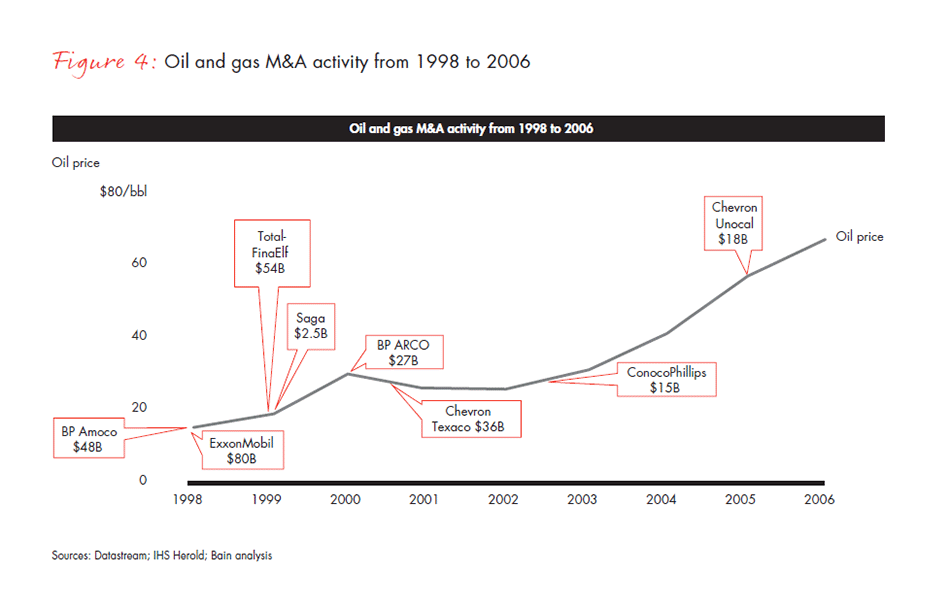
      If the industry cannot adequately manage costs, complexity or regulatory demands in a short time frame, we are likely to see company and asset values drop to levels that will attract private and public equity buyers, stimulate hostile bids and reorder the pack at a scale we last witnessed between 1998 and 2002 (see Figure 4).

      steering-through-the-oil-storm-fig4_embed

      The areas of focus described in our recent Bain Brief “2015 planning criteria: Five fundamentals” are still essential even if oil prices are half the level they were in mid-2014. Executives should have actionable plans for different price levels, realistic cost targets and predictable operational goals. Managers need to remain focused on reducing unit operating costs and delivering new projects—most likely smaller and midsize developments in the current environment. All the while, companies should continue to invest in their people and capabilities to ensure they are in a strong position when the upturn comes. Until then, executives will need to keep cool heads and maintain steady nerves as they weather this storm.

      Peter Parry is a partner with Bain & Company in London, where he leads the firm's Global Oil & Gas practice.


      steering-through-the-oil-storm-fig01_full

      steering-through-the-oil-storm-fig02_full

      steering-through-the-oil-storm-fig3_full

      steering-through-the-oil-storm-fig4_full
      Bain Book

      Profit from the Core

      Learn more about how companies can return to growth in turbulent times.

      Autori
      • Headshot of Peter Parry
        Peter Parry
        Advisory Partner, London
      Contattaci
      Industry collegate
      • Energia e Risorse Naturali
      • Petrolio e Gas
      Petrolio e Gas
      2015 Planning Criteria: Five Fundamentals

      Rising costs and lower oil prices have ushered in a period of increased pressure. It’s time to focus planning on the fundamentals.

      Leggi di più
      Petrolio e Gas
      Luis Uriza: The Acute Need for Cost Reduction in a Low-Price Environment

      Oil and gas companies must always manage ballooning costs, but low oil prices makes this effort all the more urgent.

      Leggi di più
      Petrolio e Gas
      Oil & Gas M&A

      Why some companies are winning by a wider margin.

      Leggi di più
      Petrolio e Gas
      Fueling the Future: How Business, Finance, and Policy Can Accelerate the Clean Fuels Market

      Why global clean fuel ambitions are outpacing investment, and what leaders must do to unlock capital and scale viable projects.

      Leggi di più
      Petrolio e Gas
      Positioning Oil & Gas Companies for Today’s Capital Markets

      We interviewed senior investment professionals, and here’s what we heard.

      Leggi di più
      First published in gennaio 2015
      Tags
      • Energia e Risorse Naturali
      • Petrolio e Gas

      Come abbiamo aiutato i nostri clienti

      Organizzazione Moving Beyond an Operating Model Redesign to Live the Model

      Leggi un caso di studio

      Sostenibilità e Corporate Responsibility An Oil and Gas Leader Creates a New Clean Energy Business

      Leggi un caso di studio

      An OFS captures post-merger growth synergies

      Leggi un caso di studio

      Vuoi continuare la conversazione?

      Aiutiamo i leader globali e le loro aziende ad affrontare problemi e a cogliere le opportunità. Sosteniamo cambiamenti e otteniamo risultati duraturi.

      Bain Insights. Le nostre idee e punti di vista sulle tematiche che le aziende globali affrontano ogni giorno, arrivano nella tua email tutti i mesi.

      *Ho letto l'Informativa sulla Privacy e accetto i termini e le condizioni.

      Si prega di leggere e accettare l’Informativa sulla Privacy
      Bain & Company
      Contattaci Sustainability Accessibility Condizioni d’uso Privacy Cookie Policy Sitemap Log In

      © 1996-2026 Bain & Company, Inc.

      Contatta Bain

      Come posso aiutarti?

      • Business inquiry
      • Career information
      • Press relations
      • Partnership request
      • Speaker request
      Guarda tutti gli uffici