
Skip to Content
  • Standorte

    Standorte

    North & Latin America
    • Atlanta
    • Austin
    • Bogota
    • Boston
    • Buenos Aires
    • Chicago
    • Dallas
    • Denver
    • Houston
    • Lisbon
    • Los Angeles
    • Mexico City
    • Minneapolis
    • Monterrey
    • Montreal
    • New York
    • Rio de Janeiro
    • San Francisco
    • Santiago
    • São Paulo
    • Seattle
    • Silicon Valley
    • Toronto
    • Washington, DC
    Europe & Africa
    • Amsterdam
    • Athens
    • Berlin
    • Brussels
    • Copenhagen
    • Düsseldorf
    • Frankfurt
    • Helsinki
    • Istanbul
    • Johannesburg
    • Kyiv
    • Lisbon
    • London
    • Madrid
    • Milan
    • München
    • Oslo
    • Paris
    • Rome
    • Stockholm
    • Warsaw
    • Wien
    • Zürich
    Middle East
    • Doha
    • Dubai
    • Riyadh
    Asia & Australia
    • Bangkok
    • Beijing
    • Bengaluru
    • Brisbane
    • Ho Chi Minh City
    • Hong Kong
    • Jakarta
    • Kuala Lumpur
    • Manila
    • Melbourne
    • Mumbai
    • New Delhi
    • Perth
    • Seoul
    • Shanghai
    • Singapore
    • Sydney
    • Tokyo
    Alle Standorte Anzeigen
  • Alumni
  • Presse
  • Newsletter
  • Kontakt
  • DACH-Region | Deutsch

    Wählen Sie Ihre Region und Sprache

    Global
    • Global (English)
    North & Latin America
    • Brazil (Português)
    • Argentina (Español)
    • Canada (Français)
    • Chile (Español)
    • Colombia (Español)
    Europe, Middle East, & Africa
    • France (Français)
    • DACH-Region (Deutsch)
    • Italy (Italiano)
    • Spain (Español)
    • Greece (Elliniká)
    Asia & Australia
    • China (中文版)
    • Korea (한국어)
    • Japan (日本語)
  • Saved items (0)
    Saved items (0)

    You have no saved items.

    Inhalte, für die Sie sich interessieren, werden hier gespeichert und können später gelesen oder weitergeleitet werden.

    Explore Bain Insights
  • Branchenkompetenzen
    Hauptmenü

    Branchenkompetenzen

    • Luft- und Raumfahrt, Verteidigung
    • Agrarwirtschaft
    • Chemieindustrie
    • Infrastruktur und Bauwirtschaft
    • Konsumgüter
    • Finanzdienstleistungen
    • Gesundheitswesen
    • Maschinen- und Anlagenbau
    • Medienwirtschaft
    • Metallindustrie
    • Bergbau
    • Öl und Gas
    • Papier- und Verpackungsindustrie
    • Private Equity
      Branchenkompetenzen
      Private Equity
      • Due Diligence
      • Exit Planning
      • Firm Strategy & Operations
      • Portfolio Value Creation
    • Öffentlicher Sektor und Sozialwesen
    • Einzelhandel
    • Technologie
    • Telekommunikation
    • Transportwesen
    • Reise- und Freizeitbranche
    • Versorgung und erneuerbare Energien
  • Managementkompetenzen
    Hauptmenü

    Managementkompetenzen

    • Customer Experience
    • ESG
    • Innovation
    • M&A
    • Operations
    • People & Organization
    • Private Equity
    • Sales & Marketing
    • Strategie
    • KI, Einblicke und Lösungen
    • Technologie
    • Transformation
  • Digital
  • Publikationen
    Hauptmenü

    Publikationen

    • Branchenthemen
    • Managementthemen
    • Bain-Bücher
    Alle Publikationen
    Ausgewählte Themen
    • Resilienz in der globalen Krise
    • M&A Report
    • Private Equity Podcast
    • Midyear Private Equity Report
    • Agile
    • Engineering Report
    • Digital Transformation
    • Elements of Value®
    • Firm of the Future
    • Nachhaltigkeitsstudie
    • Macro Trends
    • Future of Consumption
    • Weltwirtschaftsforum (WEF)
  • Über uns
    Hauptmenü

    Über uns

    • Was wir bieten
    • Unser Ansatz
    • Unser Team
    • Game Changer Award
    • Female Allstar Board
    • Messbare Ergebnisse (EN)
    • Auszeichnungen
    • Globale Partnerschaften
    • The Mission
    Further: Our global responsibility
    • Vielfalt & Chancengleichheit
    • Soziale Verantwortung
    • Sustainability
    Erfahren Sie mehr zu "Further"
  • Karriere
    Hauptmenü

    Karriere

    • Dein Einstieg
      Karriere
      Dein Einstieg
      • Find Your Place
      • Unsere Arbeitsbereiche
      • Unsere Teams
      • Angebote für Studierende
      • Praktika & Programme
      • Recruiting-Events
    • Arbeiten bei Bain
      Karriere
      Arbeiten bei Bain
      • Blog: Inside Bain
      • Karriere Stories
      • Unsere Bainies
      • Office-Standorte
      • Weiterentwicklung
      • Affinity Groups
      • Deine Benefits
    • Impact Stories
    • Deine Bewerbung
      Karriere
      Deine Bewerbung
      • Das erwartet dich
      • Der Interviewprozess
    FIND JOBS
  • Standorte
    Hauptmenü

    Standorte

    • North & Latin America
      Standorte
      North & Latin America
      • Atlanta
      • Austin
      • Bogota
      • Boston
      • Buenos Aires
      • Chicago
      • Dallas
      • Denver
      • Houston
      • Lisbon
      • Los Angeles
      • Mexico City
      • Minneapolis
      • Monterrey
      • Montreal
      • New York
      • Rio de Janeiro
      • San Francisco
      • Santiago
      • São Paulo
      • Seattle
      • Silicon Valley
      • Toronto
      • Washington, DC
    • Europe & Africa
      Standorte
      Europe & Africa
      • Amsterdam
      • Athens
      • Berlin
      • Brussels
      • Copenhagen
      • Düsseldorf
      • Frankfurt
      • Helsinki
      • Istanbul
      • Johannesburg
      • Kyiv
      • Lisbon
      • London
      • Madrid
      • Milan
      • München
      • Oslo
      • Paris
      • Rome
      • Stockholm
      • Warsaw
      • Wien
      • Zürich
    • Middle East
      Standorte
      Middle East
      • Doha
      • Dubai
      • Riyadh
    • Asia & Australia
      Standorte
      Asia & Australia
      • Bangkok
      • Beijing
      • Bengaluru
      • Brisbane
      • Ho Chi Minh City
      • Hong Kong
      • Jakarta
      • Kuala Lumpur
      • Manila
      • Melbourne
      • Mumbai
      • New Delhi
      • Perth
      • Seoul
      • Shanghai
      • Singapore
      • Sydney
      • Tokyo
    Alle Standorte Anzeigen
  • Alumni
  • Presse
  • Newsletter
  • Kontakt
  • DACH-Region | Deutsch
    Hauptmenü

    Wählen Sie Ihre Region und Sprache

    • Global
      Wählen Sie Ihre Region und Sprache
      Global
      • Global (English)
    • North & Latin America
      Wählen Sie Ihre Region und Sprache
      North & Latin America
      • Brazil (Português)
      • Argentina (Español)
      • Canada (Français)
      • Chile (Español)
      • Colombia (Español)
    • Europe, Middle East, & Africa
      Wählen Sie Ihre Region und Sprache
      Europe, Middle East, & Africa
      • France (Français)
      • DACH-Region (Deutsch)
      • Italy (Italiano)
      • Spain (Español)
      • Greece (Elliniká)
    • Asia & Australia
      Wählen Sie Ihre Region und Sprache
      Asia & Australia
      • China (中文版)
      • Korea (한국어)
      • Japan (日本語)
  • Saved items  (0)
    Hauptmenü
    Saved items (0)

    You have no saved items.

    Inhalte, für die Sie sich interessieren, werden hier gespeichert und können später gelesen oder weitergeleitet werden.

    Explore Bain Insights
  • Branchenkompetenzen
    • Branchenkompetenzen

      • Luft- und Raumfahrt, Verteidigung
      • Agrarwirtschaft
      • Chemieindustrie
      • Infrastruktur und Bauwirtschaft
      • Konsumgüter
      • Finanzdienstleistungen
      • Gesundheitswesen
      • Maschinen- und Anlagenbau
      • Medienwirtschaft
      • Metallindustrie
      • Bergbau
      • Öl und Gas
      • Papier- und Verpackungsindustrie
      • Private Equity
      • Öffentlicher Sektor und Sozialwesen
      • Einzelhandel
      • Technologie
      • Telekommunikation
      • Transportwesen
      • Reise- und Freizeitbranche
      • Versorgung und erneuerbare Energien
  • Managementkompetenzen
    • Managementkompetenzen

      • Customer Experience
      • ESG
      • Innovation
      • M&A
      • Operations
      • People & Organization
      • Private Equity
      • Sales & Marketing
      • Strategie
      • KI, Einblicke und Lösungen
      • Technologie
      • Transformation
  • Digital
  • Publikationen
    • Publikationen

      • Branchenthemen
      • Managementthemen
      • Bain-Bücher
      Alle Publikationen
      Ausgewählte Themen
      • Resilienz in der globalen Krise
      • M&A Report
      • Private Equity Podcast
      • Midyear Private Equity Report
      • Agile
      • Engineering Report
      • Digital Transformation
      • Elements of Value®
      • Firm of the Future
      • Nachhaltigkeitsstudie
      • Macro Trends
      • Future of Consumption
      • Weltwirtschaftsforum (WEF)
  • Über uns
    • Über uns

      • Was wir bieten
      • Unser Ansatz
      • Unser Team
      • Game Changer Award
      • Female Allstar Board
      • Messbare Ergebnisse (EN)
      • Auszeichnungen
      • Globale Partnerschaften
      • The Mission
      Further: Our global responsibility
      • Vielfalt & Chancengleichheit
      • Soziale Verantwortung
      • Sustainability
      Erfahren Sie mehr zu "Further"
  • Karriere
    Häufige Suchanfragen
    • Agil
    • Digital
    • Strategie
    Vorherige Suchanfragen
      Zuletzt besuchte Seiten

      Content added to saved items

      Saved items (0)

      Removed from saved items

      Saved items (0)

      Brief

      Auto Suppliers’ Winding Road to 2030

      Auto Suppliers’ Winding Road to 2030

      Innovation and cost control will be critical to succeed in a lower-volume environment.

      Von Markus Bürgin, Ralf Kalmbach, Wilko Stark, Michael Weber and Thomas Wendt

      • Min. Lesezeit
      }

      Brief

      Auto Suppliers’ Winding Road to 2030
      en
      Auf einen Blick
      • The auto industry needs to adjust for higher uncertainty, a foreseeable mature market volume contraction, and growth only in a few markets and at lower levels.
      • To avoid surprises and shortsighted reactions, companies need to be proactive and prepared for any potential downturn scenario.
      • Companies that have successfully navigated changes in the market develop volume scenarios, lower the breakeven point, install leading indicators, conduct integrated stress tests, prepare ready-to-use measures, seize opportunities and overcommunicate.
      • Companies need to perform a strategic review of fixed cost structures to master the challenges of the downturn and lay the foundation for future profitable growth.

      The current volume decline in passenger car demand is not just an ordinary business cycle decline. In addition to the macroeconomic cycle, some underlying factors that affect passenger car demand are shifting. For example, end user behavior in urbanized areas is shifting toward ride hailing and shared mobility, resulting in fewer cars to achieve the same transportation mileage output. Demographics in the US, especially the net growth of the driving age population (15 to 65 years old), are rapidly approaching zero.

      The same underlying factors are true for Japan and Germany. China is the only region where we see signs of a flatter cycle and a rebound to 2018 car production levels within the next decade. The population in China will peak around 2030, however, with an increasingly unhealthy distribution by age and the same demographic pattern shift of mature economies but occurring with a 10-year delay.

      The postcycle new normal cannot be predicted reliably. Production forecasts as well as Bain’s proprietary mild downturn and deep recession scenarios for the post-recovery period all land below 2017 production levels—a grim outlook for additional order reductions for suppliers in 2020 and 2021.

      To prepare for these changes, the entire auto industry needs to adjust for higher uncertainty, a foreseeable mature market volume contraction, and growth only in a few markets and at lower levels (see Figure 1). Suppliers don’t have the option to wait this one out or hope for a quick return to precycle volumes.

      Figure 1
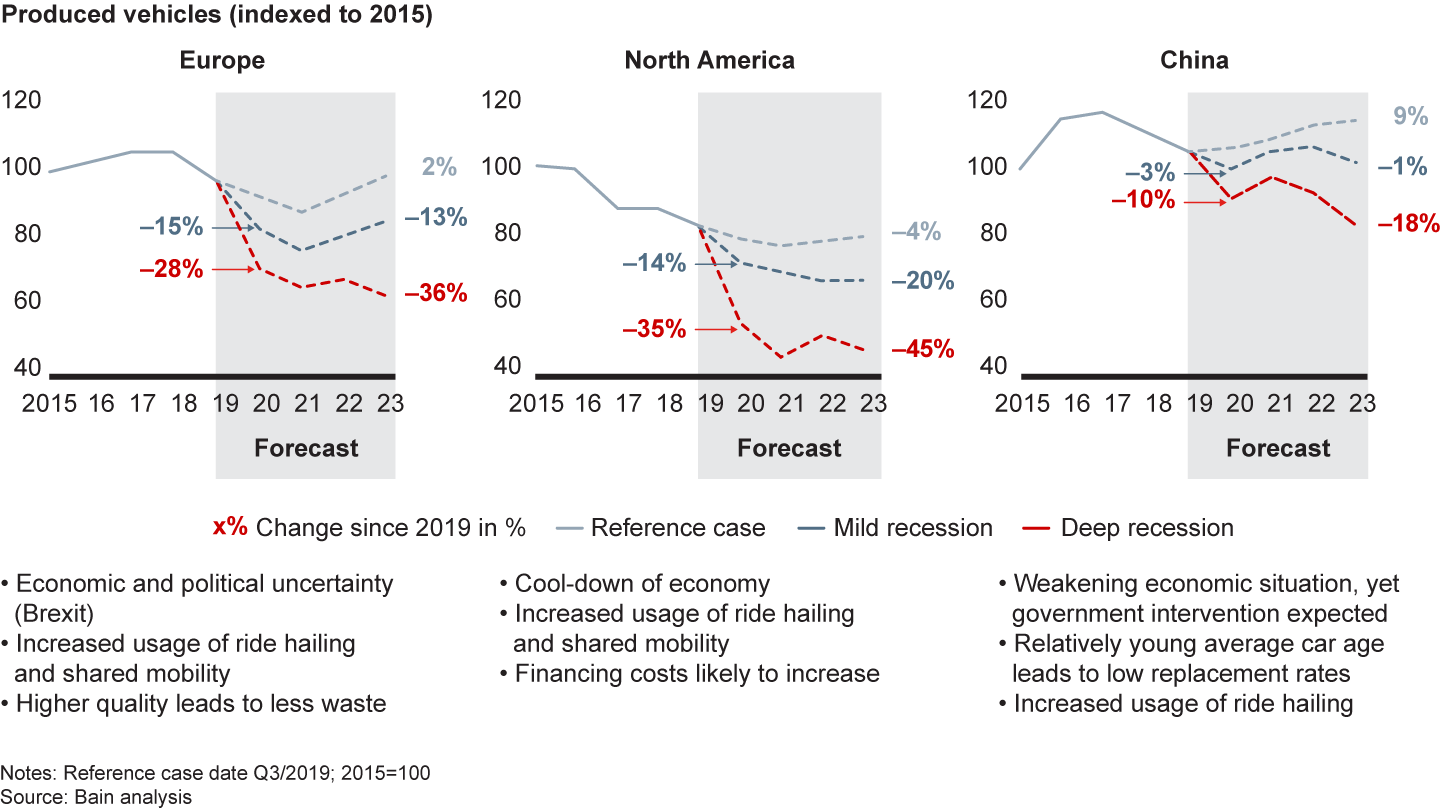
      One global passenger car market scenario shows imminent declines from differing underlying factors for each region
      One global passenger car market scenario shows imminent declines from differing underlying factors for each region
      One global passenger car market scenario shows imminent declines from differing underlying factors for each region

      Recession readiness will become critical for successful downturn management

      In times of uncertainty, management by budget is bound to hit a wall because it is typically based on the previous year’s forecasts for the coming year while orders are revised down every two weeks. Budgets have some buffer but not enough for if and when a different volume scenario comes into play.

      The years 2020 and 2021 will be decisive ones for the industry. To avoid surprises and shortsighted reactions, companies need to be proactive and prepared for any potential downturn scenario. To be able to adjust flexibly to any emerging situation with the right set of measures at the right time, typical budget planning exercises need to be complemented by scenario planning. In fact, empirical data shows that companies that were flexible enough to adjust their cost base during the last crisis outperformed their peers during and after the downturn (see Figure 2). They seized the opportunity of the downturn to address structural issues and thereby laid the groundwork for a quick and healthy recovery, resulting in postcrisis profits well above the more reactive companies.

      Figure 2
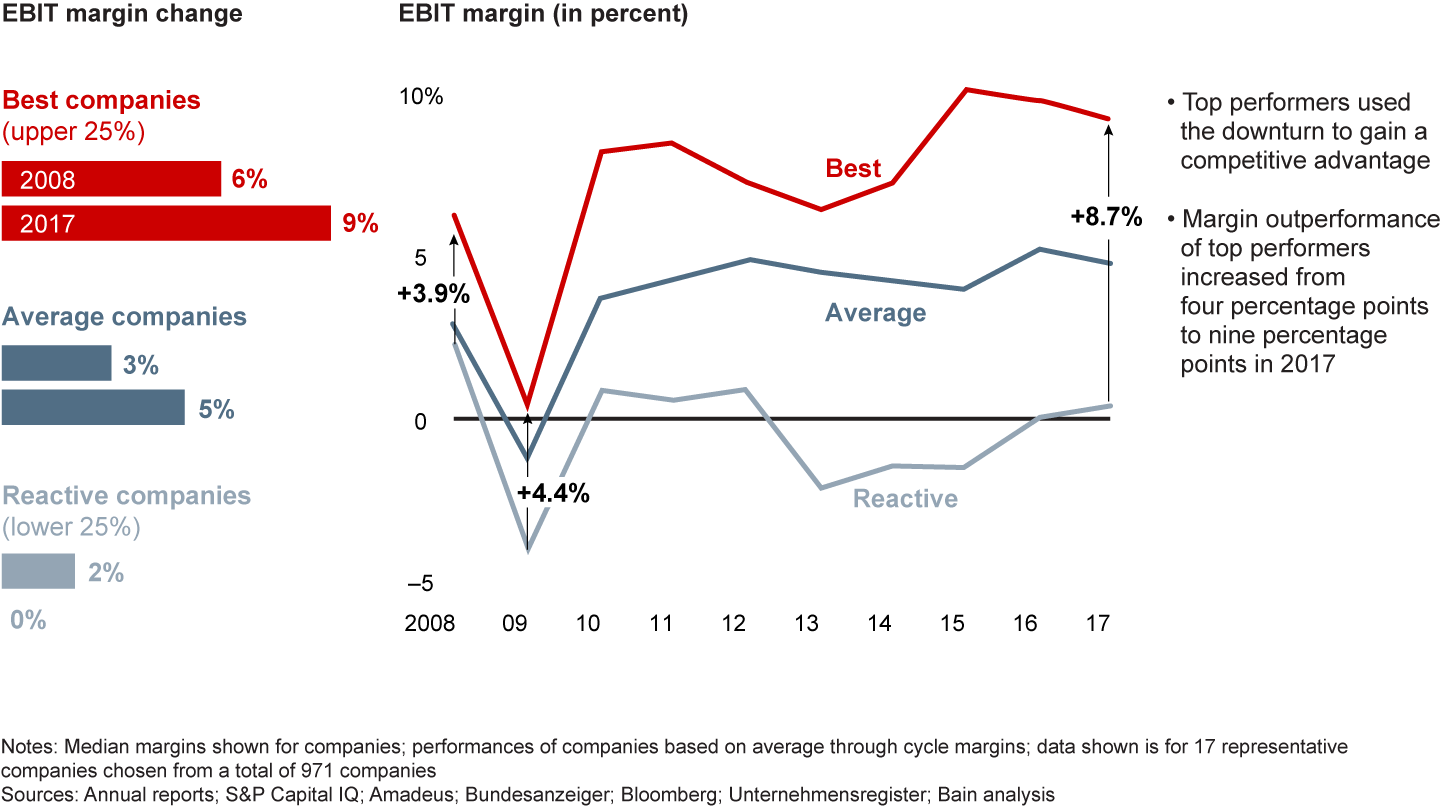
      Auto suppliers with fast and proactive responses to the August 2009 crisis outperformed their peers
      Auto suppliers with fast and proactive responses to the August 2009 crisis outperformed their peers
      Auto suppliers with fast and proactive responses to the August 2009 crisis outperformed their peers

      Top-performing companies follow seven tactics to prepare for and adapt to market changes

      Companies that have successfully navigated changes in the market use the following seven strategies.

      • Develop volume scenarios. They have a solid market-based view of volume scenarios and are not reliant on bottom-up planning from all divisions—each inflated with varying levels of hope and sales ambitions—to meet revenue targets. This requires a thorough segment- and region-specific analysis to build two scenarios for mild recession and deep recession in addition to the current base case.
      • Lower the breakeven point. They make a management decision about which scenario the company’s cost structure should correspond to. They lower their breakeven point to deep-recession preparedness or to their mild-recession scenario.
      • Install leading indicators. They develop a company-specific leading indicator rather than the usual lagging ones to stay updated on which scenario is most likely to materialize. Remember, as the future gets harder to predict, the ability to conduct rapid course corrections rather than reenforcing plans becomes critical.
      • Conduct an integrated stress test. They conduct an integrated stress test to make sure that next year’s plans for profit and loss, cash, balance sheet, and financing are resilient. Adjusting the budget or refinancing is never easy, and both get more difficult the later they are done.
      • Prepare ready-to-use measures. They have a set of actions in place for when the base case slips toward a less desirable scenario. These need to be defined sets of initiatives, sufficiently quantified, with clear ownership and timelines for implementation. Commitments and headlines will not suffice when the time to deliver results may be a couple of quarters too long, putting the company at risk.
      • Seize the opportunity. They use the opportunity to make bold decisions regarding structural issues and ailing businesses—such as a strategic review of the business portfolio, including divestitures and M&A, production footprint, and the make/buy setup with its capex implications.
      • Overcommunicate. They proactively and openly talk to all stakeholders early. It is not pleasant, but earning the respect of employees, management, owners and customers earlier in the process creates transparency rather than irritation later in the process.

      Learn more about Bain's Automotive Practice and how we can help your company

      Strategic outlook on profit pools: Customers in mature markets will not spend more on a car in 2030

      In addition to macroeconomic uncertainty, the structure of demand and the resulting imperatives for target cost per car will change dramatically.

      Over the past 10 years, on average, customers spent between seven and eight months of their income on cars, with very little variation. There are no indications thatthis number will increase within the next few years. At the same time, real net disposable income (after inflation and at purchasing power parity) will only slow growth. Japan is looking at stagnation over the next five years, estimates for Europe and the US hover between 1.6% and 2.2% annually, while only Chinese income growth rates are above 6% per annum.

      Other ways out of this predicament have been exhausted: Interest rates are at or near all-time lows, and financing periods cannot be extended endlessly. As a result, the industry faces another severe challenge: Customers in two out of three large markets will not be able to spend significantly more on cars in the near future, so the cost target for a car in 2030 may well be the same as it is today. At the same time, additional regulatory demands (emissions and safety standards, most prominently) as well as customer needs (software cycles, entertainment features and a human-machine interface) sharply increase costs.

      This leads to both an overall cost-control imperative to succeed in times of stagnating volumes as well as a shift in the target cost mix per car (see Figure 3). To succeed in this environment, suppliers need a deep understanding of customers’ future willingness to spend and the resulting cost structure that comes with it.

      Figure 3
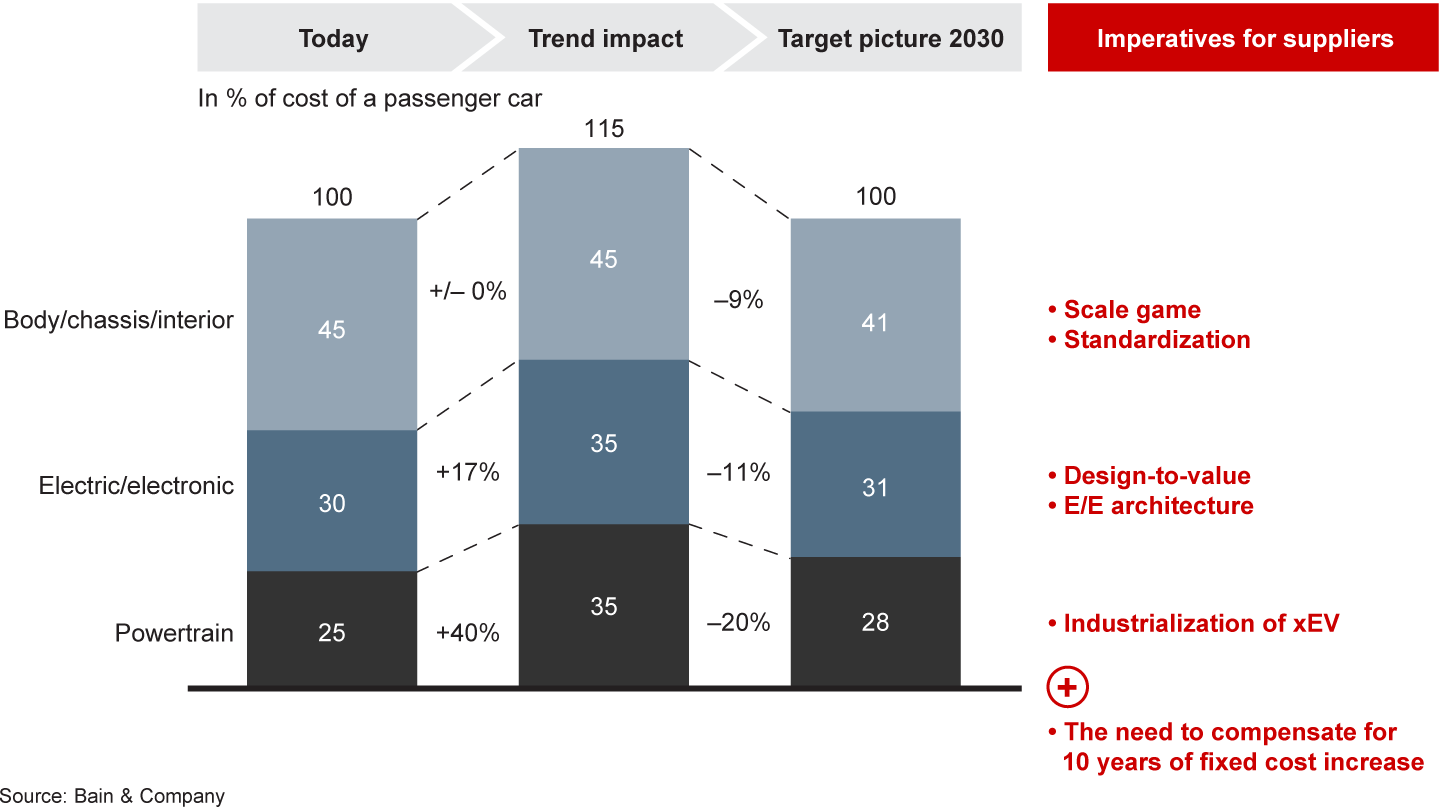
      The shifting cost mix per car will pressure the supplier landscape
      The shifting cost mix per car will pressure the supplier landscape
      The shifting cost mix per car will pressure the supplier landscape

      Auto suppliers face unprecedented cost pressure

      The conventional parts of a car (structural chassis, body, interior components) will face increased feature demands (low-weight, recyclable materials; regulatory mandates) during a time when customers are not willing to pay extra for most of the additional functionality. This will result in continued cost pressure in a commoditizing environment, requiring suppliers to focus on scale and component standardization.

      Features and software in electrical/electronic components are bound to increase sharply and in shortening cycles, requiring permanent research and development (R&D) and over-the-air updates. We estimate that the resulting share of cost per car will rise about 11% above target cost levels for 2030 and that it will be largely driven by proprietary system development by original equipment manufacturers (OEMs).

      The required cost innovation can only be addressed by a rigorous stance on design to value, which means focusing the offering on customers’ willingness to pay rather than the technical feasibility. It also means making a fundamental change to the electronics architecture, which can be accomplished by collaborating to avoid redundancies and a significant reduction in engine control units (ECUs). A few car models have already implemented this plan. xEV penetration, which is enforced ahead of customer demand, is entering the industry well before the cost learning curve and puts immense pressure on alternative powertrains’ share of cost. With scale and industrialization, we estimate the costs to be in the 20% range for the battery, inverter, ECU and motor/gearbox modules because of a flattening but continued cost reduction of the cells below 70 euro per kilowatt-hour over the next 10 years.

      The resulting challenges for suppliers are massive and unprecedented in scale and complexity. Future profit depends on highly disciplined cost innovation in the coming years. Successful companies need to do the following things:

      • Compensate for annually increasing fixed costs and OEM pricing in an environment of zero or low growth by rigorously focusing on operational excellence along key cost drivers.
      • Apply the same rigor and discipline on the top line in a low- to no-growth environment, with focused commercial excellence behaviors, collaborating with the right OEMs in the right regions to achieve future growth.
      • Decide on an appropriate strategic position.

      Waiting is not an option. Companies need to perform a strategic portfolio review, potentially resulting in divestitures and M&A to increase scale. A few, strategically aligned and focused R&D/capex bets can out-innovate the competition. A fresh look at the share of value creation, footprint and structural costs can keep breakeven points low. And companies can review the operating model, especially for innovative parts of the business portfolio.

      A macroeconomic downturn provides companies with a unique opportunity to tackle structural issues within their portfolios and to review fixed cost structures to master the challenges of the downturn and lay the foundation for future profitable growth.

      Markus Bürgin and Ralf Kalmbach are partners with Bain & Company in the Munich office and members of the Global Automotive & Mobility practice. Wilko Stark is a Bain advisor, a former member of the divisional board of Mercedes and a former leader of the CASE program at Daimler. Michael Weber is a partner in the Tokyo office and a member of the Automotive & Mobility practice in Asia-Pacific. Thomas Wendt is a partner with the Silicon Valley office and a member of the Automotive & Mobility practice in the Americas.

      Learn more about Bain's Automotive Practice and how we can help your company


      Autoren
      • Headshot of Markus Bürgin
        Markus Bürgin
        Partner, München
      • Headshot of Ralf Kalmbach
        Ralf Kalmbach
        Alumni, München
      • Headshot of Michael Weber
        Michael Weber
        Partner, Sydney
      • Headshot of Tom Wendt
        Tom Wendt
        Partner, San Francisco
      Kontaktieren Sie uns
      Verwandte Branchen
      • Automotive und Mobilität
      Automotive und Mobilität
      Automotive & Mobility M&A

      As pressure to scale mounts, leaders are consolidating and buying technology.

      Mehr erfahren
      Automotive und Mobilität
      Automotive Profitability: How OEM and Supplier Margins Are Faring

      The post-pandemic profit surge has reversed, as OEM margins have fallen more than 50% since 2023.

      Mehr erfahren
      Automotive und Mobilität
      Microfactories: The Back-to-Local Moment

      Automation could allow much smaller factories to operate closer to consumers and deliver more bespoke products.

      Mehr erfahren
      Automotive und Mobilität
      Technology Is Radically Reshaping Auto Economics

      Digital technologies and AI are poised to increase the efficiency of automotive processes by 30%.

      Mehr erfahren
      Automotive und Mobilität
      Inside Germany's Evolving Electric Vehicle Market

      Our survey of auto dealers across Germany shows strong consumer interest in EVs, but striking differences between premium and mass-market segments.

      Mehr erfahren
      First published in März 2020
      Markierungen
      • Automotive und Mobilität

      Wie wir unsere Kunden unterstützt haben

      Strategie A Conglomerate Charts a New Global Strategy

      Kundenbeispiel lesen

      An Automaker Reinvents Customer Experience with a Focus on Key Episodes

      Kundenbeispiel lesen

      Performance Improvement Streamlining engine assembly boosts output

      Kundenbeispiel lesen

      Möchten Sie mit uns in Kontakt bleiben?

      Wir unterstützen Führungskräfte weltweit, die kritischen Themen in ihrem Unternehmen zu adressieren. Gemeinsam schaffen wir nachhaltige Veränderungen und Ergebnisse.

      Bain Insights. Unsere Perspektive auf die kritischen Themen, mit denen sich international agierende Unternehmen konfrontiert sehen, finden Sie monatlich in Ihrem Postfach.

      *Ich habe die Datenschutzerklärung gelesen und akzeptiere sie.
      Bitte lesen Sie die Datenschutzerklärung und akzeptieren Sie diese.
      Bain & Company
      Contact us Sustainability Accessibility Rechtliche Hinweise Impressum Datenschutz Cookie-Richtlinie Sitemap Log In

      © 1996-2026 Bain & Company, Inc.

      Kontaktieren Sie Bain

      Wie können wir Ihnen helfen?

      • Business inquiry
      • Career information
      • Press relations
      • Partnership request
      • Speaker request
      Alle weltweiten Büros