
Skip to Content
  • Standorte

    Standorte

    North & Latin America
    • Atlanta
    • Austin
    • Bogota
    • Boston
    • Buenos Aires
    • Chicago
    • Dallas
    • Denver
    • Houston
    • Lisbon
    • Los Angeles
    • Mexico City
    • Minneapolis
    • Monterrey
    • Montreal
    • New York
    • Rio de Janeiro
    • San Francisco
    • Santiago
    • São Paulo
    • Seattle
    • Silicon Valley
    • Toronto
    • Washington, DC
    Europe & Africa
    • Amsterdam
    • Athens
    • Berlin
    • Brussels
    • Copenhagen
    • Düsseldorf
    • Frankfurt
    • Helsinki
    • Istanbul
    • Johannesburg
    • Kyiv
    • Lisbon
    • London
    • Madrid
    • Milan
    • München
    • Oslo
    • Paris
    • Rome
    • Stockholm
    • Warsaw
    • Wien
    • Zürich
    Middle East
    • Doha
    • Dubai
    • Riyadh
    Asia & Australia
    • Bangkok
    • Beijing
    • Bengaluru
    • Brisbane
    • Ho Chi Minh City
    • Hong Kong
    • Jakarta
    • Kuala Lumpur
    • Manila
    • Melbourne
    • Mumbai
    • New Delhi
    • Perth
    • Seoul
    • Shanghai
    • Singapore
    • Sydney
    • Tokyo
    Alle Standorte Anzeigen
  • Alumni
  • Presse
  • Newsletter
  • Kontakt
  • DACH-Region | Deutsch

    Wählen Sie Ihre Region und Sprache

    Global
    • Global (English)
    North & Latin America
    • Brazil (Português)
    • Argentina (Español)
    • Canada (Français)
    • Chile (Español)
    • Colombia (Español)
    Europe, Middle East, & Africa
    • France (Français)
    • DACH-Region (Deutsch)
    • Italy (Italiano)
    • Spain (Español)
    • Greece (Elliniká)
    Asia & Australia
    • China (中文版)
    • Korea (한국어)
    • Japan (日本語)
  • Saved items (0)
    Saved items (0)

    You have no saved items.

    Inhalte, für die Sie sich interessieren, werden hier gespeichert und können später gelesen oder weitergeleitet werden.

    Explore Bain Insights
  • Branchenkompetenzen
    Hauptmenü

    Branchenkompetenzen

    • Luft- und Raumfahrt, Verteidigung
    • Agrarwirtschaft
    • Chemieindustrie
    • Infrastruktur und Bauwirtschaft
    • Konsumgüter
    • Finanzdienstleistungen
    • Gesundheitswesen
    • Maschinen- und Anlagenbau
    • Medienwirtschaft
    • Metallindustrie
    • Bergbau
    • Öl und Gas
    • Papier- und Verpackungsindustrie
    • Private Equity
      Branchenkompetenzen
      Private Equity
      • Due Diligence
      • Exit Planning
      • Firm Strategy & Operations
      • Portfolio Value Creation
    • Öffentlicher Sektor und Sozialwesen
    • Einzelhandel
    • Technologie
    • Telekommunikation
    • Transportwesen
    • Reise- und Freizeitbranche
    • Versorgung und erneuerbare Energien
  • Managementkompetenzen
    Hauptmenü

    Managementkompetenzen

    • Customer Experience
    • ESG
    • Innovation
    • M&A
    • Operations
    • People & Organization
    • Private Equity
    • Sales & Marketing
    • Strategie
    • KI, Einblicke und Lösungen
    • Technologie
    • Transformation
  • Digital
  • Publikationen
    Hauptmenü

    Publikationen

    • Branchenthemen
    • Managementthemen
    • Bain-Bücher
    Alle Publikationen
    Ausgewählte Themen
    • Resilienz in der globalen Krise
    • M&A Report
    • Private Equity Podcast
    • Midyear Private Equity Report
    • Agile
    • Engineering Report
    • Digital Transformation
    • Elements of Value®
    • Firm of the Future
    • Nachhaltigkeitsstudie
    • Macro Trends
    • Future of Consumption
    • Weltwirtschaftsforum (WEF)
  • Über uns
    Hauptmenü

    Über uns

    • Was wir bieten
    • Unser Ansatz
    • Unser Team
    • Game Changer Award
    • Female Allstar Board
    • Messbare Ergebnisse (EN)
    • Auszeichnungen
    • Globale Partnerschaften
    • The Mission
    Further: Our global responsibility
    • Vielfalt & Chancengleichheit
    • Soziale Verantwortung
    • Sustainability
    Erfahren Sie mehr zu "Further"
  • Karriere
    Hauptmenü

    Karriere

    • Dein Einstieg
      Karriere
      Dein Einstieg
      • Find Your Place
      • Unsere Arbeitsbereiche
      • Unsere Teams
      • Angebote für Studierende
      • Praktika & Programme
      • Recruiting-Events
    • Arbeiten bei Bain
      Karriere
      Arbeiten bei Bain
      • Blog: Inside Bain
      • Karriere Stories
      • Unsere Bainies
      • Office-Standorte
      • Weiterentwicklung
      • Affinity Groups
      • Deine Benefits
    • Impact Stories
    • Deine Bewerbung
      Karriere
      Deine Bewerbung
      • Das erwartet dich
      • Der Interviewprozess
    FIND JOBS
  • Standorte
    Hauptmenü

    Standorte

    • North & Latin America
      Standorte
      North & Latin America
      • Atlanta
      • Austin
      • Bogota
      • Boston
      • Buenos Aires
      • Chicago
      • Dallas
      • Denver
      • Houston
      • Lisbon
      • Los Angeles
      • Mexico City
      • Minneapolis
      • Monterrey
      • Montreal
      • New York
      • Rio de Janeiro
      • San Francisco
      • Santiago
      • São Paulo
      • Seattle
      • Silicon Valley
      • Toronto
      • Washington, DC
    • Europe & Africa
      Standorte
      Europe & Africa
      • Amsterdam
      • Athens
      • Berlin
      • Brussels
      • Copenhagen
      • Düsseldorf
      • Frankfurt
      • Helsinki
      • Istanbul
      • Johannesburg
      • Kyiv
      • Lisbon
      • London
      • Madrid
      • Milan
      • München
      • Oslo
      • Paris
      • Rome
      • Stockholm
      • Warsaw
      • Wien
      • Zürich
    • Middle East
      Standorte
      Middle East
      • Doha
      • Dubai
      • Riyadh
    • Asia & Australia
      Standorte
      Asia & Australia
      • Bangkok
      • Beijing
      • Bengaluru
      • Brisbane
      • Ho Chi Minh City
      • Hong Kong
      • Jakarta
      • Kuala Lumpur
      • Manila
      • Melbourne
      • Mumbai
      • New Delhi
      • Perth
      • Seoul
      • Shanghai
      • Singapore
      • Sydney
      • Tokyo
    Alle Standorte Anzeigen
  • Alumni
  • Presse
  • Newsletter
  • Kontakt
  • DACH-Region | Deutsch
    Hauptmenü

    Wählen Sie Ihre Region und Sprache

    • Global
      Wählen Sie Ihre Region und Sprache
      Global
      • Global (English)
    • North & Latin America
      Wählen Sie Ihre Region und Sprache
      North & Latin America
      • Brazil (Português)
      • Argentina (Español)
      • Canada (Français)
      • Chile (Español)
      • Colombia (Español)
    • Europe, Middle East, & Africa
      Wählen Sie Ihre Region und Sprache
      Europe, Middle East, & Africa
      • France (Français)
      • DACH-Region (Deutsch)
      • Italy (Italiano)
      • Spain (Español)
      • Greece (Elliniká)
    • Asia & Australia
      Wählen Sie Ihre Region und Sprache
      Asia & Australia
      • China (中文版)
      • Korea (한국어)
      • Japan (日本語)
  • Saved items  (0)
    Hauptmenü
    Saved items (0)

    You have no saved items.

    Inhalte, für die Sie sich interessieren, werden hier gespeichert und können später gelesen oder weitergeleitet werden.

    Explore Bain Insights
  • Branchenkompetenzen
    • Branchenkompetenzen

      • Luft- und Raumfahrt, Verteidigung
      • Agrarwirtschaft
      • Chemieindustrie
      • Infrastruktur und Bauwirtschaft
      • Konsumgüter
      • Finanzdienstleistungen
      • Gesundheitswesen
      • Maschinen- und Anlagenbau
      • Medienwirtschaft
      • Metallindustrie
      • Bergbau
      • Öl und Gas
      • Papier- und Verpackungsindustrie
      • Private Equity
      • Öffentlicher Sektor und Sozialwesen
      • Einzelhandel
      • Technologie
      • Telekommunikation
      • Transportwesen
      • Reise- und Freizeitbranche
      • Versorgung und erneuerbare Energien
  • Managementkompetenzen
    • Managementkompetenzen

      • Customer Experience
      • ESG
      • Innovation
      • M&A
      • Operations
      • People & Organization
      • Private Equity
      • Sales & Marketing
      • Strategie
      • KI, Einblicke und Lösungen
      • Technologie
      • Transformation
  • Digital
  • Publikationen
    • Publikationen

      • Branchenthemen
      • Managementthemen
      • Bain-Bücher
      Alle Publikationen
      Ausgewählte Themen
      • Resilienz in der globalen Krise
      • M&A Report
      • Private Equity Podcast
      • Midyear Private Equity Report
      • Agile
      • Engineering Report
      • Digital Transformation
      • Elements of Value®
      • Firm of the Future
      • Nachhaltigkeitsstudie
      • Macro Trends
      • Future of Consumption
      • Weltwirtschaftsforum (WEF)
  • Über uns
    • Über uns

      • Was wir bieten
      • Unser Ansatz
      • Unser Team
      • Game Changer Award
      • Female Allstar Board
      • Messbare Ergebnisse (EN)
      • Auszeichnungen
      • Globale Partnerschaften
      • The Mission
      Further: Our global responsibility
      • Vielfalt & Chancengleichheit
      • Soziale Verantwortung
      • Sustainability
      Erfahren Sie mehr zu "Further"
  • Karriere
    Häufige Suchanfragen
    • Agil
    • Digital
    • Strategie
    Vorherige Suchanfragen
      Zuletzt besuchte Seiten

      Content added to saved items

      Saved items (0)

      Removed from saved items

      Saved items (0)

      The Visionary CEO’s Guide to Sustainability

      Fires, Floods, and Loans: How Banks Can Deal with Increasing Climate Risks

      Fires, Floods, and Loans: How Banks Can Deal with Increasing Climate Risks

      Climate-related perils are on the rise—both threatening banks’ loan portfolios and offering new business opportunities.

      Von Camille Goossens, Rocco D'Acunto, Ghizlene Azira, und Aude Schonbachler

      • Min. Lesezeit
      }

      Brief

      Fires, Floods, and Loans: How Banks Can Deal with Increasing Climate Risks
      en
      Auf einen Blick
      • Wildfires, droughts, and other climate-related perils threaten banks’ loan portfolios, yet many have only a general sense of their vulnerabilities.
      • We expect real estate assets’ exposure to physical risk to rise over the next couple of decades, likely reducing the value of collateral and damaging banks’ mortgage business profitability.
      • Banks that take the right steps soon could improve their financial stability, customer retention, and compliance with emerging regulatory standards.
      • Measuring physical risk requires new tools, capabilities, forecasting horizons, and data—all of which have been challenging to source and embed.

      This article is part of Bain’s 2023 CEO Sustainability Guide

      Explore the report

      As if banks don’t have enough to worry about with high inflation and the recent turmoil around liquidity and long-term assets, now, another risk looms increasingly large—namely, the destructive power of the natural world. High winds, floods, and other hazards pose significant threats to real estate assets and more broadly to the productivity of businesses within banks’ portfolios. To better understand the risks and trends accompanying these perils, Bain & Company analyzed data provided through a unique strategic partnership with climate risk analytics firm Jupiter Intelligence.

      Written in collaboration with

      Written in collaboration with

      jupiter-logo-55png.png


      Banks have begun to understand their climate risks, in part because regulators are starting to probe the vulnerabilities of portfolios’ risk through climate stress-testing. But few banks have holistically quantified their physical risks by business or industry using forward-looking data and scenario-based modeling, as opposed to historical data. Even fewer have taken steps to mitigate the risks. Given the continued housing and commercial development in harm’s way, banks need to get more rigorous about addressing climate-related physical risks.

      Perfect storms

      Since the middle of the last century, climate-related perils have been growing worldwide in number and intensity, the World Meteorological Organization reports, a pattern consistent with rising carbon dioxide emissions and temperatures. Human settlement and economic activity, meanwhile, continue to expand along seacoasts and other vulnerable areas.

      Financial regulators globally have taken notice and increasingly ask for more accountability on physical risk measurement. The European Banking Authority, for instance, now requires banks to carry out scenario analyses on how such risks could affect the loan portfolio.

      Yet banks are only now starting to incorporate physical risk into their business models. Bain analyzed the top 50 banks globally (by total assets) that currently adhere to the Financial Stability Board’s Task Force on Climate-Related Financial Disclosure. Bain found that in Europe, only 18% of those banks have begun to integrate physical risks into their business strategy.

      Sizing the exposure

      The data and tools available to help measure and understand the extent of various physical perils and their economic costs have become more reliable. Financial losses range from crop failure to damaged infrastructure to business and employment interruption.

      Bain used Jupiter Intelligence’s data to assess the extent of physical risk exposure over a 30-year horizon in any country, down to individual properties in a neighborhood. Jupiter measures physical risk across eight perils: flood, precipitation, wind, heat, wildfire, hail, drought, and cold. Based on a score that synthesizes those perils, Jupiter assigns a risk intensity to the region.

      Consider how much territory falls in the high-risk category—namely, a territory where an extreme event such as a hurricane or flood has a high probability of occurrence. As an example, Jupiter categorized 43% of the US, 63% of Australia, and 31% of Indonesia as high risk. For all countries assessed, physical risk increases over time (see Figure 1). In Germany, 33% of the territory is exposed to high physical risk today, a level expected to double by 2050. In Brazil, the extent of high-risk territory will likely triple by 2050, to 74%. In sum, physical risks are already widespread and will grow worse.

      Figure 1
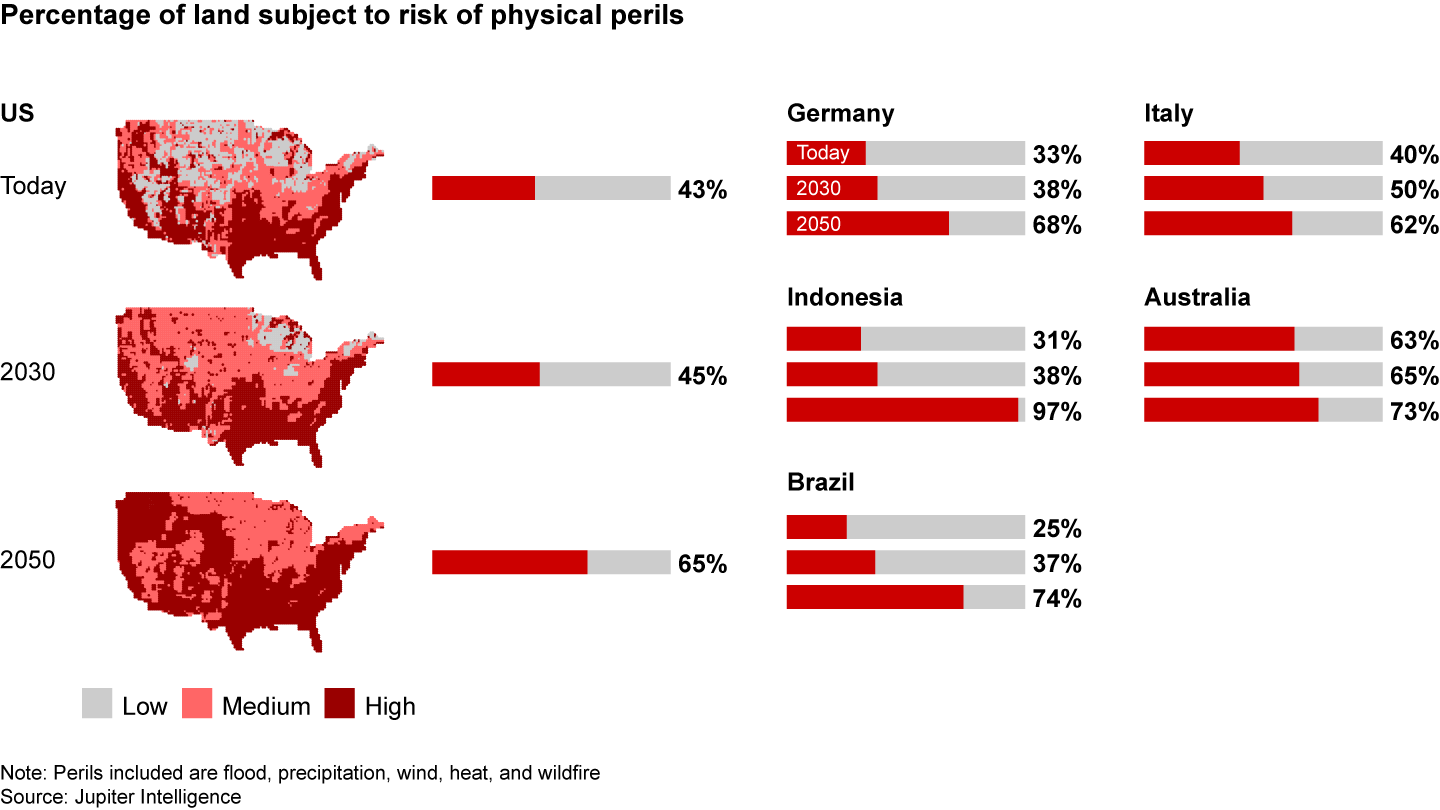
      Physical risks are expected to increase in every country
      Physical risks are expected to increase in every country
      Physical risks are expected to increase in every country

      Physical risk affects banks mainly in two ways. First, it damages collateral, such as a house or factory, and reduces its value. Second, it impairs and may lead to the insolvency of counterparties because of a loss of production and creditworthiness. For example, crop failures caused by drought or flooding could expose an agribusiness to losses that make it difficult to repay a loan.

      Of course, any single natural hazard will have a different degree of impact on each country or industry in a bank’s portfolio. Banks will also want to assess different outcomes of an event, whether those are physical damages, rising energy costs, or business interruptions.

      Exposure of a mortgage portfolio

      To illustrate the potential effects of climate events on the banking sector, Bain analyzed a sample mortgage portfolio of 10,000 assets in Italy, using Jupiter data. We assessed the current and expected future physical risk exposures for all eight perils across UN climate panel scenarios that range from carbon dioxide emissions cut severely to reach net zero after 2050 (Shared Socioeconomic Pathway 1-2.6, SSP1-2.6) to emissions that hover around current levels before starting to fall midcentury (SSP2-4.5) to emissions that roughly double by 2050 (SSP5-8.5). Across Italy as a whole, 40% of these sample locations are already highly exposed to at least one natural hazard today, a level expected to rise to 62% by 2050, which highlights the need for a comprehensive physical risk data set.

      The assessment reveals how quickly a mortgage portfolio can become exposed to high levels of risk related to one hazard—in this case, fire, taking into account factors such as fuel availability and local fire suppression (see Figure 2). When the effects are combined with those of flood and drought risks on our sample portfolio, our analysis shows that damages could be as high as 10 to 15 percentage points of the value of collateral, and potentially much higher for assets in very high-risk areas.

      Figure 2
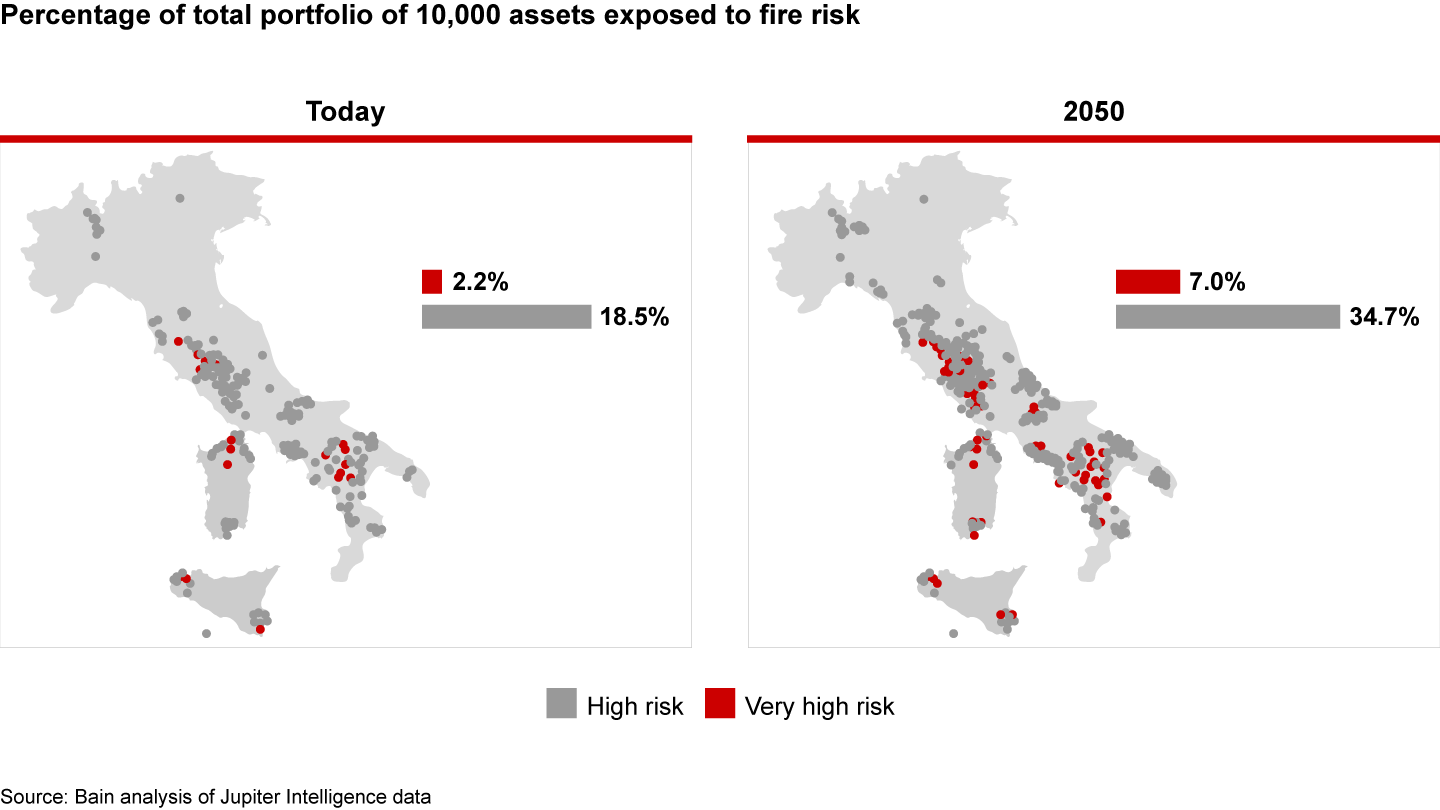
      In Italy, twice the number of assets will be exposed to high risk and three times more assets exposed to very high risk of fire by 2050
      In Italy, twice the number of assets will be exposed to high risk and three times more assets exposed to very high risk of fire by 2050
      In Italy, twice the number of assets will be exposed to high risk and three times more assets exposed to very high risk of fire by 2050

      The damage could then worsen already eroded margins via a 7- to 10-percentage-point reduction in the profitability of newly originated mortgages over a 10-year period. The magnitude of this hit to profits raises the stakes for banks to clearly understand how physical risks can affect their portfolios.

      Developing a sound strategy

      This type of analysis is essential for developing a sound strategy that combines mitigation measures with opportunities for new business.

      Defensive tactics. The analysis first informs decisions on how to mitigate risks through defensive tactics such as:

      • imposing loan-to-value caps;
      • shifting the mix of customer segments;
      • reducing the cost of risk through credit protection insurance; and
      • adjusting prices on highly exposed areas.

      Defensive tactics could be worth 5.5 percentage points in net operating income to the mortgage portfolio of a bank.

      Offensive tactics. Beyond the defensive stance of mitigating risks, banks can take a more offensive posture by, for instance:

      • raising discount levels on low-risk assets;
      • pushing for credit protection insurance; and
      • standalone climate risk protection insurance.

      Offensive moves could add an additional 5.3 percentage points in net operating income.

      New offerings. Banks can also create a competitive advantage by developing new financing products and advising clients to help them make the transition. New risk-related business opportunities could include the following:

      • fostering and financing adoption of climate adaptation solutions;
      • promoting public-private partnership financing in cities and towns; and
      • offering assessment of the physical risk resiliency of corporate assets and facilities.

      This set of new business moves could further add 10 percentage points to net operating income.

      In sum, combining mitigation measures with value creation moves could yield a 15- to 20-percentage-point (or more) increase in net operating income in 2030. Moreover, taking limited or no action will have more severe consequences over time (see Figure 3).

      Figure 3
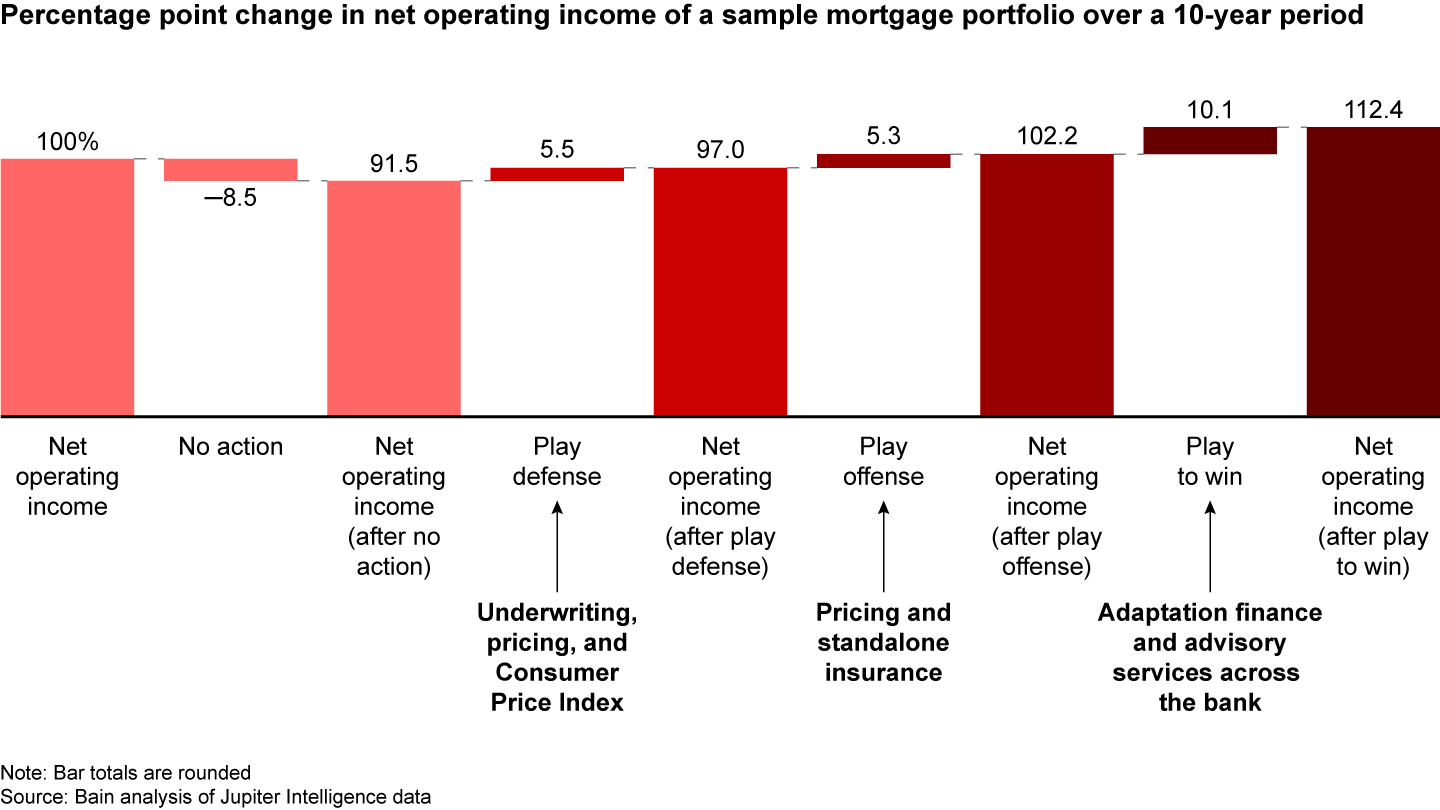
      As physical risks increase, banks should adopt a mix of defensive and offensive tactics while also pursuing new business opportunities
      As physical risks increase, banks should adopt a mix of defensive and offensive tactics while also pursuing new business opportunities
      As physical risks increase, banks should adopt a mix of defensive and offensive tactics while also pursuing new business opportunities

      Becoming a first mover or fast follower

      It’s high time for banks to integrate physical risk into risk, credit, and strategic planning processes. This entails updating credit rating assessment and policies as well as collateral analysis to reflect physical risk, adapting client onboarding to capture key risk-related information, and incorporating the risks into customer segmentation to ensure a consistent treatment of physical risk across the bank.

      A shift in strategy to incorporate the realities of physical risk will require banks to continuously experiment and anticipate market responses, adapting their business model as necessary. But any tactic will have reputational and regulatory implications that need to be considered along with the economic effects.

      A bank can start by assessing its portfolio to measure peril-specific exposure and identify the hot spots most relevant to the specific asset class and industry assessed. Based on the mix of perils in a portfolio, the bank can identify an initial set of mitigation tactics in line with market conditions, regulatory constraints, and the bank’s overall strategy. Depending on its ambitions, it could then also identify openings for new peril-related products and services that create value while strengthening clients and communities against climate-change effects.

      Physical risk represents a major threat, to be sure, but also a unique opportunity for innovation in the banking sector. Ambitious banks that move soon to take the right steps could improve their financial stability and perception among customers and regulators. Even if a bank does not have the appetite or capabilities to be a first mover in this regard, it pays to start planning now, as it’s impossible to become a fast follower without early preparation.

      About Jupiter

      Jupiter is the trusted leader in climate risk analytics for organizations looking to strengthen their climate resilience. The increasing frequency and severity of extreme weather events across the globe are having a major impact on economies, businesses, and communities. With forward-focused, rigorous methodologies, and analytics delivered by some of the best scientists in the industry, Jupiter turns gold standard climate science into actionable data. Customers proactively assess the physical risks in their portfolios, address regulatory requirements and evaluate potential reputational concerns. To find out more, visit jupiterintel.com.

      Video

      More On Our Partnership

      Jupiter Intelligence embeds state-of-the-art climate modeling capabilities within our broader climate risk assessments.

      Read the Next Chapter

      Building a Data-Based Stakeholder Strategy

      Read our 2023 CEO Sustainability Guide

      Explore the full report Download PDF
      Autoren
      • Headshot of Camille Goossens
        Camille Goossens
        Partner, Paris
      • Rocco D'Acunto
        Former Partner, Milan
      • Headshot of Ghizlene Azira
        Ghizlene Azira
        Associate Partner, Milan
      • Headshot of Aude Schonbachler
        Aude Schonbachler
        Partner, Paris
      Kontaktieren Sie uns
      Verwandte Branchen
      • Bankensektor
      • Finanzdienstleistungen
      Ähnliche Beratungsangebote
      • Nachhaltigkeit
      Wie wir Sie unterstützen können
      • Climate Change
      • Sustainable Finance & Investing
      Finanzdienstleistungen
      Financing the Transition to a Carbon-Neutral Economy

      Pioneering banks will reap substantial rewards as they help companies and consumers shift the economy away from heavy carbon-emitting activities.

      Mehr erfahren
      CEO's Guide to Sustainability
      From Sustainability Commitments to Impact: Four Pragmatic Questions for Visionary CEOs

      Amid competing priorities, CEOs and consumers still say sustainability matters. By acting now, companies can set the stage for profitable growth.

      Mehr erfahren
      Finanzdienstleistungen
      Banking M&A

      As conditions shift, leading banks are fusing scale with scope to create future-ready organizations.

      Mehr erfahren
      Climate Change
      Financing Climate Solutions in Brazil

      A study conducted by Bain, in partnership with BNDES, highlights both the challenges and the opportunities to accelerate the climate transition.

      Mehr erfahren
      Nachhaltigkeit
      How AI Is Starting to Transform Circular Packaging

      There are 15 AI use cases companies across the value chain can use today to accelerate circularity.

      Mehr erfahren

      Introduction

      • The Questions Every CEO Needs to Ask About Sustainability

      Levers of Change: Technology, Behavior, Policy

      • Selling Sustainability Means Decoding Consumers

      • Does a Purpose Help Brands Grow?

      • Lower Costs, Faster Adoption: Closing the Sustainable Innovation Gap

      • The Future Is Circular: How Companies Can Prepare to Grow in a Changing World

      • Leading with Vision: Harnessing the Climate Policy Response

      Sector Perspectives

      • Building Resilience in Your Business Strategy: Four Imperatives for Leaders

      • The Energy Transition’s Other Big Puzzle: Making the Math Work

      • Can Food and Agriculture Companies Raise Their Game?

      • Fires, Floods, and Loans: How Banks Can Deal with Increasing Climate Risks

      Making It Happen

      • Building a Data-Based Stakeholder Strategy

      • Operations and Supply Chain Decarbonization: Lower Emissions, Higher Performance

      • Making Business Do Better for Everyone

      • Organizing for Sustainability

      • A Talent Strategy for Sustainability: Skills Matter, but Mindset Is Everything

      First published in November 2023
      Markierungen
      • Bankensektor
      • CEO's Guide to Sustainability
      • Climate Change
      • Finanzdienstleistungen
      • Nachhaltigkeit
      • Sustainable Finance & Investing

      Wie wir unsere Kunden unterstützt haben

      Digitalisierung A European Banking Giant Rises to the Fintech Challenge

      Kundenbeispiel lesen

      Nachhaltigkeit Voluntary Carbon Markets: A Bank Moves Early to Seize the Opportunity

      Kundenbeispiel lesen

      Nachhaltigkeit Redesigning a Bank’s Climate Strategy for Growth

      Kundenbeispiel lesen

      Möchten Sie mit uns in Kontakt bleiben?

      Wir unterstützen Führungskräfte weltweit, die kritischen Themen in ihrem Unternehmen zu adressieren. Gemeinsam schaffen wir nachhaltige Veränderungen und Ergebnisse.

      Bain Insights. Unsere Perspektive auf die kritischen Themen, mit denen sich international agierende Unternehmen konfrontiert sehen, finden Sie monatlich in Ihrem Postfach.

      *Ich habe die Datenschutzerklärung gelesen und akzeptiere sie.
      Bitte lesen Sie die Datenschutzerklärung und akzeptieren Sie diese.
      Bain & Company
      Contact us Sustainability Accessibility Rechtliche Hinweise Impressum Datenschutz Cookie-Richtlinie Sitemap Log In

      © 1996-2026 Bain & Company, Inc.

      Kontaktieren Sie Bain

      Wie können wir Ihnen helfen?

      • Business inquiry
      • Career information
      • Press relations
      • Partnership request
      • Speaker request
      Alle weltweiten Büros