
Skip to Content
  • Standorte

    Standorte

    North & Latin America
    • Atlanta
    • Austin
    • Bogota
    • Boston
    • Buenos Aires
    • Chicago
    • Dallas
    • Denver
    • Houston
    • Lisbon
    • Los Angeles
    • Mexico City
    • Minneapolis
    • Monterrey
    • Montreal
    • New York
    • Rio de Janeiro
    • San Francisco
    • Santiago
    • São Paulo
    • Seattle
    • Silicon Valley
    • Toronto
    • Washington, DC
    Europe & Africa
    • Amsterdam
    • Athens
    • Berlin
    • Brussels
    • Copenhagen
    • Düsseldorf
    • Frankfurt
    • Helsinki
    • Istanbul
    • Johannesburg
    • Kyiv
    • Lisbon
    • London
    • Madrid
    • Milan
    • München
    • Oslo
    • Paris
    • Rome
    • Stockholm
    • Warsaw
    • Wien
    • Zürich
    Middle East
    • Doha
    • Dubai
    • Riyadh
    Asia & Australia
    • Bangkok
    • Beijing
    • Bengaluru
    • Brisbane
    • Ho Chi Minh City
    • Hong Kong
    • Jakarta
    • Kuala Lumpur
    • Manila
    • Melbourne
    • Mumbai
    • New Delhi
    • Perth
    • Seoul
    • Shanghai
    • Singapore
    • Sydney
    • Tokyo
    Alle Standorte Anzeigen
  • Alumni
  • Presse
  • Newsletter
  • Kontakt
  • DACH-Region | Deutsch

    Wählen Sie Ihre Region und Sprache

    Global
    • Global (English)
    North & Latin America
    • Brazil (Português)
    • Argentina (Español)
    • Canada (Français)
    • Chile (Español)
    • Colombia (Español)
    Europe, Middle East, & Africa
    • France (Français)
    • DACH-Region (Deutsch)
    • Italy (Italiano)
    • Spain (Español)
    • Greece (Elliniká)
    Asia & Australia
    • China (中文版)
    • Korea (한국어)
    • Japan (日本語)
  • Saved items (0)
    Saved items (0)

    You have no saved items.

    Inhalte, für die Sie sich interessieren, werden hier gespeichert und können später gelesen oder weitergeleitet werden.

    Explore Bain Insights
  • Branchenkompetenzen
    Hauptmenü

    Branchenkompetenzen

    • Luft- und Raumfahrt, Verteidigung
    • Agrarwirtschaft
    • Chemieindustrie
    • Infrastruktur und Bauwirtschaft
    • Konsumgüter
    • Finanzdienstleistungen
    • Gesundheitswesen
    • Maschinen- und Anlagenbau
    • Medienwirtschaft
    • Metallindustrie
    • Bergbau
    • Öl und Gas
    • Papier- und Verpackungsindustrie
    • Private Equity
      Branchenkompetenzen
      Private Equity
      • Due Diligence
      • Exit Planning
      • Firm Strategy & Operations
      • Portfolio Value Creation
    • Öffentlicher Sektor und Sozialwesen
    • Einzelhandel
    • Technologie
    • Telekommunikation
    • Transportwesen
    • Reise- und Freizeitbranche
    • Versorgung und erneuerbare Energien
  • Managementkompetenzen
    Hauptmenü

    Managementkompetenzen

    • Customer Experience
    • ESG
    • Innovation
    • M&A
    • Operations
    • People & Organization
    • Private Equity
    • Sales & Marketing
    • Strategie
    • KI, Einblicke und Lösungen
    • Technologie
    • Transformation
  • Digital
  • Publikationen
    Hauptmenü

    Publikationen

    • Branchenthemen
    • Managementthemen
    • Bain-Bücher
    Alle Publikationen
    Ausgewählte Themen
    • Resilienz in der globalen Krise
    • M&A Report
    • Private Equity Podcast
    • Midyear Private Equity Report
    • Agile
    • Engineering Report
    • Digital Transformation
    • Elements of Value®
    • Firm of the Future
    • Nachhaltigkeitsstudie
    • Macro Trends
    • Future of Consumption
    • Weltwirtschaftsforum (WEF)
  • Über uns
    Hauptmenü

    Über uns

    • Was wir bieten
    • Unser Ansatz
    • Unser Team
    • Game Changer Award
    • Female Allstar Board
    • Messbare Ergebnisse (EN)
    • Auszeichnungen
    • Globale Partnerschaften
    • The Mission
    Further: Our global responsibility
    • Vielfalt & Chancengleichheit
    • Soziale Verantwortung
    • Sustainability
    Erfahren Sie mehr zu "Further"
  • Karriere
    Hauptmenü

    Karriere

    • Dein Einstieg
      Karriere
      Dein Einstieg
      • Find Your Place
      • Unsere Arbeitsbereiche
      • Unsere Teams
      • Angebote für Studierende
      • Praktika & Programme
      • Recruiting-Events
    • Arbeiten bei Bain
      Karriere
      Arbeiten bei Bain
      • Blog: Inside Bain
      • Karriere Stories
      • Unsere Bainies
      • Office-Standorte
      • Weiterentwicklung
      • Affinity Groups
      • Deine Benefits
    • Impact Stories
    • Deine Bewerbung
      Karriere
      Deine Bewerbung
      • Das erwartet dich
      • Der Interviewprozess
    FIND JOBS
  • Standorte
    Hauptmenü

    Standorte

    • North & Latin America
      Standorte
      North & Latin America
      • Atlanta
      • Austin
      • Bogota
      • Boston
      • Buenos Aires
      • Chicago
      • Dallas
      • Denver
      • Houston
      • Lisbon
      • Los Angeles
      • Mexico City
      • Minneapolis
      • Monterrey
      • Montreal
      • New York
      • Rio de Janeiro
      • San Francisco
      • Santiago
      • São Paulo
      • Seattle
      • Silicon Valley
      • Toronto
      • Washington, DC
    • Europe & Africa
      Standorte
      Europe & Africa
      • Amsterdam
      • Athens
      • Berlin
      • Brussels
      • Copenhagen
      • Düsseldorf
      • Frankfurt
      • Helsinki
      • Istanbul
      • Johannesburg
      • Kyiv
      • Lisbon
      • London
      • Madrid
      • Milan
      • München
      • Oslo
      • Paris
      • Rome
      • Stockholm
      • Warsaw
      • Wien
      • Zürich
    • Middle East
      Standorte
      Middle East
      • Doha
      • Dubai
      • Riyadh
    • Asia & Australia
      Standorte
      Asia & Australia
      • Bangkok
      • Beijing
      • Bengaluru
      • Brisbane
      • Ho Chi Minh City
      • Hong Kong
      • Jakarta
      • Kuala Lumpur
      • Manila
      • Melbourne
      • Mumbai
      • New Delhi
      • Perth
      • Seoul
      • Shanghai
      • Singapore
      • Sydney
      • Tokyo
    Alle Standorte Anzeigen
  • Alumni
  • Presse
  • Newsletter
  • Kontakt
  • DACH-Region | Deutsch
    Hauptmenü

    Wählen Sie Ihre Region und Sprache

    • Global
      Wählen Sie Ihre Region und Sprache
      Global
      • Global (English)
    • North & Latin America
      Wählen Sie Ihre Region und Sprache
      North & Latin America
      • Brazil (Português)
      • Argentina (Español)
      • Canada (Français)
      • Chile (Español)
      • Colombia (Español)
    • Europe, Middle East, & Africa
      Wählen Sie Ihre Region und Sprache
      Europe, Middle East, & Africa
      • France (Français)
      • DACH-Region (Deutsch)
      • Italy (Italiano)
      • Spain (Español)
      • Greece (Elliniká)
    • Asia & Australia
      Wählen Sie Ihre Region und Sprache
      Asia & Australia
      • China (中文版)
      • Korea (한국어)
      • Japan (日本語)
  • Saved items  (0)
    Hauptmenü
    Saved items (0)

    You have no saved items.

    Inhalte, für die Sie sich interessieren, werden hier gespeichert und können später gelesen oder weitergeleitet werden.

    Explore Bain Insights
  • Branchenkompetenzen
    • Branchenkompetenzen

      • Luft- und Raumfahrt, Verteidigung
      • Agrarwirtschaft
      • Chemieindustrie
      • Infrastruktur und Bauwirtschaft
      • Konsumgüter
      • Finanzdienstleistungen
      • Gesundheitswesen
      • Maschinen- und Anlagenbau
      • Medienwirtschaft
      • Metallindustrie
      • Bergbau
      • Öl und Gas
      • Papier- und Verpackungsindustrie
      • Private Equity
      • Öffentlicher Sektor und Sozialwesen
      • Einzelhandel
      • Technologie
      • Telekommunikation
      • Transportwesen
      • Reise- und Freizeitbranche
      • Versorgung und erneuerbare Energien
  • Managementkompetenzen
    • Managementkompetenzen

      • Customer Experience
      • ESG
      • Innovation
      • M&A
      • Operations
      • People & Organization
      • Private Equity
      • Sales & Marketing
      • Strategie
      • KI, Einblicke und Lösungen
      • Technologie
      • Transformation
  • Digital
  • Publikationen
    • Publikationen

      • Branchenthemen
      • Managementthemen
      • Bain-Bücher
      Alle Publikationen
      Ausgewählte Themen
      • Resilienz in der globalen Krise
      • M&A Report
      • Private Equity Podcast
      • Midyear Private Equity Report
      • Agile
      • Engineering Report
      • Digital Transformation
      • Elements of Value®
      • Firm of the Future
      • Nachhaltigkeitsstudie
      • Macro Trends
      • Future of Consumption
      • Weltwirtschaftsforum (WEF)
  • Über uns
    • Über uns

      • Was wir bieten
      • Unser Ansatz
      • Unser Team
      • Game Changer Award
      • Female Allstar Board
      • Messbare Ergebnisse (EN)
      • Auszeichnungen
      • Globale Partnerschaften
      • The Mission
      Further: Our global responsibility
      • Vielfalt & Chancengleichheit
      • Soziale Verantwortung
      • Sustainability
      Erfahren Sie mehr zu "Further"
  • Karriere
    Häufige Suchanfragen
    • Agil
    • Digital
    • Strategie
    Vorherige Suchanfragen
      Zuletzt besuchte Seiten

      Content added to saved items

      Saved items (0)

      Removed from saved items

      Saved items (0)

      Brief

      Five Things Companies Get Wrong about Corporate Venture Capital

      Five Things Companies Get Wrong about Corporate Venture Capital

      Many corporate executives are uncomfortable taking the levels of risk that VC requires.

      Von Tom Wendt und Elizabeth Spaulding

      • Min. Lesezeit
      }

      Brief

      Five Things Companies Get Wrong about Corporate Venture Capital
      en
      Auf einen Blick
      • Hundreds of companies are setting up corporate venture capital arms, hoping to tap into the foresight, energy and promise of technology innovators. Unfortunately, many squander the opportunity by managing these VC efforts the same way they would manage an M&A or business development unit—that is, too cautiously.
      • Venture capital works best when it plays by a set of rules that are higher risk than most corporate executives are used to. VCs invest in innovations that are far from product-ready, and many fail to pan out—the price of developing unproven ideas. Corporate VC executives must be given latitude and permission to risk failure.
      • Corporate VC arms need to recognize that they are entering a realm where their corporate brand counts for less than a reputation for trust and reliability. Patience is also crucial: Even successful VC bets can take many years to deliver.

      One of the best ways to avoid being disrupted in your industry is to become the disrupter.

      That’s why so many companies are setting up corporate venture capital arms—nearly 800 were active in 2018, up from about 220 only five years earlier. Executive teams feel the pressure brought on by innovative disrupters who, backed by venture capital, are attacking their markets. They know they need to reach further out than their business development and R&D teams can take them, and the best way to do this is by becoming an active participant in the VC ecosystem. For many, this means setting up their own funds and innovation teams, often in Silicon Valley.

      Corporate venture capital 2018, by the numbers

      But this is a difficult pivot for most corporations. VC firms operate with a higher risk-reward profile than most companies do. The economics of venture capital dictate that most investments will fail to deliver their promised returns, and those that pay off take many years to do so. Plus, by definition, venture capital operates in unproven territory, investing in technologies years before the arrival of a product, let alone revenues. Neither of these factors are an easy sell in a culture that measures profit and loss on a quarterly basis, and where sponsoring a failure can be a career-limiting move.

      Despite these risks, more and more corporations are deciding they need to play in this arena, hoping to gain insight on what’s coming next and avoid being disrupted.

      When done right, corporate venture capital can be a valuable way for companies to create a competitive advantage, since it affords a view that may be three or four years ahead of what the public (and competitors) are able to see. Think of it like the icebreaker forging ahead of the larger ship. It can also help improve deal and transactional skills, inject some Silicon Valley culture into the corporate DNA, and create new opportunities in R&D, business development and M&A. A team that listens to 100 pitches and invests in only 5 of them has still learned a great deal about the state of innovation from the rest.

      However, corporations need to develop some new muscles to make venture capital work within their culture. Executives need to understand the specific role that venture capital plays in their innovation strategy. They need to view it as the tip of the spear, rather than an extended arm of business development. The corporate VC team should have the mandate of looking well over the horizon to identify potential disrupters, a perspective that requires steering clear of legacy thinking. Successful disrupters take outsized risks and often rely on methods that are anathema to a conservative corporate culture. Most long bets fail, and corporate executives can make such bets only if they believe they won’t be punished for backing failures.

      Getting comfortable with venture capital

      For venture capital to thrive within the corporate sphere, you may need to rethink its role in your innovation strategy. Most corporations use their VC arms to find “known knowns”—technology or products that they know already exist and can be used right away to improve their business (see Figure 1). But in fact, they should be doing this through their business development and R&D units. The real value of a VC arm is to discover “unknown unknowns” and, to some extent, the “known unknowns.” These are the things that will break new ground and disrupt the industry.

      Figure 1
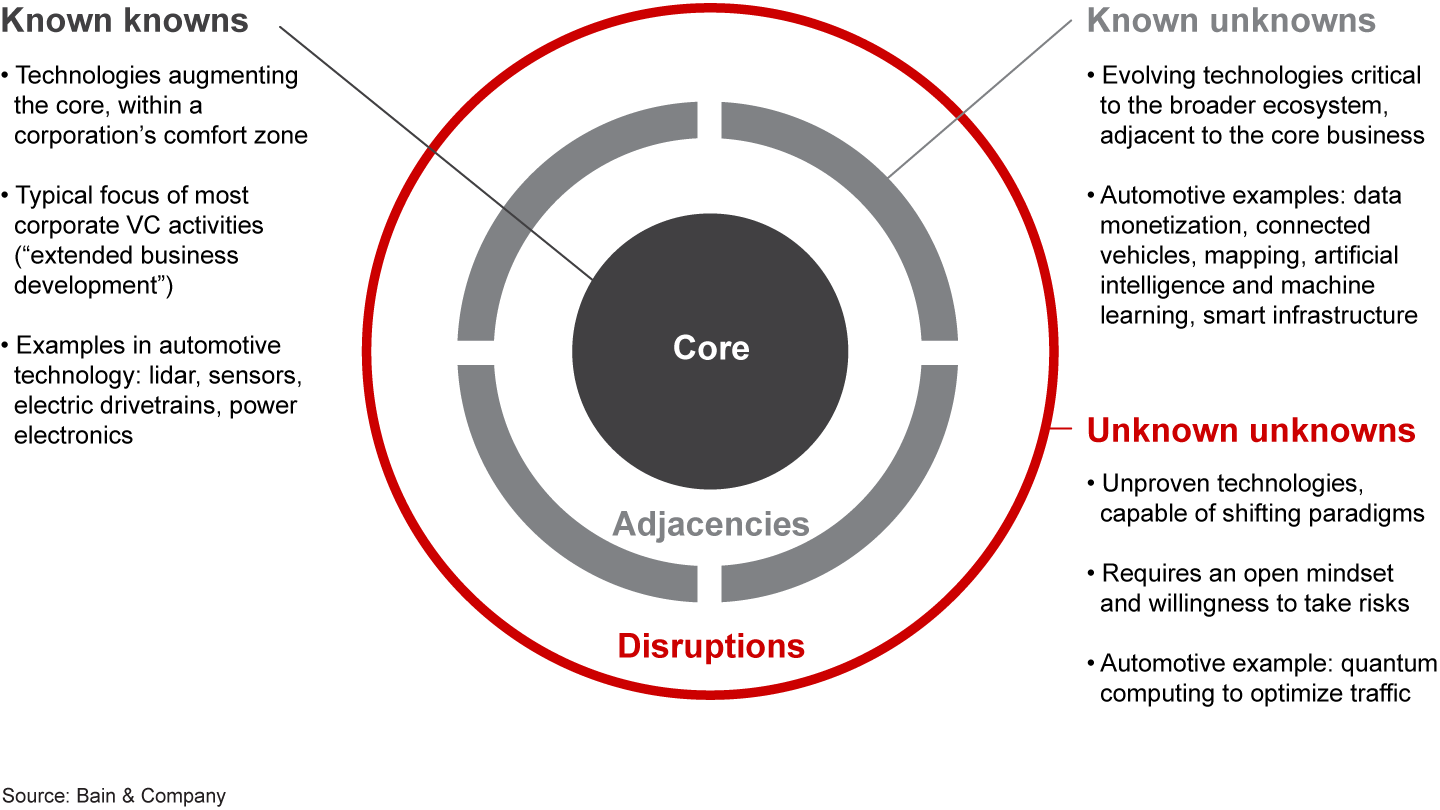
      Corporate venture capital can only succeed when it’s encouraged to pursue ideas outside the core business
      Corporate venture capital can only succeed when it’s encouraged to pursue ideas outside the core business
      Corporate venture capital can only succeed when it’s encouraged to pursue ideas outside the core business

      Consider Uber, which failed to attract several large automakers as early investors because, when it was founded in 2009, it was primarily an app for hailing town cars. Automakers had little interest, seeing this service as far from their core business. But Uber was the birth of a radically new business model, which is poised to disrupt the entire auto industry. And automakers today spend millions building their own ride-hailing services or partnering with established ones.

      Our work with the venture capital community and corporate venture capital units brings to light some key lessons that companies should consider as they develop their own CVC arms.

      • A strong corporate brand won’t create excitement. Companies sometimes enter the VC arena thinking their brand, experience and scale will ensure a warm welcome. They may not realize that sources of funding are abundant, and most entrepreneurs can choose whom they want to take money from. Silicon Valley networks are based on trust and reputation, and entrepreneurs want investors in their corner who can help them build their companies. Corporations have a hard time competing. They may invest in start-ups in early rounds but fail to make follow-up investments, or they may send in executives to work with the start-up and then swap them out for others. Entrepreneurs may wonder whether they’ll still be around for the next round of funding. Any CVC arm will need to build its reputation as a good early-stage investor, which takes years of experience. 
      • Shopping lists don’t work. The next disruptive idea is not likely to be something you’re already looking for, so CVC arms need the freedom to pursue ideas that aren’t directly related to the business—indeed, things that may not yet have a clear business proposition. Many companies miss the chance to invest in start-ups because they view the opportunities too narrowly, searching for “known knowns.” When Tesla founders Martin Eberhard and Marc Tarpenning were seeking a first round of funding, neither VCs nor auto-industry players were interested in the idea. Top-tier suppliers even refused to sell parts to them. VCs and auto-industry executives couldn’t see the potential in a plan to introduce a major new car line in the US—all electric and run by novices—for the first time in more than half a century. Imagine where EV technology could be today if one of the majors had bought in early. 
      • Don’t look for a payback in two years. Few disruptive ideas will pay off quickly. Corporate venture capital must commit to stay in the game long enough to find and fund the one idea that makes it all worthwhile. In recent years, the time to payoff appears to be lengthening. Start-ups are waiting longer to go public, due to the abundant availability of venture capital. In 2018, the median age of a company backed with venture capital was 11 years at the time of IPO, up from only 8 years in 2006, according to PitchBook. Most corporations are not used to waiting so long to see cash flowing from an investment, and venture capital is often one of the first areas cut during hard times. It can take 10 years or longer to see strategic benefits, since venture capital, if done right, focuses on early-stage innovation rather than product development.
      • Taking a minority stake is okay. Because most corporations are conditioned to want a controlling stake in investments, few take a truly strategic approach to VC. They often make a majority investment in a single technology or start-up and hope it’s the right one—which it rarely is. A better approach is to seek out optionality: smaller minority deals, within the framework of a broader innovation strategy, that give you a seat at more tables, allowing you to see technology as it develops and continuously evolve your investment thesis to pursue new opportunities.
      • Corporate diligence processes and investment committees don’t work. Since start-ups typically lack a product or revenue, corporations would have a difficult time applying the type of due diligence found in their M&A playbook. VC investment decisions are based on different criteria—the team, the market, the potential—and are made with much less certainty. CVC teams need greater freedom than a traditional M&A team. Squeeze them too hard and they will choose only “safe” deals, which isn’t venture capital.

      Corporate venture capital can be extremely valuable in today’s environment of digital disruption, but it’s difficult to do right. Savvy executives will learn how to get out of their own way. They will give greater freedom to their CVC teams, allowing them to be the proverbial sand in the oyster, the irritant that ultimately creates the pearl. Most of all, they will encourage their teams to take greater risks based on uncertain potential—and not punish them when bets don’t pan out. Only by understanding and playing by this different set of rules can executives extract the greatest value from their corporate venture capital initiatives.

      Thomas Wendt is a Bain & Company partner in Silicon Valley, working with the firm’s Global Automotive and Technology practices. Elizabeth Spaulding is a Bain partner in San Francisco and coleader of the firm’s Digital practice. 

      Autoren
      • Headshot of Tom Wendt
        Tom Wendt
        Partner, San Francisco
      • Elizabeth Spaulding
        Former Partner, San Francisco
      Kontaktieren Sie uns
      Ähnliche Beratungsangebote
      • Mergers & Acquisitions
      • Strategie
      • Venture Ecosystem
      Wie wir Sie unterstützen können
      • Joint Ventures and Alliances
      • Venture Capital As a Service
      Joint Ventures and Alliances
      Strategic Alliances

      Through Strategic Alliances, companies can improve competitive positioning, gain entry to new markets, supplement critical skills and share the risk or cost of major development projects.

      Mehr erfahren
      Joint Ventures and Alliances
      Defense M&A

      Bold moves will determine the winners as a continent rearms.

      Mehr erfahren
      Strategie
      The Magic of Founder-led Companies

      Companies with their founder present performed twice as well as their peers in the S&P 500 over the past decade.

      Mehr erfahren
      Joint Ventures and Alliances
      Where the Deals Are: 2025’s Top M&A Markets

      Explore our interactive map for strategic M&A data and key takeaways from selected markets around the world.

      Mehr erfahren
      Mergers & Acquisitions
      Positioning Oil & Gas Companies for Today’s Capital Markets

      We interviewed senior investment professionals, and here’s what we heard.

      Mehr erfahren
      First published in Juli 2019
      Markierungen
      • Joint Ventures and Alliances
      • Mergers & Acquisitions
      • Strategie
      • Venture Capital As a Service
      • Venture Ecosystem

      Wie wir unsere Kunden unterstützt haben

      Mergers & Acquisitions A bank and a grocer build a fruitful alliance

      Kundenbeispiel lesen

      Strategie Transforming a leading polymers maker into a profit powerhouse

      Kundenbeispiel lesen

      Strategie Global expansion boosts supermarket earnings and growth

      Kundenbeispiel lesen

      Möchten Sie mit uns in Kontakt bleiben?

      Wir unterstützen Führungskräfte weltweit, die kritischen Themen in ihrem Unternehmen zu adressieren. Gemeinsam schaffen wir nachhaltige Veränderungen und Ergebnisse.

      Bain Insights. Unsere Perspektive auf die kritischen Themen, mit denen sich international agierende Unternehmen konfrontiert sehen, finden Sie monatlich in Ihrem Postfach.

      *Ich habe die Datenschutzerklärung gelesen und akzeptiere sie.
      Bitte lesen Sie die Datenschutzerklärung und akzeptieren Sie diese.
      Bain & Company
      Contact us Sustainability Accessibility Rechtliche Hinweise Impressum Datenschutz Cookie-Richtlinie Sitemap Log In

      © 1996-2026 Bain & Company, Inc.

      Kontaktieren Sie Bain

      Wie können wir Ihnen helfen?

      • Business inquiry
      • Career information
      • Press relations
      • Partnership request
      • Speaker request
      Alle weltweiten Büros