
Skip to Content
  • Standorte

    Standorte

    North & Latin America
    • Atlanta
    • Austin
    • Bogota
    • Boston
    • Buenos Aires
    • Chicago
    • Dallas
    • Denver
    • Houston
    • Lisbon
    • Los Angeles
    • Mexico City
    • Minneapolis
    • Monterrey
    • Montreal
    • New York
    • Rio de Janeiro
    • San Francisco
    • Santiago
    • São Paulo
    • Seattle
    • Silicon Valley
    • Toronto
    • Washington, DC
    Europe & Africa
    • Amsterdam
    • Athens
    • Berlin
    • Brussels
    • Copenhagen
    • Düsseldorf
    • Frankfurt
    • Helsinki
    • Istanbul
    • Johannesburg
    • Kyiv
    • Lisbon
    • London
    • Madrid
    • Milan
    • München
    • Oslo
    • Paris
    • Rome
    • Stockholm
    • Warsaw
    • Wien
    • Zürich
    Middle East
    • Doha
    • Dubai
    • Riyadh
    Asia & Australia
    • Bangkok
    • Beijing
    • Bengaluru
    • Brisbane
    • Ho Chi Minh City
    • Hong Kong
    • Jakarta
    • Kuala Lumpur
    • Manila
    • Melbourne
    • Mumbai
    • New Delhi
    • Perth
    • Seoul
    • Shanghai
    • Singapore
    • Sydney
    • Tokyo
    Alle Standorte Anzeigen
  • Alumni
  • Presse
  • Newsletter
  • Kontakt
  • DACH-Region | Deutsch

    Wählen Sie Ihre Region und Sprache

    Global
    • Global (English)
    North & Latin America
    • Brazil (Português)
    • Argentina (Español)
    • Canada (Français)
    • Chile (Español)
    • Colombia (Español)
    Europe, Middle East, & Africa
    • France (Français)
    • DACH-Region (Deutsch)
    • Italy (Italiano)
    • Spain (Español)
    • Greece (Elliniká)
    Asia & Australia
    • China (中文版)
    • Korea (한국어)
    • Japan (日本語)
  • Saved items (0)
    Saved items (0)

    You have no saved items.

    Inhalte, für die Sie sich interessieren, werden hier gespeichert und können später gelesen oder weitergeleitet werden.

    Explore Bain Insights
  • Branchenkompetenzen
    Hauptmenü

    Branchenkompetenzen

    • Luft- und Raumfahrt, Verteidigung
    • Agrarwirtschaft
    • Chemieindustrie
    • Infrastruktur und Bauwirtschaft
    • Konsumgüter
    • Finanzdienstleistungen
    • Gesundheitswesen
    • Maschinen- und Anlagenbau
    • Medienwirtschaft
    • Metallindustrie
    • Bergbau
    • Öl und Gas
    • Papier- und Verpackungsindustrie
    • Private Equity
      Branchenkompetenzen
      Private Equity
      • Due Diligence
      • Exit Planning
      • Firm Strategy & Operations
      • Portfolio Value Creation
    • Öffentlicher Sektor und Sozialwesen
    • Einzelhandel
    • Technologie
    • Telekommunikation
    • Transportwesen
    • Reise- und Freizeitbranche
    • Versorgung und erneuerbare Energien
  • Managementkompetenzen
    Hauptmenü

    Managementkompetenzen

    • Customer Experience
    • ESG
    • Innovation
    • M&A
    • Operations
    • People & Organization
    • Private Equity
    • Sales & Marketing
    • Strategie
    • KI, Einblicke und Lösungen
    • Technologie
    • Transformation
  • Digital
  • Publikationen
    Hauptmenü

    Publikationen

    • Branchenthemen
    • Managementthemen
    • Bain-Bücher
    Alle Publikationen
    Ausgewählte Themen
    • Resilienz in der globalen Krise
    • M&A Report
    • Private Equity Podcast
    • Midyear Private Equity Report
    • Agile
    • Engineering Report
    • Digital Transformation
    • Elements of Value®
    • Firm of the Future
    • Nachhaltigkeitsstudie
    • Macro Trends
    • Future of Consumption
    • Weltwirtschaftsforum (WEF)
  • Über uns
    Hauptmenü

    Über uns

    • Was wir bieten
    • Unser Ansatz
    • Unser Team
    • Game Changer Award
    • Female Allstar Board
    • Messbare Ergebnisse (EN)
    • Auszeichnungen
    • Globale Partnerschaften
    • The Mission
    Further: Our global responsibility
    • Vielfalt & Chancengleichheit
    • Soziale Verantwortung
    • Sustainability
    Erfahren Sie mehr zu "Further"
  • Karriere
    Hauptmenü

    Karriere

    • Dein Einstieg
      Karriere
      Dein Einstieg
      • Find Your Place
      • Unsere Arbeitsbereiche
      • Unsere Teams
      • Angebote für Studierende
      • Praktika & Programme
      • Recruiting-Events
    • Arbeiten bei Bain
      Karriere
      Arbeiten bei Bain
      • Karriere Stories
      • Unsere Bainies
      • Office-Standorte
      • Weiterentwicklung
      • Affinity Groups
      • Deine Benefits
    • Impact Stories
    • Deine Bewerbung
      Karriere
      Deine Bewerbung
      • Das erwartet dich
      • Der Interviewprozess
    FIND JOBS
  • Standorte
    Hauptmenü

    Standorte

    • North & Latin America
      Standorte
      North & Latin America
      • Atlanta
      • Austin
      • Bogota
      • Boston
      • Buenos Aires
      • Chicago
      • Dallas
      • Denver
      • Houston
      • Lisbon
      • Los Angeles
      • Mexico City
      • Minneapolis
      • Monterrey
      • Montreal
      • New York
      • Rio de Janeiro
      • San Francisco
      • Santiago
      • São Paulo
      • Seattle
      • Silicon Valley
      • Toronto
      • Washington, DC
    • Europe & Africa
      Standorte
      Europe & Africa
      • Amsterdam
      • Athens
      • Berlin
      • Brussels
      • Copenhagen
      • Düsseldorf
      • Frankfurt
      • Helsinki
      • Istanbul
      • Johannesburg
      • Kyiv
      • Lisbon
      • London
      • Madrid
      • Milan
      • München
      • Oslo
      • Paris
      • Rome
      • Stockholm
      • Warsaw
      • Wien
      • Zürich
    • Middle East
      Standorte
      Middle East
      • Doha
      • Dubai
      • Riyadh
    • Asia & Australia
      Standorte
      Asia & Australia
      • Bangkok
      • Beijing
      • Bengaluru
      • Brisbane
      • Ho Chi Minh City
      • Hong Kong
      • Jakarta
      • Kuala Lumpur
      • Manila
      • Melbourne
      • Mumbai
      • New Delhi
      • Perth
      • Seoul
      • Shanghai
      • Singapore
      • Sydney
      • Tokyo
    Alle Standorte Anzeigen
  • Alumni
  • Presse
  • Newsletter
  • Kontakt
  • DACH-Region | Deutsch
    Hauptmenü

    Wählen Sie Ihre Region und Sprache

    • Global
      Wählen Sie Ihre Region und Sprache
      Global
      • Global (English)
    • North & Latin America
      Wählen Sie Ihre Region und Sprache
      North & Latin America
      • Brazil (Português)
      • Argentina (Español)
      • Canada (Français)
      • Chile (Español)
      • Colombia (Español)
    • Europe, Middle East, & Africa
      Wählen Sie Ihre Region und Sprache
      Europe, Middle East, & Africa
      • France (Français)
      • DACH-Region (Deutsch)
      • Italy (Italiano)
      • Spain (Español)
      • Greece (Elliniká)
    • Asia & Australia
      Wählen Sie Ihre Region und Sprache
      Asia & Australia
      • China (中文版)
      • Korea (한국어)
      • Japan (日本語)
  • Saved items  (0)
    Hauptmenü
    Saved items (0)

    You have no saved items.

    Inhalte, für die Sie sich interessieren, werden hier gespeichert und können später gelesen oder weitergeleitet werden.

    Explore Bain Insights
  • Branchenkompetenzen
    • Branchenkompetenzen

      • Luft- und Raumfahrt, Verteidigung
      • Agrarwirtschaft
      • Chemieindustrie
      • Infrastruktur und Bauwirtschaft
      • Konsumgüter
      • Finanzdienstleistungen
      • Gesundheitswesen
      • Maschinen- und Anlagenbau
      • Medienwirtschaft
      • Metallindustrie
      • Bergbau
      • Öl und Gas
      • Papier- und Verpackungsindustrie
      • Private Equity
      • Öffentlicher Sektor und Sozialwesen
      • Einzelhandel
      • Technologie
      • Telekommunikation
      • Transportwesen
      • Reise- und Freizeitbranche
      • Versorgung und erneuerbare Energien
  • Managementkompetenzen
    • Managementkompetenzen

      • Customer Experience
      • ESG
      • Innovation
      • M&A
      • Operations
      • People & Organization
      • Private Equity
      • Sales & Marketing
      • Strategie
      • KI, Einblicke und Lösungen
      • Technologie
      • Transformation
  • Digital
  • Publikationen
    • Publikationen

      • Branchenthemen
      • Managementthemen
      • Bain-Bücher
      Alle Publikationen
      Ausgewählte Themen
      • Resilienz in der globalen Krise
      • M&A Report
      • Private Equity Podcast
      • Midyear Private Equity Report
      • Agile
      • Engineering Report
      • Digital Transformation
      • Elements of Value®
      • Firm of the Future
      • Nachhaltigkeitsstudie
      • Macro Trends
      • Future of Consumption
      • Weltwirtschaftsforum (WEF)
  • Über uns
    • Über uns

      • Was wir bieten
      • Unser Ansatz
      • Unser Team
      • Game Changer Award
      • Female Allstar Board
      • Messbare Ergebnisse (EN)
      • Auszeichnungen
      • Globale Partnerschaften
      • The Mission
      Further: Our global responsibility
      • Vielfalt & Chancengleichheit
      • Soziale Verantwortung
      • Sustainability
      Erfahren Sie mehr zu "Further"
  • Karriere
    Häufige Suchanfragen
    • Agil
    • Digital
    • Strategie
    Vorherige Suchanfragen
      Zuletzt besuchte Seiten

      Content added to saved items

      Saved items (0)

      Removed from saved items

      Saved items (0)

      Brief

      How Utilities Can Make the Most of Distributed Energy Resources

      How Utilities Can Make the Most of Distributed Energy Resources

      Integrated planning allows utilities to manage the influx of electricity from rooftop solar panels and other new generation sources.

      Von Aaron Denman, Arnaud Leroi and Hubert Shen

      • Min. Lesezeit
      }

      Brief

      How Utilities Can Make the Most of Distributed Energy Resources
      en

      While many businesses and consumers are exploring the possibilities of moving activities like storage, computing and other services off premise and into the cloud, one aspect of the economy is moving determinedly in the opposite direction: electricity.

      For more than a century, most industrial, commercial and residential customers have plugged into energy sources that were centralized and out of sight—call it “cloud electricity.”

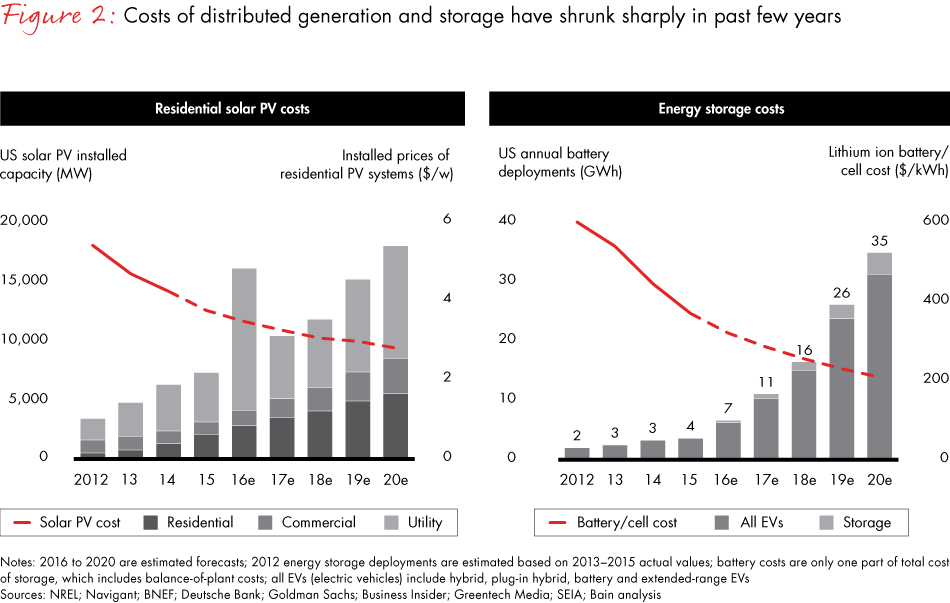
      Over the past decade, however, a shift has begun to occur as many customers have taken advantage of the declining costs in technology to localize their electricity generation. By installing rooftop solar panels or purchasing backup generators and storage units, they are taking personal responsibility for generating some of their own electricity—whether they are pursuing better reliability, more favorable economics or environmental benefits.

      The rise of these distributed energy resources (DERs) creates a challenge—and perhaps an opportunity—for utilities (see Figures 1 and 2). Utility executives are already managing slowing demand growth for electricity. Now they must also find ways to accommodate and integrate a growing influx of supply from these distributed sources of electricity. Left unplanned, DERs can represent an unreliable supply of electrons that require large investments to accommodate in the larger grid system. When planned, though, DERs can help utilities accommodate peak demand and perhaps even become a source of new revenue for energy companies—if they can find a role in the evolving economics of electricity.

      To manage this, utility executives need to understand how to integrate DERs into the increasingly digital power grid, within the parameters of their particular regulatory regimes. The grid will remain the essential center connecting all the other system elements, including large central power generation, DERs and customers at every level. For utilities, successfully navigating the integration of these resources will require a well-measured approach to understanding the impact of DERs on the system, reinforcing the grid to accommodate and take advantage of the electricity that DERs can supply, and investigating growth opportunities stemming from the popularity of distributed energy.
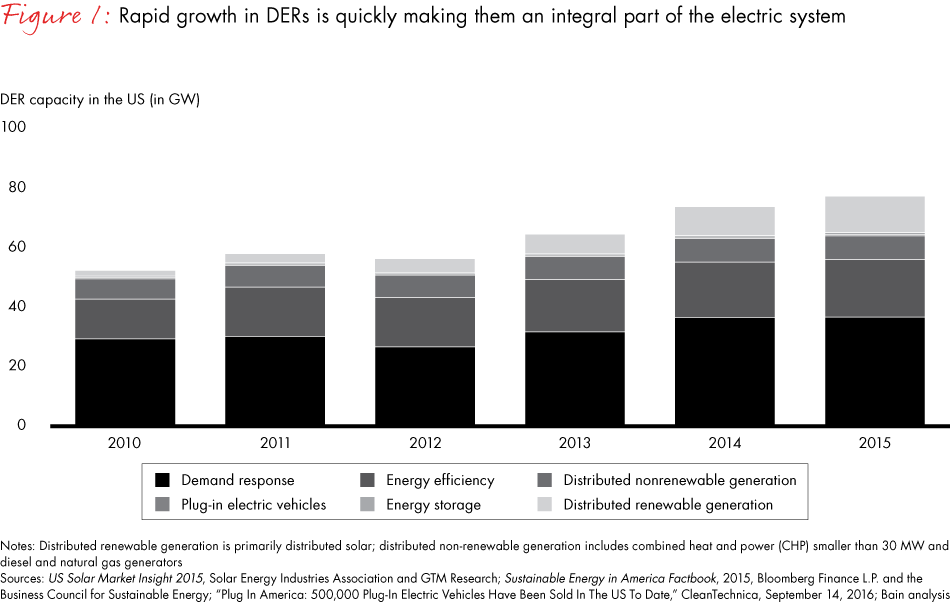
      distributed-energy-resources-fig01_embed

      distributed-energy-resources-fig02_embed

      Bringing distributed resources into the system


      Utility executives considering how to accommodate DERs in their systems must first determine where and how they can create value—in the grid and for customers. The value of any electricity that DERs contribute to the system may be outweighed by the costs of upgrading the grid to accommodate new inputs, which can require better communication and automation, accommodation of bilateral energy flows and reinforcement and strengthening of grid infrastructure.

      Well-planned DERs, however, can be a useful tool that resource planners at utilities can incorporate to help meet a region’s electricity demand. Utilities typically have two broad options to meet peak electricity demand within an area: Supply the extra electrons necessary to meet demand, or constrain demand by encouraging conservation to limit use during peaks. DERs offer a viable third option. If fewer electrons are flowing across the grid to electricity consumers during peak load times, DERs could enable utilities to defer adding substations or other upgrades and extending maintenance schedules. But for any of this to pay off, utilities will need a comprehensive view of existing and anticipated DERs.

      To unlock this value, utilities will have to determine how to integrate DERs into the system and weigh the costs against the financial gains and other benefits. Some actions they will want to take include:

      • Learn how to identify the value in DERs and begin to incorporate them as a capacity resource in system planning.
      • Update internal processes and operations to maximize the benefits from integration of DERs.
      • Decide how they will be integrated—for example, procured as a utility, or merely encouraged through price signals.
      • Determine how to compensate the DER owners for the electricity they contribute to the system. There are many options for ownership and appropriate remuneration, and these decisions will require input from customers, regulators and other stakeholders.

      These will be new capabilities for utilities. To build the necessary skills, utilities should start with smaller pilot programs supported by their regulators. These trials give utilities a platform to develop an understanding of regulatory requirements, learn how to measure the impact of DERs, experiment with different compensation models and begin to adapt their own internal processes to accommodate the changes. The pilot results can help utilities weigh the benefits and trade-offs of integrating DERs compared with traditional ways of managing maintenance, upgrades and growth.

      Aaron Denman, a partner with Bain's Utilities practice, outlines what companies should do to act assertively and plan for success in a changing industry.

      DERs as a growth opportunity


      While the rise of DERs is often seen as a growing headwind, digging deeper suggests there are three ways DERs can serve as a growth opportunity, either within the regulated utility or at the parent company level.

      First, as previously mentioned, the proliferation of DERs and the demand for greater connectedness within the distribution platform will create demand for more infrastructure investments to modernize the grid. These investments are in addition to utilities’ existing maintenance and capex obligations, and the shorter lives of DER assets also contribute to attractive returns. Several states have approved grid modernization programs that ensure such returns, including California (where San Diego Gas & Electric will invest $3.5 billion over 15 years) and in Illinois (where Commonwealth Edison will invest $2.6 billion over 10 years). In addition, the New York Public Service Commission has said that utilities participating in Reforming the Energy Vision (REV) can rate base software licenses, enabling them to make returns on technology that may allow them to become platform providers for DERs and customers.

      Second, while the addition of DER capacity may delay or even replace the need for some traditional distribution assets such as feeder or substation upgrades, there is growing precedent to treat the procuring of DER capacity as a regulatory asset. Doing so allows utilities to consider the costs of rebates or other DER investments in their rates and make a return on their investment. For example, Con Edison’s Brooklyn Queens Demand Management (BQDM) program demonstrated a potential model to use a range of DER technologies (including storage, demand response and energy efficiency) to solve some distribution needs. The analysis included an unquantifiable societal value which, when factored into the cost of procuring DERs, allowed Con Ed to implement a DER system while earning a return on that investment.

      Third, customers’ enthusiasm for generating and managing their own electricity suggests a demand for new and competitive businesses that can help customers— particularly commercial and industrial ones—meet those needs. Technological advances, favorable legislation and financial innovation are all moving in a direction that makes energy services more attractive, and DERs could act as the core service offering to build on. Utilities are exploring opportunities to provide these services, and there are already some good examples of businesses generating value from cross-selling to customers of their parent company, or through innovative use of financial securitization and tax credits. Cofely, for instance, the energy services company developed by Engie, has succeeded by developing DER-based energy efficiency solutions for industrial, commercial and civic customers in fast-growing parts of the world.

      Some utilities are exploring models that require less capital than a typical energy services company, relying more heavily on data and analytical services, a low-cost customer acquisition model and potentially a securitization component. This lowers the investment required to enter the market and focuses the business on higher margin portions of the value chain. Regardless of the model, limited existing capabilities and speed of change in the market should push utilities to consider acquisitions around a core foundation that they can use to build a services platform.

      Whether utilities consider DERs primarily as an additional resource for planning electricity consumption—or they explore new revenue opportunities in developing grids or launching new energy service businesses—the arrival of DERs on a massive scale calls for proactive engagement. Utility executives who move assertively to understand and assess the evolving conditions can position their organizations to make the most of the opportunity.

      Aaron Denman is a partner with Bain & Company in Chicago, Hubert Shen is a Bain partner in Los Angeles and Arnaud Leroi is a partner in Paris. All three work with Bain’s Global Utilities practice.


      distributed-energy-resources-fig01_full

      distributed-energy-resources-fig02_full
      Autoren
      • Headshot of Aaron Denman
        Aaron Denman
        Partner, Chicago
      • Headshot of Arnaud Leroi
        Arnaud Leroi
        Partner, Paris
      • Headshot of Hubert Shen
        Hubert Shen
        Partner, Los Angeles
      Kontaktieren Sie uns
      Verwandte Branchen
      • Energieversorgung
      • Energiewirtschaft
      Energieversorgung
      Scale Matters: Unlocking Value in Utilities

      Building scale will be key to utilities' growth as demand for electricity levels off.

      Mehr erfahren
      Energieversorgung
      Business and Investment Opportunities in a Changing Electricity Sector

      New technologies are creating ample opportunities, but incumbents that generate, transmit and distribute electricity face challenging economics.

      Mehr erfahren
      Energieversorgung
      The Future of Electricity: Attracting Investment to Build Tomorrow's Electricity Sector

      The electricity sector is undergoing an unprecedented transition.

      Mehr erfahren
      Energiewirtschaft
      Utilities Can Power Growth Through a Better Customer Experience

      Top performers turn everyday interactions into loyalty, lower costs, greater revenue streams, and stronger reputations.

      Mehr erfahren
      Energiewirtschaft
      Can the US Energy Grid Keep Up with AI Data Centers?

      Our latest forecast projects data centers will consume 9% of US electricity by 2030, straining the grid without new solutions.

      Mehr erfahren
      First published in Februar 2017
      Markierungen
      • Energieversorgung
      • Energiewirtschaft

      Wie wir unsere Kunden unterstützt haben

      An Environmental Services Company Captures Massive Savings from a Merger

      Kundenbeispiel lesen

      Performance Improvement Boosting a utility's workforce productivity

      Kundenbeispiel lesen

      Kundenstrategie und Marketing Revitalizing a utility's market position with customer loyalty

      Kundenbeispiel lesen

      Möchten Sie mit uns in Kontakt bleiben?

      Wir unterstützen Führungskräfte weltweit, die kritischen Themen in ihrem Unternehmen zu adressieren. Gemeinsam schaffen wir nachhaltige Veränderungen und Ergebnisse.

      Bain Insights. Unsere Perspektive auf die kritischen Themen, mit denen sich international agierende Unternehmen konfrontiert sehen, finden Sie monatlich in Ihrem Postfach.

      *Ich habe die Datenschutzerklärung gelesen und akzeptiere sie.
      Bitte lesen Sie die Datenschutzerklärung und akzeptieren Sie diese.
      Bain & Company
      Contact us Sustainability Accessibility Rechtliche Hinweise Impressum Datenschutz Cookie-Richtlinie Sitemap Log In

      © 1996-2026 Bain & Company, Inc.

      Kontaktieren Sie Bain

      Wie können wir Ihnen helfen?

      • Business inquiry
      • Career information
      • Press relations
      • Partnership request
      • Speaker request
      Alle weltweiten Büros