

Brief

Auf einen Blick
- The voluntary carbon market last year exceeded $1 billion in global value for the first time and could surpass $30 billion in annual value by the end of the decade.
- To ensure ongoing growth toward its full potential, the market must continue building trust, and stakeholders should adopt pragmatic investment strategies that balance carbon-removal and -avoidance credits.
- Several global initiatives are helping the market to mature by developing standards for assessing the quality of carbon credits, better communicating their use, and more efficiently and transparently trading them.
The carbon market has reached a crossroads. After more than two decades as a niche tool for addressing climate change, mainstream interest and investments in voluntary carbon credits are on the rise. But many would-be investors remain wary due to the complexity of this nascent and often misunderstood market mechanism and regular accusations against participants of greenwashing.
Written in collaboration with
Written in collaboration with

Greenwashing—presenting an environmentally friendly public image while avoiding or delaying costly changes to one’s own business model and operations—is a real issue if companies see carbon-credit purchases as an easy way out of the climate change dilemma. But the reality is that offsetting—the use of carbon credits to balance one’s carbon emissions—can play a legitimate, crucial role in tackling the climate crisis by putting a price on emissions’ indirect effects and funding activities that help resolve it.
If stakeholders find ways to increase trust and participation in the voluntary carbon market, charting a pragmatic path to scaling it up, it can become one of the most powerful climate change solutions at our disposal.
More investments, more challenges
The voluntary carbon market’s objective is to facilitate the flow of capital to projects that either avoid carbon emissions that would have occurred in their absence or remove and sequester carbon from the atmosphere. In 2021, the total market value exceeded $1 billion for the first time, reaching a global volume of about 160 million retired carbon credits. Those represent 160 million tons of avoided or removed carbon emissions across the four largest voluntary carbon standards. While this still pales in comparison to the size of traditional commodity markets, current projections indicate the voluntary carbon market could reach between $30 billion and $50 billion in value by 2030. This sort of scale will be necessary to compensate for the world’s combined annual emissions of about 46 billion tons of CO2, even when considering increased technological options to reduce emissions.
Despite the growth of the carbon market and its potential to provide financial incentives for decarbonization, the absence of a clear industry consensus on how to most effectively participate has left many businesses nervous about jumping in. A primary concern is susceptibility to accusations of greenwashing, while at the same time needing to demonstrate progress toward stated emissions-reduction goals. This has led to a recent pattern in which some companies increasingly shun avoidance credits (from projects such as forest conservation) in favor of removal credits (from projects that physically take carbon from the atmosphere, such as forest restoration).
The rationale for this is rooted in the 2018 Intergovernmental Panel on Climate Change’s (IPCC) report on Global Warming of 1.5C. This report’s scientific guidance toward emissions removals has been translated into several standards for achieving corporate net-zero emissions, such as the Science Based Target initiative’s (SBTi) net-zero framework, that initially prescribed the use of removal credits only.
It’s important to note, however, that the IPCC and SBTi are describing the net-zero end state, in which the world has reduced all but the hardest-to-avoid emissions, and the remaining emissions are balanced with removals to reach an equilibrium. In 2022, we’re far away from this end state: There are gigatons of annual carbon emissions to avoid before we can gradually switch to removing carbon from the atmosphere exclusively. This is reflected in more recent guidance from SBTi and its “beyond value chain mitigation” approach to reducing corporate emissions, which incorporates avoidance credits as well.
Furthermore, the carbon-removal market is still in its infancy and much smaller than many would-be participants realize. In 2021, only 6% of total carbon credits issued were classified as true removal credits by the Berkeley Carbon Trading Project. The long lead time for forest growth, availability of suitable land, and technology constraints will result in an undersupplied carbon-credits market for decades if avoidance credits don’t remain a part of the equation. While the higher demand and resulting high prices of removal credits will be beneficial for increased technology deployment (especially for innovative solutions such as carbon capture and storage), the market also needs to deliver on its objectives to finance ecosystem conservation as part of a comprehensive strategy against climate change.
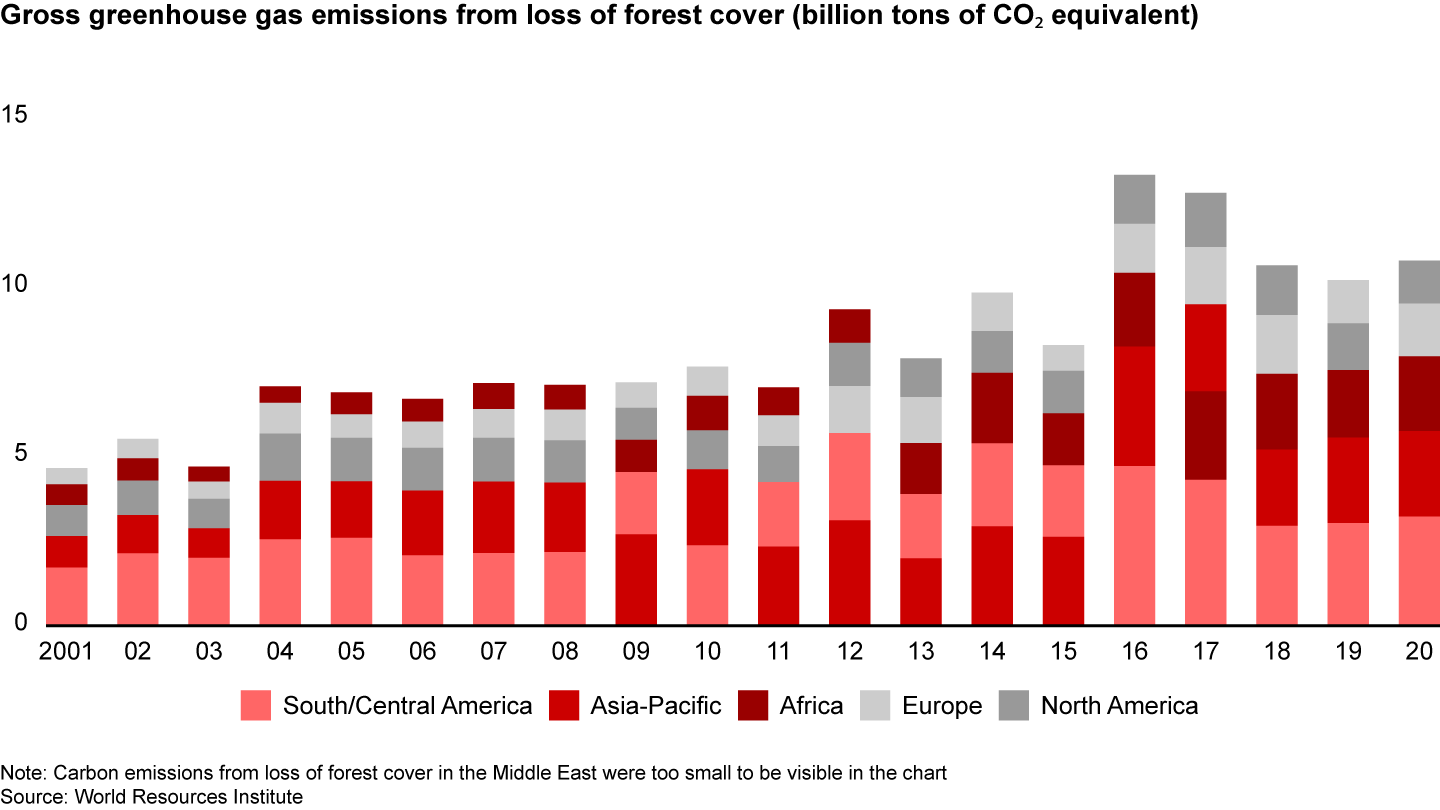
Scientists estimate that the forest and land use sector can contribute 30% of the mitigation needed to prevent a warming increase of more than 1.5 degrees Celsius, with reducing deforestation being a key component of this. Carbon credits remain one of the few mechanisms left to address deforestation at scale, especially in jurisdictions where regulation has proven unsuccessful. According to data from the World Resources Institute, global loss of forest cover and resulting greenhouse gas emissions are near their all-time high (see Figure 1). Not only is nature loss a huge problem for ecosystems, but halting this represents one of the most cost-effective ways for corporate buyers and individuals to help mitigate climate change.
Figure 1

Significant cobenefits are also achieved by nature-based avoidance projects, which often have tangible and quantifiable effects beyond the CO2 avoided. These can include increased biodiversity, local education and employment opportunities, access to clean water, pollution mitigation, and more. Buyers of these credits have a two-fold opportunity to compensate for their currently unavoidable emissions at the most effective cost, as well as align these investments with Sustainable Development Goals or overarching corporate sustainability or strategy goals.
Yet despite decades of commitments and the range of additional benefits, the global community hasn’t found a way to unlock the full scale of capital required for ecosystem conservation. Carbon markets could be the answer, but participants must find the right balance between financing much-needed development of carbon-removal technologies and the immediate conservation of natural carbon stocks through avoidance credits.
All this is to say, many buyers will have to adopt a more nuanced and blended approach to meet net-zero compliance by 2050, backing away from the ambition to achieve net zero solely through removal credits. A singular focus on removal risks making the carbon market accessible only to highly profitable businesses and those with a vested interest in certain technological solutions, rather than a global mechanism through which stakeholders of all shapes and sizes can work toward achieving emission-reduction goals and financing global decarbonization. As buyers ramp up pragmatic investments in both avoidance and removal credits to build healthy carbon portfolios, the market will be able to achieve the scale needed to assume its role as a major tool in mitigating climate change.
The trust factor
Now comes the hard part: increasing participation in the carbon market. This will fundamentally require building trust. For many years, only a few dozen companies have actively used voluntary carbon credits at scale, and these organizations often deployed complex diligence processes that aren’t practical for less sophisticated or smaller buyers. At the same time, varying claims about the use of carbon credits have confused consumers and customers, making it difficult to refute accusations of greenwashing. Skeptics have suggested the voluntary carbon market could end up an unregulated “Wild West,” with minimal accountability and lowest-common-denominator credits as the prevailing commodity.
This scenario looks increasingly unlikely, but we do see three areas in which the market needs to continue building trust. The good news is there’s cause for optimism for all three.
- Supply of carbon credits. Trust in the quality of carbon credits is critical for buyers to engage and increase the flow of capital to projects. Unfortunately, faith in the market has been shaken at times by media reports on credits with low additionality (the degree to which credit purchases directly finance carbon reductions that wouldn’t have otherwise occurred), inflated baselines (overestimating the threat to a particular ecosystem, resulting in unjustified rewards for its protection), and insignificant payments to project developers on the ground.
The Integrity Council for the Voluntary Carbon Market (ICVCM), a multistakeholder initiative with expert members from all corners of the carbon and climate sphere, is currently developing a global quality standard for carbon credits: the “Core Carbon Principles.” These should help businesses set and, perhaps most important, understand common minimum requirements for the integrity of purchased credits. Third-party organizations like Sylvera, BeZero Carbon, and Calyx Global have also emerged to issue carbon-reduction project ratings. These can provide additional confidence to corporate buyers and serve as an important source for cross-referencing quality, similar to credit rating agencies in traditional markets.
We expect these initiatives to foster more nuanced perspectives and increasingly drive the mainstream market toward consensus on what constitutes a high-quality carbon credit. - Use of carbon credits. To increase the mainstream public’s trust, companies have to do a better job communicating their use of credits in a clear, transparent, and standardized way. Differing conventions on the inclusion of various emissions scopes and types of credits—plus a plethora of standards, certifications, and logos—often make it difficult for consumers to look behind the marketing message. Consistent, repeated messaging and gradual convergence on unified language across carbon projects will help everyone make more informed decisions.
Several recent publications from the World Resources Institute, the Voluntary Carbon Markets Integrity Initiative (VCMI), and the Nordic Dialogue add to a growing body of guidance on how to use carbon credits in a standardized way as one element of a consistent corporate net-zero strategy. Leading companies increasingly have an opportunity to develop clear, science-backed narratives on the topic that they can use to their competitive advantage, while also encouraging continued growth of the market. - Trading of carbon credits. There’s also work to do to increase trust in the carbon market’s connective tissue. In mature commodities markets, the trading of spot, futures, and derivative contracts provide efficient liquidity and transparency in price discovery. The carbon market is still developing similar functions, with trading often historically constrained to bilateral agreements between the producer (project developer) and end customer (corporate offsetter). Not only does that setup inhibit liquidity and price discovery, but its highly manual nature increases transaction costs and limits the share of total market spending that actually reaches physical projects on the ground.
Recent market infrastructure developments give room for optimism and are helping carbon mature as a commodity. Exchanges such as those operated by CME Group, AirCarbon Exchange (ACX), and Intercontinental Exchange (ICE) are standardizing carbon-credit trading and price discovery by offering well-defined, tradable spot and futures contracts. Increased trading activity and liquidity in the market will allow for more flexible buying and financing structures, such as linking carbon-credit prices to an index. This ensures fair value goes back to local communities and reduces delivery risk for buyers.
The road ahead
Corporate sustainability teams and other carbon buyers might wonder where to look for better ways to support pragmatic scaling of the carbon market and facilitate investments in projects that reduce global emissions. In our work in this area, we’ve seen several emerging best practices.
First, leading companies are making carbon offsetting part of a holistic climate change strategy. The most effective ones follow a mitigation hierarchy, which starts with avoiding and reducing the use of fossil fuels, replacing polluting technologies, and only then offsetting the remaining emissions. Leading companies define a plan for decarbonizing their own operations, such as an SBTi commitment with clear intermediate targets, and spell out the initiatives that will reduce their emissions over time. Once carbon-reduction initiatives are implemented, the company’s remaining unavoidable emissions should be offset. The recently published Provisional Claims Code of Practice by VCMI provides a detailed guide for how to implement this hierarchy.
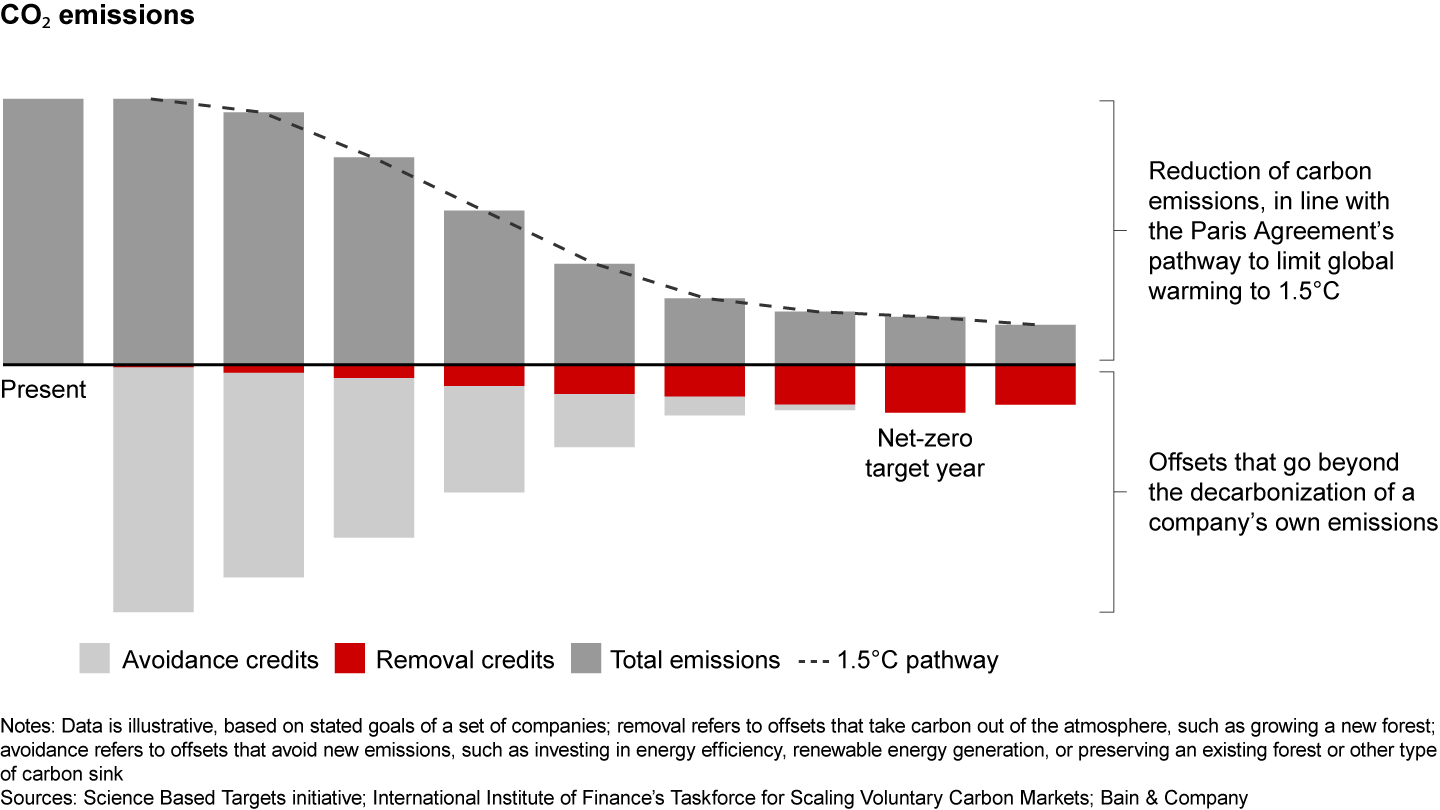
Next, recognizing that achieving net-zero emissions is a marathon, not a sprint, the most effective companies are building a balanced portfolio of carbon credits. Decision makers should acknowledge that procuring credits has a critical function in the market: not to purchase removal credits as fast as possible, but rather to finance the comprehensive net-zero transition, starting with avoiding further emissions today. By procuring credits from different regions, methodologies, standards, and project types, businesses can not only reduce their risk through diversification, but also address climate change with an “all of the above” approach instead of a singular solution. The illustrative portfolio below demonstrates the mix of carbon-removal and -avoidance credits, as well as the shift over time as supply and emissions footprints change (see Figure 2).
Figure 2

Buying methods are important, too. In lieu of repeated one-off purchases from the spot market, signing longer-term offtake agreements from carbon projects ensures that finance continues flowing to critical conservation and removal activities, as well as the ongoing community benefits. The security of longer-term commitments from buyers can further develop the market by sending strong signals for project development (supply) and therefore diversify high-quality options available to fill demand over time.
Lastly, leading companies monitor the market closely and watch for critical signposts. Participants that keep an eye on emerging conventions, new standards, and public perceptions can not only get ahead of greenwashing accusations but also encourage healthier, more realistic, and financially sound narratives around carbon.
The carbon market offers an elegant tool to finance climate change solutions. As it rapidly evolves, businesses and other stakeholders would be wise not to lose sight of the ultimate objective: to reduce the concentration of carbon dioxide in the atmosphere through any means necessary. A more positive framing and willingness to participate in this growing market in more diversified, dynamic ways over time—akin to the complexity of the overarching climate challenge itself—will benefit us all.

About Vertree
Vertree is an integrated provider of carbon solutions. Through the direct financing of emissions reduction and removal projects, trading, risk management, advisory, and downstream portfolio solutions, Vertree enables leading companies to invest in nature and innovative climate technologies to reach decarbonization goals. The business was founded in early 2020 and has established partnerships with leading project developers to provide access to existing and future supply of high-quality credits. Vertree is wholly owned by Hartree Partners, a leading energy and commodities trading firm with over 25 years of expertise in physical and financial markets.
First published in November 2022