
Skip to Content
  • Standorte

    Standorte

    North & Latin America
    • Atlanta
    • Austin
    • Bogota
    • Boston
    • Buenos Aires
    • Chicago
    • Dallas
    • Denver
    • Houston
    • Lisbon
    • Los Angeles
    • Mexico City
    • Minneapolis
    • Monterrey
    • Montreal
    • New York
    • Rio de Janeiro
    • San Francisco
    • Santiago
    • São Paulo
    • Seattle
    • Silicon Valley
    • Toronto
    • Washington, DC
    Europe & Africa
    • Amsterdam
    • Athens
    • Berlin
    • Brussels
    • Copenhagen
    • Düsseldorf
    • Frankfurt
    • Helsinki
    • Istanbul
    • Johannesburg
    • Kyiv
    • Lisbon
    • London
    • Madrid
    • Milan
    • München
    • Oslo
    • Paris
    • Rome
    • Stockholm
    • Warsaw
    • Wien
    • Zürich
    Middle East
    • Doha
    • Dubai
    • Riyadh
    Asia & Australia
    • Bangkok
    • Beijing
    • Bengaluru
    • Brisbane
    • Ho Chi Minh City
    • Hong Kong
    • Jakarta
    • Kuala Lumpur
    • Manila
    • Melbourne
    • Mumbai
    • New Delhi
    • Perth
    • Seoul
    • Shanghai
    • Singapore
    • Sydney
    • Tokyo
    Alle Standorte Anzeigen
  • Alumni
  • Presse
  • Newsletter
  • Kontakt
  • DACH-Region | Deutsch

    Wählen Sie Ihre Region und Sprache

    Global
    • Global (English)
    North & Latin America
    • Brazil (Português)
    • Argentina (Español)
    • Canada (Français)
    • Chile (Español)
    • Colombia (Español)
    Europe, Middle East, & Africa
    • France (Français)
    • DACH-Region (Deutsch)
    • Italy (Italiano)
    • Spain (Español)
    • Greece (Elliniká)
    Asia & Australia
    • China (中文版)
    • Korea (한국어)
    • Japan (日本語)
  • Saved items (0)
    Saved items (0)

    You have no saved items.

    Inhalte, für die Sie sich interessieren, werden hier gespeichert und können später gelesen oder weitergeleitet werden.

    Explore Bain Insights
  • Branchenkompetenzen
    Hauptmenü

    Branchenkompetenzen

    • Luft- und Raumfahrt, Verteidigung
    • Agrarwirtschaft
    • Chemieindustrie
    • Infrastruktur und Bauwirtschaft
    • Konsumgüter
    • Finanzdienstleistungen
    • Gesundheitswesen
    • Maschinen- und Anlagenbau
    • Medienwirtschaft
    • Metallindustrie
    • Bergbau
    • Öl und Gas
    • Papier- und Verpackungsindustrie
    • Private Equity
      Branchenkompetenzen
      Private Equity
      • Due Diligence
      • Exit Planning
      • Firm Strategy & Operations
      • Portfolio Value Creation
    • Öffentlicher Sektor und Sozialwesen
    • Einzelhandel
    • Technologie
    • Telekommunikation
    • Transportwesen
    • Reise- und Freizeitbranche
    • Versorgung und erneuerbare Energien
  • Managementkompetenzen
    Hauptmenü

    Managementkompetenzen

    • Customer Experience
    • ESG
    • Innovation
    • M&A
    • Operations
    • People & Organization
    • Private Equity
    • Sales & Marketing
    • Strategie
    • KI, Einblicke und Lösungen
    • Technologie
    • Transformation
  • Digital
  • Publikationen
    Hauptmenü

    Publikationen

    • Branchenthemen
    • Managementthemen
    • Bain-Bücher
    Alle Publikationen
    Ausgewählte Themen
    • Resilienz in der globalen Krise
    • M&A Report
    • Private Equity Podcast
    • Midyear Private Equity Report
    • Agile
    • Engineering Report
    • Digital Transformation
    • Elements of Value®
    • Firm of the Future
    • Nachhaltigkeitsstudie
    • Macro Trends
    • Future of Consumption
    • Weltwirtschaftsforum (WEF)
  • Über uns
    Hauptmenü

    Über uns

    • Was wir bieten
    • Unser Ansatz
    • Unser Team
    • Game Changer Award
    • Female Allstar Board
    • Messbare Ergebnisse (EN)
    • Auszeichnungen
    • Globale Partnerschaften
    • The Mission
    Further: Our global responsibility
    • Vielfalt & Chancengleichheit
    • Soziale Verantwortung
    • Sustainability
    Erfahren Sie mehr zu "Further"
  • Karriere
    Hauptmenü

    Karriere

    • Dein Einstieg
      Karriere
      Dein Einstieg
      • Find Your Place
      • Unsere Arbeitsbereiche
      • Unsere Teams
      • Angebote für Studierende
      • Praktika & Programme
      • Recruiting-Events
    • Arbeiten bei Bain
      Karriere
      Arbeiten bei Bain
      • Blog: Inside Bain
      • Karriere Stories
      • Unsere Bainies
      • Office-Standorte
      • Weiterentwicklung
      • Affinity Groups
      • Deine Benefits
    • Impact Stories
    • Deine Bewerbung
      Karriere
      Deine Bewerbung
      • Das erwartet dich
      • Der Interviewprozess
    FIND JOBS
  • Standorte
    Hauptmenü

    Standorte

    • North & Latin America
      Standorte
      North & Latin America
      • Atlanta
      • Austin
      • Bogota
      • Boston
      • Buenos Aires
      • Chicago
      • Dallas
      • Denver
      • Houston
      • Lisbon
      • Los Angeles
      • Mexico City
      • Minneapolis
      • Monterrey
      • Montreal
      • New York
      • Rio de Janeiro
      • San Francisco
      • Santiago
      • São Paulo
      • Seattle
      • Silicon Valley
      • Toronto
      • Washington, DC
    • Europe & Africa
      Standorte
      Europe & Africa
      • Amsterdam
      • Athens
      • Berlin
      • Brussels
      • Copenhagen
      • Düsseldorf
      • Frankfurt
      • Helsinki
      • Istanbul
      • Johannesburg
      • Kyiv
      • Lisbon
      • London
      • Madrid
      • Milan
      • München
      • Oslo
      • Paris
      • Rome
      • Stockholm
      • Warsaw
      • Wien
      • Zürich
    • Middle East
      Standorte
      Middle East
      • Doha
      • Dubai
      • Riyadh
    • Asia & Australia
      Standorte
      Asia & Australia
      • Bangkok
      • Beijing
      • Bengaluru
      • Brisbane
      • Ho Chi Minh City
      • Hong Kong
      • Jakarta
      • Kuala Lumpur
      • Manila
      • Melbourne
      • Mumbai
      • New Delhi
      • Perth
      • Seoul
      • Shanghai
      • Singapore
      • Sydney
      • Tokyo
    Alle Standorte Anzeigen
  • Alumni
  • Presse
  • Newsletter
  • Kontakt
  • DACH-Region | Deutsch
    Hauptmenü

    Wählen Sie Ihre Region und Sprache

    • Global
      Wählen Sie Ihre Region und Sprache
      Global
      • Global (English)
    • North & Latin America
      Wählen Sie Ihre Region und Sprache
      North & Latin America
      • Brazil (Português)
      • Argentina (Español)
      • Canada (Français)
      • Chile (Español)
      • Colombia (Español)
    • Europe, Middle East, & Africa
      Wählen Sie Ihre Region und Sprache
      Europe, Middle East, & Africa
      • France (Français)
      • DACH-Region (Deutsch)
      • Italy (Italiano)
      • Spain (Español)
      • Greece (Elliniká)
    • Asia & Australia
      Wählen Sie Ihre Region und Sprache
      Asia & Australia
      • China (中文版)
      • Korea (한국어)
      • Japan (日本語)
  • Saved items  (0)
    Hauptmenü
    Saved items (0)

    You have no saved items.

    Inhalte, für die Sie sich interessieren, werden hier gespeichert und können später gelesen oder weitergeleitet werden.

    Explore Bain Insights
  • Branchenkompetenzen
    • Branchenkompetenzen

      • Luft- und Raumfahrt, Verteidigung
      • Agrarwirtschaft
      • Chemieindustrie
      • Infrastruktur und Bauwirtschaft
      • Konsumgüter
      • Finanzdienstleistungen
      • Gesundheitswesen
      • Maschinen- und Anlagenbau
      • Medienwirtschaft
      • Metallindustrie
      • Bergbau
      • Öl und Gas
      • Papier- und Verpackungsindustrie
      • Private Equity
      • Öffentlicher Sektor und Sozialwesen
      • Einzelhandel
      • Technologie
      • Telekommunikation
      • Transportwesen
      • Reise- und Freizeitbranche
      • Versorgung und erneuerbare Energien
  • Managementkompetenzen
    • Managementkompetenzen

      • Customer Experience
      • ESG
      • Innovation
      • M&A
      • Operations
      • People & Organization
      • Private Equity
      • Sales & Marketing
      • Strategie
      • KI, Einblicke und Lösungen
      • Technologie
      • Transformation
  • Digital
  • Publikationen
    • Publikationen

      • Branchenthemen
      • Managementthemen
      • Bain-Bücher
      Alle Publikationen
      Ausgewählte Themen
      • Resilienz in der globalen Krise
      • M&A Report
      • Private Equity Podcast
      • Midyear Private Equity Report
      • Agile
      • Engineering Report
      • Digital Transformation
      • Elements of Value®
      • Firm of the Future
      • Nachhaltigkeitsstudie
      • Macro Trends
      • Future of Consumption
      • Weltwirtschaftsforum (WEF)
  • Über uns
    • Über uns

      • Was wir bieten
      • Unser Ansatz
      • Unser Team
      • Game Changer Award
      • Female Allstar Board
      • Messbare Ergebnisse (EN)
      • Auszeichnungen
      • Globale Partnerschaften
      • The Mission
      Further: Our global responsibility
      • Vielfalt & Chancengleichheit
      • Soziale Verantwortung
      • Sustainability
      Erfahren Sie mehr zu "Further"
  • Karriere
    Häufige Suchanfragen
    • Agil
    • Digital
    • Strategie
    Vorherige Suchanfragen
      Zuletzt besuchte Seiten

      Content added to saved items

      Saved items (0)

      Removed from saved items

      Saved items (0)

      Expert Commentary

      Making Friends with Collinearity: How Driver Interactions Can Inform Targeted Interventions

      Making Friends with Collinearity: How Driver Interactions Can Inform Targeted Interventions

      Driver analysis helps inform decisions on which drivers deserve the greatest effort.

      Von Eleonora Nazander und Ilker Carikcioglu

      • Min. Lesezeit
      }

      Brief

      Making Friends with Collinearity: How Driver Interactions Can Inform Targeted Interventions
      en
      At a Glance
      • Understanding dependencies among drivers is critical when designing interventions.
      • Two methods can achieve this understanding: dimensionality reduction methods and measuring variable uniqueness.
      • Depending on a driver’s importance and uniqueness, each should be approached differently than other drivers.

      When a company needs to determine which drivers have the greatest influence on an outcome, it can turn to key driver analysis. This allows decision makers to learn where to focus their efforts so as to achieve the greatest impact.

      The Elements of Value in retail banking

      In this commentary, we use the same dataset as in an earlier commentary. Our hypothetical retail bank is trying to understand what drives customer advocacy. Data comes from a survey of 2,500 consumers, asking how likely they are to recommend a certain brand to a friend or colleague—the core Net Promoter ScoreSM question. This likelihood to recommend becomes the outcome variable, the goal being to understand which variables have the strongest associations with the NPS® metric.

      Potential drivers are a set of 30 attitudinal statements capturing how well a certain brand performs on the Elements of Value® as experienced by customers (see Figure 1). The survey asked respondents to rate their experience with the bank on each Element of Value using a scale of 0–10. Delivering on multiple Elements of Value can lift products or services above commodity status.

      Figure 1
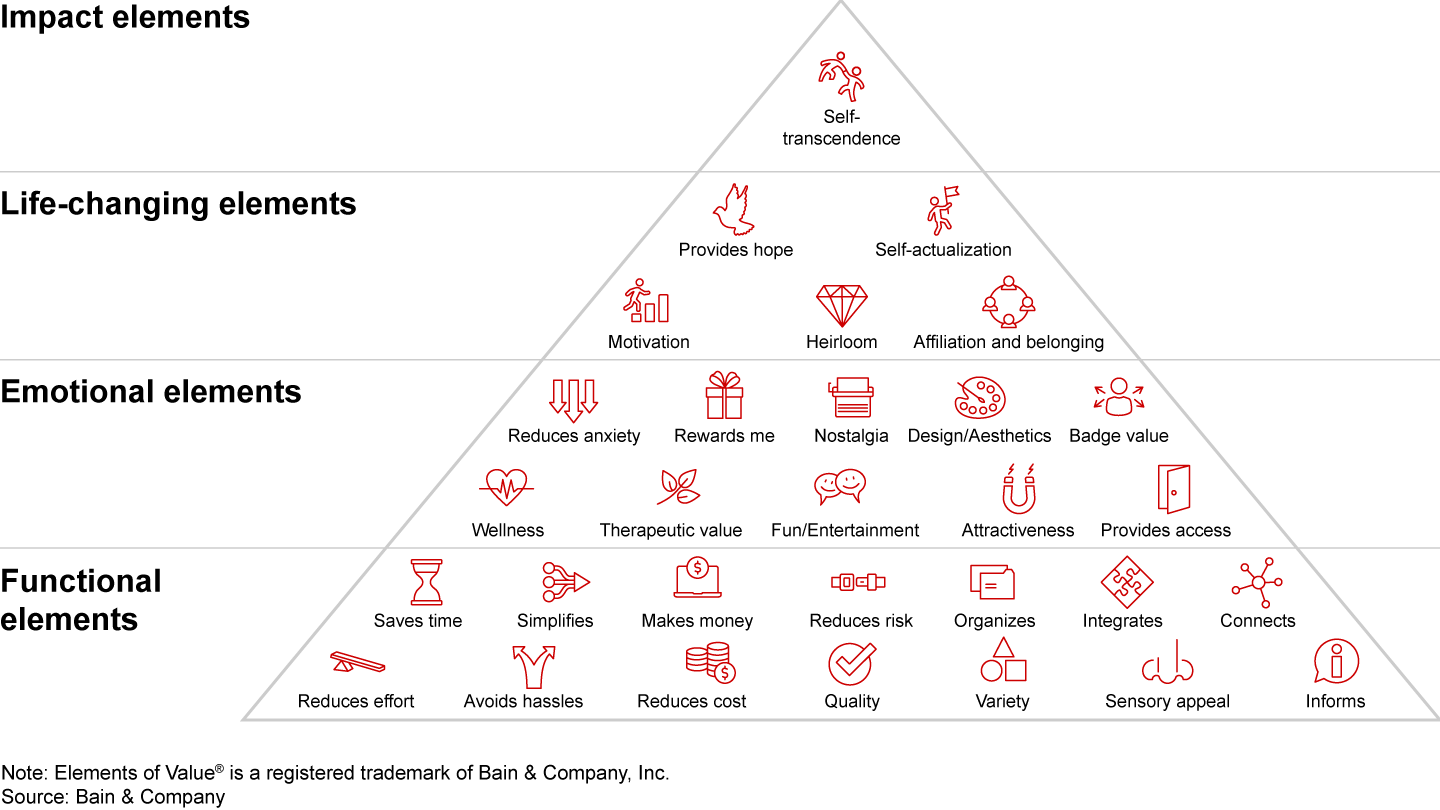
      The Elements of Value®
      Elements of Value®
      Elements of Value®

      Variable importance

      In the earlier commentary, we discussed analytical techniques commonly used for key driver analysis. We demonstrated that many methods, such as MLR, random forest variable importance, or partial correlations, penalize collinear drivers by reducing their ranking compared with other, less collinear drivers. This behavior can be problematic when collinearity among drivers is high. An important driver should still be important even if it is collinear with other drivers. We recommend using methods that assess the relationship of a driver with the outcome variable independently of other drivers in consideration. Correlation analysis is the most prominent of such methods.

      The first task of driver analysis is to rank drivers in the order of their importance. We concluded the earlier commentary by showing the relative importance of the drivers according to Pearson correlation1 with likelihood to recommend (see Figure 2).

      Figure 2
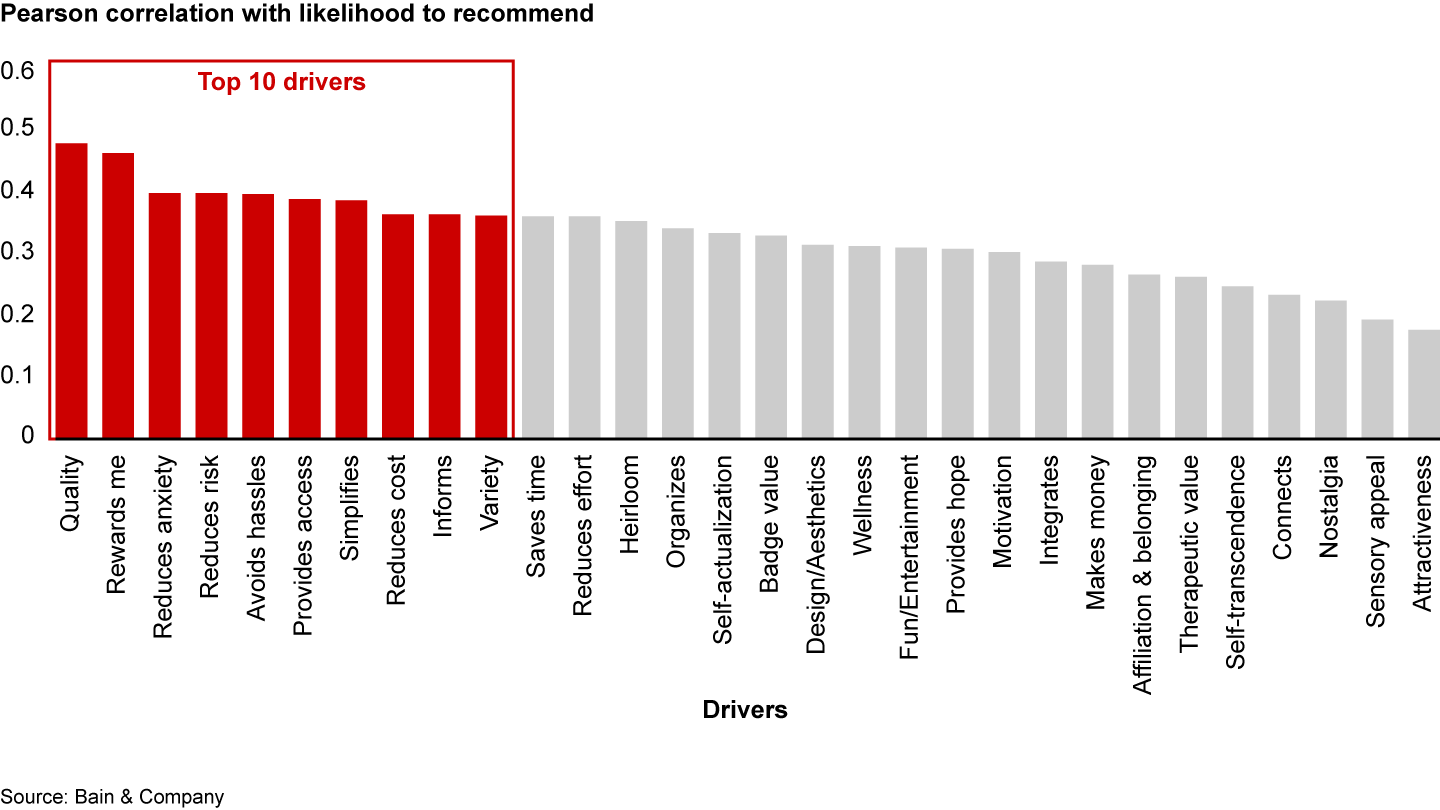
      The Pearson correlation produces this ranking of drivers
      The Pearson correlation produces a different ranking of drivers
      The Pearson correlation produces a different ranking of drivers

      Quality was ranked as the most important driver, with Rewards me and Reduces anxiety in second and third place, respectively. This outcome makes intuitive sense given that our survey focused on retail banking products.

      Many companies would conclude their driver analysis by shortlisting the top 5 or 10 drivers. We recommend taking an additional step, namely, analyzing how drivers are interrelated among themselves.

      Understanding interdependencies among drivers

      Understanding dependencies among drivers is not just a theoretical exercise. This analysis has practical implications that many business managers will find helpful when designing interventions:

      • A driver that is independent from other drivers can be addressed on its own.
      • When important drivers correlate with each other, it might be possible to address them all with a common approach.

      An analyst can use one of two approaches, or both, to determine driver interdependences.

      Approach 1. Dimensionality reduction methods such as principal component analysis (PCA). Dimensionality reduction can reveal groupings of drivers that are interrelated. As our drivers are psychometric measurements obtained through survey research, variable groupings in this context reveal drivers that are similar in the minds of survey respondents, and hence have similar ratings.

      Figure 3 demonstrates the results of running PCA on our driver data, with the top 10 drivers highlighted by PCA groupings.2

      Figure 3
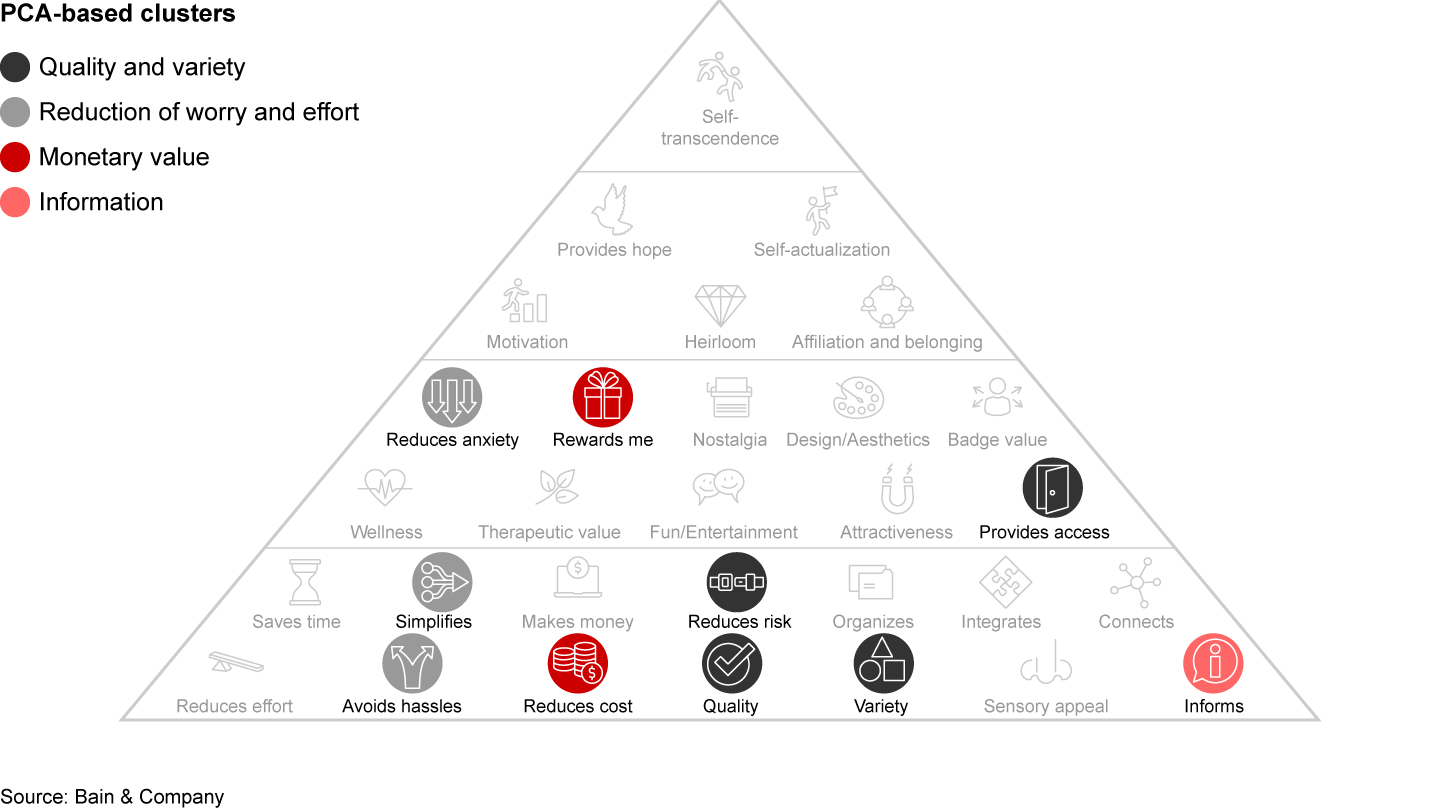
      The Elements of Value can be sorted into groupings by principal component analysis

      Drivers of the same color are interlinked in the minds of consumers. There are two potential interpretations:

      • A single theme connects these drivers. In the blue cluster, for instance, one set of actions would likely improve perceptions of a brand on all elements in the group.
      • A company that performs well on one driver tends to perform well on other drivers in that group. This likely occurs when there is no single theme in a group of drivers, yet they are linked together by PCA—such as Variety and Quality.

      As with any descriptive analysis, PCA cannot directly answer causal questions. Yet the groupings can provide valuable clues. One might want to consider whether a grouping potentially contains a root cause driver, because improving that driver might boost customer perception of other elements in the group. In perceptions of Quality, Reduces risk and Provides access tend to move together in consumers’ minds. This might indicate that perceptions of quality of retail banking products are driven by how well a bank manages to reduce risk for customers and provide access to products and services. Quality can mean different things in different industries, so knowing what other factors Quality links to in an industry can be helpful.

      Approach 2. Measuring variable uniqueness

      To estimate variable uniqueness for a driver, we fit a random forest3 model where that driver itself is the dependent variable, and all other drivers are independent variables. R-squared4 from that model is an estimate of the percentage of variance in driver A explained by other drivers. To estimate variable uniqueness, we subtract R-squared from 1 (see Figure 4).

      Figure 4
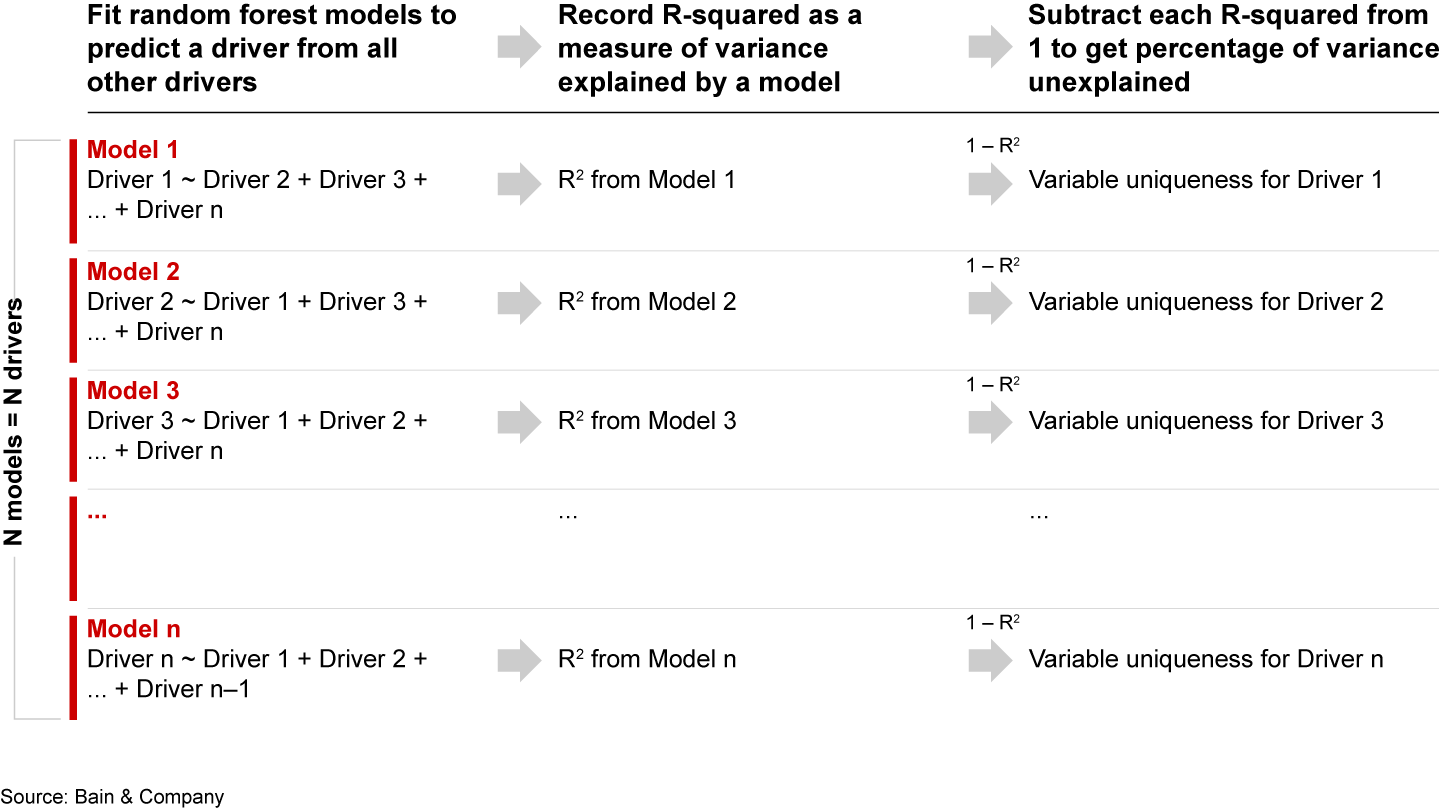
      This methodology calculates variable uniqueness

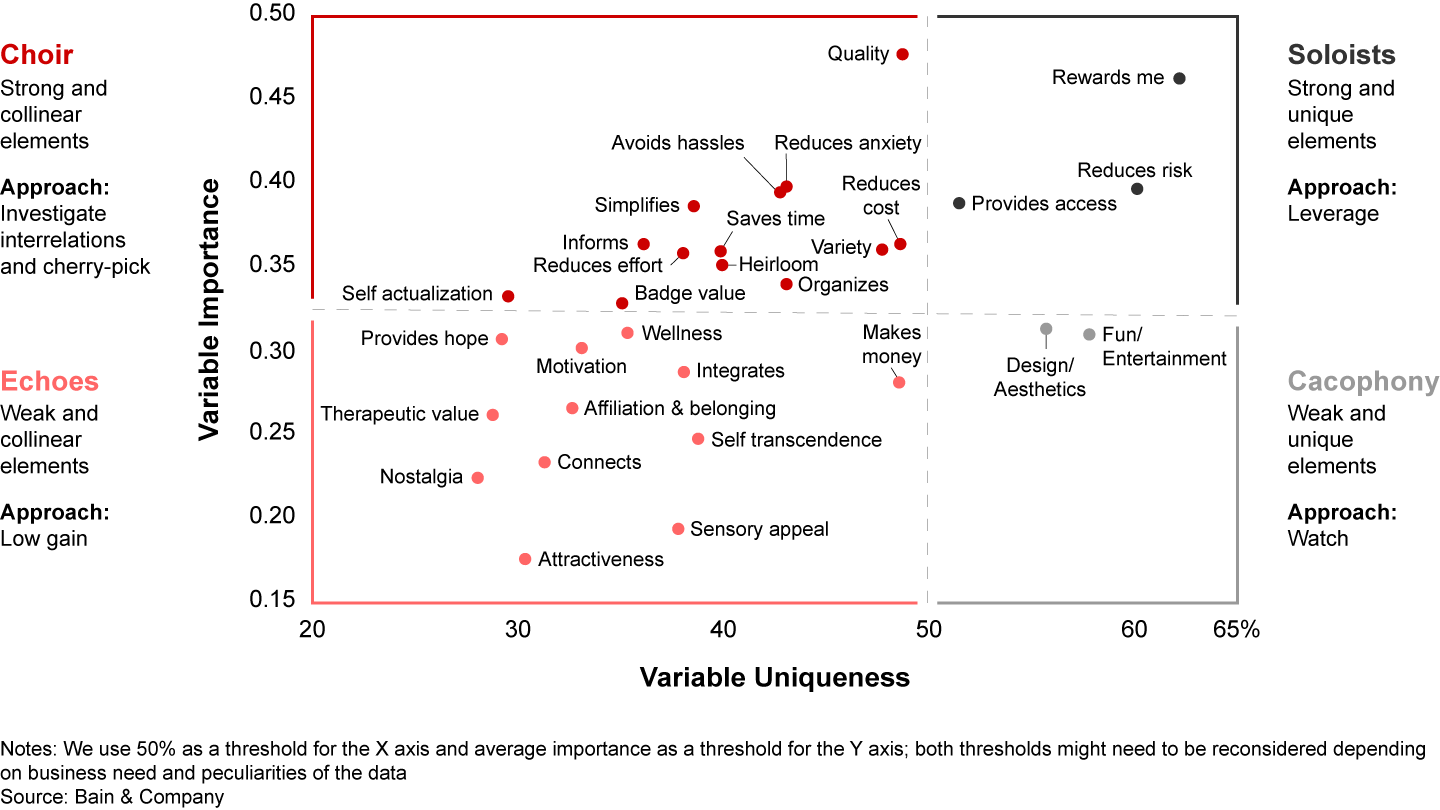
      How can companies use variable uniqueness? We suggest using it alongside the chosen metric of variable importance. Figure 5 shows drivers plotted according to their importance and uniqueness, with a separate approach to drivers in each quadrant.

      Figure 5
      Drivers should be approached differently according to their importance and uniqueness
      • Soloists: Drivers such as Rewards me and Reduces risk are strong predictors of the likelihood to recommend, independent from other drivers. Managers should consider creating a separate intervention for improving each of these drivers.
      • Choir: Here, many important drivers have strong collinearity with other drivers. The right approach would be to pick a few to work on, as improving a few would likely improve consumers’ perception of the brand’s performance on other collinear drivers.
      • Echoes: Many of these drivers are less relevant for retail banks. High collinearity can be explained by a halo effect, in which promoters of a brand tend to give nonzero scores to that brand even on metrics less relevant for the industry. A company would be better off focusing on drivers in other quadrants.
      • Cacophony: These drivers are weak predictors, not collinear with other drivers. A potential explanation here is that some companies tried to differentiate on these metrics, but the drivers did not improve the likelihood to recommend among customers. A company might consider these drivers as additional differentiators once it has addressed the main levers of business outcomes.

      An effective key driver analysis should include two steps. First, an analyst ranks potential drivers by the strength of their relationship with the outcome variable, using correlation analysis or other bivariate methods. Next, the analyst aims to understand interrelations among drivers. Understanding collinearity allows managers to make an informed decision on whether a single set of actions can address several drivers at once, or whether each driver needs an approach of its own.

      • Endnotes (click to expand)

        1 We demonstrate Pearson correlation here as it is the most famous of the correlation techniques. In practice, we usually give preference to Spearman's rank correlation. Unlike Pearson correlation, this method does not require the data to be normally distributed and it is not sensitive to outliers. Pearson correlation only measures linear dependence between variables, while Spearman's rank correlation is able to correctly capture nonlinear relationship between two variables as long as the relationship is monotonic.

        2 An Eigenvalue cutoff of 1 is typically used to determine the number of principal components necessary to keep most of information in the original data. However, we have found that for the purposes of finding meaningful groups of drivers, Eigenvalues can be less than 1. Drivers are assigned into groups according to their loadings into principal components. For example, a driver with highest loading into principal component 1 is assigned to group 1.

        3 Random forest is an ensemble method that constructs a large number of decision trees and produces a mean or mode prediction depending on whether the dependent variable is numerical or categorical. We used R’s random forest package and kept the default value of mtry hyperparameter (that is, the number of drivers divided by 3, or in our case mtry=10). Ntree=5,000.

        4 R-squared (R2) is a commonly used measure of model fit used in models with continuous dependent variables. R2 can range between 0% (model not creating value) and 100% (perfect model).


      Net Promoter®, NPS® und die NPS-bezogenen Emoticons sind eingetragene Marken von Bain & Company, Inc., Satmetrix Systems, Inc. und Fred Reichheld. Net Promoter Score℠ und Net Promoter System℠ sind Service Marks von Bain & Company, Inc., Satmetrix Systems, Inc. und Fred Reichheld.


      Elements of Value® is a registered trademark of Bain & Company, Inc.

      Autoren
      • Headshot of Eleonora Nazander
        Eleonora Nazander
        Expert Senior Manager, Data Science, Denver
      • Headshot of Ilker Carikcioglu
        Ilker Carikcioglu
        Expert Associate Partner, Boston
      Kontaktieren Sie uns
      Ähnliche Beratungsangebote
      • Advanced Analytics
      Advanced Analytics
      Defining the Intelligent Enterprise

      A recap from DeepLearning.AI’s AI Dev 25 × NYC.

      Mehr erfahren
      Advanced Analytics
      Want More Out of Your AI Investments? Think People First

      To unlock AI’s exponential productivity potential, companies must modernize workflow and workforce in tandem.

      Mehr erfahren
      Advanced Analytics
      Mission Possible: Driver Analysis with Collinear Variables

      Many commonly used methods have serious limitations when assessing the variable importance of collinear drivers.

      Mehr erfahren
      Advanced Analytics
      Life Sciences’ AI Momentum Requires a Workforce Redesign

      AI scalers aren't waiting for new talent—they're building it.

      Mehr erfahren
      Advanced Analytics
      An Alternative Methodology for Demand Forecasting with Small Data Sets

      Nested bivariate regressions can provide confidence in situations containing multiple predictors.

      Mehr erfahren
      First published in Mai 2023
      Markierungen
      • Advanced Analytics
      • Advanced Analytics

      Wie wir unsere Kunden unterstützt haben

      Advanced Analytics Analytics Powers a Software Company’s Bold Revenue Goals

      Kundenbeispiel lesen

      Kundenstrategie und Marketing Direct marketing excellence through experimental design

      Kundenbeispiel lesen

      Advanced Analytics Analytics guide an entertainment company's growth strategy

      Kundenbeispiel lesen

      Möchten Sie mit uns in Kontakt bleiben?

      Wir unterstützen Führungskräfte weltweit, die kritischen Themen in ihrem Unternehmen zu adressieren. Gemeinsam schaffen wir nachhaltige Veränderungen und Ergebnisse.

      Bain Insights. Unsere Perspektive auf die kritischen Themen, mit denen sich international agierende Unternehmen konfrontiert sehen, finden Sie monatlich in Ihrem Postfach.

      *Ich habe die Datenschutzerklärung gelesen und akzeptiere sie.
      Bitte lesen Sie die Datenschutzerklärung und akzeptieren Sie diese.
      Bain & Company
      Contact us Sustainability Accessibility Rechtliche Hinweise Impressum Datenschutz Cookie-Richtlinie Sitemap Log In

      © 1996-2026 Bain & Company, Inc.

      Kontaktieren Sie Bain

      Wie können wir Ihnen helfen?

      • Business inquiry
      • Career information
      • Press relations
      • Partnership request
      • Speaker request
      Alle weltweiten Büros