
Skip to Content
  • Standorte

    Standorte

    North & Latin America
    • Atlanta
    • Austin
    • Bogota
    • Boston
    • Buenos Aires
    • Chicago
    • Dallas
    • Denver
    • Houston
    • Lisbon
    • Los Angeles
    • Mexico City
    • Minneapolis
    • Monterrey
    • Montreal
    • New York
    • Rio de Janeiro
    • San Francisco
    • Santiago
    • São Paulo
    • Seattle
    • Silicon Valley
    • Toronto
    • Washington, DC
    Europe & Africa
    • Amsterdam
    • Athens
    • Berlin
    • Brussels
    • Copenhagen
    • Düsseldorf
    • Frankfurt
    • Helsinki
    • Istanbul
    • Johannesburg
    • Kyiv
    • Lisbon
    • London
    • Madrid
    • Milan
    • München
    • Oslo
    • Paris
    • Rome
    • Stockholm
    • Warsaw
    • Wien
    • Zürich
    Middle East
    • Doha
    • Dubai
    • Riyadh
    Asia & Australia
    • Bangkok
    • Beijing
    • Bengaluru
    • Brisbane
    • Ho Chi Minh City
    • Hong Kong
    • Jakarta
    • Kuala Lumpur
    • Manila
    • Melbourne
    • Mumbai
    • New Delhi
    • Perth
    • Seoul
    • Shanghai
    • Singapore
    • Sydney
    • Tokyo
    Alle Standorte Anzeigen
  • Alumni
  • Presse
  • Newsletter
  • Kontakt
  • DACH-Region | Deutsch

    Wählen Sie Ihre Region und Sprache

    Global
    • Global (English)
    North & Latin America
    • Brazil (Português)
    • Argentina (Español)
    • Canada (Français)
    • Chile (Español)
    • Colombia (Español)
    Europe, Middle East, & Africa
    • France (Français)
    • DACH-Region (Deutsch)
    • Italy (Italiano)
    • Spain (Español)
    • Greece (Elliniká)
    Asia & Australia
    • China (中文版)
    • Korea (한국어)
    • Japan (日本語)
  • Saved items (0)
    Saved items (0)

    You have no saved items.

    Inhalte, für die Sie sich interessieren, werden hier gespeichert und können später gelesen oder weitergeleitet werden.

    Explore Bain Insights
  • Branchenkompetenzen
    Hauptmenü

    Branchenkompetenzen

    • Luft- und Raumfahrt, Verteidigung
    • Agrarwirtschaft
    • Chemieindustrie
    • Infrastruktur und Bauwirtschaft
    • Konsumgüter
    • Finanzdienstleistungen
    • Gesundheitswesen
    • Maschinen- und Anlagenbau
    • Medienwirtschaft
    • Metallindustrie
    • Bergbau
    • Öl und Gas
    • Papier- und Verpackungsindustrie
    • Private Equity
      Branchenkompetenzen
      Private Equity
      • Due Diligence
      • Exit Planning
      • Firm Strategy & Operations
      • Portfolio Value Creation
    • Öffentlicher Sektor und Sozialwesen
    • Einzelhandel
    • Technologie
    • Telekommunikation
    • Transportwesen
    • Reise- und Freizeitbranche
    • Versorgung und erneuerbare Energien
  • Managementkompetenzen
    Hauptmenü

    Managementkompetenzen

    • Customer Experience
    • ESG
    • Innovation
    • M&A
    • Operations
    • People & Organization
    • Private Equity
    • Sales & Marketing
    • Strategie
    • KI, Einblicke und Lösungen
    • Technologie
    • Transformation
  • Digital
  • Publikationen
    Hauptmenü

    Publikationen

    • Branchenthemen
    • Managementthemen
    • Bain-Bücher
    Alle Publikationen
    Ausgewählte Themen
    • Resilienz in der globalen Krise
    • M&A Report
    • Private Equity Podcast
    • Midyear Private Equity Report
    • Agile
    • Engineering Report
    • Digital Transformation
    • Elements of Value®
    • Firm of the Future
    • Nachhaltigkeitsstudie
    • Macro Trends
    • Future of Consumption
    • Weltwirtschaftsforum (WEF)
  • Über uns
    Hauptmenü

    Über uns

    • Was wir bieten
    • Unser Ansatz
    • Unser Team
    • Game Changer Award
    • Female Allstar Board
    • Messbare Ergebnisse (EN)
    • Auszeichnungen
    • Globale Partnerschaften
    • The Mission
    Further: Our global responsibility
    • Vielfalt & Chancengleichheit
    • Soziale Verantwortung
    • Sustainability
    Erfahren Sie mehr zu "Further"
  • Karriere
    Hauptmenü

    Karriere

    • Dein Einstieg
      Karriere
      Dein Einstieg
      • Find Your Place
      • Unsere Arbeitsbereiche
      • Unsere Teams
      • Angebote für Studierende
      • Praktika & Programme
      • Recruiting-Events
    • Arbeiten bei Bain
      Karriere
      Arbeiten bei Bain
      • Blog: Inside Bain
      • Karriere Stories
      • Unsere Bainies
      • Office-Standorte
      • Weiterentwicklung
      • Affinity Groups
      • Deine Benefits
    • Impact Stories
    • Deine Bewerbung
      Karriere
      Deine Bewerbung
      • Das erwartet dich
      • Der Interviewprozess
    FIND JOBS
  • Standorte
    Hauptmenü

    Standorte

    • North & Latin America
      Standorte
      North & Latin America
      • Atlanta
      • Austin
      • Bogota
      • Boston
      • Buenos Aires
      • Chicago
      • Dallas
      • Denver
      • Houston
      • Lisbon
      • Los Angeles
      • Mexico City
      • Minneapolis
      • Monterrey
      • Montreal
      • New York
      • Rio de Janeiro
      • San Francisco
      • Santiago
      • São Paulo
      • Seattle
      • Silicon Valley
      • Toronto
      • Washington, DC
    • Europe & Africa
      Standorte
      Europe & Africa
      • Amsterdam
      • Athens
      • Berlin
      • Brussels
      • Copenhagen
      • Düsseldorf
      • Frankfurt
      • Helsinki
      • Istanbul
      • Johannesburg
      • Kyiv
      • Lisbon
      • London
      • Madrid
      • Milan
      • München
      • Oslo
      • Paris
      • Rome
      • Stockholm
      • Warsaw
      • Wien
      • Zürich
    • Middle East
      Standorte
      Middle East
      • Doha
      • Dubai
      • Riyadh
    • Asia & Australia
      Standorte
      Asia & Australia
      • Bangkok
      • Beijing
      • Bengaluru
      • Brisbane
      • Ho Chi Minh City
      • Hong Kong
      • Jakarta
      • Kuala Lumpur
      • Manila
      • Melbourne
      • Mumbai
      • New Delhi
      • Perth
      • Seoul
      • Shanghai
      • Singapore
      • Sydney
      • Tokyo
    Alle Standorte Anzeigen
  • Alumni
  • Presse
  • Newsletter
  • Kontakt
  • DACH-Region | Deutsch
    Hauptmenü

    Wählen Sie Ihre Region und Sprache

    • Global
      Wählen Sie Ihre Region und Sprache
      Global
      • Global (English)
    • North & Latin America
      Wählen Sie Ihre Region und Sprache
      North & Latin America
      • Brazil (Português)
      • Argentina (Español)
      • Canada (Français)
      • Chile (Español)
      • Colombia (Español)
    • Europe, Middle East, & Africa
      Wählen Sie Ihre Region und Sprache
      Europe, Middle East, & Africa
      • France (Français)
      • DACH-Region (Deutsch)
      • Italy (Italiano)
      • Spain (Español)
      • Greece (Elliniká)
    • Asia & Australia
      Wählen Sie Ihre Region und Sprache
      Asia & Australia
      • China (中文版)
      • Korea (한국어)
      • Japan (日本語)
  • Saved items  (0)
    Hauptmenü
    Saved items (0)

    You have no saved items.

    Inhalte, für die Sie sich interessieren, werden hier gespeichert und können später gelesen oder weitergeleitet werden.

    Explore Bain Insights
  • Branchenkompetenzen
    • Branchenkompetenzen

      • Luft- und Raumfahrt, Verteidigung
      • Agrarwirtschaft
      • Chemieindustrie
      • Infrastruktur und Bauwirtschaft
      • Konsumgüter
      • Finanzdienstleistungen
      • Gesundheitswesen
      • Maschinen- und Anlagenbau
      • Medienwirtschaft
      • Metallindustrie
      • Bergbau
      • Öl und Gas
      • Papier- und Verpackungsindustrie
      • Private Equity
      • Öffentlicher Sektor und Sozialwesen
      • Einzelhandel
      • Technologie
      • Telekommunikation
      • Transportwesen
      • Reise- und Freizeitbranche
      • Versorgung und erneuerbare Energien
  • Managementkompetenzen
    • Managementkompetenzen

      • Customer Experience
      • ESG
      • Innovation
      • M&A
      • Operations
      • People & Organization
      • Private Equity
      • Sales & Marketing
      • Strategie
      • KI, Einblicke und Lösungen
      • Technologie
      • Transformation
  • Digital
  • Publikationen
    • Publikationen

      • Branchenthemen
      • Managementthemen
      • Bain-Bücher
      Alle Publikationen
      Ausgewählte Themen
      • Resilienz in der globalen Krise
      • M&A Report
      • Private Equity Podcast
      • Midyear Private Equity Report
      • Agile
      • Engineering Report
      • Digital Transformation
      • Elements of Value®
      • Firm of the Future
      • Nachhaltigkeitsstudie
      • Macro Trends
      • Future of Consumption
      • Weltwirtschaftsforum (WEF)
  • Über uns
    • Über uns

      • Was wir bieten
      • Unser Ansatz
      • Unser Team
      • Game Changer Award
      • Female Allstar Board
      • Messbare Ergebnisse (EN)
      • Auszeichnungen
      • Globale Partnerschaften
      • The Mission
      Further: Our global responsibility
      • Vielfalt & Chancengleichheit
      • Soziale Verantwortung
      • Sustainability
      Erfahren Sie mehr zu "Further"
  • Karriere
    Häufige Suchanfragen
    • Agil
    • Digital
    • Strategie
    Vorherige Suchanfragen
      Zuletzt besuchte Seiten

      Content added to saved items

      Saved items (0)

      Removed from saved items

      Saved items (0)

      Report

      Fast-Forward Darwin: The Speed Imperative in Tech

      Fast-Forward Darwin: The Speed Imperative in Tech

      The pace of industry evolution continues to pick up.

      Von David Crawford und Matthew Crupi

      • Min. Lesezeit
      }

      Report

      Fast-Forward Darwin: The Speed Imperative in Tech
      en

      This article is Chapter 2 of Bain’s global Technology Report 2020. Explore the contents of the report here or download the PDF to read the full report.

      For a sobering reminder of the pace of change in technology markets, just look at the turnover at the top (see Figure 1). 

      Figure 1
      The 15 most-valuable technology companies have changed dramatically from 1999 to 2019

      In 1999, the list of the 15 highest-valued technology companies worldwide was populated by mainframe legacy companies such as IBM; enterprise resource planning (ERP) darlings such as Oracle; and the winners of the PC/workgroup computing phenomenon: Microsoft, Intel, Cisco, Dell and HP.

      A decade later, about half of the list had been replaced. The most notable additions were early winners in search (Google), mobile (Apple, Qualcomm, Samsung) and ERP consolidation (SAP). For the first time, a semiconductor foundry (Taiwan Semiconductor Manufacturing Co.) also made the list.

      By 2019, 40% of the top 15 had turned over again. The newcomers illustrate the importance of social media (Facebook) and the growing influence of China (Tencent, Alibaba). But the decade’s most transformative trend was the massive global success of cloud technology. It enabled the growth of other newcomers to the list (Amazon, Netflix, Adobe), and stalwarts from 2009 (Microsoft, Apple, Alphabet) rode the wave to massive valuations 10 years later.

      This rate of creative destruction speaks directly to the vibrancy and capacity for innovation of the technology sector. But is this dynamic nature par for the course in most industries?

      The answer is no.

      Bain research shows that technology companies are 12% more likely to be disrupted than companies in retail and 25% more likely than those in financial services, two other industries that have historically gone through disruptions (see Figure 2). Although the term “disruption” has become a cliché, here we’re specifically referring to companies whose annual market capitalization growth lags their sector’s average by 2 percentage points or more for at least three years in a row. Only advanced manufacturing and services companies have a higher likelihood of being disrupted than technology companies.

      Figure 2
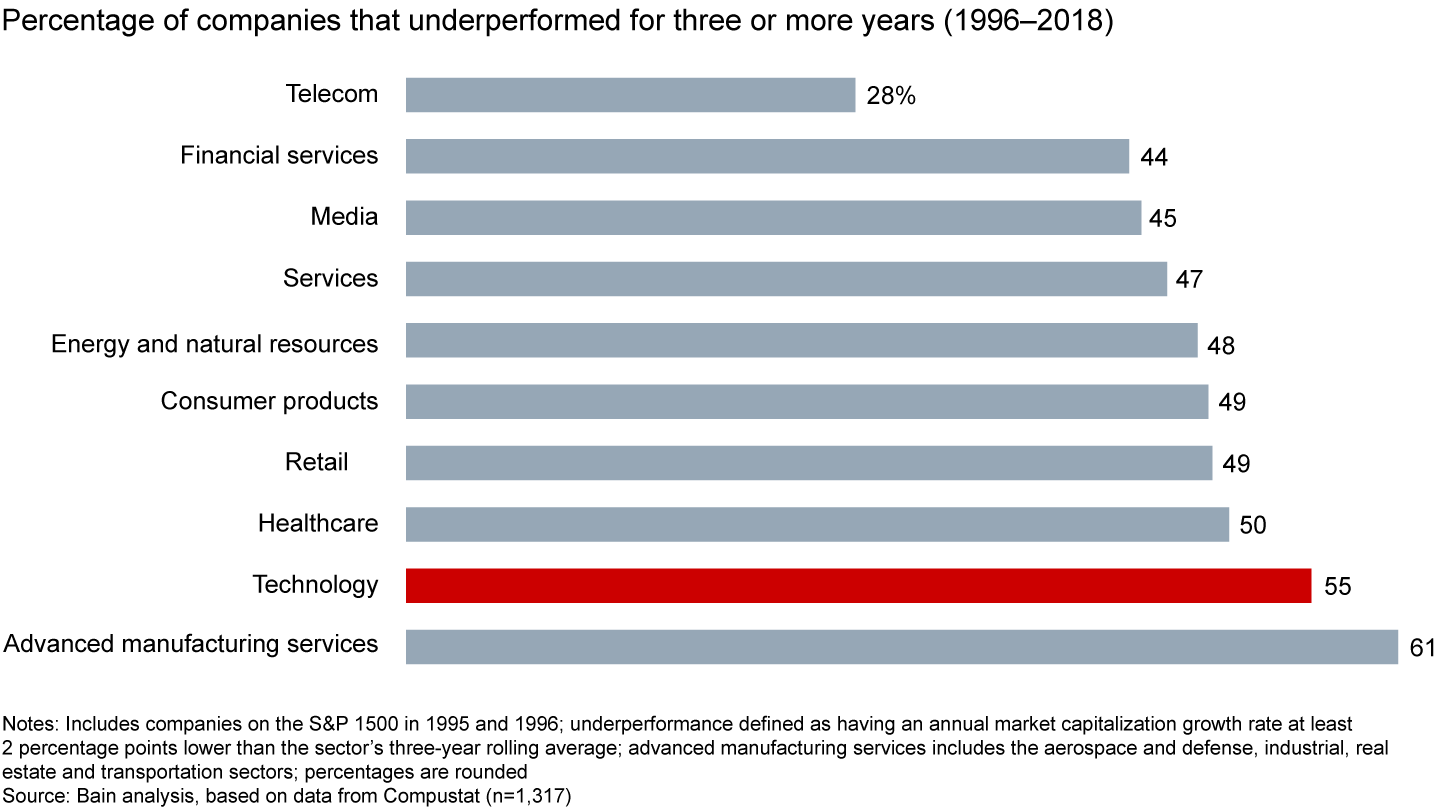
      Technology companies are easily disrupted
      Chart showing that companies in the technology industry are among the most easily disrupted by innovators, relative to other industries
      Chart showing that companies in the technology industry are among the most easily disrupted by innovators, relative to other industries

      And once a technology company falls behind, it can be difficult to repair. The same Bain research suggests that a technology company that has been disrupted is 12% less likely to return to sector-average market capitalization growth or higher than companies in retail and 17% less likely than those in healthcare, for example (see Figure 3). 

      Figure 3
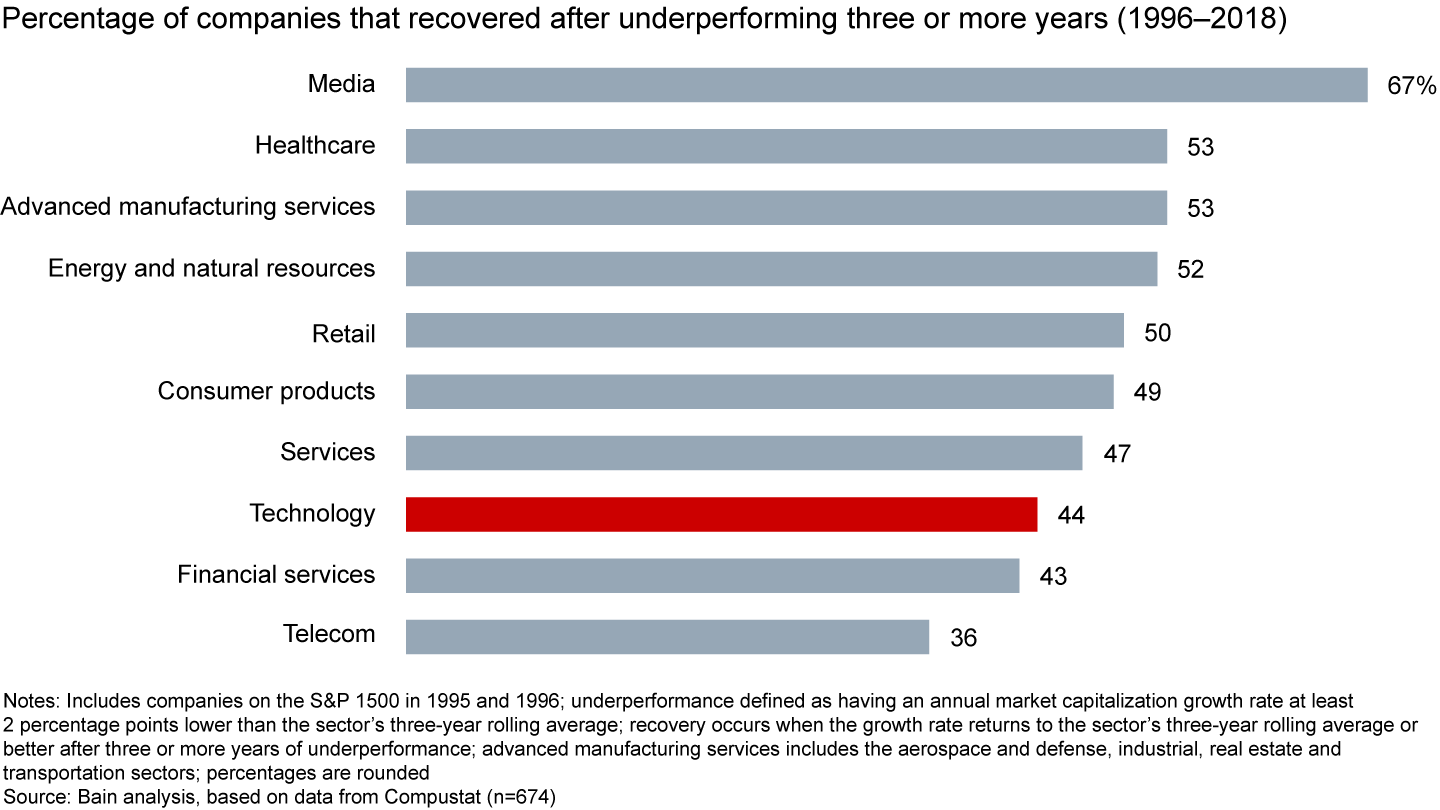
      Once disrupted, technology companies can be hard to repair
      Chart showing that once a technology company is disrupted by another, it can be hard to recover lost ground due to the speed of innovation
      Chart showing that once a technology company is disrupted by another, it can be hard to recover lost ground due to the speed of innovation

      Even more striking, the data shows that once a technology company trails its sector for three years or more, its chances of turning things around are very low, indeed (see Figure 4).  

      Figure 4
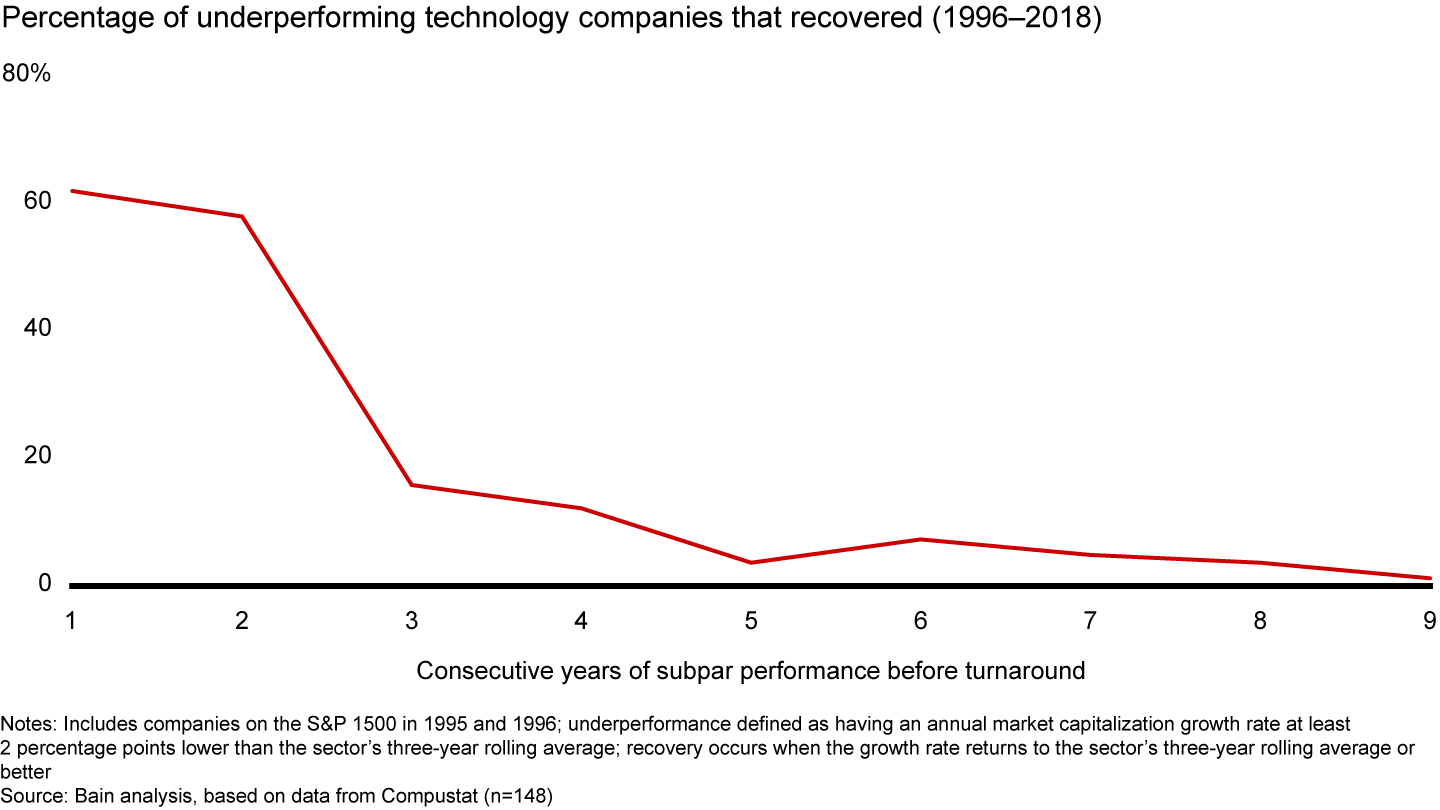
      The longer a technology company underperforms, the lower its chances of a turnaround
      Chart showing that the longer a technology company underperforms, the lower its chances of a successful turnaround.
      Chart showing that the longer a technology company underperforms, the lower its chances of a successful turnaround.

      Why is strong business growth so difficult to maintain in the technology industry? Many industry CEOs attribute it primarily to the speed at which technology transitions occur. 

      In some industries, such as manufacturing or oil and gas, the cycle times for a paradigm-shifting product to evolve and take hold can take many years, sometimes decades. However, the transition from feature phones to smartphones, for example, was completed in just seven years—from the introduction of the Apple iPhone in 2007 to the sale of Nokia’s handset unit to Microsoft in 2014. 

      Consumer mobile applications can ramp up with even more dizzying speed. ByteDance was reportedly worth $78 billion just seven years after its 2012 founding. The China-based company rode the runaway successes of TikTok and Musical.ly, an app acquired in 2017 and later merged with TikTok. These apps helped usher in an era of videostreaming and social media built on simple tools that allow users to post short, creative videos and riff off of each other’s creations. TikTok is now a global phenomenon with hundreds of millions of daily users, although it’s currently confronted by a controversy over how it handles user data and is under pressure from the Trump administration to become part of a US-based company.

      The pace of these transitions continues to accelerate. After launching in 2004, it took Facebook less than four years to reach 50 million users, according to news articles. By 2016, it took Instagram Stories less than two months to get to 50 million users, BuzzFeed News and other media outlets reported. 

      This also speaks to the “winner-takes-most” effect in the technology industry. Due to abundant cloud-computing infrastructure and mobile connectivity worldwide, a technology platform can reach a massive audience at unprecedented rates. And, of course, increasing scale digitally is nearly frictionless. It doesn’t require the time or costs involved in producing or distributing physical products. Ultimately, scale accrues so quickly to the winners that once a transition is missed, it’s difficult for other companies to get in the game.

      As all technology executives know, technology talent is remarkably mobile and often compensated with company stock. When a technology firm falls behind in its sector, employees often dust off their résumés and begin scouting new jobs at the next fast-rising company. 

      Finally, most technology companies find they must rely on mergers and acquisitions to reposition and extend their businesses. But many lose several years mired in a common series of pitfalls before they hone their M&A strategy and skills. These missteps often include assigning core-business veterans to new market domains where they lack necessary expertise; hiring token outsiders who struggle to lead veteran teams; and making tiny acquisitions and overintegrating them to the point that the benefits of the deal are dissipated. The time lost navigating these mistakes often closes the company’s window for recovering.

      Technology CEOs understand these challenges well, but that doesn’t make them any less daunting. So, how do leading technology companies create value and—just as important—maintain it? The keys are getting the most out of their core businesses and being willing to evolve, even when it’s painful in the short term.

      Read the Next Chapter

      Creating Value in Tech through Constant Reinvention


      Autoren
      • Headshot of David Crawford
        David Crawford
        Partner, Silicon Valley
      • Headshot of Matthew Crupi
        Matthew Crupi
        Partner, Dallas
      Kontaktieren Sie uns
      Verwandte Branchen
      • Software
      • Technologie
      Ähnliche Beratungsangebote
      • Informationstechnologie
      Technology Report
      Five Functions Where AI Is Already Delivering

      Spurred on by early success, companies of all sizes are increasing their spending on generative AI.

      Mehr erfahren
      Technology Report
      Will Agentic AI Disrupt SaaS?

      Disruption is mandatory. Obsolescence is optional.

      Mehr erfahren
      Technologie
      Why SaaS Stocks Have Dropped—and What It Signals for Software’s Next Chapter

      A sharp reset in valuations reflects AI-driven disruption, slowing retention, and a growing divide between incumbents and future winners.

      Mehr erfahren
      Technologie
      How Businesses Can Prepare for Post-Quantum Cybersecurity Threats

      Your company will soon face attackers armed with quantum technology. Will you be ready?

      Mehr erfahren
      Technology Report
      State of the Art of Agentic AI Transformation

      Tech-forward enterprises have cracked the code on ROI for AI. Falling behind is riskier than ever as the next wave of agentic AI raises the stakes.

      Mehr erfahren
      First published in Oktober 2020
      Markierungen
      • Informationstechnologie
      • Software
      • Technologie
      • Technology Report

      Wie wir unsere Kunden unterstützt haben

      Nachhaltigkeit Can Microchips Turbocharge Sustainability Improvement?

      Kundenbeispiel lesen

      Helping a Midsize ERP Player Compete against the Giants

      Kundenbeispiel lesen

      Kundenstrategie und Marketing Increased sales productivity frees selling time and saves millions

      Kundenbeispiel lesen

      Möchten Sie mit uns in Kontakt bleiben?

      Wir unterstützen Führungskräfte weltweit, die kritischen Themen in ihrem Unternehmen zu adressieren. Gemeinsam schaffen wir nachhaltige Veränderungen und Ergebnisse.

      Bain Insights. Unsere Perspektive auf die kritischen Themen, mit denen sich international agierende Unternehmen konfrontiert sehen, finden Sie monatlich in Ihrem Postfach.

      *Ich habe die Datenschutzerklärung gelesen und akzeptiere sie.
      Bitte lesen Sie die Datenschutzerklärung und akzeptieren Sie diese.
      Bain & Company
      Contact us Sustainability Accessibility Rechtliche Hinweise Impressum Datenschutz Cookie-Richtlinie Sitemap Log In

      © 1996-2026 Bain & Company, Inc.

      Kontaktieren Sie Bain

      Wie können wir Ihnen helfen?

      • Business inquiry
      • Career information
      • Press relations
      • Partnership request
      • Speaker request
      Alle weltweiten Büros