
Skip to Content
  • Standorte

    Standorte

    North & Latin America
    • Atlanta
    • Austin
    • Bogota
    • Boston
    • Buenos Aires
    • Chicago
    • Dallas
    • Denver
    • Houston
    • Lisbon
    • Los Angeles
    • Mexico City
    • Minneapolis
    • Monterrey
    • Montreal
    • New York
    • Rio de Janeiro
    • San Francisco
    • Santiago
    • São Paulo
    • Seattle
    • Silicon Valley
    • Toronto
    • Washington, DC
    Europe & Africa
    • Amsterdam
    • Athens
    • Berlin
    • Brussels
    • Copenhagen
    • Düsseldorf
    • Frankfurt
    • Helsinki
    • Istanbul
    • Johannesburg
    • Kyiv
    • Lisbon
    • London
    • Madrid
    • Milan
    • München
    • Oslo
    • Paris
    • Rome
    • Stockholm
    • Warsaw
    • Wien
    • Zürich
    Middle East
    • Doha
    • Dubai
    • Riyadh
    Asia & Australia
    • Bangkok
    • Beijing
    • Bengaluru
    • Brisbane
    • Ho Chi Minh City
    • Hong Kong
    • Jakarta
    • Kuala Lumpur
    • Manila
    • Melbourne
    • Mumbai
    • New Delhi
    • Perth
    • Seoul
    • Shanghai
    • Singapore
    • Sydney
    • Tokyo
    Alle Standorte Anzeigen
  • Alumni
  • Presse
  • Newsletter
  • Kontakt
  • DACH-Region | Deutsch

    Wählen Sie Ihre Region und Sprache

    Global
    • Global (English)
    North & Latin America
    • Brazil (Português)
    • Argentina (Español)
    • Canada (Français)
    • Chile (Español)
    • Colombia (Español)
    Europe, Middle East, & Africa
    • France (Français)
    • DACH-Region (Deutsch)
    • Italy (Italiano)
    • Spain (Español)
    • Greece (Elliniká)
    Asia & Australia
    • China (中文版)
    • Korea (한국어)
    • Japan (日本語)
  • Saved items (0)
    Saved items (0)

    You have no saved items.

    Inhalte, für die Sie sich interessieren, werden hier gespeichert und können später gelesen oder weitergeleitet werden.

    Explore Bain Insights
  • Branchenkompetenzen
    Hauptmenü

    Branchenkompetenzen

    • Luft- und Raumfahrt, Verteidigung
    • Agrarwirtschaft
    • Chemieindustrie
    • Infrastruktur und Bauwirtschaft
    • Konsumgüter
    • Finanzdienstleistungen
    • Gesundheitswesen
    • Maschinen- und Anlagenbau
    • Medienwirtschaft
    • Metallindustrie
    • Bergbau
    • Öl und Gas
    • Papier- und Verpackungsindustrie
    • Private Equity
      Branchenkompetenzen
      Private Equity
      • Due Diligence
      • Exit Planning
      • Firm Strategy & Operations
      • Portfolio Value Creation
    • Öffentlicher Sektor und Sozialwesen
    • Einzelhandel
    • Technologie
    • Telekommunikation
    • Transportwesen
    • Reise- und Freizeitbranche
    • Versorgung und erneuerbare Energien
  • Managementkompetenzen
    Hauptmenü

    Managementkompetenzen

    • Customer Experience
    • ESG
    • Innovation
    • M&A
    • Operations
    • People & Organization
    • Private Equity
    • Sales & Marketing
    • Strategie
    • KI, Einblicke und Lösungen
    • Technologie
    • Transformation
  • Digital
  • Publikationen
    Hauptmenü

    Publikationen

    • Branchenthemen
    • Managementthemen
    • Bain-Bücher
    Alle Publikationen
    Ausgewählte Themen
    • Resilienz in der globalen Krise
    • M&A Report
    • Private Equity Podcast
    • Midyear Private Equity Report
    • Agile
    • Engineering Report
    • Digital Transformation
    • Elements of Value®
    • Firm of the Future
    • Nachhaltigkeitsstudie
    • Macro Trends
    • Future of Consumption
    • Weltwirtschaftsforum (WEF)
  • Über uns
    Hauptmenü

    Über uns

    • Was wir bieten
    • Unser Ansatz
    • Unser Team
    • Game Changer Award
    • Female Allstar Board
    • Messbare Ergebnisse (EN)
    • Auszeichnungen
    • Globale Partnerschaften
    • The Mission
    Further: Our global responsibility
    • Vielfalt & Chancengleichheit
    • Soziale Verantwortung
    • Sustainability
    Erfahren Sie mehr zu "Further"
  • Karriere
    Hauptmenü

    Karriere

    • Dein Einstieg
      Karriere
      Dein Einstieg
      • Find Your Place
      • Unsere Arbeitsbereiche
      • Unsere Teams
      • Angebote für Studierende
      • Praktika & Programme
      • Recruiting-Events
    • Arbeiten bei Bain
      Karriere
      Arbeiten bei Bain
      • Karriere Stories
      • Unsere Bainies
      • Office-Standorte
      • Weiterentwicklung
      • Affinity Groups
      • Deine Benefits
    • Impact Stories
    • Deine Bewerbung
      Karriere
      Deine Bewerbung
      • Das erwartet dich
      • Der Interviewprozess
    FIND JOBS
  • Standorte
    Hauptmenü

    Standorte

    • North & Latin America
      Standorte
      North & Latin America
      • Atlanta
      • Austin
      • Bogota
      • Boston
      • Buenos Aires
      • Chicago
      • Dallas
      • Denver
      • Houston
      • Lisbon
      • Los Angeles
      • Mexico City
      • Minneapolis
      • Monterrey
      • Montreal
      • New York
      • Rio de Janeiro
      • San Francisco
      • Santiago
      • São Paulo
      • Seattle
      • Silicon Valley
      • Toronto
      • Washington, DC
    • Europe & Africa
      Standorte
      Europe & Africa
      • Amsterdam
      • Athens
      • Berlin
      • Brussels
      • Copenhagen
      • Düsseldorf
      • Frankfurt
      • Helsinki
      • Istanbul
      • Johannesburg
      • Kyiv
      • Lisbon
      • London
      • Madrid
      • Milan
      • München
      • Oslo
      • Paris
      • Rome
      • Stockholm
      • Warsaw
      • Wien
      • Zürich
    • Middle East
      Standorte
      Middle East
      • Doha
      • Dubai
      • Riyadh
    • Asia & Australia
      Standorte
      Asia & Australia
      • Bangkok
      • Beijing
      • Bengaluru
      • Brisbane
      • Ho Chi Minh City
      • Hong Kong
      • Jakarta
      • Kuala Lumpur
      • Manila
      • Melbourne
      • Mumbai
      • New Delhi
      • Perth
      • Seoul
      • Shanghai
      • Singapore
      • Sydney
      • Tokyo
    Alle Standorte Anzeigen
  • Alumni
  • Presse
  • Newsletter
  • Kontakt
  • DACH-Region | Deutsch
    Hauptmenü

    Wählen Sie Ihre Region und Sprache

    • Global
      Wählen Sie Ihre Region und Sprache
      Global
      • Global (English)
    • North & Latin America
      Wählen Sie Ihre Region und Sprache
      North & Latin America
      • Brazil (Português)
      • Argentina (Español)
      • Canada (Français)
      • Chile (Español)
      • Colombia (Español)
    • Europe, Middle East, & Africa
      Wählen Sie Ihre Region und Sprache
      Europe, Middle East, & Africa
      • France (Français)
      • DACH-Region (Deutsch)
      • Italy (Italiano)
      • Spain (Español)
      • Greece (Elliniká)
    • Asia & Australia
      Wählen Sie Ihre Region und Sprache
      Asia & Australia
      • China (中文版)
      • Korea (한국어)
      • Japan (日本語)
  • Saved items  (0)
    Hauptmenü
    Saved items (0)

    You have no saved items.

    Inhalte, für die Sie sich interessieren, werden hier gespeichert und können später gelesen oder weitergeleitet werden.

    Explore Bain Insights
  • Branchenkompetenzen
    • Branchenkompetenzen

      • Luft- und Raumfahrt, Verteidigung
      • Agrarwirtschaft
      • Chemieindustrie
      • Infrastruktur und Bauwirtschaft
      • Konsumgüter
      • Finanzdienstleistungen
      • Gesundheitswesen
      • Maschinen- und Anlagenbau
      • Medienwirtschaft
      • Metallindustrie
      • Bergbau
      • Öl und Gas
      • Papier- und Verpackungsindustrie
      • Private Equity
      • Öffentlicher Sektor und Sozialwesen
      • Einzelhandel
      • Technologie
      • Telekommunikation
      • Transportwesen
      • Reise- und Freizeitbranche
      • Versorgung und erneuerbare Energien
  • Managementkompetenzen
    • Managementkompetenzen

      • Customer Experience
      • ESG
      • Innovation
      • M&A
      • Operations
      • People & Organization
      • Private Equity
      • Sales & Marketing
      • Strategie
      • KI, Einblicke und Lösungen
      • Technologie
      • Transformation
  • Digital
  • Publikationen
    • Publikationen

      • Branchenthemen
      • Managementthemen
      • Bain-Bücher
      Alle Publikationen
      Ausgewählte Themen
      • Resilienz in der globalen Krise
      • M&A Report
      • Private Equity Podcast
      • Midyear Private Equity Report
      • Agile
      • Engineering Report
      • Digital Transformation
      • Elements of Value®
      • Firm of the Future
      • Nachhaltigkeitsstudie
      • Macro Trends
      • Future of Consumption
      • Weltwirtschaftsforum (WEF)
  • Über uns
    • Über uns

      • Was wir bieten
      • Unser Ansatz
      • Unser Team
      • Game Changer Award
      • Female Allstar Board
      • Messbare Ergebnisse (EN)
      • Auszeichnungen
      • Globale Partnerschaften
      • The Mission
      Further: Our global responsibility
      • Vielfalt & Chancengleichheit
      • Soziale Verantwortung
      • Sustainability
      Erfahren Sie mehr zu "Further"
  • Karriere
    Häufige Suchanfragen
    • Agil
    • Digital
    • Strategie
    Vorherige Suchanfragen
      Zuletzt besuchte Seiten

      Content added to saved items

      Saved items (0)

      Removed from saved items

      Saved items (0)

      The Visionary CEO’s Guide to Sustainability

      Organizing for Sustainability

      Organizing for Sustainability

      Most companies are way behind on their sustainability goals. Focusing on four things can accelerate progress.

      Von Sarah Elk, Grégoire Schaub, Sanjay Dhiri, und Junya Ishikawa

      • Min. Lesezeit
      }

      Report

      Organizing for Sustainability
      en
      At a Glance
      • In a Bain survey, most executives report having a bold sustainability ambition with clear targets, but almost none feel they are on track to achieve them.
      • Based on more than 300 conversations with executives and our work with scores of companies in transition, organizations that are succeeding at sustainability do four things consistently.

      This article is part of Bain’s 2023 CEO Sustainability Guide

      Explore the report

      Companies have ambitious sustainability targets they are struggling to meet. In our recent global survey of large-company executives, 67% report having a bold sustainability ambition with clear targets across environmental, social, and governance aims, but only 3% feel they are on track to achieve them.

      One consistent reason: Companies have not mobilized the core of their business to realize these sustainability ambitions. Instead, sustainability targets are set without input from the business units tasked with leading change. As a result, the businesses don’t feel they own the problem, leaving promising ideas withering from lack of support and slowing progress overall. A minority of leaders—fewer than 25%—believe sustainability is well integrated into their business today, our research found. It’s not surprising that 36% report being far below their expected level of progress on these issues.

      With the right focus, however, companies can construct the operating model needed to advance a more sustainable future. This starts with embracing a new mindset. Today, many companies treat sustainability only as a constraint, something they have to do. They can’t expect to achieve their ambitions if they don’t see that sustainability is an opportunity to create value as well.

      Based on more than 300 conversations with executives on this topic and our experience working with scores of companies in transition, organizations that are succeeding at sustainability do four things worth emulating.

      1. Break down ambitions into a portfolio of business outcomes

      Companies need to translate their sustainability ambitions into concrete, discrete goals mapped to specific business operations. This involves having challenging conversations and being open to setting multiyear goals, even when the solution or how it will be realized is not yet clear. Testing strategies to achieve these outcomes, and learning from those tests, is the only way to reach your true objective.

      CEO Doug McMillon describes Walmart’s ambition as going “beyond sustainability to become a regenerative company dedicated to placing nature and humanity at the center of our business practices.” To get there, Walmart engages in challenging dialogues about business outcomes, considering the full implications of carbon reduction for refrigeration, for example, or what it means for the transport of goods to stores and in the last mile to customer homes, and what moving toward zero waste will mean for operations. The approach has helped Walmart reduce or avoid more than 750 million metric tons of emissions since 2017.

      Chemicals and materials company Solvay has similarly focused its sustainability ambition on “climate, resources, and better life” and translated that into a roadmap of business outcomes. These include boosting energy efficiency and process electrification, increasing green power supplies across plants, reducing pressure on sites’ biodiversity, lowering water intake, and more. As a former global business unit president, the company’s chief sustainability officer, Pascal Chalvon Demersay, brings a business lens to sustainability. By systematically determining the environmental impact of all products and weaving sustainability goals throughout the organization, Solvay has reduced its direct emissions by 19% and its biodiversity pressure by 28% since 2018.

      2. Seek out opportunities that benefit multiple stakeholders

      It’s important that everyone working on new sustainability opportunities consider their broadest potential value to a variety of stakeholders.

      A plethora of independent rating agencies now track the value companies generate for individual stakeholder groups and the complex relationships among them—data companies can use to design a strategy that delivers mutual benefits for all. (For more on this, see “Building a Data-Based Stakeholder Strategy.”)

      In many situations, improving sustainability will require trade-offs among stakeholders. In the field of climate policy, frameworks and protocols that will help stakeholders share knowledge and analyze those trade-offs are being developed.

      Efforts are most likely to benefit multiple stakeholders when that has been a goal from the start. Walmart’s sustainability team and business leaders regularly brainstorm how its efforts can help multiple stakeholders. When they thought about building electric vehicle infrastructure to reduce emissions in the transport of goods from stores and fulfillment centers to homes, they also considered the value that could bring to consumers, associates, and communities. In April, the retailer, which has storefronts within 10 miles of 90% of Americans, announced it would be building a low-cost EV fast-charging network at locations coast to coast, easing concerns about access to recharging and lowering transportation costs, while creating another opportunity for customers to shop—in this case, while recharging.

      3. Dedicate teams to develop new solutions

      While some sustainability activities can be delegated and cascaded directly to the leaders and teams already running the business, others require a more fundamental change to the business. For these, the traditional task force of people working part-time on a project basis is simply insufficient. Companies accelerating toward their sustainability ambitions dedicate teams to reimagine and then test potential new solutions.

      Importantly, they match the team to the work. Depending on the type of goal, a new, dedicated multidisciplinary team might need to be launched, or it might be given to an existing team (see Figure 1). In either case, the team must be dedicated to the task in order to efficiently develop quality solutions.

      Figure 1
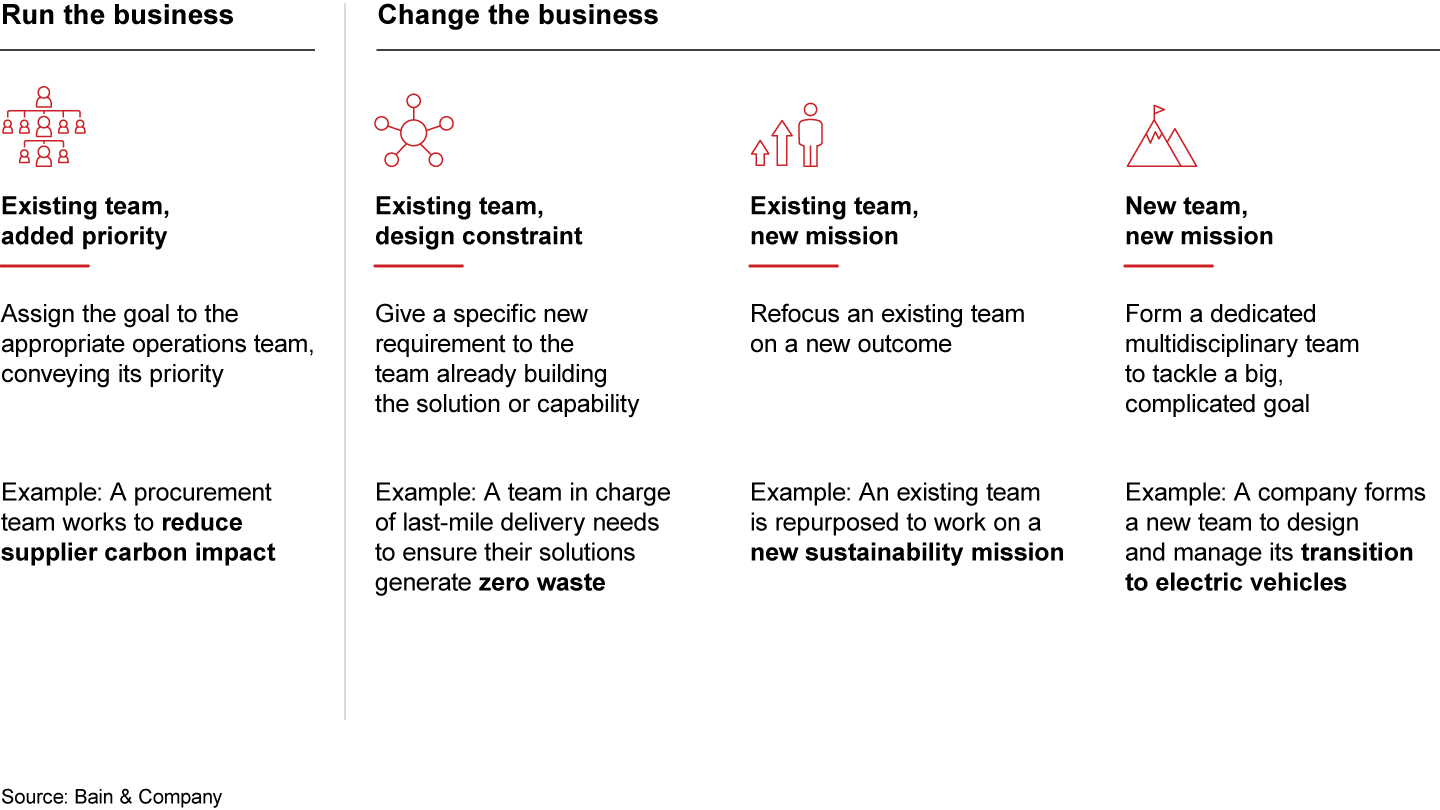
      Match the sustainability goal to the right team

      4. Build a system to accelerate scaling good solutions

      At any given time, Walmart has hundreds of tests running. Feedback loops provide near real-time identification of defects by associates and customers. Solutions that have been scaled and are being optimized are discussed in run-the-business operations meetings, while those in testing are discussed in biweekly transformation meetings. If teams need help between meetings, mechanisms exist to remove roadblocks and get them the resources they need to move as fast as possible. With sustainability outcomes built into the teams, sustainability goals benefit naturally from this well-tuned innovation engine.  

      The ability to scale their best new ideas, whether on sustainability or any other topic, is a hallmark of flexible organizations. This requires:

      • A unit of scaling. This might be a store, a customer segment, a product, or a sales territory. It might be two units, five units, or the entire company.
      • A defined release cycle. How often can customers, employees, suppliers, or other stakeholders expect to receive changes? Three times a year? Four?
      • Feedback loops. When change is repeatable, good communication helps address defects rapidly.
      • Transparent roadmaps. People want to know what might come next.

      Impact

      By adopting these practices, companies ensure that sustainability isn’t something being done on the side but is truly part of the business.

      Solvay’s business leaders see sustainability as a way of mitigating risk and driving lasting value creation, so they build the business case for change on that basis. When they evaluate the business value of any effort, they do so with a carbon price of 100 euros per metric ton incorporated. They also screen for water use, waste valorization, and other ESG adjustments when considering all capital expenditures and M&A decisions. Performance on sustainability impacts 15% of the yearly bonus of all managers. This is all part of a growth strategy made possible by the company’s operating model, which includes four sustainable platforms: renewable materials and biotechnology, batteries, green hydrogen, and thermoplastic composites.

      To understand how well their company is positioned today, CEOs can start by asking their teams a few high-gain questions:

      • Do our middle managers own specific sustainability goals?
      • Have we dedicated certain teams to sustainability innovation, to developing new solutions?
      • Do our employees raise sustainability ideas that could become new sources of value?
      • How could a repeatable model for scaling change accelerate our path to sustainability?

      Read the Next Chapter

      A Talent Strategy for Sustainability: Skills Matter, but Mindset Is Everything

      Read our 2023 CEO Sustainability Guide

      Explore the full report Download PDF
      Autoren
      • Headshot of Sarah Elk
        Sarah Elk
        Partner, Houston
      • Headshot of Grégoire Schaub
        Grégoire Schaub
        Partner, Brussels
      • Headshot of Sanjay Dhiri
        Sanjay Dhiri
        Partner, London
      • Headshot of Junya Ishikawa
        Junya Ishikawa
        Partner, Tokyo
      Kontaktieren Sie uns
      Verwandte Branchen
      • Einzelhandel
      • Energiewirtschaft
      • Industriegüter und -services
      • Konsumgüter
      • Technologie
      Ähnliche Beratungsangebote
      • Nachhaltigkeit
      • Operating Model & Org Design
      • Organisation
      • Strategie
      CEO's Guide to Sustainability
      The Future Is Circular: How Companies Can Prepare to Grow in a Changing World

      By decoupling economic growth from resource consumption, circular models offer companies their best shot at continued, long-term growth.

      Mehr erfahren
      CEO's Guide to Sustainability
      From Sustainability Commitments to Impact: Four Pragmatic Questions for Visionary CEOs

      Amid competing priorities, CEOs and consumers still say sustainability matters. By acting now, companies can set the stage for profitable growth.

      Mehr erfahren
      Konsumgüter
      Embracing the “Do-Say” Gap

      Three pragmatic questions that shift sustainability from ambition to action.

      Mehr erfahren
      Nachhaltigkeit
      Taking a Globally Orchestrated Approach to Digital Disruption

      New technologies such as generative AI, quantum computing, and climate technology require unique but complementary managerial muscles.

      Mehr erfahren
      CEO's Guide to Sustainability
      The Sustainability Puzzle: What Do Consumers Really Want?

      How businesses can unlock the challenge of helping consumers live sustainably.

      Mehr erfahren

      Introduction

      • The Questions Every CEO Needs to Ask About Sustainability

      Levers of Change: Technology, Behavior, Policy

      • Selling Sustainability Means Decoding Consumers

      • Does a Purpose Help Brands Grow?

      • Lower Costs, Faster Adoption: Closing the Sustainable Innovation Gap

      • The Future Is Circular: How Companies Can Prepare to Grow in a Changing World

      • Leading with Vision: Harnessing the Climate Policy Response

      Sector Perspectives

      • Building Resilience in Your Business Strategy: Four Imperatives for Leaders

      • The Energy Transition’s Other Big Puzzle: Making the Math Work

      • Can Food and Agriculture Companies Raise Their Game?

      • Fires, Floods, and Loans: How Banks Can Deal with Increasing Climate Risks

      Making It Happen

      • Building a Data-Based Stakeholder Strategy

      • Operations and Supply Chain Decarbonization: Lower Emissions, Higher Performance

      • Making Business Do Better for Everyone

      • Organizing for Sustainability

      • A Talent Strategy for Sustainability: Skills Matter, but Mindset Is Everything

      First published in November 2023
      Markierungen
      • CEO's Guide to Sustainability
      • Einzelhandel
      • Energiewirtschaft
      • Industriegüter und -services
      • Konsumgüter
      • Nachhaltigkeit
      • Operating Model & Org Design
      • Organisation
      • Strategie
      • Technologie

      Wie wir unsere Kunden unterstützt haben

      Performance Improvement Constructing a best-in-class global procurement organization

      Kundenbeispiel lesen

      Operations Uncovering major savings in procurement

      Kundenbeispiel lesen

      Strategie Turning around a real estate giant's financial performance

      Kundenbeispiel lesen

      Möchten Sie mit uns in Kontakt bleiben?

      Wir unterstützen Führungskräfte weltweit, die kritischen Themen in ihrem Unternehmen zu adressieren. Gemeinsam schaffen wir nachhaltige Veränderungen und Ergebnisse.

      Bain Insights. Unsere Perspektive auf die kritischen Themen, mit denen sich international agierende Unternehmen konfrontiert sehen, finden Sie monatlich in Ihrem Postfach.

      *Ich habe die Datenschutzerklärung gelesen und akzeptiere sie.
      Bitte lesen Sie die Datenschutzerklärung und akzeptieren Sie diese.
      Bain & Company
      Contact us Sustainability Accessibility Rechtliche Hinweise Impressum Datenschutz Cookie-Richtlinie Sitemap Log In

      © 1996-2026 Bain & Company, Inc.

      Kontaktieren Sie Bain

      Wie können wir Ihnen helfen?

      • Business inquiry
      • Career information
      • Press relations
      • Partnership request
      • Speaker request
      Alle weltweiten Büros