
Skip to Content
  • Standorte

    Standorte

    North & Latin America
    • Atlanta
    • Austin
    • Bogota
    • Boston
    • Buenos Aires
    • Chicago
    • Dallas
    • Denver
    • Houston
    • Lisbon
    • Los Angeles
    • Mexico City
    • Minneapolis
    • Monterrey
    • Montreal
    • New York
    • Rio de Janeiro
    • San Francisco
    • Santiago
    • São Paulo
    • Seattle
    • Silicon Valley
    • Toronto
    • Washington, DC
    Europe & Africa
    • Amsterdam
    • Athens
    • Berlin
    • Brussels
    • Copenhagen
    • Düsseldorf
    • Frankfurt
    • Helsinki
    • Istanbul
    • Johannesburg
    • Kyiv
    • Lisbon
    • London
    • Madrid
    • Milan
    • München
    • Oslo
    • Paris
    • Rome
    • Stockholm
    • Warsaw
    • Wien
    • Zürich
    Middle East
    • Doha
    • Dubai
    • Riyadh
    Asia & Australia
    • Bangkok
    • Beijing
    • Bengaluru
    • Brisbane
    • Ho Chi Minh City
    • Hong Kong
    • Jakarta
    • Kuala Lumpur
    • Manila
    • Melbourne
    • Mumbai
    • New Delhi
    • Perth
    • Seoul
    • Shanghai
    • Singapore
    • Sydney
    • Tokyo
    Alle Standorte Anzeigen
  • Alumni
  • Presse
  • Newsletter
  • Kontakt
  • DACH-Region | Deutsch

    Wählen Sie Ihre Region und Sprache

    Global
    • Global (English)
    North & Latin America
    • Brazil (Português)
    • Argentina (Español)
    • Canada (Français)
    • Chile (Español)
    • Colombia (Español)
    Europe, Middle East, & Africa
    • France (Français)
    • DACH-Region (Deutsch)
    • Italy (Italiano)
    • Spain (Español)
    • Greece (Elliniká)
    Asia & Australia
    • China (中文版)
    • Korea (한국어)
    • Japan (日本語)
  • Saved items (0)
    Saved items (0)

    You have no saved items.

    Inhalte, für die Sie sich interessieren, werden hier gespeichert und können später gelesen oder weitergeleitet werden.

    Explore Bain Insights
  • Branchenkompetenzen
    Hauptmenü

    Branchenkompetenzen

    • Luft- und Raumfahrt, Verteidigung
    • Agrarwirtschaft
    • Chemieindustrie
    • Infrastruktur und Bauwirtschaft
    • Konsumgüter
    • Finanzdienstleistungen
    • Gesundheitswesen
    • Maschinen- und Anlagenbau
    • Medienwirtschaft
    • Metallindustrie
    • Bergbau
    • Öl und Gas
    • Papier- und Verpackungsindustrie
    • Private Equity
      Branchenkompetenzen
      Private Equity
      • Due Diligence
      • Exit Planning
      • Firm Strategy & Operations
      • Portfolio Value Creation
    • Öffentlicher Sektor und Sozialwesen
    • Einzelhandel
    • Technologie
    • Telekommunikation
    • Transportwesen
    • Reise- und Freizeitbranche
    • Versorgung und erneuerbare Energien
  • Managementkompetenzen
    Hauptmenü

    Managementkompetenzen

    • Customer Experience
    • ESG
    • Innovation
    • M&A
    • Operations
    • People & Organization
    • Private Equity
    • Sales & Marketing
    • Strategie
    • KI, Einblicke und Lösungen
    • Technologie
    • Transformation
  • Digital
  • Publikationen
    Hauptmenü

    Publikationen

    • Branchenthemen
    • Managementthemen
    • Bain-Bücher
    Alle Publikationen
    Ausgewählte Themen
    • Resilienz in der globalen Krise
    • M&A Report
    • Private Equity Podcast
    • Midyear Private Equity Report
    • Agile
    • Engineering Report
    • Digital Transformation
    • Elements of Value®
    • Firm of the Future
    • Nachhaltigkeitsstudie
    • Macro Trends
    • Future of Consumption
    • Weltwirtschaftsforum (WEF)
  • Über uns
    Hauptmenü

    Über uns

    • Was wir bieten
    • Unser Ansatz
    • Unser Team
    • Game Changer Award
    • Female Allstar Board
    • Messbare Ergebnisse (EN)
    • Auszeichnungen
    • Globale Partnerschaften
    • The Mission
    Further: Our global responsibility
    • Vielfalt & Chancengleichheit
    • Soziale Verantwortung
    • Sustainability
    Erfahren Sie mehr zu "Further"
  • Karriere
    Hauptmenü

    Karriere

    • Dein Einstieg
      Karriere
      Dein Einstieg
      • Find Your Place
      • Unsere Arbeitsbereiche
      • Unsere Teams
      • Angebote für Studierende
      • Praktika & Programme
      • Recruiting-Events
    • Arbeiten bei Bain
      Karriere
      Arbeiten bei Bain
      • Blog: Inside Bain
      • Karriere Stories
      • Unsere Bainies
      • Office-Standorte
      • Weiterentwicklung
      • Affinity Groups
      • Deine Benefits
    • Impact Stories
    • Deine Bewerbung
      Karriere
      Deine Bewerbung
      • Das erwartet dich
      • Der Interviewprozess
    FIND JOBS
  • Standorte
    Hauptmenü

    Standorte

    • North & Latin America
      Standorte
      North & Latin America
      • Atlanta
      • Austin
      • Bogota
      • Boston
      • Buenos Aires
      • Chicago
      • Dallas
      • Denver
      • Houston
      • Lisbon
      • Los Angeles
      • Mexico City
      • Minneapolis
      • Monterrey
      • Montreal
      • New York
      • Rio de Janeiro
      • San Francisco
      • Santiago
      • São Paulo
      • Seattle
      • Silicon Valley
      • Toronto
      • Washington, DC
    • Europe & Africa
      Standorte
      Europe & Africa
      • Amsterdam
      • Athens
      • Berlin
      • Brussels
      • Copenhagen
      • Düsseldorf
      • Frankfurt
      • Helsinki
      • Istanbul
      • Johannesburg
      • Kyiv
      • Lisbon
      • London
      • Madrid
      • Milan
      • München
      • Oslo
      • Paris
      • Rome
      • Stockholm
      • Warsaw
      • Wien
      • Zürich
    • Middle East
      Standorte
      Middle East
      • Doha
      • Dubai
      • Riyadh
    • Asia & Australia
      Standorte
      Asia & Australia
      • Bangkok
      • Beijing
      • Bengaluru
      • Brisbane
      • Ho Chi Minh City
      • Hong Kong
      • Jakarta
      • Kuala Lumpur
      • Manila
      • Melbourne
      • Mumbai
      • New Delhi
      • Perth
      • Seoul
      • Shanghai
      • Singapore
      • Sydney
      • Tokyo
    Alle Standorte Anzeigen
  • Alumni
  • Presse
  • Newsletter
  • Kontakt
  • DACH-Region | Deutsch
    Hauptmenü

    Wählen Sie Ihre Region und Sprache

    • Global
      Wählen Sie Ihre Region und Sprache
      Global
      • Global (English)
    • North & Latin America
      Wählen Sie Ihre Region und Sprache
      North & Latin America
      • Brazil (Português)
      • Argentina (Español)
      • Canada (Français)
      • Chile (Español)
      • Colombia (Español)
    • Europe, Middle East, & Africa
      Wählen Sie Ihre Region und Sprache
      Europe, Middle East, & Africa
      • France (Français)
      • DACH-Region (Deutsch)
      • Italy (Italiano)
      • Spain (Español)
      • Greece (Elliniká)
    • Asia & Australia
      Wählen Sie Ihre Region und Sprache
      Asia & Australia
      • China (中文版)
      • Korea (한국어)
      • Japan (日本語)
  • Saved items  (0)
    Hauptmenü
    Saved items (0)

    You have no saved items.

    Inhalte, für die Sie sich interessieren, werden hier gespeichert und können später gelesen oder weitergeleitet werden.

    Explore Bain Insights
  • Branchenkompetenzen
    • Branchenkompetenzen

      • Luft- und Raumfahrt, Verteidigung
      • Agrarwirtschaft
      • Chemieindustrie
      • Infrastruktur und Bauwirtschaft
      • Konsumgüter
      • Finanzdienstleistungen
      • Gesundheitswesen
      • Maschinen- und Anlagenbau
      • Medienwirtschaft
      • Metallindustrie
      • Bergbau
      • Öl und Gas
      • Papier- und Verpackungsindustrie
      • Private Equity
      • Öffentlicher Sektor und Sozialwesen
      • Einzelhandel
      • Technologie
      • Telekommunikation
      • Transportwesen
      • Reise- und Freizeitbranche
      • Versorgung und erneuerbare Energien
  • Managementkompetenzen
    • Managementkompetenzen

      • Customer Experience
      • ESG
      • Innovation
      • M&A
      • Operations
      • People & Organization
      • Private Equity
      • Sales & Marketing
      • Strategie
      • KI, Einblicke und Lösungen
      • Technologie
      • Transformation
  • Digital
  • Publikationen
    • Publikationen

      • Branchenthemen
      • Managementthemen
      • Bain-Bücher
      Alle Publikationen
      Ausgewählte Themen
      • Resilienz in der globalen Krise
      • M&A Report
      • Private Equity Podcast
      • Midyear Private Equity Report
      • Agile
      • Engineering Report
      • Digital Transformation
      • Elements of Value®
      • Firm of the Future
      • Nachhaltigkeitsstudie
      • Macro Trends
      • Future of Consumption
      • Weltwirtschaftsforum (WEF)
  • Über uns
    • Über uns

      • Was wir bieten
      • Unser Ansatz
      • Unser Team
      • Game Changer Award
      • Female Allstar Board
      • Messbare Ergebnisse (EN)
      • Auszeichnungen
      • Globale Partnerschaften
      • The Mission
      Further: Our global responsibility
      • Vielfalt & Chancengleichheit
      • Soziale Verantwortung
      • Sustainability
      Erfahren Sie mehr zu "Further"
  • Karriere
    Häufige Suchanfragen
    • Agil
    • Digital
    • Strategie
    Vorherige Suchanfragen
      Zuletzt besuchte Seiten

      Content added to saved items

      Saved items (0)

      Removed from saved items

      Saved items (0)

      Paper & Packaging Report

      The Paper and Packaging Industry Faces a Biodiversity Crisis

      The Paper and Packaging Industry Faces a Biodiversity Crisis

      Sustainable forestry practices and recycled and reused materials deliver a competitive edge.

      Von Emma Elofsson, Erik Nordbø, und Marcos Rutigliano

      • Min. Lesezeit
      }

      Report

      The Paper and Packaging Industry Faces a Biodiversity Crisis
      en
      Auf einen Blick
      • Biodiversity loss could put $44 trillion at risk—that’s more than half of global GDP.
      • More than a third of companies surveyed plan to act on protecting biodiversity within two years.
      • Sustainable forestry practices have helped one company increase its standing timber volume and sustainable harvesting level significantly, without increasing land use.  

      This article is part of Bain’s 2023 Paper & Packaging Report

      EXPLORE THE REPORT

      Biodiversity loss is not only a threat to nature but also to the economy. In fact, the World Economic Forum (WEF) estimates that nature and biodiversity loss could put $44 trillion, more than half of global GDP, at risk. And in a recent WEF survey, global risk experts rank biodiversity loss and associated environmental risks such as climate change as the most critical threats to the global economy within the next decade (see Figure 1).

      Nature loss is unfortunately well underway. Populations of mammals, birds, amphibians, reptiles, and fish have, on average, declined by 69% since 1970. In addition, around 1 million species globally are at risk of facing extinction. Biodiversity loss and climate change are, of course, interconnected as climate change accelerates biodiversity loss. In turn, the destruction of ecosystems undermines nature’s ability to regulate greenhouse gas emissions and protect against extreme weather, thus speeding up climate change and increasing vulnerability to it.

      Companies choosing to act now are poised to benefit. Leading companies are reducing their exposure to biodiversity-related risks and brand risk as well. Early movers realize that biodiversity is not just a risk to be managed but also an opportunity to gain competitive advantage. Leaders are using sustainable forestry practices and increasing the share of recycled and reused materials to appeal to customers who are increasingly concerned about reducing their biodiversity impact on the supply chain. Others are developing innovative packaging that enables them to target new markets with a lower carbon and biodiversity footprint.

      Figure 1
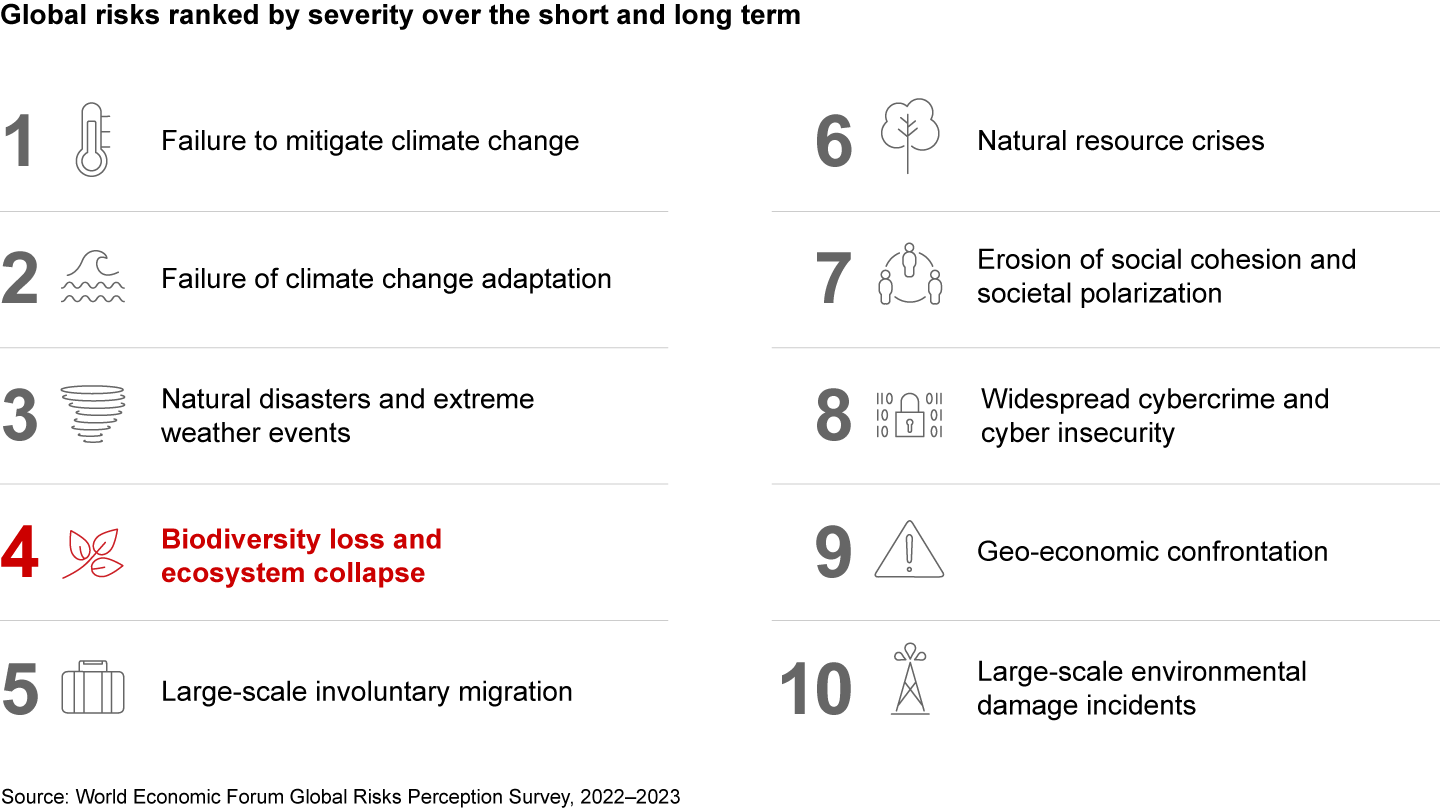
      Biodiversity loss is seen as one of the most severe global risks

      Paper and packaging perpetuate some severe issues driving biodiversity loss

      Paper and packaging companies contribute heavily to biodiversity loss through unsustainable forestry management in their supply chain and specifically through their use of forestry resources as raw materials. For example, large-scale clear cutting is a particularly unsustainable forestry practice, and in Sweden, 97% of final tree felling is clear cutting and much of this is on large plots measuring greater than 10 hectares. The paper and packaging industry also impacts biodiversity with water use. Water is used to soak pulp before producing paper, and pulp, paper, and final packaging production create air, water, and soil pollution. Packaging companies not directly involved in forestry still contribute to upstream biodiversity loss through their supply chain and downstream biodiversity loss through consumer consumption.

      Only a minority of paper and packaging companies are taking the issue seriously and acting on biodiversity loss today. Of a global sample of about 100 paper and packaging companies disclosing to the CDP (and therefore biased toward action), only 22% reported assessing their value chain impact on biodiversity and only 31% reported taking any action to progress on biodiversity-related commitments. On the positive side, however, about 45% of respondents are planning to begin assessing their biodiversity impact within the next two years and 35% are planning to act. Part of the challenge is that most companies have tackling climate change and reducing emissions as their highest priority, so biodiversity competes with climate when it comes to management attention and resources. So far, regulations, investor pressures, and incentives are less developed for biodiversity compared with those established for emissions, which can make it seem less urgent despite the acute need.

      Most companies are following forest certification schemes such as those created by the Forest Stewardship Council and the Programme for the Endorsement of Forest Certification. These certificate programs are good, but they are not enough overall. These certificates can be used as a base, and then companies need to consider their unique conditions, tailor their approach, and do more.

      31%

      of companies surveyed are acting now to address biodiversity loss

      45%

      say they plan to begin assessing their biodiversity loss within two years

      Regulation is beginning to emerge, but it lags behind other areas of climate change

      New biodiversity legislation, regulations, and reporting standards are currently under development, and, when finalized, are expected to pressure companies to do more to prevent biodiversity loss. National governments adopted the new post-2020 global biodiversity framework at the UN Convention on Biological Diversity’s December 2022 COP15 event in Montreal, setting 23 biodiversity targets to be achieved by 2030. This agreement includes the overall committment to conserve 30% of the planet’s lands and oceans and to restore at least 30% of degraded land and ocean ecosystems.

      In the EU, the European Green Deal includes commitments to legally protect at least 30% of the EU’s land and seas by 2030 (and to strictly protect at least 10%). The US has committed to conserving at least 30% of US lands and waters by 2030, as well as establishing the America the Beautiful Challenge, a $1 billion public-private partnership that supports ecosystem restoration projects that invest in watershed restoration, resilience, equitable access to nature, and collaborative conservation. Ultimately, goals and commitments around the world need to become regulations and legislation to help speed up responses from companies to protect biodiversity.

      Managing risk and capturing the business potential of biodiversity

      Leading companies are using sustainable forestry practices to improve biodiversity and gain a competitive edge. Below are two examples of different sustainable forestry strategies in two different regions of the world.

      Europe: In 2020, SCA developed an intiative to increase its conservation measures. It defined critical habitat categories required to retain 203 threatened species on those lands. It used this data to inform which areas should be set aside and not harvested, how to adapt harvesting methods to protect the habitats, and which other small-scale conservation methods can be used. As of December 2022, the company has set aside more than 160,000 hectares of its productive forest land for the purpose of promoting biodiversity.

      In addition, the company conducts active measures to promote species survival, such as prescribed burning or creating dead wood, benefiting both local biodiversity as well as the company. These efforts reduce risks from climate change or pests, creating a more stable and resilient forest as well as higher diversity of raw materials for new product innovation. The increased focus on biodiversity is not expected to affect forest productivity negatively. In fact, SCA has managed to increase its standing timber volume and sustainable harvesting level significantly, aiming to further increase harvesting from 4.3 million m³sub (a measurement unit for form-adjusted solid log volume) in 2010 to 5.4 million m³sub in 2025.

      South America: Brazilian paper and pulp company Suzano has committed to connecting half a million hectares of fragmented forests in Brazil by 2030. This will reconnect 1,850 fragmented pieces of land, allowing plant and animal species to extend their habitat and increase genetic variability.

      Adjusting products and supply chains

      Leading paper and packaging companies are innovating products to use more sustainable raw materials and optimizing supply chains to protect biodiversity. Many companies are developing innovative packaging solutions to meet new requirements. New EU regulations on deforestation-free products, for instance, will require companies selling wood products or rubber to prove that they are deforestation-free and legal, covering the global supply chain. Measures such as these will change the market dynamics and create financial incentives to find solutions that address these areas because products that don’t meet these tighter regulations will increase a company’s costs through taxation and penalties. By increasing awareness and involvement in developing policies, companies are better prepared to handle upcoming regulation.

      Other paper and packaging companies are looking to biodiversity leaders in other industries for strategies regarding how to manage biodiversity in their supply chain when they don’t produce the raw materials themselves. For instance, in order to improve biodiversity in its wool and cotton value chain, Swedish clothing retailer H&M is working with farmers in India to safeguard wildlife corridors and buffer zones, implement regenerative practices, and support access to markets for regenerative raw materials.

      Reducing exposure to biodiversity-related risks

      As a result of using sustainable forestry practices and sourcing from more resilient fibers, companies are reducing their biodiversity-related risks, including physical risks and reputational risks. The danger of ignoring physical risks is that forests become less resilient, which can push up input prices, contribute to raw material shortages, and reduce resilience to outbreaks. Planting nondiverse forests, increasing temperatures, and droughts contribute to biodiversity loss as they drive increases in beetle populations—such as the bark beetle, for example, which is a severe threat to coniferous forests.

      A strategic approach to safeguarding biodiversity

      A structured approach can help businesses define their biodiversity strategy. This approach consists of four steps (see Figure 2).

      Figure 2
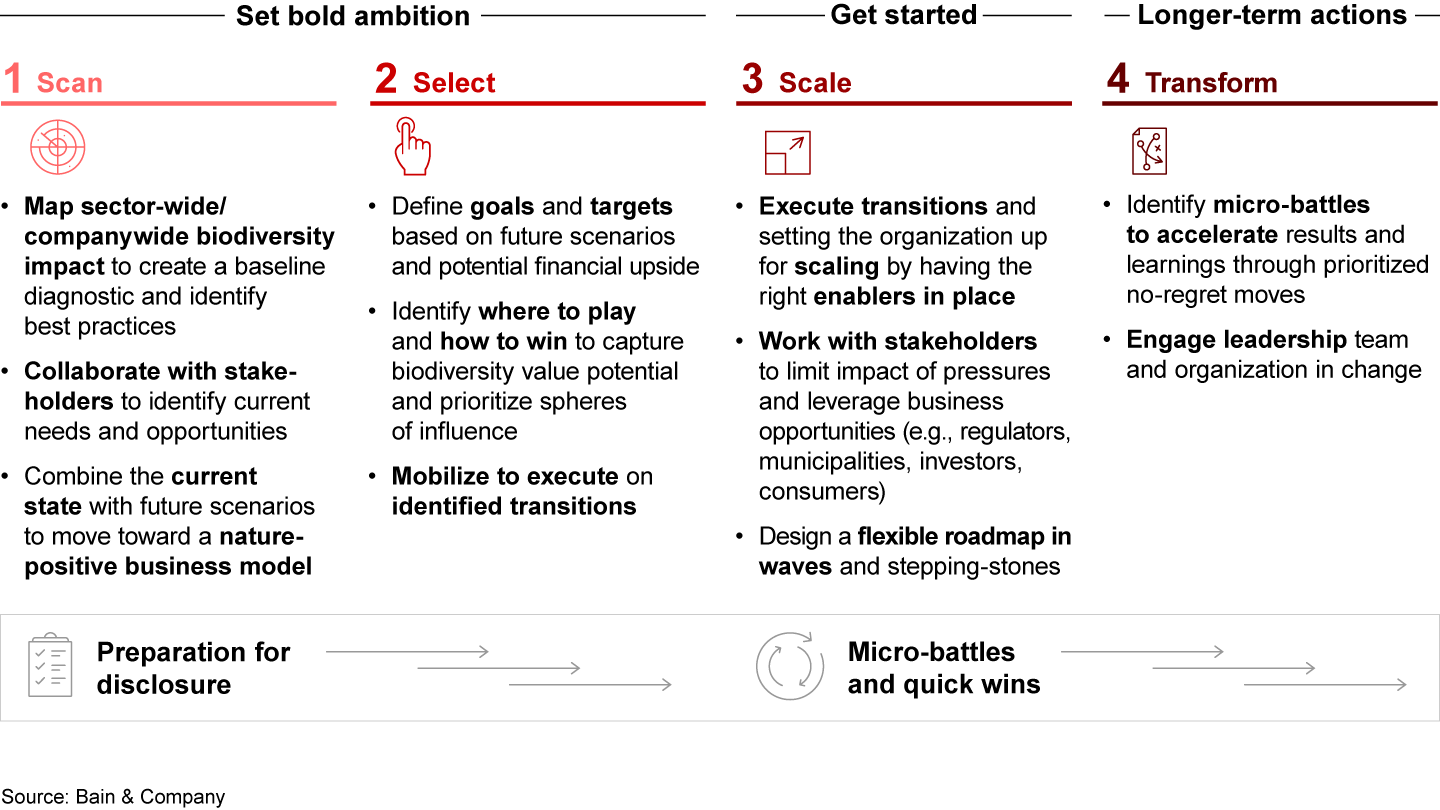
      A strategic approach to safeguarding biodiversity

      Scan: Map sector-wide and companywide biodiversity impact, both directly and through the value chain, and benchmark with current efforts. It is also important to collaborate with stakeholders to identify current needs and opportunities. While it is currently challenging to measure biodiversity impact in as clear a manner as carbon dioxide, for instance, some existing tools for assessing biodiversity impact can be useful to help companies create a baseline and assess their impact. WWF’s new Biodiversity Risk Filter tool, for instance, helps corporations and financial institutions assess the biodiversity risks and opportunities within their operations and value chains. In general, there is scope for a lot more collaboration along the entire value chain.

      Select: Define goals and targets based on future scenarios and potential financial upside, identify where and how to capture biodiversity value potential, and mobilize to execute on identified transitions. Existing frameworks such as the WWF’s biodiversity stewardship approach can be used to set targets and track results, map biodiversity ambitions amid broader sustainability efforts to ensure that they reinforce one another, and communicate results to all stakeholders. For example, retail chain Coop has developed and introduced a sustainability declaration that presents a product’s sustainability footprint to customers. Sustainability is assessed through 10 areas, including biodiversity.

      Technical development and digitalization will enable completely new and innovative solutions such as developing digital twins for forests. These digital replicas of entire forests will help model different biodiversity scenarios based on various external scenarios (such as different weather conditions) and specific measures taken by given companies. In turn, it will be possible to connect these digital twins to specific biodiversity key performance indicators.

      Scale: Get started on executing transitions, and set the organization up for scaling by having the right enablers in place. Work with stakeholders such as regulators, investors, and consumers to limit pressures, leverage business opportunities, and design a flexible roadmap.

      Making the business case for biodiversity will help scale. For instance, internal carbon pricing is set to help mitigate the impact of climate change. The same should be done for biodiversity. Leaders are aiming to develop climate- and biodiversity-positive products. And now that there are consumers and brand owners who are ready to join, these pilots could be tested in cosmetics and luxury products packaging, for instance.

      Transform: Take longer-term action by identifying micro-battles (smaller pilot projects) to accelerate results. Completely new capabilities—that is, new competence, new structure, and new processes—will be required to make the change happen. Management needs to own and implement biodiversity rather than outsource it to sustainability specialists. Finally, the total value chain needs to join the effort and not simply outsource this piece to the next participant in the value chain.

      Ultimately, executives can take a page from their overarching sustainability strategy and create bold targets, such as being biodiversity positive or nature positive by 2030, and then create a roadmap and adjust it based on continuous learning.

      Read the Next Section

      Which Packaging Substrates Are the Most Sustainable?

      More from the report

      • Navigating Turbulence in Paper and Packaging

      • Full Potential Transformation in Paper and Packaging

      • The Paper and Packaging Industry Faces a Biodiversity Crisis

      • Which Packaging Substrates Are the Most Sustainable?

      • How Paper and Packaging Companies Can Catch Up in Commercial Excellence

      • Putting Sustainability to Work in Paper and Packaging

      • The State of Private Equity and M&A in the Paper and Packaging Industry

      • Sustainable Packaging: What Consumers Want Next from the Paper and Packaging Industry

      • The Mill of the Future

      Read our Paper & Packaging Report 2023

      EXPLORE THE REPORT Download the PDF
      Autoren
      • Emma Elofsson
        Alumni, Stockholm
      • Headshot of Erik Nordbø
        Erik Nordbø
        Partner, Oslo
      • Headshot of Marcos Rutigliano
        Marcos Rutigliano
        Partner, São Paulo
      Kontaktieren Sie uns
      Verwandte Branchen
      • Forstwirtschaftliche Produkte, Papier und Verpackung
      • Industriegüter und -services
      Ähnliche Beratungsangebote
      • Nachhaltigkeit
      Wie wir Sie unterstützen können
      • Circular Economy
      • Climate Change
      Paper & Packaging Report
      Putting Sustainability to Work in Paper and Packaging

      Reduce energy costs and spur organic growth.

      Mehr erfahren
      Paper & Packaging Report
      It’s Time to Rethink Every Link in Your Supply Chain

      A function that once got little attention is now becoming a key differentiator.

      Mehr erfahren
      Paper & Packaging Report
      Sustainability: Less Talk and More Action

      Despite elusive targets, the business case is stronger than ever.

      Mehr erfahren
      Climate Change
      COP30: What Businesses Need to Do Now

      At this year’s COP30 in Brazil, the message for businesses was clear: Climate strategy can’t just be commitments—it must be about execution.

      Mehr erfahren
      Forstwirtschaftliche Produkte, Papier und Verpackung
      How AI Is Starting to Transform Circular Packaging

      There are 15 AI use cases companies across the value chain can use today to accelerate circularity.

      Mehr erfahren
      First published in August 2023
      Markierungen
      • Circular Economy
      • Climate Change
      • Forstwirtschaftliche Produkte, Papier und Verpackung
      • Industriegüter und -services
      • Nachhaltigkeit
      • Paper & Packaging Report

      Wie wir unsere Kunden unterstützt haben

      A Packaging Company Unboxes a New Go-to-Market Strategy

      Kundenbeispiel lesen

      Operations A Paper Company Optimizes Its Industrial Footprint

      Kundenbeispiel lesen

      Nachhaltigkeit A Manufacturer Vows to “Push to Zero” Carbon Emissions

      Kundenbeispiel lesen

      Möchten Sie mit uns in Kontakt bleiben?

      Wir unterstützen Führungskräfte weltweit, die kritischen Themen in ihrem Unternehmen zu adressieren. Gemeinsam schaffen wir nachhaltige Veränderungen und Ergebnisse.

      Bain Insights. Unsere Perspektive auf die kritischen Themen, mit denen sich international agierende Unternehmen konfrontiert sehen, finden Sie monatlich in Ihrem Postfach.

      *Ich habe die Datenschutzerklärung gelesen und akzeptiere sie.
      Bitte lesen Sie die Datenschutzerklärung und akzeptieren Sie diese.
      Bain & Company
      Contact us Sustainability Accessibility Rechtliche Hinweise Impressum Datenschutz Cookie-Richtlinie Sitemap Log In

      © 1996-2026 Bain & Company, Inc.

      Kontaktieren Sie Bain

      Wie können wir Ihnen helfen?

      • Business inquiry
      • Career information
      • Press relations
      • Partnership request
      • Speaker request
      Alle weltweiten Büros