
Skip to Content
  • Standorte

    Standorte

    North & Latin America
    • Atlanta
    • Austin
    • Bogota
    • Boston
    • Buenos Aires
    • Chicago
    • Dallas
    • Denver
    • Houston
    • Lisbon
    • Los Angeles
    • Mexico City
    • Minneapolis
    • Monterrey
    • Montreal
    • New York
    • Rio de Janeiro
    • San Francisco
    • Santiago
    • São Paulo
    • Seattle
    • Silicon Valley
    • Toronto
    • Washington, DC
    Europe & Africa
    • Amsterdam
    • Athens
    • Berlin
    • Brussels
    • Copenhagen
    • Düsseldorf
    • Frankfurt
    • Helsinki
    • Istanbul
    • Johannesburg
    • Kyiv
    • Lisbon
    • London
    • Madrid
    • Milan
    • München
    • Oslo
    • Paris
    • Rome
    • Stockholm
    • Warsaw
    • Wien
    • Zürich
    Middle East
    • Doha
    • Dubai
    • Riyadh
    Asia & Australia
    • Bangkok
    • Beijing
    • Bengaluru
    • Brisbane
    • Ho Chi Minh City
    • Hong Kong
    • Jakarta
    • Kuala Lumpur
    • Manila
    • Melbourne
    • Mumbai
    • New Delhi
    • Perth
    • Seoul
    • Shanghai
    • Singapore
    • Sydney
    • Tokyo
    Alle Standorte Anzeigen
  • Alumni
  • Presse
  • Newsletter
  • Kontakt
  • DACH-Region | Deutsch

    Wählen Sie Ihre Region und Sprache

    Global
    • Global (English)
    North & Latin America
    • Brazil (Português)
    • Argentina (Español)
    • Canada (Français)
    • Chile (Español)
    • Colombia (Español)
    Europe, Middle East, & Africa
    • France (Français)
    • DACH-Region (Deutsch)
    • Italy (Italiano)
    • Spain (Español)
    • Greece (Elliniká)
    Asia & Australia
    • China (中文版)
    • Korea (한국어)
    • Japan (日本語)
  • Saved items (0)
    Saved items (0)

    You have no saved items.

    Inhalte, für die Sie sich interessieren, werden hier gespeichert und können später gelesen oder weitergeleitet werden.

    Explore Bain Insights
  • Branchenkompetenzen
    Hauptmenü

    Branchenkompetenzen

    • Luft- und Raumfahrt, Verteidigung
    • Agrarwirtschaft
    • Chemieindustrie
    • Infrastruktur und Bauwirtschaft
    • Konsumgüter
    • Finanzdienstleistungen
    • Gesundheitswesen
    • Maschinen- und Anlagenbau
    • Medienwirtschaft
    • Metallindustrie
    • Bergbau
    • Öl und Gas
    • Papier- und Verpackungsindustrie
    • Private Equity
      Branchenkompetenzen
      Private Equity
      • Due Diligence
      • Exit Planning
      • Firm Strategy & Operations
      • Portfolio Value Creation
    • Öffentlicher Sektor und Sozialwesen
    • Einzelhandel
    • Technologie
    • Telekommunikation
    • Transportwesen
    • Reise- und Freizeitbranche
    • Versorgung und erneuerbare Energien
  • Managementkompetenzen
    Hauptmenü

    Managementkompetenzen

    • Customer Experience
    • ESG
    • Innovation
    • M&A
    • Operations
    • People & Organization
    • Private Equity
    • Sales & Marketing
    • Strategie
    • KI, Einblicke und Lösungen
    • Technologie
    • Transformation
  • Digital
  • Publikationen
    Hauptmenü

    Publikationen

    • Branchenthemen
    • Managementthemen
    • Bain-Bücher
    Alle Publikationen
    Ausgewählte Themen
    • Resilienz in der globalen Krise
    • M&A Report
    • Private Equity Podcast
    • Midyear Private Equity Report
    • Agile
    • Engineering Report
    • Digital Transformation
    • Elements of Value®
    • Firm of the Future
    • Nachhaltigkeitsstudie
    • Macro Trends
    • Future of Consumption
    • Weltwirtschaftsforum (WEF)
  • Über uns
    Hauptmenü

    Über uns

    • Was wir bieten
    • Unser Ansatz
    • Unser Team
    • Game Changer Award
    • Female Allstar Board
    • Messbare Ergebnisse (EN)
    • Auszeichnungen
    • Globale Partnerschaften
    • The Mission
    Further: Our global responsibility
    • Vielfalt & Chancengleichheit
    • Soziale Verantwortung
    • Sustainability
    Erfahren Sie mehr zu "Further"
  • Karriere
    Hauptmenü

    Karriere

    • Dein Einstieg
      Karriere
      Dein Einstieg
      • Find Your Place
      • Unsere Arbeitsbereiche
      • Unsere Teams
      • Angebote für Studierende
      • Praktika & Programme
      • Recruiting-Events
    • Arbeiten bei Bain
      Karriere
      Arbeiten bei Bain
      • Blog: Inside Bain
      • Karriere Stories
      • Unsere Bainies
      • Office-Standorte
      • Weiterentwicklung
      • Affinity Groups
      • Deine Benefits
    • Impact Stories
    • Deine Bewerbung
      Karriere
      Deine Bewerbung
      • Das erwartet dich
      • Der Interviewprozess
    FIND JOBS
  • Standorte
    Hauptmenü

    Standorte

    • North & Latin America
      Standorte
      North & Latin America
      • Atlanta
      • Austin
      • Bogota
      • Boston
      • Buenos Aires
      • Chicago
      • Dallas
      • Denver
      • Houston
      • Lisbon
      • Los Angeles
      • Mexico City
      • Minneapolis
      • Monterrey
      • Montreal
      • New York
      • Rio de Janeiro
      • San Francisco
      • Santiago
      • São Paulo
      • Seattle
      • Silicon Valley
      • Toronto
      • Washington, DC
    • Europe & Africa
      Standorte
      Europe & Africa
      • Amsterdam
      • Athens
      • Berlin
      • Brussels
      • Copenhagen
      • Düsseldorf
      • Frankfurt
      • Helsinki
      • Istanbul
      • Johannesburg
      • Kyiv
      • Lisbon
      • London
      • Madrid
      • Milan
      • München
      • Oslo
      • Paris
      • Rome
      • Stockholm
      • Warsaw
      • Wien
      • Zürich
    • Middle East
      Standorte
      Middle East
      • Doha
      • Dubai
      • Riyadh
    • Asia & Australia
      Standorte
      Asia & Australia
      • Bangkok
      • Beijing
      • Bengaluru
      • Brisbane
      • Ho Chi Minh City
      • Hong Kong
      • Jakarta
      • Kuala Lumpur
      • Manila
      • Melbourne
      • Mumbai
      • New Delhi
      • Perth
      • Seoul
      • Shanghai
      • Singapore
      • Sydney
      • Tokyo
    Alle Standorte Anzeigen
  • Alumni
  • Presse
  • Newsletter
  • Kontakt
  • DACH-Region | Deutsch
    Hauptmenü

    Wählen Sie Ihre Region und Sprache

    • Global
      Wählen Sie Ihre Region und Sprache
      Global
      • Global (English)
    • North & Latin America
      Wählen Sie Ihre Region und Sprache
      North & Latin America
      • Brazil (Português)
      • Argentina (Español)
      • Canada (Français)
      • Chile (Español)
      • Colombia (Español)
    • Europe, Middle East, & Africa
      Wählen Sie Ihre Region und Sprache
      Europe, Middle East, & Africa
      • France (Français)
      • DACH-Region (Deutsch)
      • Italy (Italiano)
      • Spain (Español)
      • Greece (Elliniká)
    • Asia & Australia
      Wählen Sie Ihre Region und Sprache
      Asia & Australia
      • China (中文版)
      • Korea (한국어)
      • Japan (日本語)
  • Saved items  (0)
    Hauptmenü
    Saved items (0)

    You have no saved items.

    Inhalte, für die Sie sich interessieren, werden hier gespeichert und können später gelesen oder weitergeleitet werden.

    Explore Bain Insights
  • Branchenkompetenzen
    • Branchenkompetenzen

      • Luft- und Raumfahrt, Verteidigung
      • Agrarwirtschaft
      • Chemieindustrie
      • Infrastruktur und Bauwirtschaft
      • Konsumgüter
      • Finanzdienstleistungen
      • Gesundheitswesen
      • Maschinen- und Anlagenbau
      • Medienwirtschaft
      • Metallindustrie
      • Bergbau
      • Öl und Gas
      • Papier- und Verpackungsindustrie
      • Private Equity
      • Öffentlicher Sektor und Sozialwesen
      • Einzelhandel
      • Technologie
      • Telekommunikation
      • Transportwesen
      • Reise- und Freizeitbranche
      • Versorgung und erneuerbare Energien
  • Managementkompetenzen
    • Managementkompetenzen

      • Customer Experience
      • ESG
      • Innovation
      • M&A
      • Operations
      • People & Organization
      • Private Equity
      • Sales & Marketing
      • Strategie
      • KI, Einblicke und Lösungen
      • Technologie
      • Transformation
  • Digital
  • Publikationen
    • Publikationen

      • Branchenthemen
      • Managementthemen
      • Bain-Bücher
      Alle Publikationen
      Ausgewählte Themen
      • Resilienz in der globalen Krise
      • M&A Report
      • Private Equity Podcast
      • Midyear Private Equity Report
      • Agile
      • Engineering Report
      • Digital Transformation
      • Elements of Value®
      • Firm of the Future
      • Nachhaltigkeitsstudie
      • Macro Trends
      • Future of Consumption
      • Weltwirtschaftsforum (WEF)
  • Über uns
    • Über uns

      • Was wir bieten
      • Unser Ansatz
      • Unser Team
      • Game Changer Award
      • Female Allstar Board
      • Messbare Ergebnisse (EN)
      • Auszeichnungen
      • Globale Partnerschaften
      • The Mission
      Further: Our global responsibility
      • Vielfalt & Chancengleichheit
      • Soziale Verantwortung
      • Sustainability
      Erfahren Sie mehr zu "Further"
  • Karriere
    Häufige Suchanfragen
    • Agil
    • Digital
    • Strategie
    Vorherige Suchanfragen
      Zuletzt besuchte Seiten

      Content added to saved items

      Saved items (0)

      Removed from saved items

      Saved items (0)

      Brief

      The New Realities of Tech M&A

      The New Realities of Tech M&A

      More scope deals, more start-ups on the block, and the rise of institutional investors are just three trends causing acquirers to update their playbooks.

      Von Adam Haller und Chris Johnson

      • Min. Lesezeit
      }

      Brief

      The New Realities of Tech M&A
      en
      Auf einen Blick
      • Technology companies are looking to M&A for growth, swelling deal volume to more than three times what it was five years ago.
      • More deals are about broadening scope, to acquire new capabilities or gain access to markets. That’s a trend across sectors, but it’s even more pronounced in tech, where customers are pressuring vendors to deliver more complete solutions.
      • Most big tech deals in recent years have focused on one of three themes: connectivity, the cloud, or data and analytics.
      • The potential of a recession should lead acquirers to sharpen their due diligence, to avoid taking on unnecessary risk. But recessions also offer opportunities for bargains, if the buyers have prepared by strengthening their position ahead of time.

      Mergers and acquisitions have become increasingly important sources of value in the technology sector over the past decade, and will continue to play an important role in tech companies’ strategies in the years ahead. Most technology executives know this, and they also know that the pace and shape of M&A is changing rapidly. Fewer, however, are updating their playbooks to take advantage of four rising trends—and those who don’t could miss out on critical strategic opportunities.

      More scope deals to add capabilities and deliver solutions

      Tech deal volume has surged over the past five years, growing to more than $500 billion annually in 2018 from less than $150 billion in 2013 (see Figure 1). Large, frequent deals have emerged as a winning strategy, delivering returns 3 to 10 percentage points higher than less-aggressive strategies over the past 10 years.

      Figure 1
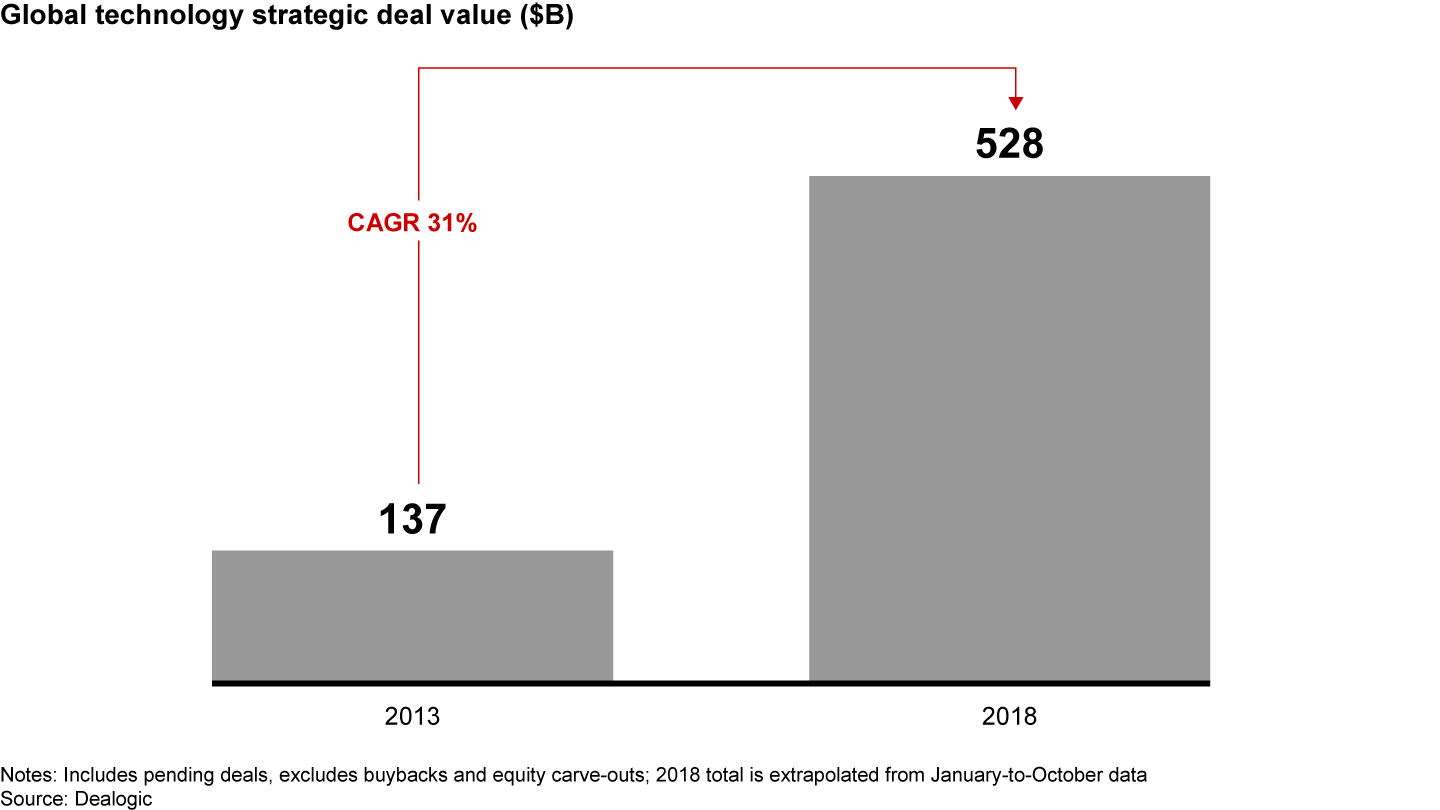
      M&A deals in the technology sector grew 31% annually over five years
      M&A deals in the technology sector grew 31% annually over five years
      M&A deals in the technology sector grew 31% annually over five years

      Significantly, the nature of these deals has shifted from scale to scope, as companies look for their acquisitions to provide more than just economies of scale. Scope deals have accounted for almost 90% of tech deals so far in 2019, up from only 50% four years earlier—a clear sign that tech companies are looking to expand their lines of business and their own capabilities (see Figure 2).

      Figure 2
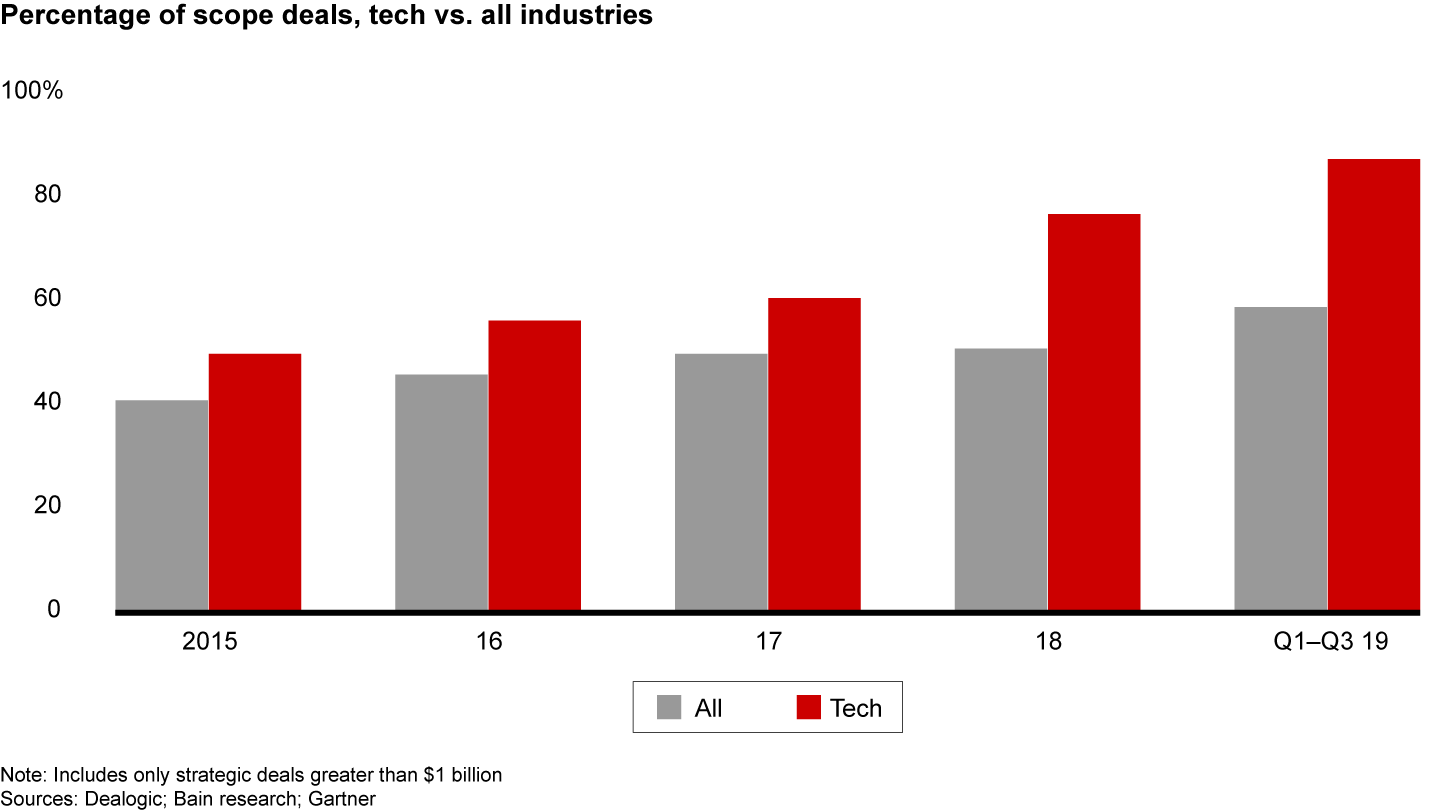
      Technology deals are shifting from scale to scope, as companies look to gain new capabilities and access to markets
      Technology deals are shifting from scale to scope, as companies look to gain new capabilities and access to markets
      Technology deals are shifting from scale to scope, as companies look to gain new capabilities and access to markets

      Scope deals are often more complex than scale ones, with more challenges delivering on the deal thesis. Revenue synergies are less certain due to different types of products, services and pricing models. Since scope deals require investing in less familiar businesses and capabilities, it’s essential to explain clearly how the acquisition fits within the long-term strategy and how executives intend to bring the companies together. Talent and culture vary from one type of business to another, so integrating teams can be trickier than when both companies work in the same business. It may be necessary to invest extra effort in retaining talented people at the acquired company to avoid breaking its base business. Dell’s successful acquisition of EMC provides an attractive model. The parent company took pains to protect the crown jewel in the merger—VMware—and cross-pollinate the best ideas from both sides during the acquisition and after.

      Bain’s analysis of 250 strategic deals over the past three years found that most scope deals aligned with one of three interrelated themes (see Figure 3). We believe these themes will continue to influence M&A activity in the future, but expect new trends and industry dynamics to influence acquisition activity as well.

      • Connectivity. Greater connectivity and the advent of 5G is creating demand for new products and offers, including better security, more advanced automation, and more capable and intelligent network infrastructure. For example, Nokia’s 2016 acquisition of Alcatel-Lucent expanded its portfolio in optical transmission and Internet Protocol routers and switches.
      • Cloud. An accelerated transition to the cloud is creating more M&A activity in the infrastructure behind the cloud, as well as the SaaS model enabled by it. Consider Oracle’s acquisition of NetSuite to manage Oracle’s shift of its core enterprise resource planning (ERP) software to the cloud.
      • Data. As data and the analytics that make sense of it become increasingly valuable, enterprises are pursuing deals to access proprietary data such as Intel’s acquisition of Mobileye, which gave it access to mapping capabilities and high-precision location data.
      Figure 3
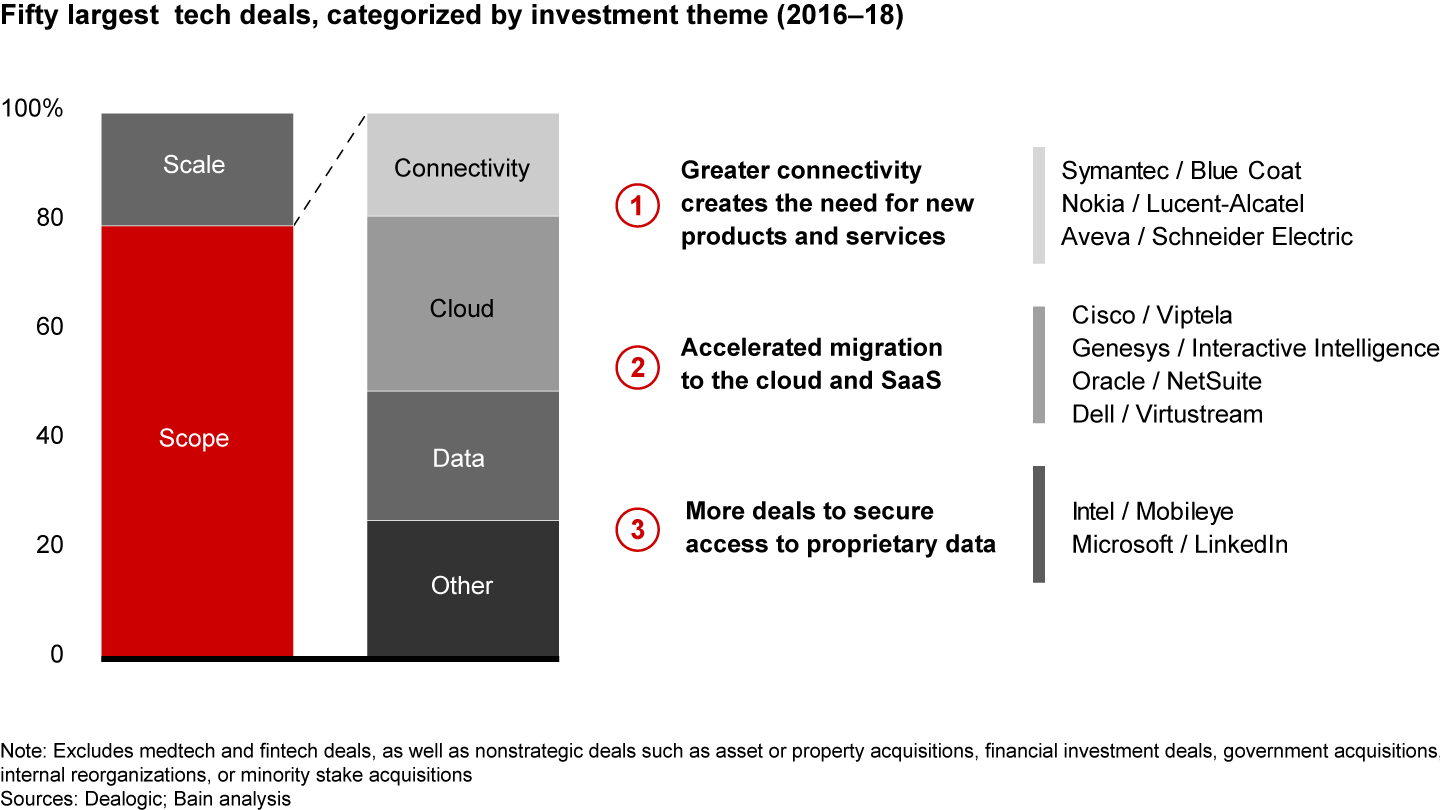
      Most of the big tech deals over the past three years reflected three themes
      Most of the big tech deals over the past three years reflected three themes
      Most of the big tech deals over the past three years reflected three themes

      More start-ups

      Innovation in tech continues to shift from R&D in established companies to venture-backed start-ups, where the tolerance for risk is greater. Consequently, more acquirers are targeting start-ups to gain access to their intellectual property, data and engineering talent. These deals can be even more challenging than other scope deals. Due diligence is more complex, since most start-ups lack a long record of generating revenue. Culture and talent are often difficult to blend into a larger firm. And identifying the right targets can be difficult, since many aren’t yet selling any products or services that would draw the attention of acquirers. To gain access to potential start-up targets, many larger companies are setting up various forms of corporate venture capital, not only to invest early in promising ideas, but also to get a better look at the pipeline of upcoming technologies—and tech companies lead the way across sectors (see Figure 4). (For more on this trend, see the Bain Brief “Five Things Companies Get Wrong about Corporate Venture Capital.”)

      Figure 4
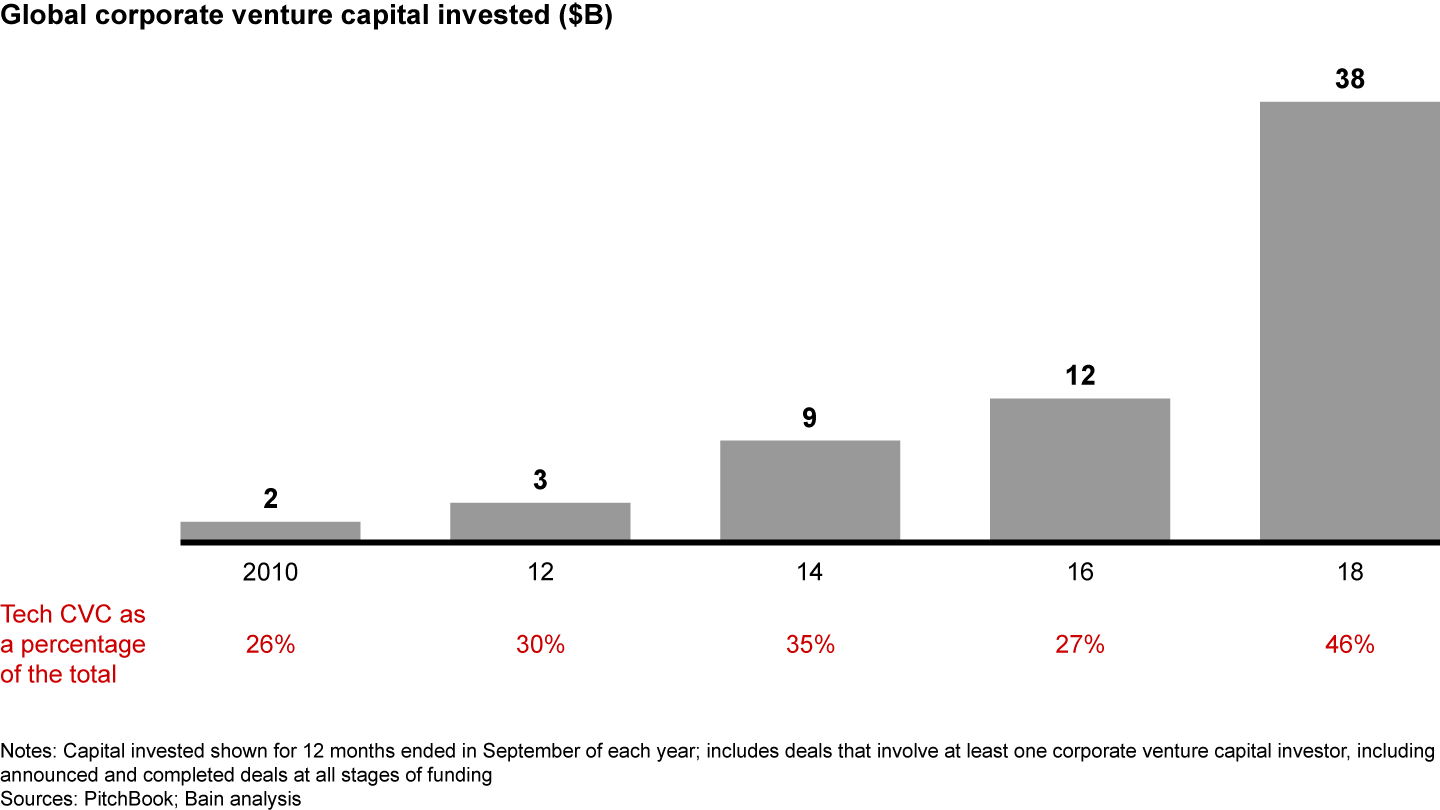
      Corporate venture capital is growing quickly, especially in technology
      Corporate venture capital is growing quickly, especially in technology
      Corporate venture capital is growing quickly, especially in technology

      Institutional buyers are increasing their range

      Institutional buyers are acting more like strategic investors, not only pursuing larger and more established targets, but competing with each other and traditional acquirers to get at them. With so much private equity in play, it’s becoming harder for investors to find and acquire smaller, poorly managed assets. This increases demand (and available funding) for targets, which means tech companies interested in acquisitions may need to pay more and should be more rigorous in their diligence. Silver Lake’s role in supporting Avago’s consolidation of the semiconductor industry—most notably, acquiring Broadcom and then attempting to acquire Qualcom—is a prominent example.  

      Potential of recession

      Recessions create new opportunities for M&A, and companies should look for bargains while sharpening their diligence to minimize taking on new risk. M&A was an important part of many tech strategies coming out of the 2008 downturn and will likely be just as important in the next recession. The tech sector weathered the recession of 2008 much better than the previous one—the so-called dotcom crash. Tech companies were better positioned in 2008, with stronger fundamentals and more cash in reserve (see Figure 5). As a result, deal volume stayed robust, and lower premiums provided several opportunities for bargains. Of course, not all bargains are good strategic deals, and executives need to identify which targets fit their long-term strategy. (For more, read the Bain Brief “Beyond the Downturn: Recession Strategies to Take the Lead.”)

      Figure 5
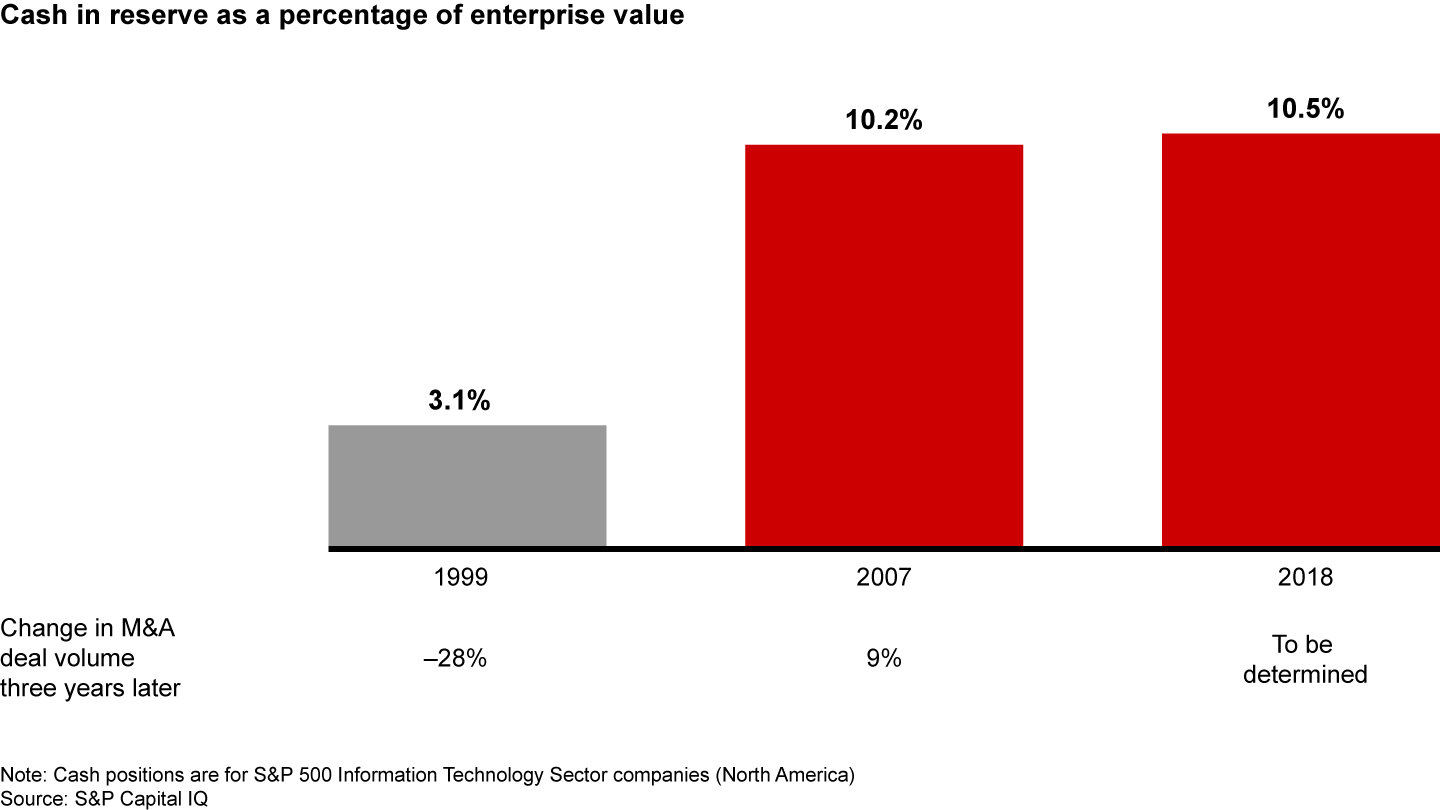
      Technology companies were in a better position to weather a recession in 2007 than in 1999—and were similarly strong in 2018
      Technology companies were in a better position to weather a recession in 2007 than in 1999—and were similarly strong in 2018
      Technology companies were in a better position to weather a recession in 2007 than in 1999—and were similarly strong in 2018

      Given the huge amounts of cash in some tech companies’ war chests, the importance on growth in technology and the entrance of sovereign wealth funds as investors in the sector, M&A is likely to continue to become an increasingly important aspect of long-term strategy in technology. But today’s tech M&A calls on a different approach, given the structural shifts in acquisition deal theses, target companies, competitors in the hunt for tech assets and the pending economic climate. Past M&A playbooks won’t work, and companies need to evolve how they source, perform due diligence on and integrate companies in order to extract the full value of their inorganic strategies as these shifts continue to accelerate.

      Adam Haller is a partner with Bain & Company’s Global M&A and Technology practices. Chris Johnson is a partner with Bain’s Global Technology practice. Both are based in San Francisco.

      Autoren
      • Headshot of Adam Haller
        Adam Haller
        Partner, San Francisco
      • Headshot of Chris Johnson
        Chris Johnson
        Alumni, San Francisco
      Kontaktieren Sie uns
      Verwandte Branchen
      • Technologie
      Ähnliche Beratungsangebote
      • Corporate Strategy
      • Mergers & Acquisitions
      Wie wir Sie unterstützen können
      • M&A Capability
      • Technology M&A
      M&A Capability
      Arnaud Leroi: The Changing Rules for Digital M&A

      Four steps for companies turning to M&A to accelerate their digital strategy.

      Mehr erfahren
      Technologie
      Why SaaS Stocks Have Dropped—and What It Signals for Software’s Next Chapter

      A sharp reset in valuations reflects AI-driven disruption, slowing retention, and a growing divide between incumbents and future winners.

      Mehr erfahren
      Mergers & Acquisitions
      Positioning Oil & Gas Companies for Today’s Capital Markets

      We interviewed senior investment professionals, and here’s what we heard.

      Mehr erfahren
      Technologie
      Software M&A

      The good news: Most deal best practices still apply to AI acquisitions.

      Mehr erfahren
      M&A Capability
      Mining M&A

      The next frontier isn’t about avoiding failure; it’s about mastering repeatable success.

      Mehr erfahren
      First published in Dezember 2019
      Markierungen
      • Corporate Strategy
      • M&A Capability
      • Mergers & Acquisitions
      • Technologie
      • Technology M&A

      Wie wir unsere Kunden unterstützt haben

      Nachhaltigkeit Can Microchips Turbocharge Sustainability Improvement?

      Kundenbeispiel lesen

      Kundenstrategie und Marketing Increased sales productivity frees selling time and saves millions

      Kundenbeispiel lesen

      Performance Improvement Aggressively growing an IT service provider with a high-performance culture

      Kundenbeispiel lesen

      Möchten Sie mit uns in Kontakt bleiben?

      Wir unterstützen Führungskräfte weltweit, die kritischen Themen in ihrem Unternehmen zu adressieren. Gemeinsam schaffen wir nachhaltige Veränderungen und Ergebnisse.

      Bain Insights. Unsere Perspektive auf die kritischen Themen, mit denen sich international agierende Unternehmen konfrontiert sehen, finden Sie monatlich in Ihrem Postfach.

      *Ich habe die Datenschutzerklärung gelesen und akzeptiere sie.
      Bitte lesen Sie die Datenschutzerklärung und akzeptieren Sie diese.
      Bain & Company
      Contact us Sustainability Accessibility Rechtliche Hinweise Impressum Datenschutz Cookie-Richtlinie Sitemap Log In

      © 1996-2026 Bain & Company, Inc.

      Kontaktieren Sie Bain

      Wie können wir Ihnen helfen?

      • Business inquiry
      • Career information
      • Press relations
      • Partnership request
      • Speaker request
      Alle weltweiten Büros