
Skip to Content
  • Standorte

    Standorte

    North & Latin America
    • Atlanta
    • Austin
    • Bogota
    • Boston
    • Buenos Aires
    • Chicago
    • Dallas
    • Denver
    • Houston
    • Lisbon
    • Los Angeles
    • Mexico City
    • Minneapolis
    • Monterrey
    • Montreal
    • New York
    • Rio de Janeiro
    • San Francisco
    • Santiago
    • São Paulo
    • Seattle
    • Silicon Valley
    • Toronto
    • Washington, DC
    Europe & Africa
    • Amsterdam
    • Athens
    • Berlin
    • Brussels
    • Copenhagen
    • Düsseldorf
    • Frankfurt
    • Helsinki
    • Istanbul
    • Johannesburg
    • Kyiv
    • Lisbon
    • London
    • Madrid
    • Milan
    • München
    • Oslo
    • Paris
    • Rome
    • Stockholm
    • Warsaw
    • Wien
    • Zürich
    Middle East
    • Doha
    • Dubai
    • Riyadh
    Asia & Australia
    • Bangkok
    • Beijing
    • Bengaluru
    • Brisbane
    • Ho Chi Minh City
    • Hong Kong
    • Jakarta
    • Kuala Lumpur
    • Manila
    • Melbourne
    • Mumbai
    • New Delhi
    • Perth
    • Seoul
    • Shanghai
    • Singapore
    • Sydney
    • Tokyo
    Alle Standorte Anzeigen
  • Alumni
  • Presse
  • Newsletter
  • Kontakt
  • DACH-Region | Deutsch

    Wählen Sie Ihre Region und Sprache

    Global
    • Global (English)
    North & Latin America
    • Brazil (Português)
    • Argentina (Español)
    • Canada (Français)
    • Chile (Español)
    • Colombia (Español)
    Europe, Middle East, & Africa
    • France (Français)
    • DACH-Region (Deutsch)
    • Italy (Italiano)
    • Spain (Español)
    • Greece (Elliniká)
    Asia & Australia
    • China (中文版)
    • Korea (한국어)
    • Japan (日本語)
  • Saved items (0)
    Saved items (0)

    You have no saved items.

    Inhalte, für die Sie sich interessieren, werden hier gespeichert und können später gelesen oder weitergeleitet werden.

    Explore Bain Insights
  • Branchenkompetenzen
    Hauptmenü

    Branchenkompetenzen

    • Luft- und Raumfahrt, Verteidigung
    • Agrarwirtschaft
    • Chemieindustrie
    • Infrastruktur und Bauwirtschaft
    • Konsumgüter
    • Finanzdienstleistungen
    • Gesundheitswesen
    • Maschinen- und Anlagenbau
    • Medienwirtschaft
    • Metallindustrie
    • Bergbau
    • Öl und Gas
    • Papier- und Verpackungsindustrie
    • Private Equity
      Branchenkompetenzen
      Private Equity
      • Due Diligence
      • Exit Planning
      • Firm Strategy & Operations
      • Portfolio Value Creation
    • Öffentlicher Sektor und Sozialwesen
    • Einzelhandel
    • Technologie
    • Telekommunikation
    • Transportwesen
    • Reise- und Freizeitbranche
    • Versorgung und erneuerbare Energien
  • Managementkompetenzen
    Hauptmenü

    Managementkompetenzen

    • Customer Experience
    • ESG
    • Innovation
    • M&A
    • Operations
    • People & Organization
    • Private Equity
    • Sales & Marketing
    • Strategie
    • KI, Einblicke und Lösungen
    • Technologie
    • Transformation
  • Digital
  • Publikationen
    Hauptmenü

    Publikationen

    • Branchenthemen
    • Managementthemen
    • Bain-Bücher
    Alle Publikationen
    Ausgewählte Themen
    • Resilienz in der globalen Krise
    • M&A Report
    • Private Equity Podcast
    • Midyear Private Equity Report
    • Agile
    • Engineering Report
    • Digital Transformation
    • Elements of Value®
    • Firm of the Future
    • Nachhaltigkeitsstudie
    • Macro Trends
    • Future of Consumption
    • Weltwirtschaftsforum (WEF)
  • Über uns
    Hauptmenü

    Über uns

    • Was wir bieten
    • Unser Ansatz
    • Unser Team
    • Game Changer Award
    • Female Allstar Board
    • Messbare Ergebnisse (EN)
    • Auszeichnungen
    • Globale Partnerschaften
    • The Mission
    Further: Our global responsibility
    • Vielfalt & Chancengleichheit
    • Soziale Verantwortung
    • Sustainability
    Erfahren Sie mehr zu "Further"
  • Karriere
    Hauptmenü

    Karriere

    • Dein Einstieg
      Karriere
      Dein Einstieg
      • Find Your Place
      • Unsere Arbeitsbereiche
      • Unsere Teams
      • Angebote für Studierende
      • Praktika & Programme
      • Recruiting-Events
    • Arbeiten bei Bain
      Karriere
      Arbeiten bei Bain
      • Blog: Inside Bain
      • Karriere Stories
      • Unsere Bainies
      • Office-Standorte
      • Weiterentwicklung
      • Affinity Groups
      • Deine Benefits
    • Impact Stories
    • Deine Bewerbung
      Karriere
      Deine Bewerbung
      • Das erwartet dich
      • Der Interviewprozess
    FIND JOBS
  • Standorte
    Hauptmenü

    Standorte

    • North & Latin America
      Standorte
      North & Latin America
      • Atlanta
      • Austin
      • Bogota
      • Boston
      • Buenos Aires
      • Chicago
      • Dallas
      • Denver
      • Houston
      • Lisbon
      • Los Angeles
      • Mexico City
      • Minneapolis
      • Monterrey
      • Montreal
      • New York
      • Rio de Janeiro
      • San Francisco
      • Santiago
      • São Paulo
      • Seattle
      • Silicon Valley
      • Toronto
      • Washington, DC
    • Europe & Africa
      Standorte
      Europe & Africa
      • Amsterdam
      • Athens
      • Berlin
      • Brussels
      • Copenhagen
      • Düsseldorf
      • Frankfurt
      • Helsinki
      • Istanbul
      • Johannesburg
      • Kyiv
      • Lisbon
      • London
      • Madrid
      • Milan
      • München
      • Oslo
      • Paris
      • Rome
      • Stockholm
      • Warsaw
      • Wien
      • Zürich
    • Middle East
      Standorte
      Middle East
      • Doha
      • Dubai
      • Riyadh
    • Asia & Australia
      Standorte
      Asia & Australia
      • Bangkok
      • Beijing
      • Bengaluru
      • Brisbane
      • Ho Chi Minh City
      • Hong Kong
      • Jakarta
      • Kuala Lumpur
      • Manila
      • Melbourne
      • Mumbai
      • New Delhi
      • Perth
      • Seoul
      • Shanghai
      • Singapore
      • Sydney
      • Tokyo
    Alle Standorte Anzeigen
  • Alumni
  • Presse
  • Newsletter
  • Kontakt
  • DACH-Region | Deutsch
    Hauptmenü

    Wählen Sie Ihre Region und Sprache

    • Global
      Wählen Sie Ihre Region und Sprache
      Global
      • Global (English)
    • North & Latin America
      Wählen Sie Ihre Region und Sprache
      North & Latin America
      • Brazil (Português)
      • Argentina (Español)
      • Canada (Français)
      • Chile (Español)
      • Colombia (Español)
    • Europe, Middle East, & Africa
      Wählen Sie Ihre Region und Sprache
      Europe, Middle East, & Africa
      • France (Français)
      • DACH-Region (Deutsch)
      • Italy (Italiano)
      • Spain (Español)
      • Greece (Elliniká)
    • Asia & Australia
      Wählen Sie Ihre Region und Sprache
      Asia & Australia
      • China (中文版)
      • Korea (한국어)
      • Japan (日本語)
  • Saved items  (0)
    Hauptmenü
    Saved items (0)

    You have no saved items.

    Inhalte, für die Sie sich interessieren, werden hier gespeichert und können später gelesen oder weitergeleitet werden.

    Explore Bain Insights
  • Branchenkompetenzen
    • Branchenkompetenzen

      • Luft- und Raumfahrt, Verteidigung
      • Agrarwirtschaft
      • Chemieindustrie
      • Infrastruktur und Bauwirtschaft
      • Konsumgüter
      • Finanzdienstleistungen
      • Gesundheitswesen
      • Maschinen- und Anlagenbau
      • Medienwirtschaft
      • Metallindustrie
      • Bergbau
      • Öl und Gas
      • Papier- und Verpackungsindustrie
      • Private Equity
      • Öffentlicher Sektor und Sozialwesen
      • Einzelhandel
      • Technologie
      • Telekommunikation
      • Transportwesen
      • Reise- und Freizeitbranche
      • Versorgung und erneuerbare Energien
  • Managementkompetenzen
    • Managementkompetenzen

      • Customer Experience
      • ESG
      • Innovation
      • M&A
      • Operations
      • People & Organization
      • Private Equity
      • Sales & Marketing
      • Strategie
      • KI, Einblicke und Lösungen
      • Technologie
      • Transformation
  • Digital
  • Publikationen
    • Publikationen

      • Branchenthemen
      • Managementthemen
      • Bain-Bücher
      Alle Publikationen
      Ausgewählte Themen
      • Resilienz in der globalen Krise
      • M&A Report
      • Private Equity Podcast
      • Midyear Private Equity Report
      • Agile
      • Engineering Report
      • Digital Transformation
      • Elements of Value®
      • Firm of the Future
      • Nachhaltigkeitsstudie
      • Macro Trends
      • Future of Consumption
      • Weltwirtschaftsforum (WEF)
  • Über uns
    • Über uns

      • Was wir bieten
      • Unser Ansatz
      • Unser Team
      • Game Changer Award
      • Female Allstar Board
      • Messbare Ergebnisse (EN)
      • Auszeichnungen
      • Globale Partnerschaften
      • The Mission
      Further: Our global responsibility
      • Vielfalt & Chancengleichheit
      • Soziale Verantwortung
      • Sustainability
      Erfahren Sie mehr zu "Further"
  • Karriere
    Häufige Suchanfragen
    • Agil
    • Digital
    • Strategie
    Vorherige Suchanfragen
      Zuletzt besuchte Seiten

      Content added to saved items

      Saved items (0)

      Removed from saved items

      Saved items (0)

      Brief

      The true behavior of the Chinese shopper

      The true behavior of the Chinese shopper

      How predictable purchasing patterns can help companies grow their brands.

      Von Bruno Lannes and Kevin Chong

      • Min. Lesezeit

      Brief

      The true behavior of the Chinese shopper
      en

      In 2012, Bain & Company presented its groundbreaking research on the behavior of Chinese shoppers, taking an unconventional approach to learn what they actually bought, as opposed to what they said they bought. This year, we present a second look: Partnering again with Kantar Worldpanel, we studied the shopping habits of 40,000 Chinese households. We analyzed categories spanning personal and home care products, beverages and packaged foods—the four largest consumer goods groups, which account for more than 80% of China’s consumer goods market.1 Our analysis confirms and refines our 2012 findings and provides additional invaluable insights into how shoppers make purchases. These insights will be critical to marketers as they seek to grow their brands in a Chinese market characterized by an economic slowdown and increasing competition. The days of growing a brand just by riding a category wave are coming to an end, especially in top-tier cities. As in more mature markets, brand growth in China will need to come from market share gains. (See our full report, "Growing brands by understanding what Chinese shoppers really do.")

      Key findings

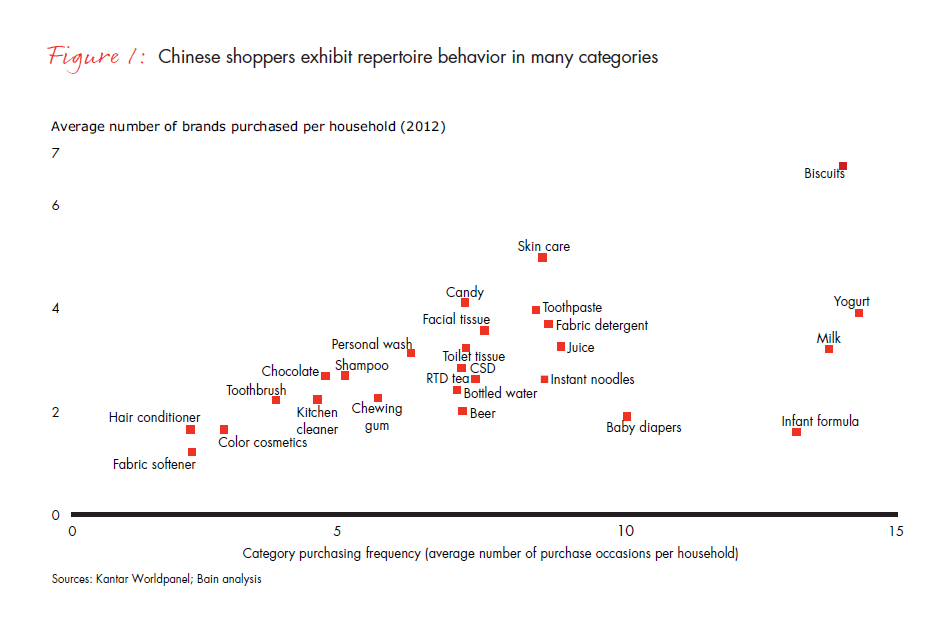
      Our research results confirm what we learned last year: Repertoire behavior prevails in China. Shoppers engaging in repertoire behavior choose multiple brands within a category for the same occasion or need, and the more they shop, the more they tend to buy multiple brands. Strong repertoire categories include skin care, biscuits and candy. In some product categories, however, shoppers are more loyal, repeatedly buying one brand for a specific need or occasion. Strong loyalist categories include infant formula, baby diapers and milk (see Figure 1).

      the-true-behavior-of-the-chinese-shopper-fig-01_embed

      Across all analyzed categories, we found very similar behaviors in terms of the number of brands purchased and the frequency of purchase from year to year. In both years, shoppers tended to purchase more brands when they purchased more frequently—that is, they tended to exhibit repertoire behavior. Understanding where a category falls along the continuum from repertoire to loyalist should be at the center of any brand strategy.

      Although brands are important to Chinese shoppers, they don’t think about one brand very often. Our study reveals that the average purchase frequency of any particular brand is very low—less than five times a year. Even at the category level, the average purchase frequency rarely exceeds once a month. This low level of engagement with brands should be sobering news for marketers who believe that the key to success is devoting tremendous effort and resources to getting shoppers to love their brands.

      Penetration is paramount to driving market share

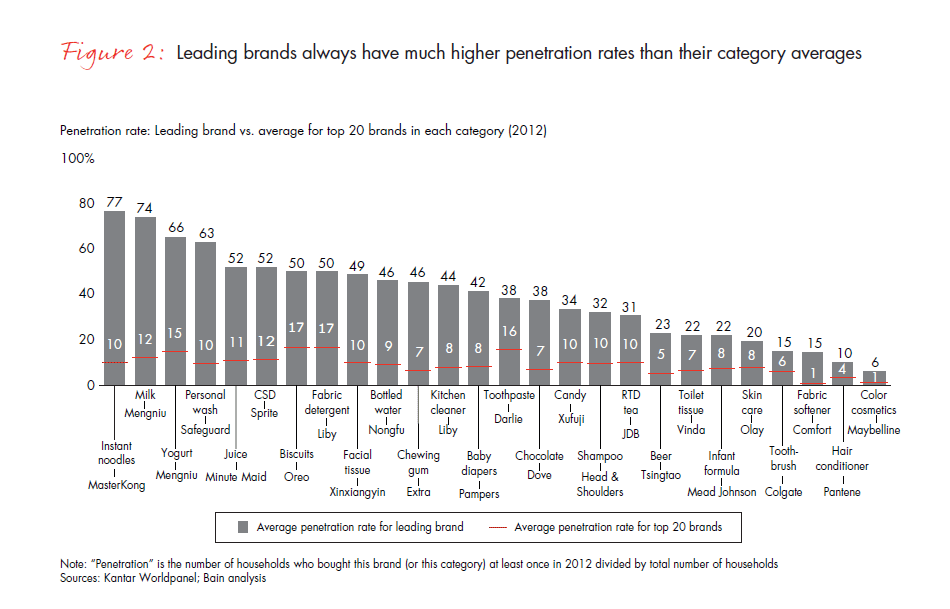
      Our findings also confirm that penetration2 is the most important driver of market share across all key categories. Across categories, increasing penetration is the primary way to build big brands. This is a key insight from the research of the Ehrenberg-Bass Institute for Marketing Science, summarized by Professor Byron Sharp, director of the Institute, in his book How Brands Grow, based on decades of observations of buying behavior. Confirming that point, we found the leading brand in a category had a penetration rate 3 to 10 times higher than the average penetration rate of the category’s top 20 brands (see Figure 2).

      the-true-behavior-of-the-chinese-shopper-fig-02_embed

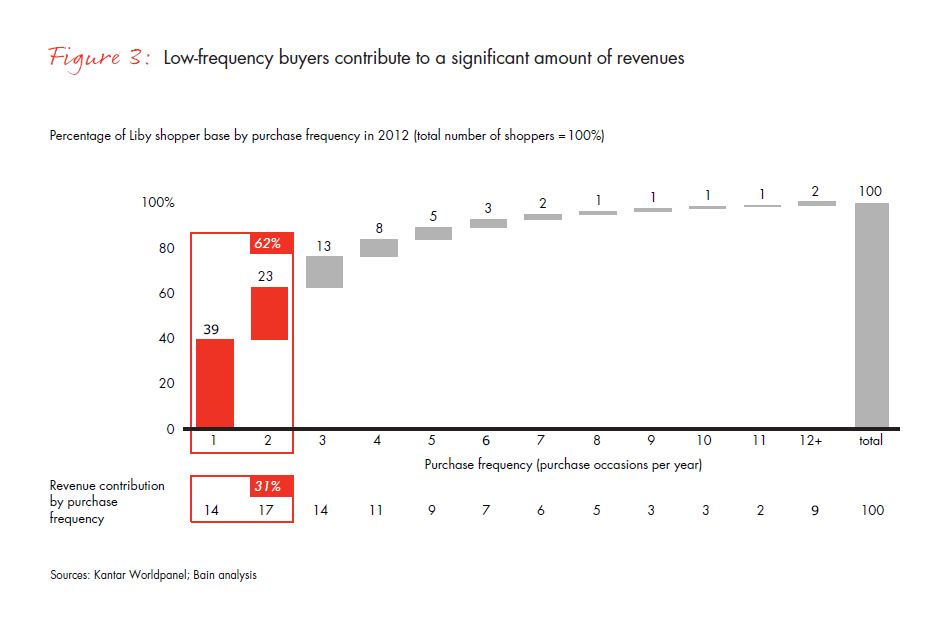
      Focusing on 10 selected categories, we verified that most shoppers have very low purchase frequency. Approximately 60% to 80% of shoppers purchase a certain brand no more than twice a year, and as a group, they drive 20% to 55% of a brand’s revenue. The Liby brand in the detergent category is a good example (see Figure 3). Given this, penetration is the key to growth for any brand.

      the-true-behavior-of-the-chinese-shopper-fig-03_embed

      Our research demonstrates that a category’s leading brand invariably has the highest purchase frequency and repurchase rate. This finding suggests that niche brands3 don’t exist; the brands that have a small shopper base are simply small brands, whose buyers usually buy less frequently and churn more often.

      Given that Chinese shoppers are inclined to buy multiple brands, it isn't possible to create big brands by targeting and selling to only a few shoppers in the hope that they will become heavy or loyal buyers. Chinese shoppers simply don’t behave this way. Instead, to build a big brand, companies need to sell to as many shoppers as possible.

      A brand’s shopper base is a "leaky bucket"

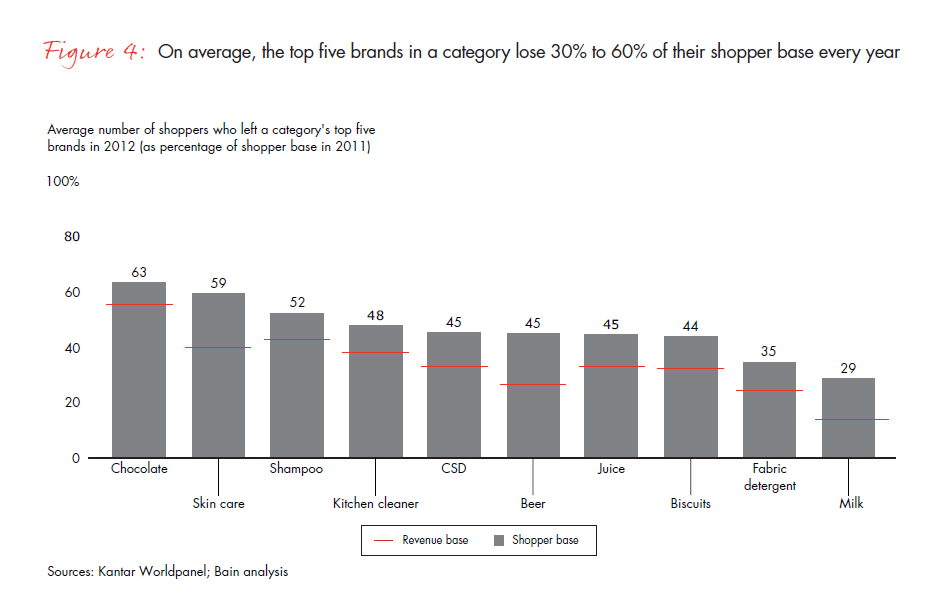
      Marketers who believe their shopper base and revenue are stable should stop and take note. Our study shows that, on average, the top five brands in a category lose 30% to 60% of their shopper base every year, and the percentages are even higher for small brands. Even if shopper base and revenue show little variation from year to year, this apparent stability often conceals the fact that a significant number of shoppers are lost and recruited each year (see Figure 4).

      the-true-behavior-of-the-chinese-shopper-fig-04_embed

      Because a brand’s shopper base is a "leaky bucket," a brand seeking to grow must not only attract new shoppers but also replace lost shoppers with new ones each year. Given that most shoppers have very low engagement with brands in terms of purchase frequency and repurchase rate, companies need to find ways to recruit customers again and again—essentially, each time they go shopping.

      Rules of the road: How consumer products companies can drive penetration

      The implications of our research are far-reaching, providing insights that can help marketers shape strategic decisions. The route to success begins with understanding where a brand category falls on the repertoire- loyalist continuum. Armed with this understanding, marketers can choose the right approach to building penetration.

      In repertoire categories

      Build consideration first. Repertoire category shoppers consider multiple brands when they shop, so a company must ensure that its brand is one that shoppers will consider. Some strategies for becoming part of the repertoire include investing in the right above-the-line mass marketing (like TV commercials), focusing on distinctive brand assets and associating the brand with specific needs and occasions. For example, Head & Shoulders has consistently and heavily invested in above-the-line marketing to promote the concept of dandruff control, building strong consideration as a result.

      Achieve perfect in-store execution so that consideration translates into penetration. Because Chinese shoppers buy so infrequently, wide distribution across channels is important. Brands need high levels of below-the-line marketing (like in-store sales promotions) and trade spending to ensure shoppers are constantly engaging them at the point of sale. To achieve superior visibility and distinctiveness in the store, marketers should present their brands in multiple locations beyond the main shelf, targeting store "hot spots," in particular shelf ends and checkout counters.

      Use product and packaging innovations to create new consumption occasions and reach new consumer groups. Promotions, seasonal packs and ubiquity on the shelf are some of the top ways a company can find fresh appeal with consumers. Mondeléz’s Oreo brand, for one, has done just that—offering multiple formats of its biscuit (sandwich, wafer and mini, to name a few) in various package sizes.

      In loyalist categories

      Build preference, beyond consideration. Marketers should strive to make theirs the preferred brand for shoppers and create high switching costs. Above-the-line marketing can help in this effort, as well as “shopper recruitment” programs, such as offering free trials for a period of time.

      Be visible and strong on the main shelf. For loyalist brands, it’s not necessary to continually activate new shoppers or be present outside the main shelf. Loyalist shoppers are likely to find the brands they prefer. Pampers, the leading brand of baby diapers, always ensures it has large shelf space and very good visibility for its products in stores.

      Use innovations to get shoppers to trade up to premium offerings. By staying ahead of the competition with product innovations, companies can build on shoppers’ loyalty to encourage purchases of more expensive products. Dairy giant Bright, for example, successfully launched its premium-priced yogurt (Momchilovtsi) based on imported lactobacillus to capture consumers' desire for high-quality products.

      •••

      China is a complex market—all the more so as growth slows and competition intensifies. To win in this market, it’s critical for companies to truly understand Chinese shoppers. More tactically, this requires increasing penetration and recruiting shoppers every time they step into a store— or, at the very least, replacing the consumers whom the brands inevitably lose through churn. With a solid understanding of a category’s position on the repertoire-loyalist continuum, marketers can take more of the right steps to attract new shoppers to their brands. For executives seeking the route to success in China, our 2013 research findings will provide valuable insights to developing strategies that will help brands grow and outpace the competition.

      Bruno Lannes is a partner in Bain & Company's Shanghai office and leads the firm’s Consumer Products and Retail practices for Greater China. Kevin Chong is a partner in Bain’s Shanghai office and a member of the firm’s Consumer Products and Retail practices.

      The authors extend gratitude to all who contributed to this brief—in particular Fiona Liu, Chen Chen and Iris Zhou from Bain & Company and Vincent Shao and Lydia Wang from Kantar Worldpanel.


      1 We looked at 26 categories, including beverages (milk, yogurt, juice, beer, ready-to-drink [RTD] tea, carbonated soft drink [CSD], bottled water), packaged foods (biscuits, chocolate, instant noodles, candy, chewing gum, infant formula), personal care products (skin care, shampoo, personal wash, toothpaste, color cosmetics, hair conditioner, toothbrush, baby diapers) and home care products (toilet tissue, fabric detergent, facial tissue, kitchen cleaner, fabric softener).

      2 Penetration, expressed as a percentage, is the number of households that bought a brand or category item at least once during the year, divided by the total number of households in the study.

      3 A niche brand has a small shopper base that displays exceptionally high loyalty or buying frequency.


      the-true-behavior-of-the-chinese-shopper-fig-01_full

      the-true-behavior-of-the-chinese-shopper-fig-02_full

      the-true-behavior-of-the-chinese-shopper-fig-03_full

      the-true-behavior-of-the-chinese-shopper-fig-04_full
      Autoren
      • Headshot of Bruno Lannes
        Bruno Lannes
        Advisory Partner, Shanghai
      Kontaktieren Sie uns
      Verwandte Branchen
      • Konsumgüter
      Konsumgüter
      Growing brands by understanding what Chinese shoppers really do

      The days of growing a brand just by riding a category wave are coming to an end, especially in top-tier cities. As in more mature markets, brand growth in China will need to come from share gains.

      Mehr erfahren
      Konsumgüter
      Foreign and local brands battle for China's shoppers in a rapidly changing environment

      The days of growing a brand just by riding a category wave are coming to an end, especially in top-tier cities. As in more mature markets, brand growth in China will need to come from share gains.

      Mehr erfahren
      Konsumgüter
      How Insurgent Brands Are Rewriting the Growth Playbook

      These small brands now capture more than their share of the growth—and no category is immune.

      Mehr erfahren
      Konsumgüter
      Insurgent Q&A: Chomps Cofounder Rashid Ali

      “Our retail expansion story isn’t about taking share—it’s about growing the category.”

      Mehr erfahren
      Konsumgüter
      Shift to Vertical: David Haines, Group CEO, Flora Food Group

      What does it take to stay connected to your customers when scale and complexity threaten to pull you away? 

      Mehr erfahren
      First published in November 2013
      Markierungen
      • Konsumgüter

      Wie wir unsere Kunden unterstützt haben

      Digitalisierung A Strategic Separation Enables New Growth for GSK and Haleon

      Kundenbeispiel lesen

      Kundenstrategie und Marketing Food Co. jump-starts growth with return to core brands

      Kundenbeispiel lesen

      Strategie Focus on core delivers growth for retailer

      Kundenbeispiel lesen

      Möchten Sie mit uns in Kontakt bleiben?

      Wir unterstützen Führungskräfte weltweit, die kritischen Themen in ihrem Unternehmen zu adressieren. Gemeinsam schaffen wir nachhaltige Veränderungen und Ergebnisse.

      Bain Insights. Unsere Perspektive auf die kritischen Themen, mit denen sich international agierende Unternehmen konfrontiert sehen, finden Sie monatlich in Ihrem Postfach.

      *Ich habe die Datenschutzerklärung gelesen und akzeptiere sie.
      Bitte lesen Sie die Datenschutzerklärung und akzeptieren Sie diese.
      Bain & Company
      Contact us Sustainability Accessibility Rechtliche Hinweise Impressum Datenschutz Cookie-Richtlinie Sitemap Log In

      © 1996-2026 Bain & Company, Inc.

      Kontaktieren Sie Bain

      Wie können wir Ihnen helfen?

      • Business inquiry
      • Career information
      • Press relations
      • Partnership request
      • Speaker request
      Alle weltweiten Büros