Skip to Content
  • Uffici

    Uffici

    Nord e Sud America
    • Atlanta
    • Austin
    • Bogota
    • Boston
    • Buenos Aires
    • Chicago
    • Dallas
    • Denver
    • Houston
    • Los Angeles
    • Mexico City
    • Minneapolis
    • Monterrey
    • Montreal
    • New York
    • Rio de Janeiro
    • San Francisco
    • Santiago
    • São Paulo
    • Seattle
    • Silicon Valley
    • Toronto
    • Washington, DC
    Europa, Medio Oriente e Africa
    • Amsterdam
    • Athens
    • Berlin
    • Brussels
    • Copenhagen
    • Doha
    • Dubai
    • Dusseldorf
    • Frankfurt
    • Helsinki
    • Istanbul
    • Johannesburg
    • Kyiv
    • Lisbon
    • London
    • Madrid
    • Milan
    • Munich
    • Oslo
    • Paris
    • Riyadh
    • Rome
    • Stockholm
    • Vienna
    • Warsaw
    • Zurich
    Asia e Australia
    • Bangkok
    • Beijing
    • Bengaluru
    • Brisbane
    • Ho Chi Minh City
    • Hong Kong
    • Jakarta
    • Kuala Lumpur
    • Manila
    • Melbourne
    • Mumbai
    • New Delhi
    • Perth
    • Seoul
    • Shanghai
    • Singapore
    • Sydney
    • Tokyo
    Guarda tutti gli uffici
  • Alumni
  • Media Center
  • Iscriviti
  • Contattaci
  • Italy | Italiano

    Seleziona il tuo Paese e la tua lingua

    Global
    • Global (English)
    Nord e Sud America
    • Brazil (Português)
    • Argentina (Español)
    • Canada (Français)
    • Chile (Español)
    • Colombia (Español)
    Europa, Medio Oriente e Africa
    • France (Français)
    • DACH Region (Deutsch)
    • Italy (Italiano)
    • Spain (Español)
    • Greece (Elliniká)
    Asia e Australia
    • China (中文版)
    • Korea (한국어)
    • Japan (日本語)
  • Saved items (0)
    Saved items (0)

    You have no saved items.

    Contrassegna il contenuto che ti interessa e verrà salvato qui. Potrai leggerlo o condividerlo in seguito.

    Explore Bain Insights
  • Settori
    Menu principale

    Settori

    • Aerospazio e Difesa
    • Agribusiness
    • Chimica
    • Infrastrutture e Costruzioni
    • Beni di Largo Consumo
    • Servizi Finanziari
    • Sanità
    • Macchinari Industriali
    • Media & Intrattenimento
    • Industria Metallurgica
    • Industria Mineraria
    • Petrolio e Gas
    • Industria Cartaria e Packaging
    • Private Equity
    • Settore Sociale & Pubblico
    • Retail
    • Tecnologia
    • Telecomunicazioni
    • Compagnie Aeree & Trasporti
    • Viaggi e Svago
    • Utility e Rinnovabili
  • Servizi di Consulenza
    Menu principale

    Servizi di Consulenza

    • Customer Experience
    • ESG
    • Innovation
    • M&A and Divestitures
    • Operation
    • People & Organization
    • Private Equity
    • Sales & Marketing
    • Strategia
    • IA, Approfondimenti e Soluzioni
    • Tecnologia
    • Trasformazione
  • Digital
  • Tematiche
  • Informazioni su Bain
    Menu principale

    Informazioni su Bain

    • Che Cosa Facciamo
    • Quello in Cui Crediamo
    • Le Nostre Persone e la Leadership
    • Risultati
    • Premi e Riconoscimenti
    • Organizzazioni Globali
    Further: Our global responsibility
    • Diversità e Inclusione
    • Social Impact
    • Sustainability
    • World Economic Forum
    Learn more about Further
  • Careers
    Menu principale

    Careers

    • Work with Us
      Careers
      Work with Us
      • Find Your Place
      • Our Work Areas
      • Integrated Teams
      • Students
      • Internships & Programs
      • Recruiting Events
    • Life at Bain
      Careers
      Life at Bain
      • Blog: Inside Bain
      • Career Stories
      • Our People
      • Where We Work
      • Supporting Your Growth
      • Affinity Groups
      • Benefits
    • Impact Stories
    • Hiring Process
      Careers
      Hiring Process
      • What to Expect
      • Interviewing
    FIND JOBS
  • Uffici
    Menu principale

    Uffici

    • Nord e Sud America
      Uffici
      Nord e Sud America
      • Atlanta
      • Austin
      • Bogota
      • Boston
      • Buenos Aires
      • Chicago
      • Dallas
      • Denver
      • Houston
      • Los Angeles
      • Mexico City
      • Minneapolis
      • Monterrey
      • Montreal
      • New York
      • Rio de Janeiro
      • San Francisco
      • Santiago
      • São Paulo
      • Seattle
      • Silicon Valley
      • Toronto
      • Washington, DC
    • Europa, Medio Oriente e Africa
      Uffici
      Europa, Medio Oriente e Africa
      • Amsterdam
      • Athens
      • Berlin
      • Brussels
      • Copenhagen
      • Doha
      • Dubai
      • Dusseldorf
      • Frankfurt
      • Helsinki
      • Istanbul
      • Johannesburg
      • Kyiv
      • Lisbon
      • London
      • Madrid
      • Milan
      • Munich
      • Oslo
      • Paris
      • Riyadh
      • Rome
      • Stockholm
      • Vienna
      • Warsaw
      • Zurich
    • Asia e Australia
      Uffici
      Asia e Australia
      • Bangkok
      • Beijing
      • Bengaluru
      • Brisbane
      • Ho Chi Minh City
      • Hong Kong
      • Jakarta
      • Kuala Lumpur
      • Manila
      • Melbourne
      • Mumbai
      • New Delhi
      • Perth
      • Seoul
      • Shanghai
      • Singapore
      • Sydney
      • Tokyo
    Guarda tutti gli uffici
  • Alumni
  • Media Center
  • Iscriviti
  • Contattaci
  • Italy | Italiano
    Menu principale

    Seleziona il tuo Paese e la tua lingua

    • Global
      Seleziona il tuo Paese e la tua lingua
      Global
      • Global (English)
    • Nord e Sud America
      Seleziona il tuo Paese e la tua lingua
      Nord e Sud America
      • Brazil (Português)
      • Argentina (Español)
      • Canada (Français)
      • Chile (Español)
      • Colombia (Español)
    • Europa, Medio Oriente e Africa
      Seleziona il tuo Paese e la tua lingua
      Europa, Medio Oriente e Africa
      • France (Français)
      • DACH Region (Deutsch)
      • Italy (Italiano)
      • Spain (Español)
      • Greece (Elliniká)
    • Asia e Australia
      Seleziona il tuo Paese e la tua lingua
      Asia e Australia
      • China (中文版)
      • Korea (한국어)
      • Japan (日本語)
  • Saved items  (0)
    Menu principale
    Saved items (0)

    You have no saved items.

    Contrassegna il contenuto che ti interessa e verrà salvato qui. Potrai leggerlo o condividerlo in seguito.

    Explore Bain Insights
  • Settori
    • Settori

      • Aerospazio e Difesa
      • Agribusiness
      • Chimica
      • Infrastrutture e Costruzioni
      • Beni di Largo Consumo
      • Servizi Finanziari
      • Sanità
      • Macchinari Industriali
      • Media & Intrattenimento
      • Industria Metallurgica
      • Industria Mineraria
      • Petrolio e Gas
      • Industria Cartaria e Packaging
      • Private Equity
      • Settore Sociale & Pubblico
      • Retail
      • Tecnologia
      • Telecomunicazioni
      • Compagnie Aeree & Trasporti
      • Viaggi e Svago
      • Utility e Rinnovabili
  • Servizi di Consulenza
    • Servizi di Consulenza

      • Customer Experience
      • ESG
      • Innovation
      • M&A and Divestitures
      • Operation
      • People & Organization
      • Private Equity
      • Sales & Marketing
      • Strategia
      • IA, Approfondimenti e Soluzioni
      • Tecnologia
      • Trasformazione
  • Digital
  • Tematiche
  • Informazioni su Bain
    • Informazioni su Bain

      • Che Cosa Facciamo
      • Quello in Cui Crediamo
      • Le Nostre Persone e la Leadership
      • Risultati
      • Premi e Riconoscimenti
      • Organizzazioni Globali
      Further: Our global responsibility
      • Diversità e Inclusione
      • Social Impact
      • Sustainability
      • World Economic Forum
      Learn more about Further
  • Careers
    Ricerche più popolari
    • Agile
    • Digitale
    • Strategia
    La tue ricerche precedenti
      Pagine visitate

      Content added to saved items

      Saved items (0)

      Removed from saved items

      Saved items (0)

      Technology Report

      Web3 Could Rewrite the Rules of User Identity

      Web3 Could Rewrite the Rules of User Identity

      A reimagined form of digital identity could disrupt some of today’s largest tech platforms.

      Di Thomas Olsen, Gene Rapoport, Parker DeRensis, e Nihar Naik

      • Tempo di lettura min.
      }

      Report

      Web3 Could Rewrite the Rules of User Identity
      en
      In evidenza
      • One of the emerging battlegrounds that will define future profit pools in web3 is the concept of identity.
      • Many say web3 provides the opportunity to democratize the online experience, enable users to reclaim control of their data, and open the door to mass customization.
      • Web3’s use of wallets and other identity platforms could upend the traditional approach to online identity and asset storage.

      This article is part of Bain's 2022 Technology Report.

      Explore the report

      Web3, the name for a group of technologies that make up the third generation of the Internet, has rapidly developed over the last several years. The ecosystem now boasts thousands of companies and more than $80 billion of start-up funding from venture capital, hedge funds, private equity, and other investors. Major companies across industries—JPMorgan, Nike, Google, and Disney among them—have begun to think about how web3 will influence their business and what benefits this new tech could unlock.

      Though web3 is still nascent and some promised effects are likely overhyped, the technology could be transformative if even a fraction of the full potential is reached. The financial services industry has experimented the most, creating applications including tokenized assets, payment systems, and settlement infrastructure. But as web3 matures, the core applications will sit squarely within the technology sector.

      One of the emerging battlegrounds that will define future profit pools in web3 is the concept of identity. Identity is central to what many see as web3’s greatest opportunity: the chance to democratize the online experience, enable users to reclaim control of their data, and open the door to mass customization of each user’s experience. Web3’s approach to identity will have important implications for many other technologies, such as artificial intelligence and machine learning, that will be needed to manage the proliferation and complexity of data required to serve and track customers. This potential can be realized only if effective, user-friendly ways are created to share only the right data in the right contexts.

      As companies compete to shape the future of identity online, digital web3 wallets are expected to play a large role. These wallets act as unified bank accounts and digital passports that have the potential to change how users connect with applications by offering universal sign-in capabilities. What used to be a website-specific log-in may soon just require choosing “connect wallet.” Many of web3’s proponents hope that this new approach will enable users to directly own and control more of their data and digital goods. 

      Web3 key concepts

      Given how new web3 is, we’ll start with some of the basics about this collection of technologies seeking to create a more decentralized and composable Internet.

      The foundational building blocks of web3 are blockchains, smart contracts, and tokens (fungible and nonfungible). Blockchains are open and interconnected community-owned databases and computing platforms. With the invention of Ethereum in 2014, blockchains became decentralized computing resources capable of executing lines of code, called smart contracts, when certain criteria are met. Finally, tokens, whether fungible, digitally native money or nonfungible—meaning unique to a specific asset—allow for the digital representation of value. Taken together, these building blocks inform web3’s approach to open, decentralized, and public infrastructure. This approach unlocks the power of composability and allows for “compounding software development,” just like open source software does. From these building blocks come many core web3 applications, including decentralized applications, DeFi (decentralized finance), open digital wallets, tokens, decentralized autonomous organizations (DAOs), and open metaverses (see Figure 1).

      Figure 1
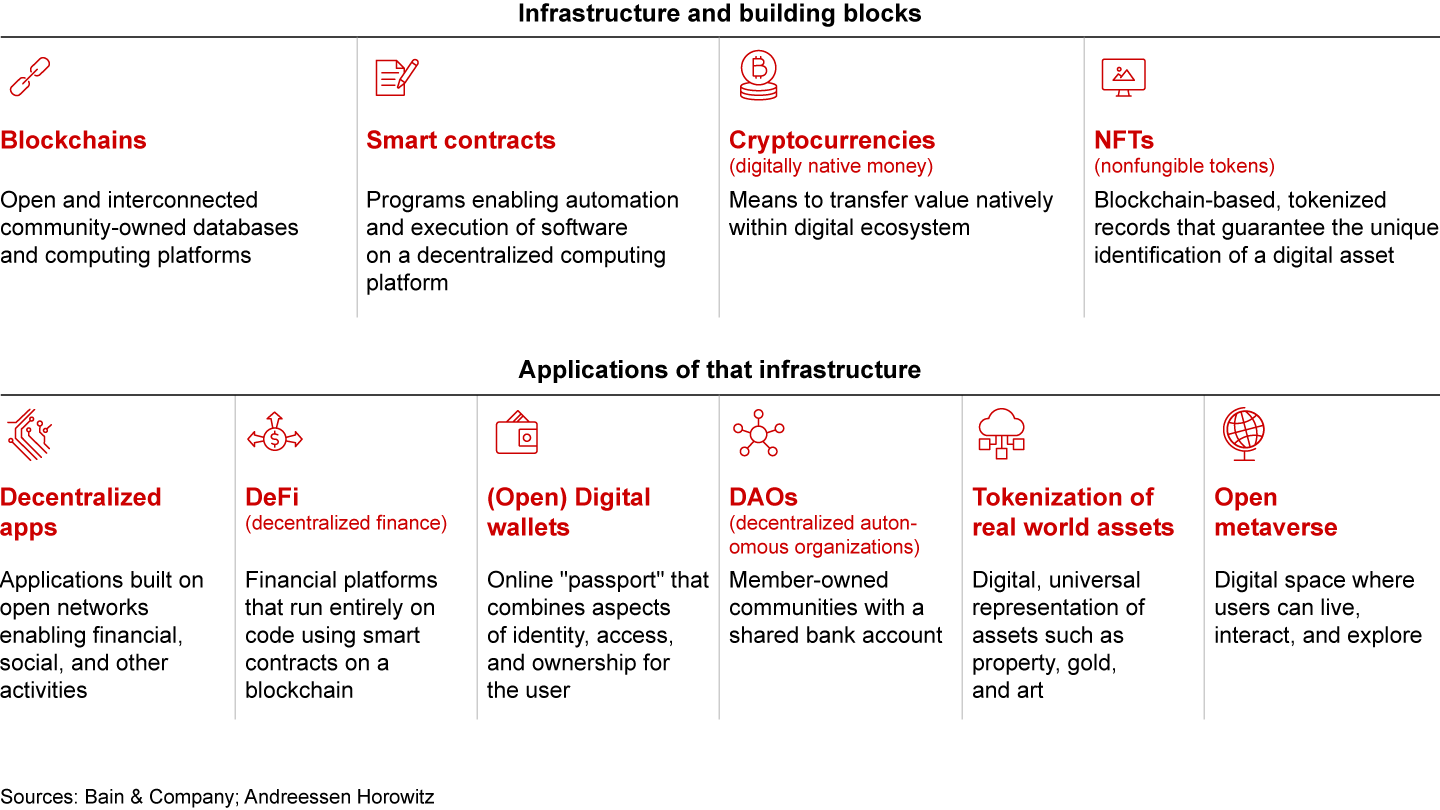
      Web3 comprises a combination of new concepts and tools

      While web3 and the metaverse are distinct concepts with a wide range of related technologies, web3 principles can be embedded in metaverse design (see Figure 2). Familiar web3 products include decentralized exchanges like Uniswap, digital dollars like Circle’s USDC, and OpenSea’s nonfungible token (NFT) market. Games like Roblox or platforms like Meta’s Horizon Worlds are well-known virtual worlds. Where the two concepts overlap sit “open metaverses,” like The Sandbox or Otherside, that are built on web3 concepts, distinguishing them from metaverses that aren’t always web3-enabled and may be closed or based on more traditional infrastructure. Identity plays a critical role wherever a metaverse is at least partly open. Consistent personhood and asset transferability limit friction for the users; if a virtual skin exists in one place, you’ll want to be able to use it in another metaverse.

      Figure 2
      Web3 and the metaverse are distinct concepts characterized by a range of related technologies, though web3 principles can be embedded in metaverse design

      Growth of web3

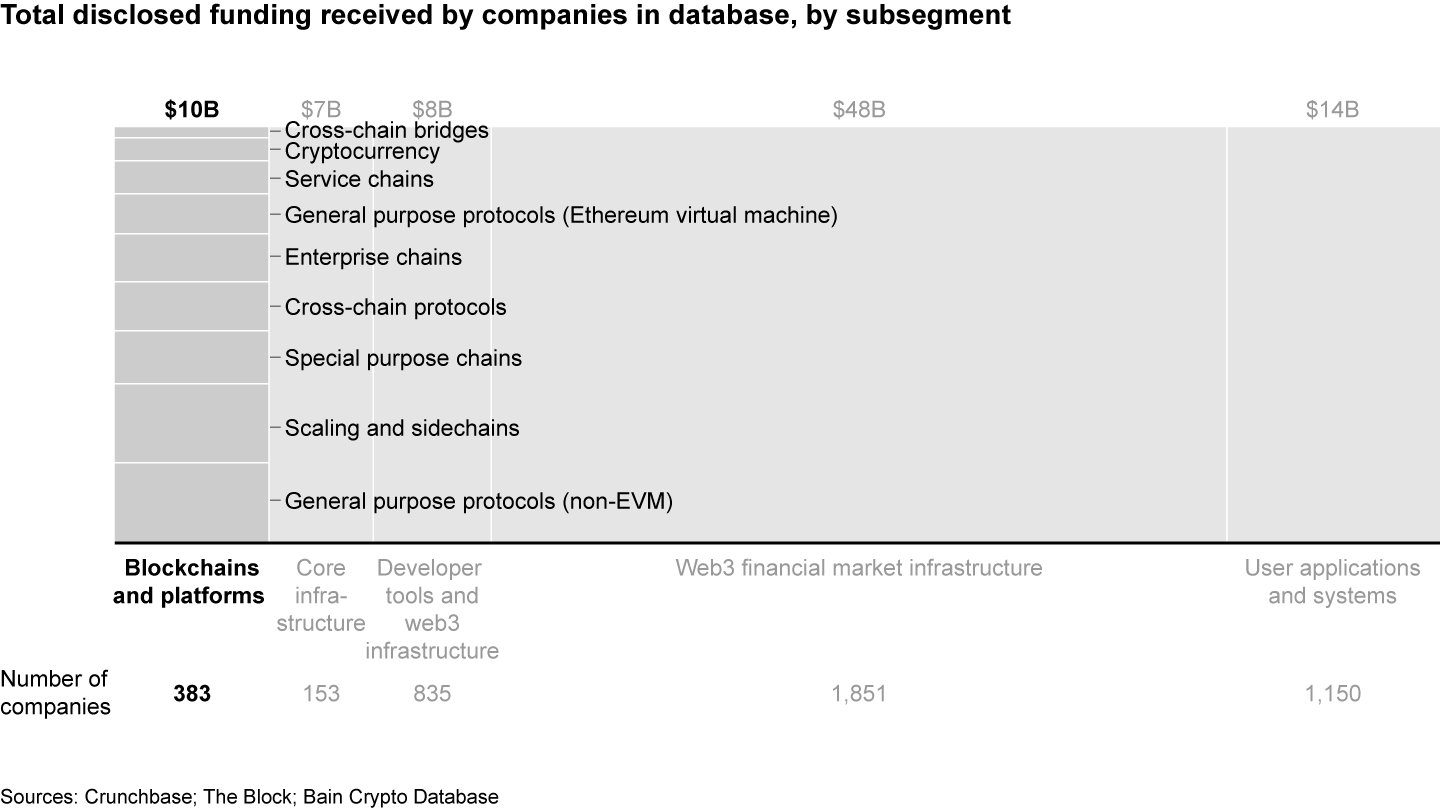
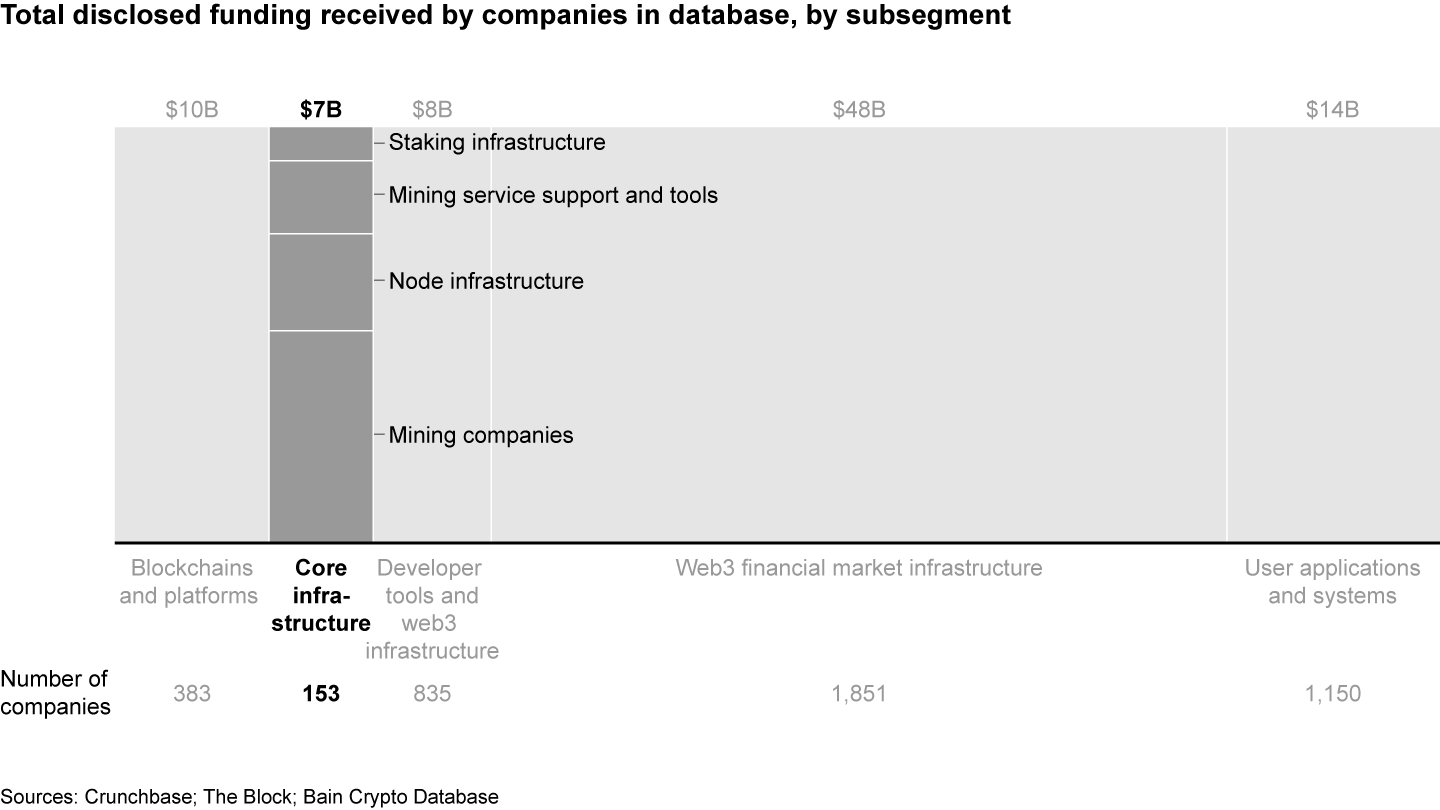
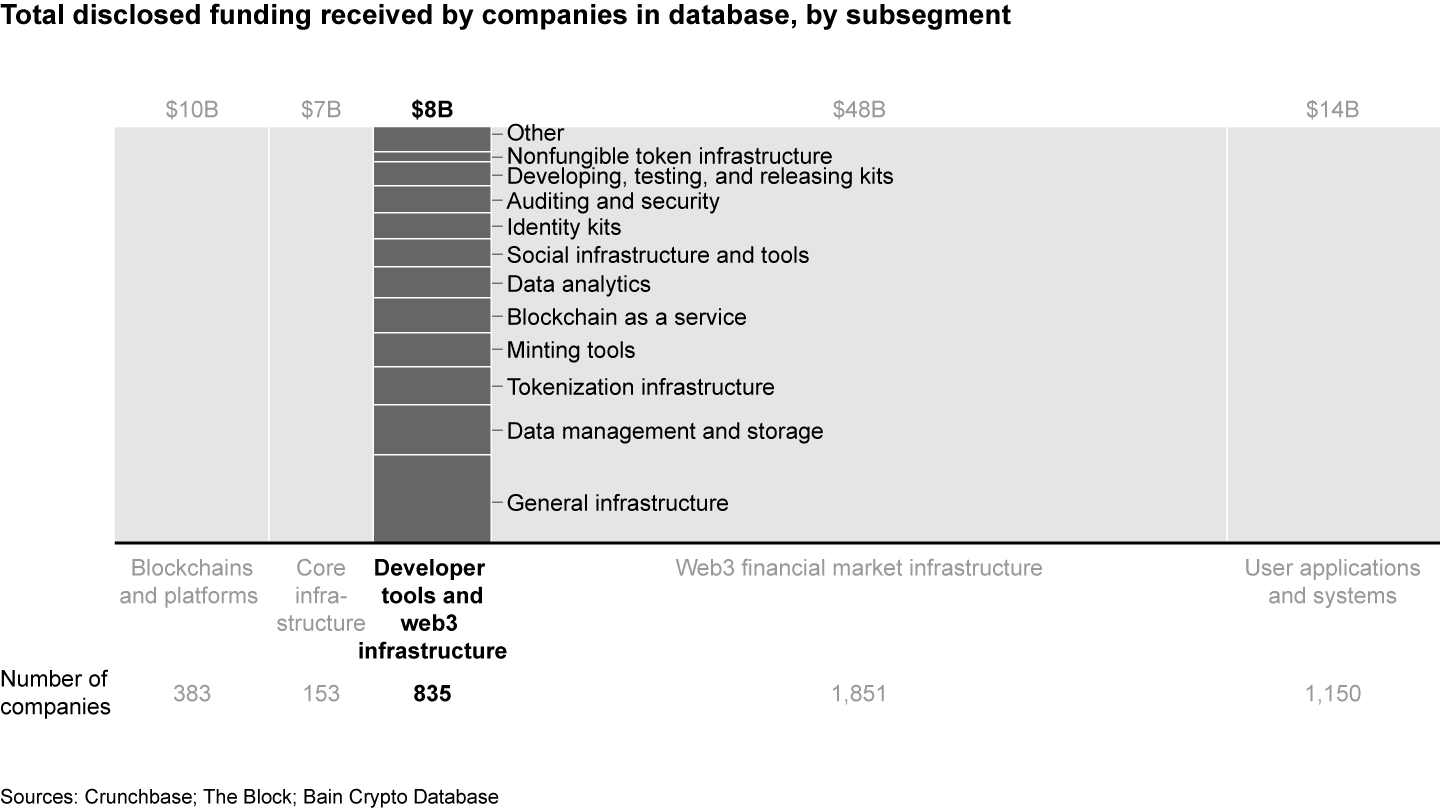
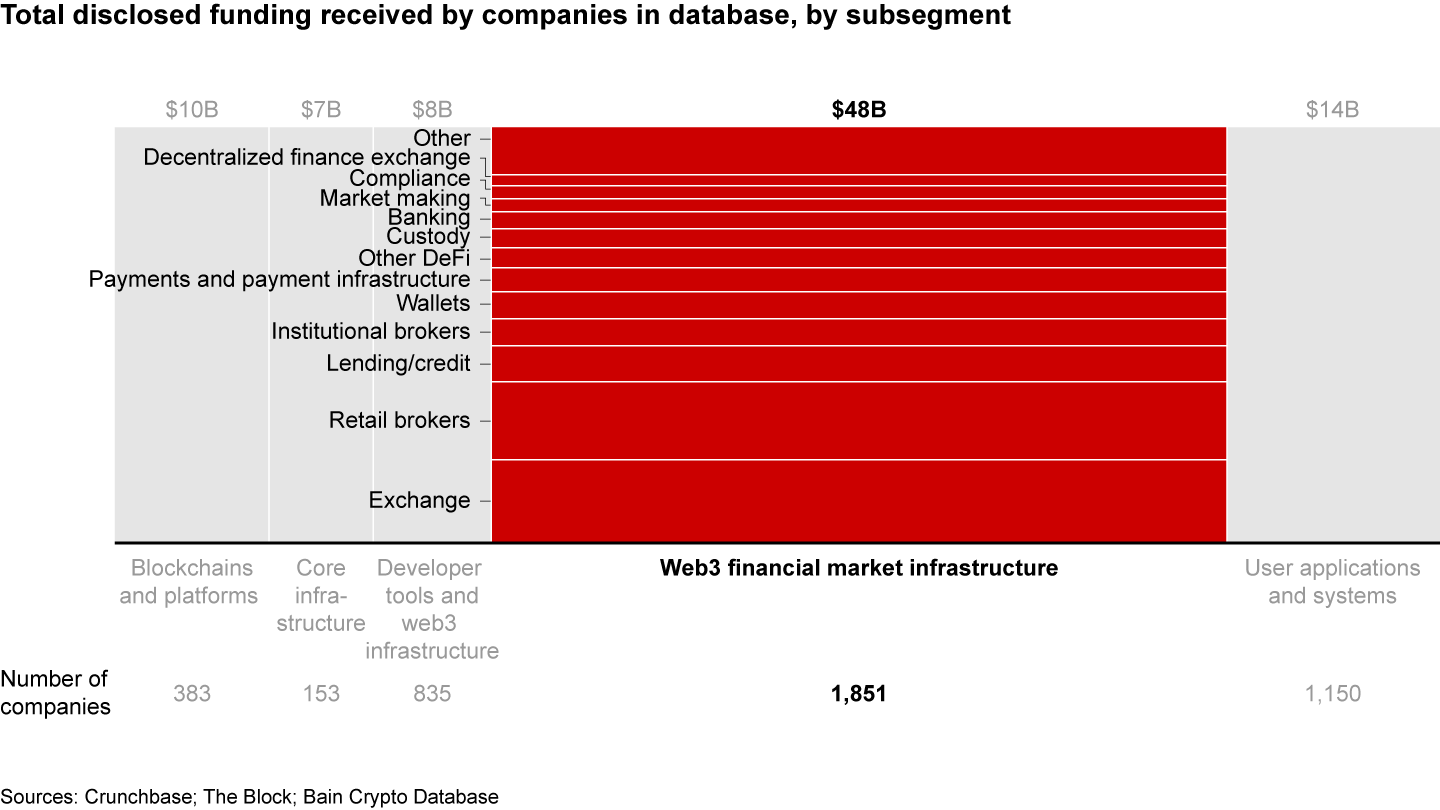
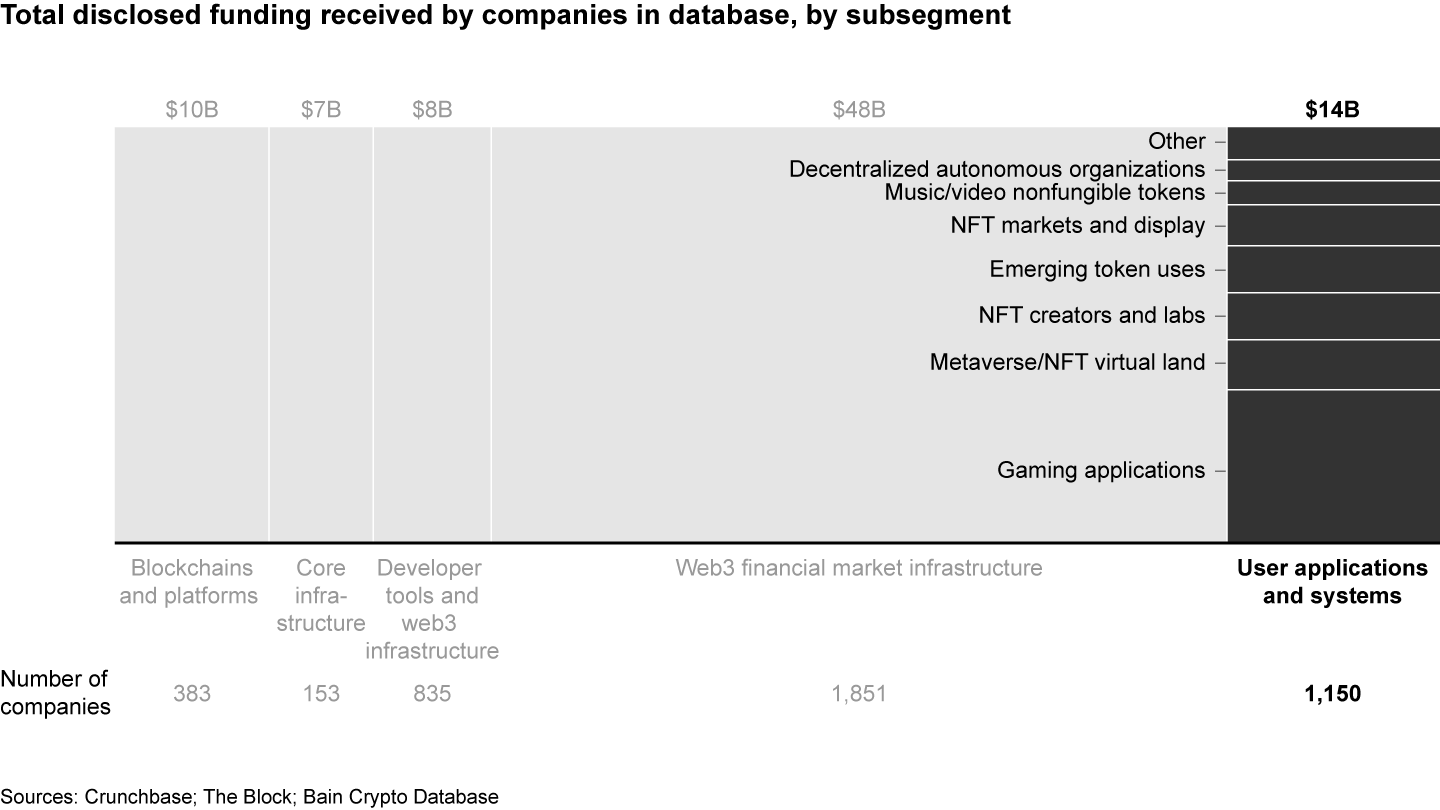
      What started in Internet forums and white papers has turned into a full-fledged ecosystem over the last decade. Bain’s web3 and digital asset database tracks more than 4,000 firms that cumulatively raised over $80 billion through June 2022 in the many segments of web3 (see Figure 3).

      Figure 3
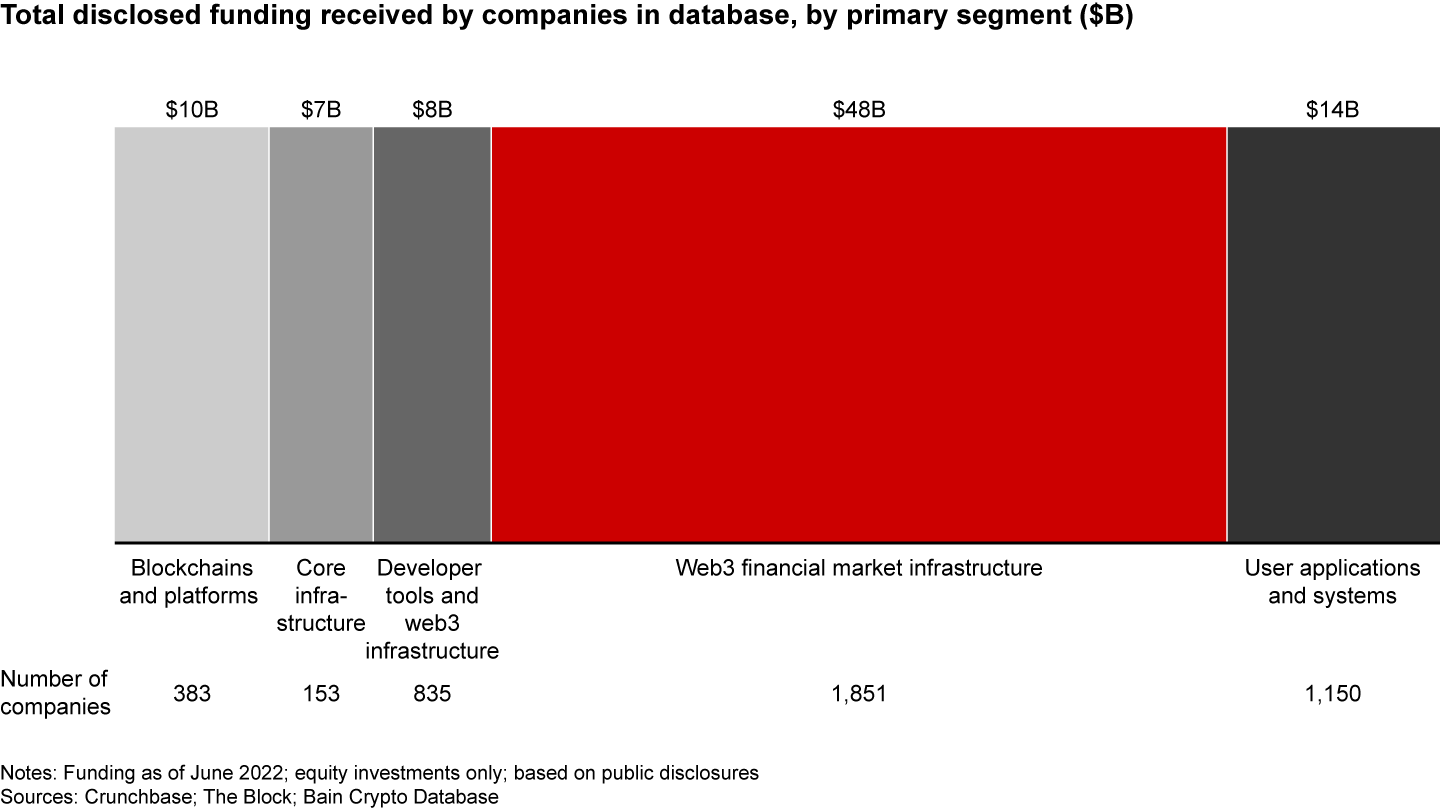
      Financial market infrastructure providers have attracted the biggest share of web3 company funding to date
      Figure 3
      Blockchains and platforms have attracted about $10 billion of web3 company funding
      Figure 3
      Core infrastructure has attracted about $7 billion of web3 company funding
      Figure 3
      Developer tools and web 3 infrastructure have attracted about $8 billion of all web3 company funding
      Figure 3
      Web3 financial market infrastructure has attracted about $48 billion of web3 company funding
      Figure 3
      User applications and systems have attracted about $14 billion of web3 company funding

      While the web3 investment landscape has undoubtedly changed over the last several months due to market volatility, momentum continues across industries, with many companies publicly acknowledging new efforts, such as Meta, Visa, Fidelity, Google, Mercado Libre, and Breitling.

      The wallet and web3 identity

      For some of the world’s leading technology firms, web3’s use of wallets and other identity platforms could potentially upend the traditional approach to online identity and asset storage. A wallet is a ledger account on the blockchain. User interface layers like popular wallet apps read the current ledger of your assets, but don’t always store them uniquely on a specific platform; that is, the assets aren’t held in custody by the platform.

      Imagine a highly simplified banking analogy. Instead of holding $1,000 in Bank A and $500 in Bank B, both acknowledge that you have $1,500 total, and the banks are just a service layer on top of your assets. You could even go to a Bank C, and it too would see you have $1,500 instantly available. The opportunity for simplified asset transfers and interoperability in this example shows how this type of decentralized infrastructure turns common business models on their head.

      By 2020, wallets had started to evolve into much more than just digital accounts. With the rise of decentralized applications, users began to interact with web3 applications, and wallets played an important role. To connect to the popular decentralized exchange Uniswap, for example, you might just click “connect wallet.” There’s no need to create an account. By connecting a wallet, platforms can see the digital assets you own and grant access or permissions based on a token you hold, for example, or an NFT ticket you might have collected by attending an event. In the bank analogy, when you “connect wallet” at Bank C, it might, based on your activity elsewhere, offer preferential loan refinancing terms for your debt with Bank A.

      The pace of innovation has continued to accelerate, and companies are creating specialized tools that abstract away the complexity of wallets, while leaving core benefits in place. Here are three examples.

      • Digital assets and goods. Similar to the bank example, you may use a wallet to transport other types of digital goods across platforms. Whether holding video game assets like skins, digital artwork, or next-generation loyalty tokens, the ability of wallets to promote interoperability and help users freely move assets unlocks benefits that could threaten customer stickiness and existing business models.
      • Credentials and access. Wallets have the potential to disrupt several types of identity and access tools. Companies like Civic, for example, are using tokens to denote certain regulatory conditions. This could enable wallet users who are over 21 to prove their age and purchase alcohol in a delivery app without ever revealing their license. Other web3 firms, like Mintgate, are focusing more on content-related access. These platforms provide holders of certain tokens (such as an NFT ticket) or loyalty points with gated entry to forums or entertainment.
      • Data and content. While content creation on the Internet today is decentralized, its publishing tends to be centralized on major platforms. Wallet-related firms hope to upend this ownership model by moving data and content rights away from platforms and toward the user. Companies like Lens Protocol and Farcaster are working to build social graphs in which all of your content—likes, comments, and other data—is decentralized and available to you. In this world, social media platforms would just read social graph data while you could carry your social interactions and content between platforms without being locked in.

      These examples represent just a few of the areas in which web3 may reshape digital identity, with continual development for years to come.

      Implications for executives today 

      Web3 can no longer be ignored. The ecosystem is robust. It has sizable funding and clear targets to disrupt. While this discussion of identity and wallets is most relevant for certain tech platforms, it also demonstrates the broader risk and opportunity that web3 poses when innovation challenges commonly held beliefs about who owns what and how to build defensible profit pools. All companies have to understand the scenarios that may affect their core markets now, and where they might find opportunity in the future.

      Read the Next Chapter

      US-China Decoupling Accelerates, and Shockwaves Spread

      Value Evolution

      • The Rise of Growth Equity Investors

      • A Multicloud World

      • Welcome to Web3

      • The US-China Decoupling

      Competitive Battlegrounds

      • Defending against Disruption

      • The Engine 2 Imperative

      • AI’s Next Frontier

      • The Industrial IoT

      Operational Advantage

      • Beyond the Rule of 40

      • Sales Productivity

      • Consumption-Based Pricing

      • Software R&D Efficiencies

      • The Chip Shortage

      • The Circular Economy

      Read our 2022 Technology Report

      Explore the report Download PDF
      Autori
      • Headshot of Thomas Olsen
        Thomas Olsen
        Partner, New York
      • Headshot of Gene Rapoport
        Gene Rapoport
        Partner, Chicago
      • Headshot of Parker DeRensis
        Parker DeRensis
        Partner, Chicago
      • Headshot of Nihar Naik
        Nihar Naik
        Alumni, San Francisco
      Contattaci
      Industry collegate
      • Cloud Computing
      • Internet of Things
      • IT Services
      • Semiconductors
      • Software
      • Tecnologia
      Servizi di consulenza collegati
      • Digital
      • Pricing
      • Web3
      Technology Report
      To Scale the Industrial Internet of Things, Don’t Forget Hardware

      Just like software companies, OEMs and hardware makers are critical to getting the industrial IoT to the next level.

      Leggi di più
      Technology Report
      Will Agentic AI Disrupt SaaS?

      Disruption is mandatory. Obsolescence is optional.

      Leggi di più
      CIO Insights
      Despite Tech Layoffs, Competition for Talent Remains Fierce

      Tech workers increasingly value career development opportunities and remote or hybrid work options, while compensation has soared.

      Leggi di più
      Tecnologia
      From Niche to Utility: Stablecoins Move toward the Financial Mainstream

      Widespread adoption depends on regulatory clarity, a compelling value proposition, and seamless integration with legacy systems.

      Leggi di più
      Technology Report
      State of the Art of Agentic AI Transformation

      Tech-forward enterprises have cracked the code on ROI for AI. Falling behind is riskier than ever as the next wave of agentic AI raises the stakes.

      Leggi di più
      First published in settembre 2022
      Tags
      • CIO Insights
      • Cloud Computing
      • Digital
      • Internet of Things
      • IT Services
      • Pricing
      • Semiconductors
      • Software
      • Technology Report
      • Tecnologia
      • Web3

      Come abbiamo aiutato i nostri clienti

      Sostenibilità e Corporate Responsibility Can Microchips Turbocharge Sustainability Improvement?

      Leggi un caso di studio

      A Go-to-Market Redesign Helps a Tech Company Thrive

      Leggi un caso di studio

      Helping a Midsize ERP Player Compete against the Giants

      Leggi un caso di studio

      Vuoi continuare la conversazione?

      Aiutiamo i leader globali e le loro aziende ad affrontare problemi e a cogliere le opportunità. Sosteniamo cambiamenti e otteniamo risultati duraturi.

      Bain Insights. Le nostre idee e punti di vista sulle tematiche che le aziende globali affrontano ogni giorno, arrivano nella tua email tutti i mesi.

      *Ho letto l'Informativa sulla Privacy e accetto i termini e le condizioni.

      Si prega di leggere e accettare l’Informativa sulla Privacy
      Bain & Company
      Contattaci Sustainability Accessibility Condizioni d’uso Privacy Cookie Policy Sitemap Log In

      © 1996-2026 Bain & Company, Inc.

      Contatta Bain

      Come posso aiutarti?

      • Business inquiry
      • Career information
      • Press relations
      • Partnership request
      • Speaker request
      Guarda tutti gli uffici