Skip to Content
  • Standorte

    Standorte

    North & Latin America
    • Atlanta
    • Austin
    • Bogota
    • Boston
    • Buenos Aires
    • Chicago
    • Dallas
    • Denver
    • Houston
    • Lisbon
    • Los Angeles
    • Mexico City
    • Minneapolis
    • Monterrey
    • Montreal
    • New York
    • Rio de Janeiro
    • San Francisco
    • Santiago
    • São Paulo
    • Seattle
    • Silicon Valley
    • Toronto
    • Washington, DC
    Europe & Africa
    • Amsterdam
    • Athens
    • Berlin
    • Brussels
    • Copenhagen
    • Düsseldorf
    • Frankfurt
    • Helsinki
    • Istanbul
    • Johannesburg
    • Kyiv
    • Lisbon
    • London
    • Madrid
    • Milan
    • München
    • Oslo
    • Paris
    • Rome
    • Stockholm
    • Warsaw
    • Wien
    • Zürich
    Middle East
    • Doha
    • Dubai
    • Riyadh
    Asia & Australia
    • Bangkok
    • Beijing
    • Bengaluru
    • Brisbane
    • Ho Chi Minh City
    • Hong Kong
    • Jakarta
    • Kuala Lumpur
    • Manila
    • Melbourne
    • Mumbai
    • New Delhi
    • Perth
    • Seoul
    • Shanghai
    • Singapore
    • Sydney
    • Tokyo
    Alle Standorte Anzeigen
  • Alumni
  • Presse
  • Newsletter
  • Kontakt
  • DACH-Region | Deutsch

    Wählen Sie Ihre Region und Sprache

    Global
    • Global (English)
    North & Latin America
    • Brazil (Português)
    • Argentina (Español)
    • Canada (Français)
    • Chile (Español)
    • Colombia (Español)
    Europe, Middle East, & Africa
    • France (Français)
    • DACH-Region (Deutsch)
    • Italy (Italiano)
    • Spain (Español)
    • Greece (Elliniká)
    Asia & Australia
    • China (中文版)
    • Korea (한국어)
    • Japan (日本語)
  • Saved items (0)
    Saved items (0)

    You have no saved items.

    Inhalte, für die Sie sich interessieren, werden hier gespeichert und können später gelesen oder weitergeleitet werden.

    Explore Bain Insights
  • Branchenkompetenzen
    Hauptmenü

    Branchenkompetenzen

    • Luft- und Raumfahrt, Verteidigung
    • Agrarwirtschaft
    • Chemieindustrie
    • Infrastruktur und Bauwirtschaft
    • Konsumgüter
    • Finanzdienstleistungen
    • Gesundheitswesen
    • Maschinen- und Anlagenbau
    • Medienwirtschaft
    • Metallindustrie
    • Bergbau
    • Öl und Gas
    • Papier- und Verpackungsindustrie
    • Private Equity
      Branchenkompetenzen
      Private Equity
      • Due Diligence
      • Exit Planning
      • Firm Strategy & Operations
      • Portfolio Value Creation
    • Öffentlicher Sektor und Sozialwesen
    • Einzelhandel
    • Technologie
    • Telekommunikation
    • Transportwesen
    • Reise- und Freizeitbranche
    • Versorgung und erneuerbare Energien
  • Managementkompetenzen
    Hauptmenü

    Managementkompetenzen

    • Customer Experience
    • ESG
    • Innovation
    • M&A
    • Operations
    • People & Organization
    • Private Equity
    • Sales & Marketing
    • Strategie
    • KI, Einblicke und Lösungen
    • Technologie
    • Transformation
  • Digital
  • Publikationen
    Hauptmenü

    Publikationen

    • Branchenthemen
    • Managementthemen
    • Bain-Bücher
    Alle Publikationen
    Ausgewählte Themen
    • Resilienz in der globalen Krise
    • M&A Report
    • Private Equity Podcast
    • Midyear Private Equity Report
    • Agile
    • Engineering Report
    • Digital Transformation
    • Elements of Value®
    • Firm of the Future
    • Nachhaltigkeitsstudie
    • Macro Trends
    • Future of Consumption
    • Weltwirtschaftsforum (WEF)
  • Über uns
    Hauptmenü

    Über uns

    • Was wir bieten
    • Unser Ansatz
    • Unser Team
    • Game Changer Award
    • Female Allstar Board
    • Messbare Ergebnisse (EN)
    • Auszeichnungen
    • Globale Partnerschaften
    • The Mission
    Further: Our global responsibility
    • Vielfalt & Chancengleichheit
    • Soziale Verantwortung
    • Sustainability
    Erfahren Sie mehr zu "Further"
  • Karriere
    Hauptmenü

    Karriere

    • Dein Einstieg
      Karriere
      Dein Einstieg
      • Find Your Place
      • Unsere Arbeitsbereiche
      • Unsere Teams
      • Angebote für Studierende
      • Praktika & Programme
      • Recruiting-Events
    • Arbeiten bei Bain
      Karriere
      Arbeiten bei Bain
      • Blog: Inside Bain
      • Karriere Stories
      • Unsere Bainies
      • Office-Standorte
      • Weiterentwicklung
      • Affinity Groups
      • Deine Benefits
    • Impact Stories
    • Deine Bewerbung
      Karriere
      Deine Bewerbung
      • Das erwartet dich
      • Der Interviewprozess
    FIND JOBS
  • Standorte
    Hauptmenü

    Standorte

    • North & Latin America
      Standorte
      North & Latin America
      • Atlanta
      • Austin
      • Bogota
      • Boston
      • Buenos Aires
      • Chicago
      • Dallas
      • Denver
      • Houston
      • Lisbon
      • Los Angeles
      • Mexico City
      • Minneapolis
      • Monterrey
      • Montreal
      • New York
      • Rio de Janeiro
      • San Francisco
      • Santiago
      • São Paulo
      • Seattle
      • Silicon Valley
      • Toronto
      • Washington, DC
    • Europe & Africa
      Standorte
      Europe & Africa
      • Amsterdam
      • Athens
      • Berlin
      • Brussels
      • Copenhagen
      • Düsseldorf
      • Frankfurt
      • Helsinki
      • Istanbul
      • Johannesburg
      • Kyiv
      • Lisbon
      • London
      • Madrid
      • Milan
      • München
      • Oslo
      • Paris
      • Rome
      • Stockholm
      • Warsaw
      • Wien
      • Zürich
    • Middle East
      Standorte
      Middle East
      • Doha
      • Dubai
      • Riyadh
    • Asia & Australia
      Standorte
      Asia & Australia
      • Bangkok
      • Beijing
      • Bengaluru
      • Brisbane
      • Ho Chi Minh City
      • Hong Kong
      • Jakarta
      • Kuala Lumpur
      • Manila
      • Melbourne
      • Mumbai
      • New Delhi
      • Perth
      • Seoul
      • Shanghai
      • Singapore
      • Sydney
      • Tokyo
    Alle Standorte Anzeigen
  • Alumni
  • Presse
  • Newsletter
  • Kontakt
  • DACH-Region | Deutsch
    Hauptmenü

    Wählen Sie Ihre Region und Sprache

    • Global
      Wählen Sie Ihre Region und Sprache
      Global
      • Global (English)
    • North & Latin America
      Wählen Sie Ihre Region und Sprache
      North & Latin America
      • Brazil (Português)
      • Argentina (Español)
      • Canada (Français)
      • Chile (Español)
      • Colombia (Español)
    • Europe, Middle East, & Africa
      Wählen Sie Ihre Region und Sprache
      Europe, Middle East, & Africa
      • France (Français)
      • DACH-Region (Deutsch)
      • Italy (Italiano)
      • Spain (Español)
      • Greece (Elliniká)
    • Asia & Australia
      Wählen Sie Ihre Region und Sprache
      Asia & Australia
      • China (中文版)
      • Korea (한국어)
      • Japan (日本語)
  • Saved items  (0)
    Hauptmenü
    Saved items (0)

    You have no saved items.

    Inhalte, für die Sie sich interessieren, werden hier gespeichert und können später gelesen oder weitergeleitet werden.

    Explore Bain Insights
  • Branchenkompetenzen
    • Branchenkompetenzen

      • Luft- und Raumfahrt, Verteidigung
      • Agrarwirtschaft
      • Chemieindustrie
      • Infrastruktur und Bauwirtschaft
      • Konsumgüter
      • Finanzdienstleistungen
      • Gesundheitswesen
      • Maschinen- und Anlagenbau
      • Medienwirtschaft
      • Metallindustrie
      • Bergbau
      • Öl und Gas
      • Papier- und Verpackungsindustrie
      • Private Equity
      • Öffentlicher Sektor und Sozialwesen
      • Einzelhandel
      • Technologie
      • Telekommunikation
      • Transportwesen
      • Reise- und Freizeitbranche
      • Versorgung und erneuerbare Energien
  • Managementkompetenzen
    • Managementkompetenzen

      • Customer Experience
      • ESG
      • Innovation
      • M&A
      • Operations
      • People & Organization
      • Private Equity
      • Sales & Marketing
      • Strategie
      • KI, Einblicke und Lösungen
      • Technologie
      • Transformation
  • Digital
  • Publikationen
    • Publikationen

      • Branchenthemen
      • Managementthemen
      • Bain-Bücher
      Alle Publikationen
      Ausgewählte Themen
      • Resilienz in der globalen Krise
      • M&A Report
      • Private Equity Podcast
      • Midyear Private Equity Report
      • Agile
      • Engineering Report
      • Digital Transformation
      • Elements of Value®
      • Firm of the Future
      • Nachhaltigkeitsstudie
      • Macro Trends
      • Future of Consumption
      • Weltwirtschaftsforum (WEF)
  • Über uns
    • Über uns

      • Was wir bieten
      • Unser Ansatz
      • Unser Team
      • Game Changer Award
      • Female Allstar Board
      • Messbare Ergebnisse (EN)
      • Auszeichnungen
      • Globale Partnerschaften
      • The Mission
      Further: Our global responsibility
      • Vielfalt & Chancengleichheit
      • Soziale Verantwortung
      • Sustainability
      Erfahren Sie mehr zu "Further"
  • Karriere
    Häufige Suchanfragen
    • Agil
    • Digital
    • Strategie
    Vorherige Suchanfragen
      Zuletzt besuchte Seiten

      Content added to saved items

      Saved items (0)

      Removed from saved items

      Saved items (0)

      Global Healthcare Private Equity Report

      Carve-Outs Open Up Value in a Tight Deal Market

      Carve-Outs Open Up Value in a Tight Deal Market

      Carve-outs give private equity firms access to undervalued assets while allowing public companies to divest slow-growth businesses.

      Von the Healthcare Private Equity team

      • First published on Januar 09, 2025
      • Min. Lesezeit
      }

      Report

      Carve-Outs Open Up Value in a Tight Deal Market
      en
      At a Glance
      • Healthcare carve-outs rose in 2024, as public healthcare companies sought to improve shareholder returns and private equity (PE) firms remained hungry for assets.
      • These deals allow PE funds to acquire and reinvigorate underperforming assets while enabling large healthcare companies to reduce complexity and shift their strategic focus to growth.
      • Given the decline in overall sponsor-to-sponsor deal activity since 2022, carve-outs provide a way for investors to deploy capital, often with significant value-creation opportunities.
      • When executed well, healthcare carve-outs have the potential for higher returns, albeit with greater variance in their return profile, than typical buyouts.

      This article is part of Bain's 2025 Global Healthcare Private Equity Report.

      EXPLORE THE REPORT

      Despite annual variability in deal activity, healthcare carve-outs have been on an upward trajectory since 2010 (see Figure 1). This trend has been propelled by a mix of public companies trying to improve shareholder value and PE firms eager to acquire sizable assets. Successful carve-outs offer a favorable outcome for both the parent company and PE buyer. They allow public companies to improve margins and focus on revenue growth while reducing leverage and complexity. Meanwhile, PE funds can buy overlooked assets with strong potential for value creation under new ownership.

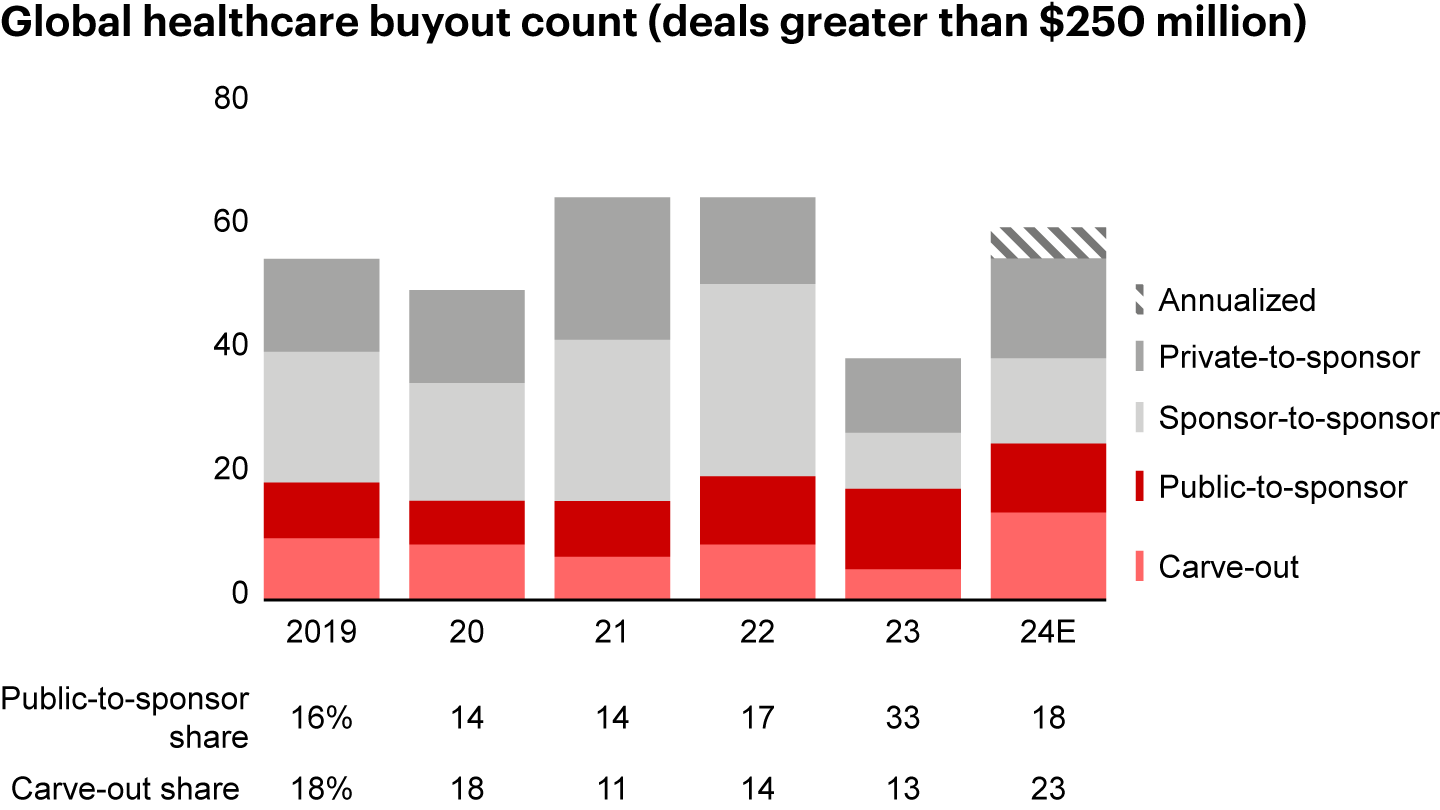
      Given reduced sponsor-to-sponsor deal activity since the peak in 2022, the combination of carve-outs and public-to-sponsor deals has drawn all types of investors around the globe (including middle-market and large cap). These investors seek to deploy capital in scalable assets across all healthcare sectors (biopharma, medtech, provider, life sciences) with value-creation potential (see Figure 2).

      Figure 1
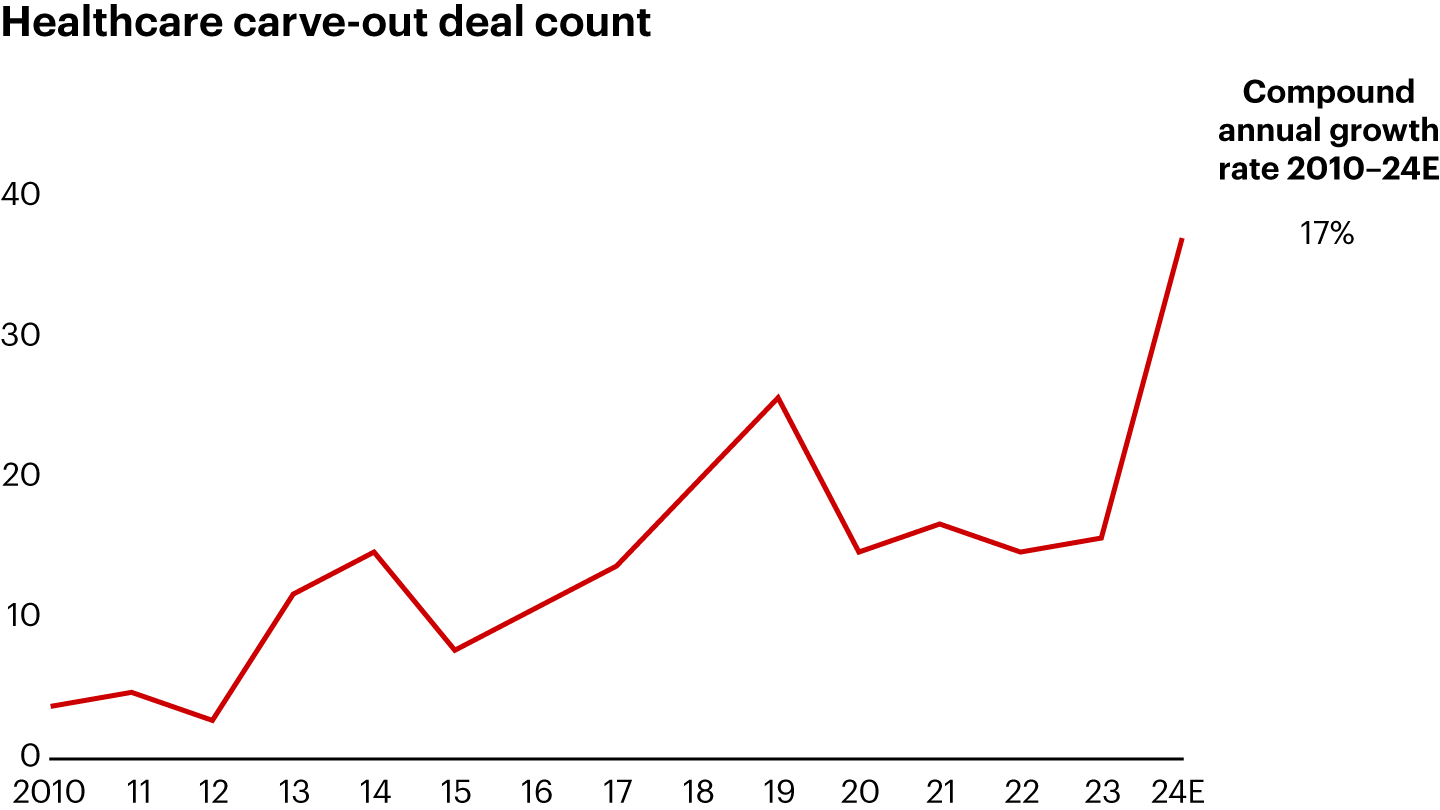
      Global healthcare carve-outs bounced back in 2024
      Sources: Deaologic; Bain analysis
      Figure 2
      The combination of carve-outs and public-to-sponsor deals has become more popular in healthcare private equity

      Anmerkungen Includes announced deals that are completed or pending, with data subject to change; deal value does not account for deals with undisclosed values; 2024E values are annualized estimates based on expected deal counts for the remainder of 2024 using historical data from 2019–2023

      Sources: Dealogic; AVCJ; Bain analysis

      The importance of execution

      Successful carve-outs give PE firms access to undervalued assets with the potential for value creation while enabling public companies to divest slow-growth or non-core lines of business. Although carve-outs can have more variable returns for PE buyers, they can deliver an internal rate of return (IRR) roughly 20 percentage points higher than that of other buyouts when executed successfully (see Figure 3).

      Figure 3
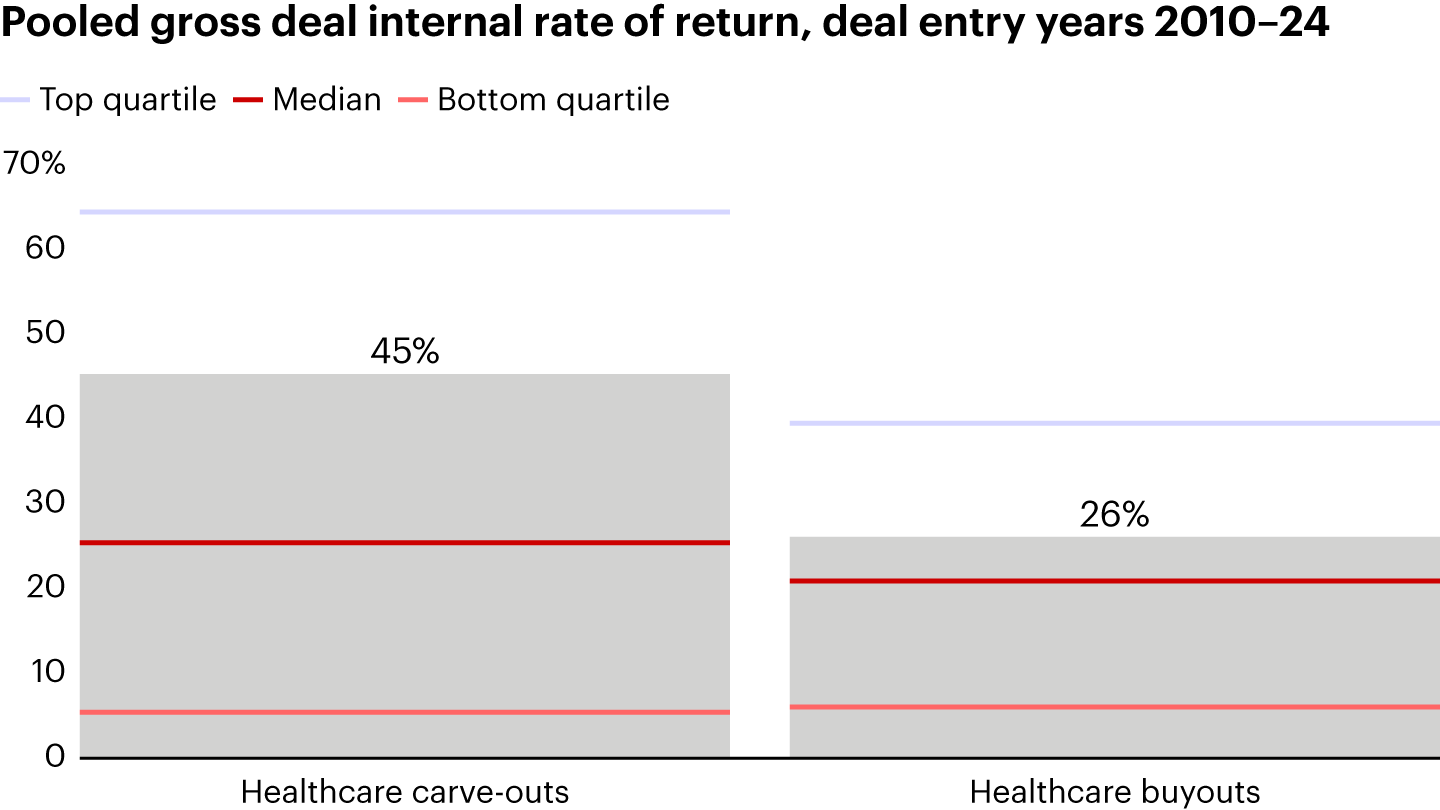
      Carve-outs perform well relative to other healthcare buyouts

      Anmerkungen All calculations are in US dollars; deal universe includes fully and partially realized healthcare deals with initial investments in 2010–2024 globally; all equity check sizes; buyout and growth; multiple on invested capital is the ratio of total distributed capital and remaining unrealized value, divided by total investment cost; pooled metrics are derived by computing the sum of all investments in a given data set and then calculating the blended return based on the aggregation of cash flows associated to that set of investments (similar to a weighted average, weighted by equity invested per deal); healthcare includes healthcare software for pharma and biotech, payers, data and analytics, telemedicine and e-health, revenue cycle management, coordination, healthcare workflow management, healthcare payment, and other

      Quelle DealEdge.com (data as of November 30, 2024); use of DealEdge data outside this context, especially further publication or reprint, requires permission of Bain & Company

      From the strategic seller perspective, one factor contributing to the rise in healthcare carve-outs is that total shareholder returns (TSR) for public companies are heavily influenced by revenue growth. In fact, revenue growth contributes to TSR roughly two times more in pharma and about seven to nine times more in medtech than all other levers combined (see Figure 4). Thus, by slicing away lower-growth segments, companies can boost overall growth rates and enhance shareholder returns.

      Figure 4
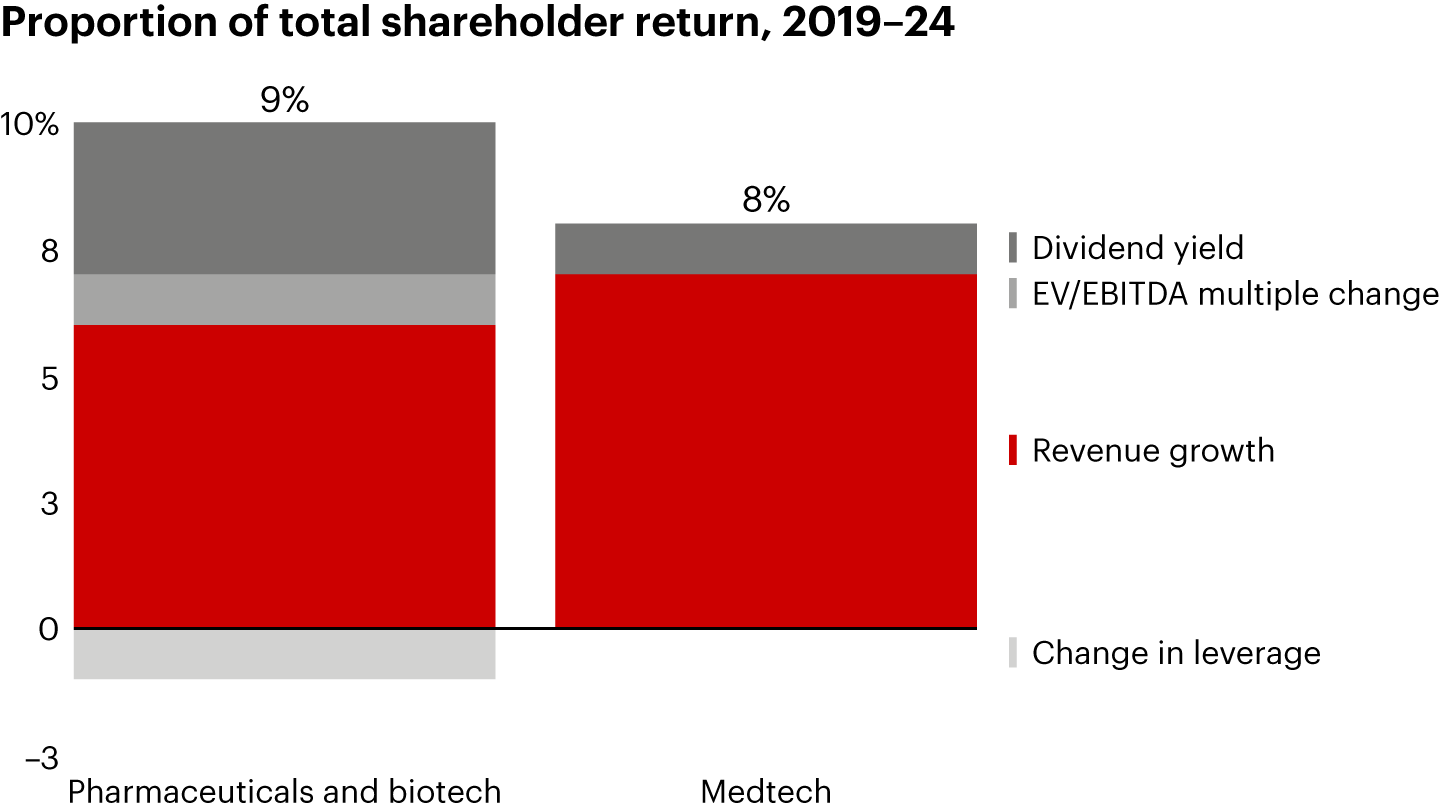
      Revenue growth powers total shareholder returns in pharma and medtech

      Anmerkungen Total shareholder return is measured by sales growth, margin growth, EV/EBITDA multiple change, change in shares, change in leverage, and dividend yield; metrics not shown on the chart are 0

      Quelle Bain analysis

      On the buy side, public company carve-outs offer significant value-creation opportunities. Business units that are carved out often have been used as cash cows to fund higher growth segments of the public company’s portfolio, frequently laboring under limited investment and attention from the parent firm.

      Bobby Schmidt, cohead of healthcare investing at Carlyle, discusses the benefits and challenges of carve-out transactions with Nirad Jain, coleader of Bain's Healthcare Private Equity team.

      Management’s focus on these units can sometimes be limited. As a result, they may struggle to retain top talent, operate under outdated salesforce incentive structures, or rely on suboptimal territory designs that lag changing market demands. The lack of strategic focus can also lead to greater complexity, including unnecessary spending on unused but shared resources, a high number of stock-keeping units (SKUs), and geographic mismatch.

      Amidst these challenges, acquiring carved-out business units can present a meaningful upside for their new owners if they reduce complexity and implement agile ways of working. With the appropriate investments, new owners can attract and retain top talent, propel growth, and support multiple expansion (see Figure 5), which has the potential to be at higher levels than typical buyouts, in the context of numerous value-creation levers and potentially low acquisition multiples.

      Figure 5
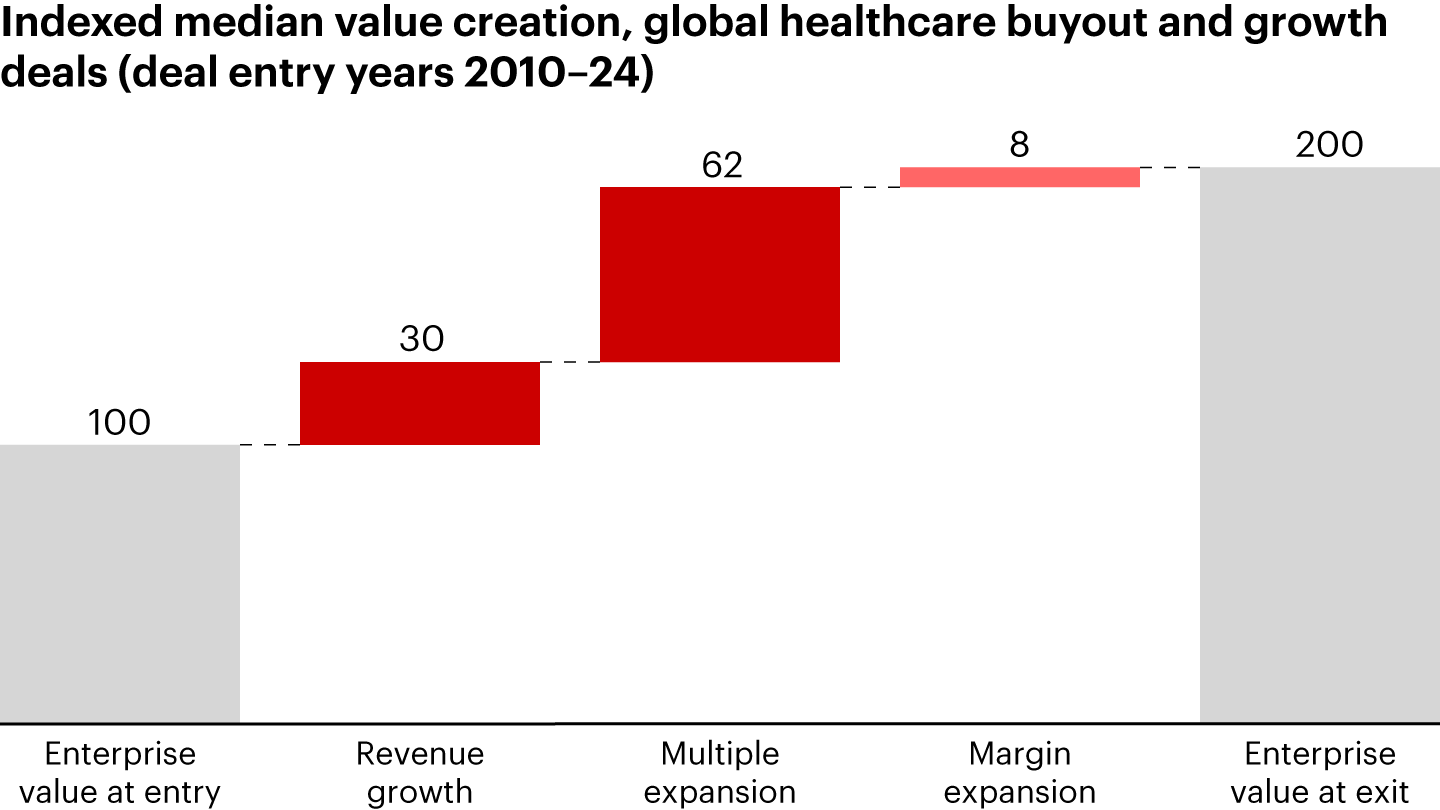
      Revenue growth and associated multiple expansion powers the bulk of PE value creation in carve-outs
      Quelle DealEdge.com (data as of November 30, 2024); use of DealEdge data outside this context, especially further publication or reprint, requires permission of Bain & Company

      How two funds saw value-creation potential

      To illustrate how private equity can make use of these dynamics to create value in carve-outs, let’s examine two recent deals.

      KKR’s portfolio company, IVIRMA Global, a leader in assisted reproduction, acquired Eugin Group, an in vitro fertilization provider, from Fresenius SE to accelerate revenue growth and enhance operational efficiency. While reproductive medicine is considered an attractive, recession-proof market, Eugin did not align with Fresenius SE’s broader strategy to refocus on core activities and streamline its portfolio, which analysts expect will unlock long-term value. For KKR, the combination of IVIRMA and Eugin creates an opportunity for significant value creation by centralizing functions within the global provider group and contributing additional funds to fuel growth. The combined entity strengthens IVIRMA’s position as a top-tier competitor in a rapidly evolving fertility provider market.

      The second deal involves the Carlyle Group and Atmas Health acquiring Baxter International’s kidney care unit, rebranded as Vantive. Carlyle has expertise to support Vantive’s investment in digital solutions, help the company facilitate a market shift toward peritoneal dialysis within kidney care, and promote advanced services within the broader organ therapy space. With Vantive as a standalone entity, Carlyle can help streamline the business’ focus and foster further growth. Through this carve-out, Baxter will be able to reduce debt and improve leverage, thus freeing up capital to fuel growth in its core businesses.

      Coordinating an integrated diligence framework

      While carve-outs are becoming increasingly common, they remain more complex and fundamentally distinct from full asset or share purchases. As a result, these partial acquisitions tend to have a higher margin for error and greater variability in performance when compared with standalone acquisitions. Unlike buyout acquisitions, in which assets can operate independently with limited to no change on Day 1, carve-outs require substantial operational adjustments from the start to guarantee business continuity. Several other factors contribute to the complexity of carve-out deals:

      • The asset is typically not completely separated on Day 1. Transitional service agreements are often required for a period of time after close. In medtech and pharma, in particular, there are several countries where buyers cannot take over operations on Day 1, limiting their ability to start executing on value-creation opportunities.
      • Sellers have much more information than buyers. Sellers’ knowledge of capabilities, technologies, and customer relationships gives them an edge in negotiations, particularly around transfer pricing and cross-selling agreements. It also means that buyers must invest significant time upfront to ensure they understand exactly what is in vs. out of the asset perimeter.
      • Unexpected complexity is common. The cost of full separation often exceeds expectations, and complex talent retention, customer retention, and contract/lease separations may present additional hurdles.

      Carve-out deals require a fully integrated diligence and value-creation plan to ensure business continuity. This Day 1 plan should encompass commercial and operational due diligence findings, potential risks and opportunities from disruptive trends such as generative artificial intelligence, and a detailed review of the asset perimeter to understand potential gaps for operational stability.

      Continuity planning and initial capability building is critical during the sign-to-close period to minimize disruption for customers, suppliers, and employees. Buyers must be prepared to build these competencies across key functions—commercial, operational, and general and administrative. Equally important is evaluating cross-functional systems such as enterprise resource planning, infrastructure, and data management to ensure there are no operational interruptions.

      Ensuring that the necessary capabilities are built and that existing operators continue to focus on business execution can help inflect a carve-out’s performance from Day 1 for the new owner. During the sign-to-close stage, carve-out buyers should keep the following levers top of mind:

      • Remain grounded in the investment thesis. Buyers need to leverage their investment thesis as a foundational plan. That plan outlines the scope of their transformation ambition (financial implications such as headcount costs, transitional service agreements, and non-financial targets), informs value-creation priorities (where to focus and what to fix), and directs action on operating principles, organizational structure, governance, and resourcing. Aligning on, prioritizing, and executing the handful of decisions that will determine success is critical during this period.
      • Address talent gaps and decision rights. Buyers must identify talent and capability gaps early so they can develop incentives to retain key talent and initiate external hiring to fill any holes. They should prioritize what is critical for Day 1 functioning; roles, responsibilities, and decision rights must be clearly defined in order to push the organizational structure to its desired future state.
      • Align on go-forward processes and technology. Across IT, manufacturing and supply chain, and people and governance, buyers should understand what business processes and systems need to be separated from the parent company before Day 1, as well as how the existing operating model, ways of working, and technology should align with their future-state vision.
      • Establish strong change management practices. Buyers should set up a separation management office to own day-to-day decisions, manage ongoing prioritization and sequencing of efforts, facilitate cross-functional collaboration, and disseminate organization-wide communications.

      An integrated approach to carve-out deals from the beginning keeps buyers focused on key value levers and ensures that all insights are incorporated into the deal model, paving the way for post-deal success.

      Read the Next Chapter

      Maximizing Exit Value: An Imperative for Both Sellers and Buyers

      Read our 2025 Global Healthcare Private Equity Report

      Download the PDF EXPLORE THE REPORT

      More from the report

      • Healthcare Private Equity Market 2024: Year in Review and Outlook

      • Why Mid-Market Healthcare Private Equity Firms Are Outperforming

      • Carve-Outs Open Up Value in a Tight Deal Market

      • Maximizing Exit Value: An Imperative for Both Sellers and Buyers

      • An Optimistic Growth Outlook in Asia-Pacific

      Autoren
      • Headshot of Nirad Jain
        Nirad Jain
        Partner, New York
      • Headshot of Kara Murphy
        Kara Murphy
        Partner, Boston
      • Headshot of Dmitry Podpolny
        Dmitry Podpolny
        Partner, London
      • Headshot of Dieter Meyer
        Dieter Meyer
        Partner, Zürich
      • Headshot of Vikram Kapur
        Vikram Kapur
        Partner, Singapore
      • Headshot of Alex Boulton
        Alex Boulton
        Partner, Singapore
      Kontaktieren Sie uns
      Verwandte Branchen
      • Gesundheitswesen
      • Private Equity
      Global Healthcare Private Equity Report
      What Differentiates Winning Healthcare IT Investments

      Amidst continued high-valuation multiples and competitive deal processes, a disciplined focus on value-creation levers distinguishes winning bids and successful exits.

      Mehr erfahren
      Global Healthcare Private Equity Report
      Healthcare Private Equity Market 2025: Resurgence and Record Growth

      Healthcare private equity investment posted a very strong year for deal value and volume, paired with a strong rebound in exits.

      Mehr erfahren
      Global Healthcare Private Equity Report
      Playing the Long Game in Pharma Services

      While uncertainty persists, many investors have focused on gem assets and attractive subsectors, with an eye toward value creation.

      Mehr erfahren
      Global Healthcare Private Equity Report
      New Models of Value Creation for Physician Groups

      Investors are retooling their physician group approach, building performance-driven platforms for the long term and positioning assets for strategic exits.

      Mehr erfahren
      Global Healthcare Private Equity Report
      Healthcare Private Equity Market 2024: Year in Review and Outlook

      Despite high borrowing costs and extended hold times in 2024, dealmaking roared ahead, marking the second-highest year on record.

      Mehr erfahren
      Markierungen
      • Gesundheitswesen
      • Global Healthcare Private Equity Report
      • Private Equity

      Wie wir unsere Kunden unterstützt haben

      Nachhaltigkeit A Paper Company Takes Bold Steps to Make Sustainability a Source of Profits

      Kundenbeispiel lesen

      Strategie Pharma oncology growth strategy

      Kundenbeispiel lesen

      Strategie Review focuses biotech on portfolio potential

      Kundenbeispiel lesen

      Möchten Sie mit uns in Kontakt bleiben?

      Wir unterstützen Führungskräfte weltweit, die kritischen Themen in ihrem Unternehmen zu adressieren. Gemeinsam schaffen wir nachhaltige Veränderungen und Ergebnisse.

      Bain Insights. Unsere Perspektive auf die kritischen Themen, mit denen sich international agierende Unternehmen konfrontiert sehen, finden Sie monatlich in Ihrem Postfach.

      *Ich habe die Datenschutzerklärung gelesen und akzeptiere sie.
      Bitte lesen Sie die Datenschutzerklärung und akzeptieren Sie diese.
      Bain & Company
      Contact us Sustainability Accessibility Rechtliche Hinweise Impressum Datenschutz Cookie-Richtlinie Sitemap Log In

      © 1996-2026 Bain & Company, Inc.

      Kontaktieren Sie Bain

      Wie können wir Ihnen helfen?

      • Business inquiry
      • Career information
      • Press relations
      • Partnership request
      • Speaker request
      Alle weltweiten Büros