
Skip to Content
  • Standorte

    Standorte

    North & Latin America
    • Atlanta
    • Austin
    • Bogota
    • Boston
    • Buenos Aires
    • Chicago
    • Dallas
    • Denver
    • Houston
    • Lisbon
    • Los Angeles
    • Mexico City
    • Minneapolis
    • Monterrey
    • Montreal
    • New York
    • Rio de Janeiro
    • San Francisco
    • Santiago
    • São Paulo
    • Seattle
    • Silicon Valley
    • Toronto
    • Washington, DC
    Europe & Africa
    • Amsterdam
    • Athens
    • Berlin
    • Brussels
    • Copenhagen
    • Düsseldorf
    • Frankfurt
    • Helsinki
    • Istanbul
    • Johannesburg
    • Kyiv
    • Lisbon
    • London
    • Madrid
    • Milan
    • München
    • Oslo
    • Paris
    • Rome
    • Stockholm
    • Warsaw
    • Wien
    • Zürich
    Middle East
    • Doha
    • Dubai
    • Riyadh
    Asia & Australia
    • Bangkok
    • Beijing
    • Bengaluru
    • Brisbane
    • Ho Chi Minh City
    • Hong Kong
    • Jakarta
    • Kuala Lumpur
    • Manila
    • Melbourne
    • Mumbai
    • New Delhi
    • Perth
    • Seoul
    • Shanghai
    • Singapore
    • Sydney
    • Tokyo
    Alle Standorte Anzeigen
  • Alumni
  • Presse
  • Newsletter
  • Kontakt
  • DACH-Region | Deutsch

    Wählen Sie Ihre Region und Sprache

    Global
    • Global (English)
    North & Latin America
    • Brazil (Português)
    • Argentina (Español)
    • Canada (Français)
    • Chile (Español)
    • Colombia (Español)
    Europe, Middle East, & Africa
    • France (Français)
    • DACH-Region (Deutsch)
    • Italy (Italiano)
    • Spain (Español)
    • Greece (Elliniká)
    Asia & Australia
    • China (中文版)
    • Korea (한국어)
    • Japan (日本語)
  • Saved items (0)
    Saved items (0)

    You have no saved items.

    Inhalte, für die Sie sich interessieren, werden hier gespeichert und können später gelesen oder weitergeleitet werden.

    Explore Bain Insights
  • Branchenkompetenzen
    Hauptmenü

    Branchenkompetenzen

    • Luft- und Raumfahrt, Verteidigung
    • Agrarwirtschaft
    • Chemieindustrie
    • Infrastruktur und Bauwirtschaft
    • Konsumgüter
    • Finanzdienstleistungen
    • Gesundheitswesen
    • Maschinen- und Anlagenbau
    • Medienwirtschaft
    • Metallindustrie
    • Bergbau
    • Öl und Gas
    • Papier- und Verpackungsindustrie
    • Private Equity
      Branchenkompetenzen
      Private Equity
      • Due Diligence
      • Exit Planning
      • Firm Strategy & Operations
      • Portfolio Value Creation
    • Öffentlicher Sektor und Sozialwesen
    • Einzelhandel
    • Technologie
    • Telekommunikation
    • Transportwesen
    • Reise- und Freizeitbranche
    • Versorgung und erneuerbare Energien
  • Managementkompetenzen
    Hauptmenü

    Managementkompetenzen

    • Customer Experience
    • ESG
    • Innovation
    • M&A
    • Operations
    • People & Organization
    • Private Equity
    • Sales & Marketing
    • Strategie
    • KI, Einblicke und Lösungen
    • Technologie
    • Transformation
  • Digital
  • Publikationen
    Hauptmenü

    Publikationen

    • Branchenthemen
    • Managementthemen
    • Bain-Bücher
    Alle Publikationen
    Ausgewählte Themen
    • Resilienz in der globalen Krise
    • M&A Report
    • Private Equity Podcast
    • Midyear Private Equity Report
    • Agile
    • Engineering Report
    • Digital Transformation
    • Elements of Value®
    • Firm of the Future
    • Nachhaltigkeitsstudie
    • Macro Trends
    • Future of Consumption
    • Weltwirtschaftsforum (WEF)
  • Über uns
    Hauptmenü

    Über uns

    • Was wir bieten
    • Unser Ansatz
    • Unser Team
    • Game Changer Award
    • Female Allstar Board
    • Messbare Ergebnisse (EN)
    • Auszeichnungen
    • Globale Partnerschaften
    • The Mission
    Further: Our global responsibility
    • Vielfalt & Chancengleichheit
    • Soziale Verantwortung
    • Sustainability
    Erfahren Sie mehr zu "Further"
  • Karriere
    Hauptmenü

    Karriere

    • Dein Einstieg
      Karriere
      Dein Einstieg
      • Find Your Place
      • Unsere Arbeitsbereiche
      • Unsere Teams
      • Angebote für Studierende
      • Praktika & Programme
      • Recruiting-Events
    • Arbeiten bei Bain
      Karriere
      Arbeiten bei Bain
      • Blog: Inside Bain
      • Karriere Stories
      • Unsere Bainies
      • Office-Standorte
      • Weiterentwicklung
      • Affinity Groups
      • Deine Benefits
    • Impact Stories
    • Deine Bewerbung
      Karriere
      Deine Bewerbung
      • Das erwartet dich
      • Der Interviewprozess
    FIND JOBS
  • Standorte
    Hauptmenü

    Standorte

    • North & Latin America
      Standorte
      North & Latin America
      • Atlanta
      • Austin
      • Bogota
      • Boston
      • Buenos Aires
      • Chicago
      • Dallas
      • Denver
      • Houston
      • Lisbon
      • Los Angeles
      • Mexico City
      • Minneapolis
      • Monterrey
      • Montreal
      • New York
      • Rio de Janeiro
      • San Francisco
      • Santiago
      • São Paulo
      • Seattle
      • Silicon Valley
      • Toronto
      • Washington, DC
    • Europe & Africa
      Standorte
      Europe & Africa
      • Amsterdam
      • Athens
      • Berlin
      • Brussels
      • Copenhagen
      • Düsseldorf
      • Frankfurt
      • Helsinki
      • Istanbul
      • Johannesburg
      • Kyiv
      • Lisbon
      • London
      • Madrid
      • Milan
      • München
      • Oslo
      • Paris
      • Rome
      • Stockholm
      • Warsaw
      • Wien
      • Zürich
    • Middle East
      Standorte
      Middle East
      • Doha
      • Dubai
      • Riyadh
    • Asia & Australia
      Standorte
      Asia & Australia
      • Bangkok
      • Beijing
      • Bengaluru
      • Brisbane
      • Ho Chi Minh City
      • Hong Kong
      • Jakarta
      • Kuala Lumpur
      • Manila
      • Melbourne
      • Mumbai
      • New Delhi
      • Perth
      • Seoul
      • Shanghai
      • Singapore
      • Sydney
      • Tokyo
    Alle Standorte Anzeigen
  • Alumni
  • Presse
  • Newsletter
  • Kontakt
  • DACH-Region | Deutsch
    Hauptmenü

    Wählen Sie Ihre Region und Sprache

    • Global
      Wählen Sie Ihre Region und Sprache
      Global
      • Global (English)
    • North & Latin America
      Wählen Sie Ihre Region und Sprache
      North & Latin America
      • Brazil (Português)
      • Argentina (Español)
      • Canada (Français)
      • Chile (Español)
      • Colombia (Español)
    • Europe, Middle East, & Africa
      Wählen Sie Ihre Region und Sprache
      Europe, Middle East, & Africa
      • France (Français)
      • DACH-Region (Deutsch)
      • Italy (Italiano)
      • Spain (Español)
      • Greece (Elliniká)
    • Asia & Australia
      Wählen Sie Ihre Region und Sprache
      Asia & Australia
      • China (中文版)
      • Korea (한국어)
      • Japan (日本語)
  • Saved items  (0)
    Hauptmenü
    Saved items (0)

    You have no saved items.

    Inhalte, für die Sie sich interessieren, werden hier gespeichert und können später gelesen oder weitergeleitet werden.

    Explore Bain Insights
  • Branchenkompetenzen
    • Branchenkompetenzen

      • Luft- und Raumfahrt, Verteidigung
      • Agrarwirtschaft
      • Chemieindustrie
      • Infrastruktur und Bauwirtschaft
      • Konsumgüter
      • Finanzdienstleistungen
      • Gesundheitswesen
      • Maschinen- und Anlagenbau
      • Medienwirtschaft
      • Metallindustrie
      • Bergbau
      • Öl und Gas
      • Papier- und Verpackungsindustrie
      • Private Equity
      • Öffentlicher Sektor und Sozialwesen
      • Einzelhandel
      • Technologie
      • Telekommunikation
      • Transportwesen
      • Reise- und Freizeitbranche
      • Versorgung und erneuerbare Energien
  • Managementkompetenzen
    • Managementkompetenzen

      • Customer Experience
      • ESG
      • Innovation
      • M&A
      • Operations
      • People & Organization
      • Private Equity
      • Sales & Marketing
      • Strategie
      • KI, Einblicke und Lösungen
      • Technologie
      • Transformation
  • Digital
  • Publikationen
    • Publikationen

      • Branchenthemen
      • Managementthemen
      • Bain-Bücher
      Alle Publikationen
      Ausgewählte Themen
      • Resilienz in der globalen Krise
      • M&A Report
      • Private Equity Podcast
      • Midyear Private Equity Report
      • Agile
      • Engineering Report
      • Digital Transformation
      • Elements of Value®
      • Firm of the Future
      • Nachhaltigkeitsstudie
      • Macro Trends
      • Future of Consumption
      • Weltwirtschaftsforum (WEF)
  • Über uns
    • Über uns

      • Was wir bieten
      • Unser Ansatz
      • Unser Team
      • Game Changer Award
      • Female Allstar Board
      • Messbare Ergebnisse (EN)
      • Auszeichnungen
      • Globale Partnerschaften
      • The Mission
      Further: Our global responsibility
      • Vielfalt & Chancengleichheit
      • Soziale Verantwortung
      • Sustainability
      Erfahren Sie mehr zu "Further"
  • Karriere
    Häufige Suchanfragen
    • Agil
    • Digital
    • Strategie
    Vorherige Suchanfragen
      Zuletzt besuchte Seiten

      Content added to saved items

      Saved items (0)

      Removed from saved items

      Saved items (0)

      Brief

      Creating a Dynamic Management System Built for Speed

      Creating a Dynamic Management System Built for Speed

      In these turbulent times, flexibly prioritizing and allocating resources helps companies make good decisions and focus on what matters most.

      Von Sarah Elk, Joost Spits, und Michelle Carroll

      • Min. Lesezeit
      }

      Brief

      Creating a Dynamic Management System Built for Speed
      en
      Auf einen Blick
      • An integrated corporate management system helps establish priorities, allocate resources, review outcomes, and dynamically learn and adapt.
      • Companies with strong management systems have five-year profit growth that is more than three times that of other companies.

      Tom Cruise fans will remember the line he made famous in the 1986 blockbuster Top Gun: “I feel the need … the need for speed.” In today’s shifting marketplace, CEOs often echo this sentiment. They, too, want to move faster.

      In the movie, Cruise flew an F-14 Tomcat fighter, a plane that can reach speeds of up to 1,500 miles per hour. Newer fighter planes remain just as fast but have other upgrades. They are difficult to detect and much more nimble, capable of sharing airspace with automated drones. 

      Executives yearn for such a combination of speed and flexibility. For corporations, that starts with a management system. A collection of processes that help an organization achieve results, the management system determines how a company establishes its priorities, allocates resources, reviews and learns from the outcomes of its efforts, and then adapts based on those lessons (see Figure 1).   

      Figure 1
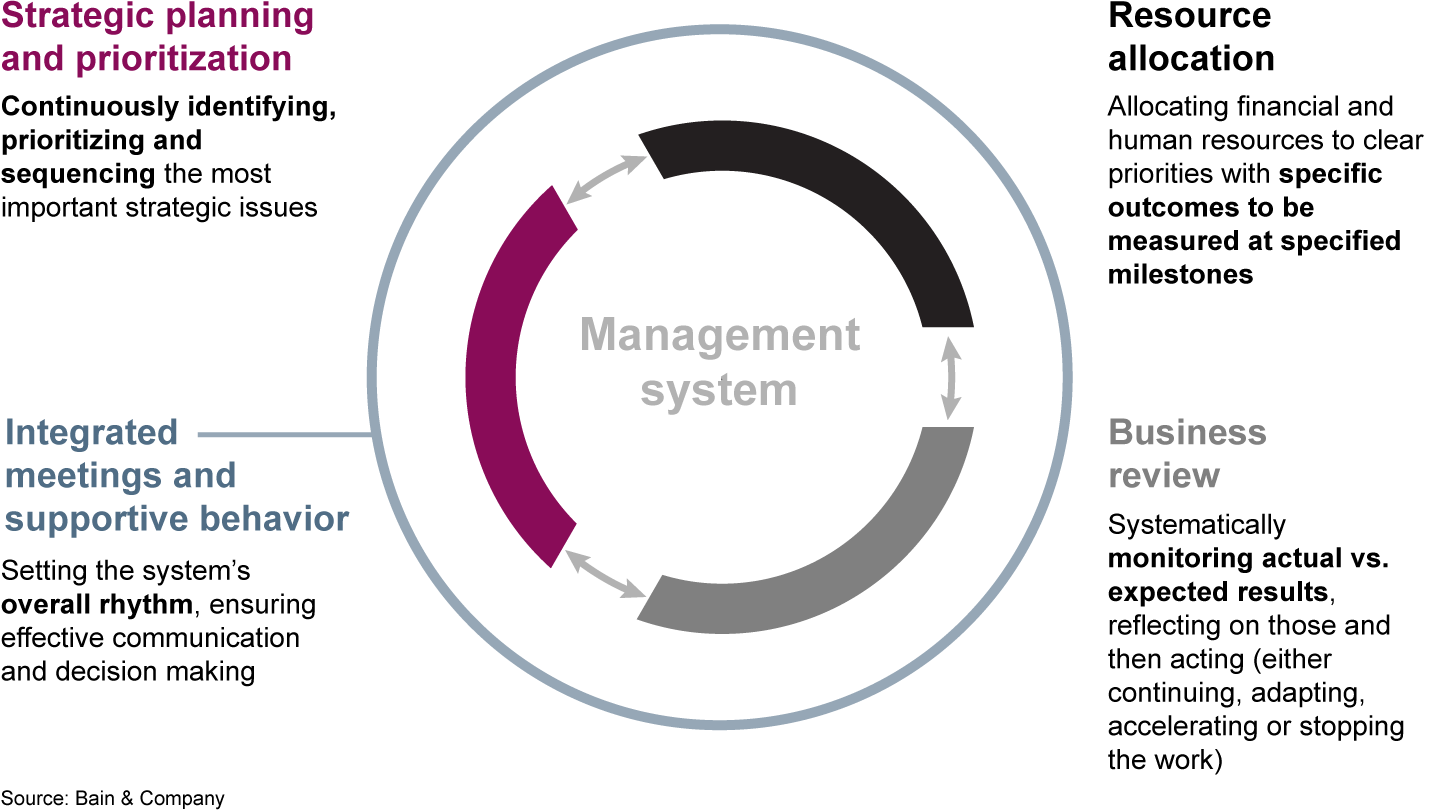
      A dynamic management system consists of four elements
      A dynamic management system consists of four elements
      A dynamic management system consists of four elements

      Our research suggests that companies with the strongest management systems achieve 3.4 times greater five-year profit growth than other companies—27% growth vs. 8%.

      Compared with other factors that contribute to organizational outcomes—such as talent systems, data and technology, business processes, leadership, and others—the management system is consistently one of the top influences on performance. A company’s management system has the greatest impact on its adaptability and efficiency.

      A well-designed management system can help executives simultaneously run the existing business efficiently and change it, moving toward long-term strategic goals with speed and innovation. Doing both requires companies to take a few steps.

      • Shift from a set, cyclical strategic planning process to one built on a managed backlog of issues, revisited and updated frequently. This makes it possible to continuously address issues using disciplined decision-making methodologies.

        Dell Technologies has made this transition. Several years ago, the company decided to implement a new model for strategic planning, budgeting and reviewing. Chairman and chief executive officer Michael Dell first develops a clear ambition for the company’s future value. Company leaders compare this target to a projection of its value on its current trajectory, and they identify the high-level actions required to close the gap between the two. This process produces a multiyear outlook of revenue and profit and a backlog of initiatives. The leaders then develop a detailed one-year operating plan. While this process happens annually, the team challenges the prioritization and resourcing of initiatives periodically during the year, ensuring that Dell can react quickly to changing customer needs, competitor moves and information about the results of past actions.

      • Allocate financial and human resources dynamically, often in smaller increments tied to specific goals, rather than in a single annual distribution. Frequent assessment makes it possible to reallocate based on results and evolving strategic priorities.

        When a US airline took a broad look at all the projects it had underway, managers realized their cycle of annual resource allocation was slowing them down and leading to overinvestment in unsuccessful experiments. So they shifted to frequent reviews of projects and their dedicated resources. During these reviews, successful projects that fit with the business’s priorities and strategy can earn more resources. For those that aren’t working, it’s a chance to be recognized as a learning experience and discontinued before the company invests too much.

      • Design forward-looking business reviews as two-way dialogues focused on the most critical issues. The review structures and content that work for projects focused on efficiently running the current business will differ from those designed for projects focused on growing it.

      • Match meeting cadence to the rapid pace of decision making and execution, and customize the meeting design and agenda to cultivate the right mindset and conversations. Though it’s one of their most valuable resources, companies squander an amazing amount of leadership time in poorly conceived meetings. By clarifying the intent of these forums, who should attend and what is discussed, companies can greatly improve their effectiveness and, in turn, their teams’ impact.

        Poor business reviews focus excessively on the things that are going exactly as expected. They should focus on the things that are not going as expected. However, in a recent Bain & Company survey conducted with Dynata, only 31% of respondents strongly agreed that their company’s business reviews focus on critical areas in which performance is deviating from expectation.

        Seeking to make its meetings more productive, a consumer products company split its “run-the-business” and “grow-the-business” topics into different meetings. Focused on predictable functions, the run-the-business meetings are frequent, short and standardized. Participants get materials to read ahead of the meeting and focus their in-person time on solving the issues that have come up. The grow-the-business meetings are dedicated to innovation and involve a lot of management coaching, ensuring that lessons are being captured and shared, and structuring ways to quickly scale what’s working. The style and substance of the meetings differ, as do the people who attend.

        More companies could follow this lead. According to our survey, only 20% of respondents’ organizations are clearly separating reviews into these two categories.

      The power of an integrated management system

      Individually important, these steps work best as part of an integrated system connected by frequent feedback. For example, business reviews help those maintaining the strategic backlog decide what should stop, continue and accelerate.

      An integrated system helps ensure that advances in individual functions benefit the whole organization. For example, implementing a more dynamic strategic planning process will only succeed if there is also a way to fund new ideas mid–business cycle. Similarly, allocating resources more dynamically won’t help for long if there is no effective review process to track the results of those investments. You can surface strategic issues during a strong business review, but they still won’t get the attention they need if the right feedback mechanisms aren’t in place.

      Though integration is critical, designing a holistic system can be difficult. Most companies already have some form of management system in place, and while it may be ill suited to what the business needs, it can also be hard to change (see Figure 2).

      Figure 2
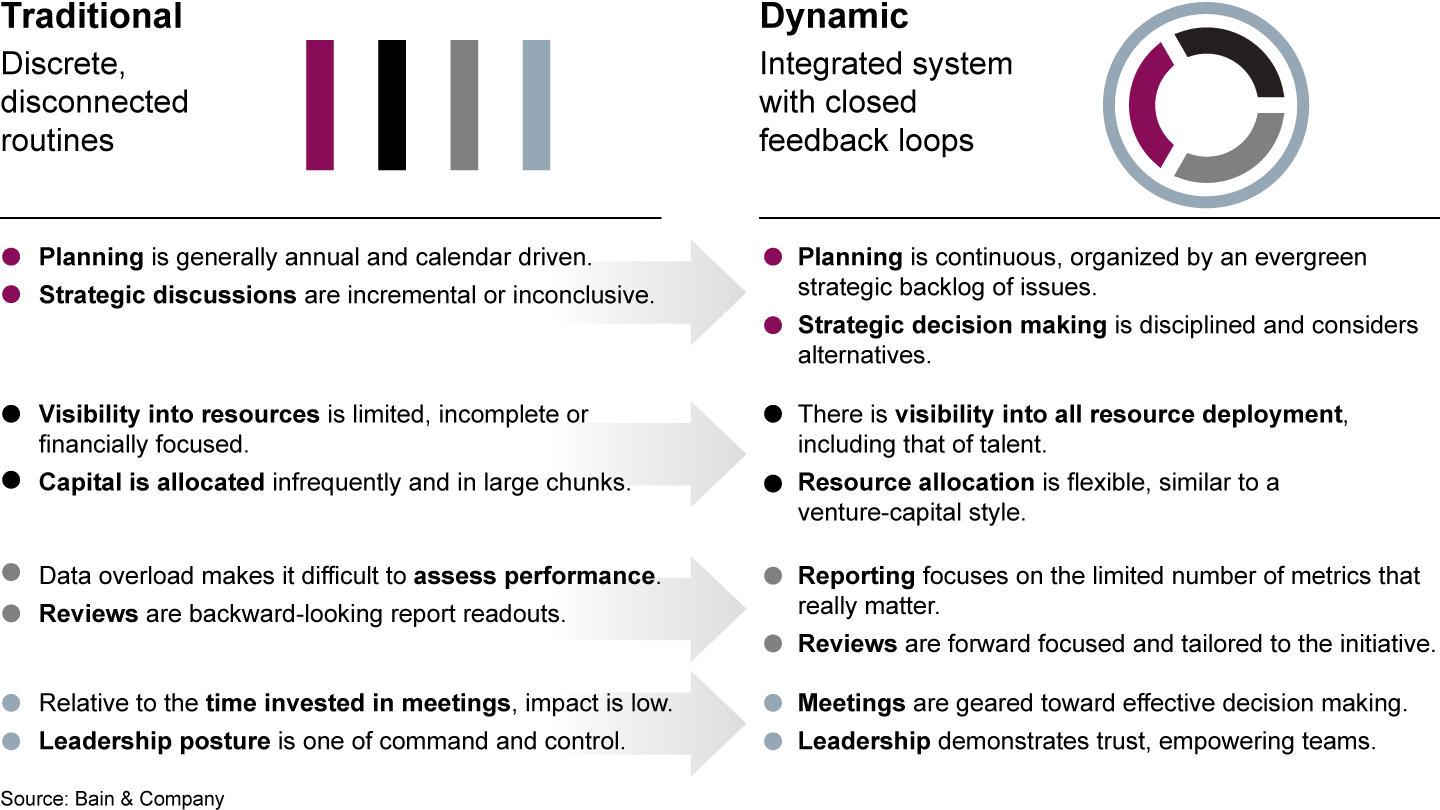
      Creating a dynamic management system
      Creating a dynamic management system
      Creating a dynamic management system

      In thinking this through, executives can take a page from Tesla’s design book. After the electric car pioneer designed its initial battery technology, executives didn’t want to build a vehicle to use it entirely from scratch. So they looked at the Lotus Elise platform. It had already been tested for US safety regulations, and sharing parts could save money. But as they began to consider all the particulars, Tesla executives realized how different an electric vehicle’s design needed to be. Even things like fans, headlights and air conditioning were fundamentally different. Most cars use air warmed by the engine to generate cabin heat, for example, but electric car engines aren’t hot. In the end, only 7% of the parts in the Lotus worked. Tesla had to create the other 93% itself. A fully integrated electric vehicle required a custom design.   

      Similarly, reinventing a management system for today’s world will require building something fundamentally different, and hopefully better, than the old one. To get there, organizations may have to fight inertia that has been building over decades. Top Gun and its dogfighting Tomcats might get away with “classic” status, but organizations with antiquated management systems won’t. The risk is too great that faster competitors will permanently outmaneuver them.

      About the Research

      Data powered by Dynata, a leading global first-party data and insights platform.

      Autoren
      • Headshot of Sarah Elk
        Sarah Elk
        Partner, Houston
      • Headshot of Joost Spits
        Joost Spits
        Partner, Boston
      • Michelle Carroll
        Practice Director, Dallas
      Kontaktieren Sie uns
      Ähnliche Beratungsangebote
      • Operating Model & Org Design
      • Organisation
      Wie wir Sie unterstützen können
      • Dynamic Management System
      Dynamic Management System
      Dynamic Strategic Planning and Budgeting

      Dynamic Strategic Planning and Budgeting is a method to help companies plan and invest during times of great uncertainty.

      Mehr erfahren
      Organisation
      Linking Organizational Effectiveness and Employee Engagement

      A Bain analysis shows that efforts to make an organization more effective also improve employee engagement.

      Mehr erfahren
      Dynamic Management System
      Objectives and Key Results (OKRs)

      Objectives and Key Results (OKRs) are a goal-setting framework used by organizations to clarify what to work on and how to measure progress.

      Mehr erfahren
      Organisation
      Consumer Products Companies, Your Strategy Evolves, So Why Doesn’t Your Organization?

      What’s needed now is an organization that can meet the unexpected.

      Mehr erfahren
      Dynamic Management System
      Scenario Analysis and Contingency Planning

      Scenario Analysis and Contingency Planning is a process that allows executives to explore and prepare for several alternative futures.

      Mehr erfahren
      First published in Dezember 2020
      Markierungen
      • Dynamic Management System
      • Operating Model & Org Design
      • Organisation

      Wie wir unsere Kunden unterstützt haben

      Organisation Moving Beyond an Operating Model Redesign to Live the Model

      Kundenbeispiel lesen

      Organisation Building a winning media salesforce

      Kundenbeispiel lesen

      Organisation A Regional Operating Model Lifts European Sales for a Medical Device Maker

      Kundenbeispiel lesen

      Möchten Sie mit uns in Kontakt bleiben?

      Wir unterstützen Führungskräfte weltweit, die kritischen Themen in ihrem Unternehmen zu adressieren. Gemeinsam schaffen wir nachhaltige Veränderungen und Ergebnisse.

      Bain Insights. Unsere Perspektive auf die kritischen Themen, mit denen sich international agierende Unternehmen konfrontiert sehen, finden Sie monatlich in Ihrem Postfach.

      *Ich habe die Datenschutzerklärung gelesen und akzeptiere sie.
      Bitte lesen Sie die Datenschutzerklärung und akzeptieren Sie diese.
      Bain & Company
      Contact us Sustainability Accessibility Rechtliche Hinweise Impressum Datenschutz Cookie-Richtlinie Sitemap Log In

      © 1996-2026 Bain & Company, Inc.

      Kontaktieren Sie Bain

      Wie können wir Ihnen helfen?

      • Business inquiry
      • Career information
      • Press relations
      • Partnership request
      • Speaker request
      Alle weltweiten Büros