
Skip to Content
  • Standorte

    Standorte

    North & Latin America
    • Atlanta
    • Austin
    • Bogota
    • Boston
    • Buenos Aires
    • Chicago
    • Dallas
    • Denver
    • Houston
    • Lisbon
    • Los Angeles
    • Mexico City
    • Minneapolis
    • Monterrey
    • Montreal
    • New York
    • Rio de Janeiro
    • San Francisco
    • Santiago
    • São Paulo
    • Seattle
    • Silicon Valley
    • Toronto
    • Washington, DC
    Europe & Africa
    • Amsterdam
    • Athens
    • Berlin
    • Brussels
    • Copenhagen
    • Düsseldorf
    • Frankfurt
    • Helsinki
    • Istanbul
    • Johannesburg
    • Kyiv
    • Lisbon
    • London
    • Madrid
    • Milan
    • München
    • Oslo
    • Paris
    • Rome
    • Stockholm
    • Warsaw
    • Wien
    • Zürich
    Middle East
    • Doha
    • Dubai
    • Riyadh
    Asia & Australia
    • Bangkok
    • Beijing
    • Bengaluru
    • Brisbane
    • Ho Chi Minh City
    • Hong Kong
    • Jakarta
    • Kuala Lumpur
    • Manila
    • Melbourne
    • Mumbai
    • New Delhi
    • Perth
    • Seoul
    • Shanghai
    • Singapore
    • Sydney
    • Tokyo
    Alle Standorte Anzeigen
  • Alumni
  • Presse
  • Newsletter
  • Kontakt
  • DACH-Region | Deutsch

    Wählen Sie Ihre Region und Sprache

    Global
    • Global (English)
    North & Latin America
    • Brazil (Português)
    • Argentina (Español)
    • Canada (Français)
    • Chile (Español)
    • Colombia (Español)
    Europe, Middle East, & Africa
    • France (Français)
    • DACH-Region (Deutsch)
    • Italy (Italiano)
    • Spain (Español)
    • Greece (Elliniká)
    Asia & Australia
    • China (中文版)
    • Korea (한국어)
    • Japan (日本語)
  • Saved items (0)
    Saved items (0)

    You have no saved items.

    Inhalte, für die Sie sich interessieren, werden hier gespeichert und können später gelesen oder weitergeleitet werden.

    Explore Bain Insights
  • Branchenkompetenzen
    Hauptmenü

    Branchenkompetenzen

    • Luft- und Raumfahrt, Verteidigung
    • Agrarwirtschaft
    • Chemieindustrie
    • Infrastruktur und Bauwirtschaft
    • Konsumgüter
    • Finanzdienstleistungen
    • Gesundheitswesen
    • Maschinen- und Anlagenbau
    • Medienwirtschaft
    • Metallindustrie
    • Bergbau
    • Öl und Gas
    • Papier- und Verpackungsindustrie
    • Private Equity
      Branchenkompetenzen
      Private Equity
      • Due Diligence
      • Exit Planning
      • Firm Strategy & Operations
      • Portfolio Value Creation
    • Öffentlicher Sektor und Sozialwesen
    • Einzelhandel
    • Technologie
    • Telekommunikation
    • Transportwesen
    • Reise- und Freizeitbranche
    • Versorgung und erneuerbare Energien
  • Managementkompetenzen
    Hauptmenü

    Managementkompetenzen

    • Customer Experience
    • ESG
    • Innovation
    • M&A
    • Operations
    • People & Organization
    • Private Equity
    • Sales & Marketing
    • Strategie
    • KI, Einblicke und Lösungen
    • Technologie
    • Transformation
  • Digital
  • Publikationen
    Hauptmenü

    Publikationen

    • Branchenthemen
    • Managementthemen
    • Bain-Bücher
    Alle Publikationen
    Ausgewählte Themen
    • Resilienz in der globalen Krise
    • M&A Report
    • Private Equity Podcast
    • Midyear Private Equity Report
    • Agile
    • Engineering Report
    • Digital Transformation
    • Elements of Value®
    • Firm of the Future
    • Nachhaltigkeitsstudie
    • Macro Trends
    • Future of Consumption
    • Weltwirtschaftsforum (WEF)
  • Über uns
    Hauptmenü

    Über uns

    • Was wir bieten
    • Unser Ansatz
    • Unser Team
    • Game Changer Award
    • Female Allstar Board
    • Messbare Ergebnisse (EN)
    • Auszeichnungen
    • Globale Partnerschaften
    • The Mission
    Further: Our global responsibility
    • Vielfalt & Chancengleichheit
    • Soziale Verantwortung
    • Sustainability
    Erfahren Sie mehr zu "Further"
  • Karriere
    Hauptmenü

    Karriere

    • Dein Einstieg
      Karriere
      Dein Einstieg
      • Find Your Place
      • Unsere Arbeitsbereiche
      • Unsere Teams
      • Angebote für Studierende
      • Praktika & Programme
      • Recruiting-Events
    • Arbeiten bei Bain
      Karriere
      Arbeiten bei Bain
      • Blog: Inside Bain
      • Karriere Stories
      • Unsere Bainies
      • Office-Standorte
      • Weiterentwicklung
      • Affinity Groups
      • Deine Benefits
    • Impact Stories
    • Deine Bewerbung
      Karriere
      Deine Bewerbung
      • Das erwartet dich
      • Der Interviewprozess
    FIND JOBS
  • Standorte
    Hauptmenü

    Standorte

    • North & Latin America
      Standorte
      North & Latin America
      • Atlanta
      • Austin
      • Bogota
      • Boston
      • Buenos Aires
      • Chicago
      • Dallas
      • Denver
      • Houston
      • Lisbon
      • Los Angeles
      • Mexico City
      • Minneapolis
      • Monterrey
      • Montreal
      • New York
      • Rio de Janeiro
      • San Francisco
      • Santiago
      • São Paulo
      • Seattle
      • Silicon Valley
      • Toronto
      • Washington, DC
    • Europe & Africa
      Standorte
      Europe & Africa
      • Amsterdam
      • Athens
      • Berlin
      • Brussels
      • Copenhagen
      • Düsseldorf
      • Frankfurt
      • Helsinki
      • Istanbul
      • Johannesburg
      • Kyiv
      • Lisbon
      • London
      • Madrid
      • Milan
      • München
      • Oslo
      • Paris
      • Rome
      • Stockholm
      • Warsaw
      • Wien
      • Zürich
    • Middle East
      Standorte
      Middle East
      • Doha
      • Dubai
      • Riyadh
    • Asia & Australia
      Standorte
      Asia & Australia
      • Bangkok
      • Beijing
      • Bengaluru
      • Brisbane
      • Ho Chi Minh City
      • Hong Kong
      • Jakarta
      • Kuala Lumpur
      • Manila
      • Melbourne
      • Mumbai
      • New Delhi
      • Perth
      • Seoul
      • Shanghai
      • Singapore
      • Sydney
      • Tokyo
    Alle Standorte Anzeigen
  • Alumni
  • Presse
  • Newsletter
  • Kontakt
  • DACH-Region | Deutsch
    Hauptmenü

    Wählen Sie Ihre Region und Sprache

    • Global
      Wählen Sie Ihre Region und Sprache
      Global
      • Global (English)
    • North & Latin America
      Wählen Sie Ihre Region und Sprache
      North & Latin America
      • Brazil (Português)
      • Argentina (Español)
      • Canada (Français)
      • Chile (Español)
      • Colombia (Español)
    • Europe, Middle East, & Africa
      Wählen Sie Ihre Region und Sprache
      Europe, Middle East, & Africa
      • France (Français)
      • DACH-Region (Deutsch)
      • Italy (Italiano)
      • Spain (Español)
      • Greece (Elliniká)
    • Asia & Australia
      Wählen Sie Ihre Region und Sprache
      Asia & Australia
      • China (中文版)
      • Korea (한국어)
      • Japan (日本語)
  • Saved items  (0)
    Hauptmenü
    Saved items (0)

    You have no saved items.

    Inhalte, für die Sie sich interessieren, werden hier gespeichert und können später gelesen oder weitergeleitet werden.

    Explore Bain Insights
  • Branchenkompetenzen
    • Branchenkompetenzen

      • Luft- und Raumfahrt, Verteidigung
      • Agrarwirtschaft
      • Chemieindustrie
      • Infrastruktur und Bauwirtschaft
      • Konsumgüter
      • Finanzdienstleistungen
      • Gesundheitswesen
      • Maschinen- und Anlagenbau
      • Medienwirtschaft
      • Metallindustrie
      • Bergbau
      • Öl und Gas
      • Papier- und Verpackungsindustrie
      • Private Equity
      • Öffentlicher Sektor und Sozialwesen
      • Einzelhandel
      • Technologie
      • Telekommunikation
      • Transportwesen
      • Reise- und Freizeitbranche
      • Versorgung und erneuerbare Energien
  • Managementkompetenzen
    • Managementkompetenzen

      • Customer Experience
      • ESG
      • Innovation
      • M&A
      • Operations
      • People & Organization
      • Private Equity
      • Sales & Marketing
      • Strategie
      • KI, Einblicke und Lösungen
      • Technologie
      • Transformation
  • Digital
  • Publikationen
    • Publikationen

      • Branchenthemen
      • Managementthemen
      • Bain-Bücher
      Alle Publikationen
      Ausgewählte Themen
      • Resilienz in der globalen Krise
      • M&A Report
      • Private Equity Podcast
      • Midyear Private Equity Report
      • Agile
      • Engineering Report
      • Digital Transformation
      • Elements of Value®
      • Firm of the Future
      • Nachhaltigkeitsstudie
      • Macro Trends
      • Future of Consumption
      • Weltwirtschaftsforum (WEF)
  • Über uns
    • Über uns

      • Was wir bieten
      • Unser Ansatz
      • Unser Team
      • Game Changer Award
      • Female Allstar Board
      • Messbare Ergebnisse (EN)
      • Auszeichnungen
      • Globale Partnerschaften
      • The Mission
      Further: Our global responsibility
      • Vielfalt & Chancengleichheit
      • Soziale Verantwortung
      • Sustainability
      Erfahren Sie mehr zu "Further"
  • Karriere
    Häufige Suchanfragen
    • Agil
    • Digital
    • Strategie
    Vorherige Suchanfragen
      Zuletzt besuchte Seiten

      Content added to saved items

      Saved items (0)

      Removed from saved items

      Saved items (0)

      Brief

      Digital Lending Can Resolve the Service Dilemma for SMEs

      Digital Lending Can Resolve the Service Dilemma for SMEs

      To meet SMEs’ evolving needs, banks should focus digital efforts where the value lies: credit.

      Von Manfredi de'Mozzi, Jeff Tijssen, Omar Collavizza, und Tommaso Storari

      • Min. Lesezeit
      }

      Brief

      Digital Lending Can Resolve the Service Dilemma for SMEs
      en
      Auf einen Blick
      • Despite the outsize importance of credit in SME markets, many banks’ current lending programs suffer from outdated, cumbersome, and time-consuming processes.
      • Fintechs and neobanks, meanwhile, have gained ground with attractive credit offerings and fast response powered by advanced technology platforms and data analytics.
      • As banks devise a more comprehensive digital lending program, they can benefit from a few core principles: carefully choose the credit products to digitalize first, design to delight clients, know where the internal barriers are, and orchestrate the program with relationship managers.

      When it comes to banking services, small and medium-size enterprises (SMEs) often are underserved by a proposition that’s not quite retail, not quite corporate—and thus not well tailored for their varied needs. Given the relevance and profitability of this business, and the growing level of competition from neobanks and fintechs, that’s an untenable position for traditional banks.

      Depending on how banks segment customers, SMEs can represent up to one-quarter of the total loan book. Even in a low-interest-rate environment, SMEs can account for a risk-adjusted return in the low double digits. But despite the attractiveness of the SME market, serving these firms presents a challenge: creating a differentiated experience while remaining cost-efficient. Digital tools and channels will be integral to such an approach, especially if directed first at the most important area—credit.

      Like larger corporations, SMEs have a broad spectrum of needs that require personalized advice from an expert, be it a relationship manager or product specialist. At the same time, most SMEs embrace digitalization, especially when it makes products simpler, faster, and more convenient to use. A recent Bain & Company survey in Australia found that SMEs count simple products, digital interfaces, and consistent execution among their top five banking criteria.

      Serving SMEs with a variation of a retail digital model fails to meet their more complex needs. But adopting a corporate-like full-coverage team both costs too much and fails to support account managers in serving SMEs, because they naturally emphasize larger accounts in their portfolios. Digitalization done right can unravel this knot, particularly when deployed in a model that keeps the relationship manager at the core and draws on an ecosystem of services that clients may use for self-service in digital or hybrid digital-human channels. This approach delivers the greatest value when applied to the bread-and-butter realm of credit.

      Many banks began their digitalization efforts in the easiest areas—payments and everyday banking. Now, however, digital lending for SMEs has become crucial to master. Some 33% of SMEs surveyed by Bain cited medium- or long-term borrowing and 29% cited short-term borrowing as among the top three priorities when managing their finances (see Figure 1). Clients who give high Net Promoter® scores for their bank’s lending experience are roughly 2.5 times more willing than those giving low scores to take new products with the bank.

      Figure 1
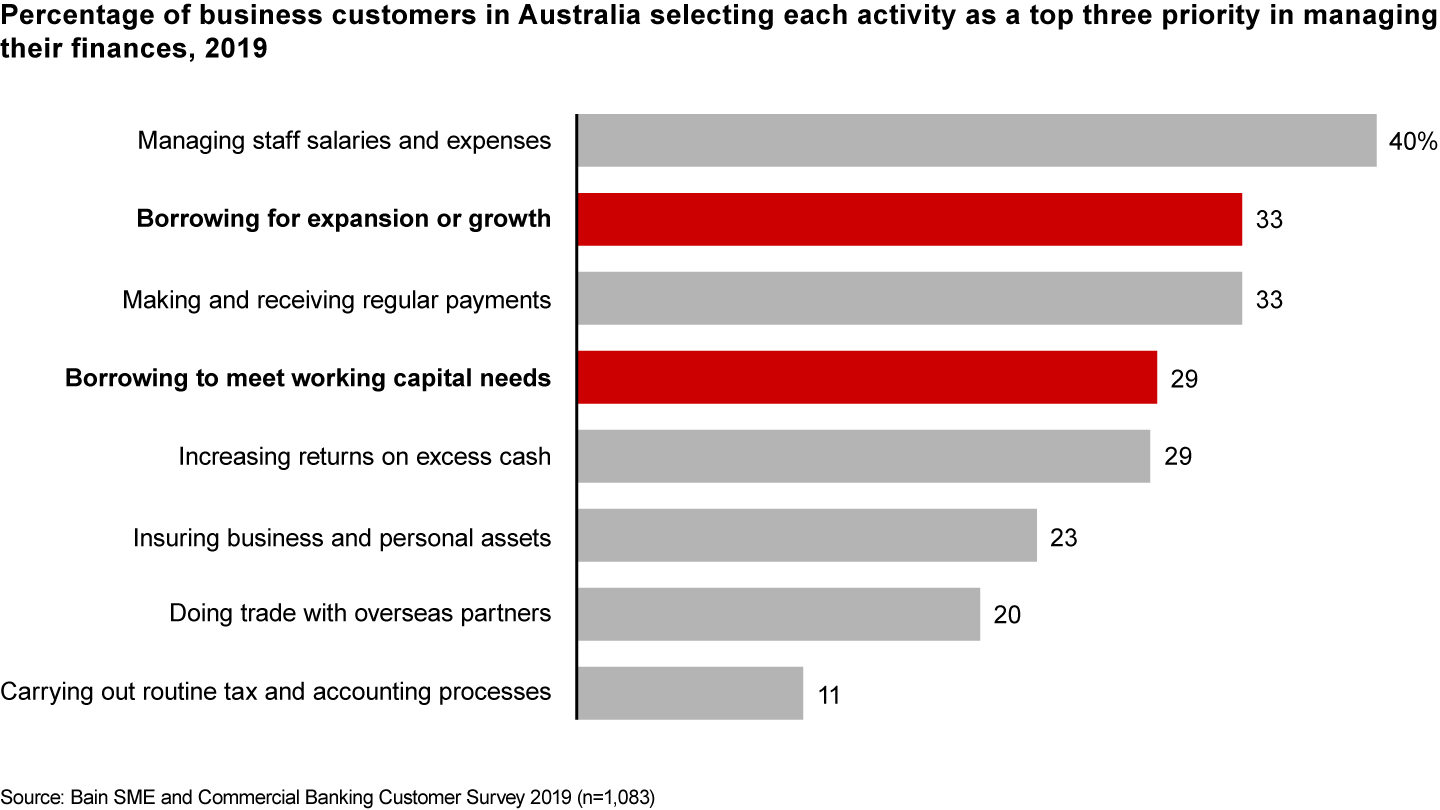
      Lending is the primary activity for a bank to build a relationship and foster advocacy with SME clients

      Moreover, lending constitutes up to 70% of total bank revenues for the SME segment in certain Western European countries, our analysis of one major bank shows. It also serves as a foundation for cross-selling, as SMEs with loans from a bank purchase twice as many other products as clients without credit lines (see Figure 2).

      Figure 2
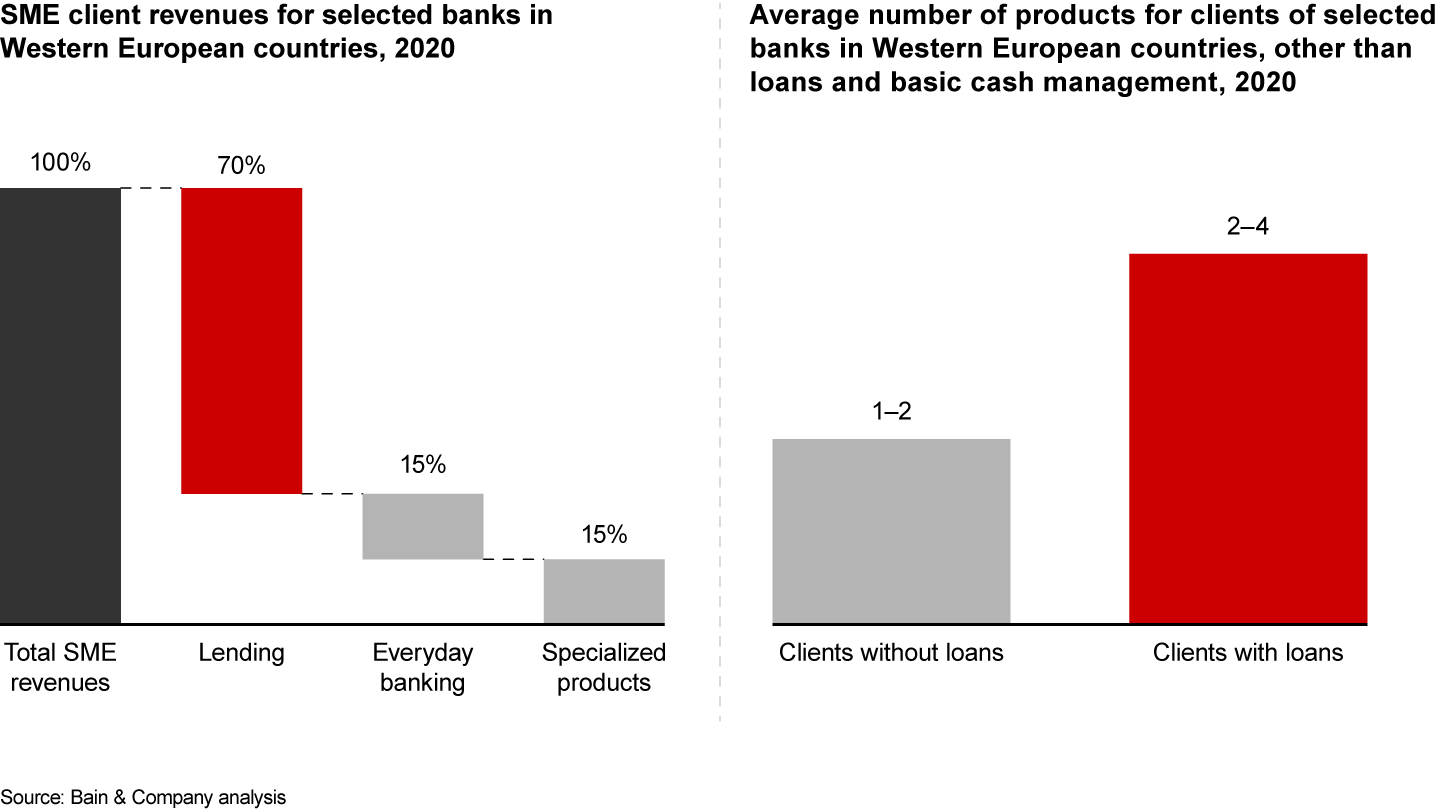
      SME lending is the primary source of client revenues and serves as the foundation for cross-selling
      SME lending is the primary source of client revenues and serves as the foundation for cross-selling
      SME lending is the primary source of client revenues and serves as the foundation for cross-selling

      Unfortunately, the current lending experience at many banks suffers from outdated processes. Clients can wait up to 30 days for a response to their credit application, and that application can consume 2 to 8 hours for relationship managers, who spend much of that time in redundant, low-value administrative tasks (see Figure 3).

      Figure 3
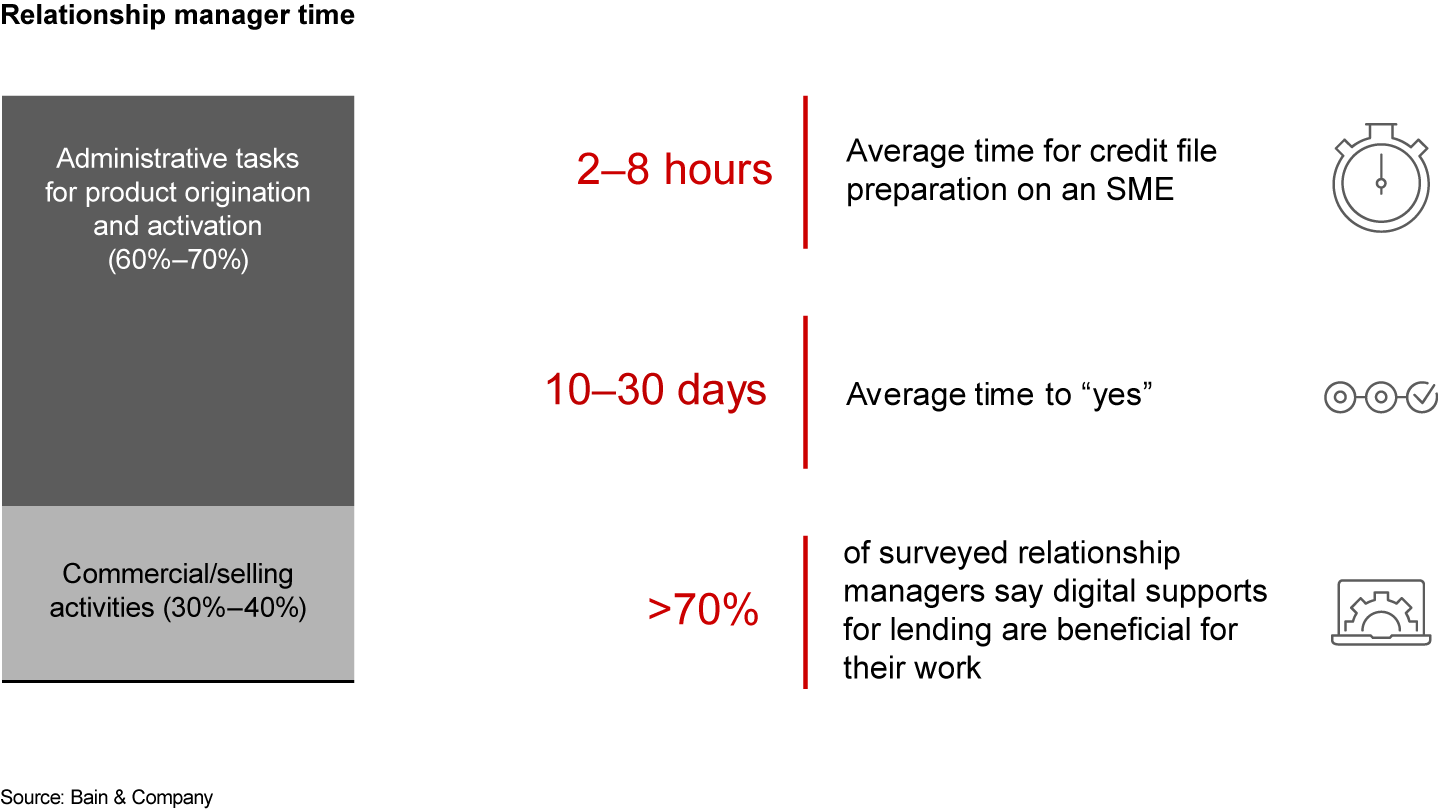
      Traditional lending processes can annoy both clients and relationship managers
      Traditional lending processes can annoy both clients and relationship managers
      Traditional lending processes can annoy both clients and relationship managers

      Not just a pretty interface

      Enter the promise of digital tools and channels, which have become even more prominent since the onset of the Covid-19 pandemic. A recent Bain survey found that between 60% and 80% of business clients are willing to work remotely with their bank for simpler products and touchpoints, such as net working capital financing or legal signatures.

      Fintechs, meanwhile, have been gaining ground in this market. According to a 2021 study by EY, 36% of SMEs are considering moving away from their traditional banking provider, with some 31% considering a fintech as an alternative. The best fintechs manage to attract SMEs by discerning their needs and priorities, delivering attractive offerings characterized by a top-notch, end-to-end digital experience with convenient interfaces and fast responses. Most use advanced technology platforms and data analytics, embedding artificial intelligence in their systems. They’re also transparent about pricing and features.

      As banks respond to this challenge, they run the risk of falling short. With pressure to deliver results quickly, it’s tempting to put up an attractive front-end interface and declare mission accomplished. Yet that approach limits any benefits and may create more problems, such as:

      • delays in releases and time to market;
      • cumbersome interfaces that confuse customers and eventually cause them to drop out during the episode;
      • foregone opportunities for cross-selling; and
      • low adoption rates, leading to a low return on the digital investment.

      Instead, initiatives must go well beyond the interface, to change how SMEs interact with their bank; in other words, banks should aim to develop comprehensive digital experiences, not simply digitize existing processes. Typically, an incumbent bank will need to depart from its stratified legacy technologies and complicated internal processes. It should address the client’s experience end to end and closely align with relationship managers’ activities.

      As banks devise a more comprehensive digital lending program, they can proceed by following a few core principles.

      Choose your battles. Select the product lines that are most relevant in terms of client penetration, revenues, and complexity to use. These could include lower-margin, high-penetration overdraft lines for short-term or medium- to long-term unsecured financing. Another early target could be forms for invoice discounting, which take up client and relationship manager time. Start small, test the product and its features through new digital methods, and then add features and extend the logic to more sophisticated products, such as foreign trade lending (see Figure 4).

      Figure 4
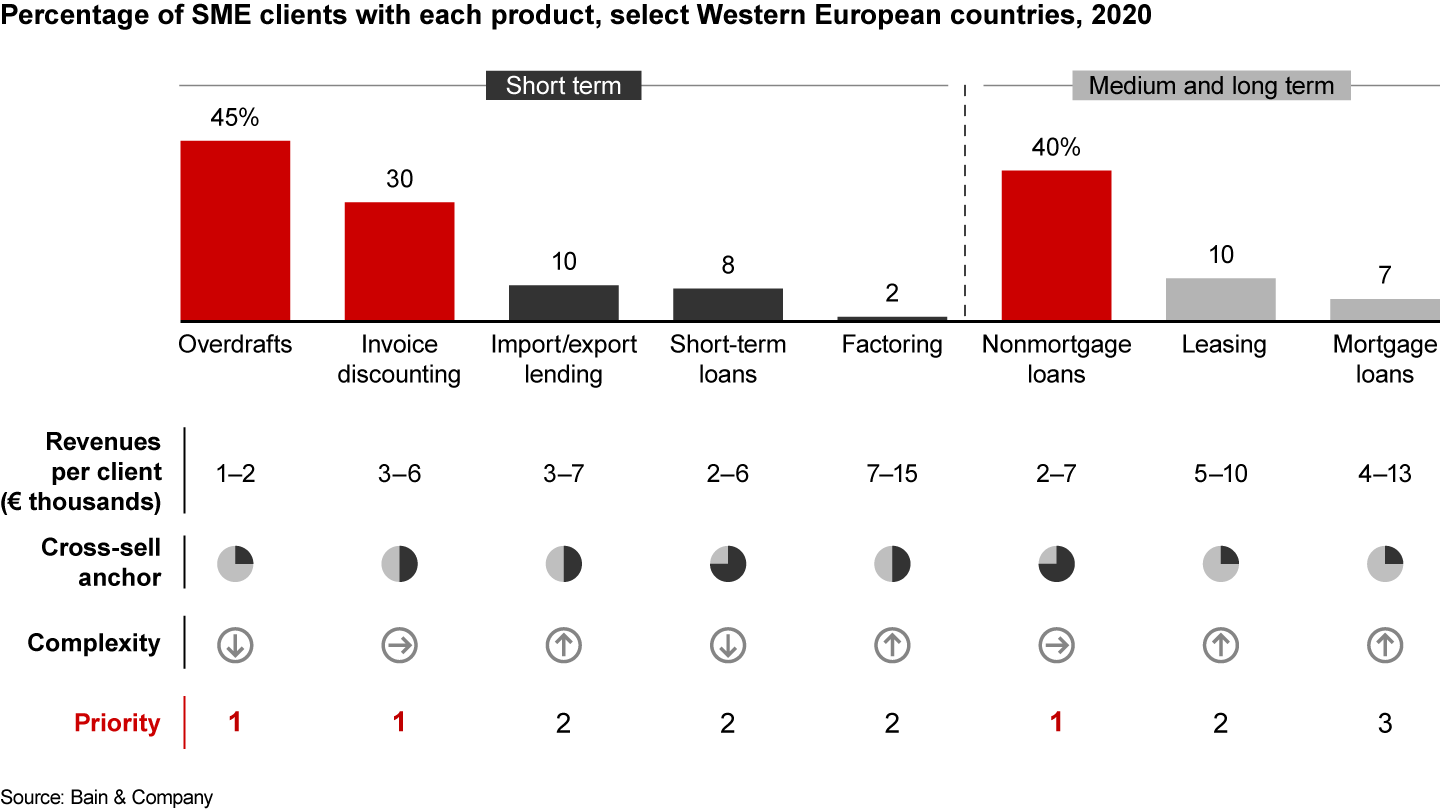
      Digital lending can start with overdrafts, invoice discounting, and unsecured lending

      As a side benefit, this exercise can spur a streamlining of outdated process steps. One European bank that reviewed its portfolio of technical forms in lending decided to close dozens of forms that it deemed marginal or redundant.

      Design to delight. Designing a great digital experience calls for a clear understanding of client needs, which can vary depending on the segment, product line, and product configuration. The interface must be simple to understand, flawless to navigate, and able to handle most concerns that could pop up. One large Italian bank, for example, launched a credit application workflow that allows customers to complete a full credit request in under 10 screens with a single signature.

      Another design challenge is that an SME client may have multiple users and counterparties, with different levels of authority and who engage at different touchpoints. Internal processes may prevent an optimal design for every stage of the client’s journey. In this case, it’s important to identify the process interruptions and manual activities that might need to continue temporarily, and gradually improve or eliminate those over time by redesigning the entire episode. Another European bank decided to continue with manual power-of-attorney checks on clients prescreened for the pilot of its new digital process, while sourcing an external vendor to automate the step in a subsequent release.

      Know your starting point. High-street banks don’t enjoy the modern, flexible technology stack of neobanks. Besides the IT burden, they also must deal with a tangle of internal processes, structures, and tools. Deep-rooted credit policies and systems lay down the law when it comes to lending.

      Take the underwriting domain. If speed is one ingredient of success in digital lending, the underwriting department must excel in targeting clients, running real-time simulations of product features and conditions, building a high-caliber workflow to process requests, and installing engines for instant credit decisions, credit line settlement, and automated disbursement. The large Italian bank cited earlier developed a scoring engine to automatically assess clients’ credit eligibility, which helped reduce time-to-cash from 5 days to 15 minutes and provided the basis for a digital offering connected to it.

      Setting clients’ expectations will be critical here. For larger loans or state-backed products, immediate approval may not be feasible. And some requests will continue to involve assistance from a relationship manager. Having a clear understanding of internal processes, their capability to deliver, and their pain points is a prerequisite for a realistic development roadmap. A bank must also prioritize clear and honest communications, in order to instill trust.

      Coordinate with your front line. Digital lending should expand the opportunities for clients to purchase in self-service mode or with the support of a relationship manager freed of many administrative tasks. However, a digital system does risk including moments where clients could drop off.

      The human touch has a role to play here, as SMEs still value advice, and cross-selling may be more effective in a hybrid model. So, no matter how many products or processes go digital, it’s critical to work hand in glove with relationship managers.  

      A European bank upgraded its CRM tool to assist in orchestrating the customer experience across different channels (see Figure 5). Now that the CRM tool links to the digital lending system and gathers data on clients’ progress, it provides a wealth of information to relationship managers: what the customer is doing online; notification of drop-out points, so the relationship manager can step in to help; and behavioral data that can inform the relationship manager’s suggestions.

      Figure 5
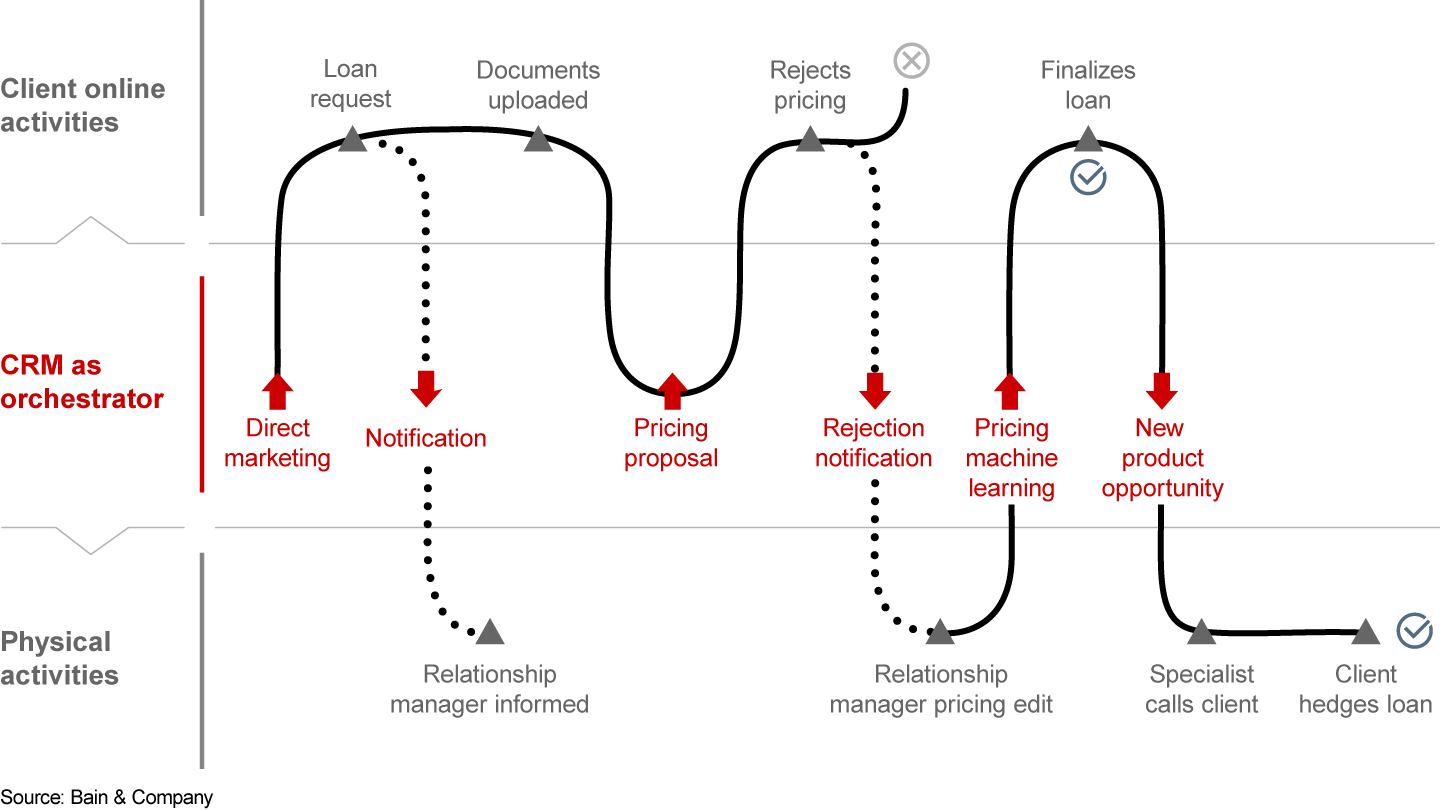
      How one European bank uses its CRM system to orchestrate digital and physical lending
      How one European bank uses its CRM system to orchestrate digital and physical lending
      How one European bank uses its CRM system to orchestrate digital and physical lending

      Hard choices for setting the plan  

      As with any ambitious initiative, digital lending will entail choices on several dimensions:

      • where to locate the change (in the core bank with its existing IT, or as a separate digital attacker that could be integrated back into the legacy bank);
      • which capabilities are a source of competitive advantage and should be built, and which can be “good enough” and bought externally;
      • how to structure agile, multifunctional units to accelerate development;
      • how to set up a feedback loop with clients in order to keep improving; and
      • how to govern the transformation and choose the right metrics to track progress.

      With a robust, comprehensive digital lending program, banks will be better positioned to expand their reach with SMEs and earn their loyalty for other products in the years ahead.


      Net Promoter®, NPS® und die NPS-bezogenen Emoticons sind eingetragene Marken von Bain & Company, Inc., Satmetrix Systems, Inc. und Fred Reichheld. Net Promoter Score℠ und Net Promoter System℠ sind Service Marks von Bain & Company, Inc., Satmetrix Systems, Inc. und Fred Reichheld.

      Autoren
      • Headshot of Manfredi de'Mozzi
        Manfredi de'Mozzi
        Partner, Milan
      • Headshot of Jeff Tijssen
        Jeff Tijssen
        Alumni, London
      • Headshot of Omar Collavizza
        Omar Collavizza
        Alumni, Milan
      • Tommaso Storari
        Alumni, Milan
      Kontaktieren Sie uns
      Verwandte Branchen
      • Bankensektor
      • Finanzdienstleistungen
      • Payments
      Wie wir Sie unterstützen können
      • Digital Transformation
      Finanzdienstleistungen
      Buy Now, Pay Later in the UK

      Consumers give BNPL high marks, relative to other forms of payment, in our new survey. Retail merchants have embraced it as well. Imminent regulation should balance protection with innovation.

      Mehr erfahren
      Finanzdienstleistungen
      From Niche to Utility: Stablecoins Move toward the Financial Mainstream

      Widespread adoption depends on regulatory clarity, a compelling value proposition, and seamless integration with legacy systems.

      Mehr erfahren
      Digital Transformation
      The New AI Stack: Speed, Scale, and Real-World ROI

      AWS re:Invent 2025 demonstrated how agents, fine-tuned models, and custom silicon are redefining performance and productivity for enterprises.

      Mehr erfahren
      Finanzdienstleistungen
      Can US Banks Protect Their Card-Issuing Business?

      Consumer payments have been gravitating to neobanks and technology firms.

      Mehr erfahren
      Digital Transformation
      The Most Powerful AI Partnership? The CEO and CTO

      Real ROI from AI requires teaming and trust at the top.

      Mehr erfahren
      First published in November 2021
      Markierungen
      • Bankensektor
      • Digital Transformation
      • Finanzdienstleistungen
      • Payments

      Wie wir unsere Kunden unterstützt haben

      Digitalisierung A European Banking Giant Rises to the Fintech Challenge

      Kundenbeispiel lesen

      Advanced Analytics Blockchain-enabled Payment Flows: A Payments Company Reviews its Strategy

      Kundenbeispiel lesen

      Change & Implementation The change process unlocks potential and profits

      Kundenbeispiel lesen

      Möchten Sie mit uns in Kontakt bleiben?

      Wir unterstützen Führungskräfte weltweit, die kritischen Themen in ihrem Unternehmen zu adressieren. Gemeinsam schaffen wir nachhaltige Veränderungen und Ergebnisse.

      Bain Insights. Unsere Perspektive auf die kritischen Themen, mit denen sich international agierende Unternehmen konfrontiert sehen, finden Sie monatlich in Ihrem Postfach.

      *Ich habe die Datenschutzerklärung gelesen und akzeptiere sie.
      Bitte lesen Sie die Datenschutzerklärung und akzeptieren Sie diese.
      Bain & Company
      Contact us Sustainability Accessibility Rechtliche Hinweise Impressum Datenschutz Cookie-Richtlinie Sitemap Log In

      © 1996-2026 Bain & Company, Inc.

      Kontaktieren Sie Bain

      Wie können wir Ihnen helfen?

      • Business inquiry
      • Career information
      • Press relations
      • Partnership request
      • Speaker request
      Alle weltweiten Büros