Skip to Content
  • Standorte

    Standorte

    North & Latin America
    • Atlanta
    • Austin
    • Bogota
    • Boston
    • Buenos Aires
    • Chicago
    • Dallas
    • Denver
    • Houston
    • Lisbon
    • Los Angeles
    • Mexico City
    • Minneapolis
    • Monterrey
    • Montreal
    • New York
    • Rio de Janeiro
    • San Francisco
    • Santiago
    • São Paulo
    • Seattle
    • Silicon Valley
    • Toronto
    • Washington, DC
    Europe & Africa
    • Amsterdam
    • Athens
    • Berlin
    • Brussels
    • Copenhagen
    • Düsseldorf
    • Frankfurt
    • Helsinki
    • Istanbul
    • Johannesburg
    • Kyiv
    • Lisbon
    • London
    • Madrid
    • Milan
    • München
    • Oslo
    • Paris
    • Rome
    • Stockholm
    • Warsaw
    • Wien
    • Zürich
    Middle East
    • Doha
    • Dubai
    • Riyadh
    Asia & Australia
    • Bangkok
    • Beijing
    • Bengaluru
    • Brisbane
    • Ho Chi Minh City
    • Hong Kong
    • Jakarta
    • Kuala Lumpur
    • Manila
    • Melbourne
    • Mumbai
    • New Delhi
    • Perth
    • Seoul
    • Shanghai
    • Singapore
    • Sydney
    • Tokyo
    Alle Standorte Anzeigen
  • Alumni
  • Presse
  • Newsletter
  • Kontakt
  • DACH-Region | Deutsch

    Wählen Sie Ihre Region und Sprache

    Global
    • Global (English)
    North & Latin America
    • Brazil (Português)
    • Argentina (Español)
    • Canada (Français)
    • Chile (Español)
    • Colombia (Español)
    Europe, Middle East, & Africa
    • France (Français)
    • DACH-Region (Deutsch)
    • Italy (Italiano)
    • Spain (Español)
    • Greece (Elliniká)
    Asia & Australia
    • China (中文版)
    • Korea (한국어)
    • Japan (日本語)
  • Saved items (0)
    Saved items (0)

    You have no saved items.

    Inhalte, für die Sie sich interessieren, werden hier gespeichert und können später gelesen oder weitergeleitet werden.

    Explore Bain Insights
  • Branchenkompetenzen
    Hauptmenü

    Branchenkompetenzen

    • Luft- und Raumfahrt, Verteidigung
    • Agrarwirtschaft
    • Chemieindustrie
    • Infrastruktur und Bauwirtschaft
    • Konsumgüter
    • Finanzdienstleistungen
    • Gesundheitswesen
    • Maschinen- und Anlagenbau
    • Medienwirtschaft
    • Metallindustrie
    • Bergbau
    • Öl und Gas
    • Papier- und Verpackungsindustrie
    • Private Equity
      Branchenkompetenzen
      Private Equity
      • Due Diligence
      • Exit Planning
      • Firm Strategy & Operations
      • Portfolio Value Creation
    • Öffentlicher Sektor und Sozialwesen
    • Einzelhandel
    • Technologie
    • Telekommunikation
    • Transportwesen
    • Reise- und Freizeitbranche
    • Versorgung und erneuerbare Energien
  • Managementkompetenzen
    Hauptmenü

    Managementkompetenzen

    • Customer Experience
    • ESG
    • Innovation
    • M&A
    • Operations
    • People & Organization
    • Private Equity
    • Sales & Marketing
    • Strategie
    • KI, Einblicke und Lösungen
    • Technologie
    • Transformation
  • Digital
  • Publikationen
    Hauptmenü

    Publikationen

    • Branchenthemen
    • Managementthemen
    • Bain-Bücher
    Alle Publikationen
    Ausgewählte Themen
    • Resilienz in der globalen Krise
    • M&A Report
    • Private Equity Podcast
    • Midyear Private Equity Report
    • Agile
    • Engineering Report
    • Digital Transformation
    • Elements of Value®
    • Firm of the Future
    • Nachhaltigkeitsstudie
    • Macro Trends
    • Future of Consumption
    • Weltwirtschaftsforum (WEF)
  • Über uns
    Hauptmenü

    Über uns

    • Was wir bieten
    • Unser Ansatz
    • Unser Team
    • Game Changer Award
    • Female Allstar Board
    • Messbare Ergebnisse (EN)
    • Auszeichnungen
    • Globale Partnerschaften
    • The Mission
    Further: Our global responsibility
    • Vielfalt & Chancengleichheit
    • Soziale Verantwortung
    • Sustainability
    Erfahren Sie mehr zu "Further"
  • Karriere
    Hauptmenü

    Karriere

    • Dein Einstieg
      Karriere
      Dein Einstieg
      • Find Your Place
      • Unsere Arbeitsbereiche
      • Unsere Teams
      • Angebote für Studierende
      • Praktika & Programme
      • Recruiting-Events
    • Arbeiten bei Bain
      Karriere
      Arbeiten bei Bain
      • Karriere Stories
      • Unsere Bainies
      • Office-Standorte
      • Weiterentwicklung
      • Affinity Groups
      • Deine Benefits
    • Impact Stories
    • Deine Bewerbung
      Karriere
      Deine Bewerbung
      • Das erwartet dich
      • Der Interviewprozess
    FIND JOBS
  • Standorte
    Hauptmenü

    Standorte

    • North & Latin America
      Standorte
      North & Latin America
      • Atlanta
      • Austin
      • Bogota
      • Boston
      • Buenos Aires
      • Chicago
      • Dallas
      • Denver
      • Houston
      • Lisbon
      • Los Angeles
      • Mexico City
      • Minneapolis
      • Monterrey
      • Montreal
      • New York
      • Rio de Janeiro
      • San Francisco
      • Santiago
      • São Paulo
      • Seattle
      • Silicon Valley
      • Toronto
      • Washington, DC
    • Europe & Africa
      Standorte
      Europe & Africa
      • Amsterdam
      • Athens
      • Berlin
      • Brussels
      • Copenhagen
      • Düsseldorf
      • Frankfurt
      • Helsinki
      • Istanbul
      • Johannesburg
      • Kyiv
      • Lisbon
      • London
      • Madrid
      • Milan
      • München
      • Oslo
      • Paris
      • Rome
      • Stockholm
      • Warsaw
      • Wien
      • Zürich
    • Middle East
      Standorte
      Middle East
      • Doha
      • Dubai
      • Riyadh
    • Asia & Australia
      Standorte
      Asia & Australia
      • Bangkok
      • Beijing
      • Bengaluru
      • Brisbane
      • Ho Chi Minh City
      • Hong Kong
      • Jakarta
      • Kuala Lumpur
      • Manila
      • Melbourne
      • Mumbai
      • New Delhi
      • Perth
      • Seoul
      • Shanghai
      • Singapore
      • Sydney
      • Tokyo
    Alle Standorte Anzeigen
  • Alumni
  • Presse
  • Newsletter
  • Kontakt
  • DACH-Region | Deutsch
    Hauptmenü

    Wählen Sie Ihre Region und Sprache

    • Global
      Wählen Sie Ihre Region und Sprache
      Global
      • Global (English)
    • North & Latin America
      Wählen Sie Ihre Region und Sprache
      North & Latin America
      • Brazil (Português)
      • Argentina (Español)
      • Canada (Français)
      • Chile (Español)
      • Colombia (Español)
    • Europe, Middle East, & Africa
      Wählen Sie Ihre Region und Sprache
      Europe, Middle East, & Africa
      • France (Français)
      • DACH-Region (Deutsch)
      • Italy (Italiano)
      • Spain (Español)
      • Greece (Elliniká)
    • Asia & Australia
      Wählen Sie Ihre Region und Sprache
      Asia & Australia
      • China (中文版)
      • Korea (한국어)
      • Japan (日本語)
  • Saved items  (0)
    Hauptmenü
    Saved items (0)

    You have no saved items.

    Inhalte, für die Sie sich interessieren, werden hier gespeichert und können später gelesen oder weitergeleitet werden.

    Explore Bain Insights
  • Branchenkompetenzen
    • Branchenkompetenzen

      • Luft- und Raumfahrt, Verteidigung
      • Agrarwirtschaft
      • Chemieindustrie
      • Infrastruktur und Bauwirtschaft
      • Konsumgüter
      • Finanzdienstleistungen
      • Gesundheitswesen
      • Maschinen- und Anlagenbau
      • Medienwirtschaft
      • Metallindustrie
      • Bergbau
      • Öl und Gas
      • Papier- und Verpackungsindustrie
      • Private Equity
      • Öffentlicher Sektor und Sozialwesen
      • Einzelhandel
      • Technologie
      • Telekommunikation
      • Transportwesen
      • Reise- und Freizeitbranche
      • Versorgung und erneuerbare Energien
  • Managementkompetenzen
    • Managementkompetenzen

      • Customer Experience
      • ESG
      • Innovation
      • M&A
      • Operations
      • People & Organization
      • Private Equity
      • Sales & Marketing
      • Strategie
      • KI, Einblicke und Lösungen
      • Technologie
      • Transformation
  • Digital
  • Publikationen
    • Publikationen

      • Branchenthemen
      • Managementthemen
      • Bain-Bücher
      Alle Publikationen
      Ausgewählte Themen
      • Resilienz in der globalen Krise
      • M&A Report
      • Private Equity Podcast
      • Midyear Private Equity Report
      • Agile
      • Engineering Report
      • Digital Transformation
      • Elements of Value®
      • Firm of the Future
      • Nachhaltigkeitsstudie
      • Macro Trends
      • Future of Consumption
      • Weltwirtschaftsforum (WEF)
  • Über uns
    • Über uns

      • Was wir bieten
      • Unser Ansatz
      • Unser Team
      • Game Changer Award
      • Female Allstar Board
      • Messbare Ergebnisse (EN)
      • Auszeichnungen
      • Globale Partnerschaften
      • The Mission
      Further: Our global responsibility
      • Vielfalt & Chancengleichheit
      • Soziale Verantwortung
      • Sustainability
      Erfahren Sie mehr zu "Further"
  • Karriere
    Häufige Suchanfragen
    • Agil
    • Digital
    • Strategie
    Vorherige Suchanfragen
      Zuletzt besuchte Seiten

      Content added to saved items

      Saved items (0)

      Removed from saved items

      Saved items (0)

      Brief

      Global M&A Report Midyear 2022

      Global M&A Report Midyear 2022

      Carpe diem—turbulent times create M&A opportunities.

      Von Les Baird, David Harding, Suzanne Kumar, und Andrei Vorobyov

      • Min. Lesezeit
      }

      Brief

      Global M&A Report Midyear 2022
      en
      Auf einen Blick
      • Turbulence has increased since we launched our Global M&A Report six months ago, and it will likely continue throughout the year.
      • In the face of so much turmoil, it’s easy for corporate dealmakers to get conservative, yet the fundamentals exist for continued robust M&A activity.
      • Based on the first five months’ performance, 2022 will likely reach $4.7 trillion in deal value by year-end, which would make it the second-best year on record.
      • We believe that winning M&A teams will revise their M&A playbooks and deploy scenario planning that rigorously assesses the range of outcomes in five key areas of M&A uncertainty.

      The world of M&A is far more complicated than it was in February 2022, when we released our fourth annual Global M&A Report. Inflation has soared. Governments around the world have raised interest rates, causing the cost of capital to increase. Supply chain issues have mounted while the war in Ukraine and heated geopolitical tensions from US-China relations have accelerated the retreat from globalism and cross-border deals.

      Yet, amid all the disruption and risk, it’s easy to overlook the fact that the fundamentals still exist for robust M&A opportunities. We still live in a world where capital is generally available for deals. Most businesses still have strong cash flows and balance sheets. Meanwhile, private equity investors’ pockets are as deep as they’ve ever been. And we see that market leaders continue to do M&A, even during these turbulent times. For example, companies still turn to dealmaking to add new capabilities, as Broadcom did with its recently announced $61 billion acquisition of VMware. And industries still consolidate via scale M&A. For instance, Celanese’s $11 billion purchase of a majority stake in DuPont’s mobility and materials business is intended to strengthen the acquirer’s market position.

      In 2021, total global deal value reached $5.9 trillion. So far this year, the M&A pace has cooled off, with aggregate deal value down by about 20%. That said, based on the first five months’ performance, 2022 could reach $4.7 trillion in deal value by year-end (see Figure 1), which would make it the second-best year on record.

      Figure 1
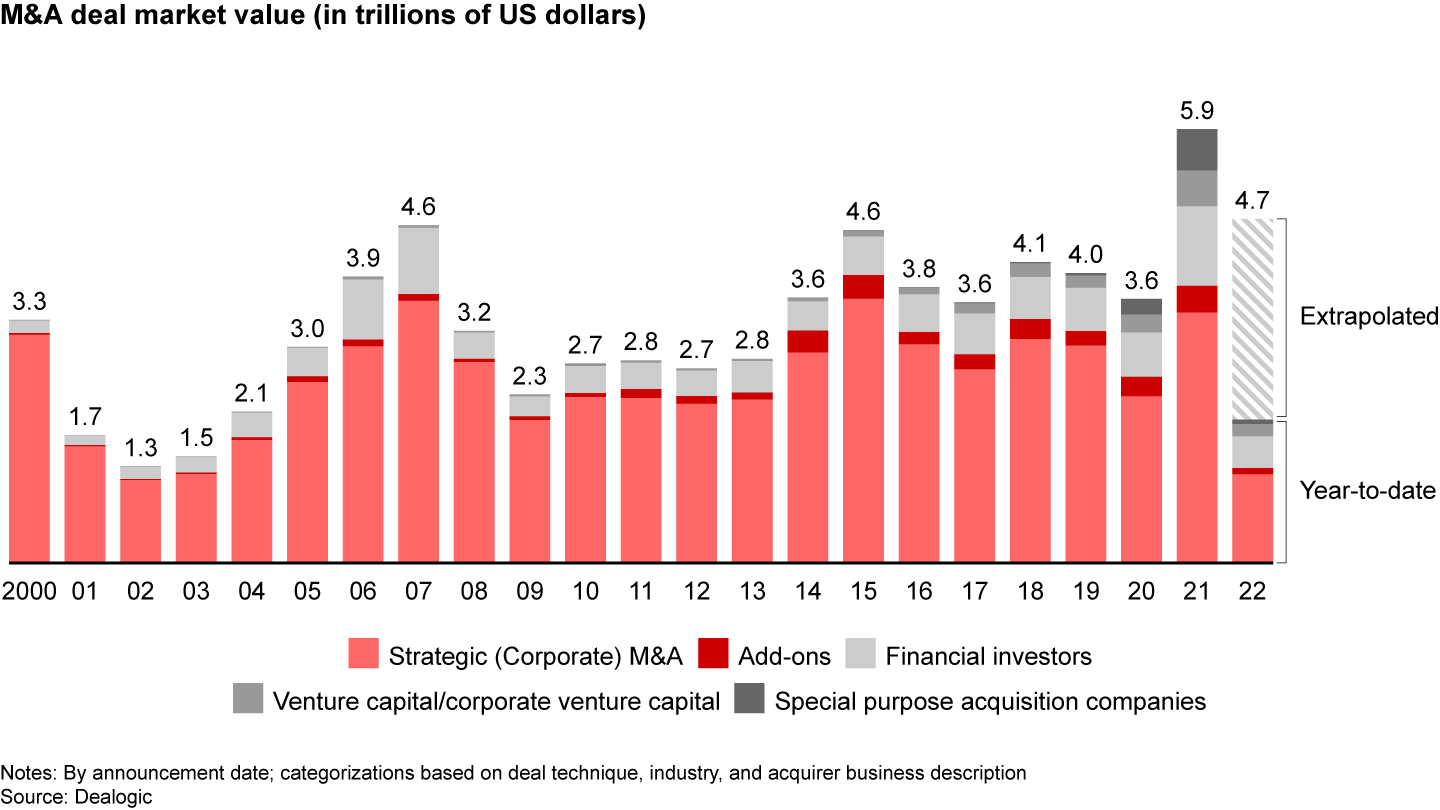
      2022 M&A should fall short of a record-breaking 2021, but it will likely still be one of the strongest markets of the past 20 years
      2022 M&A should fall short of a record-breaking 2021, but it will likely still be one of the strongest markets of the past 20 years
      2022 M&A should fall short of a record-breaking 2021, but it will likely still be one of the strongest markets of the past 20 years

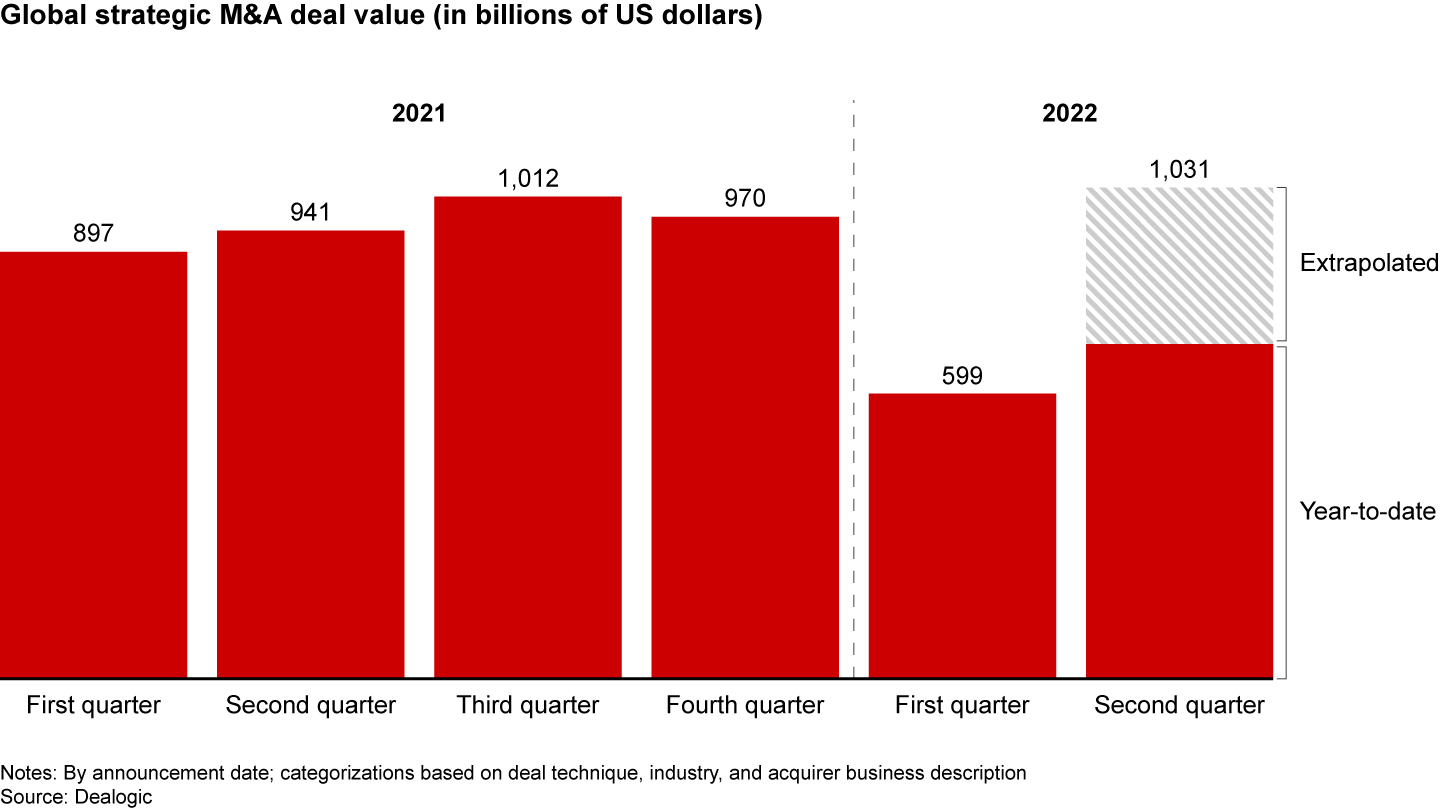
      In the first quarter of 2022, deal value totaled only $599 billion, a steep drop from fourth-quarter 2021’s $970 billion. The second quarter of 2022 brought with it a healthy recovery, however, with deal value totaling $702 billion in April and May (see Figures 2 and 3).

      Figure 2
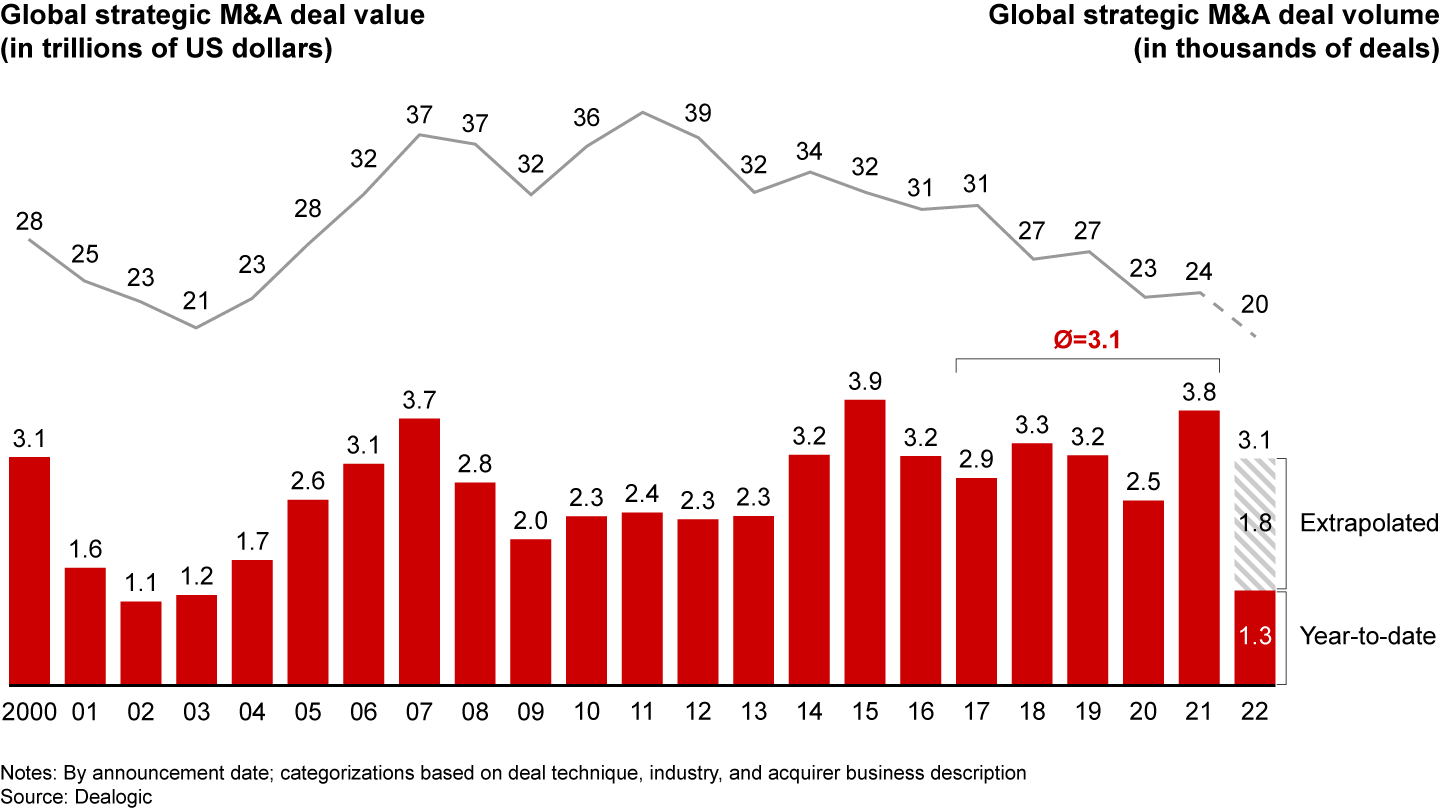
      Strategic M&A value is on track to reach the past five years’ average, with volume continuing to decline
      Strategic M&A value is on track to reach the past five years’ average, with volume continuing to decline
      Strategic M&A value is on track to reach the past five years’ average, with volume continuing to decline
      Figure 3
      After a steep decline in the first quarter of 2022, strategic M&A has recovered in the second quarter
      After a steep decline in the first quarter of 2022, strategic M&A has recovered in the second quarter
      After a steep decline in the first quarter of 2022, strategic M&A has recovered in the second quarter

      Recall that 2021 saw record deal valuations, with median enterprise value/EBITDA multiples at 15.4 times. At the extremes, tech asset prices soared to median multiples of 25 times and healthcare to 20 times. Looking deeper at 2022, valuations stumbled in the first quarter (down to 11 times enterprise value/EBITDA) only to rebound in the second quarter to 16.7 times (see Figure 4). We are in an era of unprecedented volatility.

      Figure 4
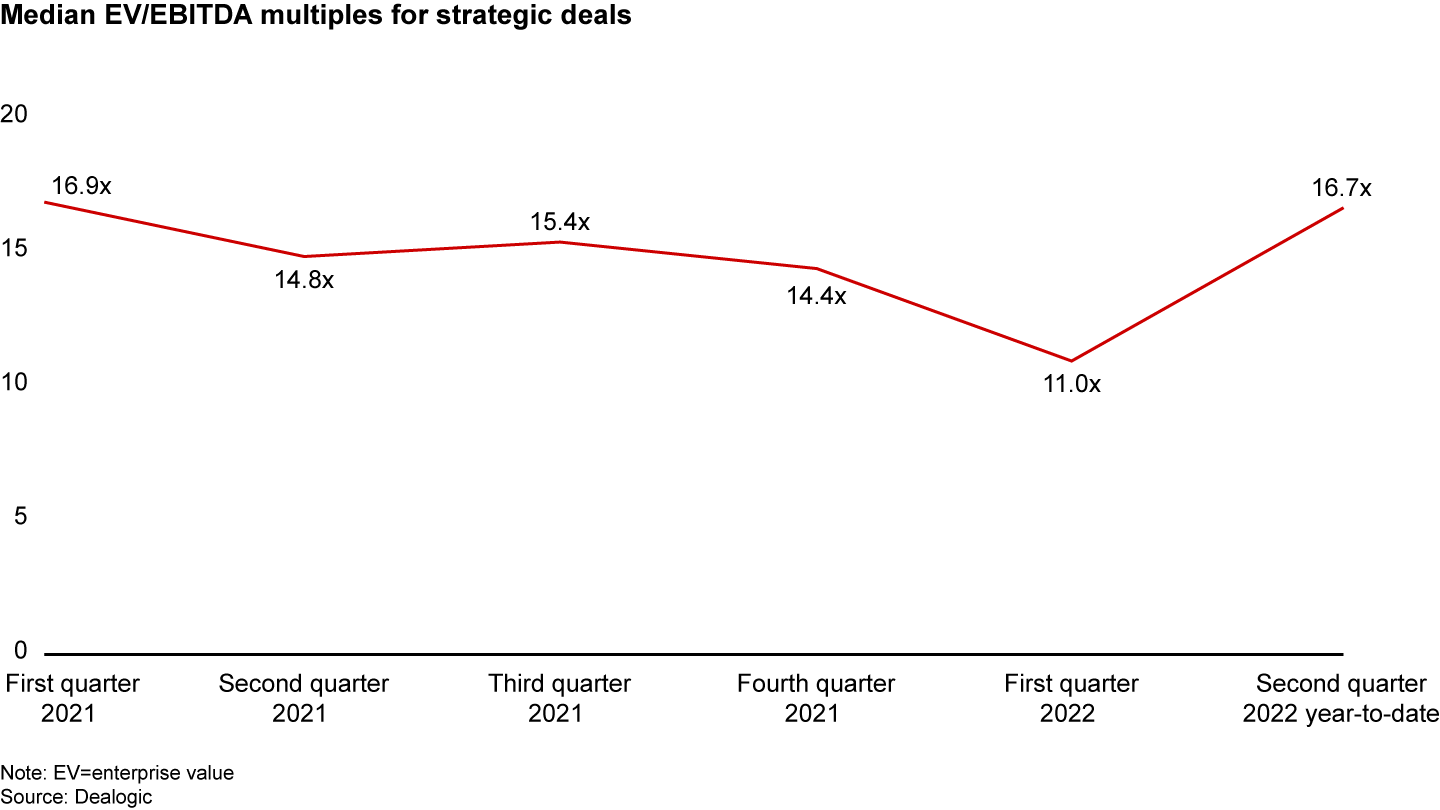
      After a dip in the first quarter of 2022, strategic M&A multiples have recently recovered to all-time high levels
      After a dip in the first quarter of 2022, strategic M&A multiples have recently recovered to all-time high levels
      After a dip in the first quarter of 2022, strategic M&A multiples have recently recovered to all-time high levels

      What does this mean for companies trying to get deals done? The volatility we’ve witnessed in the first five months will likely continue throughout the year amid continuing inflation, recession fears, supply chain constraints, geopolitical tensions, increasing regulatory scrutiny, and Covid-19’s unpredictable path. In the face of so much turmoil, it is easy for corporate dealmakers to get conservative.

      Bain’s research, however, has determined that the greatest competitive market shifts take place during times of turbulence. Companies that invest throughout the economic cycle have far superior returns than those that participate sporadically. Recession winners average 14% in compounded annual EBIT growth in the 13 years following a downturn compared with zero for recession losers, according to our study of nearly 3,900 companies. And as the winners adjust their corporate strategies for times of uncertainty, they continue to use M&A as one of the big levers to gain and strengthen their competitive advantage.

      We see strong possibilities for companies willing to act. This must start with revising their M&A playbooks so that executives have a clear view of the full range of potential outcomes. Let us give a couple of examples: Margin expansion will be more challenging, so models must reflect a realistic assessment of the efficacy of price increases against likely input cost inflation. Likewise, being a low-cost producer will require greater investment in supply chain resiliency. In many cases, companies will need to derive revenue and growth in a more national, instead of global, scenario.

      What’s also become more important is the ability to use leverage and the cost-of-capital advantages. Every model will be unique, but the range of new variables has grown significantly. The truth is that many executives have only experienced a low-cost-of-capital environment and will find it necessary to brush up on the deal model impact of the rising cost of capital.

      We believe that winning M&A teams will deploy scenario planning that rigorously assesses the range of outcomes in five key areas of M&A uncertainty: the cost of capital, the availability of capital, the impact of inflation on margins, scope vs. scale deals, and regulation/spheres of influence. We’ll look at these one by one.

      A doubling in the cost of capital can result in a halving of the net present value of future cash flows. Likewise, if the embedded weighted average cost of capital retreats by 50%, that could lead to a doubling of net present values. Out year cash flows are particularly sensitive to changes in the weighted average cost of capital, since growth becomes less valuable in a world of rising interest rates.

      We have been writing for years about the superabundance of capital, which has largely resulted from a confluence of demographics, governmental policy, and international free flows of capital. We still are witnessing large quantities of dry powder and generally accommodative lending. Yet it is not hard to imagine a world in which savings rates decline (as older populations draw down retirement funds) and banking regulations and barriers to the free flow of capital across borders become more restrictive. This will not only further drive up the cost of capital; it may restrict the very availability of capital.

      If companies cannot price up to match rising input costs (whether caused by elasticity issues or regulation), that will dampen their margins and valuations. Likewise, if companies have pricing power (particularly if commodity prices decline and consumer prices are sticky), we should see margins and valuations expand.

      The long-term M&A trend has seen a shift toward scope and capability deals. That trend appears to have softened during the pandemic as many executives sought to further consolidate their industries. It is possible that a new conservatism will creep back into M&A, with a continued focus on industry consolidations and rollups. At the same time, scope and capability deals may return to the fore as executives wrestle to redefine their businesses in the face of generational disruptions (digital, twilight of the carbon economy, and redefined supply chains, for example).

      A longer-term trend has been the decline in inter-regional M&A. If countries or blocs continue to raise barriers, it will continue to change the nature of M&A. On the other hand, if tensions ease, there may be a revival of cross-regional M&A deals.

      Using scenario planning, deal teams can create modeling assumptions against both optimistic and pessimistic scenarios to stress test their investment and integration theses.

      Finally, as M&A teams prepare to update their playbooks for a fraught environment, executive teams should consider answering these fundamental questions.

      • How are we course correcting our strategy to take advantage of the opportunities during turbulence? What role should M&A play to reshape our portfolio/add new capabilities?
      • Are we refreshing our M&A target lists to consider global economic volatility and relevant scenarios?
      • Have we met with our bankers to update capital cost and availability assumptions?
      • How are we adjusting our deal models given supply chain de-globalization and increasing inflation?
      • In today’s tight talent environment, how are we going to ensure talent retention within our own organization as well as those being acquired?

      Warren Buffett reminds all investors in assets that the time to be greedy is when others are fearful—and that the time to be fearful is when others are greedy. These are turbulent and scary times, but they also are times in which the shape of many industries will be set for the next several years.

      Autoren
      • Headshot of Les Baird
        Les Baird
        Partner, Boston
      • Headshot of David Harding
        David Harding
        Advisory Partner, Boston
      • Headshot of Suzanne Kumar
        Suzanne Kumar
        Practice Executive Vice President, New York
      • Andrei Vorobyov
        Alumni, Copenhagen
      Kontaktieren Sie uns
      Ähnliche Beratungsangebote
      • Mergers & Acquisitions
      Mergers & Acquisitions
      Banking M&A

      As conditions shift, leading banks are fusing scale with scope to create future-ready organizations.

      Mehr erfahren
      Mergers & Acquisitions
      Consumer Products M&A

      In their quest for profitable growth, more companies are divesting brands or buying insurgents.

      Mehr erfahren
      Mergers & Acquisitions
      Media M&A

      AI and other tech tools can boost bidding confidence in this highly competitive environment.

      Mehr erfahren
      Mergers & Acquisitions
      Defense M&A

      Bold moves will determine the winners as a continent rearms.

      Mehr erfahren
      Mergers & Acquisitions
      Building Products M&A

      Why more companies are acquiring for scope.

      Mehr erfahren
      First published in Juli 2022
      Markierungen
      • Mergers & Acquisitions

      Wie wir unsere Kunden unterstützt haben

      Mergers & Acquisitions Post-merger cultural issues jeopardize a deal

      Kundenbeispiel lesen

      Performance Improvement Aggressively growing an IT service provider with a high-performance culture

      Kundenbeispiel lesen

      Mergers & Acquisitions Broader market plus tighter sales strategy equals big success for a portfolio company

      Kundenbeispiel lesen

      Möchten Sie mit uns in Kontakt bleiben?

      Wir unterstützen Führungskräfte weltweit, die kritischen Themen in ihrem Unternehmen zu adressieren. Gemeinsam schaffen wir nachhaltige Veränderungen und Ergebnisse.

      Bain Insights. Unsere Perspektive auf die kritischen Themen, mit denen sich international agierende Unternehmen konfrontiert sehen, finden Sie monatlich in Ihrem Postfach.

      *Ich habe die Datenschutzerklärung gelesen und akzeptiere sie.
      Bitte lesen Sie die Datenschutzerklärung und akzeptieren Sie diese.
      Bain & Company
      Contact us Sustainability Accessibility Rechtliche Hinweise Impressum Datenschutz Cookie-Richtlinie Sitemap Log In

      © 1996-2026 Bain & Company, Inc.

      Kontaktieren Sie Bain

      Wie können wir Ihnen helfen?

      • Business inquiry
      • Career information
      • Press relations
      • Partnership request
      • Speaker request
      Alle weltweiten Büros