

Brief

Auf einen Blick
- Our benchmarking of 50 leading banks find that well-orchestrated digitalization substantially increases customer advocacy, employee engagement and shareholder value.
- The top benchmarked banks stand apart through their clear digital agenda, which includes building entirely new businesses. They have also simplified their product portfolio and tailored it to customers’ needs.
- Leading banks are further along in redesigning key customer episodes to make them more convenient, across all channels. They use customer feedback to continually improve these episodes.
- While all traditional banks contend with inflexible legacy IT systems, the leaders deploy Agile methods to significantly reduce their time to market and make the company more flexible overall.
Banks have gradually infused digital tools and channels into their operations for two decades. But the effects on cost, productivity and customer lifetime value were hard to measure, which complicates the task of ranking investment priorities. Now, however, Bain & Company has quantified how well-orchestrated digitalization pays off with customers, employees and shareholders.
Our latest benchmarking of 50 leading banks in Europe and the Middle East shows that some have made great strides in achieving a robust digital offering and are reaping the benefits on three fronts. Other banks trail far behind in their bid to get value from digital. This brief explores what sets the leaders apart, and how others can catch up.
The three benefits of digital banking
Digitalization clearly links to higher customer loyalty, by allowing customers to access products and services faster, cheaper and more easily, leading to a better experience dealing with a bank. This has become critical as customer expectations for a simple, convenient, personalized experience keep rising.
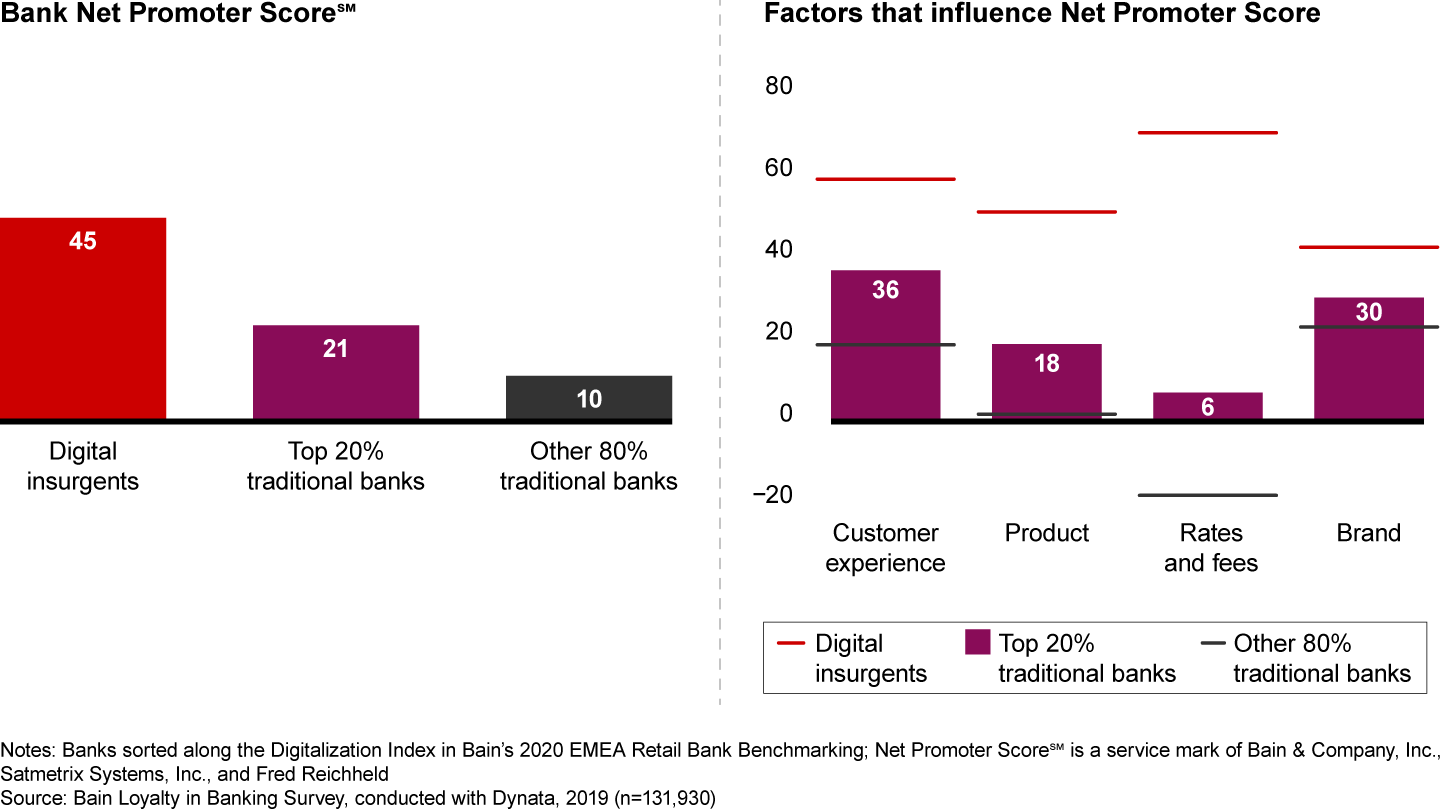
Digital insurgents have a higher Net Promoter Score℠ (a key metric of loyalty) than traditional banks, with the biggest factor in the gap being rates and fees (see Figure 1). Among traditional banks, the top 20% in digitalization outperformed the rest of the pack in NPS® by 11 points.
Figure 1

Employees benefit as well. Those employees of the digital leaders consider their company as a better place to work, giving a higher NPS on Glassdoor than the bottom fifth of the benchmarked group. Top banks are also rated higher for a promising future outlook and attractive compensation on Glassdoor and indicate higher leadership and employee alignment.
The third benefit flows to shareholders. The top fifth of traditional banks show a return on average equity of 8.7%, significantly higher than the 6.2% for other banks. The leaders also operate with a considerably lower cost-to-income ratio of 58%, vs. 70% for the rest.
Seven dimensions crucial for digital banking success
Our assessment of each bank combines the bank’s own perspective via a questionnaire and interview, with an external evaluation of each bank’s website, online banking and mobile app—150 criteria in all. We examined seven dimensions of bank performance that are crucial to digital success, in order to create a Digitalization Index.
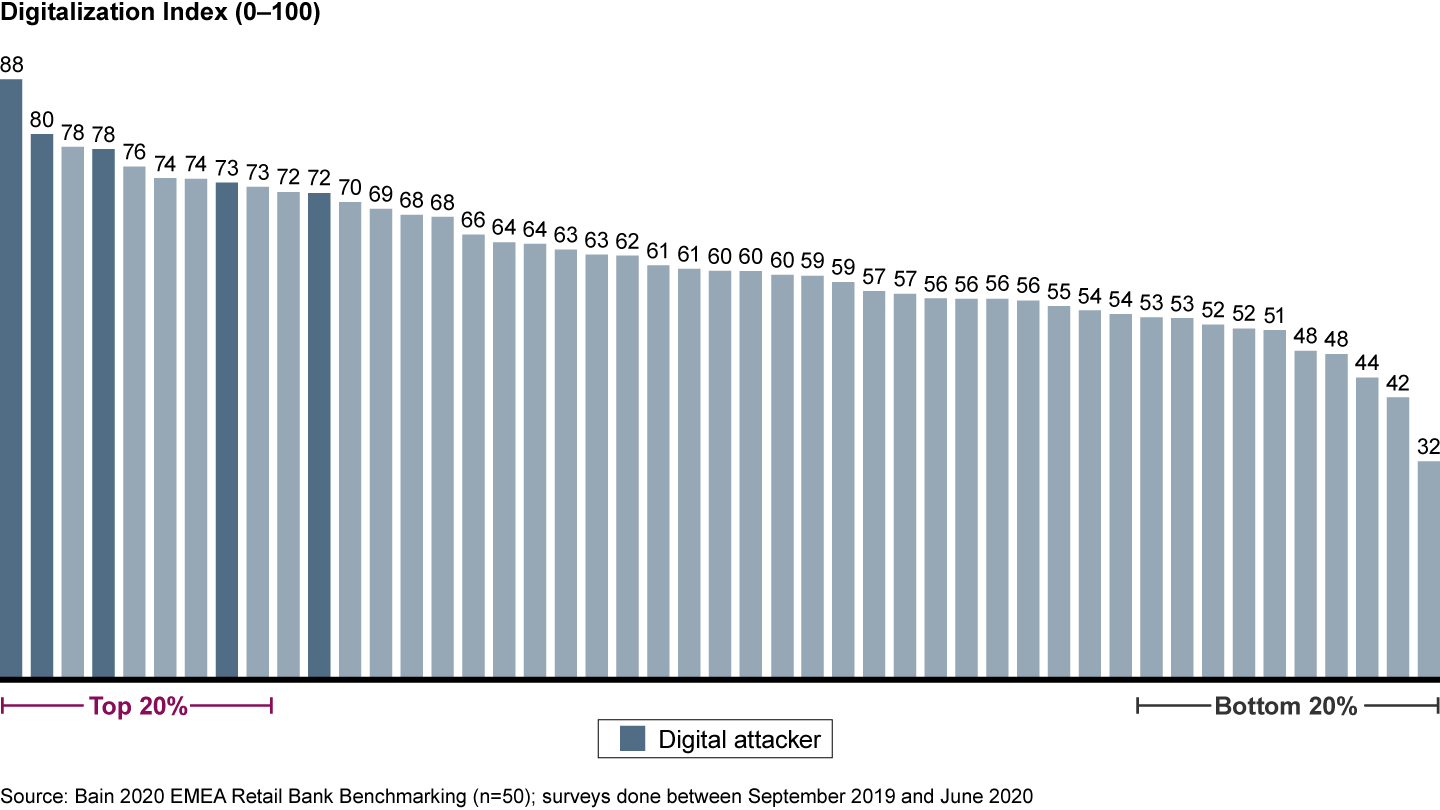
The 50 banks in EMEA show a high variation, with Index scores ranging from 32 to 88 out of a possible 100 (see Figure 2). The leaders and laggards have significantly different performances on most dimensions, and we’ll examine the nature of those differences in more detail.
Figure 2

1. Vision and objectives: How differentiated is the bank’s digital agenda and positioning, and how clearly does the bank articulate that to customers and the broader market?
Digitalization has been drawing investments from all banks, to improve customer experience and process efficiency. But only a few so far have attained a strong digital performance.
The leaders clearly communicate their digital vision, allowing for transparency and committing to their digitalization targets. For example, ABN Amro includes digital in two of its three main strategic pillars—“reinvent the customer experience” and “build a future-proof bank”—communicating these directly to customers. ABN Amro tracks against these strategic targets as part of quarterly updates for investors.
Behind those communications, leaders constantly experiment and innovate their existing core business—call it “engine 1”—with new products, services and processes. At the same time, they build entire new businesses as an “engine 2,” ranging from attacker banks to insurance platforms and automotive marketplaces. These represent diversified revenue streams and the potential to preempt disruption by insurgent competitors.
For banks that lag in this dimension, managers should address these questions:
- Are we bold enough in the market about our digital ambition?
- Do we invest in true engine 2 businesses, or are they merely modifications of engine 1?
2. Simple, modular propositions: How easy to understand are the bank’s products, and how well can they be tailored to customer needs?
Most traditional banks struggle to present a simple, transparent product offering that’s rooted in addressing customers’ needs. Instead, they tend to carry a wide variety of products that focus on features rather than needs. Their complex portfolio stems from years of adding products through innovation, mergers and acquisitions, and from neglecting to remove legacy products.
The leaders, by contrast, design their product portfolios either as fully standardized and simple or broad and tailored to customer needs. They also are more prone to customer-friendly packages.
One practice that can mitigate complexity is to offer an advisory tool guiding customers in their product selection. Société Générale has a lean online portfolio and offers a simple, question-based process to find the ideal product that suits a customer’s current needs.
Questions for managers:
- Are we really reducing complexity in the product portfolio, including migrating customers out of legacy products to simpler, less expensive new ones?
- Have we asked customers whether they think our proposition is simple and easy, or have we relied only on our own opinions?
3. Customer episodes: How well has the bank digitalized episodes to produce a strong experience?
Most banks have redesigned usage (such as making payments or checking the account balance) or very simple purchase episodes first. Some leading banks, however, have also started to focus on service episodes and more complicated purchase episodes, bringing them closer to end-to-end automation. They keep optimizing their episodes by using customer feedback to identify and correct problems.
For example, mBank allows customers to add an insurance or apply for a credit card with just a few digital steps. And NatWest launched the UK’s first paperless mortgage application, supported via live chat and call-back options, with extended hours.
As a result, banks with strong digital purchase episodes can significantly increase sales, both through higher customer acquisition and more frequent interactions with current customers. Banks that have digitalized 80% or more of their purchase episodes have an average of 73% of sales flowing through digital channels. By contrast, banks that have digitalized only 40%–60% of purchase episodes have a digital sales share of just 41%.
Questions for managers:
- If we have not seen digital pay off as anticipated, are we overlooking the importance of purchase episodes?
- Besides front-end digital processes, have we tackled end-to-end processes to further reduce costs?
4. Integrated channels: How seamless and consistent is the experience across channels?
No bank has complete channel integration and consistency, but digital leaders offer the strongest experiences through each channel, while ensuring important connections to other channels.
Most benchmarked banks are focusing on mobile channels, with the leaders emphasizing fresh and modern design, simple, intuitive navigation and short response times. Roughly 70% of the mobile bank apps rated well above 4 out of 5 (with an average of about 4.5) in the Apple App store and the Google Play Store, with no gap between digital attackers and legacy banks.
The leaders have also digitalized traditional channels, offering Wi-Fi, smart ATMs and more in their branches and digital tools in call centers.
Great design typically is not sufficient to attract all customers. Migration to digital needs an active push, through a combination of soft measures (such as communication campaigns), teams to educate customers about online banking, and employee incentives to support online migration. Selective hard measures (such as pricing or phasing out offline services) also have a role, though here banks must weigh the cost of losing some customers.
Questions for managers:
- Have we determined exactly which customer segments merit a fully integrated multichannel offering, so that we can move other customers to lower-cost digital channels?
- Are we taking all possible measures to migrate customers online?
5. Customer loyalty: How systematically does the bank measure and act on customer feedback?
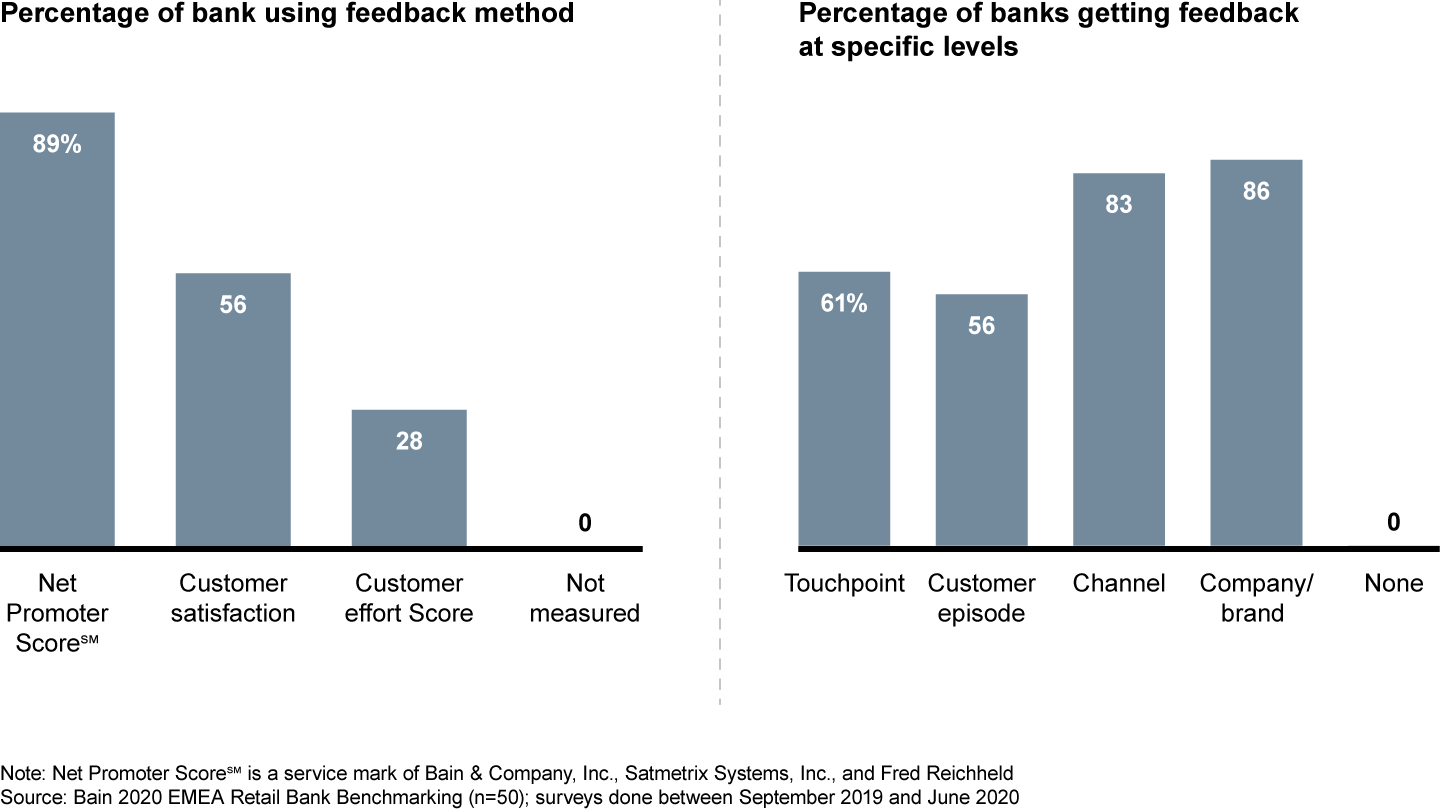
All banks collect customer feedback. The leaders, though, go well beyond that. They review feedback at least weekly, at different levels of granularity ranging from the brand to the individual interaction (see Figure 3). They have put in place structured, repeatable processes to act on feedback, by both following up with customers who give a bad score and implementing improvements to products and services.
Figure 3

Garanti BBVA, for instance, has a department dedicated to the customer experience. This department closely monitors NPS and obtains important insights through various sources. In addition, a digital user experience team runs monthly usability tests to identify and resolve problems in digital channels.
Question for managers:
- Are we just measuring customer feedback, or do we also act on that feedback?
- How systematically do we use customer feedback to improve the experience across channels?
6. Operating model: How well does the organization support a shift to digital?
The leading banks have been overhauling their operating model to incorporate digital and center on customers’ needs. They have broken through organizational silos by fielding cross-functional Agile teams.
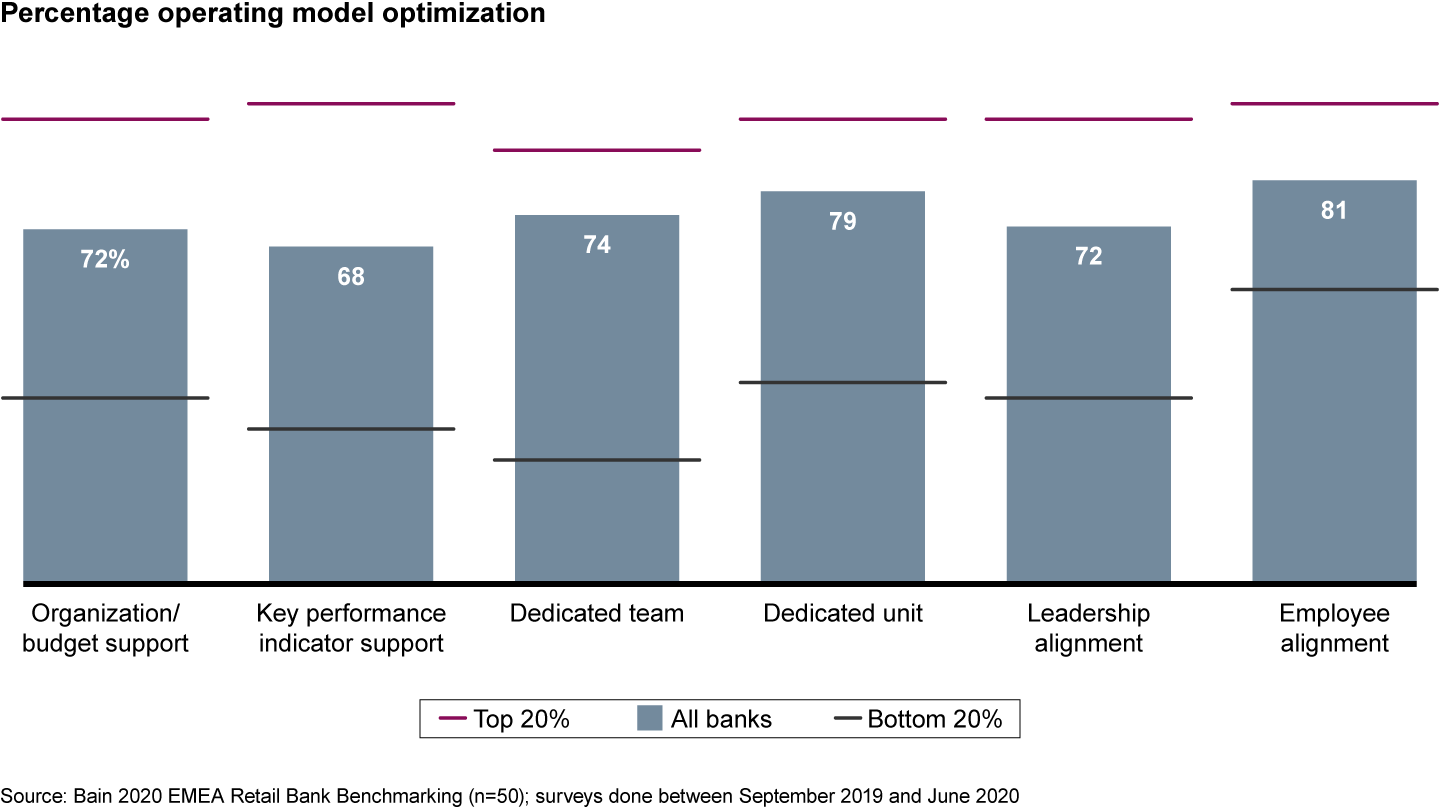
NatWest shifted its operating model from products and distribution to the customer journey (all the activities required to fill a particular need) and service. To change ways of working, NatWest set up cross-functional teams responsible for individual journeys (see Figure 4).
Figure 4

One aspect of the operating model remains a major challenge: recruiting people with the right skills. About 70% of banks see an additional need for employees with deep digital knowledge, as well as people with expertise in legacy IT systems.
Questions for managers:
- Besides acknowledging that it’s tough to attract and retain people with the right digital skills, what are we actually doing about it?
- What’s different in our recruiting approach than what we tried a few years ago?
7. Technology strategy and data foundation: How well does the bank’s IT support fast innovation, and how advanced are its data analytics?
Incumbent banks struggle with rigid application architecture, which puts their time to market for product releases far behind digital attackers. In response, deploying Agile development methods has proven to significantly reduce time to market, while also making the IT architecture and product development process more flexible.
Yet while all benchmarked banks have been adopting Agile methods, only one-fifth of them use Agile for all digitalization projects.
Turning to analytics, more than 90% of the banks have an advanced analytics strategy, but only one-third can prioritize use cases based on financial and strategic outcomes rather than on the feasibility of the use case.
Moreover, a majority of benchmarked banks contend with inflexible IT as well as poor data quality and availability. Digital attackers have an advantage in this regard, as they set up their back-end systems with data collection and processing in mind. The most advanced use a “data lake”—a single source of truth for data and customer feedback—as a basis for real-time decision making.
Widiba, for instance, invested in a data lake that gives everyone in the bank a common view on data across business units, and provides fodder for decisions such as optimizing campaigns and ad placement. Widiba also uses data-derived insights to inform cross-selling, personalization and price setting.
Questions for managers:
- What are we doing to remove the hindrances caused by our legacy IT?
- Is there a plan for incremental or total replacement?
Lessons for investment in digital banking
As banks pour more capital and staff time into digitalization, the experiences of the leading benchmarked banks holds several lessons for using resources wisely.
Sharpen the bank’s vision for using digital, and clarify the roadmap to attaining that vision.
Show how digital channels and tools help support other aspects of the strategy. Extend the bank’s collaboration with technology firms in order to move faster on product innovation and anticipate major turns in digital trends. Double down on engine 2 initiatives as a way to diversify revenue streams and preempt disruption of the core business. All of these efforts should be clearly and regularly summarized in communications to customers and other stakeholders.
Refine the overall proposition to create the best possible customer experience.
Reduce the complexity of the product portfolio and emphasize convenience, through such features as an advisory tool to help customers select products. Design the proposition around customer needs, developing personalized offerings and marketing to improve both cross-selling and upselling.
Accelerate the redesign of customer episodes.
Selecting the most critical episodes for redesigning the user experience and navigation. To translate design into revenue growth, create seamless, quick and intuitive purchase episodes. Once customer volumes have picked up, add services and ensure end-to-end automation in order to cut costs and increase convenience.
Align the operating model to banking infused with digital.
Speeding up time to market requires fully adopting Agile methods at scale and investing in cloud and other flexible components of IT architecture. Put customer data at the center of decisions and invest in advanced analytics capabilities. Above all, avoid data silos.
Continual advances in digital technologies mean the standards for a top-notch customer experience will periodically reset. But catching up from behind becomes harder to do with each passing month, so banks that aim to maintain or grow their customer base cannot afford to slow the pace of investment and innovation.
They can break their digital journey into a series of stepping-stones—smaller initiatives that make steady progress toward the desired end state. Granted, that end state is bound to evolve, given how quickly the digital world is moving. So it’s more important to move in the right direction than to have a fixed end state in mind.
Net Promoter®, NPS® und die NPS-bezogenen Emoticons sind eingetragene Marken von Bain & Company, Inc., Satmetrix Systems, Inc. und Fred Reichheld. Net Promoter Score℠ und Net Promoter System℠ sind Service Marks von Bain & Company, Inc., Satmetrix Systems, Inc. und Fred Reichheld.
First published in Oktober 2020