
Skip to Content
  • Standorte

    Standorte

    North & Latin America
    • Atlanta
    • Austin
    • Bogota
    • Boston
    • Buenos Aires
    • Chicago
    • Dallas
    • Denver
    • Houston
    • Lisbon
    • Los Angeles
    • Mexico City
    • Minneapolis
    • Monterrey
    • Montreal
    • New York
    • Rio de Janeiro
    • San Francisco
    • Santiago
    • São Paulo
    • Seattle
    • Silicon Valley
    • Toronto
    • Washington, DC
    Europe & Africa
    • Amsterdam
    • Athens
    • Berlin
    • Brussels
    • Copenhagen
    • Düsseldorf
    • Frankfurt
    • Helsinki
    • Istanbul
    • Johannesburg
    • Kyiv
    • Lisbon
    • London
    • Madrid
    • Milan
    • München
    • Oslo
    • Paris
    • Rome
    • Stockholm
    • Warsaw
    • Wien
    • Zürich
    Middle East
    • Doha
    • Dubai
    • Riyadh
    Asia & Australia
    • Bangkok
    • Beijing
    • Bengaluru
    • Brisbane
    • Ho Chi Minh City
    • Hong Kong
    • Jakarta
    • Kuala Lumpur
    • Manila
    • Melbourne
    • Mumbai
    • New Delhi
    • Perth
    • Seoul
    • Shanghai
    • Singapore
    • Sydney
    • Tokyo
    Alle Standorte Anzeigen
  • Alumni
  • Presse
  • Newsletter
  • Kontakt
  • DACH-Region | Deutsch

    Wählen Sie Ihre Region und Sprache

    Global
    • Global (English)
    North & Latin America
    • Brazil (Português)
    • Argentina (Español)
    • Canada (Français)
    • Chile (Español)
    • Colombia (Español)
    Europe, Middle East, & Africa
    • France (Français)
    • DACH-Region (Deutsch)
    • Italy (Italiano)
    • Spain (Español)
    • Greece (Elliniká)
    Asia & Australia
    • China (中文版)
    • Korea (한국어)
    • Japan (日本語)
  • Saved items (0)
    Saved items (0)

    You have no saved items.

    Inhalte, für die Sie sich interessieren, werden hier gespeichert und können später gelesen oder weitergeleitet werden.

    Explore Bain Insights
  • Branchenkompetenzen
    Hauptmenü

    Branchenkompetenzen

    • Luft- und Raumfahrt, Verteidigung
    • Agrarwirtschaft
    • Chemieindustrie
    • Infrastruktur und Bauwirtschaft
    • Konsumgüter
    • Finanzdienstleistungen
    • Gesundheitswesen
    • Maschinen- und Anlagenbau
    • Medienwirtschaft
    • Metallindustrie
    • Bergbau
    • Öl und Gas
    • Papier- und Verpackungsindustrie
    • Private Equity
      Branchenkompetenzen
      Private Equity
      • Due Diligence
      • Exit Planning
      • Firm Strategy & Operations
      • Portfolio Value Creation
    • Öffentlicher Sektor und Sozialwesen
    • Einzelhandel
    • Technologie
    • Telekommunikation
    • Transportwesen
    • Reise- und Freizeitbranche
    • Versorgung und erneuerbare Energien
  • Managementkompetenzen
    Hauptmenü

    Managementkompetenzen

    • Customer Experience
    • ESG
    • Innovation
    • M&A
    • Operations
    • People & Organization
    • Private Equity
    • Sales & Marketing
    • Strategie
    • KI, Einblicke und Lösungen
    • Technologie
    • Transformation
  • Digital
  • Publikationen
    Hauptmenü

    Publikationen

    • Branchenthemen
    • Managementthemen
    • Bain-Bücher
    Alle Publikationen
    Ausgewählte Themen
    • Resilienz in der globalen Krise
    • M&A Report
    • Private Equity Podcast
    • Midyear Private Equity Report
    • Agile
    • Engineering Report
    • Digital Transformation
    • Elements of Value®
    • Firm of the Future
    • Nachhaltigkeitsstudie
    • Macro Trends
    • Future of Consumption
    • Weltwirtschaftsforum (WEF)
  • Über uns
    Hauptmenü

    Über uns

    • Was wir bieten
    • Unser Ansatz
    • Unser Team
    • Game Changer Award
    • Female Allstar Board
    • Messbare Ergebnisse (EN)
    • Auszeichnungen
    • Globale Partnerschaften
    • The Mission
    Further: Our global responsibility
    • Vielfalt & Chancengleichheit
    • Soziale Verantwortung
    • Sustainability
    Erfahren Sie mehr zu "Further"
  • Karriere
    Hauptmenü

    Karriere

    • Dein Einstieg
      Karriere
      Dein Einstieg
      • Find Your Place
      • Unsere Arbeitsbereiche
      • Unsere Teams
      • Angebote für Studierende
      • Praktika & Programme
      • Recruiting-Events
    • Arbeiten bei Bain
      Karriere
      Arbeiten bei Bain
      • Blog: Inside Bain
      • Karriere Stories
      • Unsere Bainies
      • Office-Standorte
      • Weiterentwicklung
      • Affinity Groups
      • Deine Benefits
    • Impact Stories
    • Deine Bewerbung
      Karriere
      Deine Bewerbung
      • Das erwartet dich
      • Der Interviewprozess
    FIND JOBS
  • Standorte
    Hauptmenü

    Standorte

    • North & Latin America
      Standorte
      North & Latin America
      • Atlanta
      • Austin
      • Bogota
      • Boston
      • Buenos Aires
      • Chicago
      • Dallas
      • Denver
      • Houston
      • Lisbon
      • Los Angeles
      • Mexico City
      • Minneapolis
      • Monterrey
      • Montreal
      • New York
      • Rio de Janeiro
      • San Francisco
      • Santiago
      • São Paulo
      • Seattle
      • Silicon Valley
      • Toronto
      • Washington, DC
    • Europe & Africa
      Standorte
      Europe & Africa
      • Amsterdam
      • Athens
      • Berlin
      • Brussels
      • Copenhagen
      • Düsseldorf
      • Frankfurt
      • Helsinki
      • Istanbul
      • Johannesburg
      • Kyiv
      • Lisbon
      • London
      • Madrid
      • Milan
      • München
      • Oslo
      • Paris
      • Rome
      • Stockholm
      • Warsaw
      • Wien
      • Zürich
    • Middle East
      Standorte
      Middle East
      • Doha
      • Dubai
      • Riyadh
    • Asia & Australia
      Standorte
      Asia & Australia
      • Bangkok
      • Beijing
      • Bengaluru
      • Brisbane
      • Ho Chi Minh City
      • Hong Kong
      • Jakarta
      • Kuala Lumpur
      • Manila
      • Melbourne
      • Mumbai
      • New Delhi
      • Perth
      • Seoul
      • Shanghai
      • Singapore
      • Sydney
      • Tokyo
    Alle Standorte Anzeigen
  • Alumni
  • Presse
  • Newsletter
  • Kontakt
  • DACH-Region | Deutsch
    Hauptmenü

    Wählen Sie Ihre Region und Sprache

    • Global
      Wählen Sie Ihre Region und Sprache
      Global
      • Global (English)
    • North & Latin America
      Wählen Sie Ihre Region und Sprache
      North & Latin America
      • Brazil (Português)
      • Argentina (Español)
      • Canada (Français)
      • Chile (Español)
      • Colombia (Español)
    • Europe, Middle East, & Africa
      Wählen Sie Ihre Region und Sprache
      Europe, Middle East, & Africa
      • France (Français)
      • DACH-Region (Deutsch)
      • Italy (Italiano)
      • Spain (Español)
      • Greece (Elliniká)
    • Asia & Australia
      Wählen Sie Ihre Region und Sprache
      Asia & Australia
      • China (中文版)
      • Korea (한국어)
      • Japan (日本語)
  • Saved items  (0)
    Hauptmenü
    Saved items (0)

    You have no saved items.

    Inhalte, für die Sie sich interessieren, werden hier gespeichert und können später gelesen oder weitergeleitet werden.

    Explore Bain Insights
  • Branchenkompetenzen
    • Branchenkompetenzen

      • Luft- und Raumfahrt, Verteidigung
      • Agrarwirtschaft
      • Chemieindustrie
      • Infrastruktur und Bauwirtschaft
      • Konsumgüter
      • Finanzdienstleistungen
      • Gesundheitswesen
      • Maschinen- und Anlagenbau
      • Medienwirtschaft
      • Metallindustrie
      • Bergbau
      • Öl und Gas
      • Papier- und Verpackungsindustrie
      • Private Equity
      • Öffentlicher Sektor und Sozialwesen
      • Einzelhandel
      • Technologie
      • Telekommunikation
      • Transportwesen
      • Reise- und Freizeitbranche
      • Versorgung und erneuerbare Energien
  • Managementkompetenzen
    • Managementkompetenzen

      • Customer Experience
      • ESG
      • Innovation
      • M&A
      • Operations
      • People & Organization
      • Private Equity
      • Sales & Marketing
      • Strategie
      • KI, Einblicke und Lösungen
      • Technologie
      • Transformation
  • Digital
  • Publikationen
    • Publikationen

      • Branchenthemen
      • Managementthemen
      • Bain-Bücher
      Alle Publikationen
      Ausgewählte Themen
      • Resilienz in der globalen Krise
      • M&A Report
      • Private Equity Podcast
      • Midyear Private Equity Report
      • Agile
      • Engineering Report
      • Digital Transformation
      • Elements of Value®
      • Firm of the Future
      • Nachhaltigkeitsstudie
      • Macro Trends
      • Future of Consumption
      • Weltwirtschaftsforum (WEF)
  • Über uns
    • Über uns

      • Was wir bieten
      • Unser Ansatz
      • Unser Team
      • Game Changer Award
      • Female Allstar Board
      • Messbare Ergebnisse (EN)
      • Auszeichnungen
      • Globale Partnerschaften
      • The Mission
      Further: Our global responsibility
      • Vielfalt & Chancengleichheit
      • Soziale Verantwortung
      • Sustainability
      Erfahren Sie mehr zu "Further"
  • Karriere
    Häufige Suchanfragen
    • Agil
    • Digital
    • Strategie
    Vorherige Suchanfragen
      Zuletzt besuchte Seiten

      Content added to saved items

      Saved items (0)

      Removed from saved items

      Saved items (0)

      Brief

      In an Era of Tariffs and Turbulence, Four Moves That Matter

      In an Era of Tariffs and Turbulence, Four Moves That Matter

      Understand your exposure. Understand your competitors’ exposure. Adjust your pricing and supply chains accordingly. Repeat as necessary.

      Von Hernan Saenz und Karen Harris

      • Min. Lesezeit
      }

      Brief

      In an Era of Tariffs and Turbulence, Four Moves That Matter
      en

      As global markets convulse under the pressure of gyrating tariffs and geopolitical uncertainty, the temptation is to wait for clarity. But some leading companies aren’t standing still—they’re making bold, informed bets. Here are four actions they are taking now: mapping exposure, benchmarking competitively, rethinking cost, and reinventing supply chains.

      1. Map Your Exposure

      In a deeply interconnected world, supply chains stretch across continents and industry tiers. Understanding true exposure isn’t simple, but it’s foundational. The key lies in identifying not just where your dependencies are but also how they cascade across suppliers and geographies. And, of course, it requires a dynamic model—uncertainty will wax and wane, but it is now a permanent feature of trade.

      That model starts with costs, since tariffs increase costs. But they don’t do so in a uniform way. Costs depend on componentry, flow, country, and so on—and those dependencies will affect each product differently.

      Demand is an equally important variable. Who will have to bear those costs? You? Your suppliers? Your customers? Product demand modeling can help you understand the demand elasticity of your different customer segments, giving you a better sense of your full exposure.

      At this point, every company also is examining its exposure to international suppliers and looking at the tariff rates applied to those countries. But for many, that doesn’t dig deep enough. Companies also have domestic suppliers with international Tier-2 country exposure (not to mention domestic suppliers with little or no exposure that will nonetheless use the tariff regime to opportunistically raise prices).

      Most companies built additional flexibility into their existing supply chain structures in response to Covid-19. That means they now have a lot of levers they can pull to manage their exposure through their supply chain—whether it’s inventory levels, plant uptime, “make vs. buy” decisions, or shifts in logistics and inventory operations. In our work with clients that have two sources of supply for the same product, we’ve seen the tariff regime create very different economics for the same products simply because of different flows.

      Most companies built additional flexibility into their existing supply chain structures in response to Covid-19. That means they now have a lot of levers they can pull to manage their exposure

      Finally, the demand modeling mentioned above offers a key input into understanding how pricing actions can affect exposure. Is your margin exposed (because your market won’t accept higher prices)? Or is it your sales (because you can raise prices, but must accept some elasticity of demand)? In our work, we see the smartest companies taking an incredibly surgical approach that treats pricing not as a binary question but as a segmentation question. They look at each segment, from the most important customers to the long tail, examining where the revenue is, the exposure, and the pricing needed to maintain margins.

      Ultimately, playing defense requires both levers: the supply lever and the pricing lever.

      2. Benchmark Competitively

      But absolute exposure tells only part of the story—and playing defense is only part of the game. What matters most is your position relative to the competition. Companies with lower exposure have the opportunity to go on offense while others remain reactive—and playing offense during times of turbulence usually has extraordinary benefits.

      Bain’s research consistently shows that companies win or lose the greatest share during periods of turbulence and uncertainty—either because they make mistakes or stay on the sidelines. Crises produce more rising stars and more sinking ships (see Figure 1).

      Figure 1
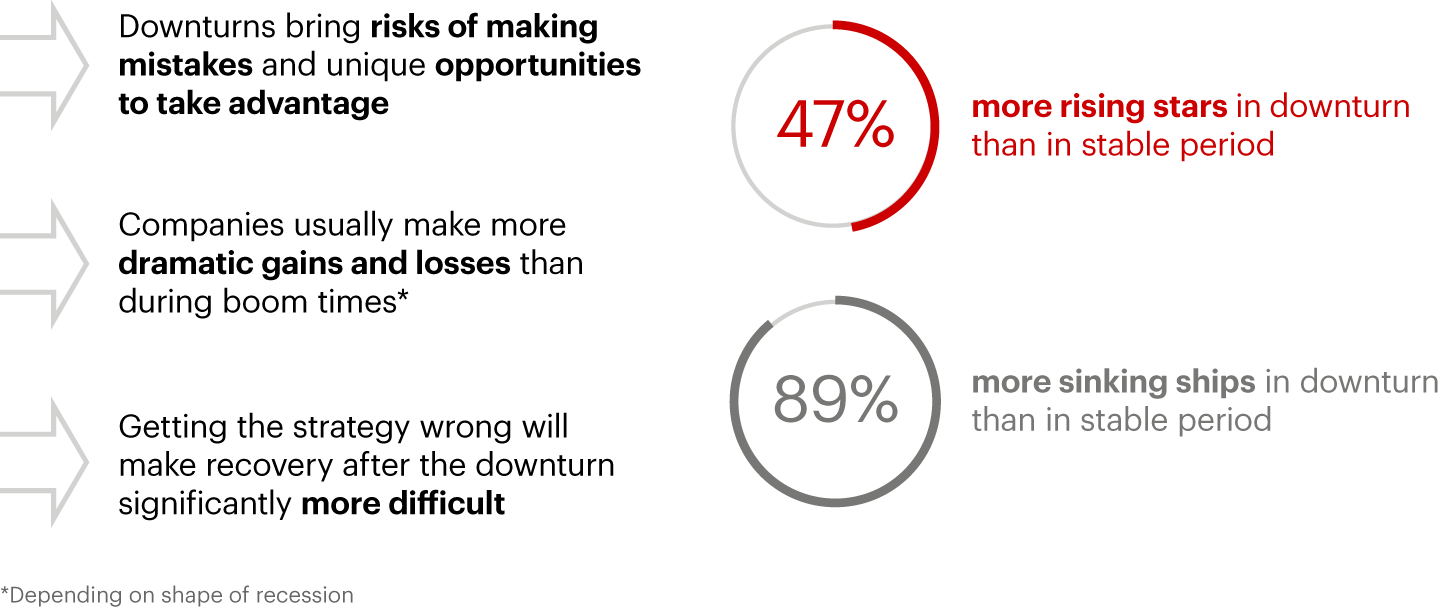
      Companies see more dramatic swings in performance during a downturn than in a stable period

      Anmerkungen Includes US S&P 500–listed companies with annual revenue of more than $2 billion; downturn period defined as December 2007 through December 2014 and stable period as December 2014 through December 2017; companies were divided into quartiles based on operating margin percentage within S&P industry sector; rising stars moved from bottom quartile to top half between beginning and end of period; sinking ships moved from top quartile to bottom half

      Quelle S&P Capital IQ

      How do you play offense? You model your exposure relative to your competitors. All of the above exercises that companies do for their own supply chain, they also need to do for direct competitors. Understanding the magnitude of exposure your competitors have by supplier and by product and the extent to which they can mitigate it is crucial.

      Think, for example, of the US automotive industry. The fundamental exposures are so different across the different players that you’d hardly believe they’re all in the same sector. If your industry is like that and you can identify areas where your company is less exposed, you have an interesting opportunity to compete on price for price-sensitive segments and gain share. And for less sensitive segments, you might be able to match industry pricing as it goes up and create a reserve of money for investment.

      3. Rethink Cost

      Another way to play offense is to take costs out now. The shift from globalization to regionalization is eroding economies of scale. As structural costs rise, the advantages of being a cost leader become more pronounced.


      As structural costs rise, the advantages of being a cost leader become more pronounced.

      Leading companies are simplifying (just as they did during Covid-19) to focus on the customer value proposition while reducing complexity in product lineups, processes, and organizations. Technology plays a crucial role in creating lean operations that can flex with uncertainty. Automation, machine learning, traditional AI, and generative AI are already reshaping the relationship between revenue and cost lines. And those technologies also create visibility and transparency that allow companies to make decisions their competitors cannot, enhancing resilience and flexibility. That’s the definition of competitive advantage.

      One caveat: In the past, companies typically reduced costs by benchmarking and creating top-down targets. The result: Costs came creeping back in within a couple of years. In a structurally more expensive world, those costs need to come out permanently. Companies that want to achieve that need to redesign their ways of working from scratch using zero-basing techniques and embedding cost discipline into the tools and culture of the organization.

      4. Reinvent Supply Chains

      Today’s supply chains (still long, opaque, and inflexible despite pandemic-era improvements) are misaligned with tomorrow’s demands. Smart companies are proactively redesigning their footprints, aiming for resilience, agility, and strategic control.

      The world of operations has shifted from the predictable and algorithmic approach in which economic order quantity was used to decide where to locate inventories with the stroke of a computer key. Today, companies need their supply chains to meet a host of complex demands from customers by investing in resilience, flexibility, traceability, and circularity (see Figure 2).

      Figure 2
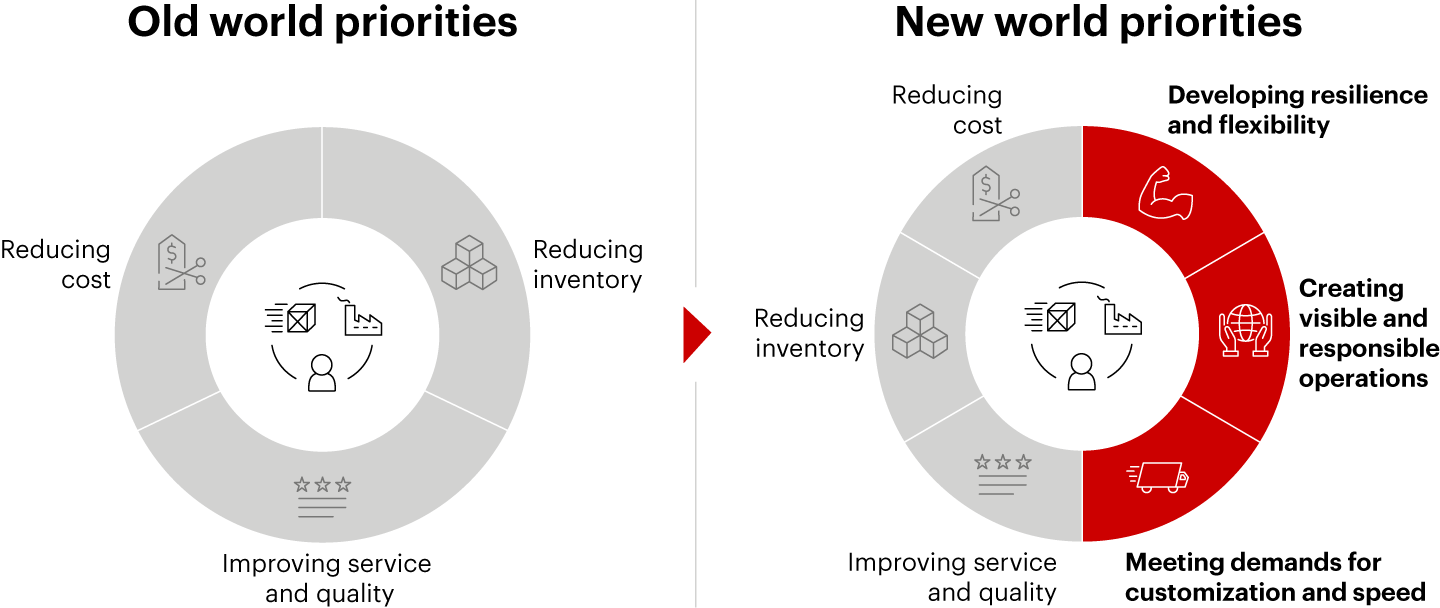
      Operations continues to shift from predictable and algorithmic to dynamic and strategic
      Quelle Bain & Company


      Until recently, supply chains operated with enormous efficiency at a global scale. Now, companies need to achieve scale and economics at a regional or local level. The supply chain you need (and can afford) will not be perfect; it will be adaptable. The priorities of the old world won’t disappear, but they must be balanced against the realities of the world we’re in today. And the tough trade-off decisions will be made by business leaders, not algorithms.

      Related webinar

      Tariff Response: What You Need to Know

      Bain's Karen Harris and Hernan Saenz discuss the lasting impact of tariffs, what leading companies are doing to adapt, and the strategic moves to make for success.

      Autoren
      • Headshot of Hernan Saenz
        Hernan Saenz
        Partner, Dallas
      • Headshot of Karen Harris
        Karen Harris
        Managing Director, Macro Trends Group, New York
      Kontaktieren Sie uns
      Ähnliche Beratungsangebote
      • Accelerated Performance Transformation
      • Macro Strategy
      • Performance Improvement
      • Strategie
      • Supply Chain
      Macro Trends
      Tariff Response: What You Need to Know

      Bain's Karen Harris and Hernan Saenz discuss the lasting impact of tariffs, what leading companies are doing to adapt, and the strategic moves to make for success.

      Mehr erfahren
      Macro Trends
      Beyond Tariffs: The Supply Chain Reinvention Imperative

      Tariffs are accelerating businesses’ operations overhaul. Winning in today’s disrupted world demands bold trade-offs and strategic transformation.

      Mehr erfahren
      Macro Trends
      Tariffs: The Next Chapter

      Companies need to rebuild their strategies for a world in which the free movement of goods, capital, IP, and people cannot be taken for granted.

      Mehr erfahren
      Supply Chain
      Don’t Underestimate the Cost of Overcapacity

      Overcapacity is endemic to the paper and packaging industry, but these actions can help you maintain margins.

      Mehr erfahren
      Macro Trends
      From China to Trouble?

      Swapping supply chains doesn’t mean escaping risk.

      Mehr erfahren
      First published in Mai 2025
      Markierungen
      • Accelerated Performance Transformation
      • CEO Agenda
      • CFO Insights
      • COO insights
      • Macro Strategy
      • Macro Trends
      • Performance Improvement
      • Strategie
      • Supply Chain
      • Tariff Response

      Wie wir unsere Kunden unterstützt haben

      Strategie Virgin Australia: From Turbulence to Triumph

      Kundenbeispiel lesen

      Strategie Full potential formula helps chemical company grow

      Kundenbeispiel lesen

      Performance Improvement Carmaker shifts its production model

      Kundenbeispiel lesen

      Möchten Sie mit uns in Kontakt bleiben?

      Wir unterstützen Führungskräfte weltweit, die kritischen Themen in ihrem Unternehmen zu adressieren. Gemeinsam schaffen wir nachhaltige Veränderungen und Ergebnisse.

      Bain Insights. Unsere Perspektive auf die kritischen Themen, mit denen sich international agierende Unternehmen konfrontiert sehen, finden Sie monatlich in Ihrem Postfach.

      *Ich habe die Datenschutzerklärung gelesen und akzeptiere sie.
      Bitte lesen Sie die Datenschutzerklärung und akzeptieren Sie diese.
      Bain & Company
      Contact us Sustainability Accessibility Rechtliche Hinweise Impressum Datenschutz Cookie-Richtlinie Sitemap Log In

      © 1996-2026 Bain & Company, Inc.

      Kontaktieren Sie Bain

      Wie können wir Ihnen helfen?

      • Business inquiry
      • Career information
      • Press relations
      • Partnership request
      • Speaker request
      Alle weltweiten Büros