
Skip to Content
  • Standorte

    Standorte

    North & Latin America
    • Atlanta
    • Austin
    • Bogota
    • Boston
    • Buenos Aires
    • Chicago
    • Dallas
    • Denver
    • Houston
    • Lisbon
    • Los Angeles
    • Mexico City
    • Minneapolis
    • Monterrey
    • Montreal
    • New York
    • Rio de Janeiro
    • San Francisco
    • Santiago
    • São Paulo
    • Seattle
    • Silicon Valley
    • Toronto
    • Washington, DC
    Europe & Africa
    • Amsterdam
    • Athens
    • Berlin
    • Brussels
    • Copenhagen
    • Düsseldorf
    • Frankfurt
    • Helsinki
    • Istanbul
    • Johannesburg
    • Kyiv
    • Lisbon
    • London
    • Madrid
    • Milan
    • München
    • Oslo
    • Paris
    • Rome
    • Stockholm
    • Warsaw
    • Wien
    • Zürich
    Middle East
    • Doha
    • Dubai
    • Riyadh
    Asia & Australia
    • Bangkok
    • Beijing
    • Bengaluru
    • Brisbane
    • Ho Chi Minh City
    • Hong Kong
    • Jakarta
    • Kuala Lumpur
    • Manila
    • Melbourne
    • Mumbai
    • New Delhi
    • Perth
    • Seoul
    • Shanghai
    • Singapore
    • Sydney
    • Tokyo
    Alle Standorte Anzeigen
  • Alumni
  • Presse
  • Newsletter
  • Kontakt
  • DACH-Region | Deutsch

    Wählen Sie Ihre Region und Sprache

    Global
    • Global (English)
    North & Latin America
    • Brazil (Português)
    • Argentina (Español)
    • Canada (Français)
    • Chile (Español)
    • Colombia (Español)
    Europe, Middle East, & Africa
    • France (Français)
    • DACH-Region (Deutsch)
    • Italy (Italiano)
    • Spain (Español)
    • Greece (Elliniká)
    Asia & Australia
    • China (中文版)
    • Korea (한국어)
    • Japan (日本語)
  • Saved items (0)
    Saved items (0)

    You have no saved items.

    Inhalte, für die Sie sich interessieren, werden hier gespeichert und können später gelesen oder weitergeleitet werden.

    Explore Bain Insights
  • Branchenkompetenzen
    Hauptmenü

    Branchenkompetenzen

    • Luft- und Raumfahrt, Verteidigung
    • Agrarwirtschaft
    • Chemieindustrie
    • Infrastruktur und Bauwirtschaft
    • Konsumgüter
    • Finanzdienstleistungen
    • Gesundheitswesen
    • Maschinen- und Anlagenbau
    • Medienwirtschaft
    • Metallindustrie
    • Bergbau
    • Öl und Gas
    • Papier- und Verpackungsindustrie
    • Private Equity
      Branchenkompetenzen
      Private Equity
      • Due Diligence
      • Exit Planning
      • Firm Strategy & Operations
      • Portfolio Value Creation
    • Öffentlicher Sektor und Sozialwesen
    • Einzelhandel
    • Technologie
    • Telekommunikation
    • Transportwesen
    • Reise- und Freizeitbranche
    • Versorgung und erneuerbare Energien
  • Managementkompetenzen
    Hauptmenü

    Managementkompetenzen

    • Customer Experience
    • ESG
    • Innovation
    • M&A
    • Operations
    • People & Organization
    • Private Equity
    • Sales & Marketing
    • Strategie
    • KI, Einblicke und Lösungen
    • Technologie
    • Transformation
  • Digital
  • Publikationen
    Hauptmenü

    Publikationen

    • Branchenthemen
    • Managementthemen
    • Bain-Bücher
    Alle Publikationen
    Ausgewählte Themen
    • Resilienz in der globalen Krise
    • M&A Report
    • Private Equity Podcast
    • Midyear Private Equity Report
    • Agile
    • Engineering Report
    • Digital Transformation
    • Elements of Value®
    • Firm of the Future
    • Nachhaltigkeitsstudie
    • Macro Trends
    • Future of Consumption
    • Weltwirtschaftsforum (WEF)
  • Über uns
    Hauptmenü

    Über uns

    • Was wir bieten
    • Unser Ansatz
    • Unser Team
    • Game Changer Award
    • Female Allstar Board
    • Messbare Ergebnisse (EN)
    • Auszeichnungen
    • Globale Partnerschaften
    • The Mission
    Further: Our global responsibility
    • Vielfalt & Chancengleichheit
    • Soziale Verantwortung
    • Sustainability
    Erfahren Sie mehr zu "Further"
  • Karriere
    Hauptmenü

    Karriere

    • Dein Einstieg
      Karriere
      Dein Einstieg
      • Find Your Place
      • Unsere Arbeitsbereiche
      • Unsere Teams
      • Angebote für Studierende
      • Praktika & Programme
      • Recruiting-Events
    • Arbeiten bei Bain
      Karriere
      Arbeiten bei Bain
      • Blog: Inside Bain
      • Karriere Stories
      • Unsere Bainies
      • Office-Standorte
      • Weiterentwicklung
      • Affinity Groups
      • Deine Benefits
    • Impact Stories
    • Deine Bewerbung
      Karriere
      Deine Bewerbung
      • Das erwartet dich
      • Der Interviewprozess
    FIND JOBS
  • Standorte
    Hauptmenü

    Standorte

    • North & Latin America
      Standorte
      North & Latin America
      • Atlanta
      • Austin
      • Bogota
      • Boston
      • Buenos Aires
      • Chicago
      • Dallas
      • Denver
      • Houston
      • Lisbon
      • Los Angeles
      • Mexico City
      • Minneapolis
      • Monterrey
      • Montreal
      • New York
      • Rio de Janeiro
      • San Francisco
      • Santiago
      • São Paulo
      • Seattle
      • Silicon Valley
      • Toronto
      • Washington, DC
    • Europe & Africa
      Standorte
      Europe & Africa
      • Amsterdam
      • Athens
      • Berlin
      • Brussels
      • Copenhagen
      • Düsseldorf
      • Frankfurt
      • Helsinki
      • Istanbul
      • Johannesburg
      • Kyiv
      • Lisbon
      • London
      • Madrid
      • Milan
      • München
      • Oslo
      • Paris
      • Rome
      • Stockholm
      • Warsaw
      • Wien
      • Zürich
    • Middle East
      Standorte
      Middle East
      • Doha
      • Dubai
      • Riyadh
    • Asia & Australia
      Standorte
      Asia & Australia
      • Bangkok
      • Beijing
      • Bengaluru
      • Brisbane
      • Ho Chi Minh City
      • Hong Kong
      • Jakarta
      • Kuala Lumpur
      • Manila
      • Melbourne
      • Mumbai
      • New Delhi
      • Perth
      • Seoul
      • Shanghai
      • Singapore
      • Sydney
      • Tokyo
    Alle Standorte Anzeigen
  • Alumni
  • Presse
  • Newsletter
  • Kontakt
  • DACH-Region | Deutsch
    Hauptmenü

    Wählen Sie Ihre Region und Sprache

    • Global
      Wählen Sie Ihre Region und Sprache
      Global
      • Global (English)
    • North & Latin America
      Wählen Sie Ihre Region und Sprache
      North & Latin America
      • Brazil (Português)
      • Argentina (Español)
      • Canada (Français)
      • Chile (Español)
      • Colombia (Español)
    • Europe, Middle East, & Africa
      Wählen Sie Ihre Region und Sprache
      Europe, Middle East, & Africa
      • France (Français)
      • DACH-Region (Deutsch)
      • Italy (Italiano)
      • Spain (Español)
      • Greece (Elliniká)
    • Asia & Australia
      Wählen Sie Ihre Region und Sprache
      Asia & Australia
      • China (中文版)
      • Korea (한국어)
      • Japan (日本語)
  • Saved items  (0)
    Hauptmenü
    Saved items (0)

    You have no saved items.

    Inhalte, für die Sie sich interessieren, werden hier gespeichert und können später gelesen oder weitergeleitet werden.

    Explore Bain Insights
  • Branchenkompetenzen
    • Branchenkompetenzen

      • Luft- und Raumfahrt, Verteidigung
      • Agrarwirtschaft
      • Chemieindustrie
      • Infrastruktur und Bauwirtschaft
      • Konsumgüter
      • Finanzdienstleistungen
      • Gesundheitswesen
      • Maschinen- und Anlagenbau
      • Medienwirtschaft
      • Metallindustrie
      • Bergbau
      • Öl und Gas
      • Papier- und Verpackungsindustrie
      • Private Equity
      • Öffentlicher Sektor und Sozialwesen
      • Einzelhandel
      • Technologie
      • Telekommunikation
      • Transportwesen
      • Reise- und Freizeitbranche
      • Versorgung und erneuerbare Energien
  • Managementkompetenzen
    • Managementkompetenzen

      • Customer Experience
      • ESG
      • Innovation
      • M&A
      • Operations
      • People & Organization
      • Private Equity
      • Sales & Marketing
      • Strategie
      • KI, Einblicke und Lösungen
      • Technologie
      • Transformation
  • Digital
  • Publikationen
    • Publikationen

      • Branchenthemen
      • Managementthemen
      • Bain-Bücher
      Alle Publikationen
      Ausgewählte Themen
      • Resilienz in der globalen Krise
      • M&A Report
      • Private Equity Podcast
      • Midyear Private Equity Report
      • Agile
      • Engineering Report
      • Digital Transformation
      • Elements of Value®
      • Firm of the Future
      • Nachhaltigkeitsstudie
      • Macro Trends
      • Future of Consumption
      • Weltwirtschaftsforum (WEF)
  • Über uns
    • Über uns

      • Was wir bieten
      • Unser Ansatz
      • Unser Team
      • Game Changer Award
      • Female Allstar Board
      • Messbare Ergebnisse (EN)
      • Auszeichnungen
      • Globale Partnerschaften
      • The Mission
      Further: Our global responsibility
      • Vielfalt & Chancengleichheit
      • Soziale Verantwortung
      • Sustainability
      Erfahren Sie mehr zu "Further"
  • Karriere
    Häufige Suchanfragen
    • Agil
    • Digital
    • Strategie
    Vorherige Suchanfragen
      Zuletzt besuchte Seiten

      Content added to saved items

      Saved items (0)

      Removed from saved items

      Saved items (0)

      Brief

      Reinventing Energy in a Crisis

      Reinventing Energy in a Crisis

      Markets reward bold action in a downturn, so rather than retreat from their sustainability goals, oil and gas companies should press forward.

      Von Peter Parry

      • Min. Lesezeit
      }

      Brief

      Reinventing Energy in a Crisis
      en
      Auf einen Blick
      • Just as oil and gas companies were beginning to make significant commitments to a net-zero carbon future, the drag on demand due to the coronavirus pandemic threatens to distract their attention and derail progress.
      • But turning away from low-carbon goals would constitute a big mistake, even in the short term. During the crisis, investors continue to reward greener companies while showing less interest in carbon-heavy incumbents.
      • Sector leaders can continue to demonstrate their low-carbon commitments to investors by doubling down on low-carbon investments with the best returns and shorter implementation times, such as electrifying assets and reducing the carbon output of operations.
      • Leaders will also take the opportunity for bold action in the crisis to tune their operating models to clarify accountabilities and professionalize sustainability at the core of the business, while prioritizing investments to clean energy and low-carbon projects.

      As recently as the beginning of this year, oil and gas majors and other sector leaders were prominently committing to ambitious targets to decarbonize their energy portfolios. Companies found themselves under intense pressure to reduce the carbon intensity of their operations, supply chains and end products. Leaders were beginning to recognize that token investments would no longer cut it and had begun to deploy more new capital into clean energy businesses (see the Bain Brief “Rethinking Energy and Natural Resources for a Net-Zero Carbon Future”).

      Subsequent events have refocused everyone’s attention. As demand for oil and gas plummeted and prices crashed, many companies found themselves in an existential crisis. Most have had to slash operational costs by at least 25% and reduce 2020 capital expenditures by as much as 30%—cuts that make it extremely difficult to invest at a scale that can produce significant outcomes in carbon reduction at the pace needed.

      For Our Clients

      Macro Surveillance Platform

      For more detail on the business implications of coronavirus from Bain’s Macro Trends Group, log on to the Macro Surveillance Platform. Learn more about the platform >

      For some executives, the temptation to retreat or slow down on decarbonization commitments or execution must be very strong.

      Doing so, however, would constitute a strategic misstep, not only in terms of meeting long-term objectives but also for maintaining market value. Bain’s analysis of the performance of energy sector shares during the current crisis finds that companies with portfolios heavy in traditional hydrocarbon businesses initially see sharp declines, while those more assertively invested in greener fuels and low-carbon power generation have fared much better (see Figure 1). Even as the world’s attention has focused on the coronavirus pandemic, investors have kept their attention on longer-term viability.

      Figure 1
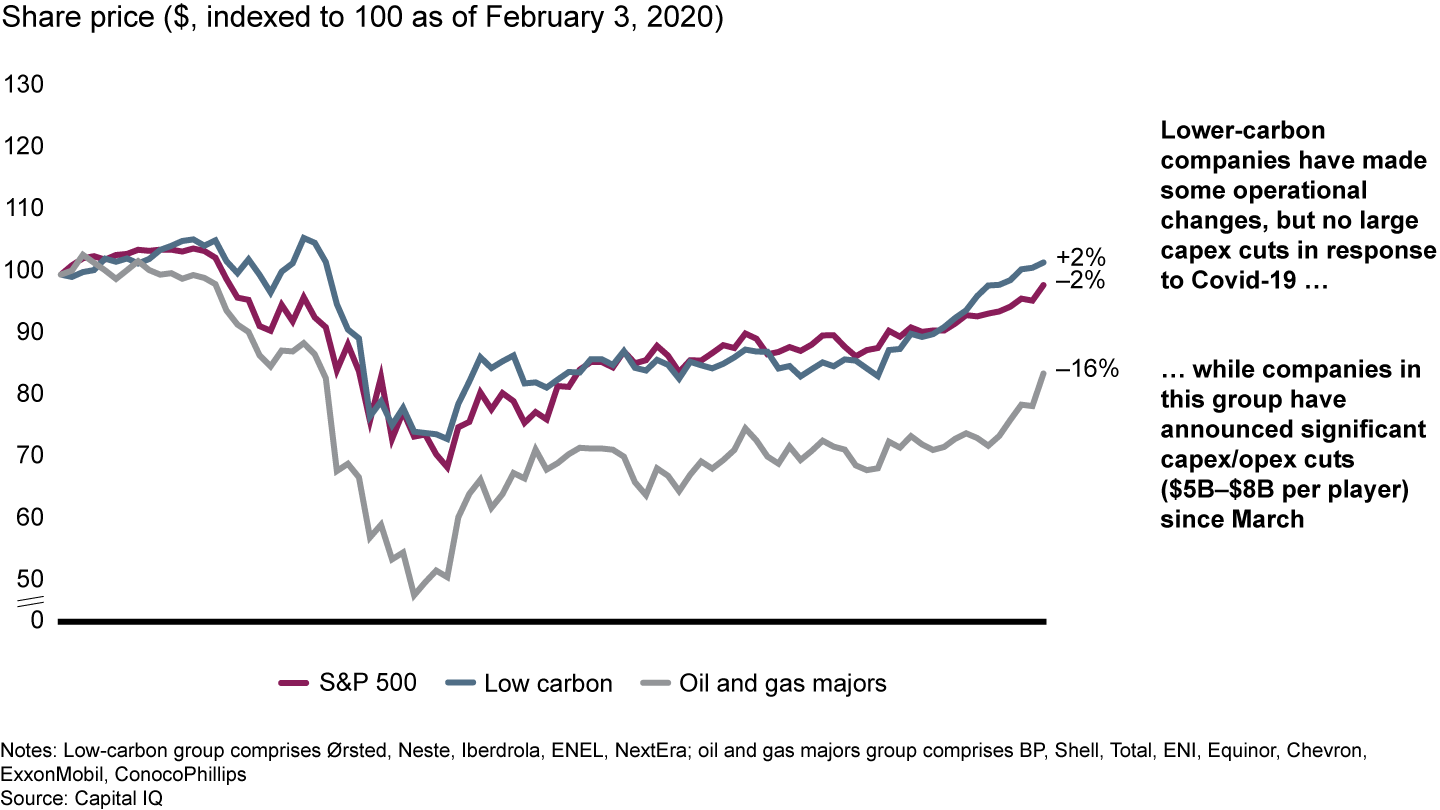
      Renewables have been more resilient than oil and gas companies

      Investors also reward decisive action during a downturn, suggesting that what may seem to be the low-risk playbook of cutting costs and retreating to the core may be the higher-risk path for oil and gas players. Analysis of oil and gas valuations over three major economic recessions during the last 25 years confirms that “wait and watch” was a poor option. Across industry sectors, companies that took bold and effective action during the 2007–08 global financial crisis performed much better than those that retreated to precrisis approaches and activities (see Figure 2).

      Figure 2
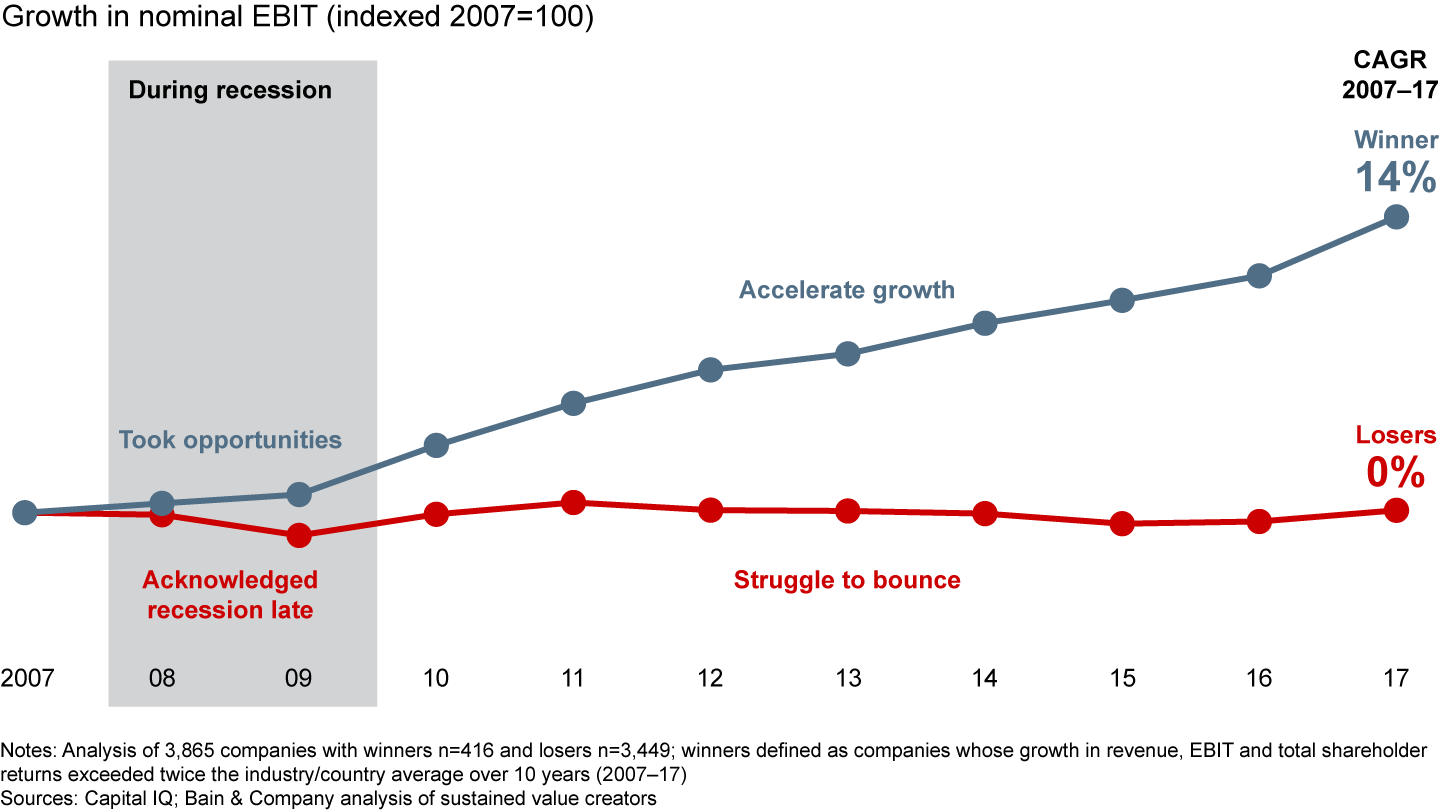
      Companies that took proactive, decisive action during a downturn saw, on average, better results in the decade that followed

      Act now

      Given that standing still is not an option, what should oil and gas companies be doing?

      The standard response might be to shelve mid- and longer-term sustainability research into initiatives that will take years to reach scale, such as large-scale hydrogen infrastructure. Energy storage and advanced biofuel feedstocks may also take a back seat, while plant electrification, carbon capture, operational decarbonization, plastics and lubricants recycling are more likely to push forward. For example, in late May, Equinor, Shell and Total made a final investment decision on their large carbon capture and storage project, Northern Lights, off Norway’s west coast. Less clear will be the scale and pace for development of low-carbon infrastructure, build-out of net-zero carbon assets, and larger-scale expansion of biofuel production and the next generation of renewable power assets (see Figure 3).

      Figure 3
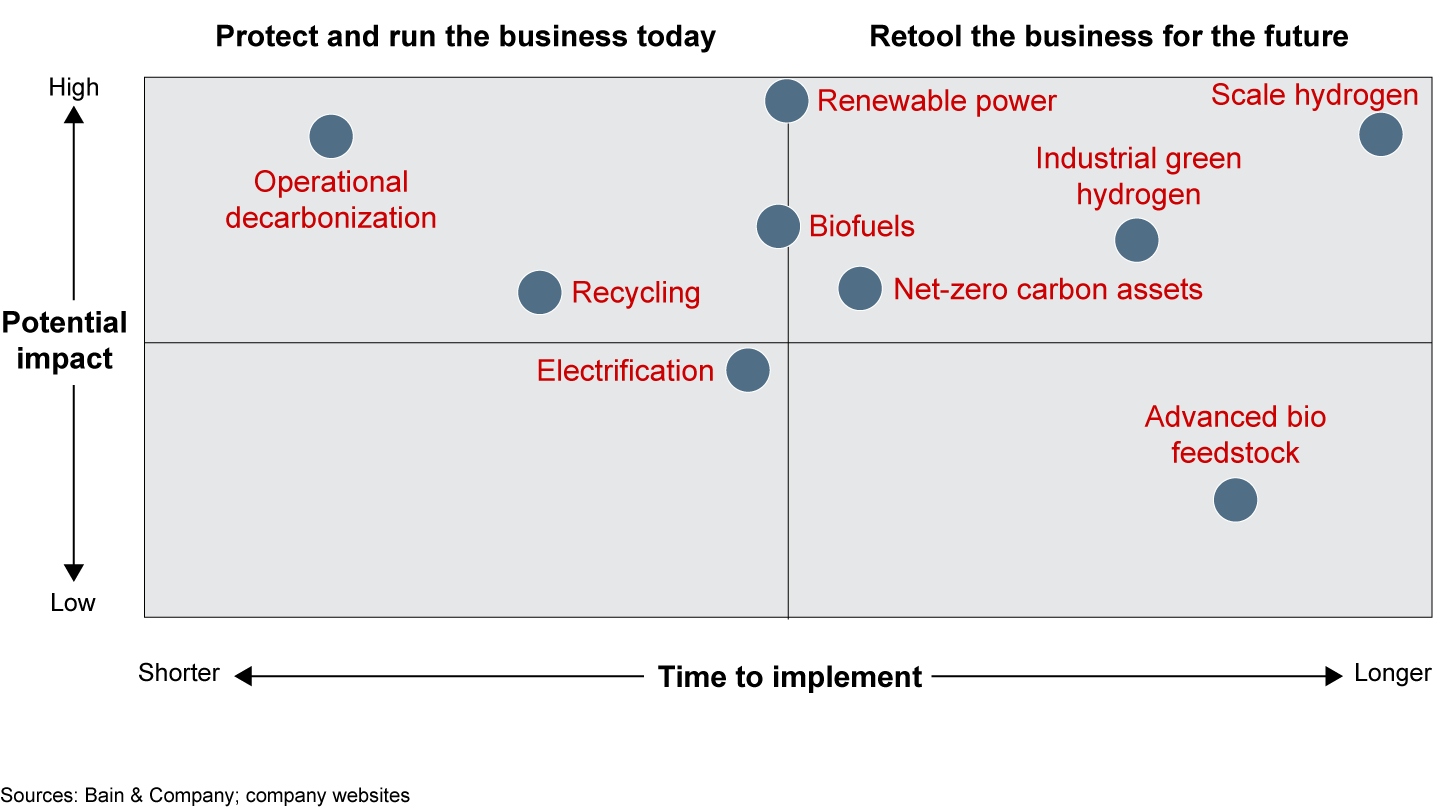
      Energy companies may need to prioritize sustainability initiatives based on their ability to deliver greater effects in less time

      Steps to pursue a zero-carbon future

      During the current crisis, oil and gas companies are freeing up company resources through new ways of working and lower levels of operational and capex activity. Some are diverting this expertise to initiatives that will help them reach their net-zero carbon goals (see Figure 4).

      Figure 4
      Some oil and gas majors have announced bold, specific decarbonization targets

      In this environment, leaders are bringing together the often fragmented and incremental sustainability efforts into a concentrated set of initiatives and establishing a transformation framework. Despite growing advocacy, initiatives and target setting, the oil and gas majors have yet to substantially reduce their Scope 1 and 2 carbon emissions: Between 2014 and 2018, eight majors reduced these emissions by only 5.6% on average. The Covid-19 slowdowns in industrial and commercial activity reduced global greenhouse gas emissions by about 17% in April, but that followed a decade of annual increases. Without concerted action, emissions are certain to spike back as lockdowns relax and resume their rise, and people and companies get back to work. To change the trajectory, a bolder approach is required.

      • Establish a short-term sustainability roadmap. Many companies have set long-term decarbonization goals, but what’s needed now are clear, short-term action plans with discernible outcomes, which complement long-term ambitions such as net zero by 2050 or sooner, with objectives and outcomes over the next 12 months, as well as two and five years out.

      • Use the operating model to clarify accountabilities, encourage change and professionalize sustainability. It took many years for the oil industry to develop effective ways to deploy digital capabilities. Experimental approaches in a wide range of settings had little effect until they were prioritized, accountabilities clarified, and pilots scaled up to deliver new ways of working. Similarly, a company’s sustainability efforts may have only token effects until the operating model reflects how and where the commercial business impact is visible and where differentiated capabilities will be developed. For an oil and gas company, embedding these changes into the corporate management system captures the lessons learned from pilot programs and how they will be scaled across the organization’s operations and products.

      • Reassign investment to clean energy projects. If the initial reaction to the collapse in demand was to delay or cancel pending oil and LNG projects, the evolving thinking is to consider how we might refocus a significant proportion (40% to 50%) of that capital into cleaner or zero-carbon energy projects that can meet production, economic and sustainability goals. For example, although the International Energy Association has said that the Covid-19 crisis will, for the first time in two decades, slow growth in renewable power generation, the IEA expects growth to rebound in 2021.

        Some oil and gas majors are taking the lead: ENI’s chief executive, Claudio Descalzi, has committed to building 55 gigawatts of renewable energy projects and reducing its product emissions by 80% by 2050. In late May, BP’s CEO, Bernard Looney, doubled down on his company’s commitment to reducing carbon, saying the pandemic had only deepened his and the board’s commitment to sustainability. And Shell’s CEO, Ben van Beurden, has told investors that the company would toughen existing targets to reduce the company’s net carbon footprint by 65% by 2050.

      These statements signal a strong desire among sector leaders to seize the opportunities in this moment in order to move the energy transition forward.

      The disruptions brought on by the coronavirus pandemic preclude any simple return to a previous status quo. Many traditional sources of capital are no longer available. Regeneration programs of nations and regional economic powers will give preference to greener initiatives; strings will be attached. Sector leaders who retool now for a more sustainable future will position themselves more competitively, for both funding and project approvals, ahead of those who hesitate or try to recreate the conditions that existed previously—and these are key elements in generating investment returns.

      The world has changed, and this is the moment to deliver sustainability gains while creating new value for the business.

      Related Insights

      Coronavirus

      The global Covid-19 pandemic has extracted a terrible human toll and spurred sweeping changes in the world economy. Across industries, executives have begun reassessing their strategies and repositioning their companies to thrive now and in the world beyond coronavirus.


      Autoren
      • Headshot of Peter Parry
        Peter Parry
        Advisory Partner, London
      Kontaktieren Sie uns
      Verwandte Branchen
      • Energiewirtschaft
      • Öl und Gas
      Ähnliche Beratungsangebote
      • Nachhaltigkeit
      Energiewirtschaft
      Fueling the Future: How Business, Finance, and Policy Can Accelerate the Clean Fuels Market

      Why global clean fuel ambitions are outpacing investment, and what leaders must do to unlock capital and scale viable projects.

      Mehr erfahren
      Energiewirtschaft
      When a New Organizational Structure Isn’t Enough: How to Truly Live Your Operating Model

      The goal of any organizational redesign is for people to work differently, but that only happens if leaders invest in changing the work itself.

      Mehr erfahren
      Nachhaltigkeit
      How AI Is Starting to Transform Circular Packaging

      There are 15 AI use cases companies across the value chain can use today to accelerate circularity.

      Mehr erfahren
      Energiewirtschaft
      Oil & Gas M&A

      Why some companies are winning by a wider margin.

      Mehr erfahren
      Nachhaltigkeit
      Exploring AI for Packaging Circularity

      AI is already creating value across the packaging lifecycle, from optimising design and reducing material use to improving sorting and traceability.

      Mehr erfahren
      First published in Juni 2020
      Markierungen
      • Energiewirtschaft
      • Nachhaltigkeit
      • Öl und Gas

      Wie wir unsere Kunden unterstützt haben

      Nachhaltigkeit An Oil and Gas Leader Creates a New Clean Energy Business

      Kundenbeispiel lesen

      Organisation Centralization boosts performance for an energy giant

      Kundenbeispiel lesen

      Mergers & Acquisitions Forecast backs a bet on shale services

      Kundenbeispiel lesen

      Möchten Sie mit uns in Kontakt bleiben?

      Wir unterstützen Führungskräfte weltweit, die kritischen Themen in ihrem Unternehmen zu adressieren. Gemeinsam schaffen wir nachhaltige Veränderungen und Ergebnisse.

      Bain Insights. Unsere Perspektive auf die kritischen Themen, mit denen sich international agierende Unternehmen konfrontiert sehen, finden Sie monatlich in Ihrem Postfach.

      *Ich habe die Datenschutzerklärung gelesen und akzeptiere sie.
      Bitte lesen Sie die Datenschutzerklärung und akzeptieren Sie diese.
      Bain & Company
      Contact us Sustainability Accessibility Rechtliche Hinweise Impressum Datenschutz Cookie-Richtlinie Sitemap Log In

      © 1996-2026 Bain & Company, Inc.

      Kontaktieren Sie Bain

      Wie können wir Ihnen helfen?

      • Business inquiry
      • Career information
      • Press relations
      • Partnership request
      • Speaker request
      Alle weltweiten Büros