

Artikel

A majority of EU consumers now use generative AI in their personal lives—up from only 5% two years ago (see Figure 1). Europeans mostly turn to generative AI for research, explanations, shopping recommendations, and news. Reported adoption, enthusiasm, and trust are particularly strong in Spain and Portugal compared with the European average (see Figure 2).
Figure 1
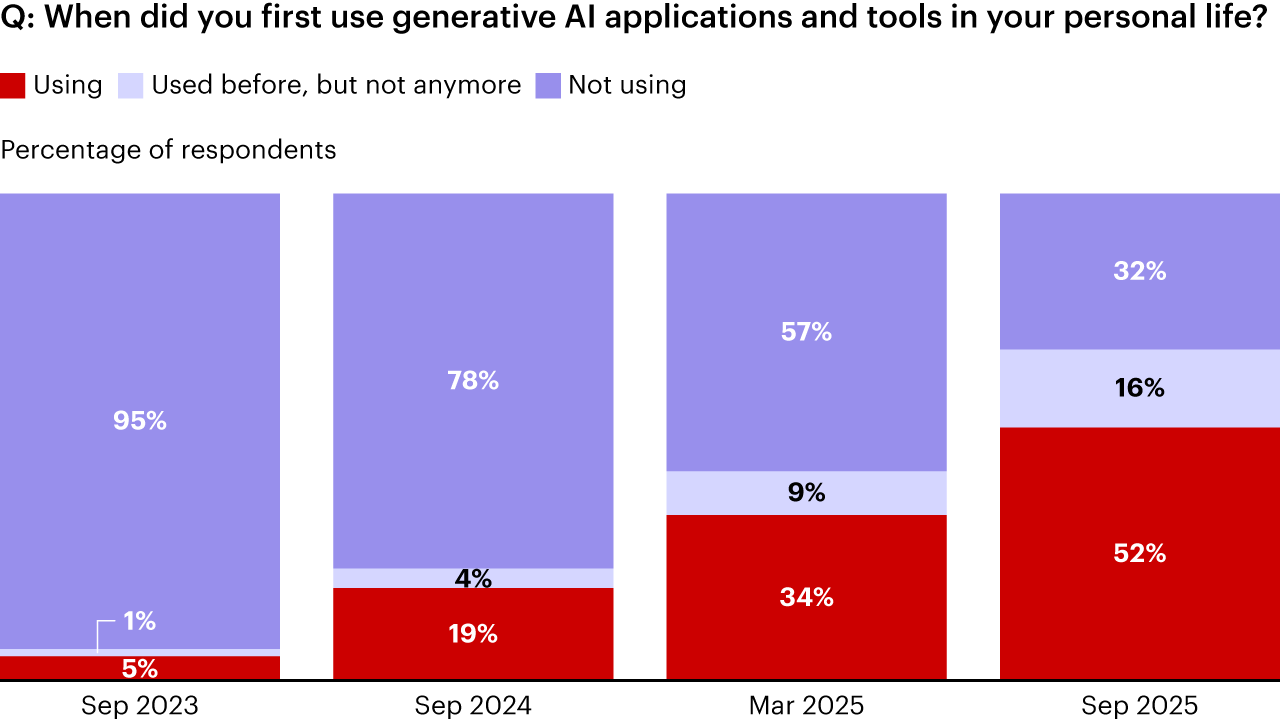

Anmerkungen Percentage “using generative AI tools and applications” is based on respondents currently using one or more generative AI tool and currently using generative AI applications and tools for personal use; 2025 = respondents who selected “in the last 6 months,” ‘6–12 months ago,” “1–2 years ago,” or “more than 2 years ago” in the 2025 survey; 2024 = respondents who selected any of the four options in the 2024 survey; 2023 = respondents who selected “1–2 years ago” or “more than 2 years ago” in the 2024 survey; 2022 = respondents who selected “more than 2 years ago” in the 2024 survey
Quelle Generative AI Consumer Survey, Sept 2025 (Europe, qualified valid n=7,298; UK n=1,503; France n=1,502; Germany n=1,502; Spain n=1,440; Portugal n=1,351)
Figure 2
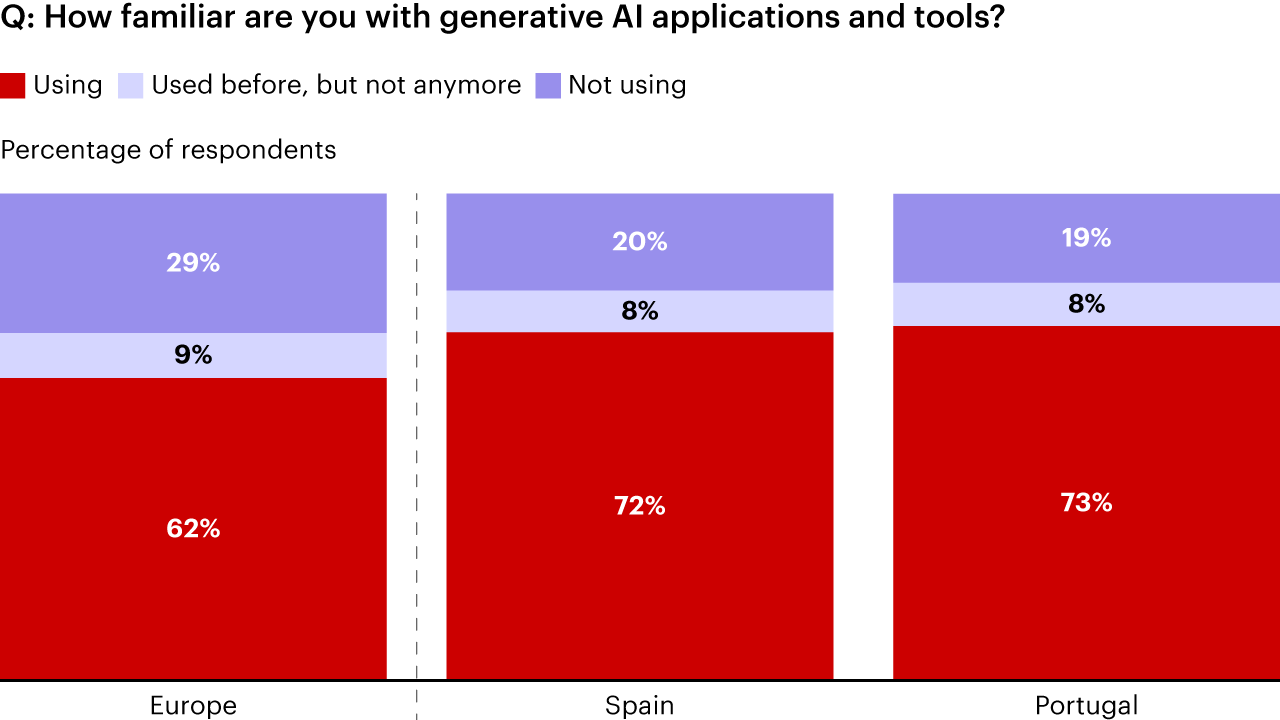

Note: Percentage “using generative AI tools and applications” is based on respondents currently using one or more generative AI tool
Quelle Generative AI Consumer Survey, Sept 2025 (Europe, qualified valid n=7,298; Spain n=1,440; Portugal n=1,351)Among non-users, 18% say they plan to start using generative AI in the next year. They said free subscriptions and greater transparency around data privacy and security would encourage adoption.
Adoption has been led by personal use, though work and school tasks drive daily use. About 35% of European generative AI users engage with these tools daily. Adoption rates are higher among Spanish (47%) and Portuguese (39%) consumers.
Younger generations report higher confidence in generative AI tools—although trust is strong overall (see Figure 3). Nearly half of European consumers (48%) “somewhat” or “completely” trust generative AI to provide accurate answers and information. Confidence is highest in Spain (53%) and Portugal (62%).
Figure 3
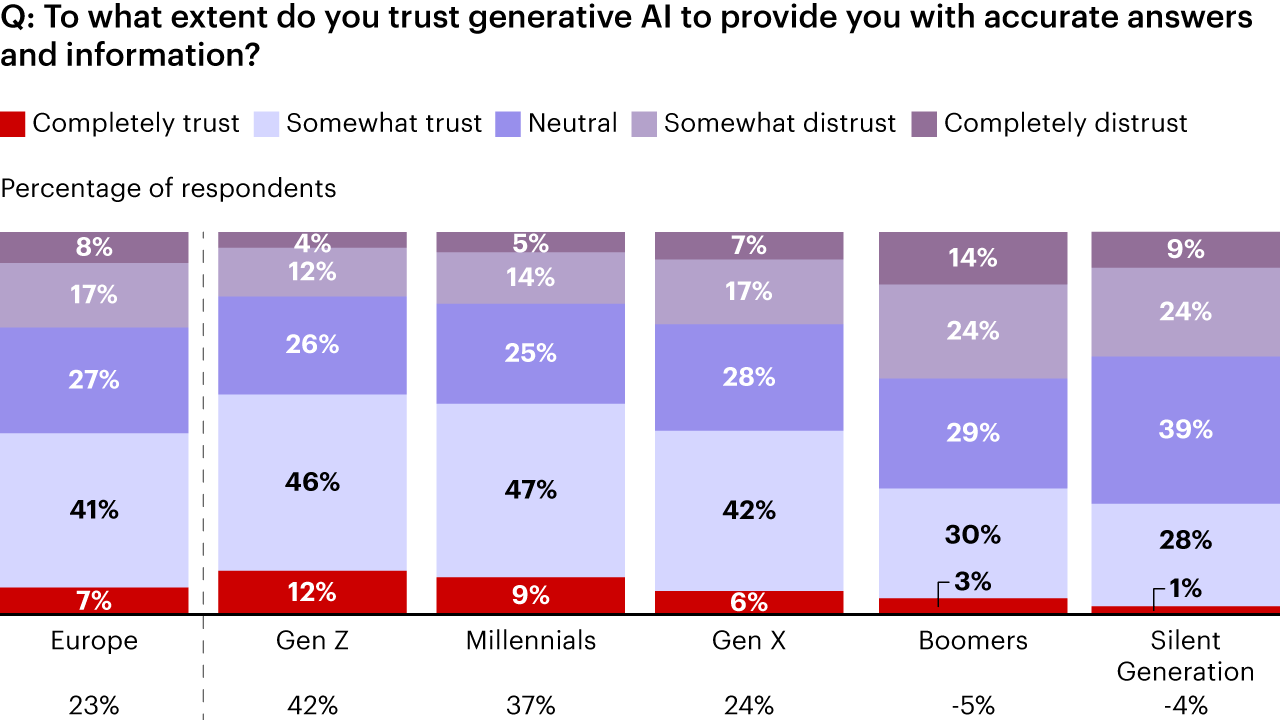

Note: Net trust percentage is calculated as the sum of respondents who selected “somewhat trust” and “completely trust,” subtracted by the sum of respondents who selected “somewhat distrust” and “completely distrust”; generation brackets are as follows: Gen Z = 1996–2015, Millennials = 1981–95, Gen X = 1965–80, Boomers = 1946–64, Silent generation = 1928–45
Quelle Generative AI Consumer Survey, Sept 2025 (Europe, qualified valid n=7,298; UK n=1,503; France n=1,502; Germany n=1,502; Spain n=1,440; Portugal n=1,351)Some of the reported differences may reflect variations in the survey sample composition across age groups. However, the higher levels of trust and usage reported in Portugal are observed across multiple age cohorts, suggesting the trend is broad-based rather than concentrated in a single generation.
Iberian consumers also report greater enthusiasm for future integration into home and family life, in-store shopping experiences, healthcare, and transportation.
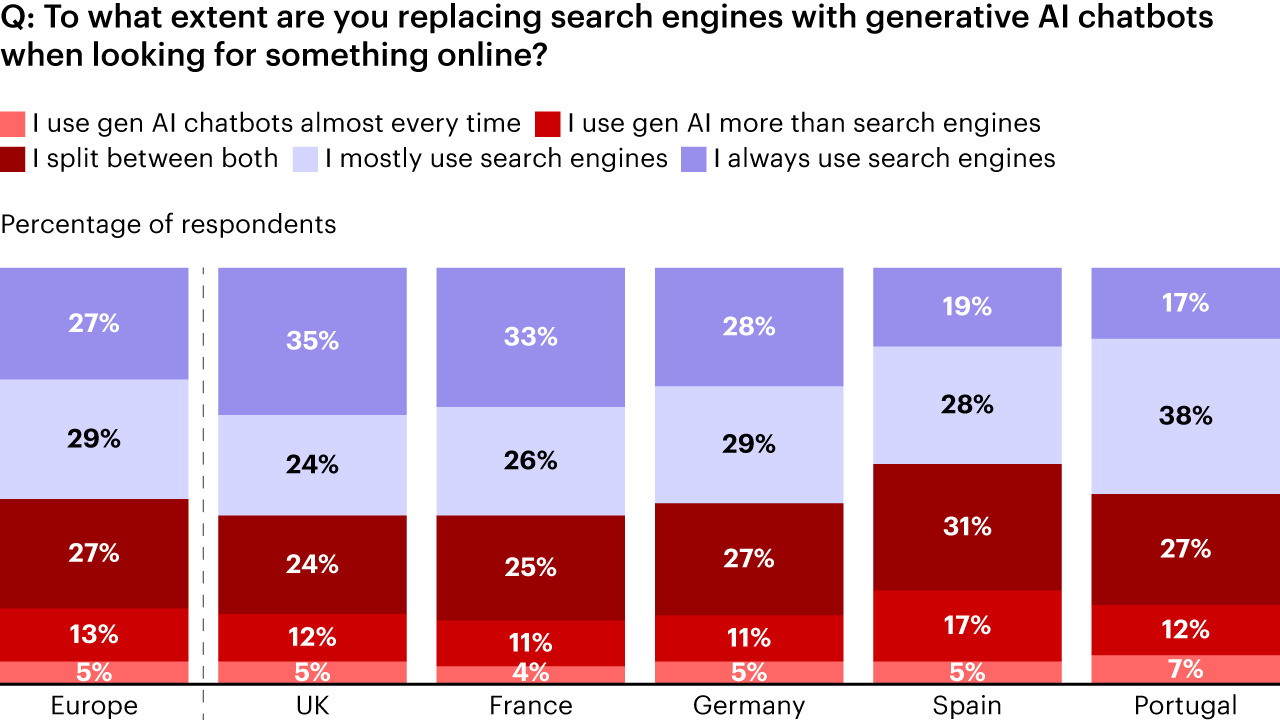
Nearly one in five EU consumers has replaced search engines with generative AI tools most of the time (see Figure 4). About 70% say AI-generated overviews provide sufficient answers “often” or “almost always.” Spanish consumers have the highest replacement rate, at 22%.
Figure 4

Generative AI is already reshaping the online shopping journey. Fifty-seven percent of European consumers use generative AI for shopping recommendations and decision support. Between 30% and 45% of European consumers say they use generative AI tools to support online shopping most of the time.
Among Iberian consumers, electronics and travel are the leading categories for AI-supported shopping. Spanish consumers also express the highest levels of trust in AI- and tech-led shopping journeys.
First published in April 2026