
Skip to Content
  • Standorte

    Standorte

    North & Latin America
    • Atlanta
    • Austin
    • Bogota
    • Boston
    • Buenos Aires
    • Chicago
    • Dallas
    • Denver
    • Houston
    • Lisbon
    • Los Angeles
    • Mexico City
    • Minneapolis
    • Monterrey
    • Montreal
    • New York
    • Rio de Janeiro
    • San Francisco
    • Santiago
    • São Paulo
    • Seattle
    • Silicon Valley
    • Toronto
    • Washington, DC
    Europe & Africa
    • Amsterdam
    • Athens
    • Berlin
    • Brussels
    • Copenhagen
    • Düsseldorf
    • Frankfurt
    • Helsinki
    • Istanbul
    • Johannesburg
    • Kyiv
    • Lisbon
    • London
    • Madrid
    • Milan
    • München
    • Oslo
    • Paris
    • Rome
    • Stockholm
    • Warsaw
    • Wien
    • Zürich
    Middle East
    • Doha
    • Dubai
    • Riyadh
    Asia & Australia
    • Bangkok
    • Beijing
    • Bengaluru
    • Brisbane
    • Ho Chi Minh City
    • Hong Kong
    • Jakarta
    • Kuala Lumpur
    • Manila
    • Melbourne
    • Mumbai
    • New Delhi
    • Perth
    • Seoul
    • Shanghai
    • Singapore
    • Sydney
    • Tokyo
    Alle Standorte Anzeigen
  • Alumni
  • Presse
  • Newsletter
  • Kontakt
  • DACH-Region | Deutsch

    Wählen Sie Ihre Region und Sprache

    Global
    • Global (English)
    North & Latin America
    • Brazil (Português)
    • Argentina (Español)
    • Canada (Français)
    • Chile (Español)
    • Colombia (Español)
    Europe, Middle East, & Africa
    • France (Français)
    • DACH-Region (Deutsch)
    • Italy (Italiano)
    • Spain (Español)
    • Greece (Elliniká)
    Asia & Australia
    • China (中文版)
    • Korea (한국어)
    • Japan (日本語)
  • Saved items (0)
    Saved items (0)

    You have no saved items.

    Inhalte, für die Sie sich interessieren, werden hier gespeichert und können später gelesen oder weitergeleitet werden.

    Explore Bain Insights
  • Branchenkompetenzen
    Hauptmenü

    Branchenkompetenzen

    • Luft- und Raumfahrt, Verteidigung
    • Agrarwirtschaft
    • Chemieindustrie
    • Infrastruktur und Bauwirtschaft
    • Konsumgüter
    • Finanzdienstleistungen
    • Gesundheitswesen
    • Maschinen- und Anlagenbau
    • Medienwirtschaft
    • Metallindustrie
    • Bergbau
    • Öl und Gas
    • Papier- und Verpackungsindustrie
    • Private Equity
      Branchenkompetenzen
      Private Equity
      • Due Diligence
      • Exit Planning
      • Firm Strategy & Operations
      • Portfolio Value Creation
    • Öffentlicher Sektor und Sozialwesen
    • Einzelhandel
    • Technologie
    • Telekommunikation
    • Transportwesen
    • Reise- und Freizeitbranche
    • Versorgung und erneuerbare Energien
  • Managementkompetenzen
    Hauptmenü

    Managementkompetenzen

    • Customer Experience
    • ESG
    • Innovation
    • M&A
    • Operations
    • People & Organization
    • Private Equity
    • Sales & Marketing
    • Strategie
    • KI, Einblicke und Lösungen
    • Technologie
    • Transformation
  • Digital
  • Publikationen
    Hauptmenü

    Publikationen

    • Branchenthemen
    • Managementthemen
    • Bain-Bücher
    Alle Publikationen
    Ausgewählte Themen
    • Resilienz in der globalen Krise
    • M&A Report
    • Private Equity Podcast
    • Midyear Private Equity Report
    • Agile
    • Engineering Report
    • Digital Transformation
    • Elements of Value®
    • Firm of the Future
    • Nachhaltigkeitsstudie
    • Macro Trends
    • Future of Consumption
    • Weltwirtschaftsforum (WEF)
  • Über uns
    Hauptmenü

    Über uns

    • Was wir bieten
    • Unser Ansatz
    • Unser Team
    • Game Changer Award
    • Female Allstar Board
    • Messbare Ergebnisse (EN)
    • Auszeichnungen
    • Globale Partnerschaften
    • The Mission
    Further: Our global responsibility
    • Vielfalt & Chancengleichheit
    • Soziale Verantwortung
    • Sustainability
    Erfahren Sie mehr zu "Further"
  • Karriere
    Hauptmenü

    Karriere

    • Dein Einstieg
      Karriere
      Dein Einstieg
      • Find Your Place
      • Unsere Arbeitsbereiche
      • Unsere Teams
      • Angebote für Studierende
      • Praktika & Programme
      • Recruiting-Events
    • Arbeiten bei Bain
      Karriere
      Arbeiten bei Bain
      • Blog: Inside Bain
      • Karriere Stories
      • Unsere Bainies
      • Office-Standorte
      • Weiterentwicklung
      • Affinity Groups
      • Deine Benefits
    • Impact Stories
    • Deine Bewerbung
      Karriere
      Deine Bewerbung
      • Das erwartet dich
      • Der Interviewprozess
    FIND JOBS
  • Standorte
    Hauptmenü

    Standorte

    • North & Latin America
      Standorte
      North & Latin America
      • Atlanta
      • Austin
      • Bogota
      • Boston
      • Buenos Aires
      • Chicago
      • Dallas
      • Denver
      • Houston
      • Lisbon
      • Los Angeles
      • Mexico City
      • Minneapolis
      • Monterrey
      • Montreal
      • New York
      • Rio de Janeiro
      • San Francisco
      • Santiago
      • São Paulo
      • Seattle
      • Silicon Valley
      • Toronto
      • Washington, DC
    • Europe & Africa
      Standorte
      Europe & Africa
      • Amsterdam
      • Athens
      • Berlin
      • Brussels
      • Copenhagen
      • Düsseldorf
      • Frankfurt
      • Helsinki
      • Istanbul
      • Johannesburg
      • Kyiv
      • Lisbon
      • London
      • Madrid
      • Milan
      • München
      • Oslo
      • Paris
      • Rome
      • Stockholm
      • Warsaw
      • Wien
      • Zürich
    • Middle East
      Standorte
      Middle East
      • Doha
      • Dubai
      • Riyadh
    • Asia & Australia
      Standorte
      Asia & Australia
      • Bangkok
      • Beijing
      • Bengaluru
      • Brisbane
      • Ho Chi Minh City
      • Hong Kong
      • Jakarta
      • Kuala Lumpur
      • Manila
      • Melbourne
      • Mumbai
      • New Delhi
      • Perth
      • Seoul
      • Shanghai
      • Singapore
      • Sydney
      • Tokyo
    Alle Standorte Anzeigen
  • Alumni
  • Presse
  • Newsletter
  • Kontakt
  • DACH-Region | Deutsch
    Hauptmenü

    Wählen Sie Ihre Region und Sprache

    • Global
      Wählen Sie Ihre Region und Sprache
      Global
      • Global (English)
    • North & Latin America
      Wählen Sie Ihre Region und Sprache
      North & Latin America
      • Brazil (Português)
      • Argentina (Español)
      • Canada (Français)
      • Chile (Español)
      • Colombia (Español)
    • Europe, Middle East, & Africa
      Wählen Sie Ihre Region und Sprache
      Europe, Middle East, & Africa
      • France (Français)
      • DACH-Region (Deutsch)
      • Italy (Italiano)
      • Spain (Español)
      • Greece (Elliniká)
    • Asia & Australia
      Wählen Sie Ihre Region und Sprache
      Asia & Australia
      • China (中文版)
      • Korea (한국어)
      • Japan (日本語)
  • Saved items  (0)
    Hauptmenü
    Saved items (0)

    You have no saved items.

    Inhalte, für die Sie sich interessieren, werden hier gespeichert und können später gelesen oder weitergeleitet werden.

    Explore Bain Insights
  • Branchenkompetenzen
    • Branchenkompetenzen

      • Luft- und Raumfahrt, Verteidigung
      • Agrarwirtschaft
      • Chemieindustrie
      • Infrastruktur und Bauwirtschaft
      • Konsumgüter
      • Finanzdienstleistungen
      • Gesundheitswesen
      • Maschinen- und Anlagenbau
      • Medienwirtschaft
      • Metallindustrie
      • Bergbau
      • Öl und Gas
      • Papier- und Verpackungsindustrie
      • Private Equity
      • Öffentlicher Sektor und Sozialwesen
      • Einzelhandel
      • Technologie
      • Telekommunikation
      • Transportwesen
      • Reise- und Freizeitbranche
      • Versorgung und erneuerbare Energien
  • Managementkompetenzen
    • Managementkompetenzen

      • Customer Experience
      • ESG
      • Innovation
      • M&A
      • Operations
      • People & Organization
      • Private Equity
      • Sales & Marketing
      • Strategie
      • KI, Einblicke und Lösungen
      • Technologie
      • Transformation
  • Digital
  • Publikationen
    • Publikationen

      • Branchenthemen
      • Managementthemen
      • Bain-Bücher
      Alle Publikationen
      Ausgewählte Themen
      • Resilienz in der globalen Krise
      • M&A Report
      • Private Equity Podcast
      • Midyear Private Equity Report
      • Agile
      • Engineering Report
      • Digital Transformation
      • Elements of Value®
      • Firm of the Future
      • Nachhaltigkeitsstudie
      • Macro Trends
      • Future of Consumption
      • Weltwirtschaftsforum (WEF)
  • Über uns
    • Über uns

      • Was wir bieten
      • Unser Ansatz
      • Unser Team
      • Game Changer Award
      • Female Allstar Board
      • Messbare Ergebnisse (EN)
      • Auszeichnungen
      • Globale Partnerschaften
      • The Mission
      Further: Our global responsibility
      • Vielfalt & Chancengleichheit
      • Soziale Verantwortung
      • Sustainability
      Erfahren Sie mehr zu "Further"
  • Karriere
    Häufige Suchanfragen
    • Agil
    • Digital
    • Strategie
    Vorherige Suchanfragen
      Zuletzt besuchte Seiten

      Content added to saved items

      Saved items (0)

      Removed from saved items

      Saved items (0)

      Brief

      The Art of Battling Telecom Goliaths

      The Art of Battling Telecom Goliaths

      A handful of challengers are writing a new playbook for growing market share and disrupting incumbents.

      Von Miguel Simoes de Melo, Frédéric Debruyne, Dunigan O'Keeffe, und Jean-Philippe Biragnet

      • Min. Lesezeit
      }

      Brief

      The Art of Battling Telecom Goliaths
      en
      Auf einen Blick
      • In recent years, few challengers have successfully taken on telecom incumbents. Only one-fifth of challengers have increased both revenue and free cash flow since 2010.
      • Winners make clear choices on where to compete. They deliver value in customer episodes, keep their operations lean, deploy capital strategically and use an Agile approach.
      • This challenger playbook has become even more critical as telecom enters a new phase of competition triggered by digital disruption.

      In recent years, the telecommunications industry has gone through a period of consolidation and convergence. Many challengers have found themselves bought out by the very incumbents they had once hoped to dislodge. Established companies that formerly specialized in fixed line, broadband, cable or mobile now provide all those services under one roof. With greater scale and wider scope, these incumbents can invest more in networks and spend more on marketing, enabling them to get even larger and more powerful.

      In this bigger-is-better environment, a handful of competitors have flouted conventional wisdom and taken on the incumbents. These select challengers have not only survived, they have thrived. They have grown profitably and created value consistently for their shareholders, using strategies and execution playbooks that hold powerful lessons for all.

      Just how rare is success for telecom challengers? Of the 83 contenders in 20 markets analyzed by Bain & Company, only 18 of them (or 22%) have grown both their revenue and free cash flow in absolute terms and increased their share of the general profit pool from 2010 to 2017. In other words, most challengers have not gained ground; they have marked time (see Figure 1).

      Figure 1
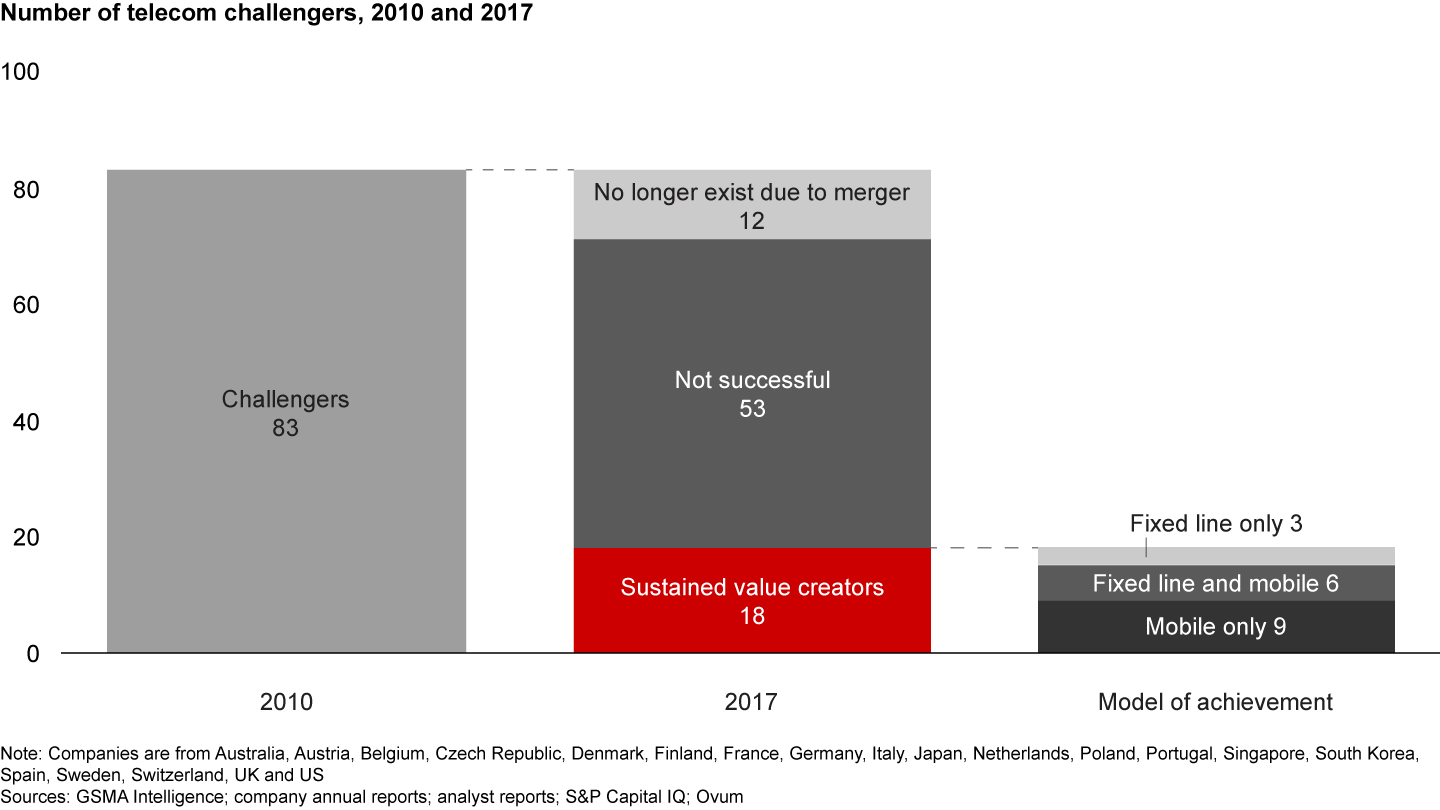
      Only one-fifth of telecom challengers have consistently increased both cash flow and share of profits since 2010
      Only one-fifth of telecom challengers have consistently increased both cash flow and share of profits since 2010
      Only one-fifth of telecom challengers have consistently increased both cash flow and share of profits since 2010

      While there is no one recipe for success, the challengers that stand out on performance have embraced five key principles—all underpinned by a customer-centric approach and a spirit of insurgency.

      • They make clear choices on “where to play” across customer segments, channels, products and geographies. They aim for scale and differentiation in select battlegrounds and stay away from markets where they do not think they can gain an edge.
      • They deliver “more for less,” by developing tailored, cost-effective value propositions for specific customer episodes.
      • They keep their operations lean, supported by a radically simplified and digital operating model
      • They deploy capital as a strategic weapon. They invest wisely, channeling scarce resources to specific battlegrounds. Where appropriate, they form partnerships and make acquisitions.
      • They develop an effective leadership team and use an Agile approach. They sustain an insurgency mission and a “challenger’s mindset,” avoiding silos, corporate politics, bureaucracy and lethargy.

      This challenger playbook has become even more critical as the telecom industry enters a new phase of competition triggered by digital disruption. Thanks to new technologies and new approaches—among them, cloud-based storage and data processing; scalable, modular IT; and Agile work processes—challengers can compete effectively with less capital.

      For challengers that master this new competitive environment, the opportunity is huge. Our experience shows that telcos can improve EBITDA by about 60% within three to five years—by increasing revenues from existing customers, generating new revenue streams from new products, lowering operating expenses, and spending capital more efficiently. A new breed of challenger is ascendant. Those that succeed will be the ones that fully embrace the challenger playbook and adapt it for a digital age.

      Winning in an era when size matters less

      Throughout the evolution of telecom competition, one premise was always believed to be true: it pays to be big. Scale players can afford the large amount of capital necessary to invest in the next generation of network technology and IT infrastructure. In addition, they can generate sufficient cash flow to fund the substantial marketing and sales efforts to build a national brand.

      However, size alone is no guarantee of success. In fact, it has not been for a long time. Our analysis across 20 markets shows that only 15% of incumbents have won both market share and increased free cash flow since 2010. Most of the telecom Goliaths have been struggling in recent years, with many of them managing for cost while suffering customer defections and hits to their top and bottom lines.

      On the other hand, challengers have not had it easy, either. Multiple players have stayed stagnant. Some grew for a few years, then drifted in profitability and sales. Others have invested aggressively in revenue growth, but with limited returns for their shareholders. Only a few companies have consistently created value.

       Miguel Simoes de Melo, a partner with Bain's Telecommunications practice, discusses how challengers have embraced five key strategic principles to win against larger players in the market. 

      Winning challengers have delivered value in one of two ways. The first group, which includes T-Mobile in the US and Unitymedia in Germany, have excelled at “customer-led growth.” They target a broad spectrum of customers and manage to simultaneously increase market share, profitability and free cash flow.  The second group, which includes Vodafone Hutchison Australia and the UK company Three, has pursued “profitability-first growth.” They increase profits and free cash flow, while containing costs and focusing on specific market segments.

      Among the winners in the customer-led group are companies that deliver tailored products, such as “all you can eat” fixed-price tariffs and discounted calling and data plans for families. These companies prioritize their investments, focusing on high-volume areas such as mobile broadband for cities, and they excel at customer service, particularly in digital channels.

      A new digital reality

      Whether they take a customer-led or a profitability-first approach, challengers now face the task of adapting the recipe for success to the new realities of the marketplace. Forward-looking companies are ready to take advantage of several major trends that are reshaping the competitive landscape.

      • Changing consumer preferences. Customers are becoming ever more demanding. They expect fast, clear connections; personalized products and plans; and “always available,” round-the-clock digital service.
      • The rise of data and artificial intelligence (AI). Telcos can gather and harness more data than ever before. Using AI, they can automate internal and customer-facing processes. With advanced analytics (AA), they can more accurately predict customer preferences.
      • The evolution of IT. Thanks to cloud technology, telcos can store and process data more efficiently. Using scalable modular architecture, microservices and open application programming interface (API) technology, they can build apps faster.
      • New network technologies. A raft of innovations will allow operators to improve network speed and capabilities, including 5G, software-defined networking and network function virtualization.
      • Flexible operating models. Telcos can adopt Agile ways of working and take advantage of shared IT tools to use talent more effectively.

      As they watch these trends unfold, telcos are refining the five principles of the challenger playbook. They are using data-driven insights to augment their understanding of where to play. By applying AA, they can hone their value propositions into even more targeted microsegments, with tailor-made strategies for each niche. Technology can also help challengers keep their operations lean, with an approach that is both simple and digital. With open APIs and new network technologies, they can be more nimble and strategic about the way they deploy capital. With help from shared IT tools, they can further refine their Agile ways of working.

      Our experience shows that challengers that follow this new playbook can reap multiple benefits. Much of the potential 60% boost to EBIDTA within five years comes from serving customers better. By providing customers with tailor-made offerings and efficient, digital-first service, companies can increase their Net Promoter Score® by 20 to 30 points. As churn shrinks, the lifetime value of their customers rises. Happy customers are more likely to refer friends and colleagues, thus lowering the marginal cost of acquiring new subscribers (see Figure 2).

      Figure 2
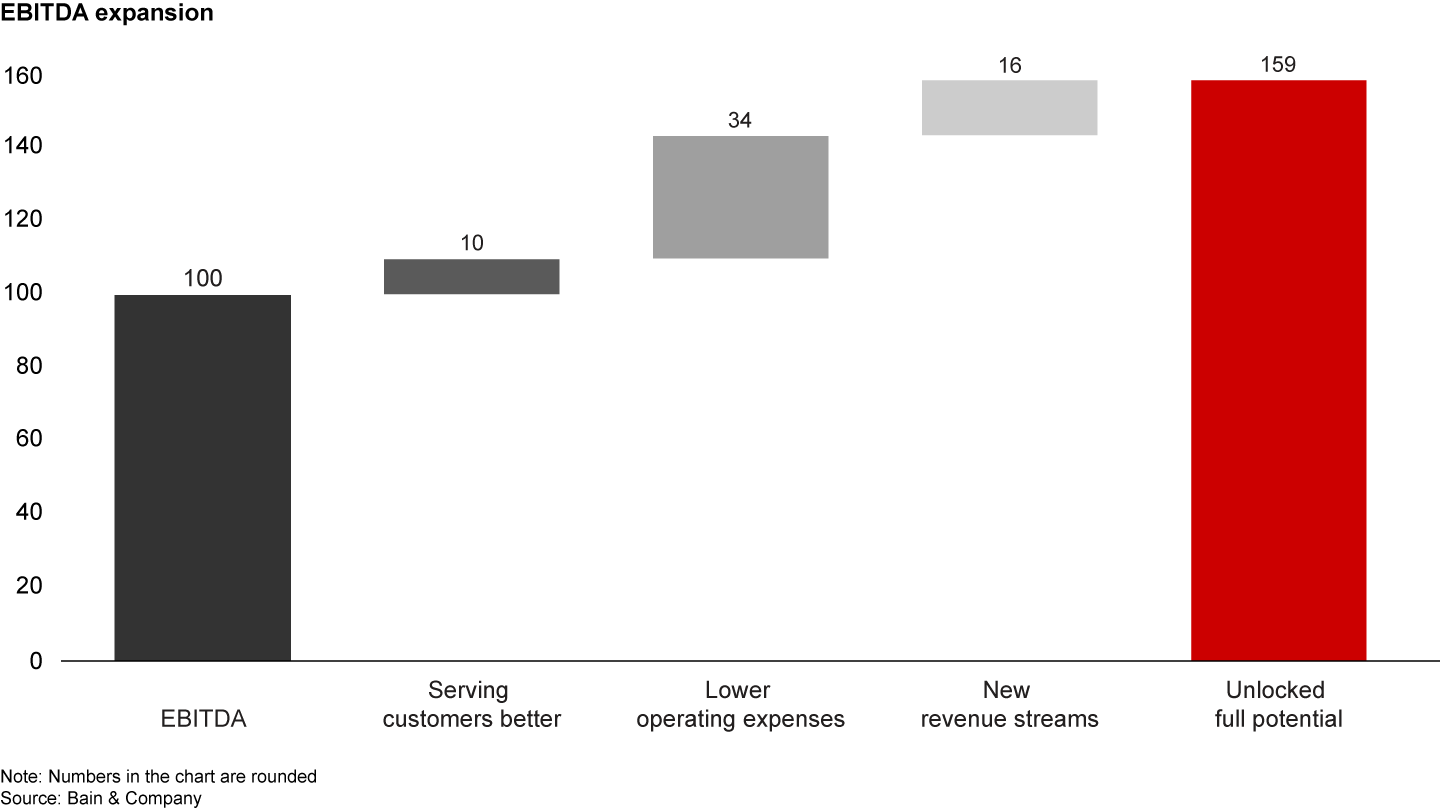
      Successful telco challengers have increased EBITDA by 60% in five years
      Successful telco challengers have increased EBITDA by 60% in five years
      Successful telco challengers have increased EBITDA by 60% in five years

      Satisfied customers are also inclined to spend more, and microsegmentation means they are more apt to find products that fit their needs. In addition, the new generation of contenders can cut operating expenses even further, by taking a series of steps. They can shift to a digital-first, omnichannel strategy and use AA to predict and preemptively resolve customer needs.

      The telecom industry has come a long way from the days when state-owned and state-sanctioned monopolies and oligopolies dominated most markets. In the past decade, challengers, helped by continual advances in technology, have upended the industry, bringing new and improved services and lower prices to consumers. In recent years, however, only a few of these challengers have prospered. Those that have succeeded have excelled at putting into practice the five ingredients of the challenger playbook. The contenders that thrive as telecom enters its next era of competition will be those that adapt the playbook for a marketplace where scale matters less than ever, and a trenchant, customer-centric strategy can carry the day.

      Miguel Simoes de Melo is a partner with Bain’s Telecommunications practice and is based in London. Frédéric Debruyne leads the firm’s Telecommunications practice in Europe, the Middle East and Africa and is based in Brussels. Dunigan O’Keeffe is a partner in the Telecommunications practice and is based in San Francisco. Jean-Philippe Biragnet leads the Telecommunications practice in Asia-Pacific and is based in Tokyo.  

      Net Promoter Score®, Net Promoter System®, Net Promoter® and NPS® are registered trademarks of Bain & Company, Inc., Fred Reichheld and Satmetrix Systems, Inc.

      Autoren
      • Headshot of Miguel Simoes de Melo
        Miguel Simoes de Melo
        Partner, London
      • Headshot of Frédéric Debruyne
        Frédéric Debruyne
        Advisory Partner, Brussels
      • Headshot of Dunigan O'Keeffe
        Dunigan O'Keeffe
        Partner, San Francisco
      • Headshot of Jean-Philippe Biragnet
        Jean-Philippe Biragnet
        Partner, Tokyo
      Kontaktieren Sie uns
      Verwandte Branchen
      • Telekommunikation
      Telekommunikation
      Shift to Vertical: David Haines, Group CEO, Flora Food Group

      What does it take to stay connected to your customers when scale and complexity threaten to pull you away? 

      Mehr erfahren
      Telekommunikation
      Telecommunications M&A

      Deal activity slowed considerably in 2025 amid macroeconomic headwinds and strategic investments in areas such as AI and fiber networks.

      Mehr erfahren
      Telekommunikation
      Tech Is Giving Telcos a Winning Edge

      As agentic AI and autonomous networks advance, telcos with a stronger tech focus often generate higher returns and growth.

      Mehr erfahren
      Telekommunikation
      Sovereign Tech, Fragmented World

      In a post-globalized era of tariffs and decoupling, semiconductors and sovereign AI are realigning global power.

      Mehr erfahren
      Telekommunikation
      Accelerating Autonomous Networks: A Reality Check for Telcos

      Early leaders are using AI to reengineer core business processes, but cultural and technological hurdles remain.

      Mehr erfahren
      First published in Oktober 2018
      Markierungen
      • Telekommunikation

      Wie wir unsere Kunden unterstützt haben

      Nachhaltigkeit Orange Charts a Bold Course to 2030 and Beyond

      Kundenbeispiel lesen

      Kundenstrategie und Marketing Customer segmentation aligns TelecomCo's growth strategy with consumers' needs

      Kundenbeispiel lesen

      Performance Improvement Transforming a telecommunications giant

      Kundenbeispiel lesen

      Möchten Sie mit uns in Kontakt bleiben?

      Wir unterstützen Führungskräfte weltweit, die kritischen Themen in ihrem Unternehmen zu adressieren. Gemeinsam schaffen wir nachhaltige Veränderungen und Ergebnisse.

      Bain Insights. Unsere Perspektive auf die kritischen Themen, mit denen sich international agierende Unternehmen konfrontiert sehen, finden Sie monatlich in Ihrem Postfach.

      *Ich habe die Datenschutzerklärung gelesen und akzeptiere sie.
      Bitte lesen Sie die Datenschutzerklärung und akzeptieren Sie diese.
      Bain & Company
      Contact us Sustainability Accessibility Rechtliche Hinweise Impressum Datenschutz Cookie-Richtlinie Sitemap Log In

      © 1996-2026 Bain & Company, Inc.

      Kontaktieren Sie Bain

      Wie können wir Ihnen helfen?

      • Business inquiry
      • Career information
      • Press relations
      • Partnership request
      • Speaker request
      Alle weltweiten Büros