

Brief
It’s nice to have satisfied customers who make repeat purchases. But apart from the general brand glow that comes from loyal customers, why should a company care about loyalty?
Because greater loyalty spurs sustained growth. Bain & Company’s ongoing research on value creation consistently shows that public companies with superior sales and profit growth, and whose earnings exceed their cost of capital, have twice the level of customer advocacy as companies with average or inferior performance.
Most successful companies, no matter what the industry, know intuitively that the loyal and vocal promoters of their brand are worth more to the business than other customers. "Detractor" customers, by contrast, can wreak havoc by defecting to rivals, driving up costs to serve, crimping sales and tarnishing the brand’s reputation.
The complex challenge for any company is to understand the root causes of advocacy and detraction, and then to invest selectively in loyalty-building initiatives that generate a high return and lead to profitable revenue growth.
In online retail, for instance, eBay has become a market leader through a series of daily decisions and processes that add up to delight customers. Those promoters in turn refer many of eBay’s new customers, which gives eBay several economic advantages. One is that referred customers cost less to serve, because they've already been coached by a promoter on how the website works, and they often turn to friends who solve their problems instead of relying on eBay employees.
Australian companies looking to boost sustainable organic growth need to crack several parts of the challenge simultaneously:
- Segment their customers, assess the value of each segment and decide which to focus on.
- Figure out how to meet the priorities of target segments and customers with a distinctive offering.
- Deliver that offering in a way that is consistent with what the brand promises.
- Design processes that channel a steady flow of customer feedback to frontline employees and managers so they can continually learn from, adapt and optimise the customer experience.
Accomplishing these objectives requires a common framework, language and set of metrics that are embraced at all levels of the organisation. Many firms in Australia have discovered that the Net Promoter® disciplines provide such a comprehensive system.
A Net Promoter company regularly surveys its customers, asking them the “ultimate question,” which is typically: “On a scale of zero to 10, how likely is it that you would recommend this company to a friend or colleague?” Companies sort their customers into promoters (9s and 10s), passives (7s and 8s) and detractors (0s through 6s). The Net Promoter score (NPS®) is simply the percentage of promoters minus the percentage of detractors. Companies then analyse how each category of customers exhibits different patterns of behaviour in terms of referral, service interactions, retention and so on. The corresponding effects on profitability can then be quantified with some precision.
Many companies that sustain high levels of advocacy use the scoring as one element in the Net Promoter SystemSM, which is a way of running a business. Net Promoter companies commit to specific processes that help everyone focus on earning the passionate loyalty of customers. They use customer feedback to understand what they are doing right and what they are doing wrong. That feedback spurs them to discover the root causes of problem areas and then to take action to improve the experience.
Sorting customers into promoter, passive and detractor categories is valuable to see how each category can strengthen or corrode a company’s economics. Promoters of a company or brand have a higher lifetime value to the company than do passives or detractors. Promoters tend to spend more with the company, they stay longer, they’re less costly to service, they make referrals to friends, family or colleagues—who have a higher propensity to become promoters themselves— and they sometimes are willing to pay higher prices for a favoured provider or brand. Detractors have the reverse effect, and today their negative comments can be multiplied with alarming speed on social networks.
All of the above traits can be quantified. Indeed, new analysis of companies in 19 industries in Australia by Bain & Company shows that a promoter is worth, on average, about two and half times a detractor in lifetime value.
Not only can companies estimate the relative profitability of promoters, passives and detractors, they can also gauge the impact that proposed actions and initiatives will have on customer behaviour and thus on financial performance. Using loyalty data to inform investment decisions and trade-offs that bear on the customer’s experience, in short, can translate into better economics for the business.
What Australian customers are saying about their providers
How are the dynamics of loyalty playing out in Australia? To gain a detailed understanding of the marketplace throughout the country, Bain undertook a survey of more than 9,000 Australian consumers covering 19 industries in the retail, financial services, telecommunications, airlines and utilities sectors. The survey, conducted by DBM Consultants, covered the ultimate question (“How likely is it you would recommend…”) plus follow-up questions about the reasons for promotion or detraction. We analysed specific consumer behaviours for their effects on company economics.
Within each industry, there’s a significant variation in loyalty scores (see Figure 1). The average NPS is negative in 16 out of 19 sectors, ranging from negative 44 for gas utilities to 24 for online retail. But each industry also has one or a few clear loyalty leaders with a much higher proportion of their customer base who are promoters.
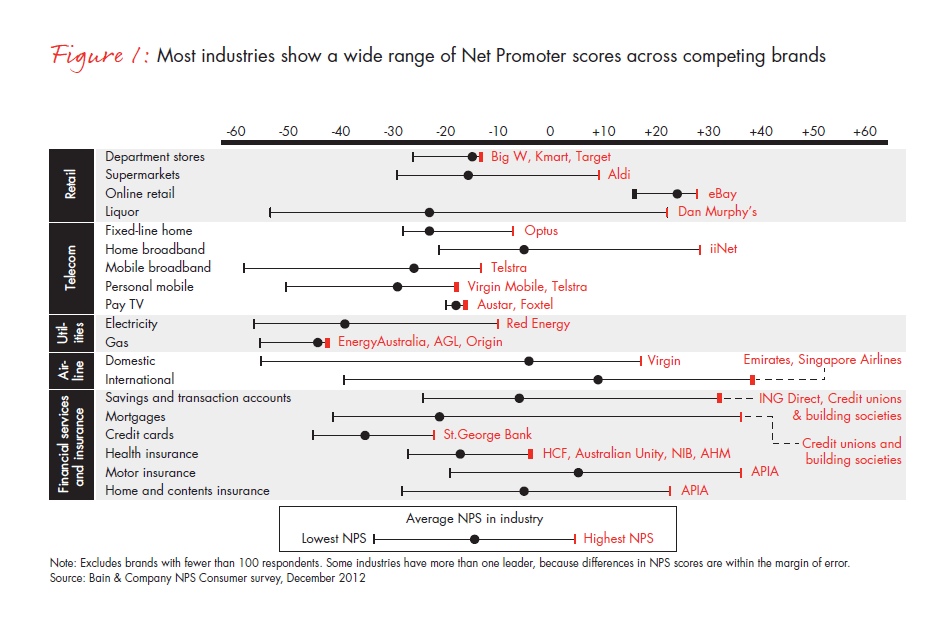
In aggregate, loyalty leaders have an NPS that’s 20 points higher than their industry average. The best performer relative to competitors is Dan Murphy’s, with an NPS 45 points higher than the average liquor retailer. Dan Murphy’s offers a broad range of beer, wine and spirits at competitive prices. Well-trained employees advise customers on product choices, and customers seeking extra convenience can also shop through the chain’s website. Dan Murphy’s promoters buy a large portion of their liquor there and frequently refer family and friends.
We would caution that comparing loyalty scores across industries does not lead to valid insights. Some industries score relatively high or low throughout the world. While it can be motivating for senior managers to set their sights on matching the NPS of a perpetual leader, such as Emirates, it is typically more useful to understand the loyalty dynamics of one’s direct competitors and those in related product markets. Taking a measure of the competition makes for a valid comparison over time by equalising for cyclical anomalies and by giving an unvarnished appraisal of one’s standing in the relevant marketplace.
Across industries, we find that promoters behave differently than detractors in ways that lead to substantial variations in lifetime value for a company (see Figure 2):
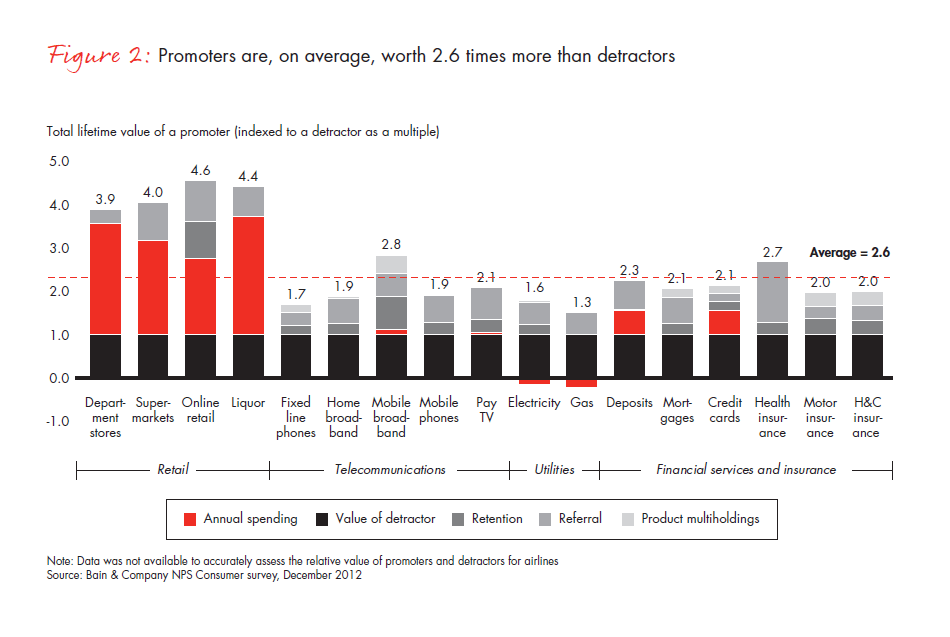
- Retention rate. Promoters generally defect at lower rates than detractors, which means they have longer and more profitable relationships with a company.
- Share of spending. A company’s share of annual spending increases as promoters choose its products over those of competitors, upgrade to higher-priced products or services and respond with enthusiasm to new offerings.
There are instances when higher loyalty does not correlate with higher spending, mainly when consumers don’t have much choice about the level of spending. Customers who are advocates of their utility company do not use more electricity or gas. In these cases, understanding customers’ needs and raising levels of loyalty is still important, because this leads to referrals and retention. Utilities, for instance, can find ways to get customers more engaged, by helping them become more energy efficient or choose environmentally sound energy plans.
- Word of mouth referrals. The financial impact of positive referrals is usually significantly greater than senior managers realise. Social media platforms and online customer reviews amplify that effect.
- Pricing. Promoters are often less price sensitive than other customers; they rarely need a discount to trigger purchases. The opposite applies to detractors.
- Cost efficiencies. Promoters typically cost less to serve than detractors: They complain less often, rack up fewer credit losses and are more likely to use self-service tools online. They bring a company more new customers, reducing sales, marketing and other customer acquisition costs. Because promoters have longer tenures with a provider, their acquisition and start-up costs can be spread over more years of revenue. And their greater propensity to upgrade on products often raises the margins on their business.
Bain’s survey of Australian consumers reveals how several of these factors contribute to company economics in different industries. For example, the survey finds that referrals are important in many sectors in Australia, with promoters on average making nearly three times more positive comments and referrals for a company they buy from than detractors. And people who decide to become customers as a result of a referral are almost three times more likely to become promoters of that company than the average customer. Disparaging comments from detractors, by contrast, can do tremendous damage that often outweighs any positive referrals a company receives from others.
While all factors matter to some extent in every industry, the relative importance of each factor depends on the type of business (see below, “How the loyalty equation varies by industry”).
When doing their own Net Promoter analysis, companies can gain even more detailed data showing which factors matter most to advocacy, which interactions with customers are causing problems and what remedies will be most cost effective. Let’s look at how companies can put this knowledge to good use in improving their economics (see Figure 3).
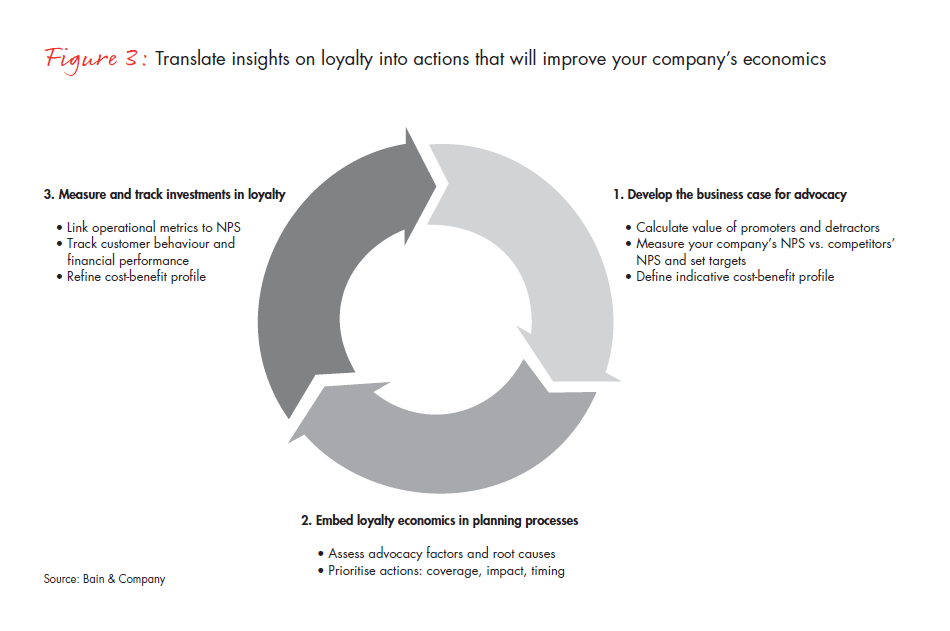
Develop the business case for advocacy. Once a company has drawn a loyalty portrait of its customer base, some senior managers might ask why they should bother with further analysis: Why not just move on to take actions that promote advocacy? In our experience, most companies have executives who are initially sceptical of the value of investing in customer advocacy. And because the process of building loyalty can take several years, new managers will be coming on board and even convinced executives may lose their zeal.
Senior managers won’t join or continue with loyalty initiatives unless they have a business case to inform decisions about where to invest to maximise loyalty. This can be accomplished by assembling a customer “balance sheet”—an understanding of how many promoters, passives and detractors a company has and the relative financial value of each group—to gauge the health of relationships with the customer base.
The business case starts through a micro view that calculates the lifetime value of an average customer. (See a brief refresher course at http://www.netpromotersystem. com/resources/toolkit/customer-lifetime-value. aspx.) Tally up the cash flows attributable to the life of a typical customer relationship and put them in today’s dollars. Using the lifetime value of an average customer as a baseline, tally up the differences in lifetime value for promoters, passives and detractors based on the ways their respective behaviours in retention, annual spending, referrals and other factors produce differences in revenue and cost. The customer’s cost profile (what it costs to implement and measure loyalty-building initiatives) can then be weighed against the benefits profile (the improvement in NPS multiplied by the value assigned to each point of improvement).
A micro view of customer economics provides a foundation for cost-benefit analyses of investment decisions aimed at building stronger customer relationships. Companies need a macro view as well, by determining through survey research their overall NPS relative to competitors, even for a defined product market or region. This allows them to see the size of the gap to the leader, track progress over time and hold executives accountable for reaching loyalty targets.
Initially, it’s not productive to try to attain the same level of rigour in a customer loyalty assessment as in an accounting report. Early data that goes into a customer balance sheet is rarely as robust as what’s drawn from accounting systems and, if pushed too far, can result in a false precision that leaves executives open to attack by sceptics. Companies find the most useful middle ground to be a level of quantification that’s reasonable for making an investment decision. Over time, though, companies should aspire to a greater rigour, as they refine their data and gain experience in tracking the effect of actions taken on the business’s economics.
Embed loyalty economics in planning processes. After a company has developed the micro and macro views of loyalty, it’s ready to figure out exactly which actions will yield the greatest improvements in loyalty for the target segments.
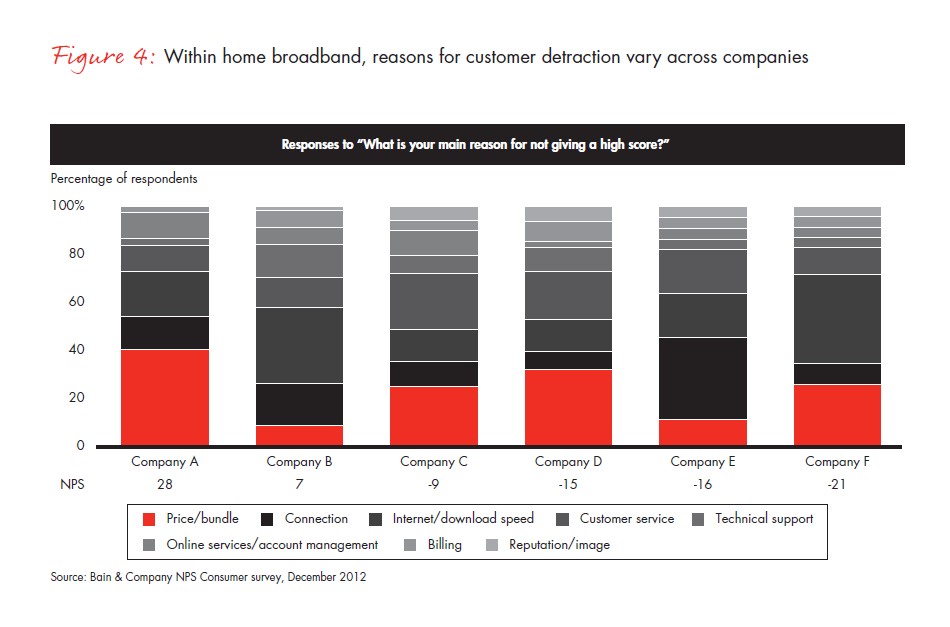
The first step is to discover, through follow-up survey questions, what factors matter most in causing promotion and detraction. Even within the same industry, loyalty factors often vary widely among individual companies (see Figure 4). Next, conduct a root-cause analysis to get to the heart of the operational issues underlying these areas.
At many telecom carriers, for example, we have traced a major source of detraction to the fact that call-centre representatives’ performance is measured largely by their average time to handle a call, which motivates them to get customers off the phone quickly. Downplaying average handle time and emphasising two other metrics, one on NPS and another on resolving the issue on the first call, helps to reduce the overall volume of calls and to raise the levels of loyalty. Giving representatives the latitude to resolve the issue without hurrying the call means they can better address the customer’s needs.
After a set of potential actions has been identified, one can estimate the impact of each on the number of promoters created, and winnow the actions to a select few. Assess each potential action on three dimensions: coverage (the number of customers covered), impact (the effect of the action on the loyalty of those customers), and timing (how soon action can be taken). That exercise leads to an estimate of additional profit from having more promoters in the customer base.
Here it is important to identify the highest-value customers and invest differentially in them, rather than taking an overly democratic approach. At a retail bank, for instance, the highest-value segment might be the region’s most affluent households, and that segment might merit investments in more knowledgeable relationship managers.
Such investments would not always rise to the top under traditional evaluation metrics like direct revenue impact.
But a new IT system or improved call service levels might merit the resources if it raises loyalty among a high-priority customer group.
Measure and track the investments in loyalty. Once investments have been made and initiatives launched, it’s critical to track their effect on specific points in the customer’s experience. This can be done by linking operational metrics to NPS, then tracking how actual customer behaviour and stated NPS change over time, as well as the ultimate effect on financial metrics.
Tracking the effect of recent investments in loyalty has another benefit, in that it provides valuable data with which to build business cases for next year’s potential investments. Tracking data over time allows executives to see longer-term trends. And the longer that people collect and analyse NPS data, the better they become at using it to improve their operations.
All hands rowing together
Building loyalty entails a balancing act. Most employees naturally want to delight customers and feel gratified when they do so. But for the enterprise to thrive, they have to generate loyalty in economically rational ways.
That’s why all relevant functions in a company play a role. If a company’s website is hard to use, or its product is flawed, that makes for a poor customer experience; loyalty will degrade no matter how good the marketing or customer service functions are. Within long-time loyalty leaders, senior management, including the CEO, support the business case for loyalty and ensure that the organisation has the tools for making appropriate tradeoffs when necessary. At one Australian company using NPS, the finance function takes the lead in calculating the value of differences in behaviour between promoters and detractors. Finance staff consider advocacy effects during the annual planning process, alongside their revenue and cost estimates, when deciding whether to fund initiatives like online self-service.
Regardless of which functions are involved, the success of the system hinges on providing employees with regular, fast feedback from customers, and then giving them the latitude to make changes within a defined framework. Having people all across the organisation, from the front line to the executive suite, identify the high-priority initiatives and take the right actions quickly can have a powerful cumulative effect on loyalty and the bottom line. To sustain that effect over and over again, people need to have confidence in Net Promoter data, rapid feedback in the form of meaningful NPS and operational metrics and the freedom to test and learn from new process improvements.
For companies intent on achieving sustained, profitable growth and outperforming competitors, securing loyal customers is an essential part of the equation. The Net Promoter discipline gives management a clear view of their loyalty position and a rigorous means of assessing which investments will improve the customer experience and produce the greatest financial benefits.
Katrina Bradley and Richard Hatherall are Sydney-based partners in Bain & Company’s Asia-Pacific Customer Strategy & Marketing practice.
How the loyalty equation varies by industry
Understanding which factors matter most in their own industry can help senior managers determine the most effective ways of improving loyalty among their customer base (see Figure 5). Our industry analysis in Australia shows:
- Retention of customers is most important where customers have a regular purchase decision triggered by, say, renewal of an annual contract. Mobile telecommunications and insurance fit this model. In mobile telecom, for instance, we estimate that a promoter is worth about two times more in lifetime value than a detractor, and greater retention accounts for almost one-third of the difference.
- Retention also plays a big role in highly competitive sectors, such as gas and electric utilities, where companies are constantly contacting consumers with discounts and offers to persuade them to switch.
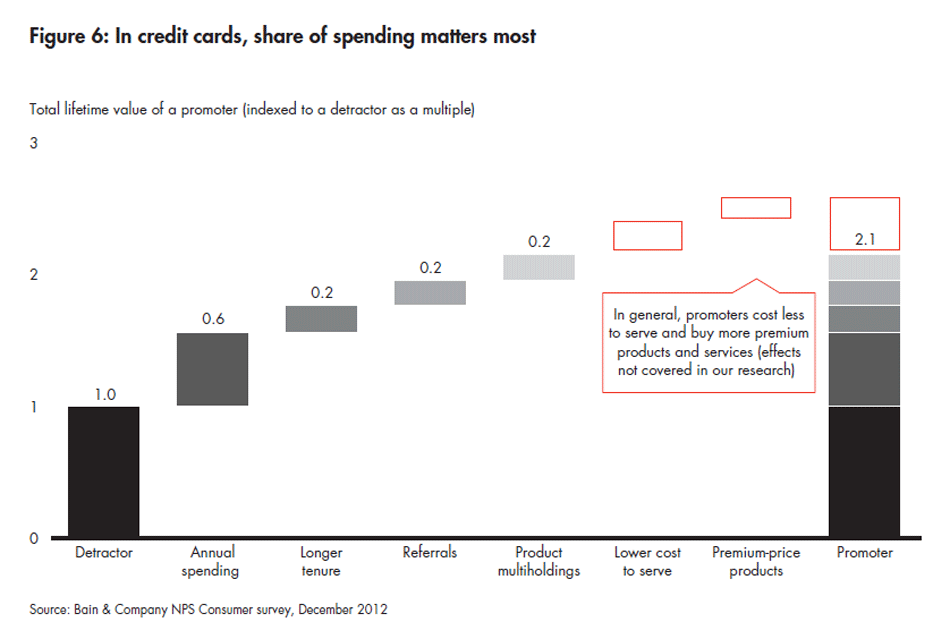
- Share of spending plays the largest role in industries where customers shop frequently among several providers, such as grocery and other retail and credit cards companies (see Figure 6). With credit cards, consumers choose which cards to carry in their wallets, and then which card to use for each purchase. In these sectors, rewards programs often influence consumers’ propensity to spend.
- Share of spending and retention are both important in online retail and in bank savings and transaction accounts. In these sectors, consumers must spend time and effort to set up an account, which makes the product “stickier”.
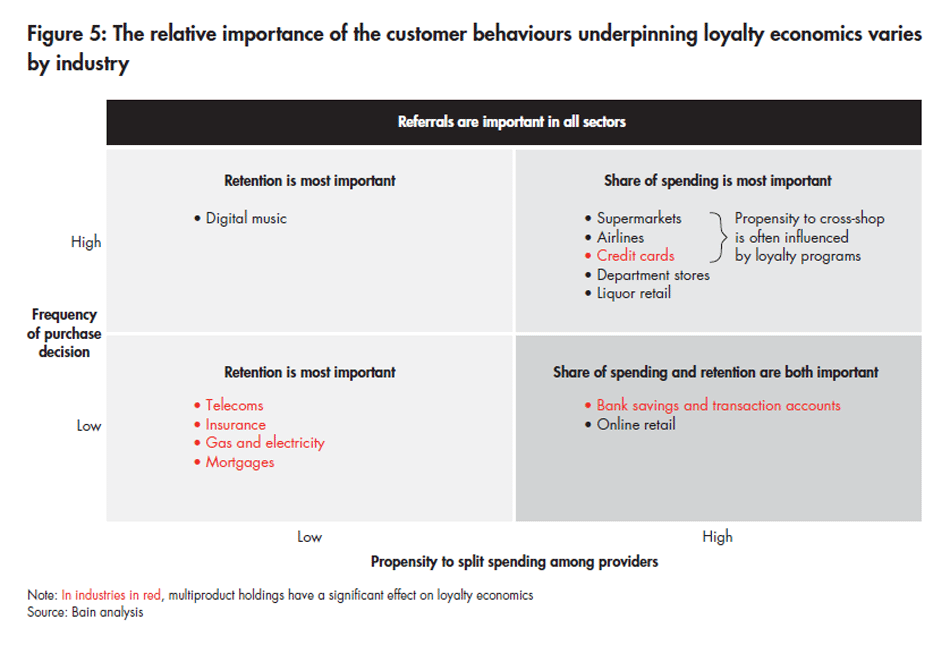
- Holding multiple products is critical in industries where customers have regular, though less frequent, opportunities to buy new products or services from an existing provider. Mortgage, credit card and fixed-line telecom are among the industries that fit this model, where promoters are more likely to buy additional products from the same provider.
First published in Juli 2013