
Skip to Content
  • Standorte

    Standorte

    North & Latin America
    • Atlanta
    • Austin
    • Bogota
    • Boston
    • Buenos Aires
    • Chicago
    • Dallas
    • Denver
    • Houston
    • Lisbon
    • Los Angeles
    • Mexico City
    • Minneapolis
    • Monterrey
    • Montreal
    • New York
    • Rio de Janeiro
    • San Francisco
    • Santiago
    • São Paulo
    • Seattle
    • Silicon Valley
    • Toronto
    • Washington, DC
    Europe & Africa
    • Amsterdam
    • Athens
    • Berlin
    • Brussels
    • Copenhagen
    • Düsseldorf
    • Frankfurt
    • Helsinki
    • Istanbul
    • Johannesburg
    • Kyiv
    • Lisbon
    • London
    • Madrid
    • Milan
    • München
    • Oslo
    • Paris
    • Rome
    • Stockholm
    • Warsaw
    • Wien
    • Zürich
    Middle East
    • Doha
    • Dubai
    • Riyadh
    Asia & Australia
    • Bangkok
    • Beijing
    • Bengaluru
    • Brisbane
    • Ho Chi Minh City
    • Hong Kong
    • Jakarta
    • Kuala Lumpur
    • Manila
    • Melbourne
    • Mumbai
    • New Delhi
    • Perth
    • Seoul
    • Shanghai
    • Singapore
    • Sydney
    • Tokyo
    Alle Standorte Anzeigen
  • Alumni
  • Presse
  • Newsletter
  • Kontakt
  • DACH-Region | Deutsch

    Wählen Sie Ihre Region und Sprache

    Global
    • Global (English)
    North & Latin America
    • Brazil (Português)
    • Argentina (Español)
    • Canada (Français)
    • Chile (Español)
    • Colombia (Español)
    Europe, Middle East, & Africa
    • France (Français)
    • DACH-Region (Deutsch)
    • Italy (Italiano)
    • Spain (Español)
    • Greece (Elliniká)
    Asia & Australia
    • China (中文版)
    • Korea (한국어)
    • Japan (日本語)
  • Saved items (0)
    Saved items (0)

    You have no saved items.

    Inhalte, für die Sie sich interessieren, werden hier gespeichert und können später gelesen oder weitergeleitet werden.

    Explore Bain Insights
  • Branchenkompetenzen
    Hauptmenü

    Branchenkompetenzen

    • Luft- und Raumfahrt, Verteidigung
    • Agrarwirtschaft
    • Chemieindustrie
    • Infrastruktur und Bauwirtschaft
    • Konsumgüter
    • Finanzdienstleistungen
    • Gesundheitswesen
    • Maschinen- und Anlagenbau
    • Medienwirtschaft
    • Metallindustrie
    • Bergbau
    • Öl und Gas
    • Papier- und Verpackungsindustrie
    • Private Equity
      Branchenkompetenzen
      Private Equity
      • Due Diligence
      • Exit Planning
      • Firm Strategy & Operations
      • Portfolio Value Creation
    • Öffentlicher Sektor und Sozialwesen
    • Einzelhandel
    • Technologie
    • Telekommunikation
    • Transportwesen
    • Reise- und Freizeitbranche
    • Versorgung und erneuerbare Energien
  • Managementkompetenzen
    Hauptmenü

    Managementkompetenzen

    • Customer Experience
    • ESG
    • Innovation
    • M&A
    • Operations
    • People & Organization
    • Private Equity
    • Sales & Marketing
    • Strategie
    • KI, Einblicke und Lösungen
    • Technologie
    • Transformation
  • Digital
  • Publikationen
    Hauptmenü

    Publikationen

    • Branchenthemen
    • Managementthemen
    • Bain-Bücher
    Alle Publikationen
    Ausgewählte Themen
    • Resilienz in der globalen Krise
    • M&A Report
    • Private Equity Podcast
    • Midyear Private Equity Report
    • Agile
    • Engineering Report
    • Digital Transformation
    • Elements of Value®
    • Firm of the Future
    • Nachhaltigkeitsstudie
    • Macro Trends
    • Future of Consumption
    • Weltwirtschaftsforum (WEF)
  • Über uns
    Hauptmenü

    Über uns

    • Was wir bieten
    • Unser Ansatz
    • Unser Team
    • Game Changer Award
    • Female Allstar Board
    • Messbare Ergebnisse (EN)
    • Auszeichnungen
    • Globale Partnerschaften
    • The Mission
    Further: Our global responsibility
    • Vielfalt & Chancengleichheit
    • Soziale Verantwortung
    • Sustainability
    Erfahren Sie mehr zu "Further"
  • Karriere
    Hauptmenü

    Karriere

    • Dein Einstieg
      Karriere
      Dein Einstieg
      • Find Your Place
      • Unsere Arbeitsbereiche
      • Unsere Teams
      • Angebote für Studierende
      • Praktika & Programme
      • Recruiting-Events
    • Arbeiten bei Bain
      Karriere
      Arbeiten bei Bain
      • Blog: Inside Bain
      • Karriere Stories
      • Unsere Bainies
      • Office-Standorte
      • Weiterentwicklung
      • Affinity Groups
      • Deine Benefits
    • Impact Stories
    • Deine Bewerbung
      Karriere
      Deine Bewerbung
      • Das erwartet dich
      • Der Interviewprozess
    FIND JOBS
  • Standorte
    Hauptmenü

    Standorte

    • North & Latin America
      Standorte
      North & Latin America
      • Atlanta
      • Austin
      • Bogota
      • Boston
      • Buenos Aires
      • Chicago
      • Dallas
      • Denver
      • Houston
      • Lisbon
      • Los Angeles
      • Mexico City
      • Minneapolis
      • Monterrey
      • Montreal
      • New York
      • Rio de Janeiro
      • San Francisco
      • Santiago
      • São Paulo
      • Seattle
      • Silicon Valley
      • Toronto
      • Washington, DC
    • Europe & Africa
      Standorte
      Europe & Africa
      • Amsterdam
      • Athens
      • Berlin
      • Brussels
      • Copenhagen
      • Düsseldorf
      • Frankfurt
      • Helsinki
      • Istanbul
      • Johannesburg
      • Kyiv
      • Lisbon
      • London
      • Madrid
      • Milan
      • München
      • Oslo
      • Paris
      • Rome
      • Stockholm
      • Warsaw
      • Wien
      • Zürich
    • Middle East
      Standorte
      Middle East
      • Doha
      • Dubai
      • Riyadh
    • Asia & Australia
      Standorte
      Asia & Australia
      • Bangkok
      • Beijing
      • Bengaluru
      • Brisbane
      • Ho Chi Minh City
      • Hong Kong
      • Jakarta
      • Kuala Lumpur
      • Manila
      • Melbourne
      • Mumbai
      • New Delhi
      • Perth
      • Seoul
      • Shanghai
      • Singapore
      • Sydney
      • Tokyo
    Alle Standorte Anzeigen
  • Alumni
  • Presse
  • Newsletter
  • Kontakt
  • DACH-Region | Deutsch
    Hauptmenü

    Wählen Sie Ihre Region und Sprache

    • Global
      Wählen Sie Ihre Region und Sprache
      Global
      • Global (English)
    • North & Latin America
      Wählen Sie Ihre Region und Sprache
      North & Latin America
      • Brazil (Português)
      • Argentina (Español)
      • Canada (Français)
      • Chile (Español)
      • Colombia (Español)
    • Europe, Middle East, & Africa
      Wählen Sie Ihre Region und Sprache
      Europe, Middle East, & Africa
      • France (Français)
      • DACH-Region (Deutsch)
      • Italy (Italiano)
      • Spain (Español)
      • Greece (Elliniká)
    • Asia & Australia
      Wählen Sie Ihre Region und Sprache
      Asia & Australia
      • China (中文版)
      • Korea (한국어)
      • Japan (日本語)
  • Saved items  (0)
    Hauptmenü
    Saved items (0)

    You have no saved items.

    Inhalte, für die Sie sich interessieren, werden hier gespeichert und können später gelesen oder weitergeleitet werden.

    Explore Bain Insights
  • Branchenkompetenzen
    • Branchenkompetenzen

      • Luft- und Raumfahrt, Verteidigung
      • Agrarwirtschaft
      • Chemieindustrie
      • Infrastruktur und Bauwirtschaft
      • Konsumgüter
      • Finanzdienstleistungen
      • Gesundheitswesen
      • Maschinen- und Anlagenbau
      • Medienwirtschaft
      • Metallindustrie
      • Bergbau
      • Öl und Gas
      • Papier- und Verpackungsindustrie
      • Private Equity
      • Öffentlicher Sektor und Sozialwesen
      • Einzelhandel
      • Technologie
      • Telekommunikation
      • Transportwesen
      • Reise- und Freizeitbranche
      • Versorgung und erneuerbare Energien
  • Managementkompetenzen
    • Managementkompetenzen

      • Customer Experience
      • ESG
      • Innovation
      • M&A
      • Operations
      • People & Organization
      • Private Equity
      • Sales & Marketing
      • Strategie
      • KI, Einblicke und Lösungen
      • Technologie
      • Transformation
  • Digital
  • Publikationen
    • Publikationen

      • Branchenthemen
      • Managementthemen
      • Bain-Bücher
      Alle Publikationen
      Ausgewählte Themen
      • Resilienz in der globalen Krise
      • M&A Report
      • Private Equity Podcast
      • Midyear Private Equity Report
      • Agile
      • Engineering Report
      • Digital Transformation
      • Elements of Value®
      • Firm of the Future
      • Nachhaltigkeitsstudie
      • Macro Trends
      • Future of Consumption
      • Weltwirtschaftsforum (WEF)
  • Über uns
    • Über uns

      • Was wir bieten
      • Unser Ansatz
      • Unser Team
      • Game Changer Award
      • Female Allstar Board
      • Messbare Ergebnisse (EN)
      • Auszeichnungen
      • Globale Partnerschaften
      • The Mission
      Further: Our global responsibility
      • Vielfalt & Chancengleichheit
      • Soziale Verantwortung
      • Sustainability
      Erfahren Sie mehr zu "Further"
  • Karriere
    Häufige Suchanfragen
    • Agil
    • Digital
    • Strategie
    Vorherige Suchanfragen
      Zuletzt besuchte Seiten

      Content added to saved items

      Saved items (0)

      Removed from saved items

      Saved items (0)

      Brief

      Thriving in a Shallower Profit Pool for Oil and Gas

      Thriving in a Shallower Profit Pool for Oil and Gas

      Regain a competitive edge by reducing costs, embracing digital and differentiating yourself in the market.

      Von Juan Carlos Gay, Peter Jackson and Torsten Lichtenau

      • Min. Lesezeit
      }

      Brief

      Thriving in a Shallower Profit Pool for Oil and Gas
      en
      Auf einen Blick
      • As crude oil prices stabilize in the $50–$70 range, some oil and gas executives may be tempted to lose focus on productivity and cost cutting—but that could prove an existential mistake.
      • Lower prices, technological disruption, rising regulatory complexity and the increasing sophistication of national competitors have combined to reduce the global profit pool by more than 60%.
      • To thrive, oil and gas companies will need to continue to seek out productivity gains and lower costs while embracing new digital technologies and pursuing strategies to differentiate themselves in the marketplace.

      More than three years after oil prices collapsed, with crude prices stabilizing in the $50–$70 range, oil and gas executives are allowing for a bit of optimism again. Capital spending is rebounding, new upstream projects launch weekly and several major integrated oil companies (IOCs) have posted consecutive quarters of profitability for the first time since 2014. Some IOCs expect to increase capex by 15% this year; others remain cautious.

      In previous cycles, this is about the point where many forget the hard-won lessons learned during the downturn, lose focus on productivity and cost efficiency, and begin to spend again in pursuit of growth.

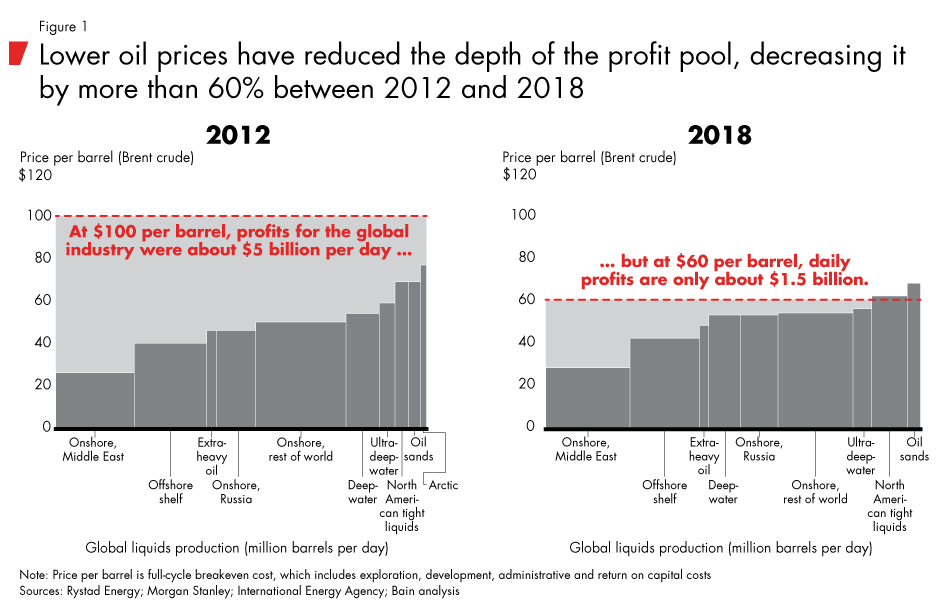
      This time, however, complacency and a return to profligate habits could prove a serious mistake. Competition is fiercer than ever, as the remaining players have been tempered and strengthened by weathering the downturn. Technological disruption, rising regulatory complexity and the increasing sophistication of national oil and service companies are creating a more challenging landscape for operators. Most important, productivity gains and the resilience of shale operators have helped flatten the supply curve and reduce the breakeven cost of the marginal barrel, increasing the likelihood that prices will remain in the $50–$70 range for some time. Bain research suggests that the fall in prices has reduced the profit pool by more than 60%—difficult math that should force executives to confront change in ways that many have only given lip service to in the past (see Figure 1).

      In addition to these structural shifts, the oil and gas industry faces the long-term challenge of a gradual tapering as its customers shift to other fuel sources and as peak demand looms. Even so, it would be premature and simplistic to conclude that the industry is in terminal decline. Energy demand has proven extremely resilient through the cycles, and substitutes for hydrocarbons are unlikely to emerge at scale anytime soon.

      OG-strategy-fig01_embed

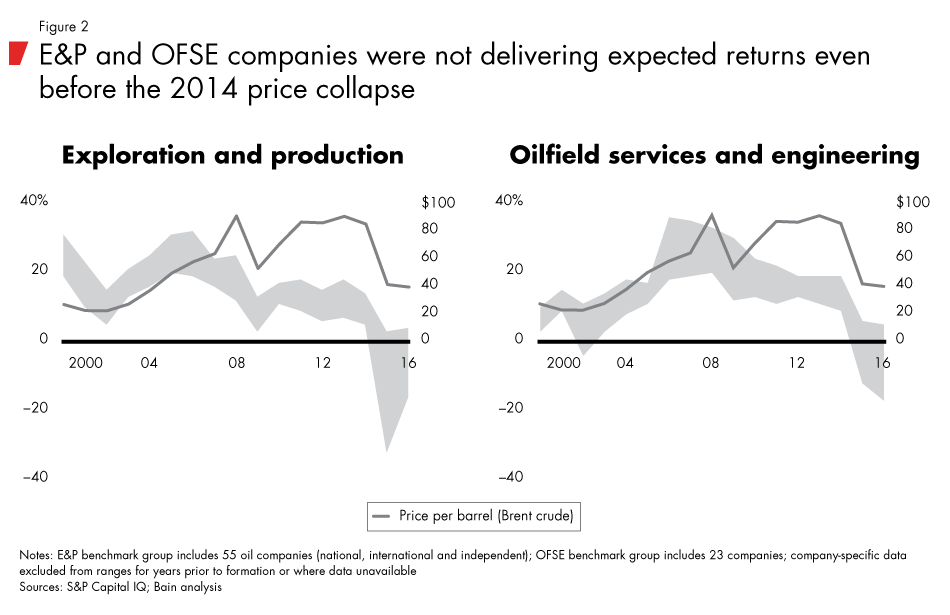
      Despite the challenging environment, shareholders still demand returns on equity in the 10%–15% range, given the inherent risks in the industry and competing investment opportunities. Experienced investors, familiar with the energy sector’s ups and downs, expect occasional underperformance. However, industries in the sector have consistently failed to deliver such returns, even when prices were at historic highs (see Figure 2).

      OG-strategy-fig02_embed

      As we have seen in other industries such as telecommunications and financial services, in a smaller and more crowded profit pool, long-term success depends on developing a focused strategy based on clear sources of strategic differentiation. This differentiation, however, cannot come at the cost of efficiency: Most executives will likely need to build their strategies on the foundation of a cost-competitive offering that will continuously raise performance and productivity. Some of these opportunities will come from new digital technologies that allow companies to automate and improve operations while also identifying new ways to use data to be more productive, from exploration and production to retail. Focusing their energies along all three of these vectors could help oil and gas executives regain their competitive edge and deliver the returns their shareholders expect.

      Regaining a competitive edge


      Today’s energy markets face unprecedented levels of uncertainty. Executives will need a sharper understanding of end markets, wherever they are in the supply chain, from upstream producers to equipment suppliers. Scenario analysis is another important tool, allowing for more optionality in the portfolio and mitigating downside risks and the incursions of industry disrupters. (For more, see “Energy Management in the Age of Disruptions.”)

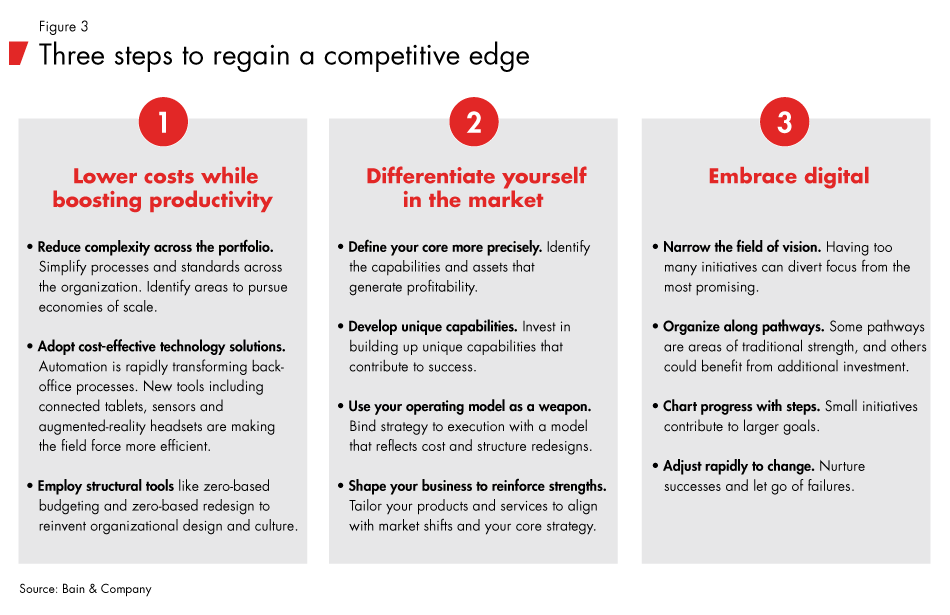
      With a sharper understanding of end markets and the optionality of scenarios, every oil and gas company should be testing its strategy against three pillars that we expect to define winners over the next five years: cost, differentiation and digital (see Figure 3).

      OG-strategy-fig03_embed

      Lower costs while boosting productivity. Because markets dictate the price of commodities, cost control is one of the few levers that oil and gas companies have over their margins. Too many executives lost sight of this fact in the decade before the price dropped, and even with crude prices topping $100 per barrel, failed to deliver adequate returns. In the wake of the price downturn, many companies were able to remove 15% to 20% of their costs by reducing head count and renegotiating contracts. A second wave of cost reduction is under way, addressing complexity in processes and organizational design, and supported by a push into digital technologies. Even before the drop in price, shale producers in North America proved to be leaders in boosting productivity gains and cutting costs, reducing drilling time, and combining tasks like drilling and cementing operations. Certain innovations—like expanding the number of wells drilled from a single pad—have made it possible to get more while spending less.

      Some companies are making deep and lasting changes to their cost structures by deploying structural tools like zero-based redesign (ZBR) and zero-based budgeting (ZBB), which start with a clean sheet and rebuild allocations based on strategic priorities. When well executed, ZBR and ZBB can build the structural capability benefits of annual repetition and continuous improvement. (For more, read “Betting on Zero-Based Budgeting’s Trifecta.”)

      Differentiate yourself in the market. When prices were higher and margins easier to achieve, success depended mostly on delivering volumes and gaining market share. A lot has changed in a short period, forcing oil and gas companies to double down on their differentiating assets and unique capabilities. Companies without an edge may struggle to hold market share and remain relevant as competition erodes their positions. Leaders differentiate themselves in a few key ways.

      • Define the core more precisely. Identify unique assets and capabilities that set you apart from competitors, usually by narrowing focus and configuration. Defining a few battlefields, investing in those, and executing well can deliver better returns and discourage others from entering your core areas.
      • Develop unique capabilities. Once companies understand their sources of competitive advantage, they can invest with more confidence to build those strengths. Investing in people, assets and capabilities improves the chances of outperforming others.
      • Use the operating model as a weapon. As markets and organizations change, so too must the operating model, the bridge between strategy and execution. Structural changes resulting from cost redesign or new digital tools and processes will push oil and gas leaders to redefine their operating models.
      • Shape your business to reinforce your strengths. Tailor your product and service offers to align with market shifts and your refined core strategy. Look across the portfolio to assess the commodity mix, resource type, value chain participation and degree of integration or specialization to determine where to expand or divest.

      Juan Carlos Gay, a partner with Bain’s Oil & Gas practice, discusses the three pillars of strategy that oil and gas companies need to implement to stay profitable.

      Embrace digital. Analytics are not new in oil and gas, but this wave of digitalization goes further with technological and process innovations that increase yields and improve operational performance. Leaders are collaborating with partners and technology providers to develop comprehensive solutions to industry challenges. Halliburton, for example, has developed a platform for monitoring workflows and production in real time, and innovation that helped one operator boost uptime to 95% during the system’s first month of operation.

      Change in digital technology is occurring so rapidly and on so many fronts that a leading risk is chasing after too many initiatives. Four principles can help executives avoid this predicament and chart a path to success.

      • Narrow the field of vision. Pursuing too many initiatives diverts attention from those with the most potential to scale and create significant value. Defining a clear destination helps narrow the focus.
      • Organize along pathways. Focus digital activity along pathways that represent aspects of the business. Some will be areas of traditional strength for oil and gas, including stakeholder and channel management, products and services, operations and new business models. Other pathways will run through underinvested areas: platforms and partnerships, digital operating models, data-based decision making and updated IT capabilities.
      • Chart progress with steps. Small initiatives contribute to broader goals. Successive waves of these steps allow companies to assess results, adjust course and build up their digital strategy over time.
      • Adapt rapidly to change. Technology evolves quickly. To succeed in a dynamic, digital environment, executives may need to become more agile and adaptable in their processes and strategies, nurturing successes and letting go of failures. Winning will require breaking old habits and evolving organizational culture.

      Through the rise and fall of the last price cycle, oil and gas companies were able to follow a “me too” strategy. The profit pool was big, and all could play the same game: Chase a project, come in at twice the budget—and still earn returns in nine months. That time, however, is over. A smaller profit pool, fierce competition and technology disruptions dictate a new approach if energy companies are to thrive and meet shareholder expectations.

      Juan Carlos Gay, Peter Jackson and Torsten Lichtenau are partners with Bain & Company in London. All three work with Bain’s Oil & Gas practice.

      The authors would like to thank Robert Campbell for his contributions to this work.


      OG-strategy-fig01_full

      OG-strategy-fig02_full

      OG-strategy-fig03_full
      Autoren
      • Headshot of Juan Carlos Gay
        Juan Carlos Gay
        Partner, London
      • Headshot of Peter Jackson
        Peter Jackson
        Partner, London
      • Headshot of Torsten Lichtenau
        Torsten Lichtenau
        Partner, London
      Kontaktieren Sie uns
      Verwandte Branchen
      • Energiewirtschaft
      • Öl und Gas
      Ähnliche Beratungsangebote
      • Digitalisierung
      • Performance Improvement
      Wie wir Sie unterstützen können
      • Zero-based Budgeting
      • Zero-based Redesign
      Öl und Gas
      Accelerating Capital: 2018 Oil & Gas Industry Planning Outlook

      Cost-reduction efforts of recent years have laid the groundwork for a return to sustainable capital investment.

      Mehr erfahren
      Öl und Gas
      Technology, Strategy and People: Becoming a Digital Oil and Gas Company

      Digital initiatives must deliver short-term results, but they should also align with a longer-term strategic plan.

      Mehr erfahren
      Zero-based Redesign
      Wealth Management Firms Can Take Out Costs While Reducing Risk and Improving Client Loyalty

      Six tactics allow firms to reduce operating costs by 17% to 38%.

      Mehr erfahren
      Öl und Gas
      When a New Organizational Structure Isn’t Enough: How to Truly Live Your Operating Model

      The goal of any organizational redesign is for people to work differently, but that only happens if leaders invest in changing the work itself.

      Mehr erfahren
      Zero-based Budgeting
      The New Case for Zero-Based Cost Management

      A clean-sheet approach helps leaders produce savings that stick—even in turbulent times.

      Mehr erfahren
      First published in April 2018
      Markierungen
      • Digitalisierung
      • Energiewirtschaft
      • Öl und Gas
      • Performance Improvement
      • Zero-based Budgeting
      • Zero-based Redesign

      Wie wir unsere Kunden unterstützt haben

      Nachhaltigkeit An Oil and Gas Leader Creates a New Clean Energy Business

      Kundenbeispiel lesen

      Organisation Centralization boosts performance for an energy giant

      Kundenbeispiel lesen

      Mergers & Acquisitions Forecast backs a bet on shale services

      Kundenbeispiel lesen

      Möchten Sie mit uns in Kontakt bleiben?

      Wir unterstützen Führungskräfte weltweit, die kritischen Themen in ihrem Unternehmen zu adressieren. Gemeinsam schaffen wir nachhaltige Veränderungen und Ergebnisse.

      Bain Insights. Unsere Perspektive auf die kritischen Themen, mit denen sich international agierende Unternehmen konfrontiert sehen, finden Sie monatlich in Ihrem Postfach.

      *Ich habe die Datenschutzerklärung gelesen und akzeptiere sie.
      Bitte lesen Sie die Datenschutzerklärung und akzeptieren Sie diese.
      Bain & Company
      Contact us Sustainability Accessibility Rechtliche Hinweise Impressum Datenschutz Cookie-Richtlinie Sitemap Log In

      © 1996-2026 Bain & Company, Inc.

      Kontaktieren Sie Bain

      Wie können wir Ihnen helfen?

      • Business inquiry
      • Career information
      • Press relations
      • Partnership request
      • Speaker request
      Alle weltweiten Büros