
Skip to Content
  • Standorte

    Standorte

    North & Latin America
    • Atlanta
    • Austin
    • Bogota
    • Boston
    • Buenos Aires
    • Chicago
    • Dallas
    • Denver
    • Houston
    • Lisbon
    • Los Angeles
    • Mexico City
    • Minneapolis
    • Monterrey
    • Montreal
    • New York
    • Rio de Janeiro
    • San Francisco
    • Santiago
    • São Paulo
    • Seattle
    • Silicon Valley
    • Toronto
    • Washington, DC
    Europe & Africa
    • Amsterdam
    • Athens
    • Berlin
    • Brussels
    • Copenhagen
    • Düsseldorf
    • Frankfurt
    • Helsinki
    • Istanbul
    • Johannesburg
    • Kyiv
    • Lisbon
    • London
    • Madrid
    • Milan
    • München
    • Oslo
    • Paris
    • Rome
    • Stockholm
    • Warsaw
    • Wien
    • Zürich
    Middle East
    • Doha
    • Dubai
    • Riyadh
    Asia & Australia
    • Bangkok
    • Beijing
    • Bengaluru
    • Brisbane
    • Ho Chi Minh City
    • Hong Kong
    • Jakarta
    • Kuala Lumpur
    • Manila
    • Melbourne
    • Mumbai
    • New Delhi
    • Perth
    • Seoul
    • Shanghai
    • Singapore
    • Sydney
    • Tokyo
    Alle Standorte Anzeigen
  • Alumni
  • Presse
  • Newsletter
  • Kontakt
  • DACH-Region | Deutsch

    Wählen Sie Ihre Region und Sprache

    Global
    • Global (English)
    North & Latin America
    • Brazil (Português)
    • Argentina (Español)
    • Canada (Français)
    • Chile (Español)
    • Colombia (Español)
    Europe, Middle East, & Africa
    • France (Français)
    • DACH-Region (Deutsch)
    • Italy (Italiano)
    • Spain (Español)
    • Greece (Elliniká)
    Asia & Australia
    • China (中文版)
    • Korea (한국어)
    • Japan (日本語)
  • Saved items (0)
    Saved items (0)

    You have no saved items.

    Inhalte, für die Sie sich interessieren, werden hier gespeichert und können später gelesen oder weitergeleitet werden.

    Explore Bain Insights
  • Branchenkompetenzen
    Hauptmenü

    Branchenkompetenzen

    • Luft- und Raumfahrt, Verteidigung
    • Agrarwirtschaft
    • Chemieindustrie
    • Infrastruktur und Bauwirtschaft
    • Konsumgüter
    • Finanzdienstleistungen
    • Gesundheitswesen
    • Maschinen- und Anlagenbau
    • Medienwirtschaft
    • Metallindustrie
    • Bergbau
    • Öl und Gas
    • Papier- und Verpackungsindustrie
    • Private Equity
      Branchenkompetenzen
      Private Equity
      • Due Diligence
      • Exit Planning
      • Firm Strategy & Operations
      • Portfolio Value Creation
    • Öffentlicher Sektor und Sozialwesen
    • Einzelhandel
    • Technologie
    • Telekommunikation
    • Transportwesen
    • Reise- und Freizeitbranche
    • Versorgung und erneuerbare Energien
  • Managementkompetenzen
    Hauptmenü

    Managementkompetenzen

    • Customer Experience
    • ESG
    • Innovation
    • M&A
    • Operations
    • People & Organization
    • Private Equity
    • Sales & Marketing
    • Strategie
    • KI, Einblicke und Lösungen
    • Technologie
    • Transformation
  • Digital
  • Publikationen
    Hauptmenü

    Publikationen

    • Branchenthemen
    • Managementthemen
    • Bain-Bücher
    Alle Publikationen
    Ausgewählte Themen
    • Resilienz in der globalen Krise
    • M&A Report
    • Private Equity Podcast
    • Midyear Private Equity Report
    • Agile
    • Engineering Report
    • Digital Transformation
    • Elements of Value®
    • Firm of the Future
    • Nachhaltigkeitsstudie
    • Macro Trends
    • Future of Consumption
    • Weltwirtschaftsforum (WEF)
  • Über uns
    Hauptmenü

    Über uns

    • Was wir bieten
    • Unser Ansatz
    • Unser Team
    • Game Changer Award
    • Female Allstar Board
    • Messbare Ergebnisse (EN)
    • Auszeichnungen
    • Globale Partnerschaften
    • The Mission
    Further: Our global responsibility
    • Vielfalt & Chancengleichheit
    • Soziale Verantwortung
    • Sustainability
    Erfahren Sie mehr zu "Further"
  • Karriere
    Hauptmenü

    Karriere

    • Dein Einstieg
      Karriere
      Dein Einstieg
      • Find Your Place
      • Unsere Arbeitsbereiche
      • Unsere Teams
      • Angebote für Studierende
      • Praktika & Programme
      • Recruiting-Events
    • Arbeiten bei Bain
      Karriere
      Arbeiten bei Bain
      • Blog: Inside Bain
      • Karriere Stories
      • Unsere Bainies
      • Office-Standorte
      • Weiterentwicklung
      • Affinity Groups
      • Deine Benefits
    • Impact Stories
    • Deine Bewerbung
      Karriere
      Deine Bewerbung
      • Das erwartet dich
      • Der Interviewprozess
    FIND JOBS
  • Standorte
    Hauptmenü

    Standorte

    • North & Latin America
      Standorte
      North & Latin America
      • Atlanta
      • Austin
      • Bogota
      • Boston
      • Buenos Aires
      • Chicago
      • Dallas
      • Denver
      • Houston
      • Lisbon
      • Los Angeles
      • Mexico City
      • Minneapolis
      • Monterrey
      • Montreal
      • New York
      • Rio de Janeiro
      • San Francisco
      • Santiago
      • São Paulo
      • Seattle
      • Silicon Valley
      • Toronto
      • Washington, DC
    • Europe & Africa
      Standorte
      Europe & Africa
      • Amsterdam
      • Athens
      • Berlin
      • Brussels
      • Copenhagen
      • Düsseldorf
      • Frankfurt
      • Helsinki
      • Istanbul
      • Johannesburg
      • Kyiv
      • Lisbon
      • London
      • Madrid
      • Milan
      • München
      • Oslo
      • Paris
      • Rome
      • Stockholm
      • Warsaw
      • Wien
      • Zürich
    • Middle East
      Standorte
      Middle East
      • Doha
      • Dubai
      • Riyadh
    • Asia & Australia
      Standorte
      Asia & Australia
      • Bangkok
      • Beijing
      • Bengaluru
      • Brisbane
      • Ho Chi Minh City
      • Hong Kong
      • Jakarta
      • Kuala Lumpur
      • Manila
      • Melbourne
      • Mumbai
      • New Delhi
      • Perth
      • Seoul
      • Shanghai
      • Singapore
      • Sydney
      • Tokyo
    Alle Standorte Anzeigen
  • Alumni
  • Presse
  • Newsletter
  • Kontakt
  • DACH-Region | Deutsch
    Hauptmenü

    Wählen Sie Ihre Region und Sprache

    • Global
      Wählen Sie Ihre Region und Sprache
      Global
      • Global (English)
    • North & Latin America
      Wählen Sie Ihre Region und Sprache
      North & Latin America
      • Brazil (Português)
      • Argentina (Español)
      • Canada (Français)
      • Chile (Español)
      • Colombia (Español)
    • Europe, Middle East, & Africa
      Wählen Sie Ihre Region und Sprache
      Europe, Middle East, & Africa
      • France (Français)
      • DACH-Region (Deutsch)
      • Italy (Italiano)
      • Spain (Español)
      • Greece (Elliniká)
    • Asia & Australia
      Wählen Sie Ihre Region und Sprache
      Asia & Australia
      • China (中文版)
      • Korea (한국어)
      • Japan (日本語)
  • Saved items  (0)
    Hauptmenü
    Saved items (0)

    You have no saved items.

    Inhalte, für die Sie sich interessieren, werden hier gespeichert und können später gelesen oder weitergeleitet werden.

    Explore Bain Insights
  • Branchenkompetenzen
    • Branchenkompetenzen

      • Luft- und Raumfahrt, Verteidigung
      • Agrarwirtschaft
      • Chemieindustrie
      • Infrastruktur und Bauwirtschaft
      • Konsumgüter
      • Finanzdienstleistungen
      • Gesundheitswesen
      • Maschinen- und Anlagenbau
      • Medienwirtschaft
      • Metallindustrie
      • Bergbau
      • Öl und Gas
      • Papier- und Verpackungsindustrie
      • Private Equity
      • Öffentlicher Sektor und Sozialwesen
      • Einzelhandel
      • Technologie
      • Telekommunikation
      • Transportwesen
      • Reise- und Freizeitbranche
      • Versorgung und erneuerbare Energien
  • Managementkompetenzen
    • Managementkompetenzen

      • Customer Experience
      • ESG
      • Innovation
      • M&A
      • Operations
      • People & Organization
      • Private Equity
      • Sales & Marketing
      • Strategie
      • KI, Einblicke und Lösungen
      • Technologie
      • Transformation
  • Digital
  • Publikationen
    • Publikationen

      • Branchenthemen
      • Managementthemen
      • Bain-Bücher
      Alle Publikationen
      Ausgewählte Themen
      • Resilienz in der globalen Krise
      • M&A Report
      • Private Equity Podcast
      • Midyear Private Equity Report
      • Agile
      • Engineering Report
      • Digital Transformation
      • Elements of Value®
      • Firm of the Future
      • Nachhaltigkeitsstudie
      • Macro Trends
      • Future of Consumption
      • Weltwirtschaftsforum (WEF)
  • Über uns
    • Über uns

      • Was wir bieten
      • Unser Ansatz
      • Unser Team
      • Game Changer Award
      • Female Allstar Board
      • Messbare Ergebnisse (EN)
      • Auszeichnungen
      • Globale Partnerschaften
      • The Mission
      Further: Our global responsibility
      • Vielfalt & Chancengleichheit
      • Soziale Verantwortung
      • Sustainability
      Erfahren Sie mehr zu "Further"
  • Karriere
    Häufige Suchanfragen
    • Agil
    • Digital
    • Strategie
    Vorherige Suchanfragen
      Zuletzt besuchte Seiten

      Content added to saved items

      Saved items (0)

      Removed from saved items

      Saved items (0)

      Insurance Industry Outlook

      Bridging the Protection Gap: Affordability, Access, and Risk Prevention

      Bridging the Protection Gap: Affordability, Access, and Risk Prevention

      With many customers finding P&C coverage too expensive and life coverage not relevant, insurers have to evolve their products, channels, and business models.

      Von Sean O'Neill, Andrew Schwedel, Daniel Jones, und Tanja Brettel

      • First published on März 31, 2025
      • Min. Lesezeit
      }

      Report

      Bridging the Protection Gap: Affordability, Access, and Risk Prevention
      en
      Auf einen Blick
      • Recent rate-driven growth is unsustainable, as insurers contend with unaffordable property premiums and declining relevance of life insurance.
      • The rise in natural disasters, cyberattacks, and novel transportation demands innovative models, with a stronger focus on risk prevention.
      • In parallel, AI and unstructured data are revolutionizing the industry, but harnessing the technologies will require new skills and roles.
      • To manage large-scale risks, mitigate disasters, and improve returns, insurers should expand capital sources and government collaboration.

      Insurance companies find themselves at an inflection point. The industry weathered the Covid-19 pandemic and aftermath fairly well and, over the past couple of years, was bolstered by unsustainable tailwinds, namely rate increases in the property and casualty (P&C) sector and interest-rate–driven annuity sales in the life sector. Capital and balance sheets remain reasonably strong, yet a number of challenges have emerged, ranging from unaffordable premiums for property coverage to declining relevance and access for life policies in many countries, especially among younger generations.

      As natural disasters and cyber hacks have escalated in frequency and severity beyond previous projections, the inability of the industry to match price-to-risk profitably may be reaching a breaking point. Many homeowners, for instance, have had to forgo property coverage altogether, creating insurance deserts in some regions that mortgage lenders might abandon.

      Profitability, meanwhile, has come under pressure for many lines of business including personal auto and property. Although many insurance stocks have performed well of late, investors are now skeptical about insurers’ prospects for future growth but remain bullish on life insurers, especially in emerging markets (see Figure 1).

      Figure 1
      Investors are skeptical of many insurers' future earnings growth potential
      visualization
      visualization

      Protection gaps and how to close them

      Foremost among the opportunities insurers face are big gaps in protection. Only one-quarter to one-third of the damage from natural disasters will be covered by insurance by 2030; for mortality, it would be less than half (see Figure 2). The best ways to bridge protection gaps are by addressing affordability in P&C insurance and regaining relevance in life insurance through better access to and engagement with prospective customers.

      Figure 2
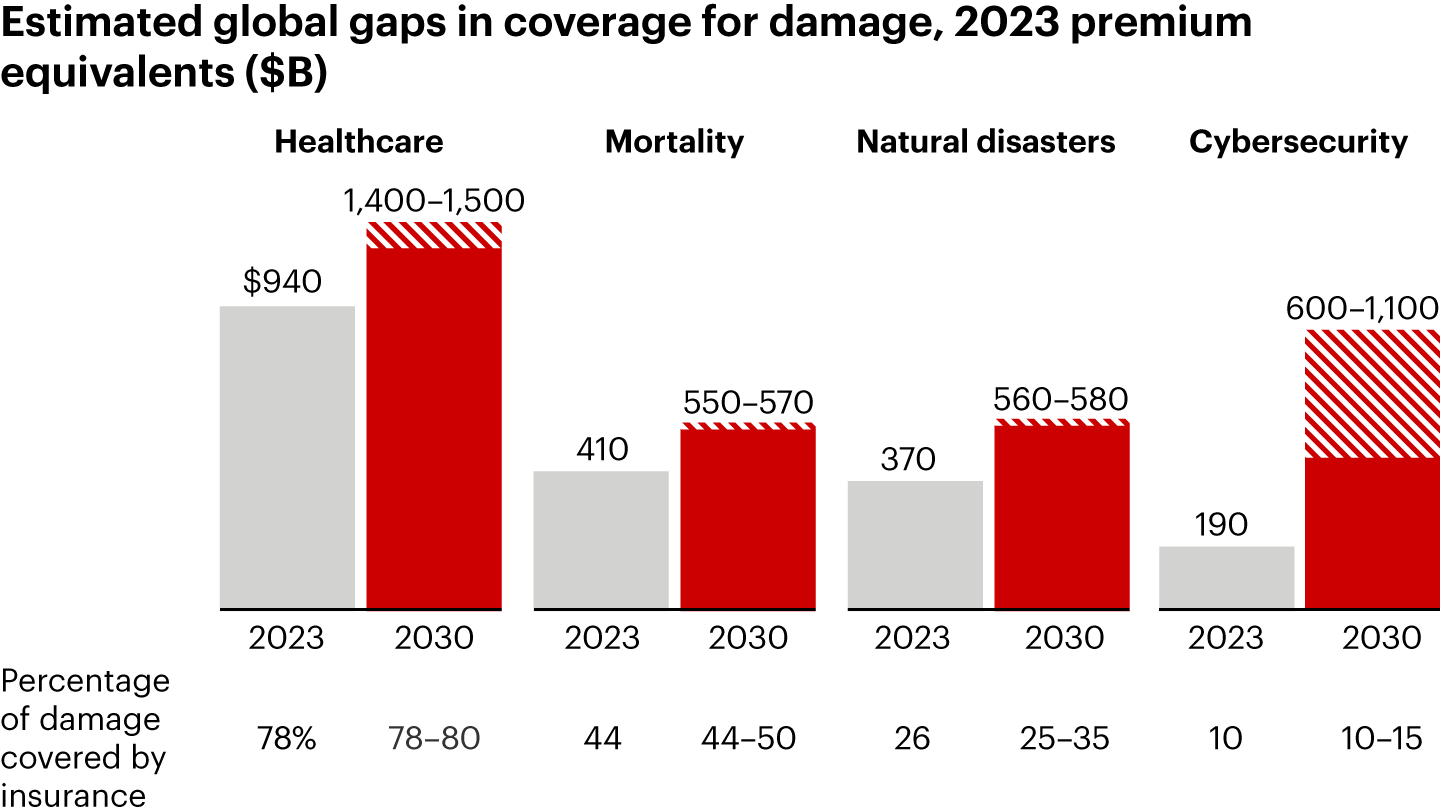
      Protection gaps persist across all lines of business
      Sources: Cybersecurity Ventures; MunichRe; GlobalData; Swiss Re Institute

      Prevention services also present a significant avenue for insurers to add value. Helping customers proactively mitigate risks—whether through safer driving, better property maintenance, or improved health management—reduces the number of claims and amount of losses. Prevention also allows insurers to enhance their relationships with policyholders and create a more sustainable model.

      As carriers seek to attain these goals and make the world safer in a way that works economically, there are six critical themes to consider.

      1. Customers’ shifting circumstances and priorities

      Economic constraints are reshaping consumer behavior, forcing insurers to reconsider their strategies. In the US, property premiums in many states have risen at double-digit rates in the past few years, making insurance unaffordable for a growing number of homeowners. Yet regulators in some states have prevented insurers from charging premiums commensurate with rising property values, construction costs, and the increased risks of flooding, wind, or wildfires. Insurers have had to reevaluate the prices at which they can afford to write and renew business in parts of the US, Australia, and other areas suffering weather-related losses. 

      In life insurance, demographic changes and savings behavior are reshaping demand. Life expectancy continues to rise globally, particularly in developing Asia-Pacific countries. Although this is a positive trend, it also creates longer decumulation periods, requiring higher savings targets or guaranteed income solutions in regions where many people already struggle to save for retirement.

      Compounding the issue, traditional life insurance products have slipped in appeal as consumers have gravitated toward other types of investments, especially those offered by the wealth management industry. Today, nearly half of US Gen Z and millennial consumers indicate they don’t have any or enough life insurance, according to a recent LIMRA survey. To remain relevant, life insurers must introduce more flexible and portable protection and retirement solutions tailored to a modern workforce.

      2. Emerging risks that merit new products, more prevention

      The increasing frequency of climate-related disasters, cyberattacks, and technological advances in transportation are reshaping risk. From 1994 to 2023, global inflation-adjusted insured losses from natural catastrophes grew almost 6% per year, more than double the rate of global GDP, Swiss Re calculates. By 2030, the commercial climate solutions market is expected to double to €60 billion, calling for more resilient and adaptive risk models. Meanwhile, ransomware attacks and cyber breaches have also escalated.

      In automotive markets, the rise of electric vehicles, assisted driving, and autonomous technologies will transform the dynamics of risk and liability. While fewer human-driven accidents may reduce claims frequency, liability could shift from drivers to other entities such as vehicle manufacturers, putting new pressure on the traditional underwriting and claims functions.

      Turning to cyber risks, the spread of generative AI could expand this market (see Figure 3). But in both the cyber and property markets, actions by individual carriers will not be sufficient to address the risks. Public-private partnerships will need to expand in order to promote prevention and share risks for catastrophic events. Risk-sharing will also likely require additional capacity from excess and surplus carriers, reinsurers, and alternative capital providers.

      Figure 3
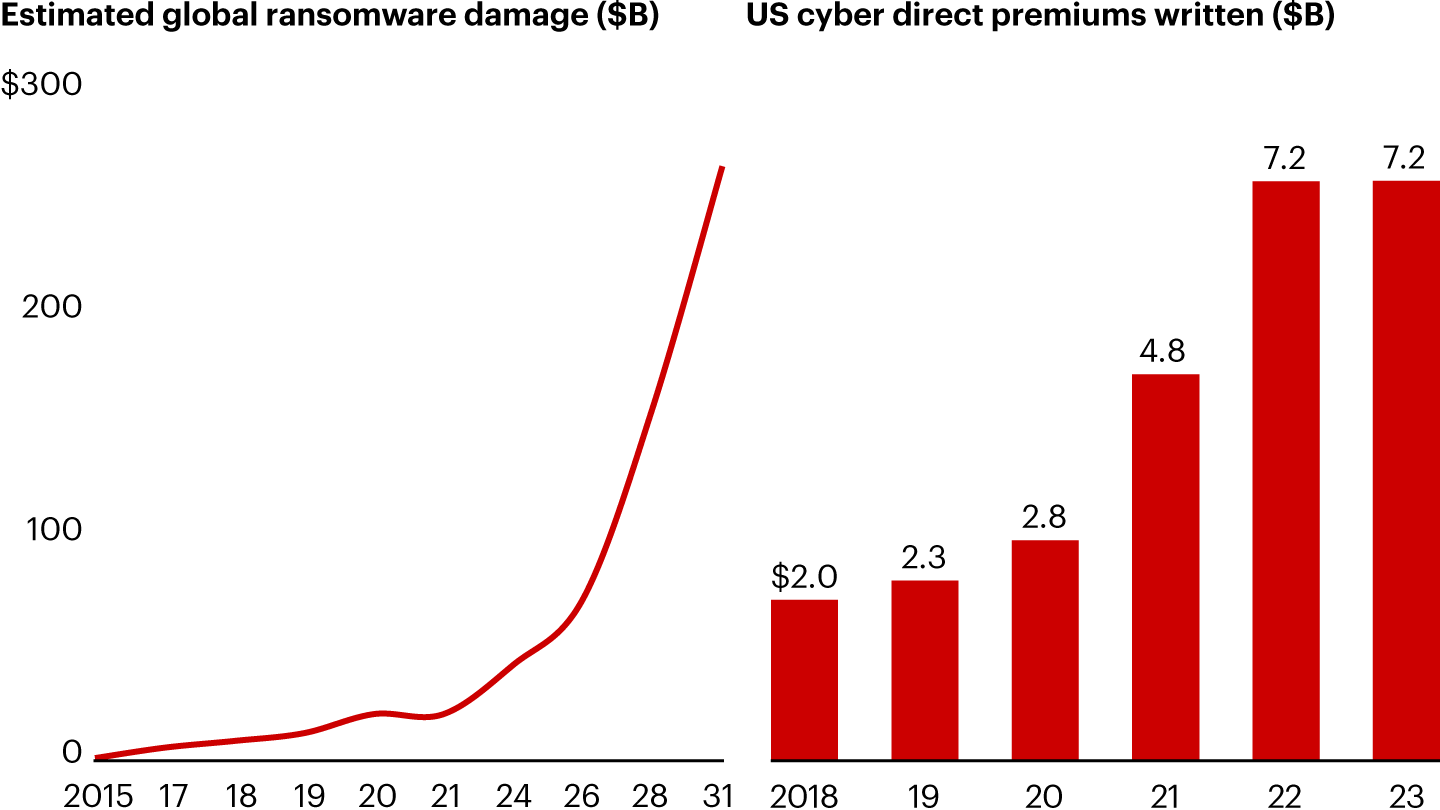
      Emerging cyber risks spur demand for coverage
      Sources: Swiss Re; Cybersecurity Ventures; CyberEdge Group; Cybercrime Magazine; Cyfirma; IBM; Forbes 2019 study; AM Best

      Throughout the insurance sector, risk prevention is an increasingly critical component of strategy. For example, GOQii uses behavioral science principles, wearable devices, and real-time feedback to promote healthier behaviors among policyholders. Several auto insurers are integrating telematics to adjust premiums based on real-time driving data.

      Prevention features extend to real property, where insurers have an opportunity to leverage smart technology, such as automated water shutoff systems. Insurers could also recommend changes to building codes, which would mirror the earlier transformation in auto safety, when insurance industry lobbying helped make restraints and airbags standard features.

      3. Different ways to engage customers

      The way consumers research and buy insurance is changing. Digital channels, social media, and embedded insurance increasingly shape consumer behavior. A recent LIMRA survey indicates that 59% of US adults and as many as 84% of Gen Z adults use social media for financial guidance—though they would still need advisers to buy life insurance.

      Embedded insurance models might also gain traction, primarily in personal P&C lines. Although adoption has been strong for products such as travel insurance, scalability in auto or home remains uncertain, though pilots are underway. Allianz, for example, embeds insurance through partnerships with more than 40 vehicle manufacturers.

      Life insurers face a different challenge: engaging prospective customers early in their financial decision-making process. In the US, financial advisers play a key role, yet few less-affluent customers interact with them. Insurers will need to better focus marketing spending to address customers who drop out of the search process before speaking to an adviser. And they could use technologies to help employees target customers more effectively.

      4. The surge of unstructured data and the spread of AI

      The rapid proliferation of unstructured data and the rise of AI are reshaping the insurance landscape. From call logs and product reviews to dashcam videos, an explosion of real-time data is fueling AI-driven analytical workloads (see Figure 4). Harnessing this data presents insurers with a unique opportunity to enhance affordability and access.

      Figure 4
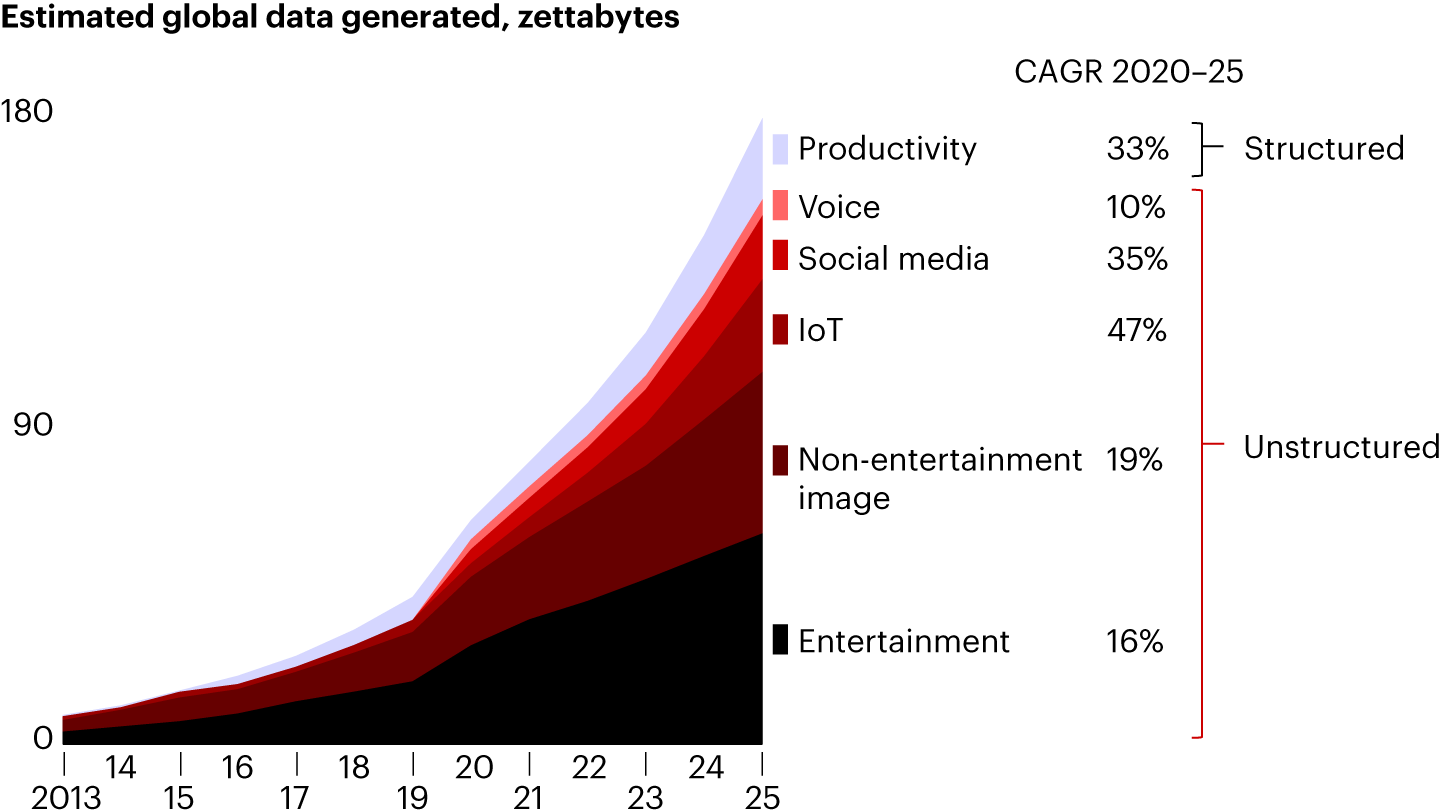
      Unstructured data has proliferated

      Note: No data available before 2020 for social media and voice

      Sources: IDC; Bain analysis

      This wave of data unlocks significant potential for optimizing business operations, personalizing customer interactions, and matching price to risk. Generative AI, in particular, can extend the reach of financial advisers, allowing them to serve a broader audience, which would help narrow the protection gap in life insurance. Additionally, employees in underwriting and claims are using AI to improve productivity and the quality of their work. We anticipate that AI-driven improvements will allow insurers to realize a 10%–15% revenue uplift, up to 30% functional cost savings, and a 30%–50% reduction in P&C leakage (losses due to errors, inefficiencies, or fraud in claims handling).

      To be sure, attaining these benefits requires insurers to use unstructured data effectively. Unlocking the full revenue and cost potential of AI depends on large-scale implementation, which has proved more challenging and time-consuming than anticipated. To succeed, insurers must rethink their processes rather than simply applying AI to existing workflows.

      5. Dealing with the retirement cliff

      With the insurance industry’s aging employee base, critical functions such as underwriting and claims could face severe disruptions as seasoned professionals retire in the coming years. Many of these experts have spent years learning to recognize patterns and make informed decisions—whether detecting fraudulent claims or identifying mispriced risks.

      To navigate the looming retirement cliff, insurers must emphasize technology literacy, relationship building, and critical thinking. Traditional insurers cannot afford to spend years training new hires before they become productive. AI can help. Early successes with AI-powered copilots and summarizers demonstrate the potential for quickly reskilling employees. Also, AI will reshape many roles, making some obsolete while creating new ways of working that require more analytical and technical skills.

      6. The rise of alternative capital on the balance sheet

      Insurers are increasingly turning to a wider set of alternative instruments, such as collateralized reinsurance, insurance-linked securities, and sidecars, to improve risk-adjusted returns and increase capacity (see Figure 5). Alternative capital has long played a key role in the P&C sector and is becoming increasingly prevalent in life insurance for new financing structures. Many carriers partner with alternative asset managers for investment expertise.

      Figure 5
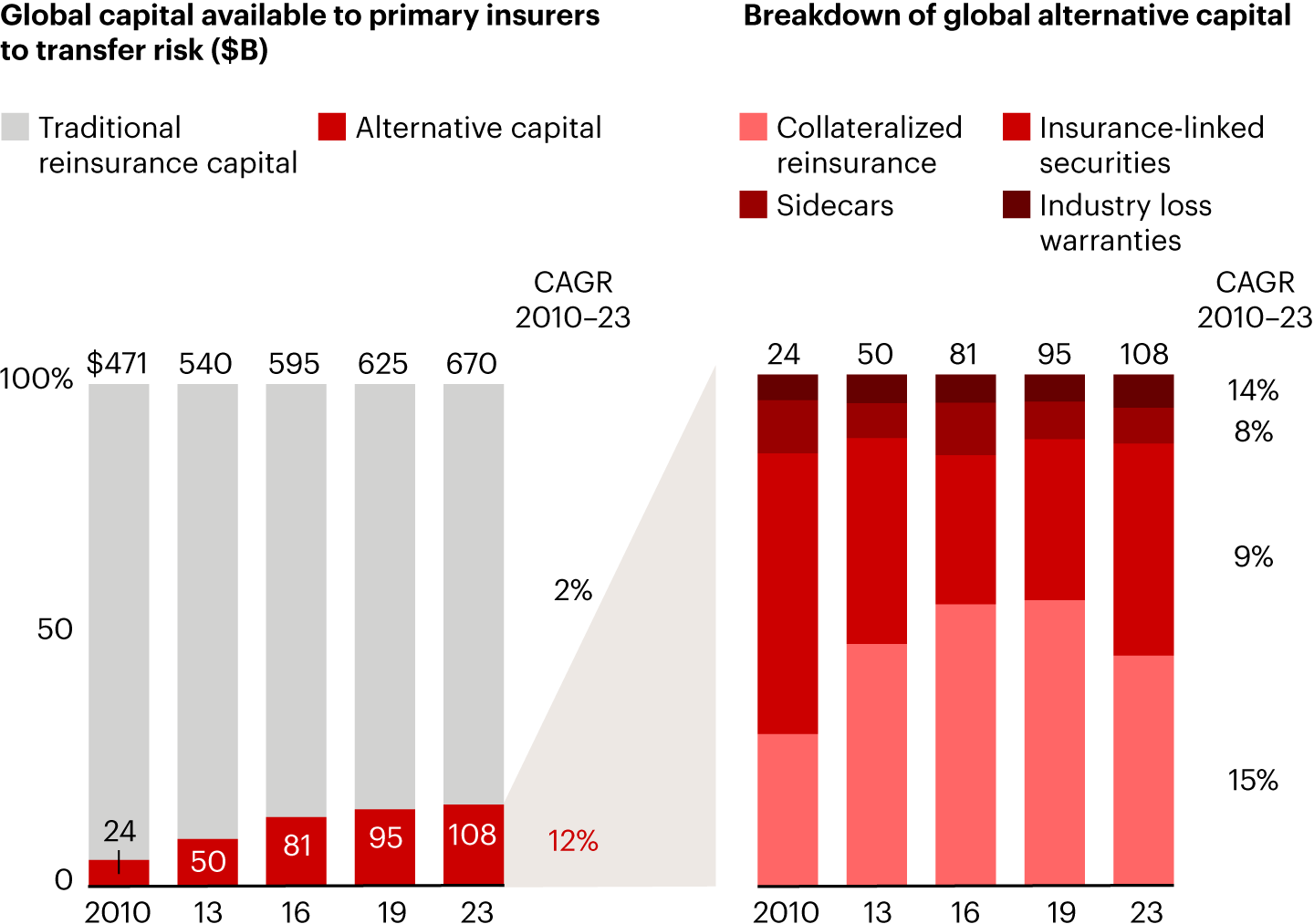
      Insurers increasingly turn to alternative capital
      Quelle Aon Securities

      Several regulatory bodies generally support these moves, as long as policyholder protection and systemic risk mitigation remain priorities. But even these sources of private capital may not be enough to handle exposure to climate, cyber, and pandemic catastrophes, so insurers should continue exploring opportunities to expand public-private partnerships. By leveraging insurers’ expertise in risk modeling and claims processing, alongside government knowledge of infrastructure and communities, collaborations could enhance disaster prevention efforts and streamline responses in the aftermath of crises.

      A playbook for the year ahead

      The insurance industry is at a turning point. Generating value from AI and modernizing data systems will be pivotal in shaping carriers’ fortunes. Simultaneously, insurers must start to transform their workforces, particularly in mission-critical roles like underwriting and claims, ensuring analytical and technical fluency to operate in an AI-driven landscape.

      Insurers that take proactive steps now—by renovating their product portfolios, enhancing data-driven decision making, and modernizing their marketing and sales approaches—will be well positioned for sustainable growth. Society will also benefit when insurers help to make the world safer amid the rise in risks.

      Autoren
      • Headshot of Sean O'Neill
        Sean O'Neill
        Partner, Chicago
      • Headshot of Andrew Schwedel
        Andrew Schwedel
        Partner, New York
      • Headshot of Daniel Jones
        Daniel Jones
        Partner, New York
      • Headshot of Tanja Brettel
        Tanja Brettel
        Practice Executive Vice President, Düsseldorf
      Kontaktieren Sie uns
      Verwandte Branchen
      • Finanzdienstleistungen
      • Versicherungswirtschaft
      Ähnliche Beratungsangebote
      • Advanced Analytics
      • Digitalisierung
      • Organisation
      Wie wir Sie unterstützen können
      • Climate Change
      • NPS Prism®
      CIO Insights
      AI Won’t Just Cut Costs, It Will Reinvent the Customer Experience

      Beyond efficiency, AI helps create a more personalized experience that delivers a triple play of customer loyalty, employee engagement, and revenue growth.

      Mehr erfahren
      CIO Insights
      Want More Out of Your AI Investments? Think People First

      To unlock AI’s exponential productivity potential, companies must modernize workflow and workforce in tandem.

      Mehr erfahren
      Finanzdienstleistungen
      Rethinking Transformation: Lawrence Lam on Leading Change at Prudential

      Frankie Leung speaks with Lawrence Lam, CEO of Prudential Hong Kong, about organizational transformation and sustaining change through a people-led approach.

      Mehr erfahren
      NPS Prism®
      Improving the Customer Experience in Three Areas Positively Impacts Loyalty for Automotive OEMs

      Targeted improvements in digital and tech-enabled experiences, EV charging, and service-related experiences deliver a strong upside in customer loyalty.

      Mehr erfahren
      Organisation
      HR: The Hidden Accelerator of AI Adoption

      Scaling AI starts with people. Yet only half of companies involve HR in their strategy.

      Mehr erfahren
      Markierungen
      • Advanced Analytics
      • CIO Insights
      • Climate Change
      • Digitalisierung
      • Finanzdienstleistungen
      • Insurance Industry Outlook
      • NPS Prism®
      • Organisation
      • Versicherungswirtschaft

      Wie wir unsere Kunden unterstützt haben

      Strategie From Laggard to Leader: Desjardins Evolves Member Centricity for the Digital Age

      Kundenbeispiel lesen

      Informationstechnologie Cost Transparency Helps Insurer Strengthen Tech Expense Management Capability

      Kundenbeispiel lesen

      Kundenstrategie und Marketing Customer focus helps a P&C insurer grow

      Kundenbeispiel lesen

      Möchten Sie mit uns in Kontakt bleiben?

      Wir unterstützen Führungskräfte weltweit, die kritischen Themen in ihrem Unternehmen zu adressieren. Gemeinsam schaffen wir nachhaltige Veränderungen und Ergebnisse.

      Net Promoter®, NPS®, NPS Prism®, and the NPS-related emoticons are registered trademarks and Net Promoter Score℠ and Net Promoter System℠ are service marks of Bain & Company, Inc., Satmetrix Systems, Inc., and Fred Reichheld.

      Bain Insights. Unsere Perspektive auf die kritischen Themen, mit denen sich international agierende Unternehmen konfrontiert sehen, finden Sie monatlich in Ihrem Postfach.

      *Ich habe die Datenschutzerklärung gelesen und akzeptiere sie.
      Bitte lesen Sie die Datenschutzerklärung und akzeptieren Sie diese.
      Bain & Company
      Contact us Sustainability Accessibility Rechtliche Hinweise Impressum Datenschutz Cookie-Richtlinie Sitemap Log In

      © 1996-2026 Bain & Company, Inc.

      Kontaktieren Sie Bain

      Wie können wir Ihnen helfen?

      • Business inquiry
      • Career information
      • Press relations
      • Partnership request
      • Speaker request
      Alle weltweiten Büros