

Brief

Auf einen Blick
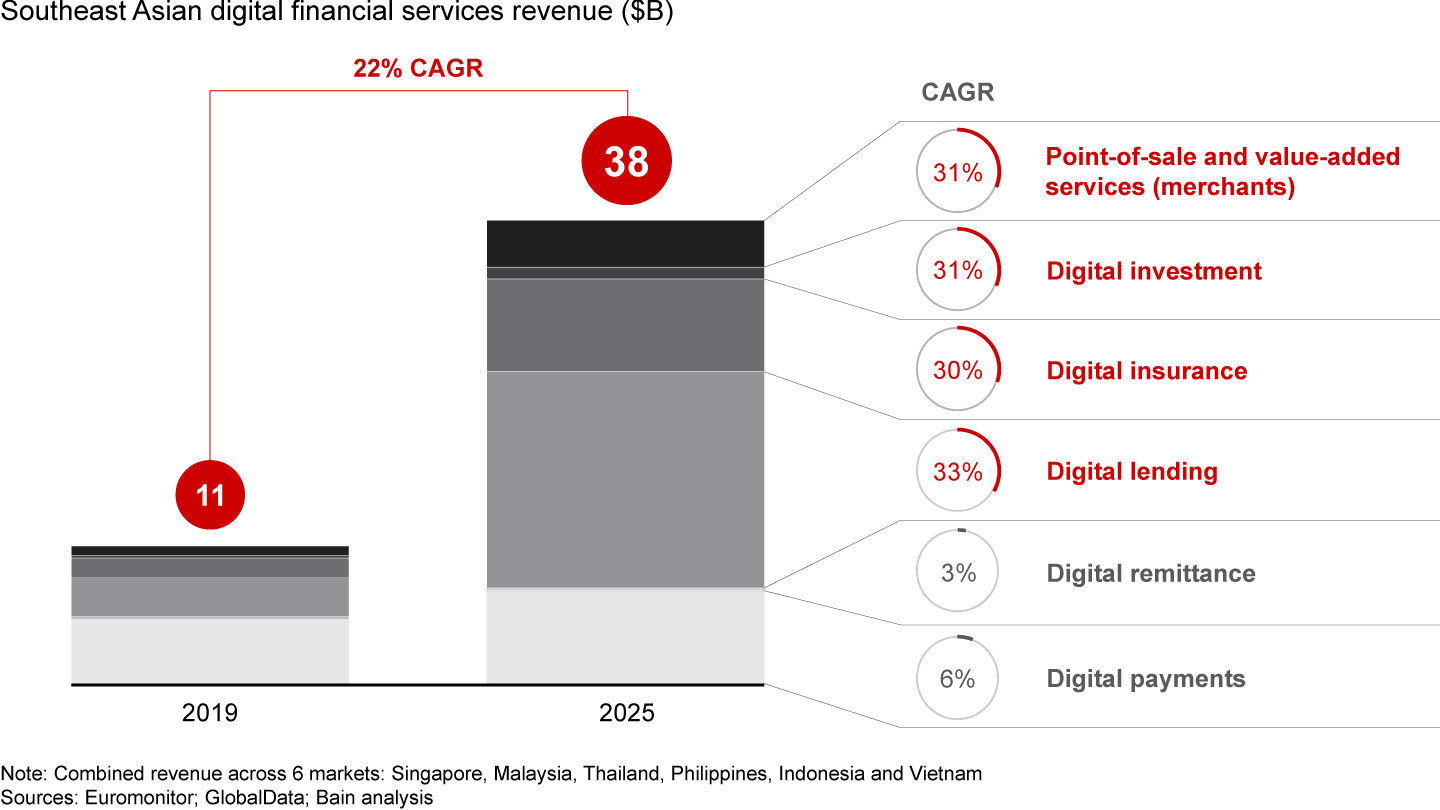
- Digital financial services will generate about $38 billion by 2025 in annual revenue, with lending making up about half of that opportunity. If it achieves its full potential, digital financial services could expand to $60 billion in revenues and contribute 17% of the financial services industry’s total revenues.
- As the field of competitors quickly expands, lines are blurring between different categories of players in the ecosystem, and partnerships are becoming more common.
- Digital financial services will evolve differently among three distinct customer segments: the banked, the underbanked and the unbanked.
- The underbanked segment is the true growth engine in digital financial services. Consumer technology platforms are well positioned to create and grow this market segment.
- Players that successfully offer integrated solutions for SME merchants will help fill unserved working capital needs.
With its population of 570 million and a GDP expected to reach $4.7 trillion by 2025, the six largest countries in Southeast Asia represent one of the world’s largest and fastest-growing regions. Within the region, the financial services industry holds big potential that could be unleashed if fundamental underlying challenges are addressed.
Written in collaboration with
Written in collaboration with

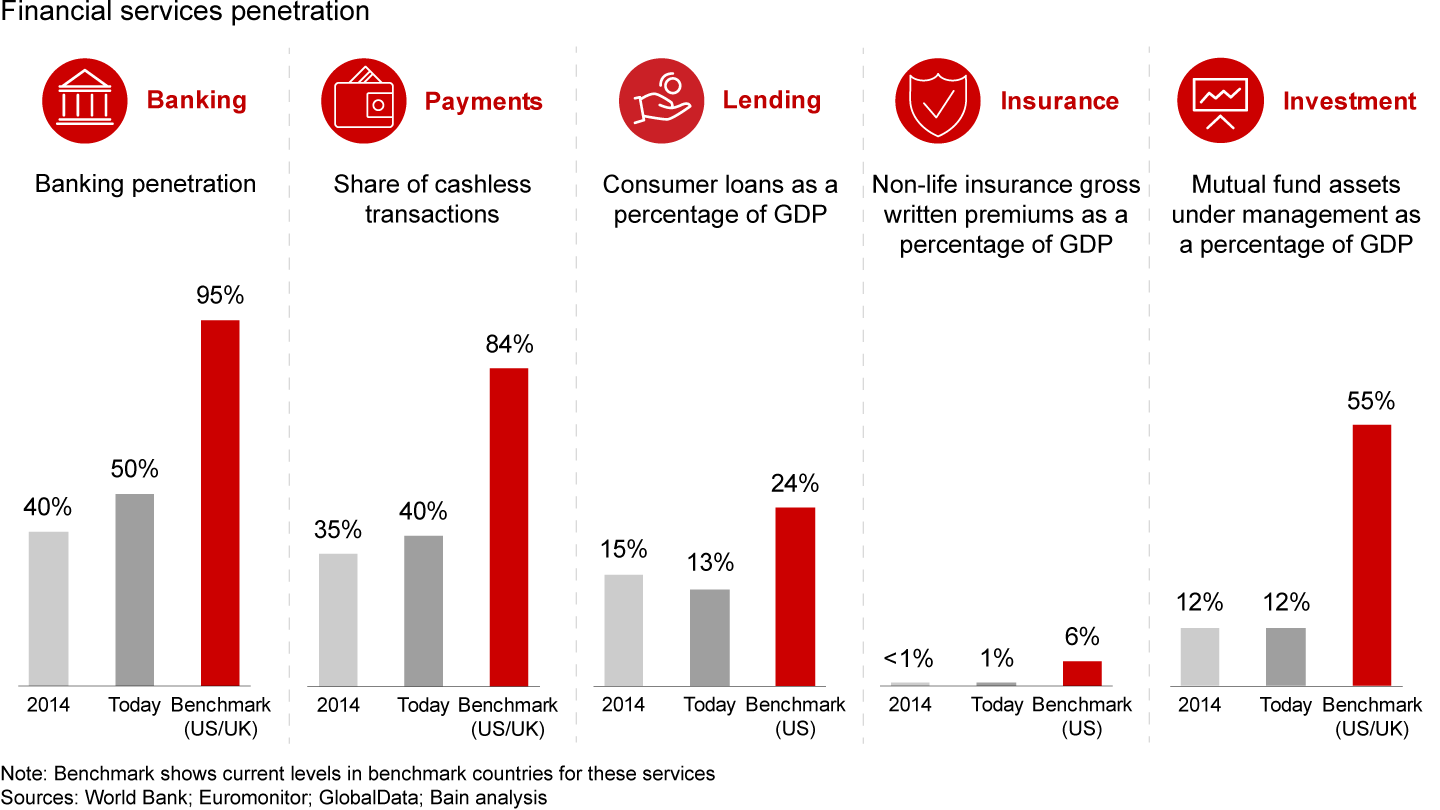
It is well known that Southeast Asia’s consumers have less access to financial services than peers do in developed markets (see Figure 1). Although banking penetration now is 1.25 times what it was in 2014, it still is only 50% on average, compared with the 95% banking penetration rate in the US and UK. More than 7 out of 10 adults in Southeast Asia are either “underbanked”—they have no access to credit cards or have no long-term savings product, for example—or are “unbanked,” without access to a basic bank account. In addition, millions of Southeast Asia’s small and midsize enterprises (SMEs) face large funding gaps.
Figure 1

Now all eyes look to digital financial services to overcome these and other challenges.
Four factors have limited the growth of digital financial services in the region. First, consumers and merchants alike have been slow to abandon cash and make the move to digital—only 40% of transactions are cashless, compared with 84% in the US and UK. Another obstacle: There’s an absence of a reliable digitized identification system in most Southeast Asian markets. In addition, regulators have taken a cautious approach that emphasizes consumer protection over innovation. A final issue: The region’s financial system infrastructure remains largely underdeveloped, with an absence of robust credit bureaus, for example.
Despite these impediments, the market opportunity in each of these five financial services will grow fast. The region’s high smartphone penetration and engagement makes customer adoption of services like e-commerce and ride hailing easier, and provides opportunities to offer embedded financial services. Also, regulatory policies across the region are becoming more open, with governments supporting the development of digital financial services. In fact, supportive and consistent regulations and government policies will be the biggest swing factor in the development of digital financial services throughout the region.
Consider Singapore and Thailand’s regulatory sandbox, which allows companies to test innovations in a controlled environment under regulators’ supervision. Singapore and Thailand established standardized QR codes for mobile payment to increase the efficiency of financial services. Indonesia introduced a National Strategy for Inclusive Finance aimed at developing the economy by expanding the market for banking services. Vietnam has announced similar intentions.

Digital Financial Services in Southeast Asia: By the Numbers
Success in the region's booming market will hinge developing digital solutions for tomorrow's customers.
Among various services, key inflection points occur over the next five years. Both digital payments and digital remittances are at or approaching inflection points now (see Figure 2). Digital payments is the most advanced and will exceed US$1 trillion in transaction value by 2025. With the highest penetration rate among these verticals, digital payments and remittances are experiencing rapid adoption among consumers similar to what was seen in other digitally enabled industries, like e-commerce, ride hailing and online media. The other services—lending, investment and insurance—are still emerging, but each should grow by more than 20% annually through 2025, according to research conducted by Bain & Company in conjunction with Google and Temasek. Digital financial services will generate about $38 billion by 2025 in annual revenue, with lending making up about half of that opportunity, led by innovations in consumer lending and SME working capital financing (see Figures 3 and 4).
Figure 2
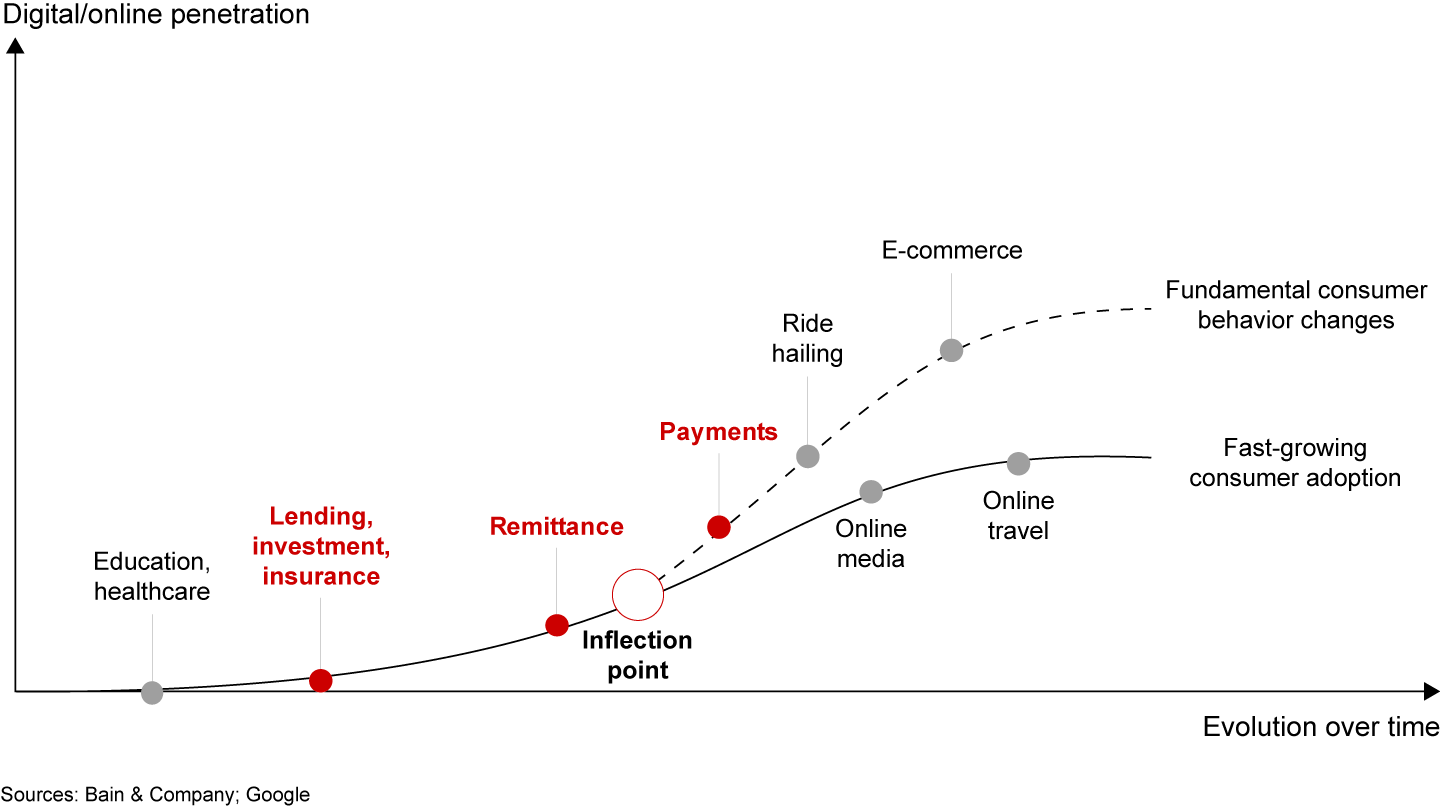

Figure 3
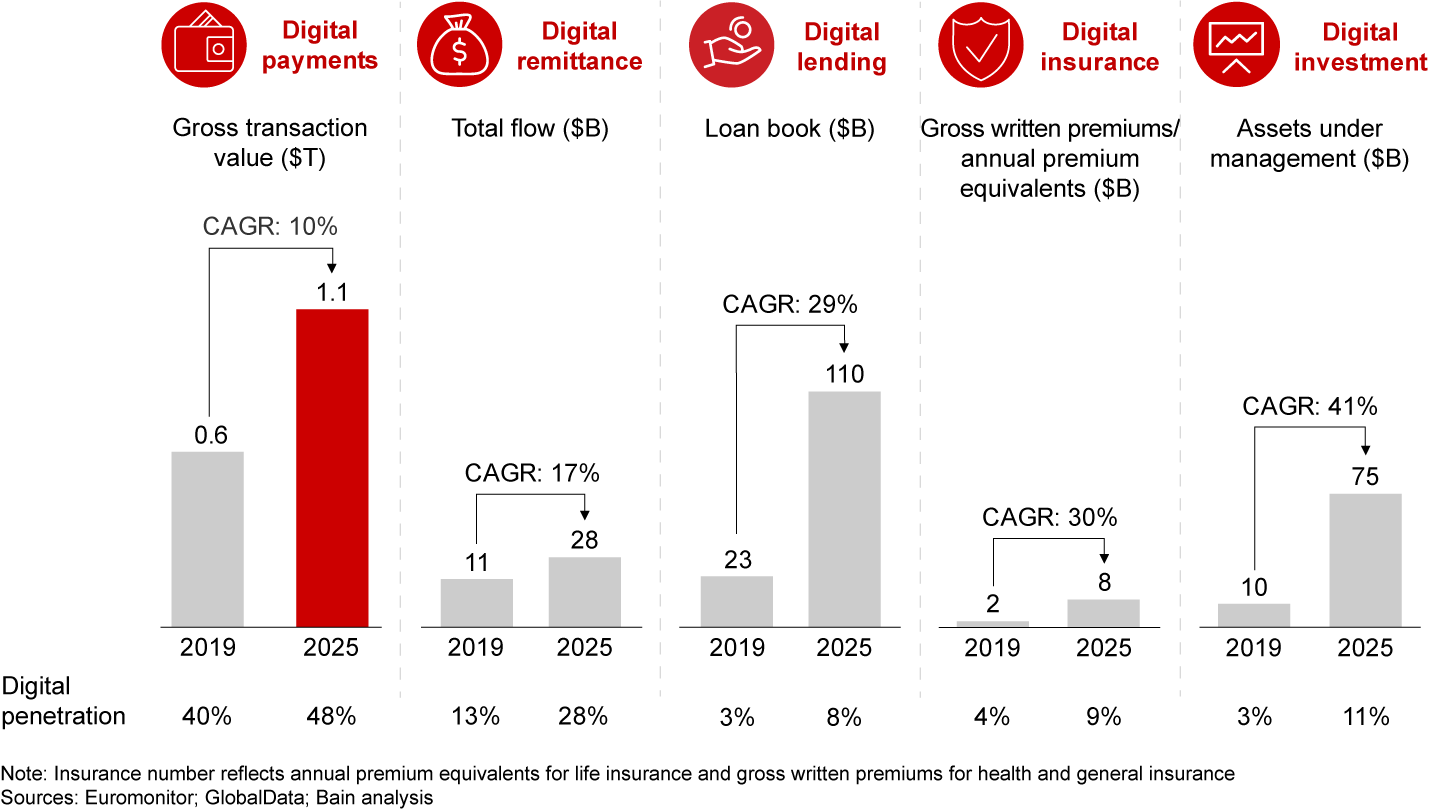

Figure 4

The players
The landscape includes four major archetypes of players.
- Established financial services players are traditional institutions such as banks, money transfer operators, insurance companies and asset management firms.
- Established consumer players include traditional companies in other consumer industries with large customer bases—telcos, airlines, retail companies, for example—that are expanding their product offerings to include financial services.
- Pure-play fintechs represent a new generation of independent players that has emerged to compete with digital financial services offered through new business models.
- Consumer technology platforms are digital economy platforms providing consumer services such as ride hailing, e-commerce and gaming, and they are embedding financial services products within their existing services.
No single archetype meets all the success factors to win. For example, established financial services players have broad financial services expertise, a large customer base, customer trust and access to low-cost funding. But fintechs benefit from a more flexible cost structure and ability to build cleaner technology stacks, allowing them to provide competitive pricing and better user experiences. Established consumer players have a broad distribution network and massive amounts of customer data, but may lack the digital capabilities to leverage those assets. Lastly, consumer technology platforms have a large online customer base for cross-selling of financial services, frequent use cases and digital capabilities, and they offer an online-to-offline (O2O) experience.
Disrupters and established players alike are upping the competition. Regional tech players like Grab and Gojek have pushed into financial services. Chinese tech companies like WeChat and Alipay have entered through local partnerships. Pure-play fintechs such as Funding Societies, InstaReM, PayMaya and StashAway offer digital financial services in specific verticals like lending, remittance, payment and investment.
The activity is fueled with readily available funding. Fintech investment in Southeast Asia grew by almost 140% annually from 2016 to 2018. Fintech players raised over $2 billion in funding over the last three years, with over $1 billion raised in 2018 alone. Consumer tech platforms like ride hailing and e-commerce companies raised over $24 billion over the same period, and their investments to build digital financial services most likely surpassed the amounts raised by the standalone fintech players.
Meanwhile, incumbent banks across the region are not satisfied with the status quo—they are spending sizable IT budgets to rapidly transform their core and forging alliances. However, only 14% of the industry experts that we interviewed believe that established financial services players are well prepared for digital financial services disruption. Most established players still require significant investments to fundamentally digitize in order to fend off new competition.
As this field of competitors quickly expands, lines are blurring between different categories of players in the ecosystem and partnerships are becoming more common. Disruption at scale will more likely come from consumer technology platforms than from pure-play fintechs offering niche services. We expect that an increasing number of banks, especially subscale platforms, will seek growth by partnering with established consumer players or consumer tech platforms to expand their user base and build volume through those new distribution channels. This represents a move away from their traditional notion of directly owning the customer relationship, in an attempt to reach a larger customer base and gain share.
Despite the march of new players entering the market, it will be difficult for Southeast Asia’s customers to move away from banks completely. Banks have large capital bases and regulated deposits. Pure-play fintechs will find that balance sheet funding remains a potential risk to scaling business. Should markets truly open up to data sharing through open banking, increased data portability can accelerate a shift in business models with a broader array of opportunities for innovation.
Three distinct segments
The development of digital financial services will play out differently in three distinct customer segments: the banked, the underbanked and the unbanked. The banked segment (representing 26% of the population and contributing 50% of total income) already has adequate access to the full range of financial services. This segment is a major focus for established players, who are likely to retain a stronghold, albeit with share shifts. Companies that are more nimble and technology-savvy will outpace competitors.
On the other hand, the underbanked consumer (24% of the population) does not have full access to traditional financial services. As such, technology-enabled business models offer a more effective way to serve this segment, creating new market opportunities. This segment represents the biggest potential and the true growth engine in digital financial services. Consumer tech platforms are well positioned to gain share in the underbanked segment given their large, expanding and engaged customer base. These platforms have the ability to capture broader customer lifetime value via a fuller suite of consumer services. Of the industry experts surveyed, 88% believe digital financial services will transform the livelihood of the underbanked by 2025.
But digital financial services will not be a panacea for reaching the unbanked, representing 50% of the population. Serving the unbanked population has been a lingering challenge in the region, and 67% of the executives surveyed believe access to the unbanked will remain limited by 2025. Indeed, contrary to common perception, pure-play fintechs and consumer tech platforms are not yet making a meaningful impact. Governments and telecom companies will need to play a key role in accelerating development of this segment, through a combination of infrastructure development, digital regulatory frameworks and, in some cases, direct access that can enable strong product and underwriting capabilities from partners.
SME merchants, such as independent restaurants and shops, will likely become a key digital financial services battleground in Southeast Asia in the years ahead. Digital advances are rapidly opening up new business models to serve this fragmented, underserved and potentially huge market. While established players and specialty players continue to focus on large merchants, with whom they have existing relationships built on strong trust, all four of the digital services archetypes will fight it out for the vast SME market.
A survey of SMEs in Indonesia found that 76% already accept digital payments or are likely to accept them in the next three years. Established players are now vulnerable to losing this customer segment to new players that can use nontraditional data sources to create access and supplement underwriting, and offer a broader suite of products and new delivery models (such as offline-to-online platforms) to address the needs of SMEs. Players that serve as a merchant gatekeeper will have a distinct advantage in the battle for SMEs. Those that offer an integrated solution to meet different SME merchants’ needs will gain share.
The keys to success
A number of success factors will influence any participant’s ability to win. The best competitors will maintain differentiated customer access—building a large base of end users and merchants and honing their ability to win customers’ share of mind through value-added services, loyalty and trust.
Winners will invest to access and analyze valuable consumer and merchant data or partner with those who own such capabilities and deliver a superior customer experience—all while continuing to transform their core operating platform and improve cost efficiency. A payments service provider or a consumer technology platform that has access to consumer and merchant transaction data, for example, may leverage such data to offer lending or insurance to the consumer or merchant.
In our view, winning players will be those who own the consumer and merchant relationship. With intense competition and a high degree of fragmentation, companies that gain an outsized share will become gatekeepers for consumers and merchants. That means a focus on winning three key battles.
First, they will excel in becoming top-of-mind for consumers or merchants for specific use cases. The most common way is to be positioned with the right nonfinancial services offerings. Second, they will win the battle for share of time with consumers and save time for SMEs and merchants. Finally, they will strive to surpass competitors by developing integrated solutions and therefore share of wallet. By doing so, gatekeepers stand to gain a disproportionate share of profit pools and monetize customer relationships through additional services.
While all four archetypes still stand a chance of becoming a consumer or merchant gatekeeper, certain archetypes may be better positioned in certain segments. For example, consumer technology platforms could become the gatekeeper for the underbanked given their broad use case offerings, which enables them to gain share of mind for customers and cross-sell relevant financial services.
Given the market dynamics, it also is unlikely that any player will win on its own. Instead, leaders will build ecosystems through strong partnerships or deeply integrated alliances to establish multiple touchpoints with customers and ultimately bundle offerings. There will also be players that focus on narrow areas of expertise or utility functions that will be embedded into the gatekeeper’s integrated solutions.
Our prediction that digital financial services’ full potential could reach up to $60 billion in revenue and contribute about 17% of the total financial services industry’s revenues assumes a few important criteria are in place. The industry requires continued investment to promote innovations as well as incentives to stimulate adoption and use. But the biggest swing factor will be supportive and consistent regulations and government policies. That means a concerted regulatory push for digitization and financial inclusion, electronic KYC (know your customer) and licensing to further allow virtual banks. It also means establishing critical infrastructure including digitized national ID systems, real-time payment systems, standardized QR codes and other standards and effective credit bureaus. Only with these ingredients will Southeast Asia’s digital financial services industry reach its full potential.
Florian Hoppe is a partner in Bain & Company’s Strategy practice and Technology and Analytics Group. He is based in the firm’s Singapore office. Aadarsh Baijal is a partner in Bain & Company’s Financial Services practice based in Singapore. Thomas Olsen is a partner in the Financial Services and Private Equity practices in Singapore. Usman Akhtar is a partner in Bain’s Financial Services and Private Equity practices and is based in Jakarta.
Written in collaboration with
Written in collaboration with

Google's mission is to organize the world's information and make it universally accessible and useful. Through products and platforms like Search, Maps, Gmail, Android, Google Play, Chrome and YouTube, Google plays a meaningful role in the daily lives of billions of people and has become one of the most widely-known companies in the world. Google is a subsidiary of Alphabet Inc.
Temasek is an investment company with a net portfolio value of S$306 billion as of 31 March 2020. Our Temasek Charter roles as an investor, institution and steward shape our investment stance, ethos and philosophy, to do well, do right and do good. Our investment philosophy is anchored around four key themes: Transforming Economies; Growing Middle Income Populations; Deepening Comparative Advantages; and Emerging Champions. We actively seek sustainable solutions to address present and future challenges, as we capture investment and other opportunities that help to bring about a better, smarter and more sustainable world. For more information on Temasek, please visit www.temasek.com.sg.
First published in Oktober 2019