

Report

Executive summary
Background
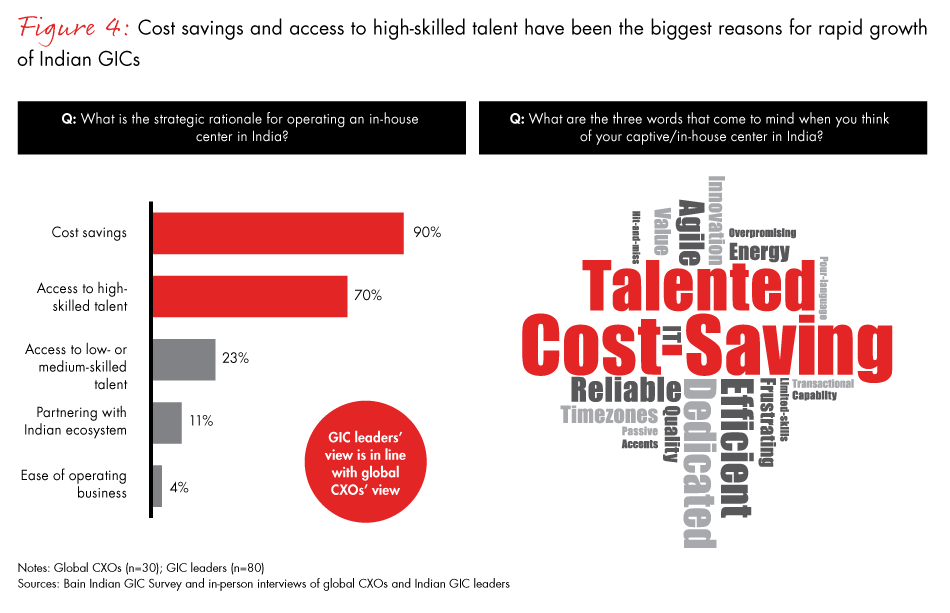
The Indian Global In-house Center, or GIC, landscape has evolved significantly over the last 20 years. Originally called captive centers in the early 1990s, GICs are offshore centers that perform designated functions for large organizations. GICs in India now number about 1,100, employing more than 800,000 individuals and generating approximately $23 billion in revenue. GICs’ ability to create cost savings for an enterprise—while tapping India’s talent pool—have led to that impressive growth. However, due to unprecedented digital disruption in industries worldwide, the role of Indian GICs needs to evolve.
The National Association of Software and Services Companies (NASSCOM) and Bain & Company partnered to explore the changing role of Indian GICs—specifically, to define the key priorities that will enable them to become GICs of the future. Primary input for this study came from interviews with and surveys of more than 30 C-level executives (CXOs) of Fortune 1000 companies and 80 Indian GIC heads and senior leaders, supplemented by Bain’s intellectual property (IP) and client experience.
Digital disruption and changing business priorities of the enterprise
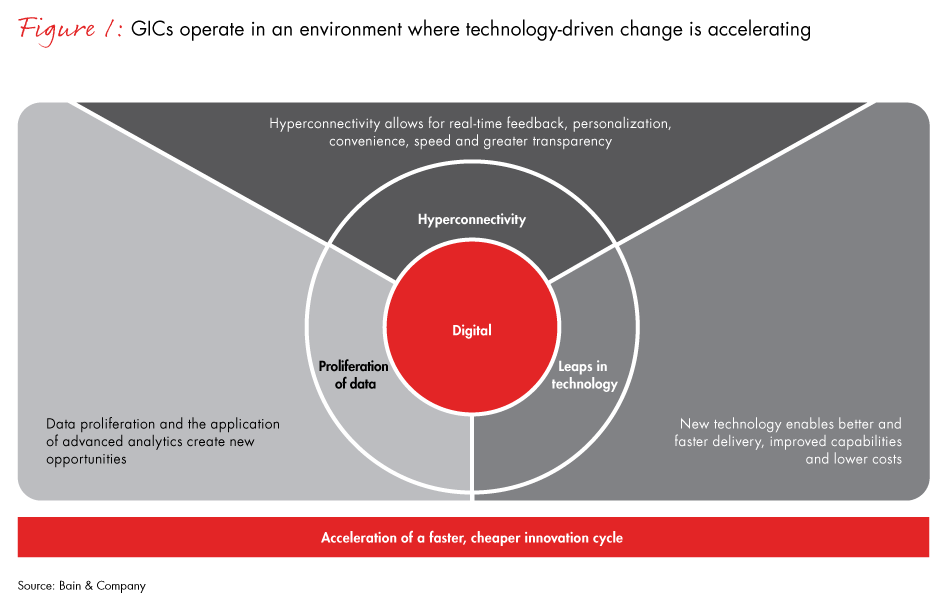
To understand the path forward for Indian GICs, it is critical to recognize the turbulence global enterprises are facing. Today, technology-driven change is rapidly accelerating, propelled by the converging trends of hyperconnectivity, data proliferation and new technologies that allow faster cycle-times and improved capabilities. Computing power is at an inflection point, allowing us to use data in ways previously impossible, while hardware is rapidly becoming cheaper, smaller, on-demand and more efficient. However, the extent of this digital disruption varies: Industries such as retail, telecom and media have been significantly more affected than, for example, construction, mining and utilities.
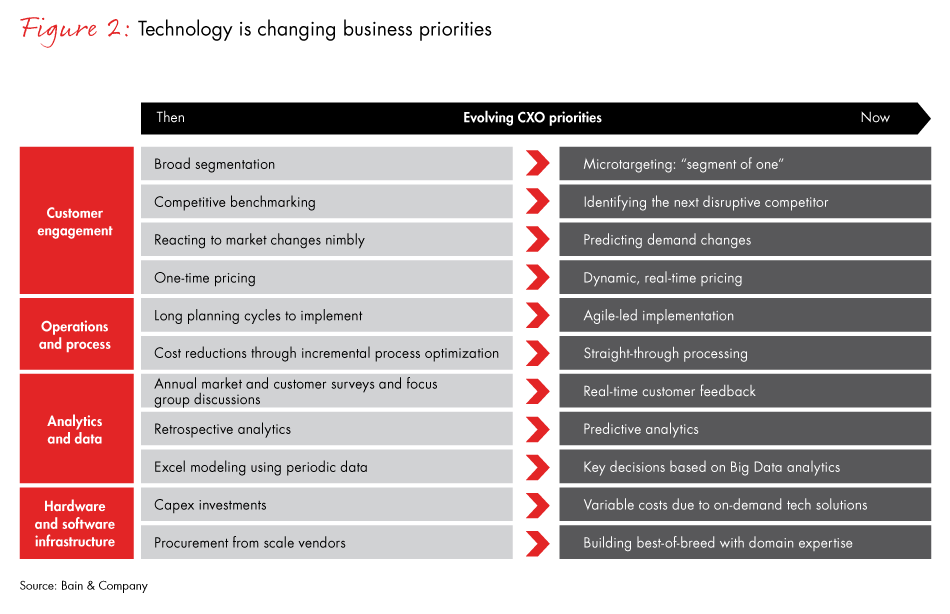
Technology is becoming a more central and critical path to business, therefore changing CXO priorities substantially. For example, technology now allows businesses to strive for a “segment of one” vs. traditional broad segmentation, and to engage with customers more frequently through more channels and in a more targeted manner. Long planning cycles have given way to the Agile methodology. Organizations now spend 45% of their IT budgets on activities that will grow their business compared with only 20% of their IT budgets on such activities previously. This shift necessitates a relentless focus on optimizing traditional IT costs, developing high-skilled talent, self-funding digital initiatives and making IT Agile, adaptive and resilient. These changing CXO priorities have created a unique opportunity for GICs to play a more active role in helping their enterprises thrive in the digital world.
Prateek Majumdar, a partner with Bain's Technology practice, explains how global in-house centers (GICs) can reevaluate their actions and become huge strategic assets for their parent companies.
The opportunity for Indian GICs
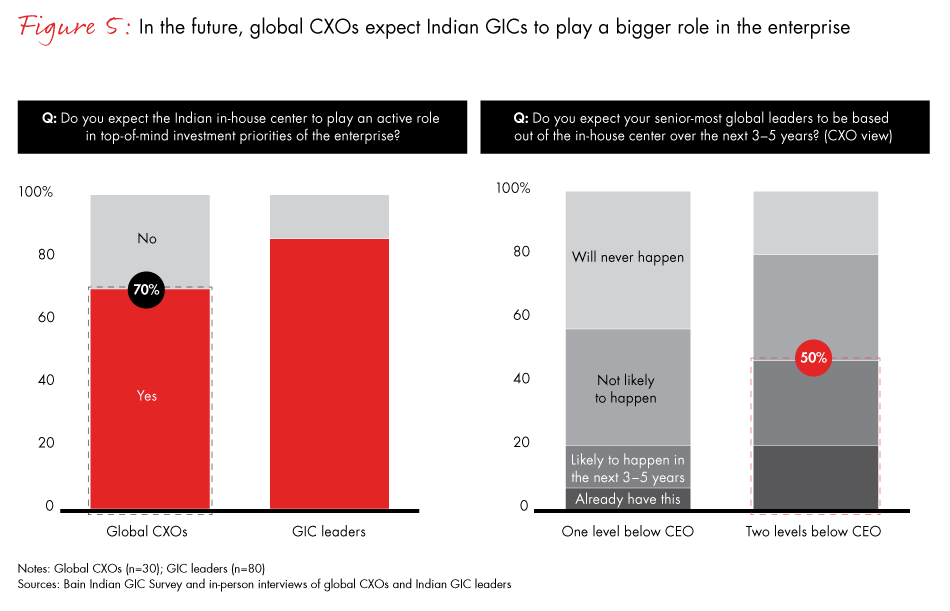
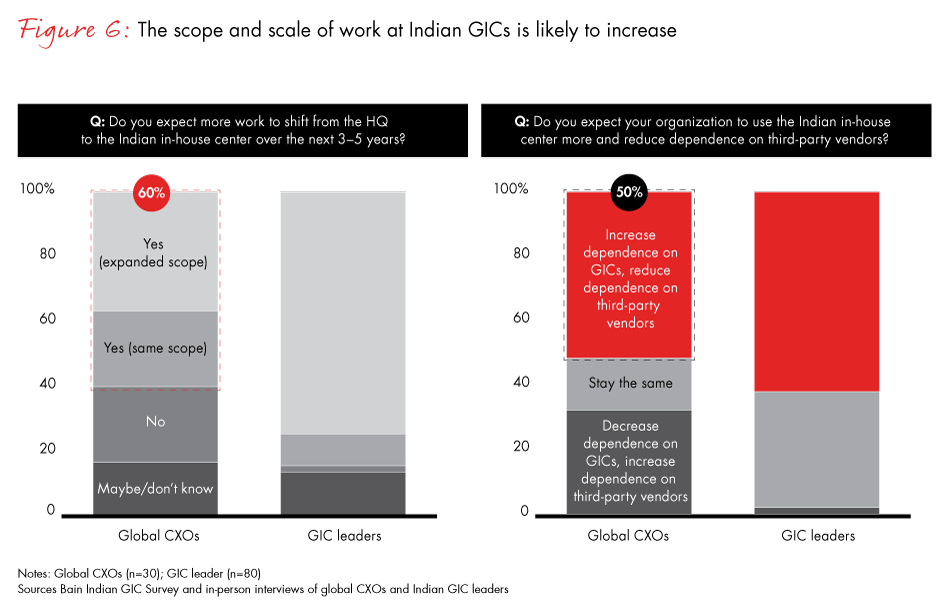
The majority of global CXOs surveyed during this study expect Indian GICs to play a more active role in leading top-of-mind investment priorities in the next three to five years. They also expect more senior enterprise leaders, particularly those two levels below CEO, to be based out of their Indian GICs. These CXOs anticipate the scale and scope of work managed by GICs to increase along with the enterprise’s reliance on the GIC while also fundamentally expecting GICs to continue to deliver cost productivity. This outlines the bigger role that Indian GICs can aspire to play within the global enterprise if they invest in becoming GICs of the future.
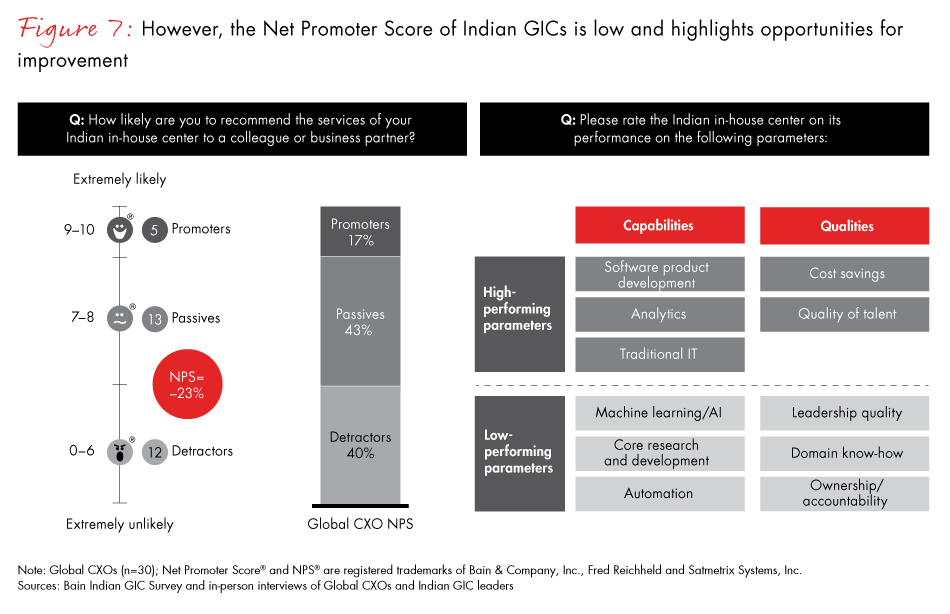
There are, however, multiple areas in which GICs need to improve. As a group, the global CXOs we surveyed gave their Indian GICs a Net Promoter Score® of -23% for their Indian GICs, highlighting leadership quality, domain expertise and automation (including machine learning and artificial intelligence) as areas for improvement. Not all GICs need to excel in all dimensions, but it is critical for each GIC to zero in on the right priorities and invest in them.
While global GXOs and GIC leaders are broadly aligned on most fronts, there are some disconnects on the current role of, and future priorities for, GICs. As a starting point, about 60% of CXOs perceive their GICs to be focused on low-end or transactional work, while 65% of GIC leaders feel that their GICs are focused on high-value, sophisticated work. Similarly, almost 40% of GIC leaders believe that they are involved in core functions, but only about 15% of enterprise CXOs agree.
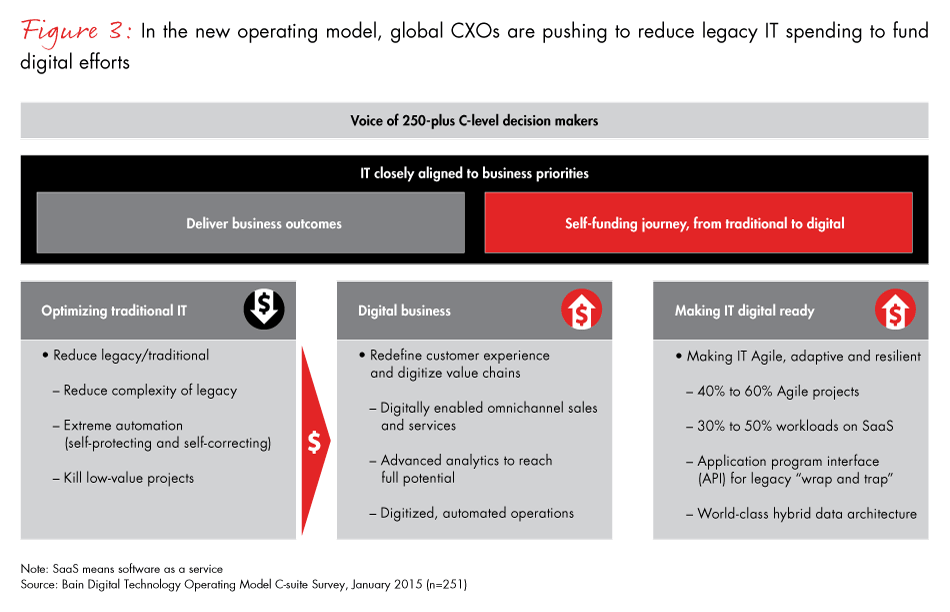
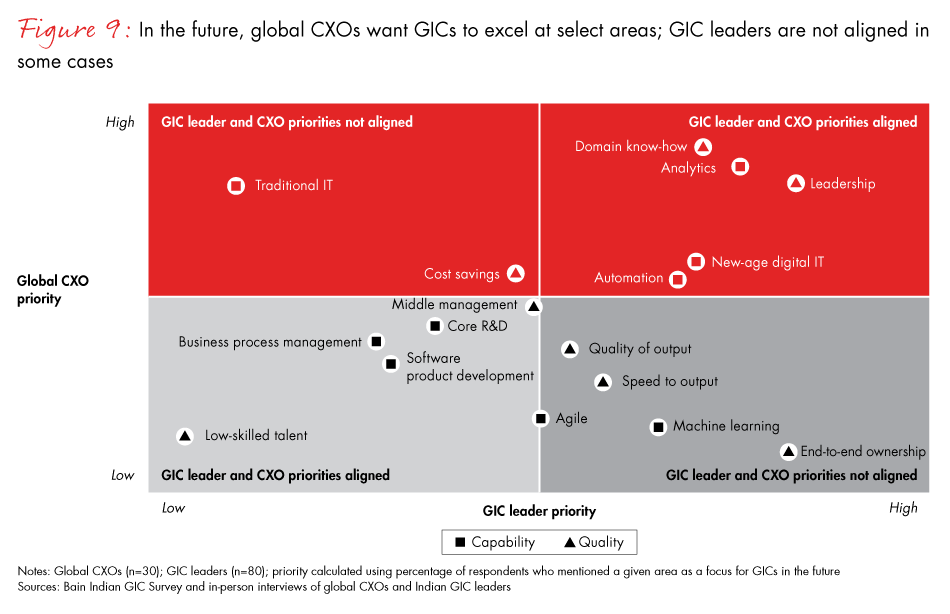
Enterprise CXOs highlight six key areas Indian GICs can invest in to become GICs of the future: analytics, traditional IT, digital-age IT, domain expertise, leadership quality and cost savings. While GIC leaders are mostly aligned on those priorities, traditional IT stands out as something that GIC leaders aren’t prioritizing as much as global CXOs want them to. GICs must excel at digital-age IT capabilities, but in parallel they need to continue to focus on reducing the cost of traditional IT to help CXOs fund growth initiatives. GICs also need to help make traditional IT ready for digital initiatives.
Becoming GICs of the future
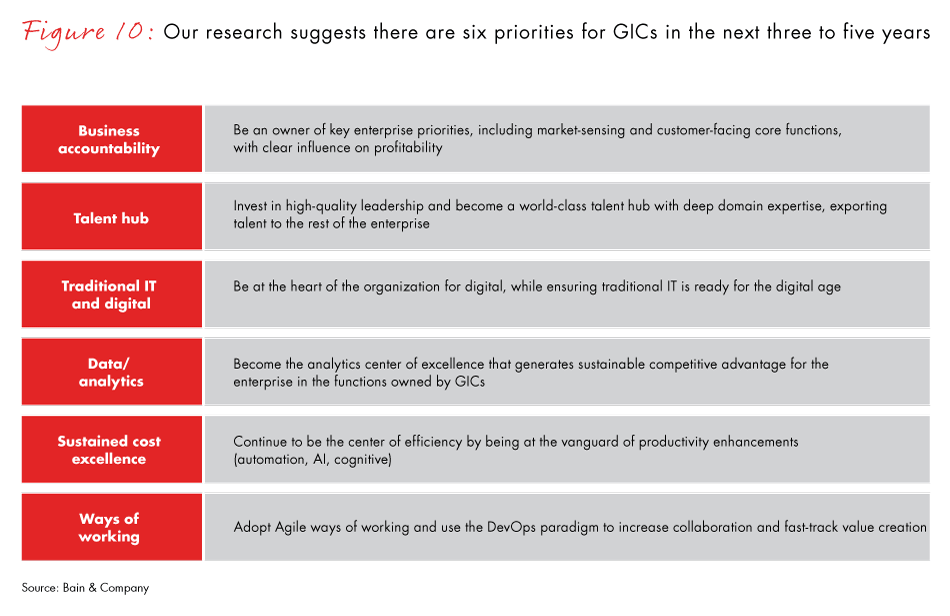
Indian GICs must focus on six key priorities over the next three to five years to become GICs of the future:
- Business accountability. Be an owner of key enterprise priorities, including market-sensing and customer-facing core functions that bring measurable improvements to enterprise profitability.
- Talent hub. Invest in high-quality leadership and become a world-class talent hub with deep domain expertise, exporting talent to the rest of the enterprise.
- Traditional and digital IT. Place digital IT at the heart of the organization while ensuring traditional IT is ready for the digital age.
- Data and analytics. Become an analytics center of excellence that generates sustainable competitive advantage for the enterprise in the functions owned by GICs.
- Sustained cost excellence. Continue to be the center of efficiency by being at the vanguard of productivity enhancements (automation, AI, cognitive and so on).
- Ways of working. Adopt Agile ways of working and use the DevOps paradigm to increase collaboration and fast-track value creation.
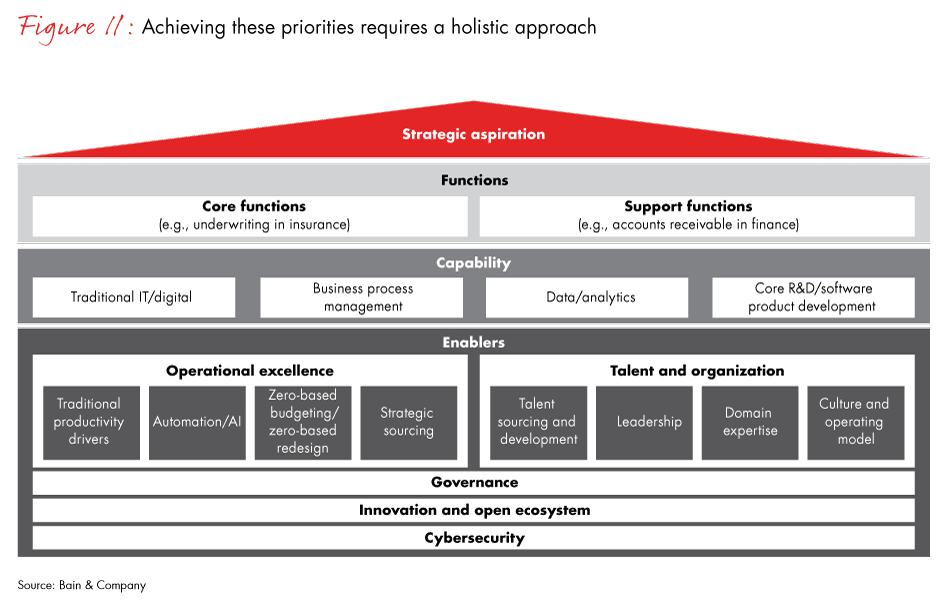
GICs will need to adopt a holistic approach to achieving those goals, including strategic aspirations, functions, capabilities and enablers.
- Strategic aspirations. Revisit how the GIC can contribute to the changing business priorities of the enterprise and focus on how it can improve an enterprise’s top and bottom line.
- Functions. In addition to supporting functions and operations, shape key market-sensing and customer-facing core functions of the enterprise.
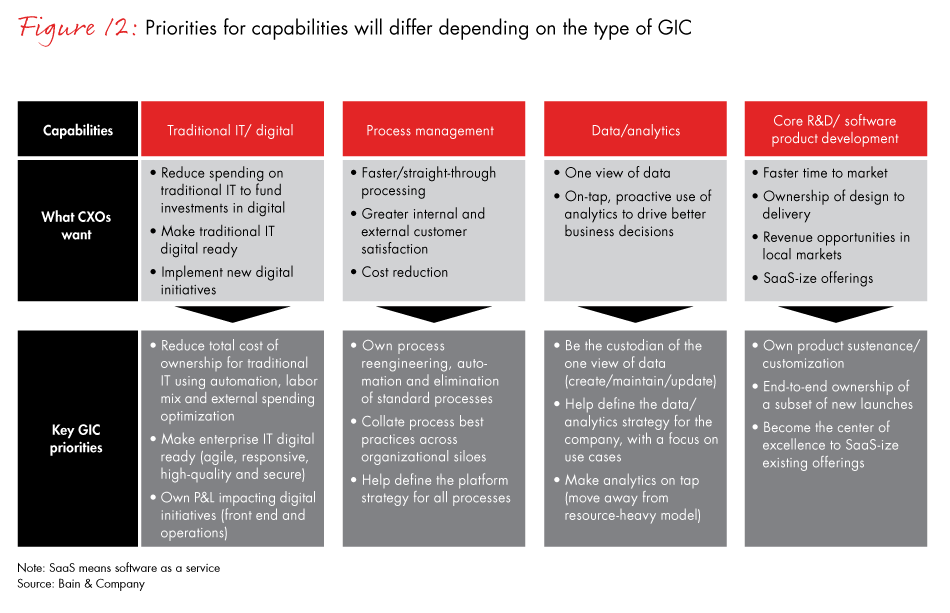
- Capabilities. Depending on the role of the GIC, selectively excel at one or more capabilities—IT and digital, process management, data and analytics, software product development, and core research and development. The key is to use analytics, automation and domain expertise to move toward more high-skilled and less resource-intensive models in core capabilities.
- Enablers. Excel at all of the enablers:
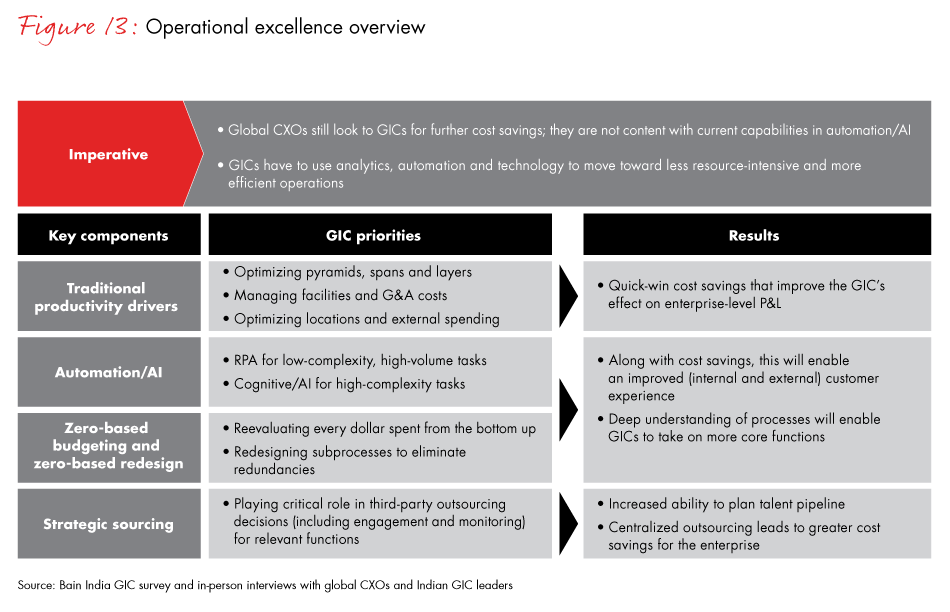
- Improve operational excellence with traditional productivity enhancements, automation and AI, zero-based budgeting and redesign, and strategic sourcing.
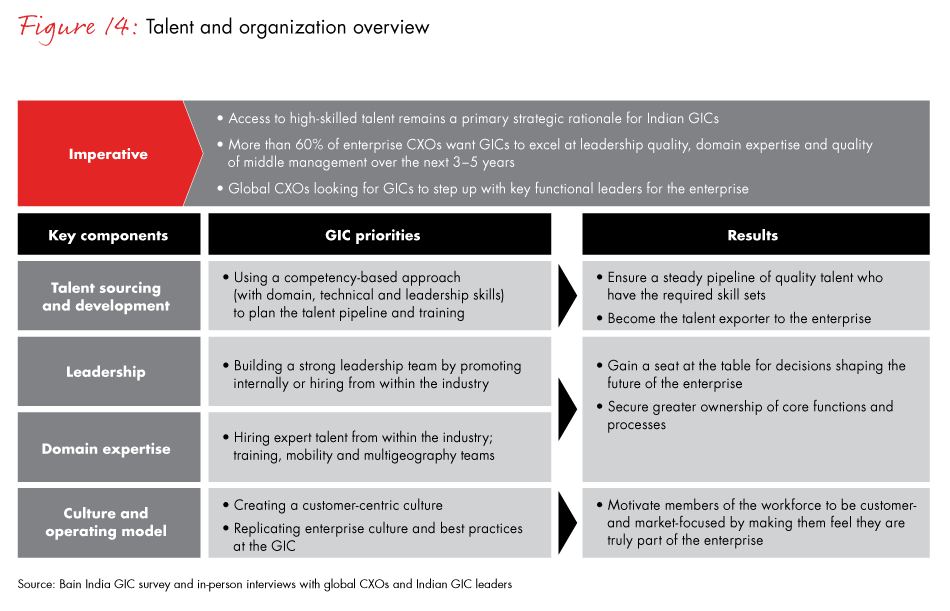
- Strengthen talent and organization by developing high-skilled talent, building the leadership team, building domain expertise, and creating the right culture and operating model.
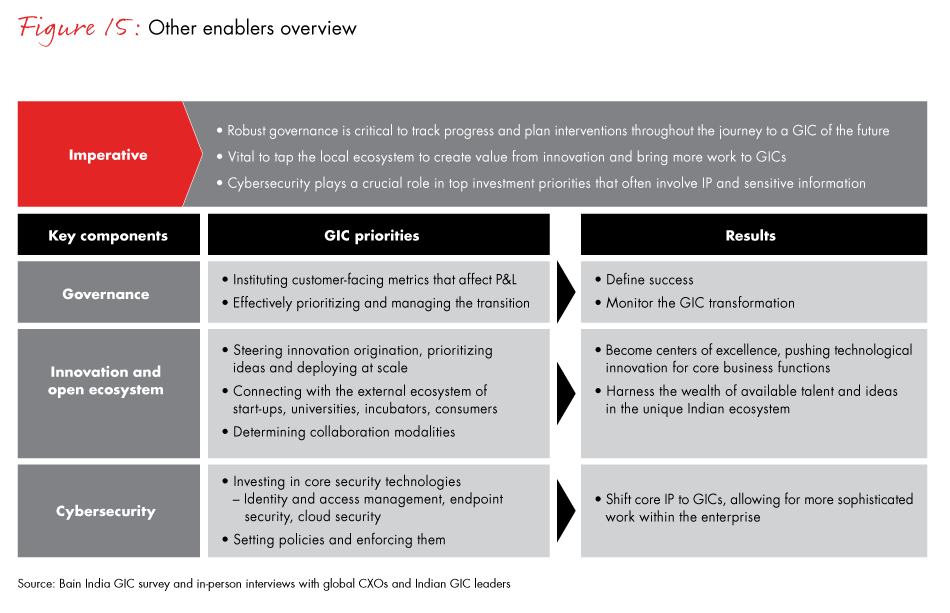
- Build a joint governance model with the enterprise to transition to the GIC of the future. Key performance indicators (KPIs) to track should include operational metrics, employee metrics, internal and external customer Net Promoter Scores, capability and domain building, and profitability improvement created by the GIC.
- Use innovation and open ecosystem at the GIC by collaborating with start-ups, universities, incubators and the like, and innovating at the GIC itself.
- Adopt the highest standard of cybersecurity by building strong policies, investing in core technologies and ensuring rigid enforcement.
Indian GICs have a unique opportunity to step up and play a larger role in the organization and ultimately achieve the stated goal of “accelerating enterprise transformation.” But getting there requires a holistic approach, a concerted effort and a shift in mindset. The journey is unlikely to be business as usual.
Methodology
This report is formulated from surveys of and interviews with C-level executives at Fortune 1000 companies headquartered in the US and Europe (referred to as CXOs in this report) and Indian GIC leaders. Specifically, input from 30 CXOs and 50 GIC leaders was collected through surveys. We interviewed an additional 30 leaders in depth to provide nuanced opinions.
The insights collated from those primary sources were bolstered by Bain & Company’s global intellectual property and client experience in the areas of changing CXO priorities and digital trends.
1. Digital disruption and changing business priorities of the enterprise
- GICs operate in an environment in which technology-driven change is accelerating. Technological disruption is creating a new world order propelled by trends such as hyperconnectivity, data proliferation and new technologies that allow faster delivery and improved capabilities.
- Technology is becoming core to every business and transforming business priorities across four key dimensions: customer engagement, with trends such as more targeted “segment of one” marketing; operations and process, which includes “straight-through processing”; analytics and data, which allows companies to apply tools such as predictive models using Big Data; and infrastructure, in which on-demand cloud solutions are eliminating capital expenditure (capex) investments.
- Bain research shows that today’s global CXOs are focused on optimizing traditional legacy IT spending to fund new digital-age initiatives and make their own IT systems ready for digital.
- As a result, GICs in India have seen robust growth over the last five years; there are currently about 1,100 centers employing more than 800,000 people. Cost arbitrage and access to high-skilled talent are the biggest influencers on that growth and remain the key rationale for operating Indian GICs.
2. The opportunity for Indian GICs
- Global CXOs expect Indian GICs to play a more active role in driving top-of-mind investment priorities in the coming years. Approximately 70% of CXOs surveyed believe that the Indian GICs will play a more active role, and approximately 50% of enterprises already have, or expect to have, leaders two levels below CEO positions based out of their Indian GICs.
- Sixty percent of CXOs believe that the GICs will take on more work in the future, with GIC leaders even more optimistic. More than 50% of CXOs also believe they will reduce dependence on third-party vendors and increase their dependence on GICs.
- Global CXOs’ Net Promoter Score of Indian GICs is low, at -23%. The key reasons given by promoters include analytics, traditional IT, cost savings and quality of talent, whereas the key reasons given by detractors include automation, core research and development, leadership quality and domain expertise.
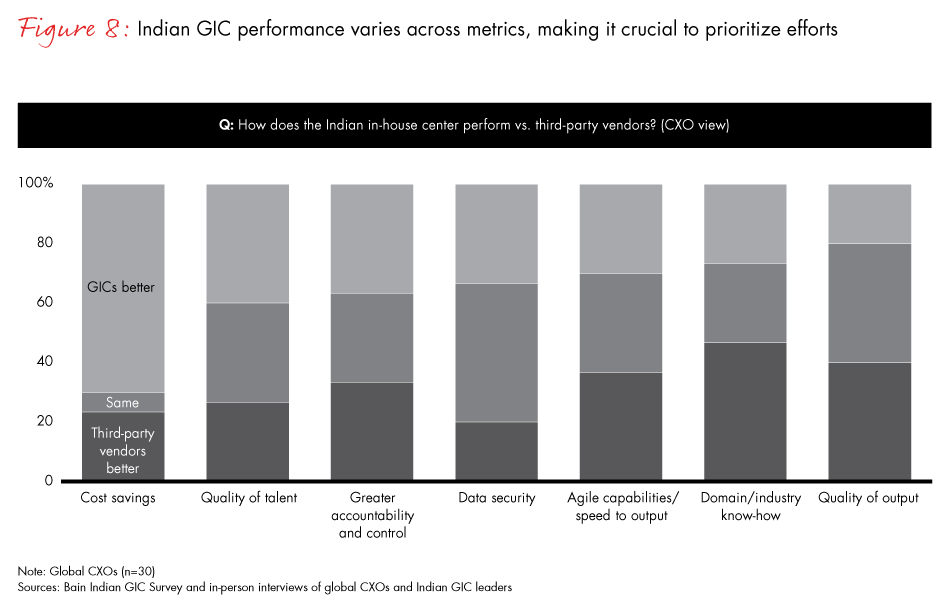
- Additionally, Indian GIC performance varies across capabilities, and global CXOs cite several metrics in which the performance of Indian GICs lags that of third-party vendors. This further highlights the need for Indian GICs to identify and focus on essential areas to be able to play the role they aspire to play within the enterprise.
- In most cases, GICs and global CXOs are aligned on the key priorities for the future: domain know-how, analytics, leadership quality and digital-age IT. However, in some cases GIC leaders are not adequately prioritizing the elements that CXOs see as important, such as traditional IT and cost savings.
3. Becoming GICs of the future
- GICs must focus on six key priorities over the next three to five years to become GICs of the future: business accountability, becoming a world-class talent hub, placing digital IT at the center of the organization while ensuring traditional IT is ready for digital, becoming a data and analytics center of excellence, driving sustained cost excellence and adopting Agile ways of working.
- GICs need a holistic approach that includes strategic aspirations, functions, capabilities and enablers. Their strategic aspirations must revisit how the GIC can contribute to the enterprises’ changing business priorities and focus on the GIC’s influence on profitability. GICs must also shape the enterprise’s market-sensing and customer-facing core functions. GICs need to selectively excel at one or more capability: IT and digital, process management, data and analytics, software product development, and core research and development.
- All GICs should aim to become best-in-class on the various enablers. Implementing and driving cost excellence is still a key global priority for CXOs. Therefore, GICs should steer operational excellence through traditional productivity enhancements, automation and AI, zero-based budgeting and redesign, and greater ownership of strategic sourcing to third-party vendors.
- Global CXOs are looking for GICs to improve leadership quality and domain expertise, making talent and organization a key enabler. GICs should excel at this through strategic talent-sourcing models and strong leadership programs, focusing on domain expertise and building a customer-focused culture.
- Finally, GICs need to focus on a holistic governance and change-management framework, innovation and collaborating with the ecosystem, and cybersecurity.
Arpan Sheth is a Bain & Company partner based in Bengaluru and a leader of Bain’s Asia Pacific Information Technology practice and Bain’s Digital practice in India. Bhanu Singh is a partner in Bain’s New Delhi office. Prateek Majumdar is a principal in Bain’s Bengaluru office. They are all members of Bain’s Asia-Pacific Technology practice.
The authors would like to thank Navneet Kapoor, Sandeep Nayak, Gobin Chandra, Abhaas Shah, Siddha Jain, K.S. Viswanathan and Paresh Degaonkar for their contributions to this report.
The National Association of Software and Services Companies, or NASSCOM, is the industry association for the Information Technology-Business Process Management sector in India. A not-for-profit organization funded by the industry, its objective is to build a growth-led and sustainable technology and business services sector in India. Established in 1988, NASSCOM’s membership has grown over the years and currently stands at 1,400. These companies represent 95% of industry revenues and have enabled the association to spearhead initiatives and programs to build the sector in India and globally.
Net Promoter® and Net Promoter Score® are registered trademarks of Bain & Company, Inc., Fred Reichheld and Satmetrix Systems, Inc.
First published in April 2017