
Skip to Content
  • Standorte

    Standorte

    North & Latin America
    • Atlanta
    • Austin
    • Bogota
    • Boston
    • Buenos Aires
    • Chicago
    • Dallas
    • Denver
    • Houston
    • Lisbon
    • Los Angeles
    • Mexico City
    • Minneapolis
    • Monterrey
    • Montreal
    • New York
    • Rio de Janeiro
    • San Francisco
    • Santiago
    • São Paulo
    • Seattle
    • Silicon Valley
    • Toronto
    • Washington, DC
    Europe & Africa
    • Amsterdam
    • Athens
    • Berlin
    • Brussels
    • Copenhagen
    • Düsseldorf
    • Frankfurt
    • Helsinki
    • Istanbul
    • Johannesburg
    • Kyiv
    • Lisbon
    • London
    • Madrid
    • Milan
    • München
    • Oslo
    • Paris
    • Rome
    • Stockholm
    • Warsaw
    • Wien
    • Zürich
    Middle East
    • Doha
    • Dubai
    • Riyadh
    Asia & Australia
    • Bangkok
    • Beijing
    • Bengaluru
    • Brisbane
    • Ho Chi Minh City
    • Hong Kong
    • Jakarta
    • Kuala Lumpur
    • Manila
    • Melbourne
    • Mumbai
    • New Delhi
    • Perth
    • Seoul
    • Shanghai
    • Singapore
    • Sydney
    • Tokyo
    Alle Standorte Anzeigen
  • Alumni
  • Presse
  • Newsletter
  • Kontakt
  • DACH-Region | Deutsch

    Wählen Sie Ihre Region und Sprache

    Global
    • Global (English)
    North & Latin America
    • Brazil (Português)
    • Argentina (Español)
    • Canada (Français)
    • Chile (Español)
    • Colombia (Español)
    Europe, Middle East, & Africa
    • France (Français)
    • DACH-Region (Deutsch)
    • Italy (Italiano)
    • Spain (Español)
    • Greece (Elliniká)
    Asia & Australia
    • China (中文版)
    • Korea (한국어)
    • Japan (日本語)
  • Saved items (0)
    Saved items (0)

    You have no saved items.

    Inhalte, für die Sie sich interessieren, werden hier gespeichert und können später gelesen oder weitergeleitet werden.

    Explore Bain Insights
  • Branchenkompetenzen
    Hauptmenü

    Branchenkompetenzen

    • Luft- und Raumfahrt, Verteidigung
    • Agrarwirtschaft
    • Chemieindustrie
    • Infrastruktur und Bauwirtschaft
    • Konsumgüter
    • Finanzdienstleistungen
    • Gesundheitswesen
    • Maschinen- und Anlagenbau
    • Medienwirtschaft
    • Metallindustrie
    • Bergbau
    • Öl und Gas
    • Papier- und Verpackungsindustrie
    • Private Equity
      Branchenkompetenzen
      Private Equity
      • Due Diligence
      • Exit Planning
      • Firm Strategy & Operations
      • Portfolio Value Creation
    • Öffentlicher Sektor und Sozialwesen
    • Einzelhandel
    • Technologie
    • Telekommunikation
    • Transportwesen
    • Reise- und Freizeitbranche
    • Versorgung und erneuerbare Energien
  • Managementkompetenzen
    Hauptmenü

    Managementkompetenzen

    • Customer Experience
    • ESG
    • Innovation
    • M&A
    • Operations
    • People & Organization
    • Private Equity
    • Sales & Marketing
    • Strategie
    • KI, Einblicke und Lösungen
    • Technologie
    • Transformation
  • Digital
  • Publikationen
    Hauptmenü

    Publikationen

    • Branchenthemen
    • Managementthemen
    • Bain-Bücher
    Alle Publikationen
    Ausgewählte Themen
    • Resilienz in der globalen Krise
    • M&A Report
    • Private Equity Podcast
    • Midyear Private Equity Report
    • Agile
    • Engineering Report
    • Digital Transformation
    • Elements of Value®
    • Firm of the Future
    • Nachhaltigkeitsstudie
    • Macro Trends
    • Future of Consumption
    • Weltwirtschaftsforum (WEF)
  • Über uns
    Hauptmenü

    Über uns

    • Was wir bieten
    • Unser Ansatz
    • Unser Team
    • Game Changer Award
    • Female Allstar Board
    • Messbare Ergebnisse (EN)
    • Auszeichnungen
    • Globale Partnerschaften
    • The Mission
    Further: Our global responsibility
    • Vielfalt & Chancengleichheit
    • Soziale Verantwortung
    • Sustainability
    Erfahren Sie mehr zu "Further"
  • Karriere
    Hauptmenü

    Karriere

    • Dein Einstieg
      Karriere
      Dein Einstieg
      • Find Your Place
      • Unsere Arbeitsbereiche
      • Unsere Teams
      • Angebote für Studierende
      • Praktika & Programme
      • Recruiting-Events
    • Arbeiten bei Bain
      Karriere
      Arbeiten bei Bain
      • Blog: Inside Bain
      • Karriere Stories
      • Unsere Bainies
      • Office-Standorte
      • Weiterentwicklung
      • Affinity Groups
      • Deine Benefits
    • Impact Stories
    • Deine Bewerbung
      Karriere
      Deine Bewerbung
      • Das erwartet dich
      • Der Interviewprozess
    FIND JOBS
  • Standorte
    Hauptmenü

    Standorte

    • North & Latin America
      Standorte
      North & Latin America
      • Atlanta
      • Austin
      • Bogota
      • Boston
      • Buenos Aires
      • Chicago
      • Dallas
      • Denver
      • Houston
      • Lisbon
      • Los Angeles
      • Mexico City
      • Minneapolis
      • Monterrey
      • Montreal
      • New York
      • Rio de Janeiro
      • San Francisco
      • Santiago
      • São Paulo
      • Seattle
      • Silicon Valley
      • Toronto
      • Washington, DC
    • Europe & Africa
      Standorte
      Europe & Africa
      • Amsterdam
      • Athens
      • Berlin
      • Brussels
      • Copenhagen
      • Düsseldorf
      • Frankfurt
      • Helsinki
      • Istanbul
      • Johannesburg
      • Kyiv
      • Lisbon
      • London
      • Madrid
      • Milan
      • München
      • Oslo
      • Paris
      • Rome
      • Stockholm
      • Warsaw
      • Wien
      • Zürich
    • Middle East
      Standorte
      Middle East
      • Doha
      • Dubai
      • Riyadh
    • Asia & Australia
      Standorte
      Asia & Australia
      • Bangkok
      • Beijing
      • Bengaluru
      • Brisbane
      • Ho Chi Minh City
      • Hong Kong
      • Jakarta
      • Kuala Lumpur
      • Manila
      • Melbourne
      • Mumbai
      • New Delhi
      • Perth
      • Seoul
      • Shanghai
      • Singapore
      • Sydney
      • Tokyo
    Alle Standorte Anzeigen
  • Alumni
  • Presse
  • Newsletter
  • Kontakt
  • DACH-Region | Deutsch
    Hauptmenü

    Wählen Sie Ihre Region und Sprache

    • Global
      Wählen Sie Ihre Region und Sprache
      Global
      • Global (English)
    • North & Latin America
      Wählen Sie Ihre Region und Sprache
      North & Latin America
      • Brazil (Português)
      • Argentina (Español)
      • Canada (Français)
      • Chile (Español)
      • Colombia (Español)
    • Europe, Middle East, & Africa
      Wählen Sie Ihre Region und Sprache
      Europe, Middle East, & Africa
      • France (Français)
      • DACH-Region (Deutsch)
      • Italy (Italiano)
      • Spain (Español)
      • Greece (Elliniká)
    • Asia & Australia
      Wählen Sie Ihre Region und Sprache
      Asia & Australia
      • China (中文版)
      • Korea (한국어)
      • Japan (日本語)
  • Saved items  (0)
    Hauptmenü
    Saved items (0)

    You have no saved items.

    Inhalte, für die Sie sich interessieren, werden hier gespeichert und können später gelesen oder weitergeleitet werden.

    Explore Bain Insights
  • Branchenkompetenzen
    • Branchenkompetenzen

      • Luft- und Raumfahrt, Verteidigung
      • Agrarwirtschaft
      • Chemieindustrie
      • Infrastruktur und Bauwirtschaft
      • Konsumgüter
      • Finanzdienstleistungen
      • Gesundheitswesen
      • Maschinen- und Anlagenbau
      • Medienwirtschaft
      • Metallindustrie
      • Bergbau
      • Öl und Gas
      • Papier- und Verpackungsindustrie
      • Private Equity
      • Öffentlicher Sektor und Sozialwesen
      • Einzelhandel
      • Technologie
      • Telekommunikation
      • Transportwesen
      • Reise- und Freizeitbranche
      • Versorgung und erneuerbare Energien
  • Managementkompetenzen
    • Managementkompetenzen

      • Customer Experience
      • ESG
      • Innovation
      • M&A
      • Operations
      • People & Organization
      • Private Equity
      • Sales & Marketing
      • Strategie
      • KI, Einblicke und Lösungen
      • Technologie
      • Transformation
  • Digital
  • Publikationen
    • Publikationen

      • Branchenthemen
      • Managementthemen
      • Bain-Bücher
      Alle Publikationen
      Ausgewählte Themen
      • Resilienz in der globalen Krise
      • M&A Report
      • Private Equity Podcast
      • Midyear Private Equity Report
      • Agile
      • Engineering Report
      • Digital Transformation
      • Elements of Value®
      • Firm of the Future
      • Nachhaltigkeitsstudie
      • Macro Trends
      • Future of Consumption
      • Weltwirtschaftsforum (WEF)
  • Über uns
    • Über uns

      • Was wir bieten
      • Unser Ansatz
      • Unser Team
      • Game Changer Award
      • Female Allstar Board
      • Messbare Ergebnisse (EN)
      • Auszeichnungen
      • Globale Partnerschaften
      • The Mission
      Further: Our global responsibility
      • Vielfalt & Chancengleichheit
      • Soziale Verantwortung
      • Sustainability
      Erfahren Sie mehr zu "Further"
  • Karriere
    Häufige Suchanfragen
    • Agil
    • Digital
    • Strategie
    Vorherige Suchanfragen
      Zuletzt besuchte Seiten

      Content added to saved items

      Saved items (0)

      Removed from saved items

      Saved items (0)

      Brief

      Tested by Fire: Three Keys to Making Better Decisions through Disruption

      Tested by Fire: Three Keys to Making Better Decisions through Disruption

      Leading companies are building on lessons of Covid-19 to make better and faster decisions.

      Von David Michels, Marcia Blenko, und Leonora Lesesne

      • Min. Lesezeit
      }

      Brief

      Tested by Fire: Three Keys to Making Better Decisions through Disruption
      en

      Three Keys to Better Decision Making during Times of Uncertainty:

      1. Improve data tracking and visibility
      2. Broaden the experts and resources tapped
      3. Make decisions at the right level

      “Decisions matter. They are to an organization what cells are to an organism: the basic building blocks. An organization’s performance relative to its competitors is no more or less than the sum of the decisions it makes and executes.”

      Those words first appeared a decade ago in the book Decide & Deliver. Since then, so much has changed, from the ongoing digitalization of industries to deep shifts in the workforce and a series of exogenous events culminating in the Covid-19 pandemic. Through it all, the critical importance of decision making has remained constant.

      Many factors affect corporate performance, but Bain & Company research has found a consistent correlation between a company’s ability to effectively make and execute decisions and its financial performance over time. On average, over five years, companies that excel in decision effectiveness return to shareholders more than 4 times what their peers do and grow profits as measured by earnings before taxes at a rate 5.5 times that of their peers (see Figure 1).

      Figure 1
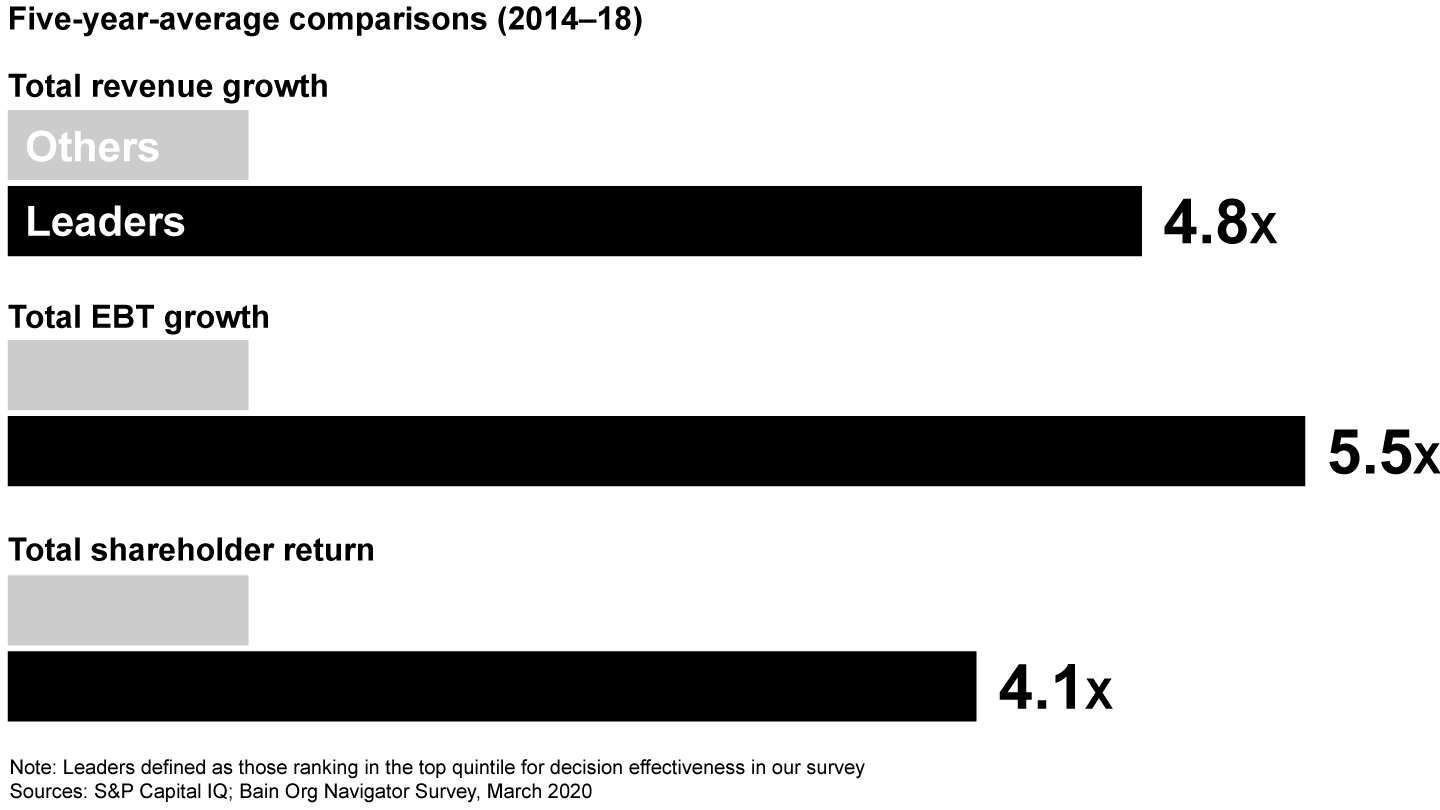
      Companies that make and execute decisions well outperform peers on key financial metrics
      Companies that make and execute decisions well outperform peers on key financial metrics
      Companies that make and execute decisions well outperform peers on key financial metrics

      This year, the vital importance of decision making has been clear as companies grapple with the coronavirus and massive economic disruption. As they begin to recover and rebuild from the initial acute phase of the crisis, executives are reflecting on what has worked well and what hasn’t—including some surprising lessons.

      Breaking the old decision-making mold

      In any crisis, decision making must accelerate and sharpen in focus. During periods of urgency and uncertainty, leaders seek to answer pressing questions faster, even as their teams feel increasingly stretched. As a result, companies often improvise, circumventing typical, sometimes antiquated, processes and routines in favor of a much more pragmatic and agile approach. In this way, leaders tighten control over high-stakes decisions and quickly cut through organizational hierarchy to draw together the people and information needed to make the right calls.

      This year has fit that pattern in ways that are influenced by accelerating adoption of new technology and different ways of working. And customers and employees have benefited as a result. According to Bain research, employees report their companies have become more focused, decision driven and innovative during Covid-19. Some 62% describe more efficient decision making since the crisis started, and just as many hope this will continue beyond the pandemic (see Figure 2).

      Figure 2
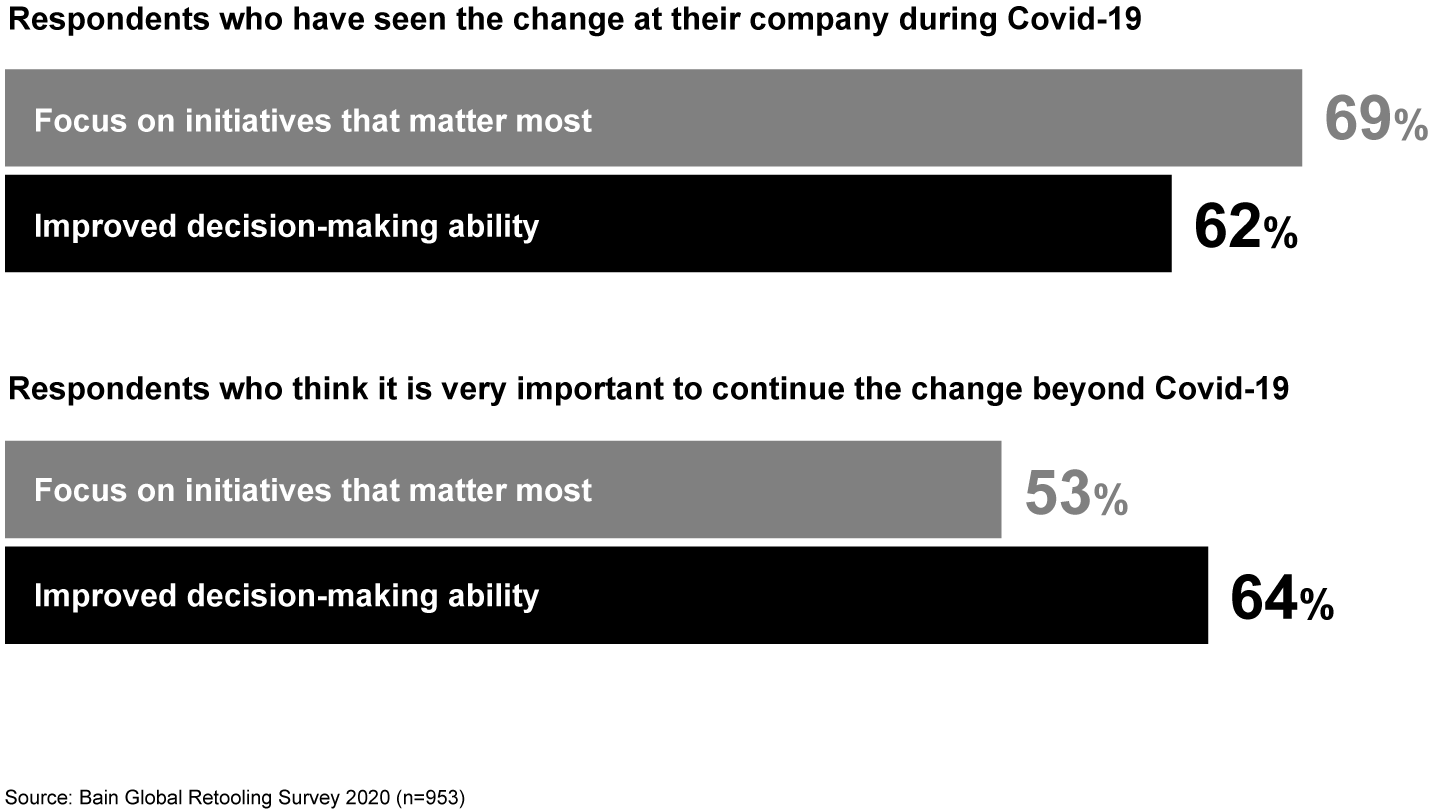
      During Covid-19, companies have more focus and are making decisions more efficiently
      During Covid-19, companies have more focus and are making decisions more efficiently
      During Covid-19, companies have more focus and are making decisions more efficiently

      Changing how we make decisions can be challenging, but with so many organizations sprinting forward at unprecedented speed, companies have the opportunity to focus the urgency and lessons of Covid-19 on permanently improving their decision-making processes.

      Lesson 1: Improve data tracking and visibility

      The digital transformation of business was well underway before Covid-19, but the arrival of the virus accelerated the use of many digital tools, from Zoom conferencing software to collaboration boards like Miro. In decision making, getting the right information to the right people at the right time is critical. So is encouraging the kind of debate and discussion that leads to better decisions. New digital program management tools, designed to do both, have advanced to the point that they are now indispensable to any effort to create change on a large scale. Benefits of these tools include greater transparency, better process discipline and clearer governance. For these tools to have maximum impact, it is optimal to have a transformation office that establishes and maintains proper governance, determines who has the authority and right to make certain decisions, and schedules meetings at the right cadence.

      Wie wir Ihnen helfen könnenResults Delivery® Office

      Bains Results Delivery® Office (RDO) funktioniert wie ein Trainingsprogramm, das die Fähigkeiten einer Organisation entwickelt, mit Wandel umzugehen, Veränderung zu meistern und zum Erfolg zu führen.

      Explore

      Take the example of a power equipment manufacturer that was in the midst of a corporate transformation when Covid-19 hit. The company’s work had focused on reducing costs and improving its supply chain. Expecting the virus would hurt sales, management used a digital transformation dashboard to monitor progress and estimate Covid-19’s impact on sales and projected cost savings. In particular, they dug into the incremental margin growth expected from each initiative, the projected savings on materials and labor, and the timeline on which they’d expected the savings.

      The dashboard made it possible to calculate the expected impact in just one day, a process that could have taken over a week using traditional methods. Management used that estimate to put in place targeted contingency plans to ensure the company would still hit its goals. The process gave management confidence their plans would work, strengthened the board’s commitment to those plans and informed decisions that followed.

      In this way, ready access to meaningful data helped the company identify potential roadblocks and elevate concerns to the executives who could best interpret the data and quickly solve the issues.

      Wie wir Ihnen helfen können

      A Tool for Better Decision Making

      Learn how you can organize for more effective decision making with ARC℠, Bain's digital program tracking tool that helps you monitor progress and accelerate results.

      Lesson 2: Quickly tap the right experts and resources

      The technologies that have made collaboration easier and quicker during the pandemic have also illustrated that physical location is not the limitation we once thought it was. Zoom and other technologies make it possible to connect effectively with internal and external experts and resources, wherever they are located, reducing the need for travel and lowering the barriers to tapping expertise in any location. Creative partnerships with outside resources and talent, such as social influencers and technology providers, are being embraced like never before, often facilitated by technology.   

      When a global food company recently launched a new breakfast option, it faced a double challenge: first, making consumers aware of a new product in a world reordered by Covid-19 and, second, convincing them to try it. In lieu of classic approaches like sampling in stores and at events, the company worked in partnership with online social influencers, who hosted virtual in-home sampling sessions with kits provided by the company. The influencers’ enthusiastic followers then amplified the social media content, and brand managers tracked valuable data about impressions and engagement levels, capturing email addresses of interested consumers. Altogether, this data pointed to a target audience of busy moms. The company then made this group the focus of its commercial model and marketing, zeroing in on newsletters and e-commerce opportunities with social media sites popular with this demographic and working with the influencers busy moms relate to best.

      Lesson 3: Clarify who makes decisions and how

      Executives are often advised to delegate decision making as much as possible to those closer to customers and the dynamics of the marketplace, in order to be more responsive and nimble. During a crisis, however, it can feel like the opposite is happening, as senior leaders seek to better understand and control the issues most affecting performance and risk. While this is necessary to crisis management, there is an art to balancing the decision-making authority of the executive team with the important contributions of line and functional managers.

      Just prior to Covid-19, a quick-service restaurant chain redesigned how it makes decisions. More executive team time would focus on strategic, “change-the-business” decisions—international expansion or acquisitions, for example—and on critical culture and talent issues, while routine “run-the-business” decisions, including things like new site selection, would be delegated.

      In this new system, the executive team sets up a cross-functional team to work on complex change-the-business issues, thoughtfully framing the opportunity and the team’s mission at the start. The executive team clarifies up front which decisions can be made by the project team or by a specified leader and which should be brought back to them. A timetable maps check-ins at which the executives can make any decisions they need to and provide further direction to the project team.

      When Covid-19 hit, this new approach was put to the test as the chain quickly made hundreds of decisions, large and small. To keep everything coordinated and on track, the executive team mobilized three cross-functional teams, each focused on a different time frame and led by a talented manager one level below the executive team. The first team is responsible for decisions related to the immediate crisis. They track data on the health situation from the US Centers for Disease Control and Prevention, local governments and other sources; monitor social unrest and its implications; study changing customer needs; and work to understand the challenges faced by store managers and employees. The second team focuses on emerging from the crisis over the next year, learning from this period and using those lessons to help the business thrive beyond it. The third team evaluates strategic opportunities, creating a one- to three-year outlook for the business and studying how to modify long-term plans and investments.

      Each team understands its mission, knows which decisions can be quickly resolved at lower levels and which should be elevated, and how to engage the executive team for guidance and coaching as needed. The back-and-forth between the teams and executives has closely connected the groups and ensured that urgent decisions are made quickly and align with the company’s strategy, values and finances.

      By empowering these cross-functional teams, the company has quickly accommodated changing customer dining patterns, adding family sizes and options to the menu, adjusting prices, expanding delivery services, launching curbside delivery, and rapidly adding new drive-through operations. The approach has made it possible to pursue critical innovation while maintaining tight budget control, and after a brief dip during the early lockdown, the chain’s volume and sales numbers have both rebounded strongly.

      During the pandemic, each company has learned its own valuable lessons. It’s important not to lose sight of them. As organizations look to maintain speed and further improve decision making, they can start by reflecting on their Covid-19 experience, asking:

      • Has the crisis changed where decision authority lies within our organization?
      • Has it changed the way decisions are made?
      • What changes to individual responsibilities or reporting structures have helped accelerate decisions?
      • Are rapidly shifting customer and employee needs factored into our decisions? 

      Combined with the benefits of focusing on data, expertise, and who makes which decisions and how, answers to these questions can help companies use a period of disruption to make permanent, positive improvements. Today and in the post–Covid-19 world, effectively making and executing decisions still very much matters.

      Related Insights

      Coronavirus

      The global Covid-19 pandemic has extracted a terrible human toll and spurred sweeping changes in the world economy. Across industries, executives have begun reassessing their strategies and repositioning their companies to thrive now and in the world beyond coronavirus.

      Autoren
      • Headshot of David Michels
        David Michels
        Partner, Tokyo
      • Headshot of Marcia Blenko
        Marcia Blenko
        Advisory Partner, Boston
      • Headshot of Leonora Lesesne
        Leonora Lesesne
        Alumni, Atlanta
      Kontaktieren Sie uns
      Ähnliche Beratungsangebote
      • Organisation
      Wie wir Sie unterstützen können
      • ARC℠
      • Results Delivery® Office
      ARC℠
      New Tool Supports Accelerated Performance Transformation for UK Healthcare Providers

      Improving front-line healthcare performance requires a fresh approach.

      Mehr erfahren
      Coronavirus
      Cash Management Practices to Weather a Downturn

      Take an honest look at the business, and decide where to improve.

      Mehr erfahren
      Organisation
      When a New Organizational Structure Isn’t Enough: How to Truly Live Your Operating Model

      The goal of any organizational redesign is for people to work differently, but that only happens if leaders invest in changing the work itself.

      Mehr erfahren
      Coronavirus
      Ramping Up Online Grocery without Breaking the Bank

      Bain’s Marc-André Kamel discusses the challenges that online grocery presents for retailers and CPGs and how they can pair up to find a winning solution.

      Mehr erfahren
      ARC℠
      It's 8-to-1 against Your Change Program: How to Beat the Odds

      The most successful change programs often have five principles in common.

      Mehr erfahren
      First published in November 2020
      Markierungen
      • ARC℠
      • Coronavirus
      • Organisation
      • Results Delivery® Office

      Wie wir unsere Kunden unterstützt haben

      An Aerospace Leader Bounces Back with a Three-Part Transformation

      Kundenbeispiel lesen

      Change & Implementation Mobilization Efforts Help a Chemical Company Implement and Sustain 15% Cost Reduction

      Kundenbeispiel lesen

      Change & Implementation Results360® Boosts a Pharmaceutical Company’s Stock Price 135%

      Kundenbeispiel lesen

      Möchten Sie mit uns in Kontakt bleiben?

      Wir unterstützen Führungskräfte weltweit, die kritischen Themen in ihrem Unternehmen zu adressieren. Gemeinsam schaffen wir nachhaltige Veränderungen und Ergebnisse.

      ARC℠ is a service mark of Bain & Company, Inc.

      Bain Insights. Unsere Perspektive auf die kritischen Themen, mit denen sich international agierende Unternehmen konfrontiert sehen, finden Sie monatlich in Ihrem Postfach.

      *Ich habe die Datenschutzerklärung gelesen und akzeptiere sie.
      Bitte lesen Sie die Datenschutzerklärung und akzeptieren Sie diese.
      Bain & Company
      Contact us Sustainability Accessibility Rechtliche Hinweise Impressum Datenschutz Cookie-Richtlinie Sitemap Log In

      © 1996-2026 Bain & Company, Inc.

      Kontaktieren Sie Bain

      Wie können wir Ihnen helfen?

      • Business inquiry
      • Career information
      • Press relations
      • Partnership request
      • Speaker request
      Alle weltweiten Büros