

Founder's Mentality Blog

Micro-battles—those discrete, time-boxed initiatives that rapidly bring strategic choices to action and formulate ways to scale the results—guide organizations on the journey to scale insurgency. In order to act with speed and responsiveness, large companies use micro-battles to transform their most bureaucratic behaviors. Micro-battles teach an organization’s key players to develop solutions that will scale, while engaging the executive committee (Exco)—or the "Amplify" team—to sponsor the greatest efforts. We recommend that companies start with just three micro-battles linked to their most pressing strategic challenges. But to effectively reshape the entire organization’s ways of working, firms should eventually build up a full portfolio of around 25 micro-battles through several “waves” of launches.
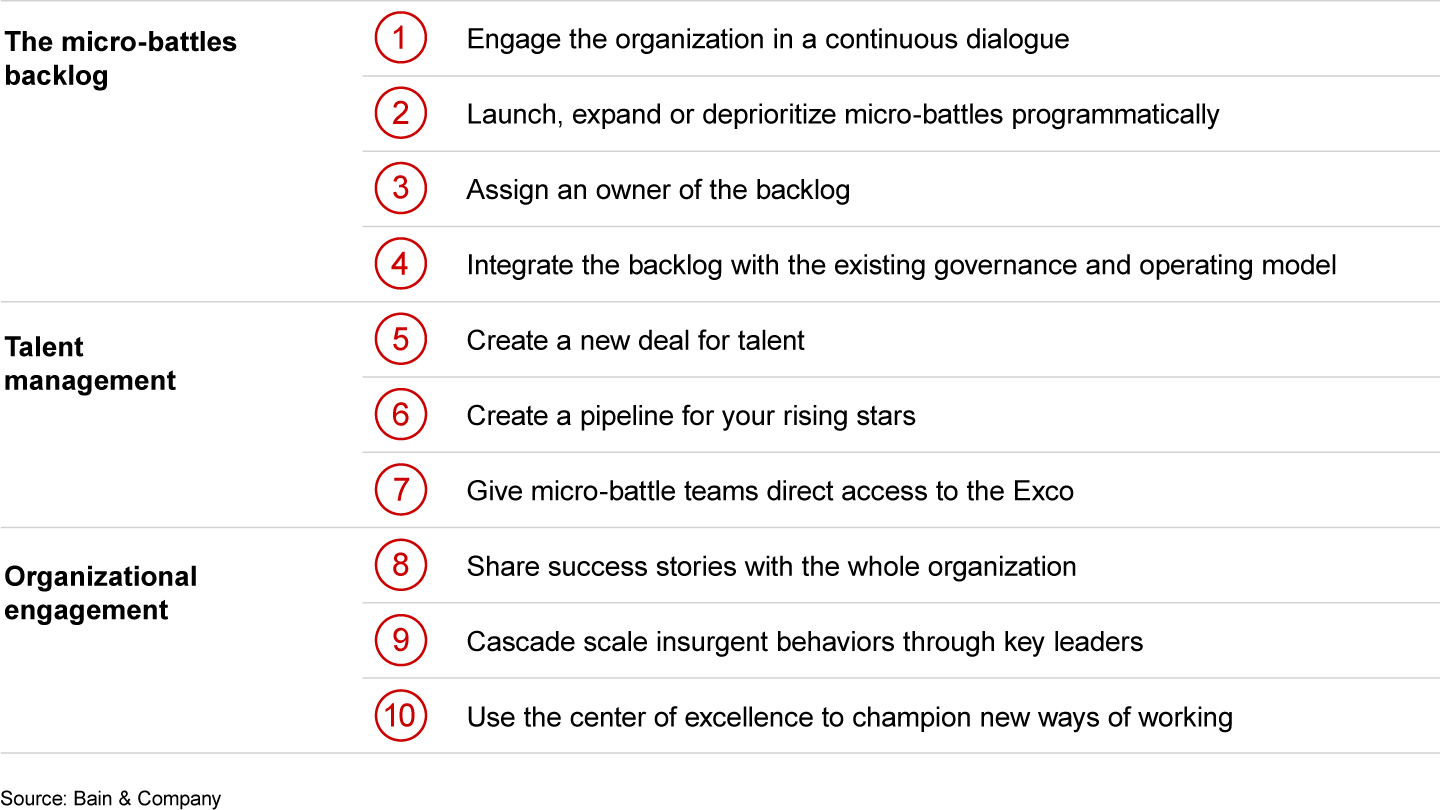
Once a company has succeeded with its first set of micro-battles, how can it ramp up the newfound skills to tackle more than eight times as many? How can it scale the renewed energy and new ways of working from the Exco and original micro-battle teams to the next level of leadership and beyond? As companies embed Bain Micro-battles SystemSM and start running a full portfolio, three areas will require increased focus: the micro-battles backlog, talent management and organizational engagement. When left unmanaged, these areas can generate organizational tensions around planning future micro-battles, distributing sufficient resources and transferring learnings to the entire company. As we’ve worked with companies on micro-battles and watched them successfully mitigate these tensions, we’ve collected an initial list of 10 best practices for managing the micro-battles portfolio (see Figure 1). But this list certainly isn’t exhaustive. In the spirit of micro-battles, we’re continuously learning about how the best companies run the system and are sharing our findings. Therefore, this is only the first version of our best practices for managing the portfolio; we’ll continue to update the list (and our micro-battles book) as we learn from the best.
Figure 1

The micro-battles backlog
No. 1: Engage the organization in a continuous dialogue. Strategy needs to be dynamic—and so does your micro-battles backlog. Companies should determine the right list by managing the tension between new disruption in the market and emerging lessons from other micro-battles. Successful organizations set up a process to build the backlog. They ask different regional or product market leaders to identify potential areas for improvement. They also rely on a clear set of criteria for what makes a good micro-battle (see “The Art of Choosing Micro-battles”). Once they have a set of viable options, leading companies employ a transparent process for the senior leadership team to prioritize micro-battles and provide feedback to market leaders.
It’s also important for leadership to consider the size of the portfolio. The optimal number of micro-battles depends on several factors, such as strategic and market complexity. It also depends on your organization’s complexity, capacity for change, available leadership and global scale. If your company is launching micro-battles to adapt a solution for several new markets, you can probably manage a larger number of initiatives. If each micro-battle addresses a different strategic priority, a smaller number may be more feasible. But in our experience thus far, most companies should diligently scale from 3 to 6 to 12 micro-battles. They will most likely never exceed 25 micro-battles at any one time (see “Broadening the Micro-battles Portfolio”).
Some CEOs cascade several sets of micro-battles throughout the organization. They select individuals who have proven themselves as micro-battle team leaders or Amplify team members and give them the opportunity to run a micro-battles program in their own division or market. This quickly expands the program far beyond 25 micro-battles. While we find this approach encouraging, we caution against cascading until you’ve truly mastered running a portfolio of 25. This will take time, so don’t rush it.
No. 2: Launch, expand or deprioritize micro-battles programmatically. Many companies ask if it’s better to cast the net wide or cluster micro-battles in one business unit or function. When casting the net wide, a company launches micro-battles across all functions in order to reach a greater number of people. When clustering micro-battles, a company launches new micro-battles or expands existing ones in a single function to accelerate momentum and behavior change in that area. The best option depends on the organization. Casting the net wide works well if you have strong leadership across the business. Your Exco and micro-battle leaders can build momentum relatively quickly from one or two micro-battles. If you need a lot of behavior change, a more focused and clustered approach may be necessary. It can help you achieve the desired results and create an internal buzz that will eventually spread from function to function. A clear focus and strong results are key to success in this approach, so leaders will need to balance their speed with the overall impact of the micro-battles. If you exhaust your resources too quickly, you won’t create sustainable results in the long run.
Leaders also commonly ask how they should broaden the scope of an individual micro-battle. Should they expand the current micro-battle or launch a new one? Once again, our answer is simple: It depends on the context of the micro-battle and the team. If the existing team can handle the new scope, expand the existing micro-battle. If you need a new team to handle the scope, launch a new micro-battle.
In addition to their launch and expansion approach, companies should consider the potential of each micro-battle when managing their backlog. Some micro-battles will have 10 times, or even 100 times, the business impact of others. The most successful companies escalate micro-battles with the highest potential and actively deprioritize those with less impact. Leaders want the organization to associate micro-battles with great successes.
A programmatic approach to micro-battles can increase your odds of success and boost support for the system throughout the company. This is exactly what you want. But as organizational backing grows, leaders should be mindful to protect the “micro-battles” name. A micro-battle can quickly become the hottest new thing in the company. Soon enough, any new project is called a micro-battle. However, these projects aren’t always set up as micro-battles. They aren’t linked to key strategic priorities, properly resourced, or sponsored by senior leadership. Beware of diluting the micro-battles system in this way—course correction may be impossible downstream.
No. 3: Assign an owner of the backlog. Companies often incorrectly assume that the micro-battles backlog will look after itself. A backlog owner should manage the process to update and prioritize it with each wave. The owner can improve the list by challenging suggested micro-battles and assessing each one for potential value and ease of implementation. The owner also helps the senior leadership team make informed decisions to accelerate funding or pivot on specific micro-battles.
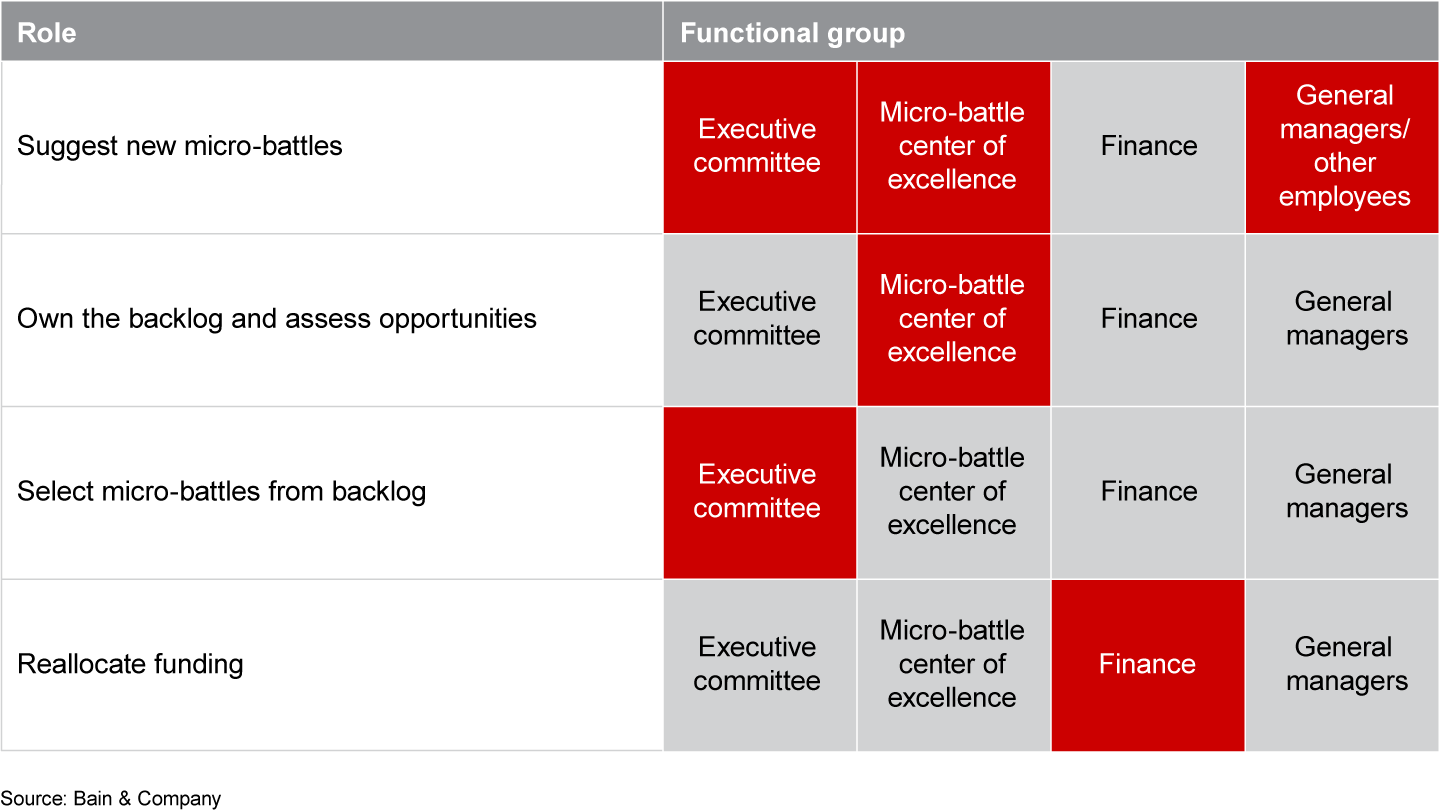
Some companies choose to recruit a micro-battles director and establish a center of excellence. With a center of excellence, there’s often a struggle to balance the tension between creating a bureaucratic central team and spreading accountability too thin. The approach can work, but only if the center is lean. It should avoid the bureaucratic milestone-tracking and paperwork exercises that plague many project management offices. We always caution companies that if they want to be less bureaucratic, they should avoid a bureaucracy managing the process. Some companies find it helpful to assign the ownership of each task to specific functions (see Figure 2). For example, the Exco might select new micro-battles, while the finance team supports funding decisions.
Figure 2

No. 4: Integrate the backlog with the existing governance and operating model. If you have an annual planning process to determine resource allocation for new strategic initiatives and projects, include the micro-battles backlog. You don’t want micro-battles to end up in the “special projects graveyard.” You don’t want the company reverting to old ways of working. Over time, micro-battles should become the normal way of running projects. The most successful organizations replace their traditional project-planning processes with micro-battles governance. They run other special projects—those that don’t fit the micro-battles approach, such M&A or organizational restructuring—under the same governance system.
For companies that are well versed in Agile, especially those on the journey to become fully Agile enterprises, the micro-battles system can complement the new operating model. Micro-battles can be a small subset of dynamic teams that focus on the biggest strategic priorities and adopt Agile ways of working. They still demand Exco attention and require winning, scaling and amplifying solutions for the unknowns in a company’s strategy. Separate from the micro-battles portfolio, the company can continue relying on Agile teams to run the rest of the organization’s execution.
Talent management
No. 5: Create a new deal for talent. Companies with the most successful micro-battle portfolios rethink their talent policies. Micro-battles are a great professional development opportunity, allowing your people to work on a strategic priority with direct access and exposure to senior leaders. The “new deal for talent” should enable an organization’s best people to be temporarily released from their day-to-day roles to focus on a micro-battle. It can include details on the duration of the engagement, expenses and performance management. But it will work only if all department heads agree to release their people.
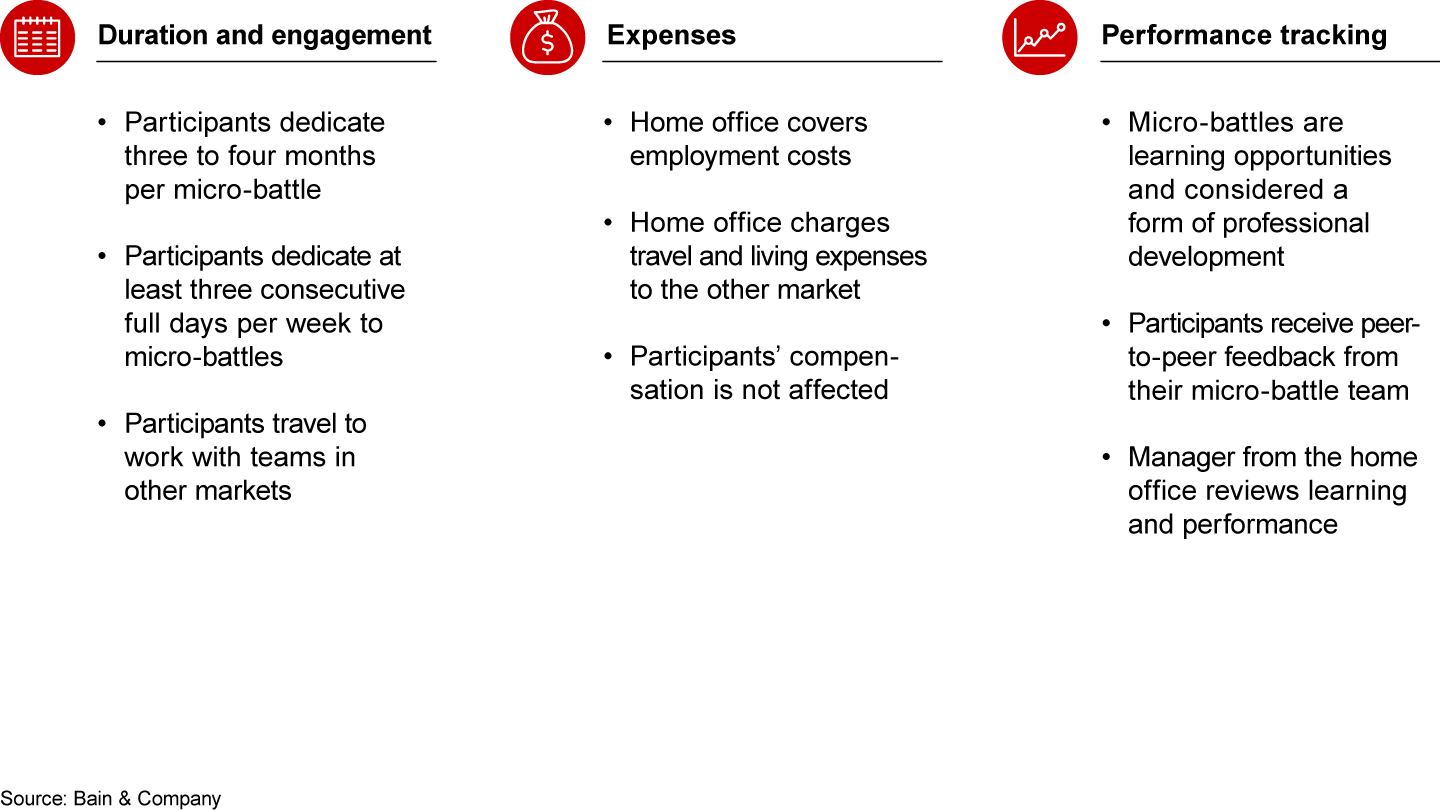
The new deal for talent is a huge topic that extends far beyond micro-battles. For firms of the future to compete and win in the next era of business, they’ll need to reassess their people and talent management approach. The good news is that we’re already seeing companies find new solutions for talent through their work on micro-battles. For one company, the new deal for talent was critical to breaking down regional siloes and quickly scaling new innovations across geographies. Leadership introduced a short-term assignment policy, enabling employees to work on a prototype in another market for three to four months before returning to their home geography. Back at their home office, the same employees launched a scaling micro-battle to adapt the prototype from the other market. Each country head agreed to the policy, which directly outlined the three- to four-month duration of engagement, the division of expenses, and peer-to-peer performance reviews (see Figure 3). Without development and alignment on the new policy, the micro-battle teams wouldn’t have been able to transfer their initial scaling success to other markets.
Figure 3

No. 6: Create a pipeline for your rising stars. Talent and leadership resources can quickly become a significant roadblock to micro-battles. We’ve seen successful companies create a talent pipeline to identify the next micro-battle leaders and teams. Their HR departments compile a database of potential micro-battle leaders and team members from each market and update it regularly. Once the next wave is selected, they use the database to identify the right people for each micro-battle. Every micro-battle team will need three types of people: the disruptors, who generate ideas; the scalers, who institutionalize ideas; and the executors, who turn those ideas into business results. HR can also be responsible for ensuring that each team has the right balance (see “How to Identify Great Scalers” for details on how to find these individuals in an organization).
Beyond building teams, many companies will have the more fundamental talent issues of limited availability and resources. It’s imperative that they recognize and address these issues early on. Companies should consider reforming their recruitment process and seeking talent with the right commercial experience to fill critical roles. This is much easier said than done, but micro-battles can provide the catalyst to get started.
No. 7: Give micro-battle teams direct access to the Exco. One of the key draws of micro-battles is the opportunity to be coached directly by the senior leadership team. Micro-battles also provide a great opportunity for the Exco to reconnect to the front line and the rising stars in their business. The micro-battles system is designed to have individual Exco members sponsor each micro-battle. A part of their role is to mentor the micro-battle team members. But beyond individual sponsorships, the entire Exco should communicate with micro-battle teams. Likewise, the teams should feel empowered to communicate directly with each Exco member. Through review sessions, micro-battle teams gain direct access to the Exco, enabling them to share new ideas and give feedback. These meetings can create a mutually beneficial two-way dialogue and foster mentoring relationships between senior leaders and high-potential talent in the organization.

Micro-battles
Want to learn more about the journey to scale insurgency? Explore the Bain Micro-battles System℠, step by step.
Organizational engagement
No. 8: Share success stories with the whole organization. At the embedding stage of a micro-battles journey, only a small fraction of the organization will have experienced new ways of working and developed the behaviors of a scale insurgent. As the portfolio grows, the most successful companies engage the remainder of the organization. One great way is to communicate results and success stories. Some companies create videos showcasing the best results and celebrating heroes from micro-battle teams. The videos can be shared through town halls or digital collaboration platforms such as an intranet, Facebook Workplace or Microsoft Teams.
No. 9: Cascade scale insurgent behaviors through key leaders. Micro-battles aim to change the behaviors of senior leaders. This can have an amplified effect, with leaders serving as a role model to their direct reports. Companies can use a training program for their top 100 leaders to introduce them to the micro-battles system and the fundamental behaviors of a scale insurgent. This training often uses what we call a “field and forum approach.” The forums are workshops that train and align leaders on new ways of working. The fieldwork enables leaders to take lessons from the forums and apply them to real-life situations, such as micro-battle review sessions and one-on-one mentorship meetings with micro-battle leaders. Through trainings, we’ve seen great behavioral shifts, as leaders move from a command-and-control mindset to one of empowerment and trust. They rapidly learn how to become better exemplars for the organization.
Along with training, some companies have tracked their progress on the journey to scale insurgency through our Founder’s Mentality® diagnostic. Many organizations kick off their micro-battles program by running the diagnostic, which examines where the company stands on the journey and which forces are most responsible for their standing. But a few companies rerun the diagnostic 8 to 12 months later to check their progress. Results in hand, they discuss the required behavioral changes to act more like a scale insurgent.
No. 10: Use the center of excellence to champion new ways of working. As Amplify teams manage the portfolio of micro-battles, they collect and distribute their learnings to all micro-battle teams, and when appropriate, the organization as a whole. The micro-battles learning center puts these lessons on display—quite literally, on the walls—and makes them available to all. But we’ve seen leading companies take the learning center a step further with their center of excellence. The team uses the learning center to provide training and onboard new micro-battle team members. They coach their talent in new ways of working, such as Agile, human-centered design and scaling approaches. They help update the learning center walls and often provide additional support for micro-battle teams in the initial stages or at critical scaling points.
As we work with organizations to co-create new approaches for successfully managing the micro-battles portfolio, we’ll continue to update our list of best practices. For now, by focusing their approach on the backlog, talent management and organizational engagement, companies can smooth the transition of scaling and embedding the micro-battles system. They can ensure that behavior change and new ways of working cascade beyond the Exco, micro-battle leaders and their teams, and in the long run sustainably transform the entire organization.
James Allen is a senior partner with Bain’s Global Strategy practice, and is based in London. He coauthored The Founder’s Mentality. Peter Slagt is a senior partner with Bain’s Global Results Delivery® practice. He is based in Singapore.
The authors would like to acknowledge the contributions of Jennifer Withers, manager, and Bhavya Nand Kishore, practice director, with Bain’s Global Strategy practice. They’re based in London and Zurich, respectively, and have been leading our efforts to codify best practices for managing the micro-battle portfolio. We encourage you to reach out to them with positive and negative lessons at jennifer.withers@bain.com and bhavya.nandkishore@bain.com.

The Embedding Challenge
Five common questions to consider when embedding micro-battles.
Bain Micro-battles System℠ is a registered service mark of Bain & Company, Inc. Founder’s Mentality® and Results Delivery® are registered trademarks of Bain & Company, Inc.
First published in 4月 2019