
Skip to Content
  • Standorte

    Standorte

    North & Latin America
    • Atlanta
    • Austin
    • Bogota
    • Boston
    • Buenos Aires
    • Chicago
    • Dallas
    • Denver
    • Houston
    • Lisbon
    • Los Angeles
    • Mexico City
    • Minneapolis
    • Monterrey
    • Montreal
    • New York
    • Rio de Janeiro
    • San Francisco
    • Santiago
    • São Paulo
    • Seattle
    • Silicon Valley
    • Toronto
    • Washington, DC
    Europe & Africa
    • Amsterdam
    • Athens
    • Berlin
    • Brussels
    • Copenhagen
    • Düsseldorf
    • Frankfurt
    • Helsinki
    • Istanbul
    • Johannesburg
    • Kyiv
    • Lisbon
    • London
    • Madrid
    • Milan
    • München
    • Oslo
    • Paris
    • Rome
    • Stockholm
    • Warsaw
    • Wien
    • Zürich
    Middle East
    • Doha
    • Dubai
    • Riyadh
    Asia & Australia
    • Bangkok
    • Beijing
    • Bengaluru
    • Brisbane
    • Ho Chi Minh City
    • Hong Kong
    • Jakarta
    • Kuala Lumpur
    • Manila
    • Melbourne
    • Mumbai
    • New Delhi
    • Perth
    • Seoul
    • Shanghai
    • Singapore
    • Sydney
    • Tokyo
    Alle Standorte Anzeigen
  • Alumni
  • Presse
  • Newsletter
  • Kontakt
  • DACH-Region | Deutsch

    Wählen Sie Ihre Region und Sprache

    Global
    • Global (English)
    North & Latin America
    • Brazil (Português)
    • Argentina (Español)
    • Canada (Français)
    • Chile (Español)
    • Colombia (Español)
    Europe, Middle East, & Africa
    • France (Français)
    • DACH-Region (Deutsch)
    • Italy (Italiano)
    • Spain (Español)
    • Greece (Elliniká)
    Asia & Australia
    • China (中文版)
    • Korea (한국어)
    • Japan (日本語)
  • Saved items (0)
    Saved items (0)

    You have no saved items.

    Inhalte, für die Sie sich interessieren, werden hier gespeichert und können später gelesen oder weitergeleitet werden.

    Explore Bain Insights
  • Branchenkompetenzen
    Hauptmenü

    Branchenkompetenzen

    • Luft- und Raumfahrt, Verteidigung
    • Agrarwirtschaft
    • Chemieindustrie
    • Infrastruktur und Bauwirtschaft
    • Konsumgüter
    • Finanzdienstleistungen
    • Gesundheitswesen
    • Maschinen- und Anlagenbau
    • Medienwirtschaft
    • Metallindustrie
    • Bergbau
    • Öl und Gas
    • Papier- und Verpackungsindustrie
    • Private Equity
      Branchenkompetenzen
      Private Equity
      • Due Diligence
      • Exit Planning
      • Firm Strategy & Operations
      • Portfolio Value Creation
    • Öffentlicher Sektor und Sozialwesen
    • Einzelhandel
    • Technologie
    • Telekommunikation
    • Transportwesen
    • Reise- und Freizeitbranche
    • Versorgung und erneuerbare Energien
  • Managementkompetenzen
    Hauptmenü

    Managementkompetenzen

    • Customer Experience
    • ESG
    • Innovation
    • M&A
    • Operations
    • People & Organization
    • Private Equity
    • Sales & Marketing
    • Strategie
    • KI, Einblicke und Lösungen
    • Technologie
    • Transformation
  • Digital
  • Publikationen
    Hauptmenü

    Publikationen

    • Branchenthemen
    • Managementthemen
    • Bain-Bücher
    Alle Publikationen
    Ausgewählte Themen
    • Resilienz in der globalen Krise
    • M&A Report
    • Private Equity Podcast
    • Midyear Private Equity Report
    • Agile
    • Engineering Report
    • Digital Transformation
    • Elements of Value®
    • Firm of the Future
    • Nachhaltigkeitsstudie
    • Macro Trends
    • Future of Consumption
    • Weltwirtschaftsforum (WEF)
  • Über uns
    Hauptmenü

    Über uns

    • Was wir bieten
    • Unser Ansatz
    • Unser Team
    • Game Changer Award
    • Female Allstar Board
    • Messbare Ergebnisse (EN)
    • Auszeichnungen
    • Globale Partnerschaften
    • The Mission
    Further: Our global responsibility
    • Vielfalt & Chancengleichheit
    • Soziale Verantwortung
    • Sustainability
    Erfahren Sie mehr zu "Further"
  • Karriere
    Hauptmenü

    Karriere

    • Dein Einstieg
      Karriere
      Dein Einstieg
      • Find Your Place
      • Unsere Arbeitsbereiche
      • Unsere Teams
      • Angebote für Studierende
      • Praktika & Programme
      • Recruiting-Events
    • Arbeiten bei Bain
      Karriere
      Arbeiten bei Bain
      • Blog: Inside Bain
      • Karriere Stories
      • Unsere Bainies
      • Office-Standorte
      • Weiterentwicklung
      • Affinity Groups
      • Deine Benefits
    • Impact Stories
    • Deine Bewerbung
      Karriere
      Deine Bewerbung
      • Das erwartet dich
      • Der Interviewprozess
    FIND JOBS
  • Standorte
    Hauptmenü

    Standorte

    • North & Latin America
      Standorte
      North & Latin America
      • Atlanta
      • Austin
      • Bogota
      • Boston
      • Buenos Aires
      • Chicago
      • Dallas
      • Denver
      • Houston
      • Lisbon
      • Los Angeles
      • Mexico City
      • Minneapolis
      • Monterrey
      • Montreal
      • New York
      • Rio de Janeiro
      • San Francisco
      • Santiago
      • São Paulo
      • Seattle
      • Silicon Valley
      • Toronto
      • Washington, DC
    • Europe & Africa
      Standorte
      Europe & Africa
      • Amsterdam
      • Athens
      • Berlin
      • Brussels
      • Copenhagen
      • Düsseldorf
      • Frankfurt
      • Helsinki
      • Istanbul
      • Johannesburg
      • Kyiv
      • Lisbon
      • London
      • Madrid
      • Milan
      • München
      • Oslo
      • Paris
      • Rome
      • Stockholm
      • Warsaw
      • Wien
      • Zürich
    • Middle East
      Standorte
      Middle East
      • Doha
      • Dubai
      • Riyadh
    • Asia & Australia
      Standorte
      Asia & Australia
      • Bangkok
      • Beijing
      • Bengaluru
      • Brisbane
      • Ho Chi Minh City
      • Hong Kong
      • Jakarta
      • Kuala Lumpur
      • Manila
      • Melbourne
      • Mumbai
      • New Delhi
      • Perth
      • Seoul
      • Shanghai
      • Singapore
      • Sydney
      • Tokyo
    Alle Standorte Anzeigen
  • Alumni
  • Presse
  • Newsletter
  • Kontakt
  • DACH-Region | Deutsch
    Hauptmenü

    Wählen Sie Ihre Region und Sprache

    • Global
      Wählen Sie Ihre Region und Sprache
      Global
      • Global (English)
    • North & Latin America
      Wählen Sie Ihre Region und Sprache
      North & Latin America
      • Brazil (Português)
      • Argentina (Español)
      • Canada (Français)
      • Chile (Español)
      • Colombia (Español)
    • Europe, Middle East, & Africa
      Wählen Sie Ihre Region und Sprache
      Europe, Middle East, & Africa
      • France (Français)
      • DACH-Region (Deutsch)
      • Italy (Italiano)
      • Spain (Español)
      • Greece (Elliniká)
    • Asia & Australia
      Wählen Sie Ihre Region und Sprache
      Asia & Australia
      • China (中文版)
      • Korea (한국어)
      • Japan (日本語)
  • Saved items  (0)
    Hauptmenü
    Saved items (0)

    You have no saved items.

    Inhalte, für die Sie sich interessieren, werden hier gespeichert und können später gelesen oder weitergeleitet werden.

    Explore Bain Insights
  • Branchenkompetenzen
    • Branchenkompetenzen

      • Luft- und Raumfahrt, Verteidigung
      • Agrarwirtschaft
      • Chemieindustrie
      • Infrastruktur und Bauwirtschaft
      • Konsumgüter
      • Finanzdienstleistungen
      • Gesundheitswesen
      • Maschinen- und Anlagenbau
      • Medienwirtschaft
      • Metallindustrie
      • Bergbau
      • Öl und Gas
      • Papier- und Verpackungsindustrie
      • Private Equity
      • Öffentlicher Sektor und Sozialwesen
      • Einzelhandel
      • Technologie
      • Telekommunikation
      • Transportwesen
      • Reise- und Freizeitbranche
      • Versorgung und erneuerbare Energien
  • Managementkompetenzen
    • Managementkompetenzen

      • Customer Experience
      • ESG
      • Innovation
      • M&A
      • Operations
      • People & Organization
      • Private Equity
      • Sales & Marketing
      • Strategie
      • KI, Einblicke und Lösungen
      • Technologie
      • Transformation
  • Digital
  • Publikationen
    • Publikationen

      • Branchenthemen
      • Managementthemen
      • Bain-Bücher
      Alle Publikationen
      Ausgewählte Themen
      • Resilienz in der globalen Krise
      • M&A Report
      • Private Equity Podcast
      • Midyear Private Equity Report
      • Agile
      • Engineering Report
      • Digital Transformation
      • Elements of Value®
      • Firm of the Future
      • Nachhaltigkeitsstudie
      • Macro Trends
      • Future of Consumption
      • Weltwirtschaftsforum (WEF)
  • Über uns
    • Über uns

      • Was wir bieten
      • Unser Ansatz
      • Unser Team
      • Game Changer Award
      • Female Allstar Board
      • Messbare Ergebnisse (EN)
      • Auszeichnungen
      • Globale Partnerschaften
      • The Mission
      Further: Our global responsibility
      • Vielfalt & Chancengleichheit
      • Soziale Verantwortung
      • Sustainability
      Erfahren Sie mehr zu "Further"
  • Karriere
    Häufige Suchanfragen
    • Agil
    • Digital
    • Strategie
    Vorherige Suchanfragen
      Zuletzt besuchte Seiten

      Content added to saved items

      Saved items (0)

      Removed from saved items

      Saved items (0)

      Brief

      Have It Both Ways: Happy Customers and Lower Costs

      Have It Both Ways: Happy Customers and Lower Costs

      A simpler, more digital experience delivers on both goals.

      Von Richard Hatherall, Priscilla Dell'Orto, und Karsten Fruechtl

      • Min. Lesezeit
      }

      Brief

      Have It Both Ways: Happy Customers and Lower Costs
      en
      Auf einen Blick
      • Improving the customer’s experience with an insurance company or bank does not automatically conflict with cost-containment goals.
      • Reducing bad volume, offering more self-service options for basic transactions and rationalizing the product mix can deliver a better experience at lower cost.
      • To make headway on both goals, companies should focus on discrete customer episodes—such as “I want to purchase a life insurance policy to protect my family”—identify the episodes that matter most to customers and target the unit cost of each episode.
      • The key characteristics of more effective and efficient episodes are simple, digital, fast and right the first time.

      Senior executives at insurers, banks and other financial services companies often believe they must make trade-offs between two opposing forces: improving the customer experience and managing costs. “Good service is expensive,” goes the thinking, “so managing costs will be difficult if we try to provide better service.”

      That belief might contain a grain of truth with traditional customer experience programs run through organizational silos, or cost-cutting programs focused narrowly on reducing headcount. In some cases, initiatives to create a well-designed experience lead to beautiful visions, but operations and IT teams cannot deliver the experience because they haven’t figured out the path through complex legacy processes, policies and systems. In other cases, dozens of IT initiatives take the upper hand, but it’s not clear how they will improve the customer experience. These initiatives do not reduce underlying complexity and may even degrade the experience.

      Consider the claims process in home or auto insurance. Customers often complain about being in the dark for days or weeks after they’ve submitted a claim. Anxious customers call the contact center, creating bad volume. Or consider the policy application process, with its copious paper forms that customers must fill out and insurers have to scan, index, augment through data entry and check for accuracy. Even when digital tools exist, such as sales apps for agents or digital claims submission for customers, entrenched behaviors often deter widespread adoption.

      There’s a better way to deal with this dilemma. Companies can more efficiently deliver higher product or service volumes, freeing up funds to reinvest in growth areas. Taking out operational costs and improving the customer experience become two sides of the same coin. Companies can attain both goals by reducing bad or avoidable volume, such as unnecessary calls to the contact center; offering more self-service options for basic transactions, which customers actually want; and rationalizing the product architecture and mix. These steps lead to a better experience, which accelerates revenues through greater customer loyalty and a larger share of wallet.

      The customer episode as a unit of change

      Virtually all banks and insurance companies have been migrating many transactions to digital channels. Yet there is substantial variation in the pace of change and the return on investment. How can they make substantial progress?

      We have found that the most effective unit of transformation is the customer episode, which provides a powerful lens to reduce companies’ cost position without degrading the experience. When customers have a task to complete or a need to fulfill through the company, that’s an episode. It has a clear start and end, marked by the customer completing what he or she set out to do. Episodes encompass a variety of purchase, usage or service activities; they range from a single interaction (such as paying a bill online) to an intricate series of interactions spanning weeks (financing a new home). The sum of episodes over time constitutes the entire experience of dealing with the company. Focusing on episode costs allows the company to determine how efficiently it is serving the customer’s needs (see Figure 1).  

      Figure 1
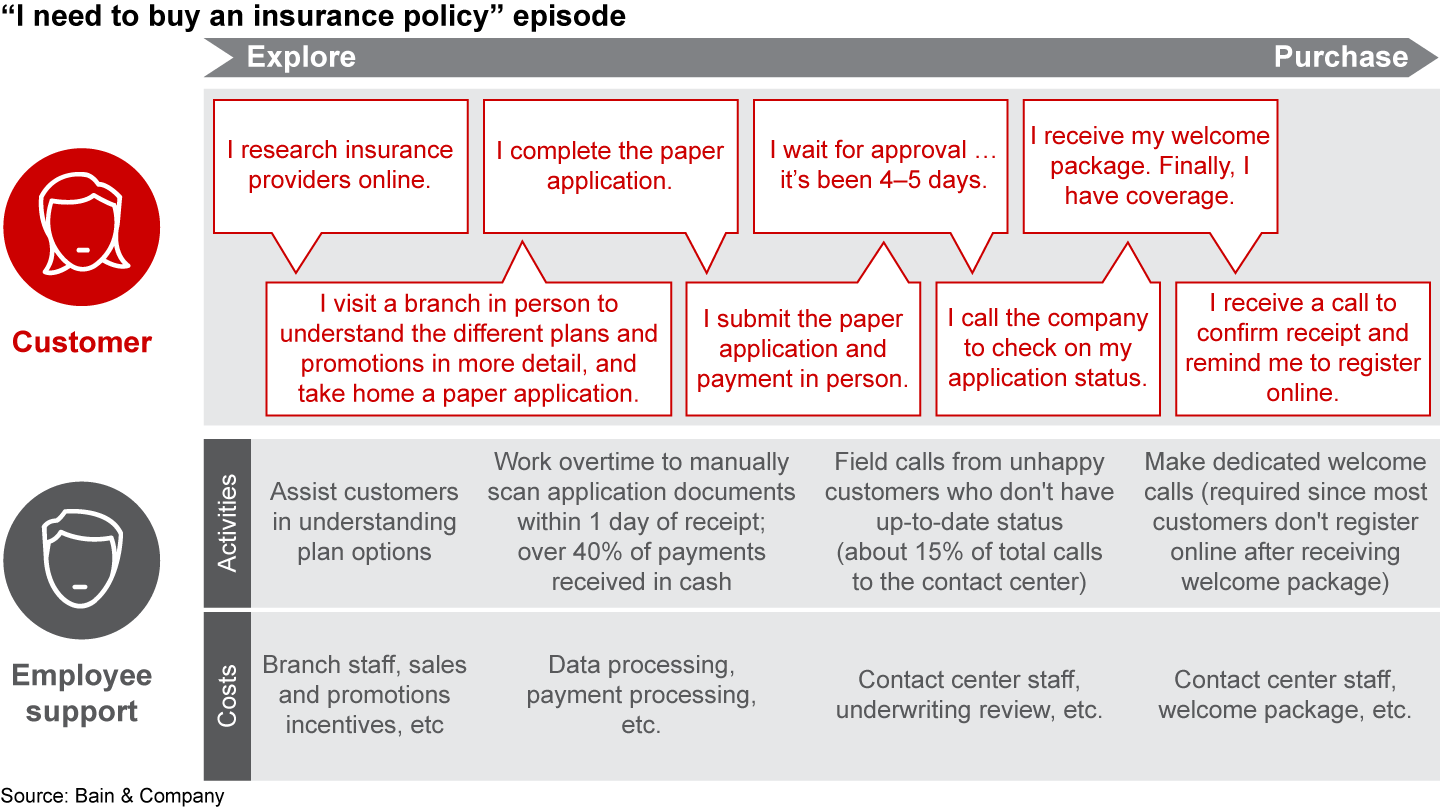
      Many episodes cause customers pain and incur unnecessary costs for the company along the way
      Many episodes cause customers pain and incur unnecessary costs for the company along the way
      Many episodes cause customers pain and incur unnecessary costs for the company along the way

      For many episodes, the critical characteristics are simple, digital, right the first time, fast and personalized. From the customer’s standpoint, a highly manual episode usually takes longer, invites mistakes and makes it difficult to stay informed. Manual, complex processes and systems also add costs in employee time and in lost business, when customers defect to competitors. The “simple and digital” alternative partly explains why direct banks tend to outperform traditional banks on customer loyalty metrics, and explains the rise of fintechs such as Quicken Loans, whose Rocket Mortgage offering has made it the leading direct-to-consumer mortgage lender in the US. 

      For the cost side of the equation, leading companies find it useful to take an activity-based approach to understand the unit cost of each customer episode. First, you map the full spectrum of activities in an episode. Buying an insurance policy, for example, would include data entry and processing, underwriting and fielding customers’ calls about their application status. Then you take the functional costs from the general ledger (operations, distribution, IT and so on) and assign them to each activity, such as how many contact-center calls pertain to buying a policy (see Figure 2). This analysis allows you to identify hot spots—the activities that cause customers pain and have high costs—that should be prioritized for resolution.

      Figure 2
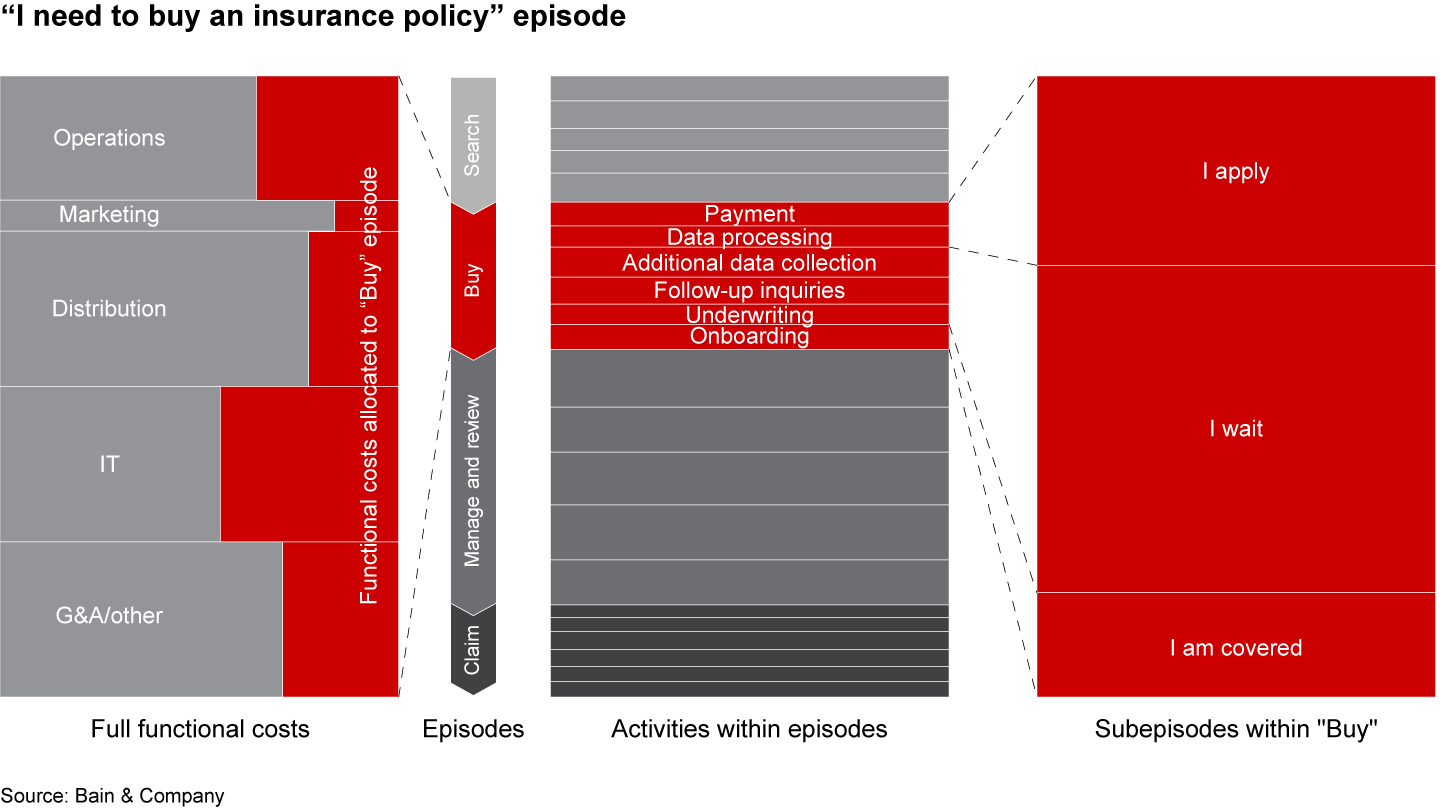
      Functional costs from the general ledger are allocated to each episode according to the activities involved
      Functional costs from the general ledger are allocated to each episode according to the activities involved
      Functional costs from the general ledger are allocated to each episode according to the activities involved

      Using the episode lens helps you pinpoint issues that might otherwise slip through the cracks, such as why customers are calling the contact center. An episode lens also holds executives accountable for episode performance, by measuring both the cost and the quality of the experience.

      To reduce drivers of cost (see Figure 3), and improve the episode in the bargain, companies use levers ranging from digital submission of forms, to automatic status updates, to optimized workforce scheduling of contact-center agents. These levers also enhance the quality of the episode. For instance, switching from paper to digital applications eliminates data entry, and an auto-underwriting engine can automatically assess the vast majority of cases, which translates to faster processing times and happier customers. 

      Figure 3
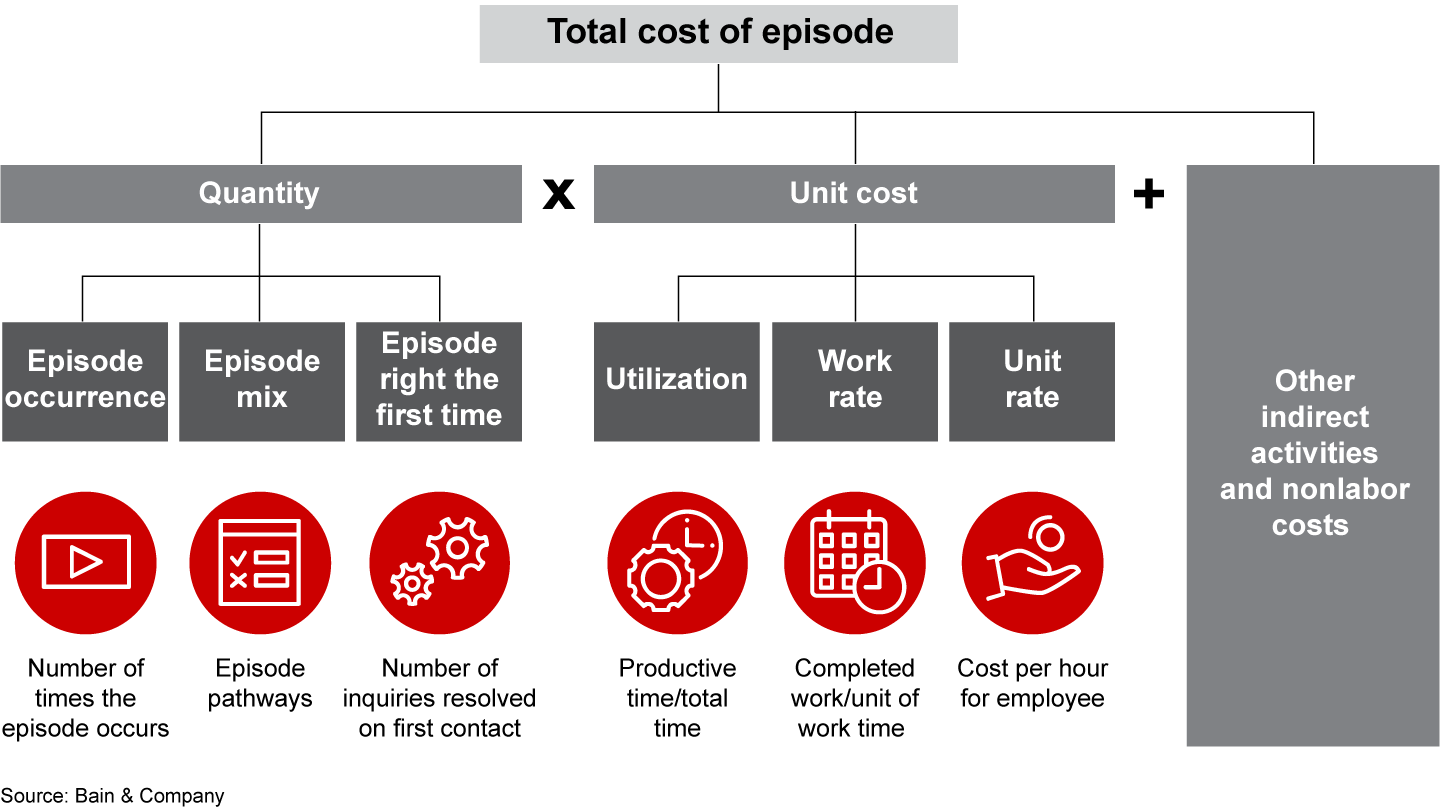
      For each customer episode, various levers can reduce costs
      For each customer episode, various levers can reduce costs
      For each customer episode, various levers can reduce costs

      Similarly, for the “open an account” episode in banking, simplifying the process through digital channels can reduce the share of incomplete applications requiring a follow-up call. At one Australian bank, about half of customers started the account-opening process online, but only 24% of those people completed the application digitally while more than 40% simply dropped out. The bank is redesigning the end-to-end account-opening episode, addressing the issues that cause customers to quit along the way.

      Automation can support a simple and digital shift by minimizing human intervention and creating a true end-to-end process. Episodes also tend to improve through simplified product lines and processes, which make for greater reliability and speed. In addition, you can reconfigure where and by whom the work gets done. Each of these levers involves behavioral change, especially overcoming barriers to both employee and customer adoption of digital tools—whether those barriers consist of lack of confidence, lack of understanding the benefits or simply inertia.

      Simplification appeals to customers in the form of faster and more intuitive transactions. It also unlocks benefits for employees and the broader organization, in the form of reduced training needs, employee attrition and testing costs for future IT changes.

      A multinational insurer based in Asia launched a cost-led simple and digital initiative focused first on a couple of episodes, including researching and applying for a life insurance policy. The company identified pain points for customers and employees, including long service times, paper-intensive processes and redundant activities. Cross-functional Agile teams with dedicated funding were charged with improving individual episodes while also reducing costs (see Figure 4). The episode owners were accountable for both unit cost and customer ratings of the episode. 

      Figure 4
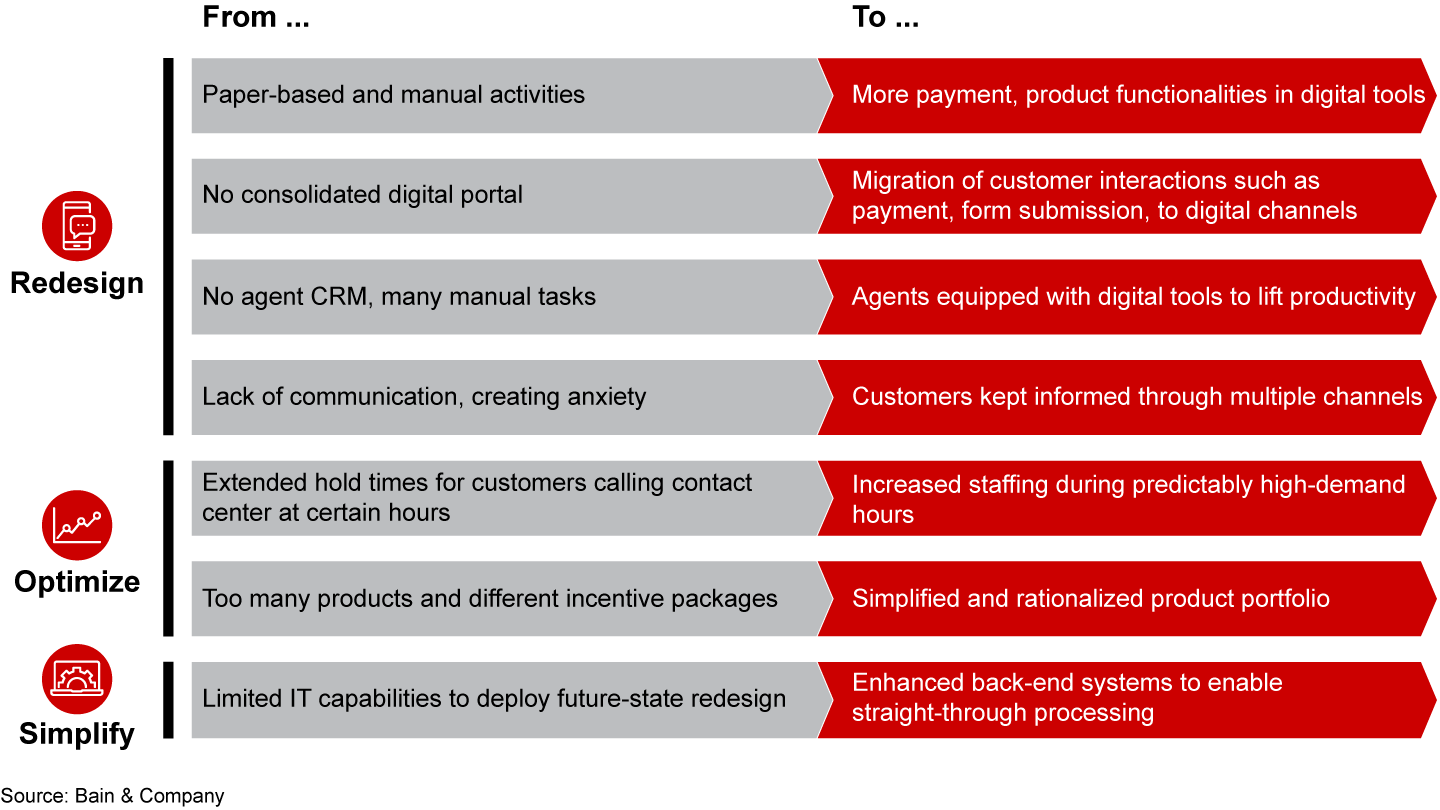
      How an insurer improved episodes and took out costs
      How an insurer improved episodes and took out costs
      How an insurer improved episodes and took out costs

      Across the full program, the insurer is on track to realize dramatic benefits, including a 30-point increase in episode-level Net Promoter Score® (a key metric of customer loyalty), a 19-point rise in employee engagement and a 30%–50% reduction in unit costs for various episodes.

      Key questions to get started

      Applying an episode lens serves financial services companies well in several situations. Some are trying to deliver a better experience and scale up growth efficiently. Others aim to accelerate the use of digital tools but want to realize a higher return on that investment. And still others have the foremost goal of a broad cost-reduction program, without letting the experience suffer. The latter goal is timely, as the economic expansion grows long by historical standards and a recession appears more likely in the near future.

      For executives looking for a better way to contain costs while improving the customer experience, it’s useful to frame the effort by answering a set of key questions:

      • Do we have a clear sense of our competitive position in terms of the customer experience and unit cost per episode? What position do we aspire to?
      • Where are the biggest drivers of the experience and cost—which episodes, products, services and channels?
      • What levers for improvement, such as digitization and process redesign, will yield the most progress toward both objectives? 
      • How will we need to adjust our operating model and technology stack to reach our goals?
      • Are we investing in the right capabilities, such as Agile methods, to unlock the full-potential cost benefits? 

      Leading financial institutions have discovered that a better experience can be consistent with lower costs. Reducing IT and process complexity, and automating manual steps where possible, will make both customers and employees happier—leading to economic improvements that benefit shareholders as well.

      Richard Hatherall and Priscilla Dell’Orto are partners with Bain & Company’s Financial Services practice. Karsten Fruechtl is a partner with Bain’s Customer Strategy & Marketing practice. They are based, respectively, in Sydney, Hong Kong and Melbourne.

      Net Promoter Score® is a registered trademark of Bain & Company, Inc., Fred Reichheld and Satmetrix Systems, Inc.

      Autoren
      • Headshot of Richard Hatherall
        Richard Hatherall
        Advisory Partner, Sydney
      • Headshot of Priscilla Dell'Orto
        Priscilla Dell'Orto
        Partner, Hong Kong
      • Headshot of Karsten Fruechtl
        Karsten Fruechtl
        Partner, Melbourne
      Kontaktieren Sie uns
      Verwandte Branchen
      • Bankensektor
      • Finanzdienstleistungen
      • Versicherungswirtschaft
      Ähnliche Beratungsangebote
      • Accelerated Performance Transformation
      • Customer Experience
      • Net Promoter System®
      Finanzdienstleistungen
      AI Won’t Just Cut Costs, It Will Reinvent the Customer Experience

      Beyond efficiency, AI helps create a more personalized experience that delivers a triple play of customer loyalty, employee engagement, and revenue growth.

      Mehr erfahren
      Accelerated Performance Transformation
      How Shared Services Organizations Can Scale Up by Earning Internal Customers’ Love

      How are we doing? When shared services organizations ask that question of their internal customers and act on the feedback, great business outcomes can happen.

      Mehr erfahren
      Finanzdienstleistungen
      Building the Foundation for Agentic AI

      Capturing the full potential of agents will require modernizing enterprise architecture.

      Mehr erfahren
      Bankensektor
      What Loyalty-Leading Banks Do Differently

      Bain’s global survey reveals consumer preferences and how those flow through to lower costs and higher revenues.

      Mehr erfahren
      Finanzdienstleistungen
      The Cooperative Advantage in Banking and Insurance

      Bain experts explore how cooperative banks and insurers are differentiating themselves in an evolving marketplace.

      Mehr erfahren
      First published in August 2019
      Markierungen
      • Accelerated Performance Transformation
      • Bankensektor
      • Customer Experience
      • Finanzdienstleistungen
      • Net Promoter System®
      • Versicherungswirtschaft

      Wie wir unsere Kunden unterstützt haben

      Strategie From Laggard to Leader: Desjardins Evolves Member Centricity for the Digital Age

      Kundenbeispiel lesen

      Digitalisierung A European Banking Giant Rises to the Fintech Challenge

      Kundenbeispiel lesen

      Change & Implementation The change process unlocks potential and profits

      Kundenbeispiel lesen

      Möchten Sie mit uns in Kontakt bleiben?

      Wir unterstützen Führungskräfte weltweit, die kritischen Themen in ihrem Unternehmen zu adressieren. Gemeinsam schaffen wir nachhaltige Veränderungen und Ergebnisse.

      Net Promoter®, NPS®, NPS Prism®, and the NPS-related emoticons are registered trademarks and Net Promoter Score℠ and Net Promoter System℠ are service marks of Bain & Company, Inc., Satmetrix Systems, Inc., and Fred Reichheld.

      Bain Insights. Unsere Perspektive auf die kritischen Themen, mit denen sich international agierende Unternehmen konfrontiert sehen, finden Sie monatlich in Ihrem Postfach.

      *Ich habe die Datenschutzerklärung gelesen und akzeptiere sie.
      Bitte lesen Sie die Datenschutzerklärung und akzeptieren Sie diese.
      Bain & Company
      Contact us Sustainability Accessibility Rechtliche Hinweise Impressum Datenschutz Cookie-Richtlinie Sitemap Log In

      © 1996-2026 Bain & Company, Inc.

      Kontaktieren Sie Bain

      Wie können wir Ihnen helfen?

      • Business inquiry
      • Career information
      • Press relations
      • Partnership request
      • Speaker request
      Alle weltweiten Büros