
Skip to Content
  • オフィス

    オフィス

    北米・南米
    • Atlanta
    • Austin
    • Bogota
    • Boston
    • Buenos Aires
    • Chicago
    • Dallas
    • Denver
    • Houston
    • Los Angeles
    • Mexico City
    • Minneapolis
    • Monterrey
    • Montreal
    • New York
    • Rio de Janeiro
    • San Francisco
    • Santiago
    • São Paulo
    • Seattle
    • Silicon Valley
    • Toronto
    • Washington, DC
    ヨーロッパ・中東・アフリカ
    • Amsterdam
    • Athens
    • Berlin
    • Brussels
    • Copenhagen
    • Doha
    • Dubai
    • Dusseldorf
    • Frankfurt
    • Helsinki
    • Istanbul
    • Johannesburg
    • Kyiv
    • Lisbon
    • London
    • Madrid
    • Milan
    • Munich
    • Oslo
    • Paris
    • Riyadh
    • Rome
    • Stockholm
    • Vienna
    • Warsaw
    • Zurich
    アジア・オーストラリア
    • Bangkok
    • Beijing
    • Bengaluru
    • Brisbane
    • Ho Chi Minh City
    • Hong Kong
    • Jakarta
    • Kuala Lumpur
    • Manila
    • Melbourne
    • Mumbai
    • New Delhi
    • Perth
    • Shanghai
    • Singapore
    • Sydney
    • Tokyo
    全てのオフィス
  • アルムナイ
  • メディア
  • お問い合わせ
  • 東京オフィス
  • Japan | 日本語

    地域と言語を選択

    グローバル
    • Global (English)
    北米・南米
    • Brazil (Português)
    • Argentina (Español)
    • Canada (Français)
    • Chile (Español)
    • Colombia (Español)
    ヨーロッパ・中東・アフリカ
    • France (Français)
    • DACH Region (Deutsch)
    • Italy (Italiano)
    • Spain (Español)
    • Greece (Elliniká)
    アジア・オーストラリア
    • China (中文版)
    • Korea (한국어)
    • Japan (日本語)
  • Saved items (0)
    Saved items (0)

    You have no saved items.

    後で閲読、共有できるようにするためにブックマークしてください

    Explore Bain Insights
  • 業界別プラクティス
    メインメニュー

    業界別プラクティス

    • 航空宇宙、防衛、政府関連
    • 農業
    • 化学製品
    • インフラ、建設
    • 消費財
    • 金融サービス
    • ヘルスケア
    • 産業機械、設備
    • メディア、エンターテインメント
    • 金属
    • 採掘・鉱業
    • 石油、ガス
    • 紙、パッケージ
    • プライベートエクイティ
    • 公共、社会セクター
    • 小売
    • テクノロジー
    • 通信
    • 交通
    • 観光産業
    • 公益事業、再生可能エネルギー
  • 機能別プラクティス
    メインメニュー

    機能別プラクティス

    • カスタマー・エクスペリエンス
    • サステイナビリティ、 社会貢献
    • Innovation
    • 企業買収、合併 (M&A)
    • オペレーション
    • 組織
    • プライベートエクイティ
    • マーケティング・営業
    • 戦略
    • アドバンスド・アナリティクス
    • Technology
    • フルポテンシャル・トランスフォーメーション
  • Digital
  • 知見/レポート
  • ベイン・アンド・カンパニーについて
    メインメニュー

    ベイン・アンド・カンパニーについて

    • ベインの信条
    • 活動内容
    • 社員とリーダーシップ
    • プレス・メディア情報
    • クライアントの結果
    • 受賞歴
    • パートナーシップを結んでいる団体
    Further: Our global responsibility
    • ダイバーシティ
    • 社会貢献
    • サステイナビリティへの取り組み
    • 世界経済フォーラム(WEF)
    Learn more about Further
  • キャリア
    メインメニュー

    キャリア

    • ベインで働く
      キャリア
      ベインで働く
      • Find Your Place
      • ベインで活躍する機会
      • ベインのチーム体制
      • 学生向けページ
      • インターンシップ
      • 採用イベント
    • ベインでの体験
      キャリア
      ベインでの体験
      • キャリアストーリー
      • 社員紹介
      • Where We Work
      • 成長を後押しするサポート体制
      • アフィニティ・グループ
      • 福利厚生
    • Impact Stories
    • 採用情報
      キャリア
      採用情報
      • 採用プロセス
      • 面接内容
    FIND JOBS
  • オフィス
    メインメニュー

    オフィス

    • 北米・南米
      オフィス
      北米・南米
      • Atlanta
      • Austin
      • Bogota
      • Boston
      • Buenos Aires
      • Chicago
      • Dallas
      • Denver
      • Houston
      • Los Angeles
      • Mexico City
      • Minneapolis
      • Monterrey
      • Montreal
      • New York
      • Rio de Janeiro
      • San Francisco
      • Santiago
      • São Paulo
      • Seattle
      • Silicon Valley
      • Toronto
      • Washington, DC
    • ヨーロッパ・中東・アフリカ
      オフィス
      ヨーロッパ・中東・アフリカ
      • Amsterdam
      • Athens
      • Berlin
      • Brussels
      • Copenhagen
      • Doha
      • Dubai
      • Dusseldorf
      • Frankfurt
      • Helsinki
      • Istanbul
      • Johannesburg
      • Kyiv
      • Lisbon
      • London
      • Madrid
      • Milan
      • Munich
      • Oslo
      • Paris
      • Riyadh
      • Rome
      • Stockholm
      • Vienna
      • Warsaw
      • Zurich
    • アジア・オーストラリア
      オフィス
      アジア・オーストラリア
      • Bangkok
      • Beijing
      • Bengaluru
      • Brisbane
      • Ho Chi Minh City
      • Hong Kong
      • Jakarta
      • Kuala Lumpur
      • Manila
      • Melbourne
      • Mumbai
      • New Delhi
      • Perth
      • Shanghai
      • Singapore
      • Sydney
      • Tokyo
    全てのオフィス
  • アルムナイ
  • メディア
  • お問い合わせ
  • 東京オフィス
  • Japan | 日本語
    メインメニュー

    地域と言語を選択

    • グローバル
      地域と言語を選択
      グローバル
      • Global (English)
    • 北米・南米
      地域と言語を選択
      北米・南米
      • Brazil (Português)
      • Argentina (Español)
      • Canada (Français)
      • Chile (Español)
      • Colombia (Español)
    • ヨーロッパ・中東・アフリカ
      地域と言語を選択
      ヨーロッパ・中東・アフリカ
      • France (Français)
      • DACH Region (Deutsch)
      • Italy (Italiano)
      • Spain (Español)
      • Greece (Elliniká)
    • アジア・オーストラリア
      地域と言語を選択
      アジア・オーストラリア
      • China (中文版)
      • Korea (한국어)
      • Japan (日本語)
  • Saved items  (0)
    メインメニュー
    Saved items (0)

    You have no saved items.

    後で閲読、共有できるようにするためにブックマークしてください

    Explore Bain Insights
  • 業界別プラクティス
    • 業界別プラクティス

      • 航空宇宙、防衛、政府関連
      • 農業
      • 化学製品
      • インフラ、建設
      • 消費財
      • 金融サービス
      • ヘルスケア
      • 産業機械、設備
      • メディア、エンターテインメント
      • 金属
      • 採掘・鉱業
      • 石油、ガス
      • 紙、パッケージ
      • プライベートエクイティ
      • 公共、社会セクター
      • 小売
      • テクノロジー
      • 通信
      • 交通
      • 観光産業
      • 公益事業、再生可能エネルギー
  • 機能別プラクティス
    • 機能別プラクティス

      • カスタマー・エクスペリエンス
      • サステイナビリティ、 社会貢献
      • Innovation
      • 企業買収、合併 (M&A)
      • オペレーション
      • 組織
      • プライベートエクイティ
      • マーケティング・営業
      • 戦略
      • アドバンスド・アナリティクス
      • Technology
      • フルポテンシャル・トランスフォーメーション
  • Digital
  • 知見/レポート
  • ベイン・アンド・カンパニーについて
    • ベイン・アンド・カンパニーについて

      • ベインの信条
      • 活動内容
      • 社員とリーダーシップ
      • プレス・メディア情報
      • クライアントの結果
      • 受賞歴
      • パートナーシップを結んでいる団体
      Further: Our global responsibility
      • ダイバーシティ
      • 社会貢献
      • サステイナビリティへの取り組み
      • 世界経済フォーラム(WEF)
      Learn more about Further
  • キャリア
    人気検索キーワード
    • デジタル
    • 戦略
    前回の検索
      最近訪れたページ

      Content added to saved items

      Saved items (0)

      Removed from saved items

      Saved items (0)

      論説

      Boiling-frog affliction and other ills: Using combination therapies to improve organization performance

      Boiling-frog affliction and other ills: Using combination therapies to improve organization performance

      Organizational ailments tend to come in clusters, which means you’re going to need a combination of treatments to fix them.

      著者: Michael C. Mankins and Jenny Davis-Peccoud

      • min read

      論説

      Boiling-frog affliction and other ills: Using combination therapies to improve organization performance
      en

      Companies trying to fix an underperforming organization typically try first one remedy and then another, hoping to find something that will work. But organizations are complex, and their problems rarely respond to a single solution. The most effective treatments usually involve several different therapies at once.

      A company’s first job, of course, is to diagnose where and how its organization is failing, thereby narrowing the treatment options. To help in the process, we studied the trajectories of more than 1,000 organizations between 2006 and 2012. The research identified five common clusters of ailments, all of which undermined financial performance and employee engagement in one way or another (see below, “Diagnosing sick organizations”).

      We then created a set of 164 before-and-after cases, looking at what companies had done to address their organizational ills and the ultimate results. Some companies had tried single-dimension therapies—fixing an inadequate structure, for instance—while others pursued “combination therapies,” addressing multiple dimensions at once (see Figure 1).
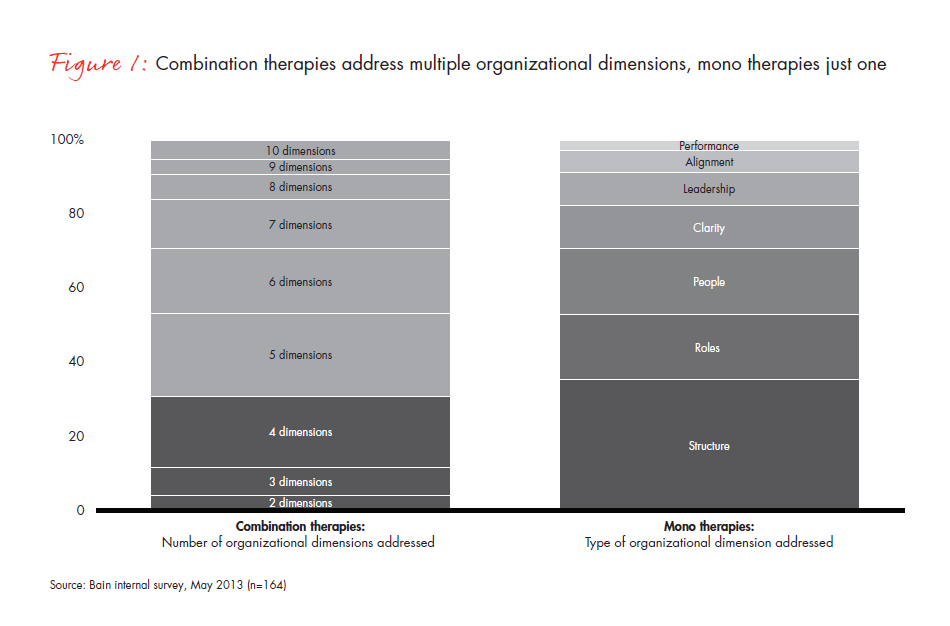

      di-boiling-frog-affliction-and-other-ills-fig-01_embed

      The results? Single-dimension therapies typically didn’t work. A poor structure, for example, is rarely the root cause of poor business performance. And even when structure does get in the way, as it did in some of the cases we studied, a reorganization alone is seldom sufficient to turn things around. It’s much the same with people, processes, decision accountabilities and the other elements of an organization: You usually need to fix more than one. In fact, in more than 85% of the cases we examined, successful treatment of organizational underperformance required some form of targeted combination therapy (see Figures 2 and 3).
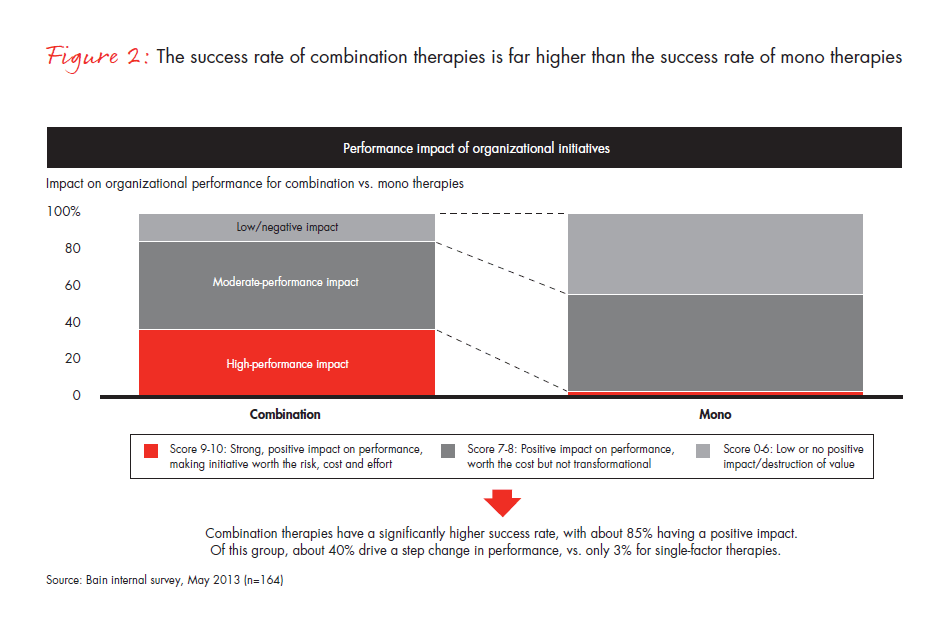
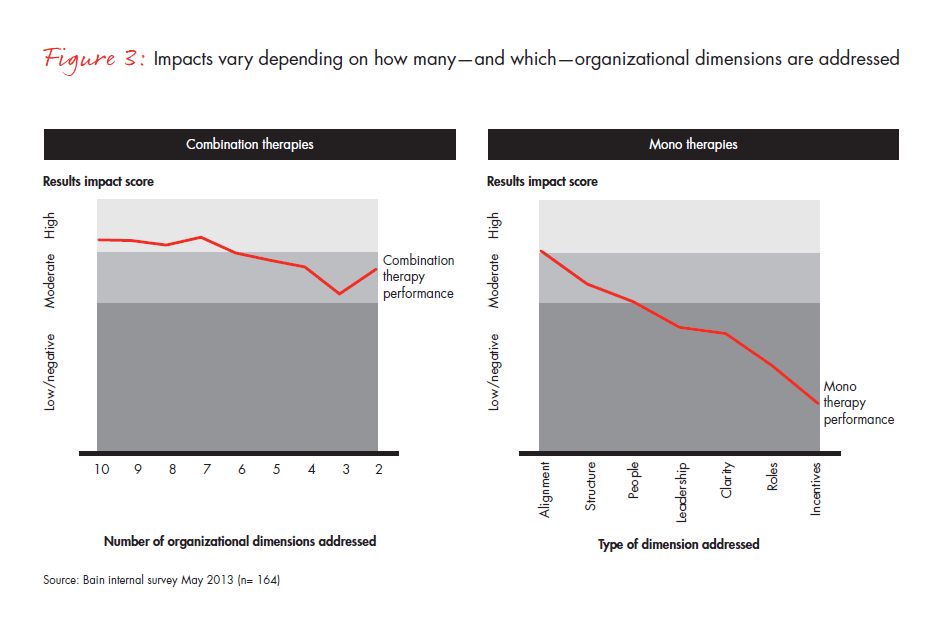
      di-boiling-frog-affliction-and-other-ills-fig-02_embed

      di-boiling-frog-affliction-and-other-ills-fig-03_embed

      A case in point is Ford Motor Company. When Alan Mulally became CEO of the company in 2006, Ford was losing market share and its finances were shaky. It had too many unrelated brands, too little commonality across its models, too many financially troubled suppliers and dealers, and too much reliance on big SUVs and trucks. Though Ford had decades of internal analyses and consulting studies documenting these difficulties, the organization seemed unable to address them. Like about 12% of the organizations in our sample, the company was a victim of process pathology. It had many talented executives but lacked good processes and clear decision roles, so it couldn't get things done.

      Mulally recognized that Ford’s situation required multiple therapies. He started by reorganizing the company, moving from a regional business unit structure (which discouraged common global platforms) to a global matrix. Equally important, his team created a process—weekly business plan review meetings—for making key decisions, and clarified the roles executives would play in each one. A simple system of color-coded charts ensured that senior leaders had an accurate view of which decisions were on track and which were running into obstacles. Soon Ford was on the move. It divested or eliminated brands and reduced the number of vehicle platforms. It accelerated the development of new models, reduced the number of available options and increased the proportion of common parts from less than 10% to more than 50%. By 2010 it was earning $6.6 billion in profits, its highest net income in more than a decade.

      Like Ford, the companies in our study that employed tailored combination therapies to treat their organizational ills showed dramatically better results. In fact, companies that pursued combination therapies were 12 times as likely to see a step change in performance as those that relied on rifle-shot therapies.

      Structural change and other one-shot remedies appeal to many executives because they are simple. But those remedies almost always fall short. Success in addressing organizational ills requires leaders to diagnose their organization’s ailments, understand which of the five pathology clusters are most prevalent in their company and then employ targeted combination therapies. As the case of Ford suggests, such an approach can produce remarkable results.

      Michael C. Mankins leads Bain’s Organization practice in the Americas and is a senior member of Bain’s Global Strategy practice. He is a partner in the firm’s San Francisco office. Jenny Davis-Peccoud leads Bain’s Organization practice in Europe, the Middle East and Africa. She is based in London.

      The authors would like to thank Cornelia de Ruiter, senior practice consultant for Bain’s Global Organization practice, for her support with this article.


      Diagnosing sick organizations

      Underperforming organizations rarely suffer from a single malady. Analysis of the most troubled companies suggests that ailments tend to come in clusters, with different elements of the organization affected simultaneously (see figure below). That’s why combination therapies are so effective—identifying the relevant cluster helps determine the right treatment. Here are five major pathologies we found, along with the percentage of those in the troubled-company subgroup suffering from each one. See if any are infecting your organization:

      Boiling-frog affliction (34%): No imminent life-threatening maladies, but many minor issues and bottlenecks across the organizational system. A company suffering from this common cluster is often like the proverbial boiling frog, not noticing it is in trouble until the condition is serious.

      Drifting disease (29%): Lack of vision and direction, further worsened by talent and leadership challenges—a common cluster among mature companies that have begun to drift and now require fresh visionary leadership.

      Confusion complaint (16%): Lack of alignment and clarity on strategic priorities, creating role uncertainty and blurred performance objectives. Confusion of this sort is common after a change in leadership or strategy.

      Process pathology (12%): Unfit systems, ineffective metrics and duplicative, complex processes, all of them impairing people’s ability to cooperate effectively. This cluster is common in industries such as financial services, where rapid growth, globalization and complicated regulations have introduced additional layers of complexity over time.

      Fast-growth failure (9%): Malfunctioning hardware, with a misaligned structure, unclear accountabilities and weak governance system, all undermining employee engagement. Rapidly growing companies may suffer from some or all of these ills.
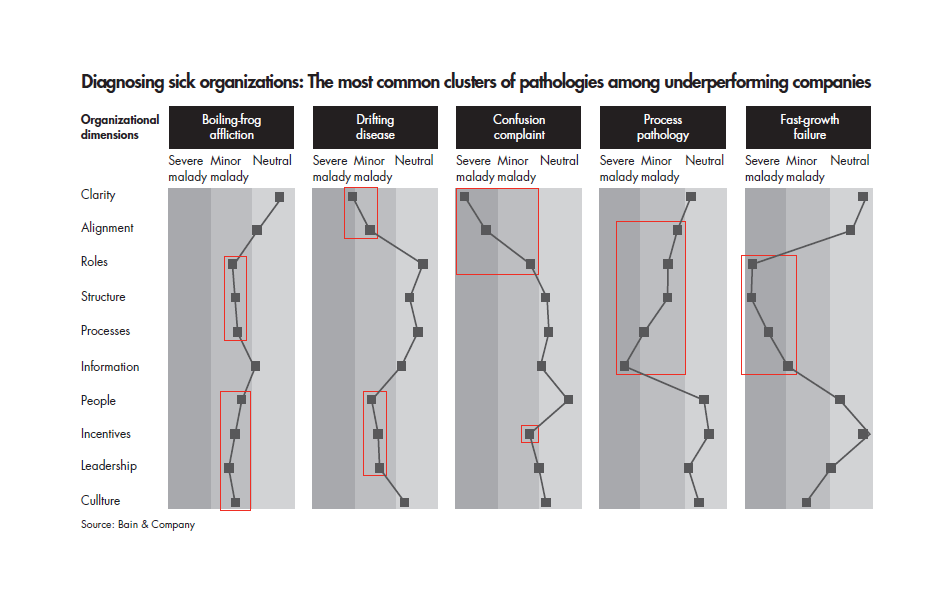
      di-boiling-frog-affliction-and-other-ills-diagnosing-sick-organizations_embed


      di-boiling-frog-affliction-and-other-ills-fig-01_full

      di-boiling-frog-affliction-and-other-ills-fig-02_full

      di-boiling-frog-affliction-and-other-ills-fig-03_full

      di-boiling-frog-affliction-and-other-ills-diagnosing-sick-organizations_full
      Bain Book

      Decide & Deliver

      Learn more about the five steps that leading organizations use to make great decisions quickly and execute them effectively.

      著者
      • Headshot of Michael Mankins
        Michael Mankins
        パートナー, Austin
      • Headshot of Jenny Davis-Peccoud
        Jenny Davis-Peccoud
        パートナー, Amsterdam
      関連するコンサルティングサービス
      • 組織
      コンサルティングサービス
      • Org Navigator
      Org Navigator
      Balanced Scorecard

      A Balanced Scorecard is a way to measure an organization’s performance and shows whether management is achieving desired results.

      詳細
      組織
      When a New Organizational Structure Isn’t Enough: How to Truly Live Your Operating Model

      The goal of any organizational redesign is for people to work differently, but that only happens if leaders invest in changing the work itself.

      詳細
      Org Navigator
      Fixing Poor Organizational Performance

      Many companies flounder when they try to cure what ails them. To succeed, pinpoint your specific problems before trying to fix them.

      詳細
      組織
      Shift to Vertical: David Haines, Group CEO, Flora Food Group

      What does it take to stay connected to your customers when scale and complexity threaten to pull you away? 

      詳細
      Org Navigator
      Finding the Right Remedy for Poor Organizational Performance

      Diagnose the root causes of dysfunction so that you don’t solve for the wrong problem.

      詳細
      First published in 10月 2013
      Tags
      • Org Navigator
      • 組織

      クライアント支援事例

      組織 A Video Game Company Levels Up With a New Operating Model

      ケーススタディを見る

      組織 Building a winning media salesforce

      ケーススタディを見る

      組織 Powering a mining company's growth through cultural change

      ケーススタディを見る

      お気軽にご連絡下さい

      私達は、グローバルに活躍する経営者が抱える最重要経営課題に対して、厳しい競争環境の中でも成長し続け、「結果」を出すために支援しています。

      ベインの知見。競争が激化するグローバルビジネス環境で、日々直面するであろう問題について論じている知見を毎月お届けします。

      *プライバシーポリシーの内容を確認し、合意しました。

      プライバシーポリシーをご確認頂き、合意頂けますようお願い致します。
      Bain & Company
      お問い合わせ Sustainability Accessibility Terms of use Privacy Cookie Policy Sitemap Log In

      © 1996-2026 Bain & Company, Inc.

      お問い合わせ

      How can we help you?

      • ビジネスについて
      • プレス報道について
      • 採用について
      全てのオフィス