

論説

概要
- The environment for decarbonization and climate has changed since last year’s COP26, with growing geopolitical and macroeconomic pressures.
- At a time when they are plotting their downturn strategy, many corporations that set ambitious decarbonization targets are wrestling with what they can now afford to do to accelerate decarbonization and monetize it with customers.
- The companies that will get ahead of peers will be those that embrace visionary pragmatism and follow through during the downturn.
- These companies will reduce cost and carbon in tandem, address climate physical risks as part of the broader supply chain resilience, and protect strategic decarbonization initiatives that drive differentiation with customers.
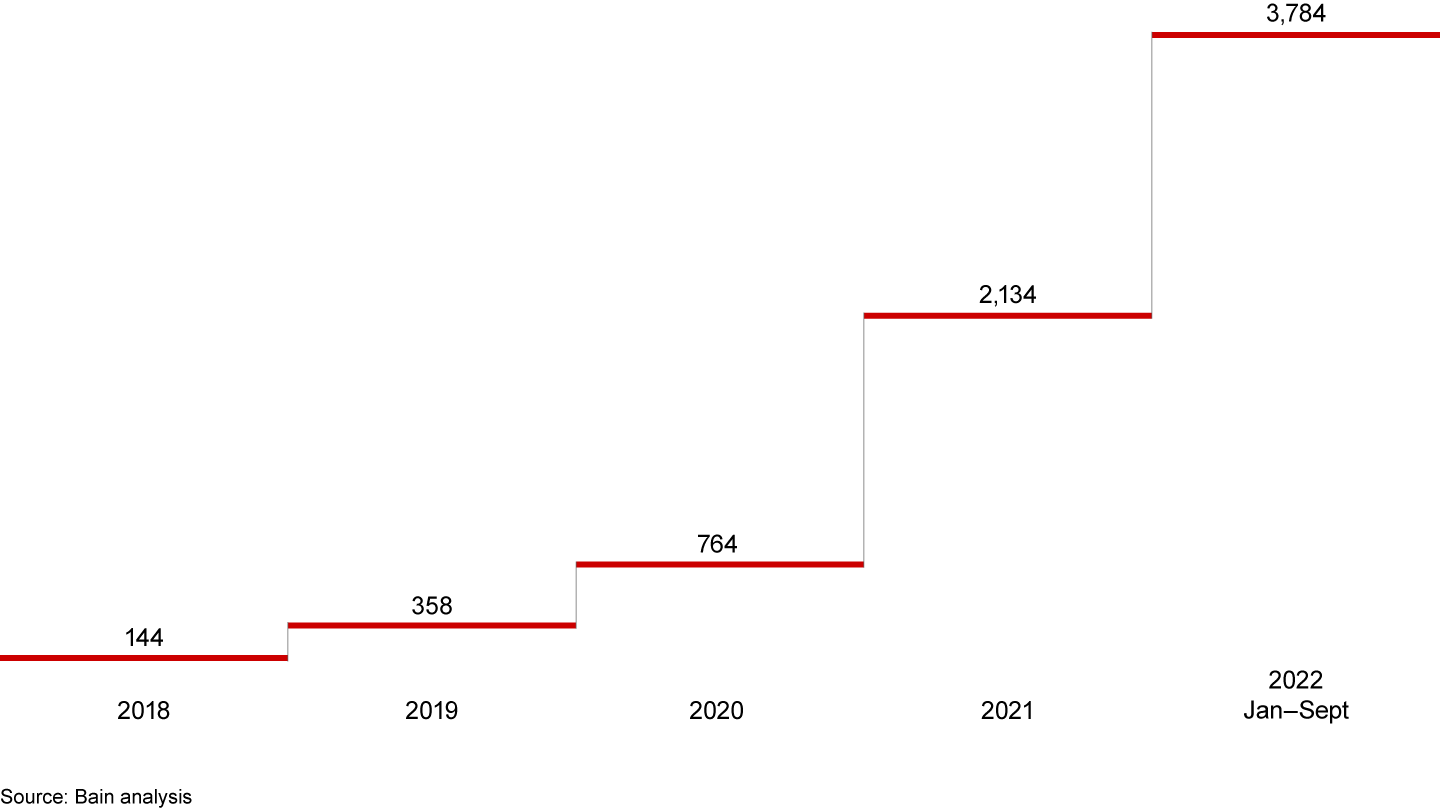
In the 12 months since COP26, companies have faced the unexpected in the form of geopolitical upheavals, supply chain disruption, mounting global inflation, and now the threat of recession. Despite this perfect storm, corporations’ long-term commitment to decarbonization hasn’t fundamentally wavered. The number of companies embracing science-based targets jumped 179% in 2021 ahead of COP26 and is continuing to grow at a rapid pace prior to COP27 in Sharm el-Sheikh, Egypt (see Figure 1).
Figure 1

However, as they make such pledges, executives need to acknowledge the ways the environment for decarbonization and climate has changed in such a short time. We see four shifts from the past year that will inform how companies are tackling their decarbonization priorities.
From ambition to delivery—with monetization. Setting ambitions is the easy part, but meeting those goals has proven difficult, with 33% of companies missing the absolute scope 1 & 2 targets that expired in 2021. This year more than ever, companies find themselves in the position of needing to look beyond setting ambitions to tackling the real challenges of decarbonizing and finding ways to monetize it with customers. Many corporations that set ambitious targets for COP26 are wrestling with what they can now afford to do.
Global policy intervention. Global policy has become more prominent and more complex in the past year. Some governments across the world are acting more boldly to make the carbon transition a source of competitive advantage rather than risk losing the green business to another country. This is a trend we see accelerating in the medium and long term. For example, this year, the US stepped up with the Inflation Reduction Act, a largely incentive-based industrial package offering $369 billion to mainly accelerate energy transition in US energy production and manufacturing. However, many governments around the world also have had to make difficult near-term energy policy decisions this year, in some cases choosing between a looming climate disaster, keeping their people fed, and keeping energy costs from breaking the backs of the population.
Adapt now, not tomorrow. Floods in Pakistan leave millions homeless. Power overloads caused by California heatwaves require rolling blackouts. Record-low levels in the Yangtze hurt hydropower production in China, impacting local manufacturing capacity. As the effects of climate change quickly became more evident last year, so did the need to not only mitigate by reducing emissions, but also adapt by adjusting to a changing climate. Leading companies have begun stepping up their physical risks analytics and adapting their strategy, operations, and supply chain.
Just transition as an imperative. As developing economies and underserved communities struggle with the impact of rising energy and food prices, companies are facing the reality that the carbon transition needs to be addressed in a way that is fair to all—a just transition. This means ensuring the continued expansion of energy access across the globe, that energy is as low carbon and affordable as possible, and that workers with livelihoods tied to conventional energy infrastructure have an opportunity to participate in the new energy economy.
The choices
These changes come at a time when companies are devising and implementing downturn strategies and require difficult new choices.
Three themes will characterize this downturn: addressing cost in an inflationary environment, resetting supply chains for resilience, and scrutinizing strategic investment in the face of uncertainty. Each of these can be tackled in the old way, or with carbon and climate in mind. In cost reduction, for example, the best companies will deal with cost and carbon simultaneously to emerge from the downturn with a more competitive cost and carbon base. Companies early on in their decarbonization journey will find there can be an overlap between cutting cost and cutting carbon: less material, less energy, and less waste all equal less cost—and less carbon.
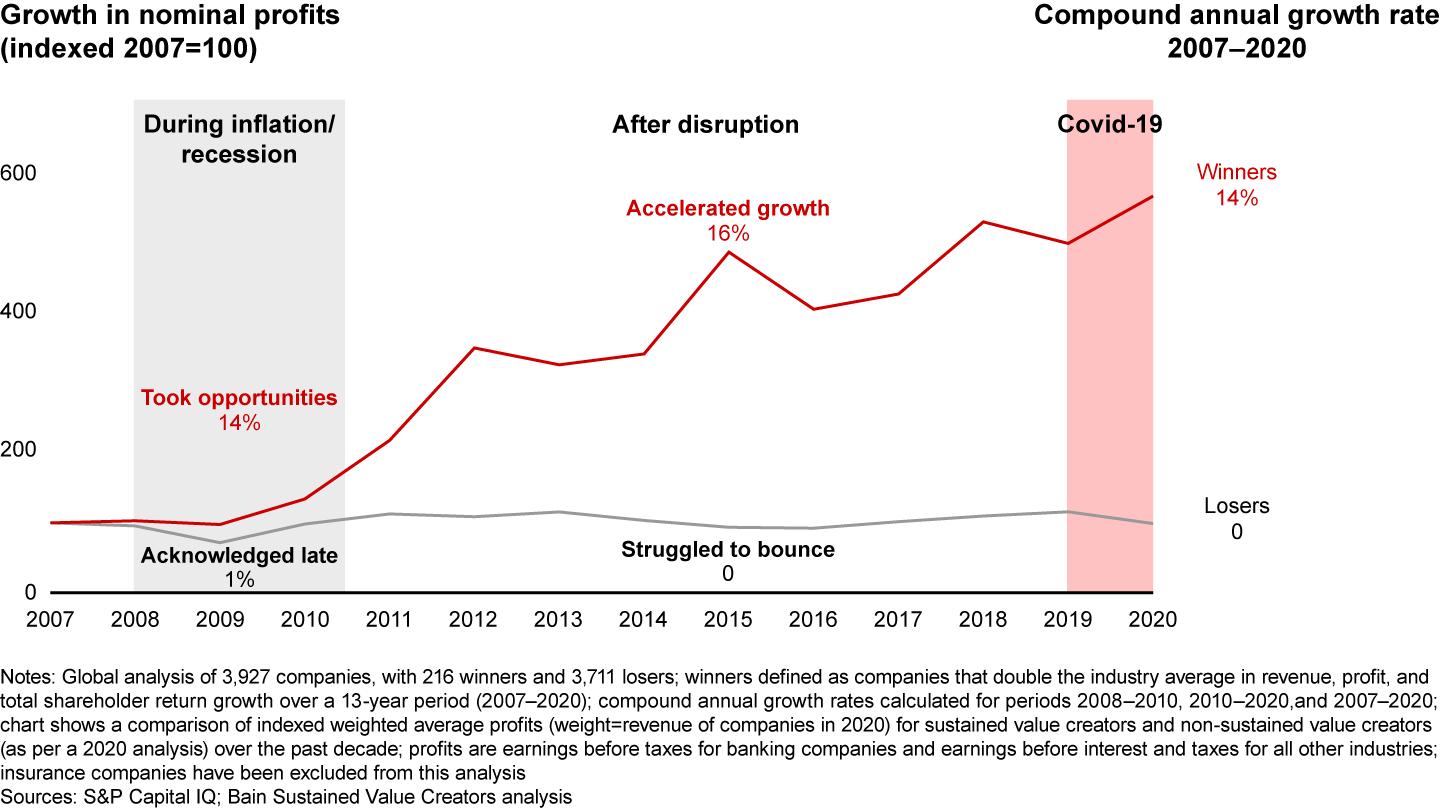
Also, as companies reimagine their supply chains for greater resilience to disruption caused by the pandemic and geopolitical tensions, winners will also consider climate physical risks. And while some companies might view decarbonization efforts as discretionary budget items in a downturn, the best will maintain those investments, even optimizing them in the face of increased cost scrutiny. Our long-term research supports the benefits of making such bold moves in times of disruption. There is more movement in company performance to capitalize on during a downturn than during a stable period (see Figure 2).
Figure 2

What does it mean for CEOs?
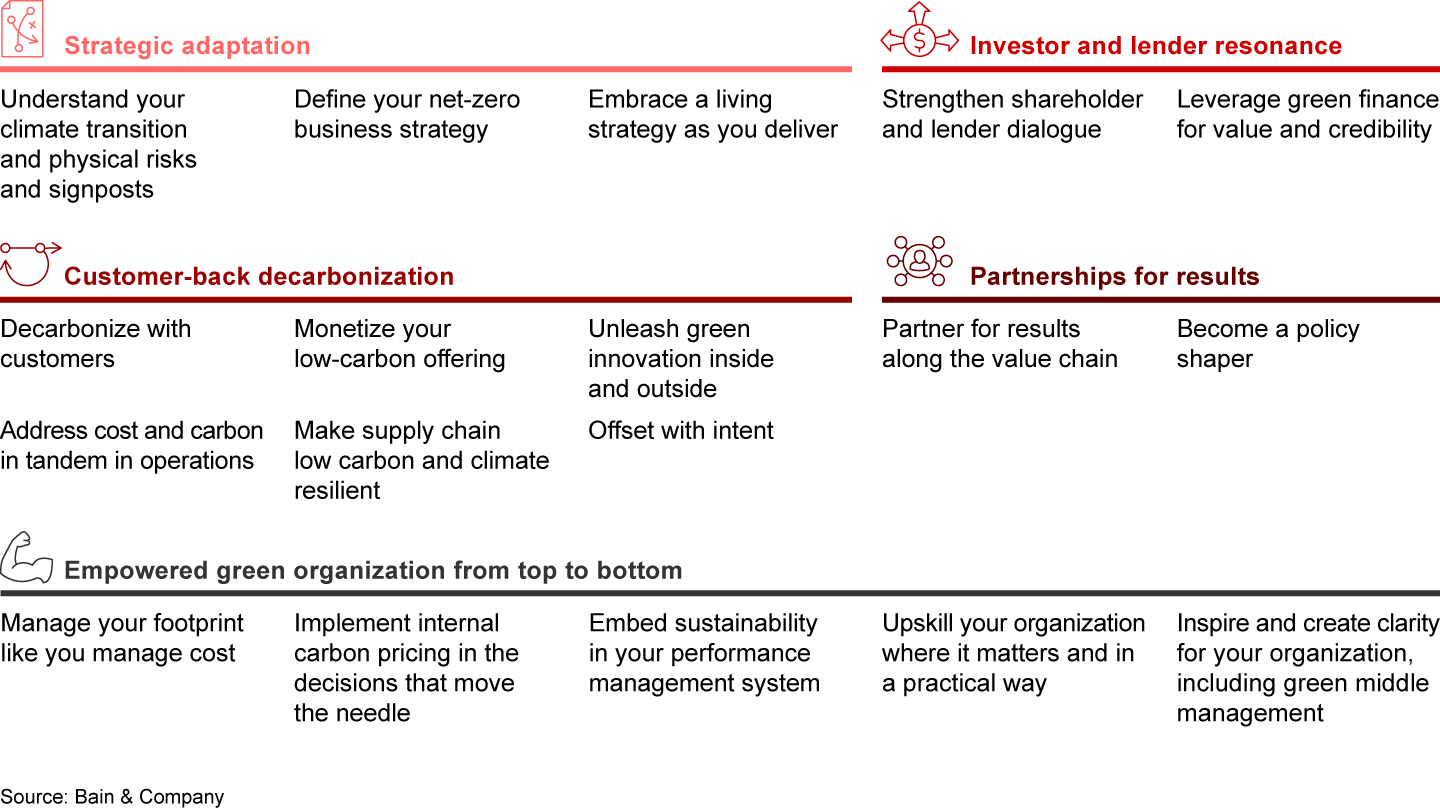
In our brief “From Carbon Ambition to Delivery,” we described how it will take a combination of vision and pragmatism for companies to reach their decarbonization goals and drive value creation in the process. Translating carbon net zero into zeroes for the bottom line enables them to step up the investment into this decarbonization. We have introduced the five areas that companies must get right to succeed; all of those areas still apply, but the emphasis has sharpened over the past 12 months.
Strategic adaptation. Companies don’t need more climate scenarios but, rather, clarity on the relevant ones. Most important, they need to identify the signposts that will indicate what’s coming next. This is especially vital given the recently accelerated pace of policy changes and advances in technology. Historically, scenarios and signposts were focused on climate transition risks, such as changes in economics and end market demand. Now, that is extending to climate physical scenarios—changes to weather patterns and business resilience. Especially in the current downturn, and with climate change intensifying, winners will adopt a living strategy, with quarterly updates to the board and executive committee on strategic issues split between delivery agenda (what has been agreed and needs to be executed) and development agenda (critical topics that need to mature for a decision to be made). As part of that living strategy, companies will find themselves taking steps to deliver results today, such as improving energy efficiency and optimizing supply chains, while investing in next-generation solutions like hydrogen.
Investor and lender resonance. Shareholders are sharpening their expectations about decarbonization, and at the same time, they often aren’t willing to compromise on near-term returns. This perceived tension can create dissonance in capital markets. While much of the effort to communicate on decarbonization has been aimed at shareholders, lenders have also become increasingly assertive and discerning in recent months, with the Glasgow Financial Alliance for Net Zero firming up criteria for net zero alignment ahead of implementation. It will be critical for companies to double down on proof points to clearly explain to investors and lenders how a more profitable business in the medium-to-long term is also a more sustainable one. That means showing how they’ve started to reduce carbon in a cost-effective manner while also making the business resilient to transition and physical risks. They’ll also be required to show distinct pathways—that they have the options to get to net zero—and how they will be flexible based on evolving regulation and technology.
Customer-back decarbonization. Companies that are most successful in their climate transitions start decarbonization with the customer in mind and work backward across offerings, operations, and the supply chain. More than ever, it will be critical to clearly understand the sustainability priorities of customers who are navigating a downturn and are very focused on costs. The increased pressure on cost requires an even more specific articulation of the benefits of of low carbon as part of an integrated value proposition, ones that the salesforce can bring to market. Affordability and transparency should be a focus of sustainability innovation. A key prerequisite is to de-average the customer base. Not all customers are moving at the same pace, so targeting the right ones based on their carbon ambition, progress, and internal carbon price used is the best way to achieve the right green premium.
Partnerships for results. Carbon transition is a problem far too big to be solved by any company on its own, and companies need to engage the wider ecosystem of customers, suppliers, and peers up and down the value chain. For example, when building the hydrogen economy, many players will need to come together, everyone from renewable energy generators to electrolyzers producers to offtakers. Another benefit of partnering: It can be a great way to spread costs on new approaches; that can be critical during a downturn. This imperative has not changed. However, policymakers should be part of these partnerships. It is important for companies and industry alliances to engage with governments early and often as partners in shaping policies that can accelerate decarbonization and create value. Corporations can offer solutions that regulators may not have considered. At the same time, the constraints and opportunities of the policy landscape are not always well known to corporations. Credible corporations will build these relationships and be consistent in their policy asks. Ever-increasing data and transparency makes it possible for companies to ensure their credibility.
Empowered green organization from top to bottom. Top management may be fully convinced of the need for aggressive decarbonization, given interactions with investors, the board, and key customers. New recruits often have chosen an employer based on its green credentials. Yet the task of delivering on decarbonization has solidly moved into middle management, and some companies underinvest in convincing and empowering middle management to get the job done. Leading companies have now started to evolve their decarbonization efforts from reporting to effective performance management. It’s now critical to integrate decarbonization delivery into a company’s current performance management system by aligning KPIs and incentives to decarbonization, by putting a price on carbon (internal carbon pricing) in the decisions that matter—and by providing clarity and guidance to middle management on how to resolve trade-offs. This only works by inspiring the organization and upskilling it at scale and in a way that gives people the tools they need to succeed, such as the ability to make the right operational trade-offs.
As CEOs plot their strategy across these five areas for navigating their carbon and energy transition in a downturn, it will be easy to get diverted by unrealistic future predictions or by the naive illusion that moving to a greener business is an easy task. Climate change becomes more evident. Geopolitical risks surface. Macroeconomic challenges emerge. But companies that take an approach of visionary pragmatism will be on solid footing to navigate the changes—and outpace their less-nimble and less-prepared competitors (see Figure 3).
Figure 3

CEOs can start by asking these eight questions:
- Where do I want to be on decarbonization as I exit the downturn?
- How clear are my decarbonization non-negotiables as I prepare for the likely recession?
- What opportunities does the downturn offer to accelerate my decarbonization journey, if any?
- How can I leverage sustainability to differentiate and protect my top line as my customers prepare for the downturn?
- How integrated is my approach to tackling cost and carbon as I address my cost base?
- What are the skills that I can’t afford to lose for decarbonization as I scrutinize my headcount?
- How am I addressing climate physical risks (e.g., drought, flood, fire) as I reshape my supply chain for resilience?
- Who from the sustainability and carbon transition team is involved in my downturn preparation team?
First published in 11月 2022