
Skip to Content
  • オフィス

    オフィス

    北米・南米
    • Atlanta
    • Austin
    • Bogota
    • Boston
    • Buenos Aires
    • Chicago
    • Dallas
    • Denver
    • Houston
    • Los Angeles
    • Mexico City
    • Minneapolis
    • Monterrey
    • Montreal
    • New York
    • Rio de Janeiro
    • San Francisco
    • Santiago
    • São Paulo
    • Seattle
    • Silicon Valley
    • Toronto
    • Washington, DC
    ヨーロッパ・中東・アフリカ
    • Amsterdam
    • Athens
    • Berlin
    • Brussels
    • Copenhagen
    • Doha
    • Dubai
    • Dusseldorf
    • Frankfurt
    • Helsinki
    • Istanbul
    • Johannesburg
    • Kyiv
    • Lisbon
    • London
    • Madrid
    • Milan
    • Munich
    • Oslo
    • Paris
    • Riyadh
    • Rome
    • Stockholm
    • Vienna
    • Warsaw
    • Zurich
    アジア・オーストラリア
    • Bangkok
    • Beijing
    • Bengaluru
    • Brisbane
    • Ho Chi Minh City
    • Hong Kong
    • Jakarta
    • Kuala Lumpur
    • Manila
    • Melbourne
    • Mumbai
    • New Delhi
    • Perth
    • Shanghai
    • Singapore
    • Sydney
    • Tokyo
    全てのオフィス
  • アルムナイ
  • メディア
  • お問い合わせ
  • 東京オフィス
  • Japan | 日本語

    地域と言語を選択

    グローバル
    • Global (English)
    北米・南米
    • Brazil (Português)
    • Argentina (Español)
    • Canada (Français)
    • Chile (Español)
    • Colombia (Español)
    ヨーロッパ・中東・アフリカ
    • France (Français)
    • DACH Region (Deutsch)
    • Italy (Italiano)
    • Spain (Español)
    • Greece (Elliniká)
    アジア・オーストラリア
    • China (中文版)
    • Korea (한국어)
    • Japan (日本語)
  • Saved items (0)
    Saved items (0)

    You have no saved items.

    後で閲読、共有できるようにするためにブックマークしてください

    Explore Bain Insights
  • 業界別プラクティス
    メインメニュー

    業界別プラクティス

    • 航空宇宙、防衛、政府関連
    • 農業
    • 化学製品
    • インフラ、建設
    • 消費財
    • 金融サービス
    • ヘルスケア
    • 産業機械、設備
    • メディア、エンターテインメント
    • 金属
    • 採掘・鉱業
    • 石油、ガス
    • 紙、パッケージ
    • プライベートエクイティ
    • 公共、社会セクター
    • 小売
    • テクノロジー
    • 通信
    • 交通
    • 観光産業
    • 公益事業、再生可能エネルギー
  • 機能別プラクティス
    メインメニュー

    機能別プラクティス

    • カスタマー・エクスペリエンス
    • サステイナビリティ、 社会貢献
    • Innovation
    • 企業買収、合併 (M&A)
    • オペレーション
    • 組織
    • プライベートエクイティ
    • マーケティング・営業
    • 戦略
    • アドバンスド・アナリティクス
    • Technology
    • フルポテンシャル・トランスフォーメーション
  • Digital
  • 知見/レポート
  • ベイン・アンド・カンパニーについて
    メインメニュー

    ベイン・アンド・カンパニーについて

    • ベインの信条
    • 活動内容
    • 社員とリーダーシップ
    • プレス・メディア情報
    • クライアントの結果
    • 受賞歴
    • パートナーシップを結んでいる団体
    Further: Our global responsibility
    • ダイバーシティ
    • 社会貢献
    • サステイナビリティへの取り組み
    • 世界経済フォーラム(WEF)
    Learn more about Further
  • キャリア
    メインメニュー

    キャリア

    • ベインで働く
      キャリア
      ベインで働く
      • Find Your Place
      • ベインで活躍する機会
      • ベインのチーム体制
      • 学生向けページ
      • インターンシップ
      • 採用イベント
    • ベインでの体験
      キャリア
      ベインでの体験
      • Blog: Inside Bain
      • キャリアストーリー
      • 社員紹介
      • Where We Work
      • 成長を後押しするサポート体制
      • アフィニティ・グループ
      • 福利厚生
    • Impact Stories
    • 採用情報
      キャリア
      採用情報
      • 採用プロセス
      • 面接内容
    FIND JOBS
  • オフィス
    メインメニュー

    オフィス

    • 北米・南米
      オフィス
      北米・南米
      • Atlanta
      • Austin
      • Bogota
      • Boston
      • Buenos Aires
      • Chicago
      • Dallas
      • Denver
      • Houston
      • Los Angeles
      • Mexico City
      • Minneapolis
      • Monterrey
      • Montreal
      • New York
      • Rio de Janeiro
      • San Francisco
      • Santiago
      • São Paulo
      • Seattle
      • Silicon Valley
      • Toronto
      • Washington, DC
    • ヨーロッパ・中東・アフリカ
      オフィス
      ヨーロッパ・中東・アフリカ
      • Amsterdam
      • Athens
      • Berlin
      • Brussels
      • Copenhagen
      • Doha
      • Dubai
      • Dusseldorf
      • Frankfurt
      • Helsinki
      • Istanbul
      • Johannesburg
      • Kyiv
      • Lisbon
      • London
      • Madrid
      • Milan
      • Munich
      • Oslo
      • Paris
      • Riyadh
      • Rome
      • Stockholm
      • Vienna
      • Warsaw
      • Zurich
    • アジア・オーストラリア
      オフィス
      アジア・オーストラリア
      • Bangkok
      • Beijing
      • Bengaluru
      • Brisbane
      • Ho Chi Minh City
      • Hong Kong
      • Jakarta
      • Kuala Lumpur
      • Manila
      • Melbourne
      • Mumbai
      • New Delhi
      • Perth
      • Shanghai
      • Singapore
      • Sydney
      • Tokyo
    全てのオフィス
  • アルムナイ
  • メディア
  • お問い合わせ
  • 東京オフィス
  • Japan | 日本語
    メインメニュー

    地域と言語を選択

    • グローバル
      地域と言語を選択
      グローバル
      • Global (English)
    • 北米・南米
      地域と言語を選択
      北米・南米
      • Brazil (Português)
      • Argentina (Español)
      • Canada (Français)
      • Chile (Español)
      • Colombia (Español)
    • ヨーロッパ・中東・アフリカ
      地域と言語を選択
      ヨーロッパ・中東・アフリカ
      • France (Français)
      • DACH Region (Deutsch)
      • Italy (Italiano)
      • Spain (Español)
      • Greece (Elliniká)
    • アジア・オーストラリア
      地域と言語を選択
      アジア・オーストラリア
      • China (中文版)
      • Korea (한국어)
      • Japan (日本語)
  • Saved items  (0)
    メインメニュー
    Saved items (0)

    You have no saved items.

    後で閲読、共有できるようにするためにブックマークしてください

    Explore Bain Insights
  • 業界別プラクティス
    • 業界別プラクティス

      • 航空宇宙、防衛、政府関連
      • 農業
      • 化学製品
      • インフラ、建設
      • 消費財
      • 金融サービス
      • ヘルスケア
      • 産業機械、設備
      • メディア、エンターテインメント
      • 金属
      • 採掘・鉱業
      • 石油、ガス
      • 紙、パッケージ
      • プライベートエクイティ
      • 公共、社会セクター
      • 小売
      • テクノロジー
      • 通信
      • 交通
      • 観光産業
      • 公益事業、再生可能エネルギー
  • 機能別プラクティス
    • 機能別プラクティス

      • カスタマー・エクスペリエンス
      • サステイナビリティ、 社会貢献
      • Innovation
      • 企業買収、合併 (M&A)
      • オペレーション
      • 組織
      • プライベートエクイティ
      • マーケティング・営業
      • 戦略
      • アドバンスド・アナリティクス
      • Technology
      • フルポテンシャル・トランスフォーメーション
  • Digital
  • 知見/レポート
  • ベイン・アンド・カンパニーについて
    • ベイン・アンド・カンパニーについて

      • ベインの信条
      • 活動内容
      • 社員とリーダーシップ
      • プレス・メディア情報
      • クライアントの結果
      • 受賞歴
      • パートナーシップを結んでいる団体
      Further: Our global responsibility
      • ダイバーシティ
      • 社会貢献
      • サステイナビリティへの取り組み
      • 世界経済フォーラム(WEF)
      Learn more about Further
  • キャリア
    人気検索キーワード
    • デジタル
    • 戦略
    前回の検索
      最近訪れたページ

      Content added to saved items

      Saved items (0)

      Removed from saved items

      Saved items (0)

      論説

      Committees that work

      Committees that work

      Committees can be time sinks and morale killers, but they don’t have to be. With facts in hand, you can tackle the tyranny of bad committees.

      著者: James Hadley and Jenny Davis-Peccoud

      • min read

      論説

      Committees that work
      en

      Executives’ visions of liberation:

      • A truck manufacturer cuts its committees in half, from 30 to 15. Before, said one manager, “We didn’t have a clue which committees we had to send our people to in order to get a final approval.”

      • A mining company does even better: It eliminates more than 40 committees, leaving just 10. “We used to have a ‘Red Book’ that listed all the committees. We burned it—literally—and started over.”

      • “I spend almost all my day in committee meetings,” complains a deputy director at an investment fund. Then the fund agrees to a new policy: No member of the leadership team can sit on more than three committees, and the time spent attending and preparing for committee meetings should not exceed 20% of total working hours.

      Committees can be the bane of an executive’s life. They eat up countless hours. Many don’t accomplish much. And they proliferate like rabbits. Key leaders can wind up serving on six, eight, even 10 committees. Trouble is, committees are indispensable. From the CEO-led executive committee to product-development committees and so on, committees enable a company to get its work done. At their best, committees are an efficient way of assembling people. They facilitate debate on important issues, and they can be effective forums for decision making. So the challenge is to manage committees well: to get the most out of them while nipping their dysfunctional traits in the bud.

      Gather facts, then establish procedures

      Any review of a company’s committees needs to start with a solid fact base. How many committees are there? How much time do people spend on them? What role does each one play? Listing all the committees on a single page is usually revealing. Quantitative data helps too. One company, for instance, uses Outlook data to calculate time spent in meetings and thus to quantify the cost.

      Facts in hand, you can tackle the tyranny of bad committees. In our experience, good committee management turns on three central precepts.

      1. Design committees like an architect. Form follows function, architects like to say. First, identify the function you want a committee to perform—typically, a specified role in a well-defined set of critical decisions. Then establish the committee and give it an appropriately defined charter. The investment fund mentioned earlier, attempting to rationalize a host of ill-defined committees, adopted a handful of ironclad rules. A committee should exist only if it plays an explicit role in decisions that have a material impact on the company’s performance and objectives, and only if good recommendations or decisions require diverse perspectives from departments and functions. Only about 40% of the investment fund’s committees survived such screens.

      2. Assign people to committees carefully—and set them up to succeed. The makeup of any committee obviously has to match the committee’s functional requirements: the right skills, seniority levels and representation from relevant functions or departments. But that’s only the start of getting the committee composition right.

      Size, for instance, is a critical variable. Though some committees may need more members, Bain research suggests that six or seven people is usually the best number for a committee. More than that and the committee’s effectiveness is likely to drop sharply. The group has to include at least one respected, experienced individual who can serve as chair and another who has the communication and attention-to-detail skills required for a recording secretary.

      Equally important: a reasonable workload. Committees can’t function when their members are spread too thin. We favor the investment fund’s approach: Put strict limits on the number of committees executives can serve on. Spell out expectations about how much time the committees will require. It’s often helpful to have term limits on individual committee service. Term limits not only spread the responsibility, they ensure that the same people aren’t always required to be on every committee.

      3. Run committees using best-practice disciplines. Some committee meetings quickly degenerate into talk fests and socializing. Even those that ostensibly focus on business matters can get on the wrong track. An insurance company we worked with found that its executive committee devoted 40% of its time to “informing” members of new developments and only 20% considering decisions.

      One antidote to this lack of focus is to build agendas around the key decisions. The most effective companies typically draft agendas prior to the meeting that specify the purpose of the meeting and the time allocated to each item. Meeting organizers circulate the agendas and supporting documents at least 48 hours beforehand.
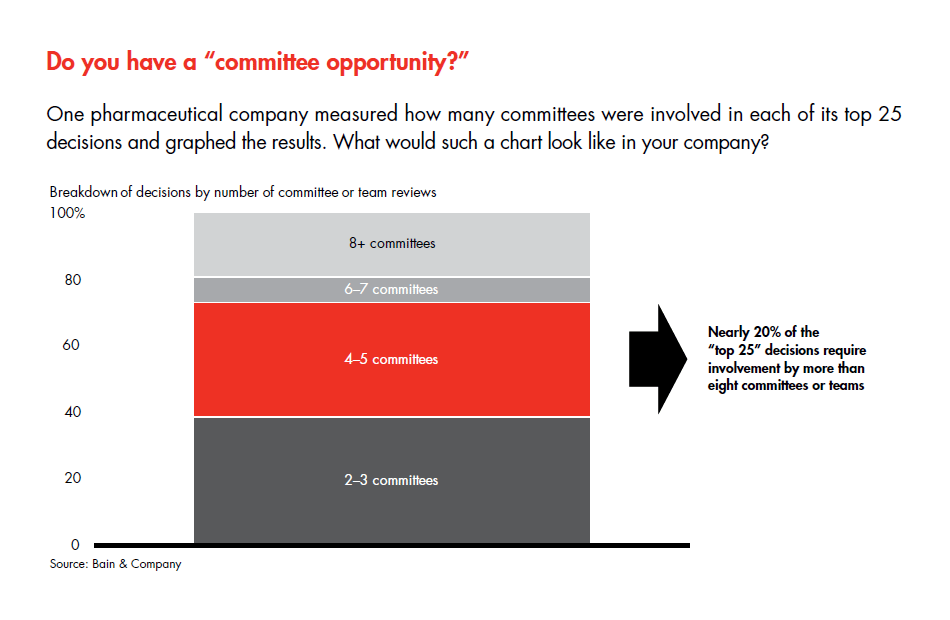

      di-committees-that-work-fig-01_embed

      At the meetings themselves, the chair ensures good discipline, often including the use of symbols and reminders that help keep everyone on track. (See our previous article, “Refresh, refocus, remind: Nine practical tips to keep meetings centered on decisions and action.”) The chair also has to help the group clarify by its decision-making mechanism. Is it participative, with the chair gathering input and then making the decision? Is it consensus? Majority vote? Finally, the secretary has to record decisions, communicate the relevant action items and time frames to all concerned and ensure follow-up.

      A well-functioning committee system, like liberty, requires eternal vigilance. We hesitate to suggest a committee to manage committees—that might be overkill—but we do think it’s essential to track how committees and their members perform over time. Some companies, for instance, incorporate committee contributions into individual performance reviews. Also, it’s worth remembering that committees function best when every other element of the organization—its structure, processes, culture and so on—is clearly focused on decisions.

      Committees can be time sinks and morale killers, but they don’t have to be. Effective committees make decisions, see that those decisions are executed and give every member the well-justified feeling that they are actually getting something done.

      James Hadley is a partner in Bain’s Dubai office and is a leader in Bain’s Global Strategy practice. Jenny Davis-Peccoud is the senior director of Bain’s Global Organization practice. She is based in London.


      di-committees-that-work-fig-01_full
      著者
      • Headshot of James Hadley
        James Hadley
        パートナー, London
      関連するコンサルティングサービス
      • 組織
      組織
      Measuring decision effectiveness

      Good, fast decision making and execution produce good financial results.

      詳細
      組織
      Refresh, refocus and remind: Nine practical tips to keep meetings centered on decisions and action

      Meetings. No company can live without them, but it sure is hard to live with them.

      詳細
      組織
      When a New Organizational Structure Isn’t Enough: How to Truly Live Your Operating Model

      The goal of any organizational redesign is for people to work differently, but that only happens if leaders invest in changing the work itself.

      詳細
      組織
      Shift to Vertical: David Haines, Group CEO, Flora Food Group

      What does it take to stay connected to your customers when scale and complexity threaten to pull you away? 

      詳細
      組織
      Leading with Dynamism: AI and the Future of Top Teams

      In the age of AI, dynamic leadership—not just digital tools—is a true competitive advantage.

      詳細
      First published in 8月 2012
      Tags
      • 組織

      クライアント支援事例

      組織 A Video Game Company Levels Up With a New Operating Model

      ケーススタディを見る

      組織 Building a winning media salesforce

      ケーススタディを見る

      組織 Powering a mining company's growth through cultural change

      ケーススタディを見る

      お気軽にご連絡下さい

      私達は、グローバルに活躍する経営者が抱える最重要経営課題に対して、厳しい競争環境の中でも成長し続け、「結果」を出すために支援しています。

      ベインの知見。競争が激化するグローバルビジネス環境で、日々直面するであろう問題について論じている知見を毎月お届けします。

      *プライバシーポリシーの内容を確認し、合意しました。

      プライバシーポリシーをご確認頂き、合意頂けますようお願い致します。
      Bain & Company
      お問い合わせ Sustainability Accessibility Terms of use Privacy Cookie Policy Sitemap Log In

      © 1996-2026 Bain & Company, Inc.

      お問い合わせ

      How can we help you?

      • ビジネスについて
      • プレス報道について
      • 採用について
      全てのオフィス