
Skip to Content
  • オフィス

    オフィス

    北米・南米
    • Atlanta
    • Austin
    • Bogota
    • Boston
    • Buenos Aires
    • Chicago
    • Dallas
    • Denver
    • Houston
    • Los Angeles
    • Mexico City
    • Minneapolis
    • Monterrey
    • Montreal
    • New York
    • Rio de Janeiro
    • San Francisco
    • Santiago
    • São Paulo
    • Seattle
    • Silicon Valley
    • Toronto
    • Washington, DC
    ヨーロッパ・中東・アフリカ
    • Amsterdam
    • Athens
    • Berlin
    • Brussels
    • Copenhagen
    • Doha
    • Dubai
    • Dusseldorf
    • Frankfurt
    • Helsinki
    • Istanbul
    • Johannesburg
    • Kyiv
    • Lisbon
    • London
    • Madrid
    • Milan
    • Munich
    • Oslo
    • Paris
    • Riyadh
    • Rome
    • Stockholm
    • Vienna
    • Warsaw
    • Zurich
    アジア・オーストラリア
    • Bangkok
    • Beijing
    • Bengaluru
    • Brisbane
    • Ho Chi Minh City
    • Hong Kong
    • Jakarta
    • Kuala Lumpur
    • Manila
    • Melbourne
    • Mumbai
    • New Delhi
    • Perth
    • Shanghai
    • Singapore
    • Sydney
    • Tokyo
    全てのオフィス
  • アルムナイ
  • メディア
  • お問い合わせ
  • 東京オフィス
  • Japan | 日本語

    地域と言語を選択

    グローバル
    • Global (English)
    北米・南米
    • Brazil (Português)
    • Argentina (Español)
    • Canada (Français)
    • Chile (Español)
    • Colombia (Español)
    ヨーロッパ・中東・アフリカ
    • France (Français)
    • DACH Region (Deutsch)
    • Italy (Italiano)
    • Spain (Español)
    • Greece (Elliniká)
    アジア・オーストラリア
    • China (中文版)
    • Korea (한국어)
    • Japan (日本語)
  • Saved items (0)
    Saved items (0)

    You have no saved items.

    後で閲読、共有できるようにするためにブックマークしてください

    Explore Bain Insights
  • 業界別プラクティス
    メインメニュー

    業界別プラクティス

    • 航空宇宙、防衛、政府関連
    • 農業
    • 化学製品
    • インフラ、建設
    • 消費財
    • 金融サービス
    • ヘルスケア
    • 産業機械、設備
    • メディア、エンターテインメント
    • 金属
    • 採掘・鉱業
    • 石油、ガス
    • 紙、パッケージ
    • プライベートエクイティ
    • 公共、社会セクター
    • 小売
    • テクノロジー
    • 通信
    • 交通
    • 観光産業
    • 公益事業、再生可能エネルギー
  • 機能別プラクティス
    メインメニュー

    機能別プラクティス

    • カスタマー・エクスペリエンス
    • サステイナビリティ、 社会貢献
    • Innovation
    • 企業買収、合併 (M&A)
    • オペレーション
    • 組織
    • プライベートエクイティ
    • マーケティング・営業
    • 戦略
    • アドバンスド・アナリティクス
    • Technology
    • フルポテンシャル・トランスフォーメーション
  • Digital
  • 知見/レポート
  • ベイン・アンド・カンパニーについて
    メインメニュー

    ベイン・アンド・カンパニーについて

    • ベインの信条
    • 活動内容
    • 社員とリーダーシップ
    • プレス・メディア情報
    • クライアントの結果
    • 受賞歴
    • パートナーシップを結んでいる団体
    Further: Our global responsibility
    • ダイバーシティ
    • 社会貢献
    • サステイナビリティへの取り組み
    • 世界経済フォーラム(WEF)
    Learn more about Further
  • キャリア
    メインメニュー

    キャリア

    • ベインで働く
      キャリア
      ベインで働く
      • Find Your Place
      • ベインで活躍する機会
      • ベインのチーム体制
      • 学生向けページ
      • インターンシップ
      • 採用イベント
    • ベインでの体験
      キャリア
      ベインでの体験
      • キャリアストーリー
      • 社員紹介
      • Where We Work
      • 成長を後押しするサポート体制
      • アフィニティ・グループ
      • 福利厚生
    • Impact Stories
    • 採用情報
      キャリア
      採用情報
      • 採用プロセス
      • 面接内容
    FIND JOBS
  • オフィス
    メインメニュー

    オフィス

    • 北米・南米
      オフィス
      北米・南米
      • Atlanta
      • Austin
      • Bogota
      • Boston
      • Buenos Aires
      • Chicago
      • Dallas
      • Denver
      • Houston
      • Los Angeles
      • Mexico City
      • Minneapolis
      • Monterrey
      • Montreal
      • New York
      • Rio de Janeiro
      • San Francisco
      • Santiago
      • São Paulo
      • Seattle
      • Silicon Valley
      • Toronto
      • Washington, DC
    • ヨーロッパ・中東・アフリカ
      オフィス
      ヨーロッパ・中東・アフリカ
      • Amsterdam
      • Athens
      • Berlin
      • Brussels
      • Copenhagen
      • Doha
      • Dubai
      • Dusseldorf
      • Frankfurt
      • Helsinki
      • Istanbul
      • Johannesburg
      • Kyiv
      • Lisbon
      • London
      • Madrid
      • Milan
      • Munich
      • Oslo
      • Paris
      • Riyadh
      • Rome
      • Stockholm
      • Vienna
      • Warsaw
      • Zurich
    • アジア・オーストラリア
      オフィス
      アジア・オーストラリア
      • Bangkok
      • Beijing
      • Bengaluru
      • Brisbane
      • Ho Chi Minh City
      • Hong Kong
      • Jakarta
      • Kuala Lumpur
      • Manila
      • Melbourne
      • Mumbai
      • New Delhi
      • Perth
      • Shanghai
      • Singapore
      • Sydney
      • Tokyo
    全てのオフィス
  • アルムナイ
  • メディア
  • お問い合わせ
  • 東京オフィス
  • Japan | 日本語
    メインメニュー

    地域と言語を選択

    • グローバル
      地域と言語を選択
      グローバル
      • Global (English)
    • 北米・南米
      地域と言語を選択
      北米・南米
      • Brazil (Português)
      • Argentina (Español)
      • Canada (Français)
      • Chile (Español)
      • Colombia (Español)
    • ヨーロッパ・中東・アフリカ
      地域と言語を選択
      ヨーロッパ・中東・アフリカ
      • France (Français)
      • DACH Region (Deutsch)
      • Italy (Italiano)
      • Spain (Español)
      • Greece (Elliniká)
    • アジア・オーストラリア
      地域と言語を選択
      アジア・オーストラリア
      • China (中文版)
      • Korea (한국어)
      • Japan (日本語)
  • Saved items  (0)
    メインメニュー
    Saved items (0)

    You have no saved items.

    後で閲読、共有できるようにするためにブックマークしてください

    Explore Bain Insights
  • 業界別プラクティス
    • 業界別プラクティス

      • 航空宇宙、防衛、政府関連
      • 農業
      • 化学製品
      • インフラ、建設
      • 消費財
      • 金融サービス
      • ヘルスケア
      • 産業機械、設備
      • メディア、エンターテインメント
      • 金属
      • 採掘・鉱業
      • 石油、ガス
      • 紙、パッケージ
      • プライベートエクイティ
      • 公共、社会セクター
      • 小売
      • テクノロジー
      • 通信
      • 交通
      • 観光産業
      • 公益事業、再生可能エネルギー
  • 機能別プラクティス
    • 機能別プラクティス

      • カスタマー・エクスペリエンス
      • サステイナビリティ、 社会貢献
      • Innovation
      • 企業買収、合併 (M&A)
      • オペレーション
      • 組織
      • プライベートエクイティ
      • マーケティング・営業
      • 戦略
      • アドバンスド・アナリティクス
      • Technology
      • フルポテンシャル・トランスフォーメーション
  • Digital
  • 知見/レポート
  • ベイン・アンド・カンパニーについて
    • ベイン・アンド・カンパニーについて

      • ベインの信条
      • 活動内容
      • 社員とリーダーシップ
      • プレス・メディア情報
      • クライアントの結果
      • 受賞歴
      • パートナーシップを結んでいる団体
      Further: Our global responsibility
      • ダイバーシティ
      • 社会貢献
      • サステイナビリティへの取り組み
      • 世界経済フォーラム(WEF)
      Learn more about Further
  • キャリア
    人気検索キーワード
    • デジタル
    • 戦略
    前回の検索
      最近訪れたページ

      Content added to saved items

      Saved items (0)

      Removed from saved items

      Saved items (0)

      論説

      Digital Attacker Banks’ Time Has Come

      Digital Attacker Banks’ Time Has Come

      Digital attackers are lower cost, faster to innovate and can transform their traditional parents.

      著者:Fabrice Franzen, Vitor D'Agnoluzzo, and Bernardo Sebastião

      • min read
      }

      論説

      Digital Attacker Banks’ Time Has Come
      en
      概要
      • Digital attacker banks have demonstrated that they can delight customers, scale up quickly and expand into new products, geographies and customer segments.
      • Attackers’ cloud-native, cutting-edge technology platforms allow them to have much lower operating costs than most traditional incumbent banks.
      • As an alternative to embarking on a multiyear, hugely expensive systems transformation, some incumbent banks have launched attackers with the aim of transforming the core business.

      Digital attackers—that is, digital-only banks using a cloud-native, low-cost platform—historically were secondary banks for consumers. Many attackers garnered smaller deposits and more limited lending than traditional banks.

      Yet digital attackers have gained ground among consumers, and they hold more promise than initially meets the eye. Traditional banks risk losing market share if they don’t respond to these new models. An inflection point in adoption is near, as some attackers have shown that they can please customers and achieve a large scale. They are expanding from retail to small business accounts, from deposits and basic transactions to lending. As a result, venture capitalists and other investors have heavily funded digital attacker banks in recent years (see Figure 1).

      Figure 1
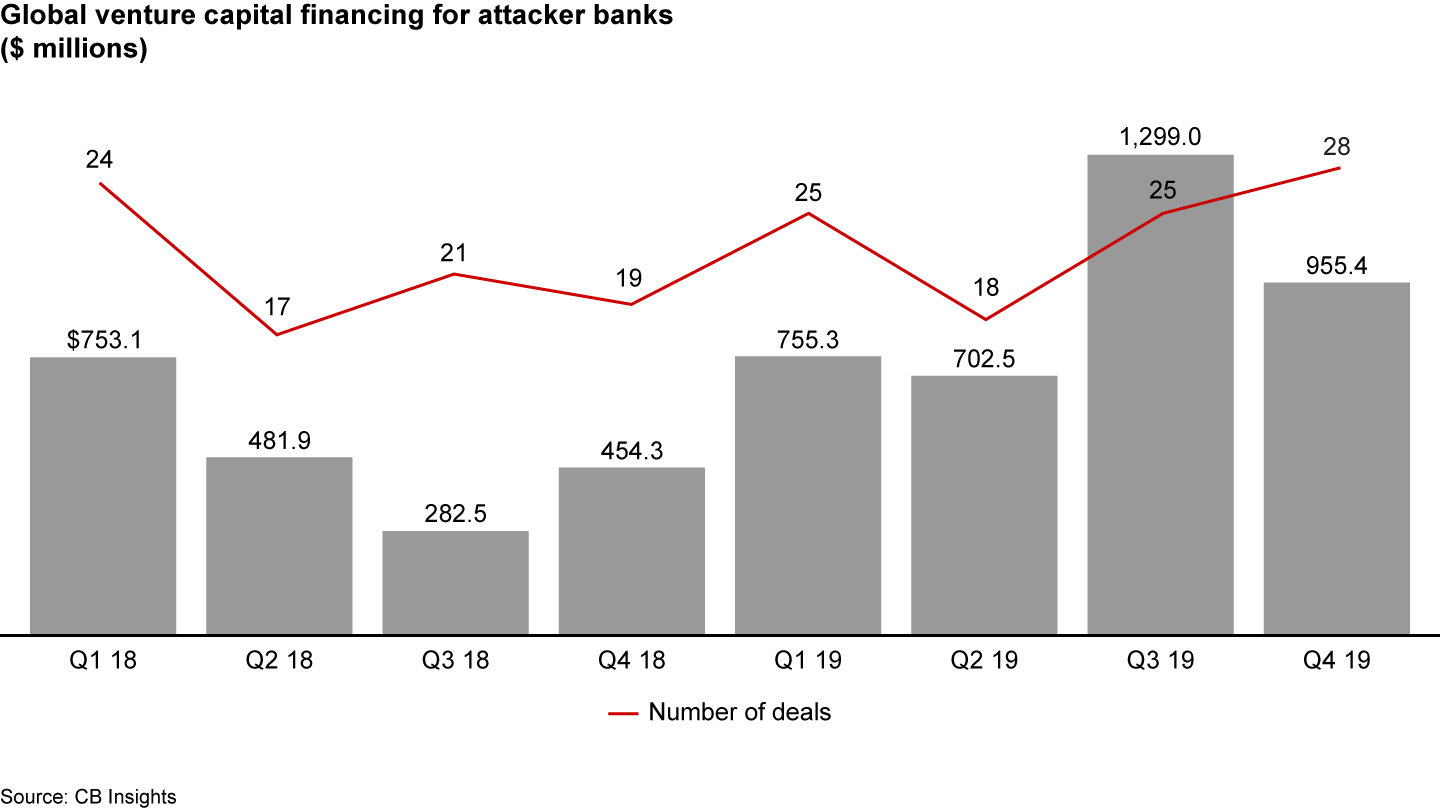
      Digital attacker banks are attracting heavy funding

      For instance, Nubank in Brazil has more than 25 million customers, making it one of the world’s largest digital banks. Nubank has put the smartphone at the heart of its strategy, and it has earned the region’s highest NPS Prism® score (a key metric of loyalty) for banks. Similarly, Kakao Bank attracted 10 million customers in just two years, and in 2019, it also had a customer loyalty score far above traditional banks in Korea, largely on the strength of its customer experience.

      In parallel, the ranks of traditional banks launching their own digital attackers has grown. Mettle, launched by NatWest, targets small UK businesses. Bradesco’s digital offering, Next, started by targeting underserved millennials in Brazil, and it has broadened its appeal to other underserved segments.

      Incumbent banks have realized the compelling logic of having a separate digital bank. Regulatory changes (such as open banking initiatives and the Revised Payment Services Directive, or PSD2, in the European Union) that are designed to promote innovation, better prices and a better experience have primed the field for more competition. Customer expectations have been redefined by technology firms offering personalized, easy, convenient services. To open a current checking account, for instance, takes an average of 81 clicks for 11 major incumbents analyzed in Europe, but it only takes 36 clicks on average for 5 attacker banks in Europe, according to the Centre for Finance, Technology and Entrepreneurship.

      Digital’s cost advantage

      On the revenue side, incumbents strategically can use an attacker bank to enter a new country or to improve their position within a customer segment such as millennials.

      Moreover, lower operating costs flow from having a modern, cloud-native technology platform. Analysis by Bain and Thought Machine finds that a digital attacker launched on such a platform could have a cost base that is 60% to 70% lower than a mid-tier legacy bank (see Figure 2). Bain’s comparison of four attackers with four major incumbents shows that attackers serve two to three times as many customers per employee.

      Figure 2
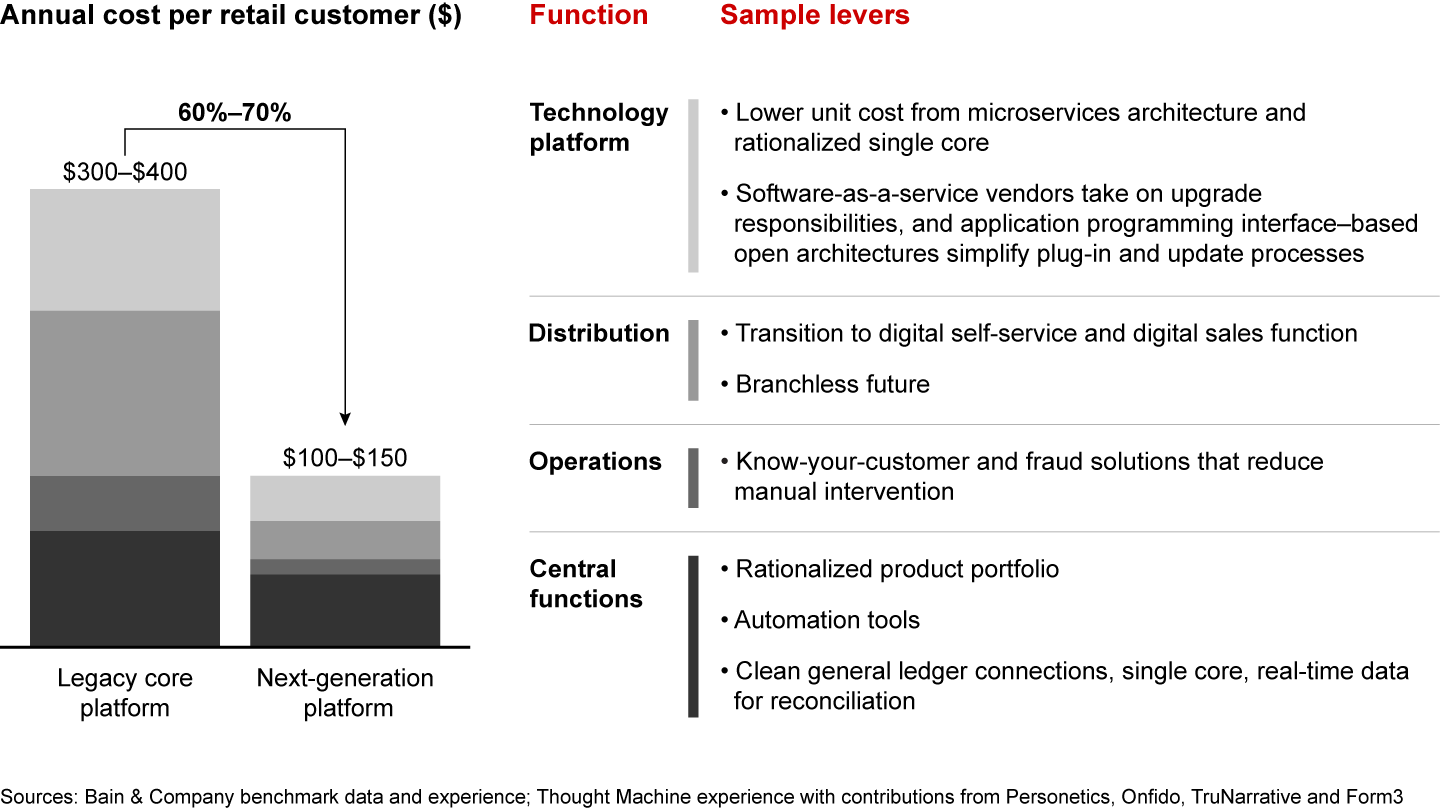
      A digital attacker bank on a cutting-edge technology platform could have a cost base 60%–70% lower than a mid-tier traditional bank

      Digital banks launched by incumbents have varying levels of integration with the parent company. Some incumbents treat their digital attacker as a separate entity with which to energize revenue growth by reaching underserved customer segments and quickly launching new products. They may also enjoy synergies with the existing business—for instance, by sharing fast, low-cost innovation.

      The child could transform the parent

      Other incumbents take a longer view, aiming to use the new bank to transform the core business by building very low-cost operations and more resilient technology. For example, Swedish bank SEB set up SEBx, a cloud-native technology platform, creating an in-house fintech to break with the traditional bank’s own legacy that will serve the broader SEB Group over time. This option holds perhaps the greatest promise as an alternative to embarking on a five-year, hugely expensive core banking transformation that risks causing a big-bang, all-at-once migration of customers.

      Whatever the motivation, success with an attacker bank hinges on several dimensions.

      • Monetization: From the outset, there should be a clear and realistic path to monetizing the strategy. Digital attackers have demonstrated that they can monetize by focusing on a specific customer segment with a narrow value proposition that addresses that segment’s needs.
      • A customer-centered proposition: The offering must align with customers’ needs and expectations. That’s why Marcus from Goldman Sachs has made inroads with affluent US millennials with its high-yield-interest savings product.
      • Speed of scaling: The ability to scale up quickly allows insurgents to penetrate their target segment. Bradesco’s Next reached 3.2 million customers in three years. By contrast, Chase shut down finn, its digital-only mobile banking platform, after only 47,000 customers had joined in a year.
      • Lean operations: The best bank platforms run low-cost operations by leveraging next-generation technology, as Revolut has demonstrated with its cloud-based core systems.
      • An ecosystem of partners: Many customers have begun to see value in obtaining related services through a single platform using open architecture for better integration. Starling’s third-party marketplace is one example, offering insurance, wealth management and tax tools.

      As with any new business, not all attackers will survive, much less thrive. Yet many have resonated with customers; digital attacker banks typically earn higher loyalty scores than regional and national incumbents. Digital attackers might start with less profitable parts of a market, but as they become the primary bank for more customers, they will grow and continue to take share from traditional banks. Younger customers are particularly open to using digital attackers, meaning that the pool of potential customers is bound to grow.

      So incumbents that embrace the scale insurgent mentality stand a better chance of defending their current business while also targeting new customer segments and new markets. It pays to act soon, however, as the window of time to build a strong attacker brand that will attract high-value customers is closing.


      NPS Prism® is a registered trademark of Bain & Company, Inc.

      著者
      • Headshot of Fabrice Franzen
        Fabrice Franzen
        パートナー, Middle East
      • Headshot of Vitor D'Agnoluzzo
        Vitor D'Agnoluzzo
        パートナー, London
      • Headshot of Bernardo Sebastião
        Bernardo Sebastião
        Alumni, São Paulo
      関連業種
      • 金融サービス
      • 銀行
      • 銀行(2)
      関連するコンサルティングサービス
      • Digital
      • IT
      金融サービス
      What Makes Digital Attacker Banks So Efficient?

      Digital-only banks have gained ground with consumers, and have lower operating costs than incumbent banks. Here’s why.

      詳細
      金融サービス
      Can US Banks Protect Their Card-Issuing Business?

      Consumer payments have been gravitating to neobanks and technology firms.

      詳細
      IT
      Reimagining Merchandising in the Era of Agentic AI

      The future of merchandising is not better analysis, but faster, smarter execution—and agentic AI is what makes that possible.

      詳細
      金融サービス
      The Fragmentation of Wholesale Payments Calls for Banks to Remake Their Approach

      Banks have a dominant position, but competitors look set to take market share.

      詳細
      IT
      Beyond AI Efficiency: A Conversation with Intuit’s Ivan Lazarov

      “Ultimately, we must be audacious enough to envision the impossible and bold enough to build it.”

      詳細
      First published in 12月 2020
      Tags
      • Digital
      • IT
      • 金融サービス
      • 銀行
      • 銀行(2)

      クライアント支援事例

      Digital A European Banking Giant Rises to the Fintech Challenge

      ケーススタディを見る

      アドバンスド・アナリティクス Blockchain-enabled Payment Flows: A Payments Company Reviews its Strategy

      ケーススタディを見る

      アジャイル A Digital-First Bank Finds a Customer-Driven Path to Profitability

      ケーススタディを見る

      お気軽にご連絡下さい

      私達は、グローバルに活躍する経営者が抱える最重要経営課題に対して、厳しい競争環境の中でも成長し続け、「結果」を出すために支援しています。

      Digital is a service mark of Bain & Company, Inc.

      ベインの知見。競争が激化するグローバルビジネス環境で、日々直面するであろう問題について論じている知見を毎月お届けします。

      *プライバシーポリシーの内容を確認し、合意しました。

      プライバシーポリシーをご確認頂き、合意頂けますようお願い致します。
      Bain & Company
      お問い合わせ Sustainability Accessibility Terms of use Privacy Cookie Policy Sitemap Log In

      © 1996-2026 Bain & Company, Inc.

      お問い合わせ

      How can we help you?

      • ビジネスについて
      • プレス報道について
      • 採用について
      全てのオフィス