

レポート
Over the past two decades, a steady stream of foreign brands has entered the Chinese market and achieved impressive growth. Competition between multinationals and local players has never been as fierce as it is now. This chapter explores the dynamics between foreign and domestic consumer goods companies, offering insights that will help both types of competitors capture their share of China’s growth.
Introduction
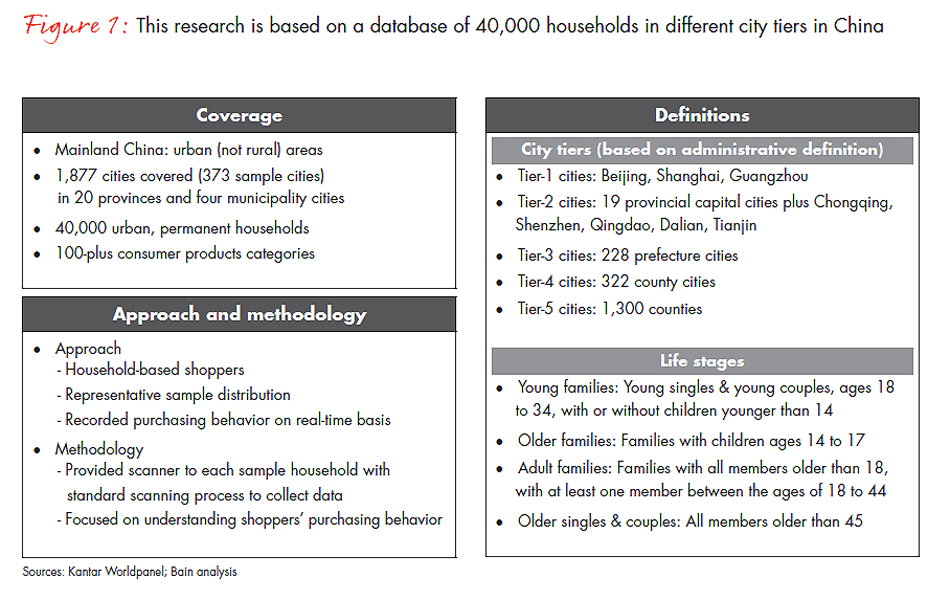
China has become the world’s biggest battleground for consumer goods sales as both multinational and local companies aggressively compete for shoppers with rising incomes. In this second follow-up to our main report, "What Chinese Shoppers Really Do But Will Never Tell You," published in June 2012, we explore the raging fight between multinational and domestic players, based on a joint study by Bain & Company and Kantar Worldpanel. In this study we analyzed the behavior of 40,000 Chinese households from 373 cities in 20 provinces and four major municipalities, providing a groundbreaking look at how much shoppers spend by region and by city in 26 important consumer products categories ranging from milk to shampoo. The comprehensive study covers all Chinese city tiers, categories in different development stages and shoppers’ life stages (see Figure 1).
The survey has helped us clearly understand the dimensions of the competition between foreign and local consumer products companies and reveals some key findings.
Current situation
Different positions of foreign and local brands across categories Foreign brands have introduced a number of new food and beverage categories to China, such as chocolate, chewing gum and carbonated soft drinks. Our study found that those foreign brands continue to lead in the categories that they introduced. For example, foreign brands dominate chewing gum with about an 85% market share and chocolate with a market share of more than 70%. In many ways, multinationals “own” these categories, and it’s imperative not to lose them. However, in more traditional food and beverage categories, like ready-to-drink tea and instant noodles, it’s the Chinese brands, including those from Taiwan and Hong Kong, that rule (see Figure 2).
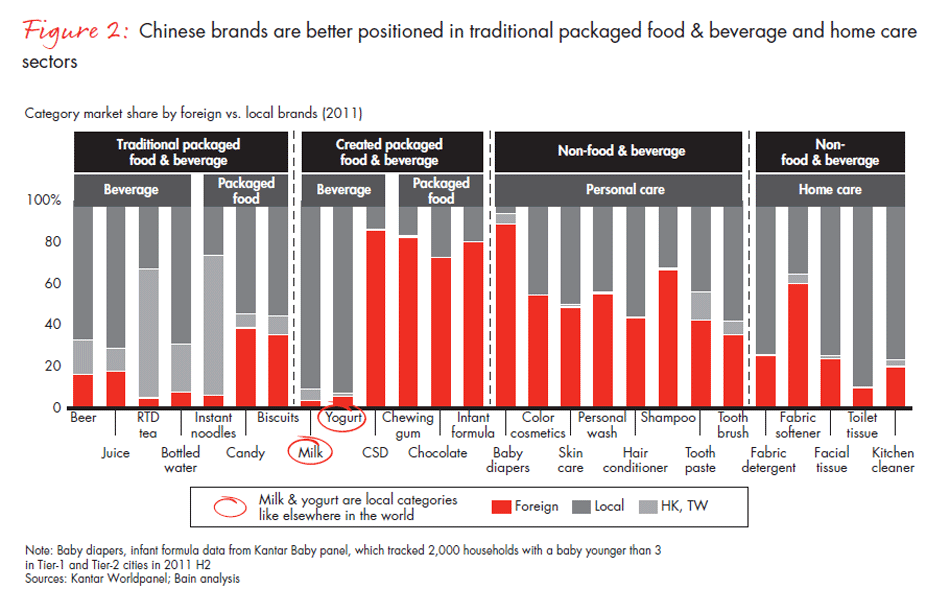
There are a number of reasons why local companies control market share for these categories. For one thing, local players have been more effective at developing products that appeal to local tastes. Also, because local companies have been selling these products for years, they have strong supply and distribution networks that ensure extensive product availability. Finally, there is the matter of “memory structure.” Local brands are strong in capturing Chinese shoppers’ tastes—these are preferences that they’ve developed over the years, as far back as childhood.
But foreign brands are gaining a solid foothold in two traditional Chinese categories: candy and biscuits (see Figure 3). In candy, Italy’s Alpenliebe achieved deep penetration of 34% in 2011, leading local brands with a 9.2% market share. It outpaced local competitors with a three-pronged approach: catering to local tastes by creating flavors such as Chinese herbs, litchi and honey; innovating easy-to-carry tube packages; and launching a wedding package to capture the needs for special occasions.
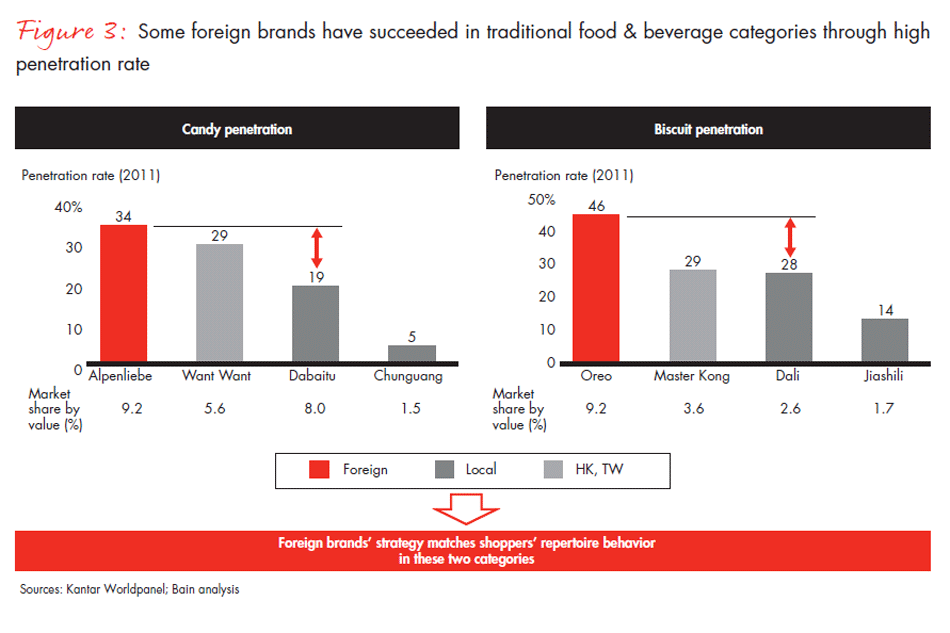
In biscuits, Kraft’s Oreo brand leapfrogged ahead of local brands by following a similar strategy, winning 46% penetration and 9.6% market share. Oreo used a lower-sugar recipe to adapt to local tastes and introduced trendy flavors such as matcha ice cream and double fruit. The brand marketed new ways for Chinese consumers to eat Oreos—such as dunking the cookies in milk—and introduced innovative “mini packages.”
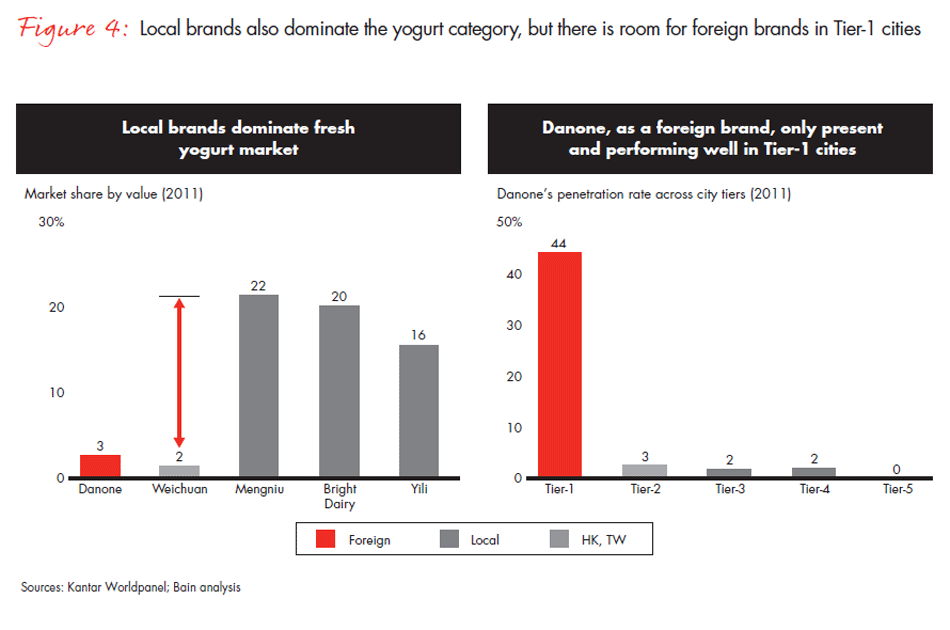
Milk and yogurt are unusual categories in that they tend to be dominated by local players everywhere in the world—and China is no exception. Domestic brands lead in the milk sector, controlling approximately 95% of the market, even though milk has only recently been introduced to the Chinese diet. Given the proximity requirements of milk sourcing, it is not surprising that local milk is more readily available throughout China and that this category is dominated by local brands. One of the reasons local yogurt makers have about 95% share is their ability to make the most of synergies with their large-scale milk businesses, including using their distribution network to penetrate Tier-3 to Tier-5 cities. But our survey found that while local companies will continue to control the majority of the market share in yogurt, there is room for global brands to grow, based on shopper behavior in Tier-1 cities. For example, consider the fresh yogurt segment, in which Danone achieved a 44% penetration rate in Tier-1 cities in 2011 (see Figure 4). Among the reasons they’re succeeding: Foreign brands are strong at selling in modern trade, which is prevalent in Tier-1 cities. Also, shoppers in Tier-1 cities can afford the higher prices often charged by foreign brands.
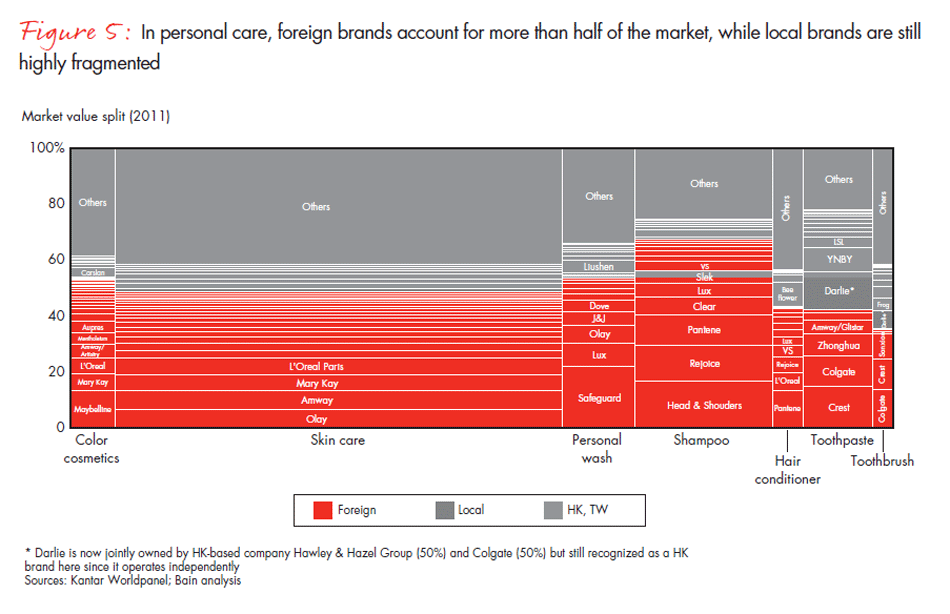
In non-food & beverage categories, foreign brands lead in the personal care sector, where they can leverage their global innovation and scale (see Figure 5).
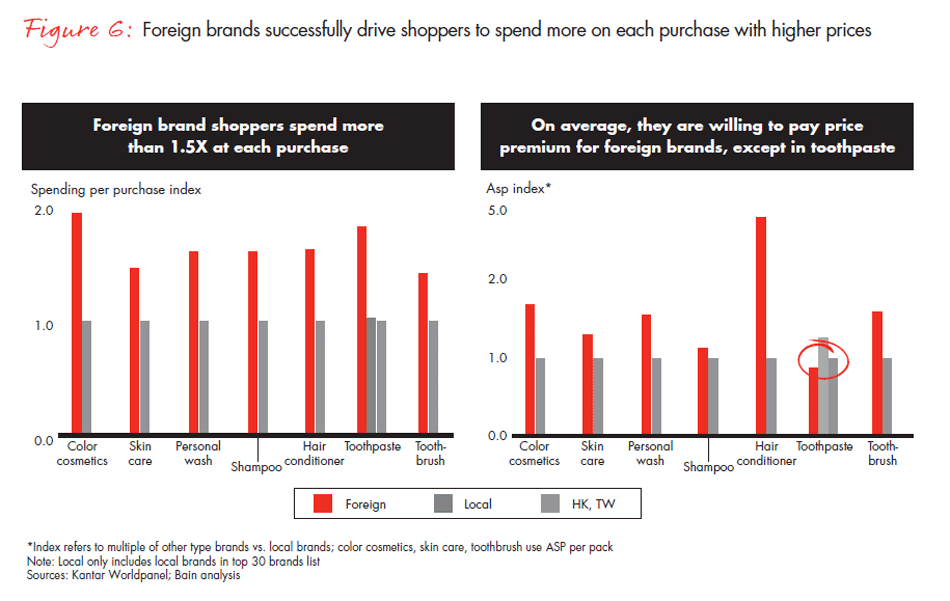
Based on our survey, foreign brands successfully get shoppers to spend an average 50% more on each purchase, paying a premium price over local brands (see Figure 6).
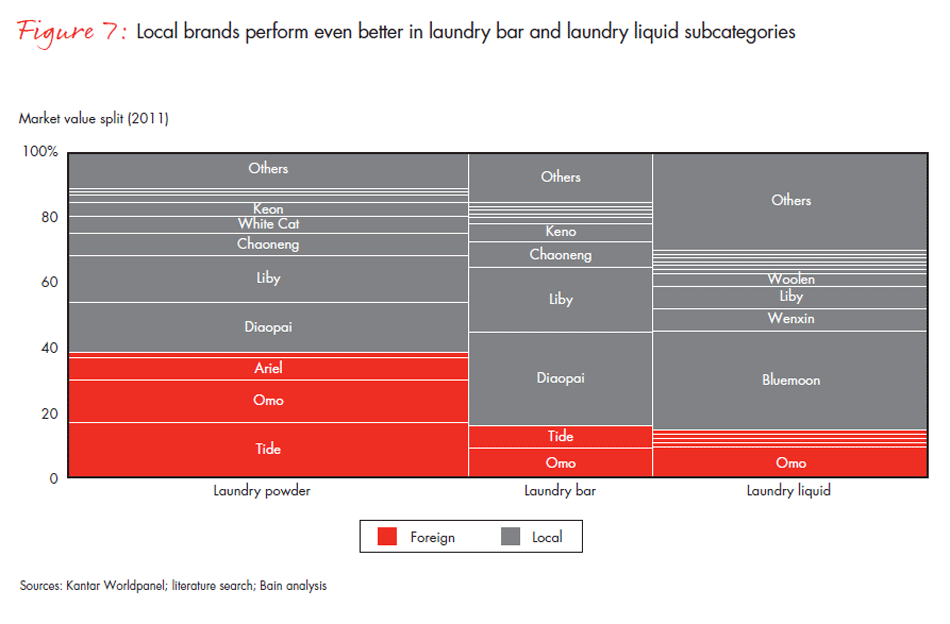
However, local brands dominate home care with more than an 80% market share, including fabric detergent (see Figure 7).
There are a number of reasons why domestic companies lead in home care. First, unlike many global brands, local brands tend to build dominance in one or two subcategories (for example, laundry powder only or laundry powder and soap). This reduced complexity gives them a clear advantage when it comes to salesforce execution and activation at the point of sale.
Second, local brands typically were launched before the development of modern trade. As a result, they have built strong distribution networks with third-party distributors that operate throughout the country, such as Liby. Distribution remains a critical competitive advantage for any companies to be successful in China, especially in Tier-3 to Tier-5 cities, where modern trade has not yet made a strong presence. For example, today Diaopai has a 60% penetration rate in Tier-3 to Tier-5 cities, compared with OMO’s 30% penetration rate.
Third, Chinese companies typically have more manufacturing plants throughout the country than their foreign counterparts. These plants provide a competitive advantage by making it cost-effective to distribute to remote cities.
And fourth, local brands have been good at exploiting product segments that were not targeted by global brands. For example, Diaopai started by selling laundry detergent in the laundry bar form in 1992, while OMO and Tide entered China focusing on powder. More recently, local brand Bluemoon launched a liquid version of fabric detergent in 2008, a year ahead of Unilever’s OMO and two years before Procter & Gamble’s Tide entered the segment. As a result, Bluemoon has achieved 30% market share and is the leader in laundry liquid today.
The future
Intensifying battles between foreign and local brands
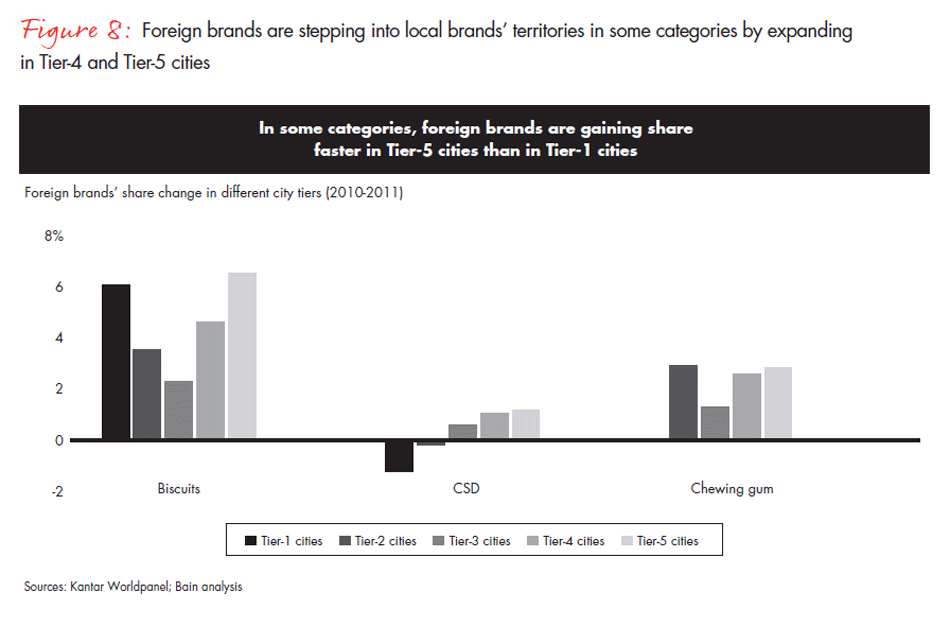
Foreign and local brands are breaking new ground by fighting face-to-face in some battlefields. Previously, they competed in different market segments, even if they were in the same category. Foreign brands served the high end, while locals catered to the low or mass market. Foreign brands focused on modern trade in Tier-1 and Tier-2 cities; local brands developed strong distribution networks in traditional trade. Now, as foreign brands move out of their comfort zone—modern trade in Tier-1 and Tier-2 cities— and enter the mass market, they’re confronting local players directly. They're expanding aggressively into Tier-3 to Tier-5 cities and often target similar market segments as local brands. For example, between 2010 and 2011, foreign brand biscuits gained more than 6% of market share in Tier-5 cities (see Figure 8).
Foreign brands also are competing within the same price segment in many categories, including beer, chewing gum and facial tissues (see Figure 9).
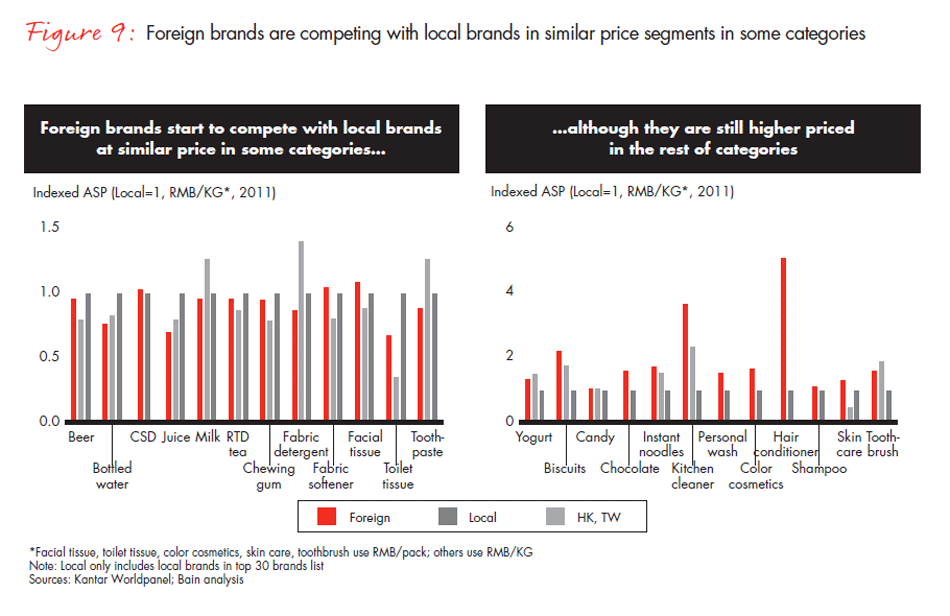
Meanwhile, local brands, like YNBY in toothpaste and Bluemoon in laundry detergent, are starting to enter the high end in different categories. They’re gaining traction by taking a page from foreign brands’ playbook and adopting multinationals’ traditional strategic strengths, including an emphasis on innovation. YNBY relied on its background in Chinese medicine to develop new formulas for oral problems such as gingivitis. It also is charging premium prices—RMB 28 per tube versus RMB 3–18 per tube for competing brands. Bluemoon played a typical global player’s game when it introduced laundry liquid: It focused on modern trade and Tier-1 and Tier-2 cities, with strong innovation and excellent in-store activation.
Implications
In the first two series of this report, we shared our findings about shoppers’ repertoire and loyalist behaviors. In our continuing analysis, we found no relationship between repertoire or loyalist behavior and whether a brand is foreign-owned or locally owned. Also, we found that both local and foreign brands are well positioned to succeed in China. Chinese shoppers love brands that they consider safe and trustworthy. In addition, except for well-recognized leading brands or imported products, they often can’t identify whether a brand is foreign or local at the point of sale. When a foreign brand is successful in China, it has little to do with its foreign status. More likely, it is the result of a multinational player using proven branding and activation techniques—the same techniques that can help a local company gain equal success.
Undeniably, the battle between foreign and local brands is more brutal than ever, and it will only intensify as successful local brands adopt global players’ strategies and as global brands continue their move into lower-tier cities and traditional trade. As they compete head-tohead, local and foreign competitors are learning each other’s strengths to gain market share. Of course, there’s a big first step to take before any company—foreign or local—can hope to succeed in China. Winning begins by clearly understanding the definition and type of category in which you compete.
About the authors
Bruno Lannes is a partner in Bain’s Shanghai office and leads the firm’s Consumer Products and Retail practices for Greater China. Mike Booker is a partner in Bain’s Singapore office and leads the firm’s Consumer Products and Retail practices for Asia-Pacific. Kevin Chong and Fiona Liu are partners in Bain’s Shanghai office. James Root is a partner in Bain’s Hong Kong office. Guy Brusselmans is a partner in Bain’s Brussels office.
Marcy Kou is managing director at Kantar Worldpanel Asia. Jason Yu is general manager at Kantar Worldpanel China.
Acknowledgments
This report is a joint effort between Bain & Company and Kantar Worldpanel. The authors extend gratitude to all who contributed to this report, in particular Hongfei Zheng, Victoria Lan, Iris Zhou and Jixuan Jiang from Bain & Company; Rachel Lee, Tina Qin and Tracy Zhuang from Kantar Worldpanel.
First published in 12月 2012