Skip to Content
  • オフィス

    オフィス

    北米・南米
    • Atlanta
    • Austin
    • Bogota
    • Boston
    • Buenos Aires
    • Chicago
    • Dallas
    • Denver
    • Houston
    • Los Angeles
    • Mexico City
    • Minneapolis
    • Monterrey
    • Montreal
    • New York
    • Rio de Janeiro
    • San Francisco
    • Santiago
    • São Paulo
    • Seattle
    • Silicon Valley
    • Toronto
    • Washington, DC
    ヨーロッパ・中東・アフリカ
    • Amsterdam
    • Athens
    • Berlin
    • Brussels
    • Copenhagen
    • Doha
    • Dubai
    • Dusseldorf
    • Frankfurt
    • Helsinki
    • Istanbul
    • Johannesburg
    • Kyiv
    • Lisbon
    • London
    • Madrid
    • Milan
    • Munich
    • Oslo
    • Paris
    • Riyadh
    • Rome
    • Stockholm
    • Vienna
    • Warsaw
    • Zurich
    アジア・オーストラリア
    • Bangkok
    • Beijing
    • Bengaluru
    • Brisbane
    • Ho Chi Minh City
    • Hong Kong
    • Jakarta
    • Kuala Lumpur
    • Manila
    • Melbourne
    • Mumbai
    • New Delhi
    • Perth
    • Shanghai
    • Singapore
    • Sydney
    • Tokyo
    全てのオフィス
  • アルムナイ
  • メディア
  • お問い合わせ
  • 東京オフィス
  • Japan | 日本語

    地域と言語を選択

    グローバル
    • Global (English)
    北米・南米
    • Brazil (Português)
    • Argentina (Español)
    • Canada (Français)
    • Chile (Español)
    • Colombia (Español)
    ヨーロッパ・中東・アフリカ
    • France (Français)
    • DACH Region (Deutsch)
    • Italy (Italiano)
    • Spain (Español)
    • Greece (Elliniká)
    アジア・オーストラリア
    • China (中文版)
    • Korea (한국어)
    • Japan (日本語)
  • Saved items (0)
    Saved items (0)

    You have no saved items.

    後で閲読、共有できるようにするためにブックマークしてください

    Explore Bain Insights
  • 業界別プラクティス
    メインメニュー

    業界別プラクティス

    • 航空宇宙、防衛、政府関連
    • 農業
    • 化学製品
    • インフラ、建設
    • 消費財
    • 金融サービス
    • ヘルスケア
    • 産業機械、設備
    • メディア、エンターテインメント
    • 金属
    • 採掘・鉱業
    • 石油、ガス
    • 紙、パッケージ
    • プライベートエクイティ
    • 公共、社会セクター
    • 小売
    • テクノロジー
    • 通信
    • 交通
    • 観光産業
    • 公益事業、再生可能エネルギー
  • 機能別プラクティス
    メインメニュー

    機能別プラクティス

    • カスタマー・エクスペリエンス
    • サステイナビリティ、 社会貢献
    • Innovation
    • 企業買収、合併 (M&A)
    • オペレーション
    • 組織
    • プライベートエクイティ
    • マーケティング・営業
    • 戦略
    • アドバンスド・アナリティクス
    • Technology
    • フルポテンシャル・トランスフォーメーション
  • Digital
  • 知見/レポート
  • ベイン・アンド・カンパニーについて
    メインメニュー

    ベイン・アンド・カンパニーについて

    • ベインの信条
    • 活動内容
    • 社員とリーダーシップ
    • プレス・メディア情報
    • クライアントの結果
    • 受賞歴
    • パートナーシップを結んでいる団体
    Further: Our global responsibility
    • ダイバーシティ
    • 社会貢献
    • サステイナビリティへの取り組み
    • 世界経済フォーラム(WEF)
    Learn more about Further
  • キャリア
    メインメニュー

    キャリア

    • ベインで働く
      キャリア
      ベインで働く
      • Find Your Place
      • ベインで活躍する機会
      • ベインのチーム体制
      • 学生向けページ
      • インターンシップ
      • 採用イベント
    • ベインでの体験
      キャリア
      ベインでの体験
      • Blog: Inside Bain
      • キャリアストーリー
      • 社員紹介
      • Where We Work
      • 成長を後押しするサポート体制
      • アフィニティ・グループ
      • 福利厚生
    • Impact Stories
    • 採用情報
      キャリア
      採用情報
      • 採用プロセス
      • 面接内容
    FIND JOBS
  • オフィス
    メインメニュー

    オフィス

    • 北米・南米
      オフィス
      北米・南米
      • Atlanta
      • Austin
      • Bogota
      • Boston
      • Buenos Aires
      • Chicago
      • Dallas
      • Denver
      • Houston
      • Los Angeles
      • Mexico City
      • Minneapolis
      • Monterrey
      • Montreal
      • New York
      • Rio de Janeiro
      • San Francisco
      • Santiago
      • São Paulo
      • Seattle
      • Silicon Valley
      • Toronto
      • Washington, DC
    • ヨーロッパ・中東・アフリカ
      オフィス
      ヨーロッパ・中東・アフリカ
      • Amsterdam
      • Athens
      • Berlin
      • Brussels
      • Copenhagen
      • Doha
      • Dubai
      • Dusseldorf
      • Frankfurt
      • Helsinki
      • Istanbul
      • Johannesburg
      • Kyiv
      • Lisbon
      • London
      • Madrid
      • Milan
      • Munich
      • Oslo
      • Paris
      • Riyadh
      • Rome
      • Stockholm
      • Vienna
      • Warsaw
      • Zurich
    • アジア・オーストラリア
      オフィス
      アジア・オーストラリア
      • Bangkok
      • Beijing
      • Bengaluru
      • Brisbane
      • Ho Chi Minh City
      • Hong Kong
      • Jakarta
      • Kuala Lumpur
      • Manila
      • Melbourne
      • Mumbai
      • New Delhi
      • Perth
      • Shanghai
      • Singapore
      • Sydney
      • Tokyo
    全てのオフィス
  • アルムナイ
  • メディア
  • お問い合わせ
  • 東京オフィス
  • Japan | 日本語
    メインメニュー

    地域と言語を選択

    • グローバル
      地域と言語を選択
      グローバル
      • Global (English)
    • 北米・南米
      地域と言語を選択
      北米・南米
      • Brazil (Português)
      • Argentina (Español)
      • Canada (Français)
      • Chile (Español)
      • Colombia (Español)
    • ヨーロッパ・中東・アフリカ
      地域と言語を選択
      ヨーロッパ・中東・アフリカ
      • France (Français)
      • DACH Region (Deutsch)
      • Italy (Italiano)
      • Spain (Español)
      • Greece (Elliniká)
    • アジア・オーストラリア
      地域と言語を選択
      アジア・オーストラリア
      • China (中文版)
      • Korea (한국어)
      • Japan (日本語)
  • Saved items  (0)
    メインメニュー
    Saved items (0)

    You have no saved items.

    後で閲読、共有できるようにするためにブックマークしてください

    Explore Bain Insights
  • 業界別プラクティス
    • 業界別プラクティス

      • 航空宇宙、防衛、政府関連
      • 農業
      • 化学製品
      • インフラ、建設
      • 消費財
      • 金融サービス
      • ヘルスケア
      • 産業機械、設備
      • メディア、エンターテインメント
      • 金属
      • 採掘・鉱業
      • 石油、ガス
      • 紙、パッケージ
      • プライベートエクイティ
      • 公共、社会セクター
      • 小売
      • テクノロジー
      • 通信
      • 交通
      • 観光産業
      • 公益事業、再生可能エネルギー
  • 機能別プラクティス
    • 機能別プラクティス

      • カスタマー・エクスペリエンス
      • サステイナビリティ、 社会貢献
      • Innovation
      • 企業買収、合併 (M&A)
      • オペレーション
      • 組織
      • プライベートエクイティ
      • マーケティング・営業
      • 戦略
      • アドバンスド・アナリティクス
      • Technology
      • フルポテンシャル・トランスフォーメーション
  • Digital
  • 知見/レポート
  • ベイン・アンド・カンパニーについて
    • ベイン・アンド・カンパニーについて

      • ベインの信条
      • 活動内容
      • 社員とリーダーシップ
      • プレス・メディア情報
      • クライアントの結果
      • 受賞歴
      • パートナーシップを結んでいる団体
      Further: Our global responsibility
      • ダイバーシティ
      • 社会貢献
      • サステイナビリティへの取り組み
      • 世界経済フォーラム(WEF)
      Learn more about Further
  • キャリア
    人気検索キーワード
    • デジタル
    • 戦略
    前回の検索
      最近訪れたページ

      Content added to saved items

      Saved items (0)

      Removed from saved items

      Saved items (0)

      レポート

      Barriers and Pathways to Sustainable Growth: Harnessing the Power of the Founder's Mentality

      Barriers and Pathways to Sustainable Growth: Harnessing the Power of the Founder's Mentality

      Some companies have been able to anticipate and address the internal obstacles to growth.

      著者:Chris Zook and James Allen

      • min read
      }

      レポート

      Barriers and Pathways to Sustainable Growth: Harnessing the Power of the Founder's Mentality
      en

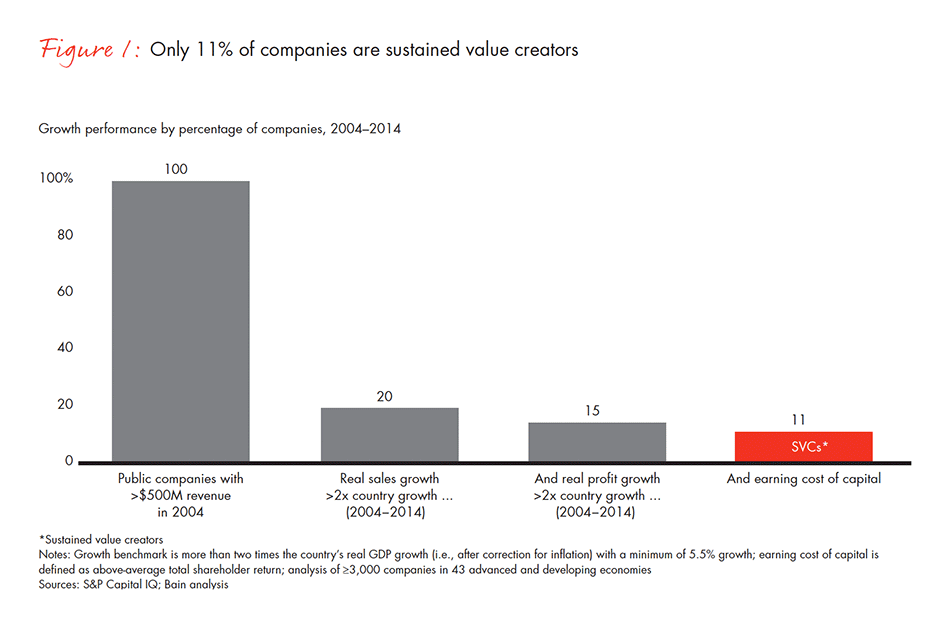
      All companies need to grow profitably in order to succeed. But only 11% of companies manage to grow profits and revenues by 5.5% or more over a 10-year period, and earn back their cost of capital. That’s a sobering statistic for company leaders, directors, employees and investors.

      This report, based in part on Bain & Company’s 18-year longitudinal study of sustained value creators, two global surveys of senior executives and extensive interviews, addresses the following questions:

      • What are the primary barriers and challenges that companies face today in their pursuit of sustained and profitable growth? How does this vary across stages of their life cycles?
      • What distinguishes the companies that are able to anticipate and address these challenges most successfully from those that fail to achieve their goals?
      • Are successful companies set up internally in a fundamentally different way, which allows them to react to challenges and adapt to opportunities better and faster than those that fall short? Do these differences trace back to the founding of the company and its deep fundamentals?
      • Why is it that companies seem to mature at such different rates? Some stay flexible, open minded and innovative, and are excellent at attracting and retaining young talent; yet, others slow down, descend into bureaucracies, fall behind the innovation curve, and have difficulty attracting and holding talent.
      • How can leaders use these insights to address the predictable crises of growth or to renew their organizations?

      Key findings


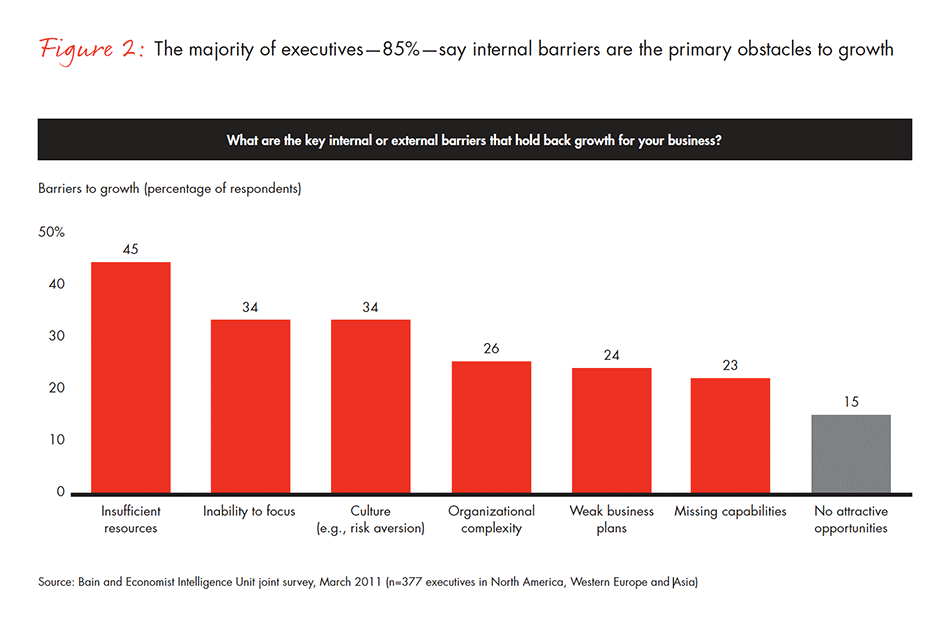
      Eighty-five percent of the executives we surveyed, and a full 94% of those running companies with more than $5 billion in revenue, said that internal obstacles, not external ones, keep their companies from growing profitably. Only a small percentage blamed external factors, such as unfairly advantaged competitors, government regulations and subsidies, inaccessible technologies and market conditions that did not offer growth opportunities.

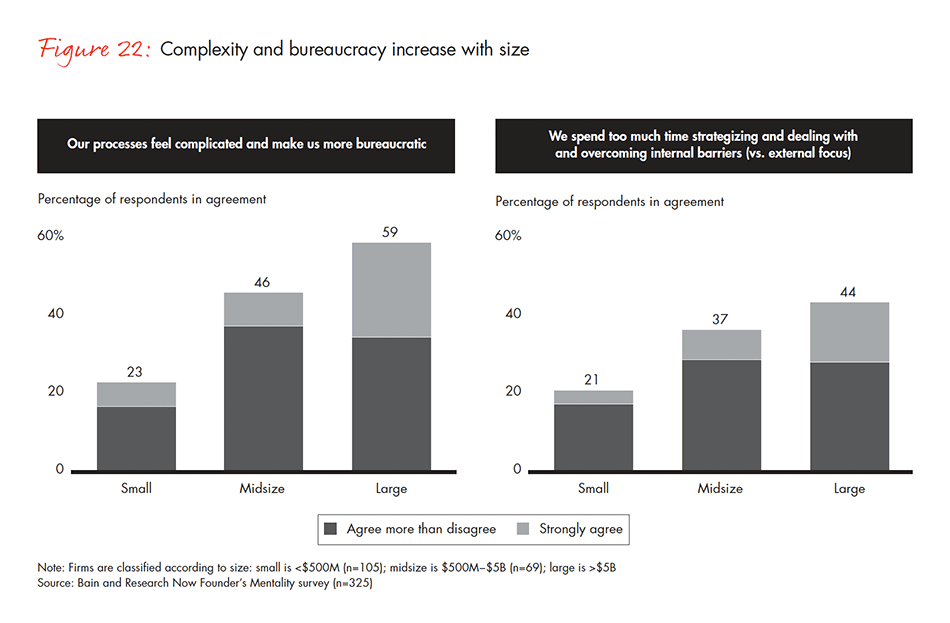
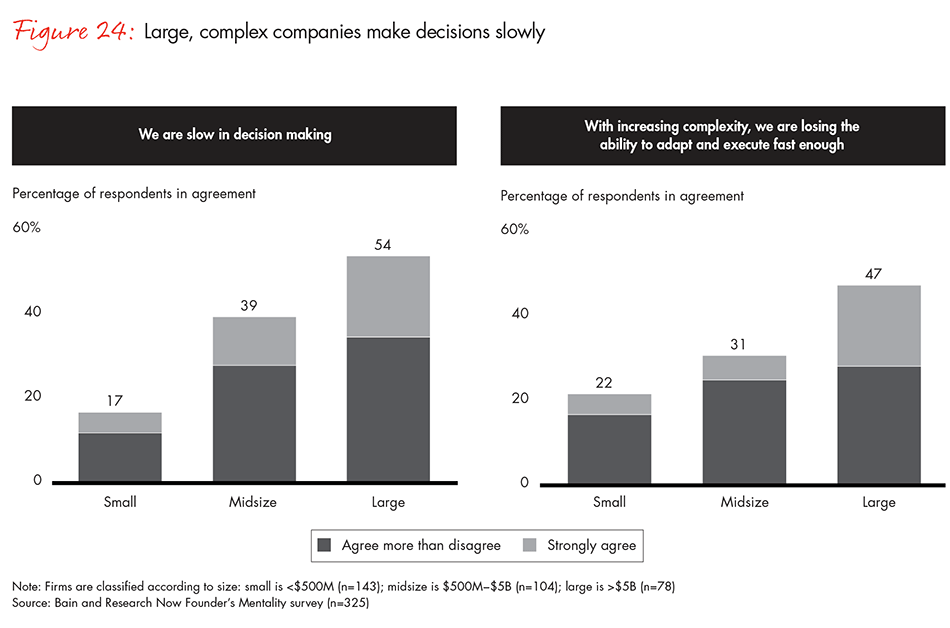
      The primary internal barriers to growth cited by executives included revenues growing faster than talent, increasing distance from the customer with growth, complexity of decision making slowing the company down, inability to choose focus and direction, and difficulty mobilizing resources. All of these challenges increase with company size and complexity, and we refer to this as the “paradox of growth”: Growth creates complexity, and complexity is the silent killer of profitable growth.

      The Founder's Mentality Survey

      How real is the distinction between scale insurgent and struggling bureaucracy? Explore by the numbers.

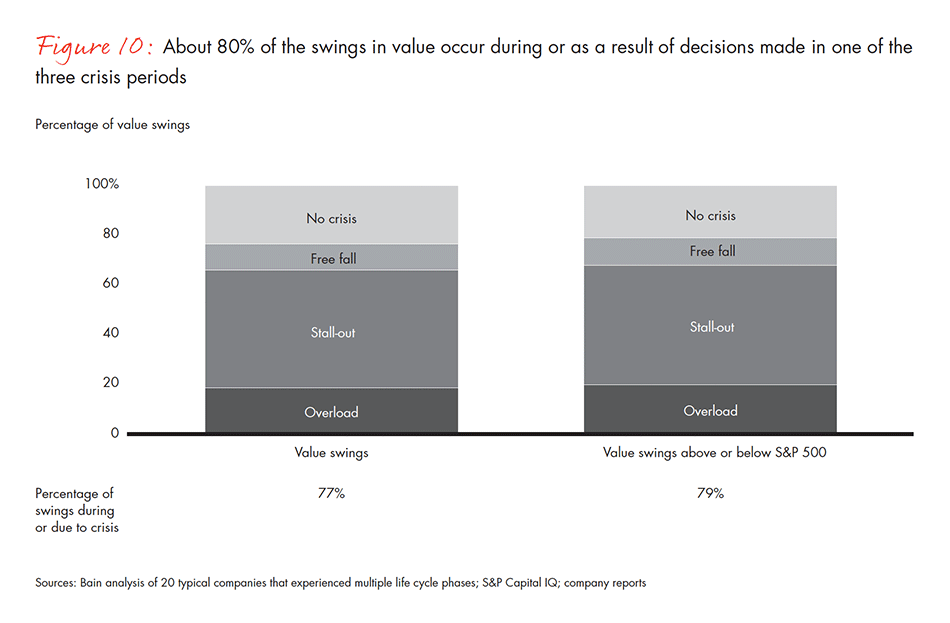
      About 80% of the major swings in market value for companies occur as a result of decisions made and actions taken during three types of predictable crises that companies encounter (sometimes multiple times) during the course of their life cycle. These are the crises of overload, which typically occurs during a rapid scale-up period (five to ten times); stall-out, when the growth engine in a mature company loses momentum; and free fall, when a company’s business model no longer works and performance declines sharply.

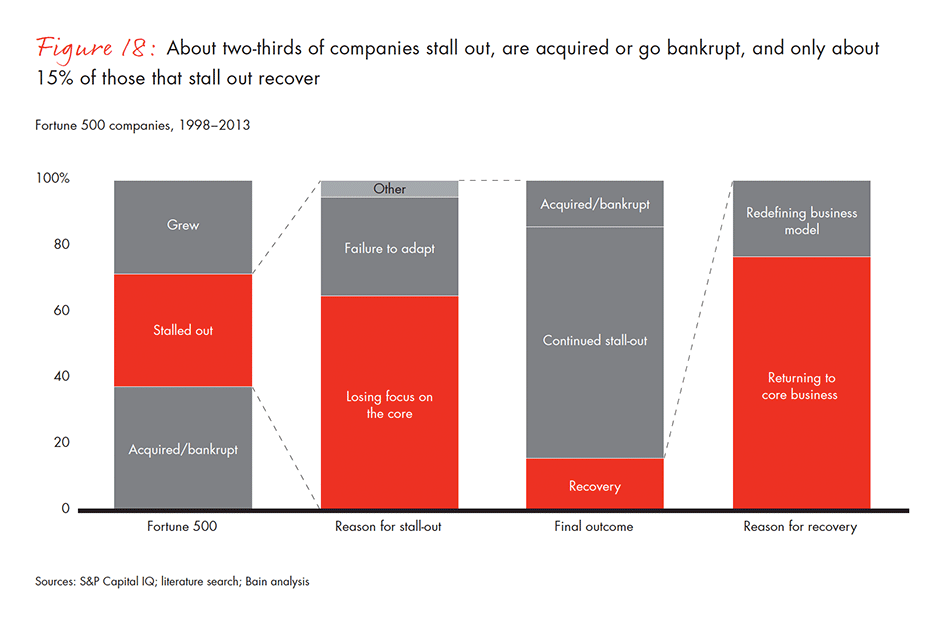
      • Two out of three large companies (worth $5 billion or more) will stall out, go bankrupt, be acquired or break into pieces in the next 15 years. Only one in seven recover their past momentum. Stall-out happens fast and is hard to reverse.
      • About 5% to 7% of companies are in free fall or about to tip into it at any one time; of those, only 10% to 15% will recover and redefine their business models successfully.

      The Founder’s Mentality defined


      Many of the companies that surmount these challenges of growth and demonstrate higher levels of business and financial performance have maintained attitudes and behaviors most commonly found in young companies run by strong, successful founders. These attitudes and behaviors are specific and observable. We call them the “Founder’s Mentality.” Companies that maintain these traits as they grow tend to move and adapt faster, be more open-minded, and anticipate and adapt to the future better than those that lose the Founder’s Mentality as they age.

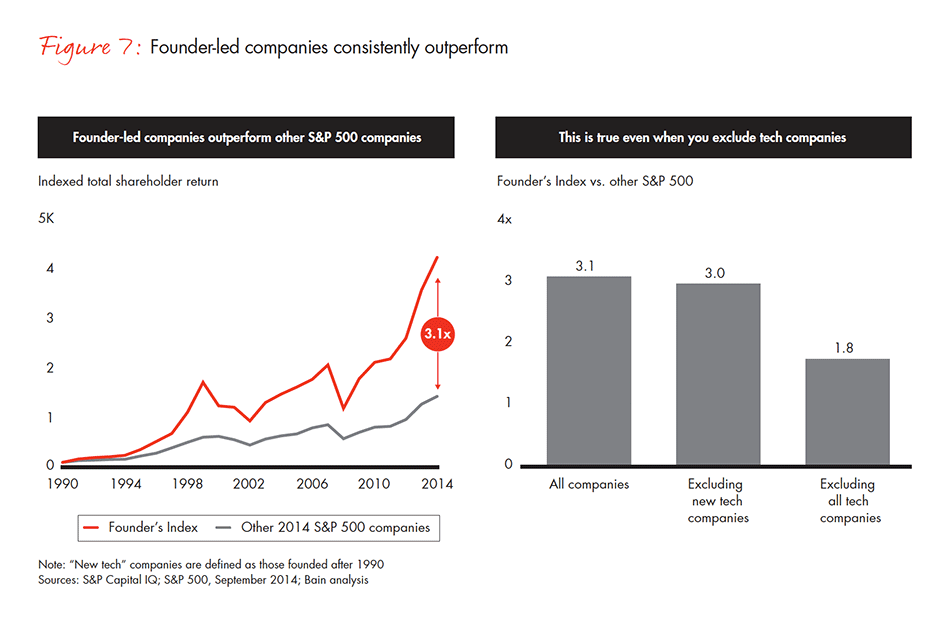
      • Since 1990, returns to shareholders in public companies where the founder is still involved are three times higher than in other companies.
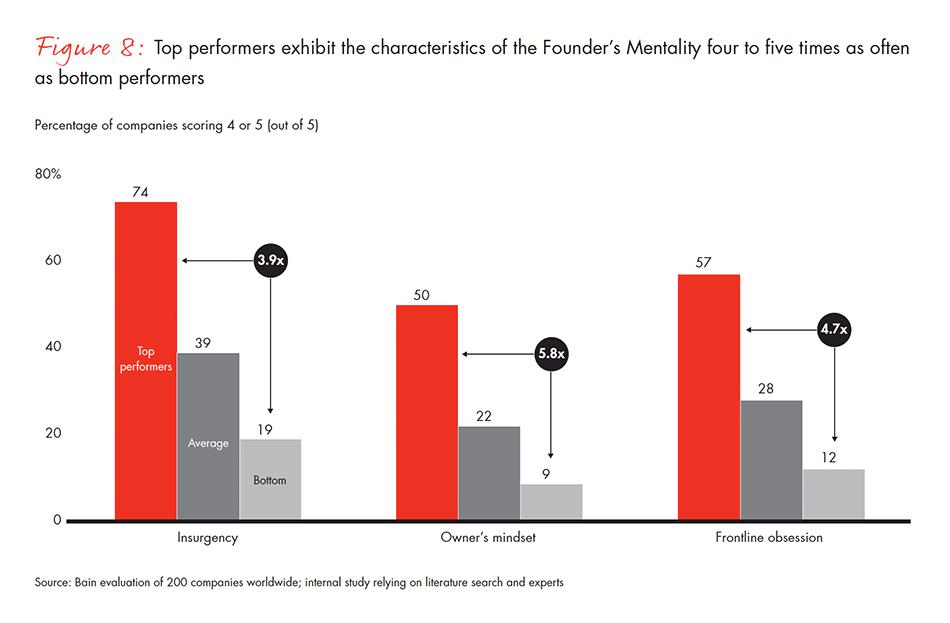
      • Companies that are in the top 20% in terms of performance, regardless of whether they are still founder-led or not, are four or five times more likely to exhibit the attributes of the Founder’s Mentality than the bottom 20%.

      Through our research, we have identified three primary traits of the Founder’s Mentality:

      • The first is a sense of insurgent mission, characterized by a sense of higher purpose, a long-term horizon, and a few spikes in capabilities and assets that make a company special and are the centerpiece of its business model.
      • The second is an obsession with the front line, characterized by an intellectual curiosity about every detail of the customer experience and of how everything in the business works. Executives use instincts formed at the ground level to make every decision; frontline employees are empowered and are the heroes of the business; and the customer voice is central to all decisions.
      • The third is an owner’s mindset, characterized by a powerful sense of responsibility for employees, customers, products and decisions; an antipathy to bureaucracy; and a bias toward speed in decisions and actions.

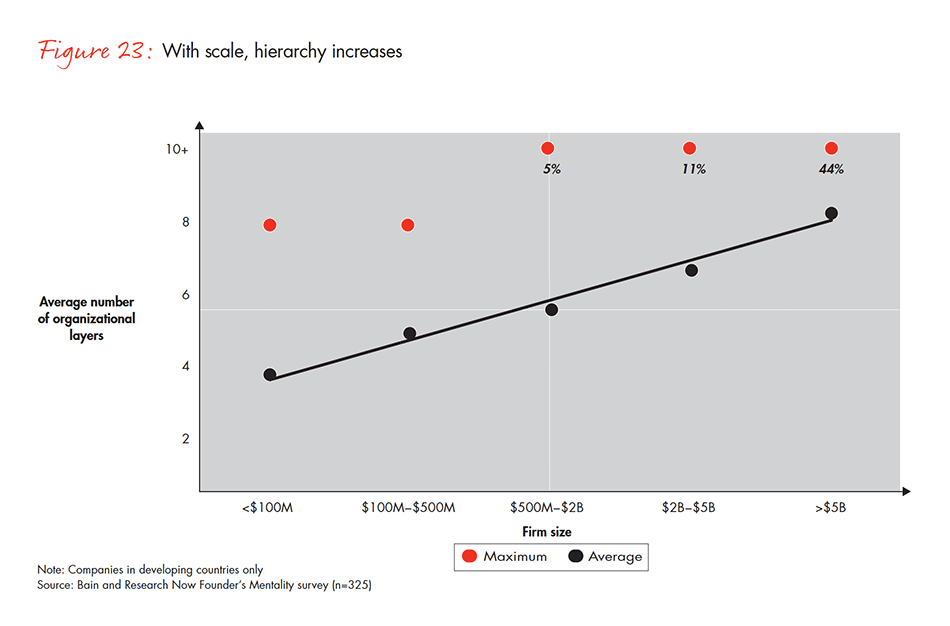
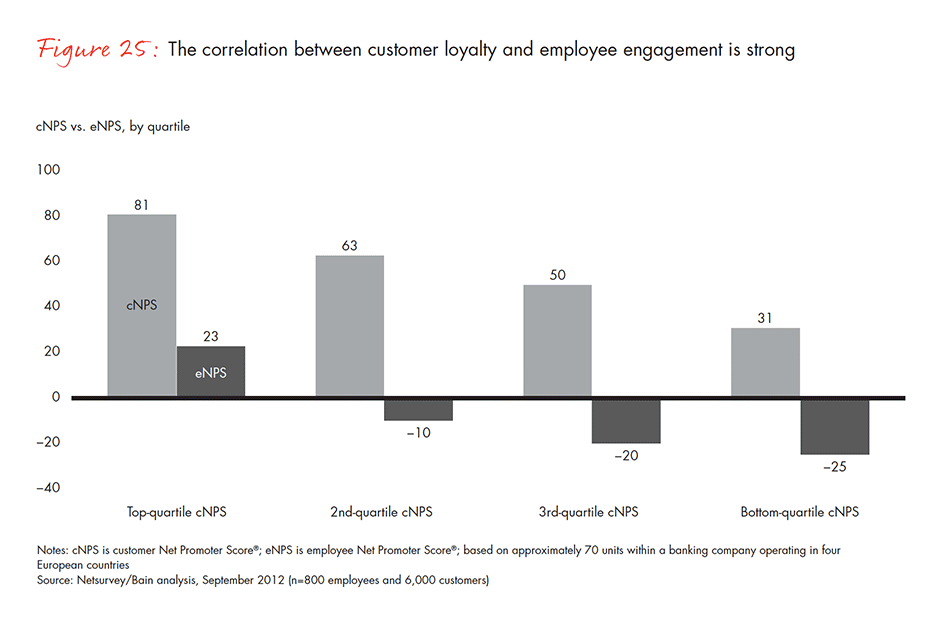
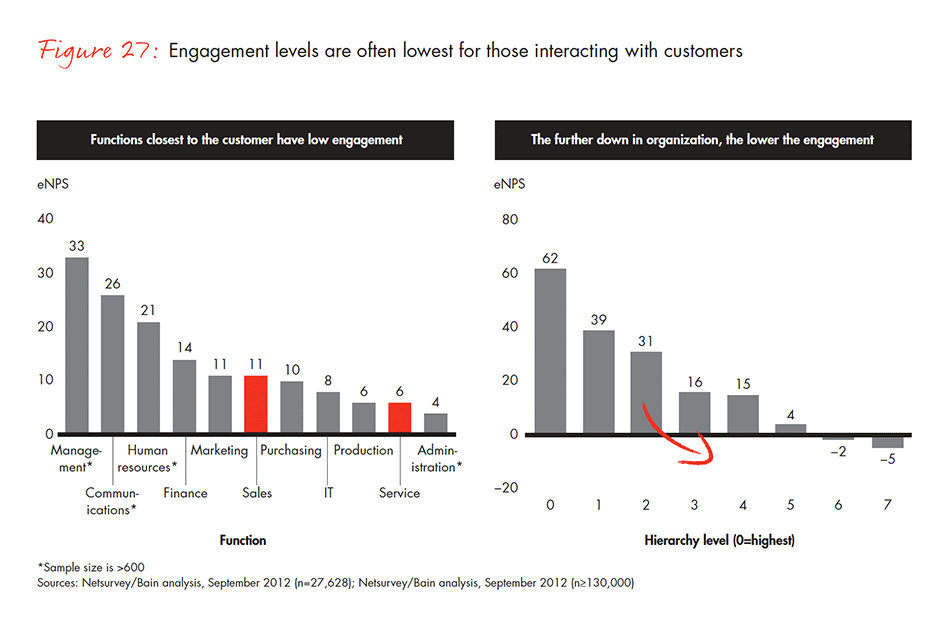
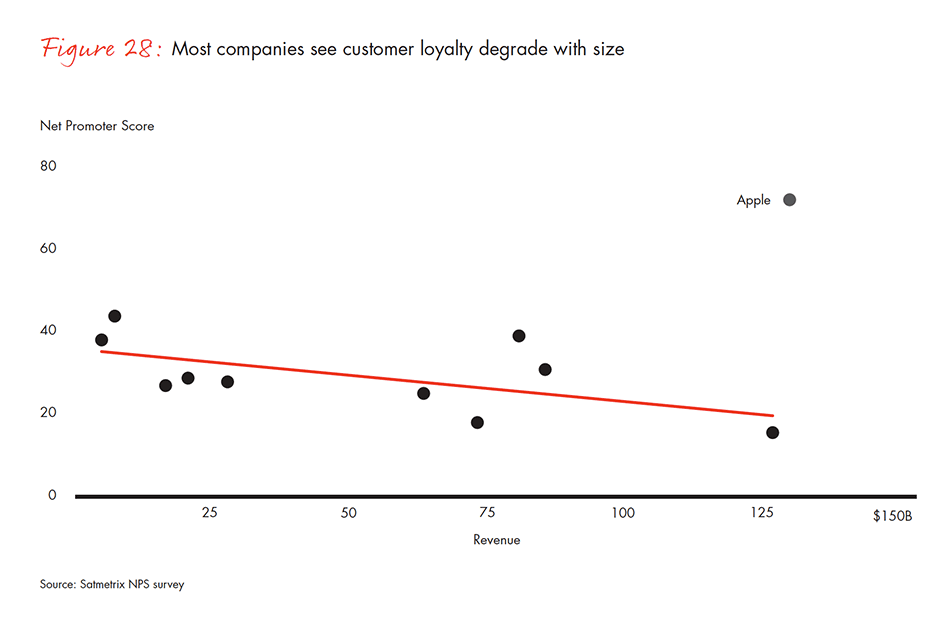
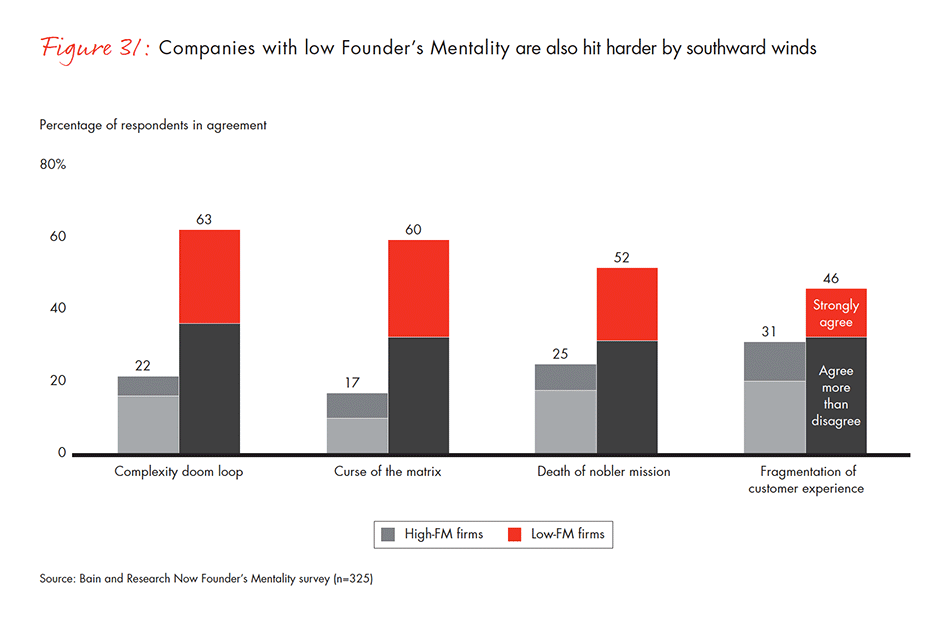
      The Founder’s Mentality tends to decline as companies grow in scale and become more mature. Layers form, increasing distance from leaders to the front line. Customer and employee loyalty and engagement tend to decline. Speed of decision making declines with size. We have identified eight forces that erode the Founder’s Mentality and the advantages of size as companies scale. We call these forces the westward winds and the southward winds. They are defined in more detail in our study.

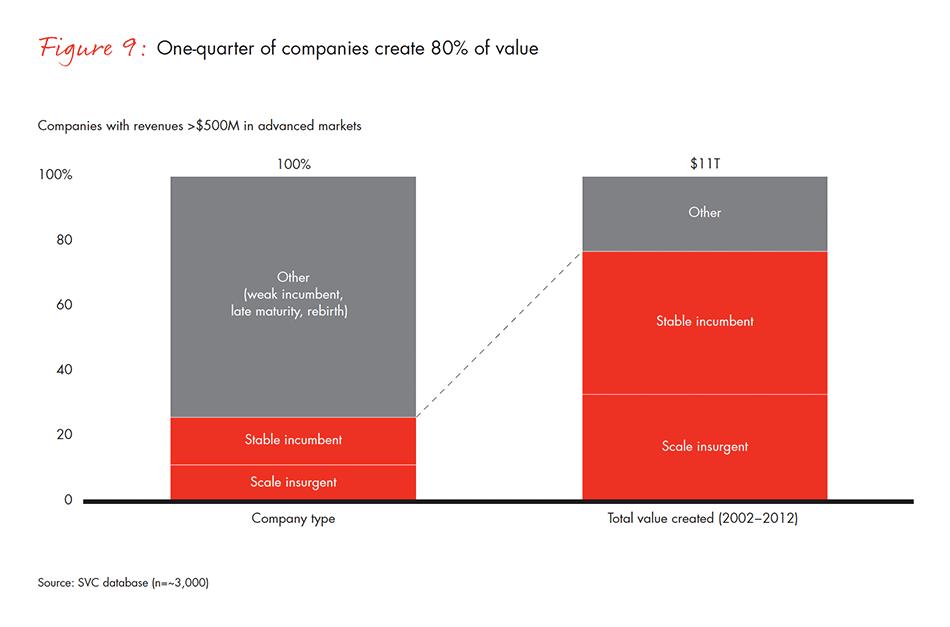
      By contrast, cultivating these three traits—the insurgent mission, the frontline obsession and the owner’s mindset—helps companies overcome the crises of growth. It puts them on the path to what we call scale insurgency, a state in which companies have grown to scale and achieved a position of leadership while maintaining the many benefits of the Founder’s Mentality. Scale insurgents represent more than 50% of net value created in the stock market. These companies, about 7% of the total, achieve both scale and high levels of the Founder’s Mentality at the same time.

      Inside the Founder's Mentality

      Explore how companies that nurture and maintain three key traits are more likely to sustain growth.

      1. The growth paradox


      • Only 11% of companies are “sustained value creators”—companies that manage to achieve more than a modest level of profitable growth while earning their cost of capital over the course of a decade.
      • 85% of executives surveyed cited internal barriers, not external barriers, as the primary obstacles to growth.
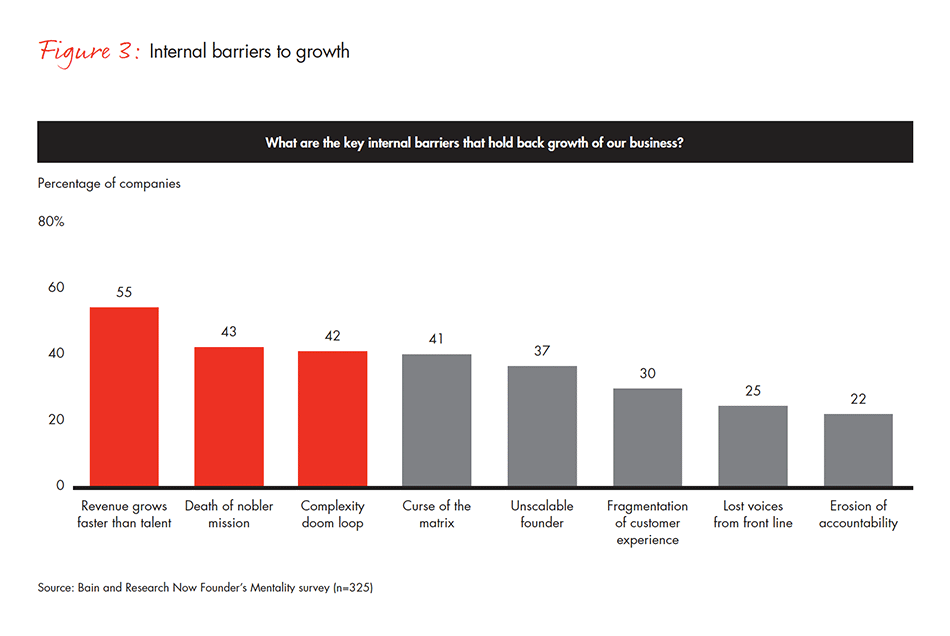
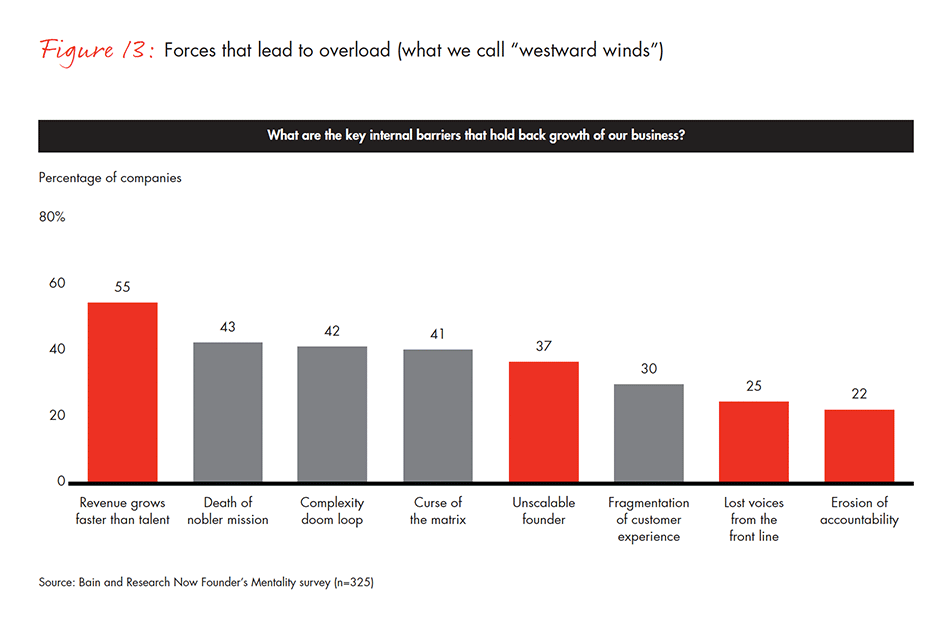
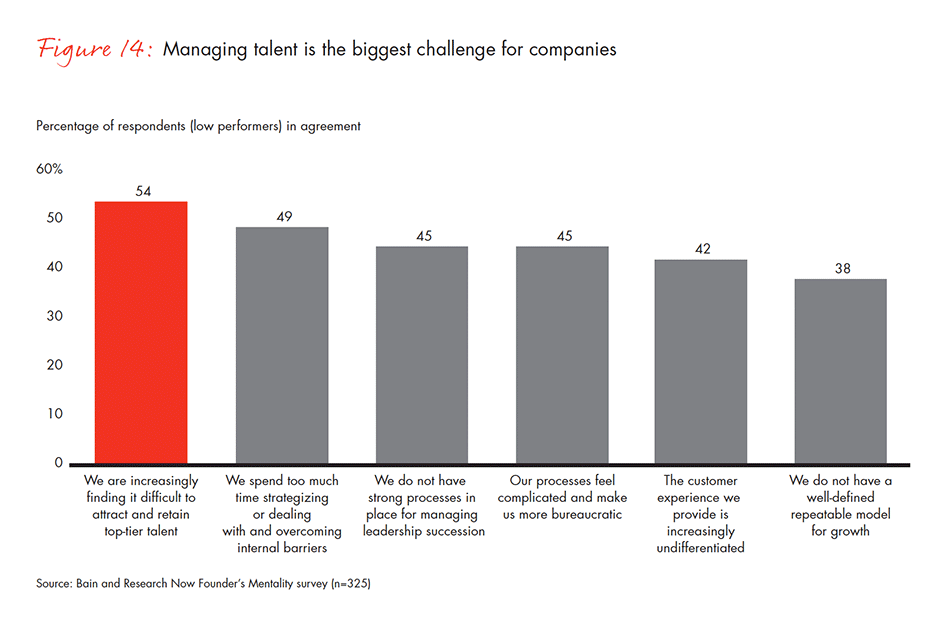
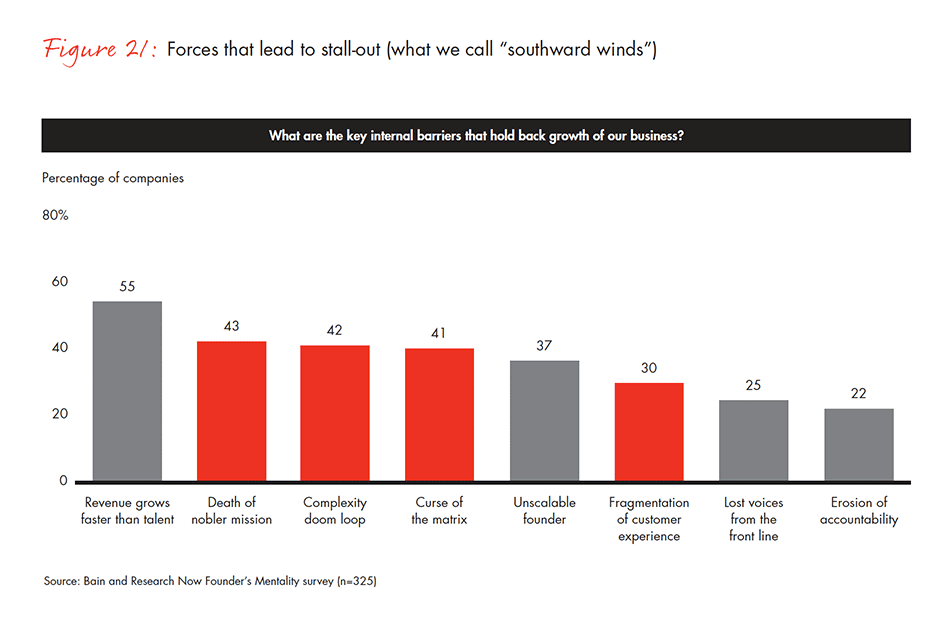
      • The biggest internal barriers are the problems created when revenue grows faster than talent (55%); the loss of a sense of higher mission (43%); and the sluggishness and bureaucratic rigidity that accompany size and complexity.
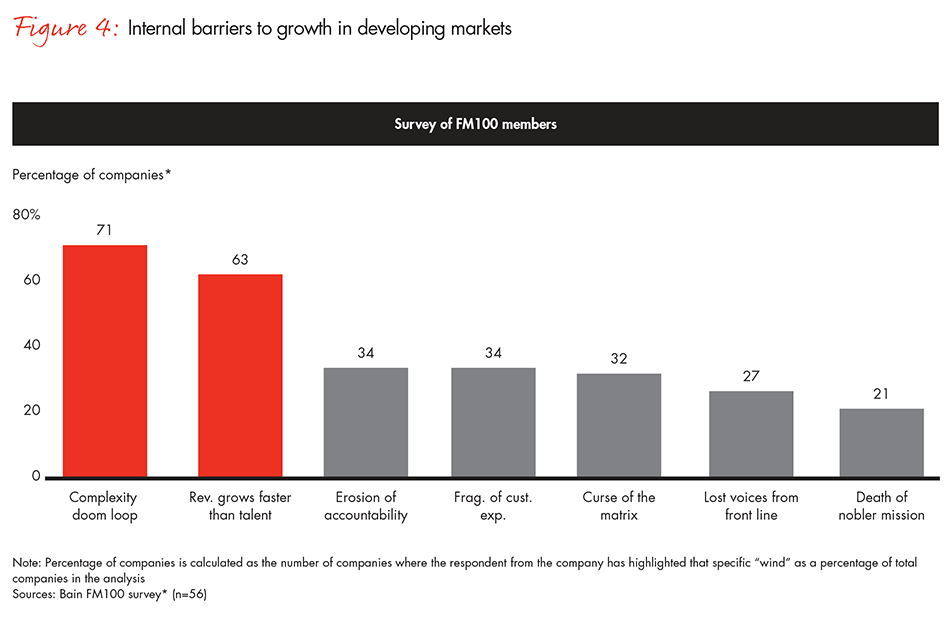
      • Leaders of 56 companies in developing markets cited two major causes leading to internal barriers: the problems that accompany size and complexity (71%) and revenues growing faster than talent (63%).
      barriers-and-pathways-to-sustainable-growth-fig-01_embed

      barriers-and-pathways-to-sustainable-growth-fig-02_embed

      barriers-and-pathways-to-sustainable-growth-fig-03_embed

      barriers-and-pathways-to-sustainable-growth-fig-04_embed

      2. The Founder’s Mentality


      • Most companies that achieve sustainable growth are run with “the Founder’s Mentality”—a set of motivating attitudes and behaviors that can usually be traced back to a bold, ambitious founder.
      • Since 1990, founder-led companies have consistently outperformed other S&P 500 companies. From 1990 to 2014, they performed 3.1 times better.
      • Even when we exclude tech companies, founder-led companies outperformed other S&P 500 companies by 1.8 times from 1990 to 2014.
      • The most sustainably profitable companies exhibit the characteristics of the Founder’s Mentality four to five times as often as lower performers.
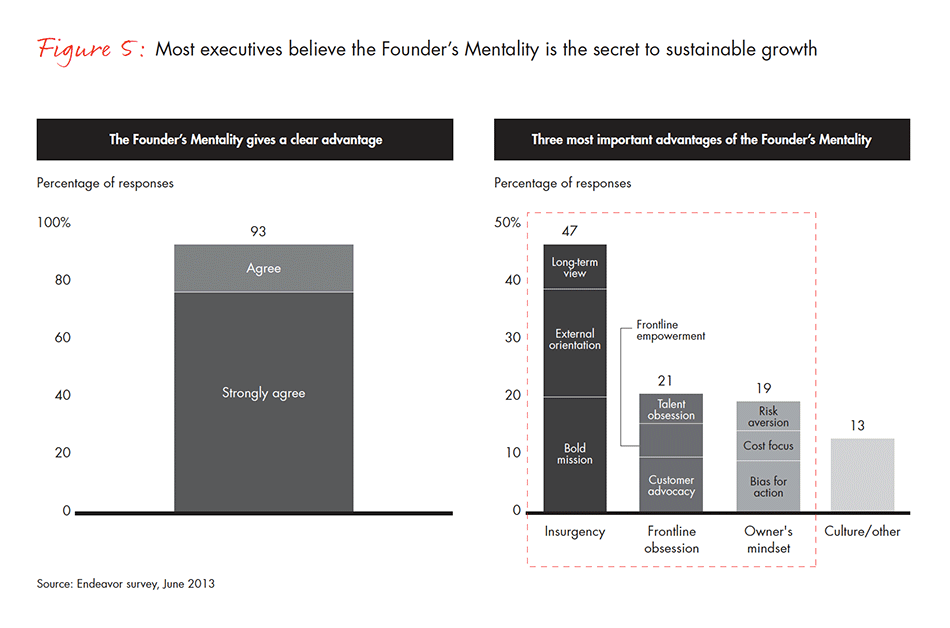
      • 93% of entrepreneurs surveyed consider the Founder’s Mentality a huge competitive advantage.
      • As confirmed by surveys, the Founder’s Mentality consists of three main traits: a sense of insurgent mission, an obsession with the front line and an owner’s mindset.
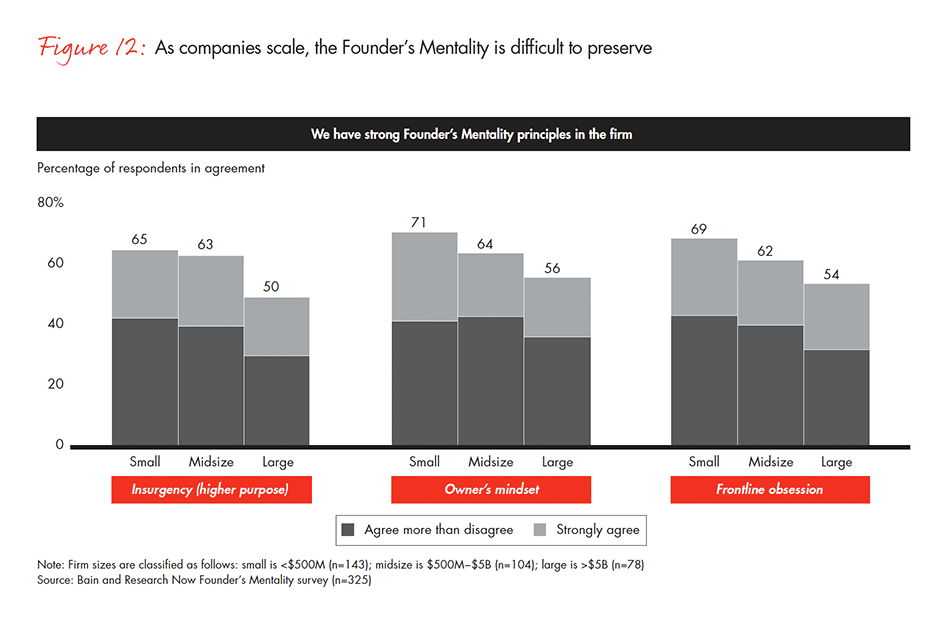
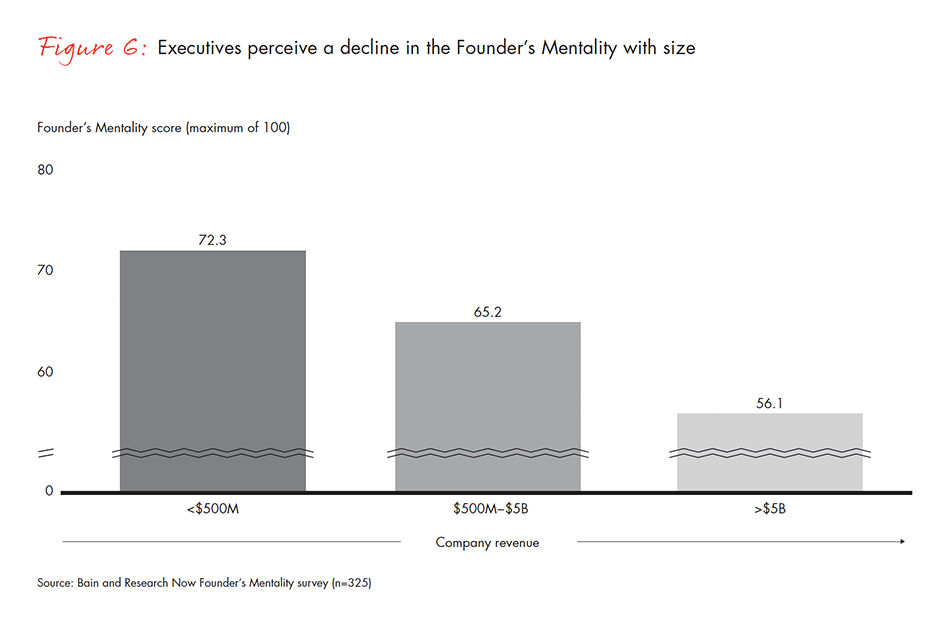
      • Executives perceive a significant decline in the Founder’s Mentality with size. The Founder’s Mentality score drops dramatically from companies with revenues of $500 million or less (72.3/100) to companies with revenues of $5 billion or more (56.1/100).
      barriers-and-pathways-to-sustainable-growth-fig-05_embed

      barriers-and-pathways-to-sustainable-growth-fig-06_embed

      barriers-and-pathways-to-sustainable-growth-fig-07_embed

      barriers-and-pathways-to-sustainable-growth-fig-08_embed

      3. The crises of growth


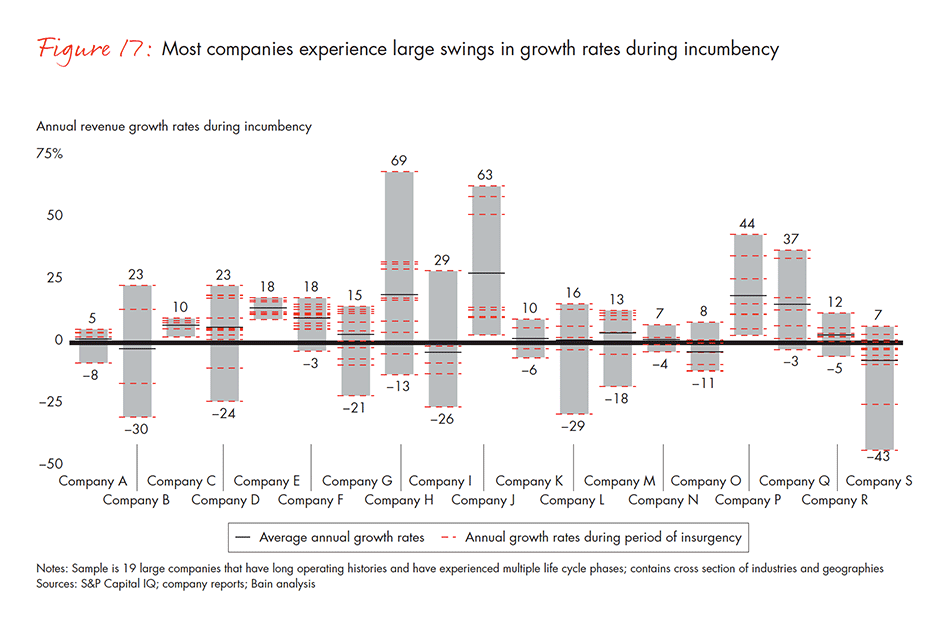
      • About 80% of the swings in value for companies occur during or as a result of decisions made in one of three crisis periods: overload (the crisis of youth), stall-out (the crisis of incumbency) and free fall (the crisis of late maturity). Focusing on the Founder’s Mentality helps companies survive all three.
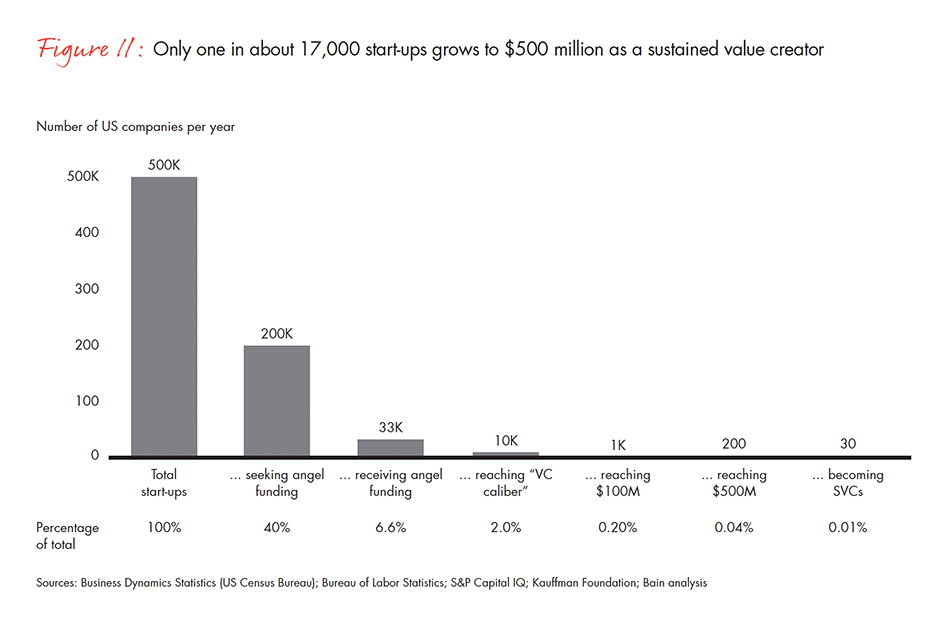
      • Only one in 17,000 companies will grow to $500 million and become a sustained value creator because of the bottlenecks, systems breakdowns and complexity that accompany growth and lead to overload.
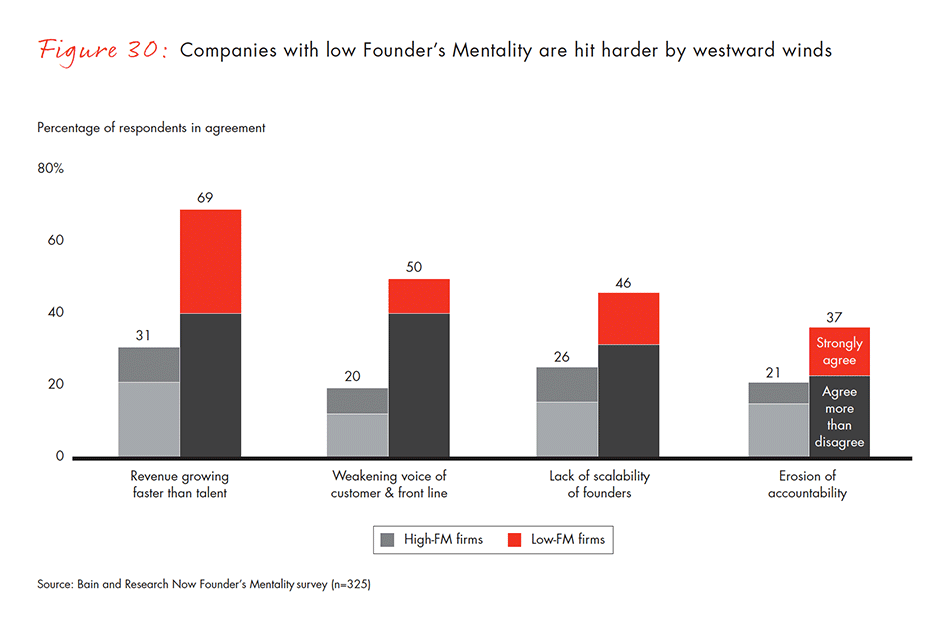
      • Executives surveyed cite a series of predictable forces that contribute to overload that include revenue growing faster than talent (55%), an unscalable founder (37%), lost voices from the front line (25%) and the erosion of accountability (22%).
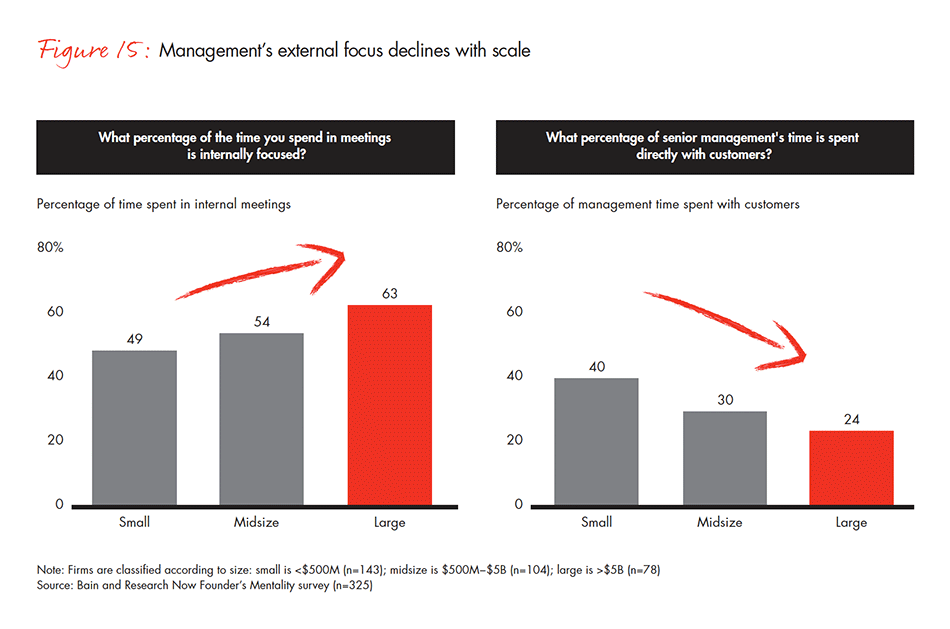
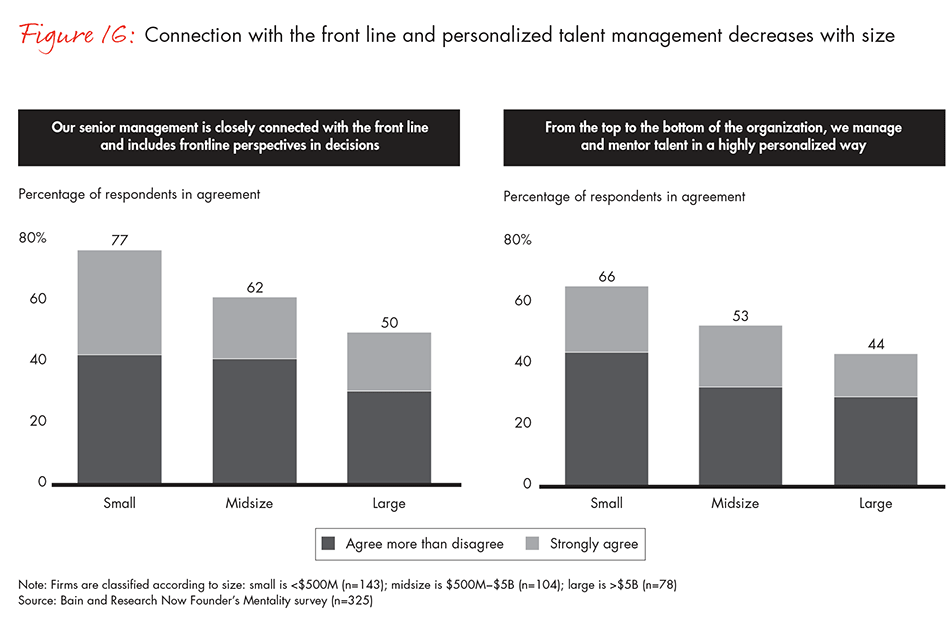
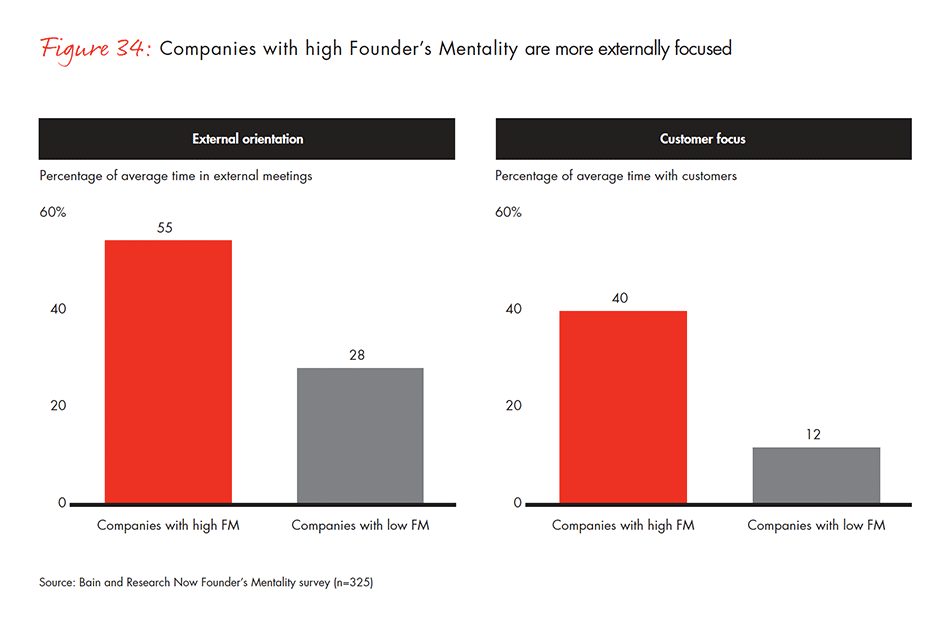
      • As companies scale, the Founder’s Mentality becomes difficult to preserve: Executives surveyed report that senior management loses external focus, spends less time directly with customers and has trouble with personalized talent management.
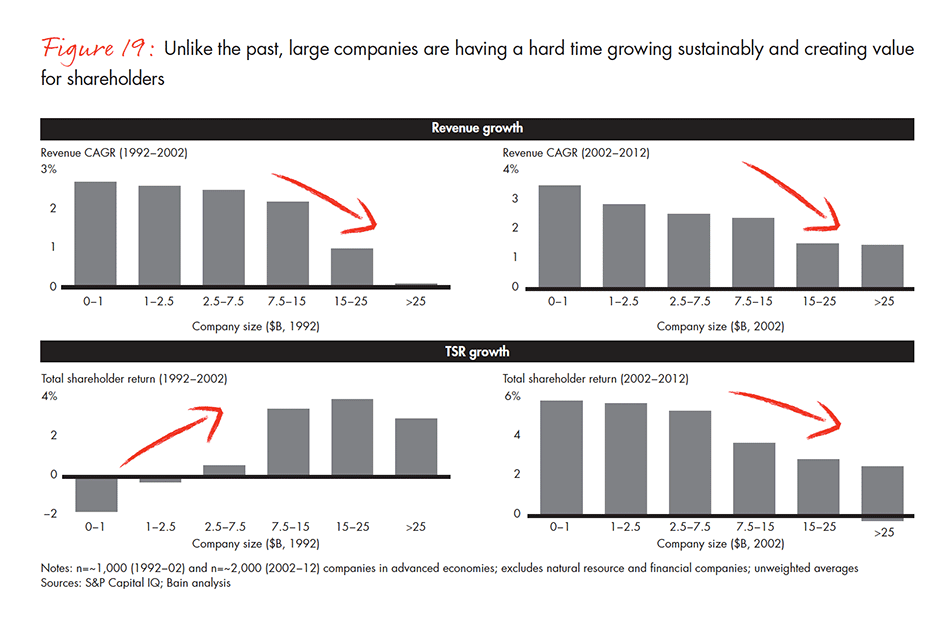
      • Unlike in the past, large companies have a hard time sustaining growth and creating value for shareholders.
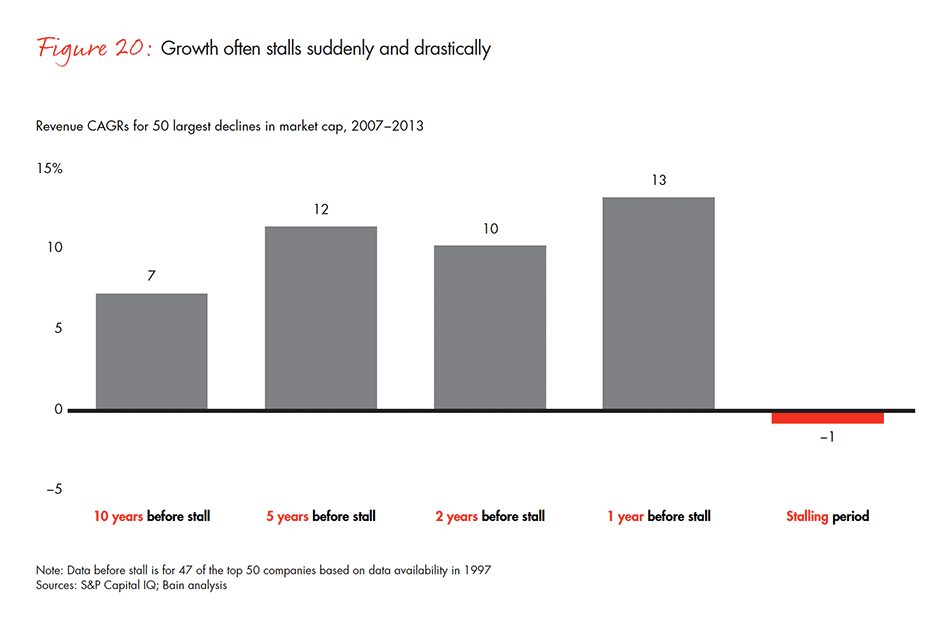
      • When stall-out hits, it can be sudden and drastic. The 50 companies with the biggest market-cap declines in 2007 – 13 had an average growth rate of 12% in the 5 years before stall-out, compared with a rate of – 1% in the 5 years during stall-out.
      • About a third of the 1998 Fortune 500 companies stalled out, and a third were acquired or went bankrupt. Of those that stalled out, only 10% to 15% recovered.
      • Executives report that four key forces create stall-out: the death of the nobler mission (43%), unchecked complexity that kills growth (42%), bureaucratization (41%) and the fragmentation of customer experience (30%).
      • 80% of those that recovered from stall-out did so by returning to their core business, and 20% by redefining the whole business model.
      barriers-and-pathways-to-sustainable-growth-fig-09_embed

      barriers-and-pathways-to-sustainable-growth-fig-10_embed

      barriers-and-pathways-to-sustainable-growth-fig-11_embed

      barriers-and-pathways-to-sustainable-growth-fig-12_embed

      barriers-and-pathways-to-sustainable-growth-fig-13_embed

      barriers-and-pathways-to-sustainable-growth-fig-14_embed

      barriers-and-pathways-to-sustainable-growth-fig-15_embed

      barriers-and-pathways-to-sustainable-growth-fig-16_embed

      barriers-and-pathways-to-sustainable-growth-fig-17_embed

      barriers-and-pathways-to-sustainable-growth-fig-18_embed

      barriers-and-pathways-to-sustainable-growth-fig-19_embed

      barriers-and-pathways-to-sustainable-growth-fig-20_embed

      barriers-and-pathways-to-sustainable-growth-fig-21_embed

      barriers-and-pathways-to-sustainable-growth-fig-22_embed

      barriers-and-pathways-to-sustainable-growth-fig-23_embed

      barriers-and-pathways-to-sustainable-growth-fig-24_embed

      barriers-and-pathways-to-sustainable-growth-fig-25_embed

      barriers-and-pathways-to-sustainable-growth-fig-26_embed

      barriers-and-pathways-to-sustainable-growth-fig-27_embed

      barriers-and-pathways-to-sustainable-growth-fig-28_embed

      barriers-and-pathways-to-sustainable-growth-fig-29_embed

      4. The case for renewal


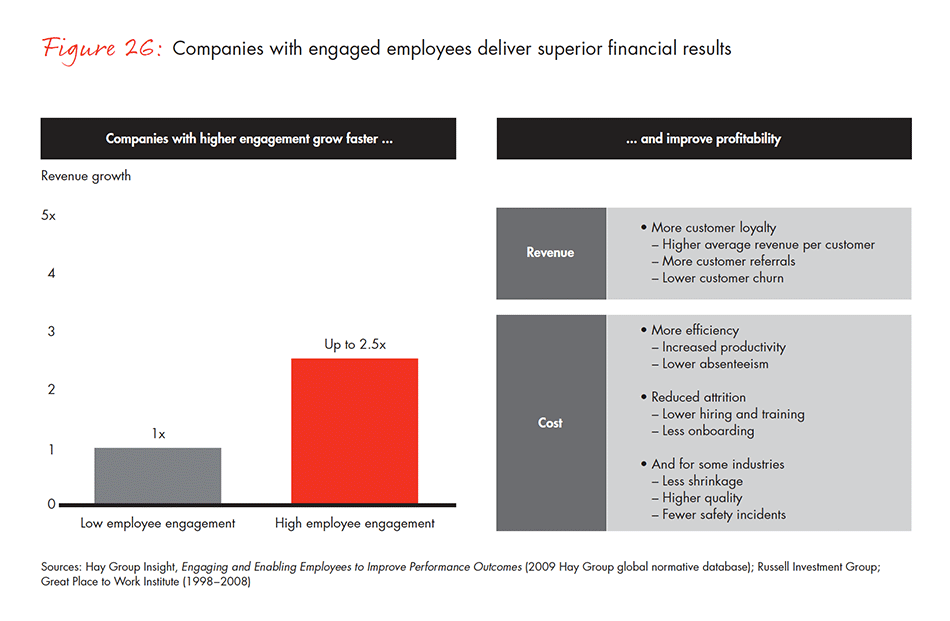
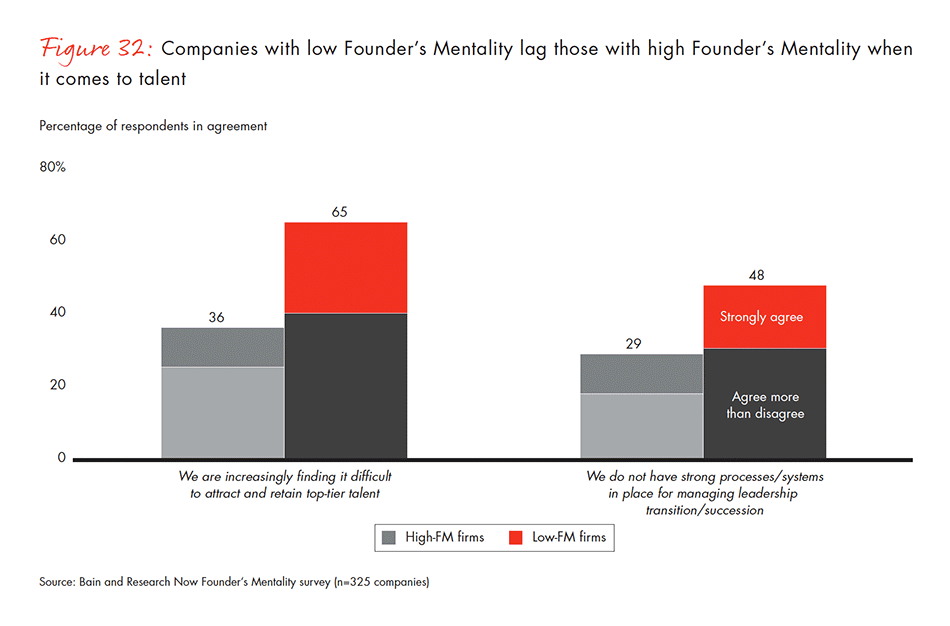
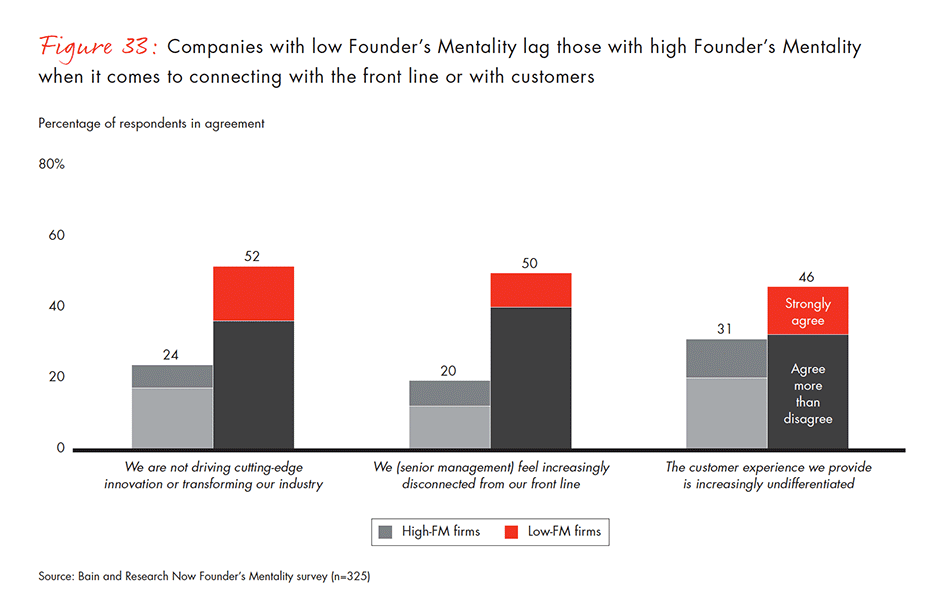
      • Firms with low Founder’s Mentality lag behind companies with high Founder’s Mentality when it comes to attracting, retaining and training talent, as well as engaging customers and frontline employees.
      • Firms with low Founder’s Mentality are less able to contend with the forces that cause overload and stall-out.
      • Firms with high Founder’s Mentality are more externally focused and customer focused.
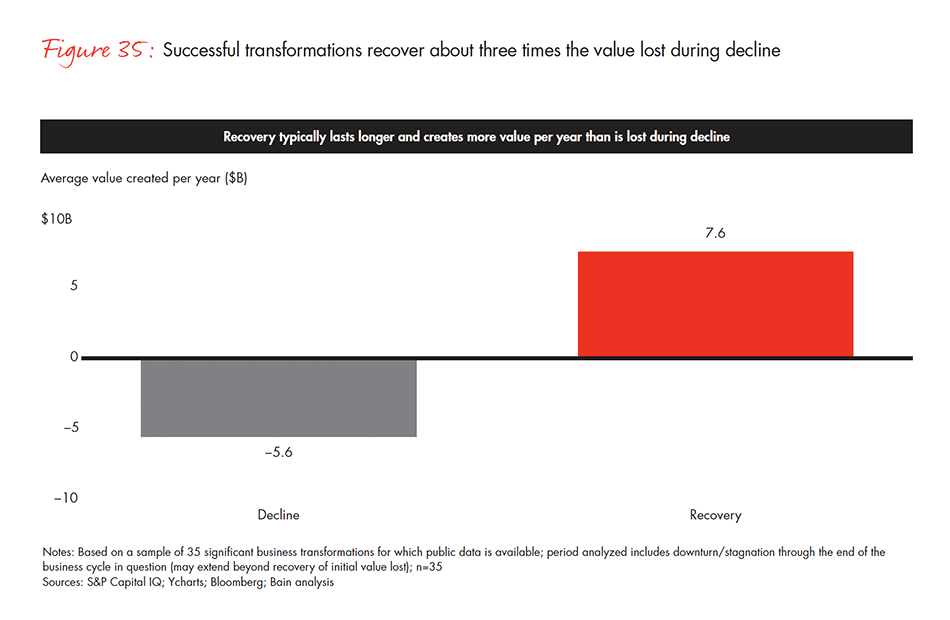
      • Successful transformations recover about three times the value lost during decline.
      barriers-and-pathways-to-sustainable-growth-fig-30_embed

      barriers-and-pathways-to-sustainable-growth-fig-31_embed

      barriers-and-pathways-to-sustainable-growth-fig-32_embed

      barriers-and-pathways-to-sustainable-growth-fig-33_embed

      barriers-and-pathways-to-sustainable-growth-fig-34_embed

      5. Faster growth, faster stall-out


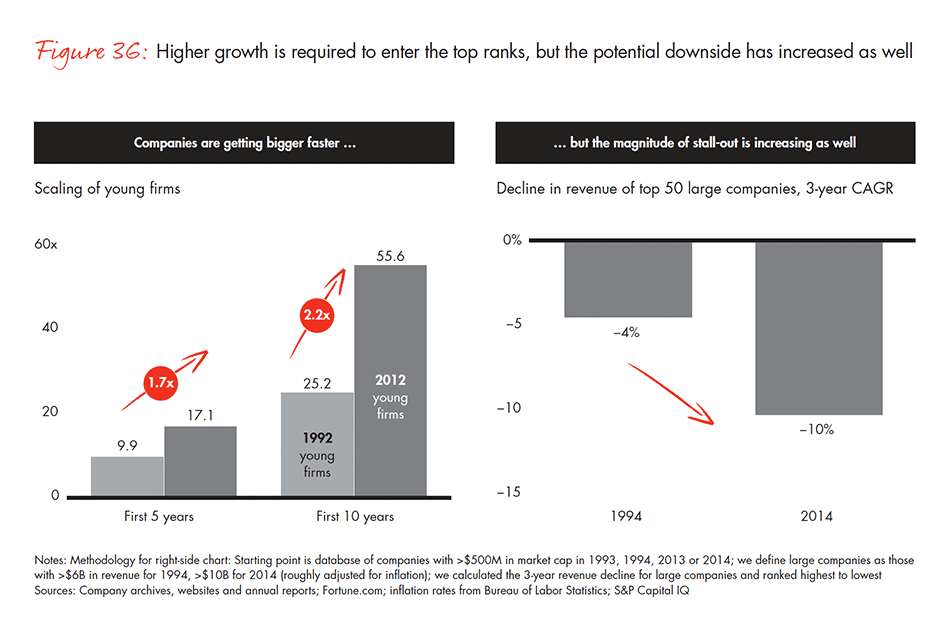
      • Companies are growing to scale faster than ever.
      • Companies that were young in 2012 grew 1.8 times faster in their first five years than companies that were young in 1992.
      • Those same 2012 companies grew 2.2 times faster than their 1992 counterparts in their first 10 years.
      barriers-and-pathways-to-sustainable-growth-fig-35_embed

      barriers-and-pathways-to-sustainable-growth-fig-36_embed

      Founder’s Mentality® is a registered trademark of Bain & Company, Inc. Repeatable Models® is a registered trademark of Bain & Company, Inc.

      Net Promoter®, Net Promoter System®, Net Promoter Score® and NPS® are registered trademarks of Bain & Company, Inc., Fred Reichheld and Satmetrix Systems, Inc.

      Chris Zook is a partner at Bain & Company and has been coleader of the firm’s Global Strategy practice for 20 years. He is based in Boston and Amsterdam, and specializes in helping companies find new sources of profitable growth. James Allen is a partner in Bain’s London office. Coleader of the firm’s Global Strategy practice, he is founder of the Founder’s Mentality 100, a global network of high-growth companies. Zook and Allen are the authors of five best-selling books on strategy, including Profit from the Core.

      About our research


      • Chris Zook and James Allen, The Founder’s Mentality: How to Overcome the Predictable Crises of Growth, Harvard Business Review Press, June 2016
      • Seven sets of discussions around the world with top growth companies, part of a Bain & Company project called the Founder’s Mentality 100 (FM100)
      • Interviews with about 100 executives and founders worldwide
      • Two global surveys of growth targets and barriers (n=325, n=377)
      • Bain Sustained Value Creator Database (n=~8,000 global public companies)
      • Analysis of case examples from Bain & Company’s Global Experience Center (GXC) and from outside sources (literature search and books)
      • Analysis of performance of Founder’s Mentality companies vs. other companies (macro with S&P 500 companies and micro using a database of 200 company practices)
      • Supplementary surveys (e.g., Endeavor Global Entrepreneurs)
      • Analysis of value creation at different stages of a company’s life cycle
      • Analysis of large-company stall-outs (frequency, recovery, causes, speed)
      • Analysis of small-company rates of growth
      • International studies of growth and job creation and the role of young companies

      barriers-and-pathways-to-sustainable-growth-fig-01_full

      barriers-and-pathways-to-sustainable-growth-fig-02_full

      barriers-and-pathways-to-sustainable-growth-fig-03_full

      barriers-and-pathways-to-sustainable-growth-fig-04_full

      barriers-and-pathways-to-sustainable-growth-fig-05_full

      barriers-and-pathways-to-sustainable-growth-fig-06_full

      barriers-and-pathways-to-sustainable-growth-fig-07_full

      barriers-and-pathways-to-sustainable-growth-fig-08_full

      barriers-and-pathways-to-sustainable-growth-fig-09_full

      barriers-and-pathways-to-sustainable-growth-fig-10_full

      barriers-and-pathways-to-sustainable-growth-fig-11_full

      barriers-and-pathways-to-sustainable-growth-fig-12_full

      barriers-and-pathways-to-sustainable-growth-fig-13_full

      barriers-and-pathways-to-sustainable-growth-fig-14_full

      barriers-and-pathways-to-sustainable-growth-fig-15_full

      barriers-and-pathways-to-sustainable-growth-fig-16_full

      barriers-and-pathways-to-sustainable-growth-fig-17_full

      barriers-and-pathways-to-sustainable-growth-fig-18_full

      barriers-and-pathways-to-sustainable-growth-fig-19_full

      barriers-and-pathways-to-sustainable-growth-fig-20_full

      barriers-and-pathways-to-sustainable-growth-fig-21_full

      barriers-and-pathways-to-sustainable-growth-fig-22_full

      barriers-and-pathways-to-sustainable-growth-fig-23_full

      barriers-and-pathways-to-sustainable-growth-fig-24_full

      barriers-and-pathways-to-sustainable-growth-fig-25_full

      barriers-and-pathways-to-sustainable-growth-fig-26_full

      barriers-and-pathways-to-sustainable-growth-fig-27_full

      barriers-and-pathways-to-sustainable-growth-fig-28_full

      barriers-and-pathways-to-sustainable-growth-fig-29_full

      barriers-and-pathways-to-sustainable-growth-fig-30_full

      barriers-and-pathways-to-sustainable-growth-fig-31_full

      barriers-and-pathways-to-sustainable-growth-fig-32_full

      barriers-and-pathways-to-sustainable-growth-fig-33_full

      barriers-and-pathways-to-sustainable-growth-fig-34_full

      barriers-and-pathways-to-sustainable-growth-fig-35_full

      barriers-and-pathways-to-sustainable-growth-fig-36_full
      Learn More

      Founder's Mentality

      Fast-growing companies can become global leaders without losing the values that helped them succeed. Bain’s research explores how large incumbents can also reignite their growth by recapturing their Founder’s Mentality®.

      著者
      • Headshot of Chris Zook
        Chris Zook
        Advisory Partner, Boston
      • Headshot of James Allen
        James Allen
        Advisory Partner, London
      関連するコンサルティングサービス
      • 戦略
      コンサルティングサービス
      • Bain Micro-battles System®
      戦略
      Reigniting Growth

      Three qualities can help any company restart its growth engine by removing gunk and complexity that has built up over the years.

      詳細
      戦略
      The Journey North

      Why are so many fast-growing, disruptive companies able to run circles around larger, slower multinationals?

      詳細
      戦略
      Founder's Mentality®: The Path to Scale Insurgency

      How fast-growing companies can capture the benefits of scale and scope by maintaining a Founder's Mentality®.

      詳細
      創業メンタリティ
      Roadmap for a Post-Pandemic World

      Bain Partner James Allen shares how CEOs can sustain the speed and adaptability that their organizations uncovered during the crisis.

      詳細
      創業メンタリティ
      The Magic of Founder-led Companies

      Companies with their founder present performed twice as well as their peers in the S&P 500 over the past decade.

      詳細
      First published in 7月 2016
      Tags
      • Bain Micro-battles System®
      • 戦略
      • 創業メンタリティ

      クライアント支援事例

      フルポテンシャル・トランスフォメーション Springtime for April as a Digital Transformation Takes Root

      ケーススタディを見る

      Digital Better Forecasts, Less Waste Boost Grupo Bimbo’s Profitability

      ケーススタディを見る

      Business Strategy How Micro-battles Powered a Brand and Sales Lift at BeautyCo

      ケーススタディを見る

      お気軽にご連絡下さい

      私達は、グローバルに活躍する経営者が抱える最重要経営課題に対して、厳しい競争環境の中でも成長し続け、「結果」を出すために支援しています。

      ベインの知見。競争が激化するグローバルビジネス環境で、日々直面するであろう問題について論じている知見を毎月お届けします。

      *プライバシーポリシーの内容を確認し、合意しました。

      プライバシーポリシーをご確認頂き、合意頂けますようお願い致します。
      Bain & Company
      お問い合わせ Sustainability Accessibility Terms of use Privacy Cookie Policy Sitemap Log In

      © 1996-2026 Bain & Company, Inc.

      お問い合わせ

      How can we help you?

      • ビジネスについて
      • プレス報道について
      • 採用について
      全てのオフィス