

論説

概要
- Bain & Company and Google surveyed nearly 5,800 US consumers to gauge how retail is likely to change as millennials and Gen Z shoppers become more economically dominant.
- Our research shows they will continue to shop via many channels but won’t reject physical stores, even as their appetite for tech-enabled innovations, such as virtual try-on, grows.
- The influence of trusted advisers on video platforms and social media is set to increase, as is the importance of sustainability—assuming retailers help shoppers bridge a “say-do” gap by making sustainable products perform well on other key purchase criteria.
Millennials and Generation Z are poised to become ever more powerful in retail. These generations—mostly teens, twentysomethings, and thirtysomethings today—represent more than 40% of the US population. Executive teams across the industry know that they will have to keep tailoring their businesses to the evolving behavior of these demographic groups. But just how much are millennials and Gen Z likely to differ from older generations over the next few years?
Written in collaboration with
Written in collaboration with

That’s the focus of new research from Bain & Company and Google. We surveyed nearly 5,800 US consumers of all ages to gauge how millennial and Gen Z shopping is likely to develop relative to that of older peers, examining shopping experiences and sources of influence across channels, product categories, and emerging media. Our analysis highlights ways in which these maturing cohorts will shape tomorrow’s industry, either by popularizing new ways of shopping or by providing an unexpected source of continuity with today’s dominant habits.
Our findings point not just to an evolution in the retail experience but also to an evolution in sources of influence that shape the shopping journey. In particular, four insights stand out—two related to the “evolution of experience,” in terms of physical stores and tech-led innovations, and two related to the “evolution of influence,” in terms of trusted advisers and sustainability.
1. Evolution of experience: Physical stores will still be crucial
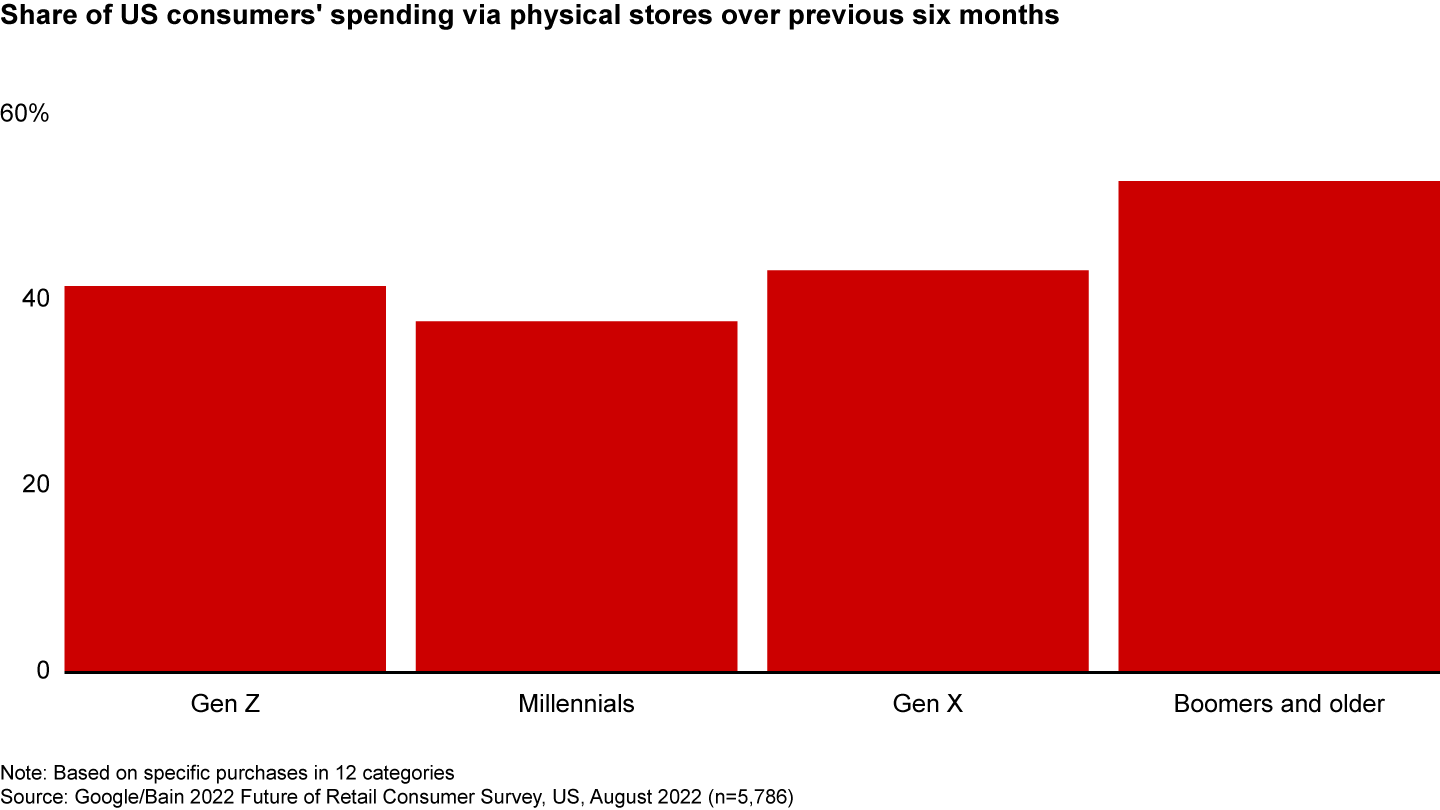
Pandemic lockdowns gave a glimpse of what all-digital shopping would look like. Since consumers have regained the freedom to choose where they shop, it’s become clear that shopping in physical stores is something they want to keep doing—and our research shows that this holds for younger cohorts, too, even though they are digital natives. In our survey of US shoppers, millennials and Gen Z said physical stores accounted for 38% of their retail spending across 12 categories over the previous six months (see Figure 1), close to the 43% reported by Gen X and not too far off the 53% attributable to boomers and older consumers.
Figure 1

The continued importance of in-store shopping to the retail experience varies by category and purchase occasion. For example, among US shoppers, in-store preferences are more pronounced in categories where fit or feel is critical, such as furniture, in which about 60% of millennial and Gen Z spending was in physical stores. But the ability to touch and feel isn’t the only attraction of physical retail for today’s shoppers. Ease of browsing and getting a product quicker are also big pluses for consumers of all ages when opting to shop in physical retail stores vs. other channels.
Brick-and-mortar retail could even strengthen its current hold on younger consumers: 36% of Gen Z and millennial shoppers expect to increase their spending in physical stores over the next two years. Those spending intentions offer a corrective to suggestions that winning over younger shoppers requires focusing on digital channels above all else. Retailers will need to delight them everywhere, not just on apps, on social media, or in the metaverse.
Tomorrow’s winners in retail will connect physical and digital channels to create a seamless experience, enabling them to offer more targeted, personalized, and lower-friction in-store shopping for their customers in a few ways.
- By curating the in-store experience. When customers visit a store, leading retailers will know how they have engaged digitally and will build on that knowledge. For instance, items in a customer’s online shopping basket could be provided in a fitting room for them to try on. Their interactions with digital ads could also shape their physical shopping journey.
- By deploying consumer-facing technology more broadly in-store. Using digital tools to give customers value-added information in-store will be key to seamless omnichannel shopping. That could take the form of providing access to product reviews or QR code–activated videos showing products in use.
- By better integrating the systems and technology for managing online and physical stores. For instance, there continues to be an opportunity to spare shoppers wasted trips by giving them accurate online information about in-store inventory.
2. Evolution of experience: Appetite for tech-led innovations will grow
While we firmly believe that physical stores retain an edge in categories where fit and feel are important, online shopping can still improve its appeal in these areas. Indeed, emerging technologies are poised to help online shoppers get a clearer, more tactile sense of what they are browsing, wherever they are, making the online experience more satisfying.
Consumers in the US are starting to embrace emerging technologies today, with 41% of shoppers already having used at least one of the following: virtual try-on (where consumers use their device’s camera to see how products like clothing and accessories will look on them), virtual try-out (where items such as sofas are shown in a consumer’s real-world surroundings), livestreaming (hosted online broadcasts that showcase products and offers), and e-commerce via social media. This adoption is being powered primarily by younger consumers (see Figure 2).
Figure 2
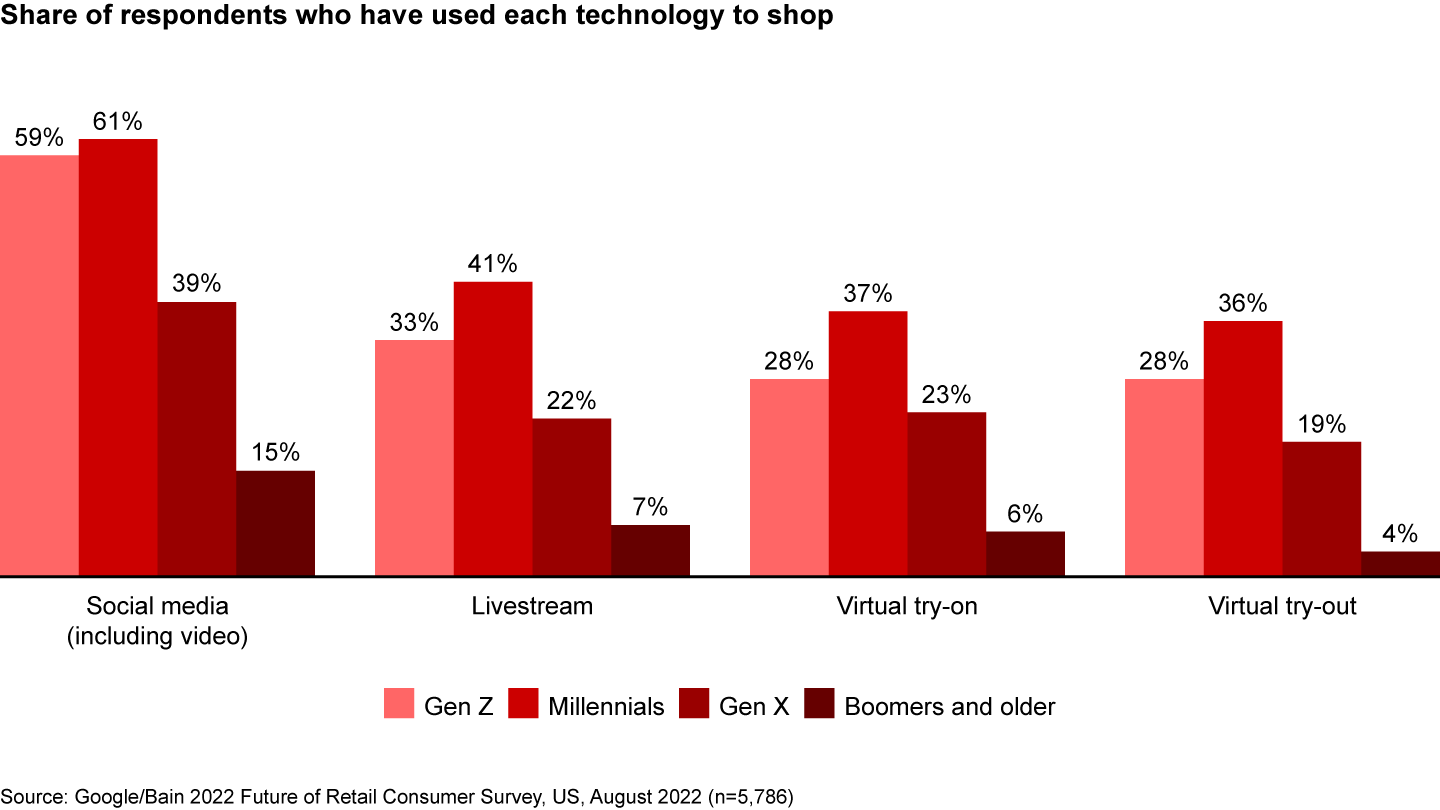

Overall, 66% of the Gen Z and millennial shoppers we surveyed in the US had tried one of these four innovations, vs. 30% of Gen X and boomer shoppers. Based on their initial experience with emerging technologies, the majority of adopters are very or extremely likely to use those tools to shop in the next three months and to use them more often over the next two years.
However, retailers will have to raise their game to win over these discerning consumers, who spent their formative years immersed in digital technology. Some Gen Z and millennial shoppers we surveyed were blunt in highlighting the current limitations of virtual try-on and virtual try-out, for instance. One described the augmented reality images as “super-cartoonish”; another said the colors were “never accurate.”
Another issue to fix is visibility: Often, it’s hard for consumers to find tech-enabled shopping tools on a retailer’s website or app. Incompatibility across retailers is also a challenge. Many of today’s tools require consumers to invest time in learning how to use them for a specific retailer, but that acquired skill tends not to be transferable to another retailer’s all-singing, all-dancing tech showcase, which (of course) operates entirely differently.
Shopping for virtual goods and/or in virtual worlds also offers long-term potential for retailers. After all, many children are deeply engaged in virtual worlds; take the tens of millions of under-13s who play Roblox, the immersive game and social network, daily. Having grown up spending money on digital goods such as avatars and skins, these virtual natives will be more receptive to a broader range of digital goods than their forebears—and willing to use their disposable income to buy them if they are sufficiently compelling.
For digital goods to realize their full mainstream potential, retailers will need to invest in consumer education. In our survey, we asked US consumers who had never made in-game purchases or bought nonfungible tokens why they had held back; about 85% gave a reason tied to a lack of understanding of the value proposition. But there are already signs that digital goods are providing something valuable beyond fun and novelty. In our survey, 38% of those who had purchased digital goods said they did so as a means of self-expression, while 33% cited being part of a community. Crucially, about 65% of those who had already bought digital goods said they expected to spend more on such products in the next two years.
Finally, as well as enriching the online shopping experience, tech-enabled innovations will be key to realizing the full strategic value of brick-and-mortar stores. Deployed skillfully, they can turn stores into theaters where brands are brought to life and into laboratories for new ideas and technology—a great way to attract new omnichannel customers.
3. Evolution of influence: Trusted advisers will have more sway
Millennials and Gen Z might have kept much of the attachment to physical stores characteristic of older generations, but that doesn’t mean they arrive at a purchase decision in the same way. Younger consumers are much less likely to rely on in-person browsing, for a start. When it comes to “inspiration” purchases (those that aren’t sparked by a direct need), our survey among US consumers showed that only 18% of millennial and Gen Z shoppers ranked in-person browsing as the most influential activity, vs. 30% for Gen X, baby boomers, and older consumers.
On the other hand, in the US, millennials and Gen Z are two times more likely than older shoppers to say that watching an online video was their most influential activity when shopping and 3.7 times more likely to say that browsing social media was most influential. They are also more likely than preceding generations to use Google Search and to talk to family and friends about potential purchases.
Across age groups, online video is most frequently used when US consumers are shopping for larger, more considered purchases, such as computers, home fitness equipment, wearable devices, and luxury clothing.
Impartiality is the cornerstone of many of the videos sought out by shoppers as they decide what to buy. “I look at video reviews when I want to get someone’s honest opinion,” one Gen Z beauty shopper told us. For retailer-produced videos to strike younger shoppers as authentic, they might need to avoid a transactional, “buy it here now” tone and sound more like independent advice instead. That could mean losing a few sales here and there, but the increased influence should more than compensate.
4. Evolution of influence: The rise of sustainable shopping depends on retailers
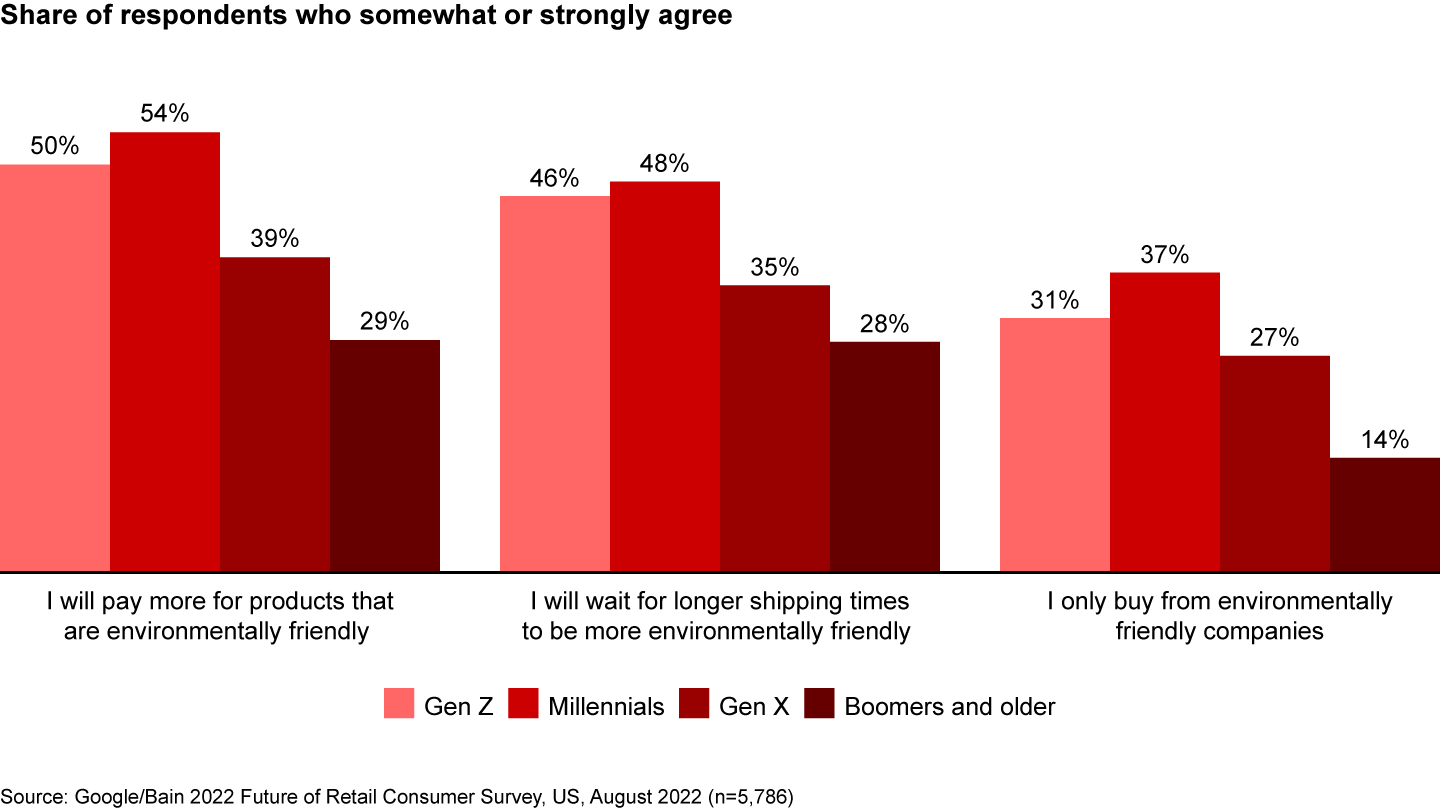
There’s no doubt that sustainability is becoming an ever more influential consideration for shoppers as millennials and Gen Z become more economically powerful. For instance, about half of the millennial and Gen Z shoppers we surveyed in the US said they would pay more for products that are environmentally friendly, vs. 39% for Gen X and just 29% for boomers and older consumers (see Figure 3). That clear millennial and Gen Z concern was broadly consistent across income groups (although it gets a little more pronounced the wealthier they are).
Figure 3

However, when it comes to sustainability and its influence on younger consumers, our research shows that the strategic path ahead for retailers isn’t as straightforward as it might appear. Crucially, there’s still a gap between what younger shoppers say and do on sustainability, just as there is for their older counterparts. Sustainability has begun to move up the list of key purchasing criteria, but among US shoppers of all ages, only 9% rank it among their top three priorities. Value for money, product quality, product features, and other factors are still higher up the list.
Consumers of all ages in the US are wary of compromising on these other key purchase factors. The Bain/Google research further explored the “say-do” gap by analyzing granular purchase data for about 1,100 of our survey respondents. On one shopping platform, we looked at the spending of US customers who said they’d wait longer for shipping to reduce emissions and be greener. They still made seven purchases a month on average, only one less than those who didn’t want to wait. That suggests they might not be cutting down on deliveries after all.
The persistent say-do gap means that, in order to meet their own sustainability goals, retailers will need to nudge millennials and Gen Z to align their spending and their values. Actions retailers can take today to narrow the gap include making sustainable products hypervisible, clarifying labeling to banish any nervousness about shifting to less familiar but more sustainable items, innovating to fill holes in their sustainable ranges, and directly incentivizing consumers to make sustainable choices (see the Bain Brief “Sustainability in Retail: Practical Ways to Make Progress”).
It’s worth emphasizing that retailers cannot rely on sustainable products that are lower quality, less durable, or more expensive. True innovators that can combine sustainability with quality and value will be well placed to gain significant market share.
Preparing for the millennial and Gen Z ascendancy
Retailers have been adapting to the needs of millennial and Gen Z shoppers since they became economically significant demographic groups. Now that these groups are becoming more economically powerful, retailers need to ensure their current business is optimally configured, both for short-term and longer-term strategic initiatives.
Here are some key questions for executive teams to consider:
- How seamlessly are you connecting physical and digital channels? Are you investing to help customers cut through the retail noise (for instance, by making assortments highly searchable and curated)?
- When it comes to emerging technologies, are you instilling a test-and-learn innovation mindset in your organization, while continuously training frontline teams on next-generation tech, so they can use and explain the latest tools? Are you maximizing consumer traction by making the right trade-offs between developing your own technology vs. embracing industry standards as they emerge (e.g., in virtual try-on tools)?
- How effectively are you using sources of influence such as video and social media with Gen Z and millennials, while maintaining the authenticity of these connections?
- What investments are you making in brand positioning and operations to narrow the say-do gap with increasingly environmentally conscious, younger consumers?

About Google
Google's mission is to organize the world's information and make it universally accessible and useful. Through products and platforms like Gemini, Search, Maps, Gmail, Android, Google Play, Google Cloud, Chrome, and YouTube, Google plays a meaningful role in the daily lives of billions of people and has become one of the most widely known companies in the world. Google is a subsidiary of Alphabet Inc.
First published in 3月 2023