

論説

概要
- While banks’ wholesale payments revenues from enterprise clients may stay relatively secure, all signs point to an eroding share in the profitable small and midsize business segment and, increasingly, in cross-border payments use cases.
- Ceding that ground would reduce valuable touchpoints with customers, and ultimately the “ownership” of these customers, which would limit banks’ ability to cross-sell lending and other services.
- For banks that revise their wholesale payments strategy and business model, we see four promising postures: wholesale utility, innovator, universal provider with dedicated strengths, and embedded finance specialist.
- Banks that start now to modernize their technology and overhaul their operating model, go-to-market approach, and partnerships will be well positioned to attract the most valuable customers.
Wholesale payments has been a dependable market for traditional incumbent banks. Indeed, banks enjoyed a 95% share of the $490 billion in global wholesale payments revenues at the end of 2022 (see Figure 1). That’s a remarkable performance given the raft of new competition in the form of fintechs, neobanks, and software vendors.
Yet this strong position is under threat. While revenues from large corporate clients may stay relatively secure, all signs point to an eroding share in the profitable small and midsize business (SMB) segment and, increasingly, in cross-border payments use cases.
Figure 1
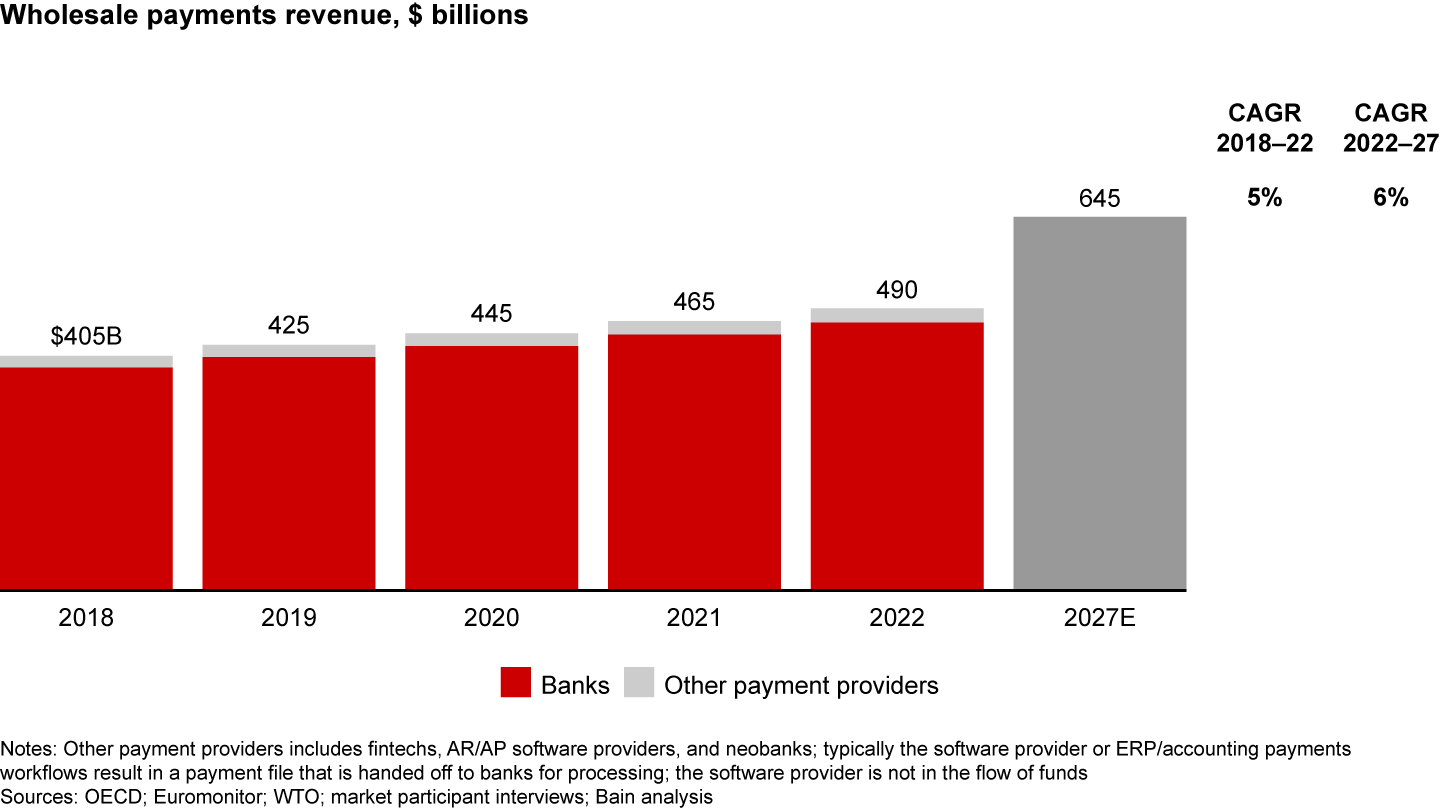

By 2027, Bain & Company estimates that global wholesale payments revenues will have grown at a 6% cumulative annual rate to reach $645 billion, and much of the growth will shift away from banks to emerging providers. As a consequence, roughly 10% of SMB transaction banking revenues—and about 15% of profits—will be captured by software providers, fintechs, and the banks that enable their payments capabilities (though with lower profitability).
A similar shift will likely occur in cross-border business, where many recent entrants offer low-cost solutions for low-value payments, affecting roughly 10% of revenues and up to 30% of profits across all sizes of business customers. In addition to the threat of new entrants, banks that are slow to modernize wholesale payments technology and evolve their operating model are at risk of losing up to 15% of SMB revenues (25% of profits) and 6% of commercial and large corporate revenues (15% of profits) to more innovative bank competitors. And the shift could accelerate in subsequent years.
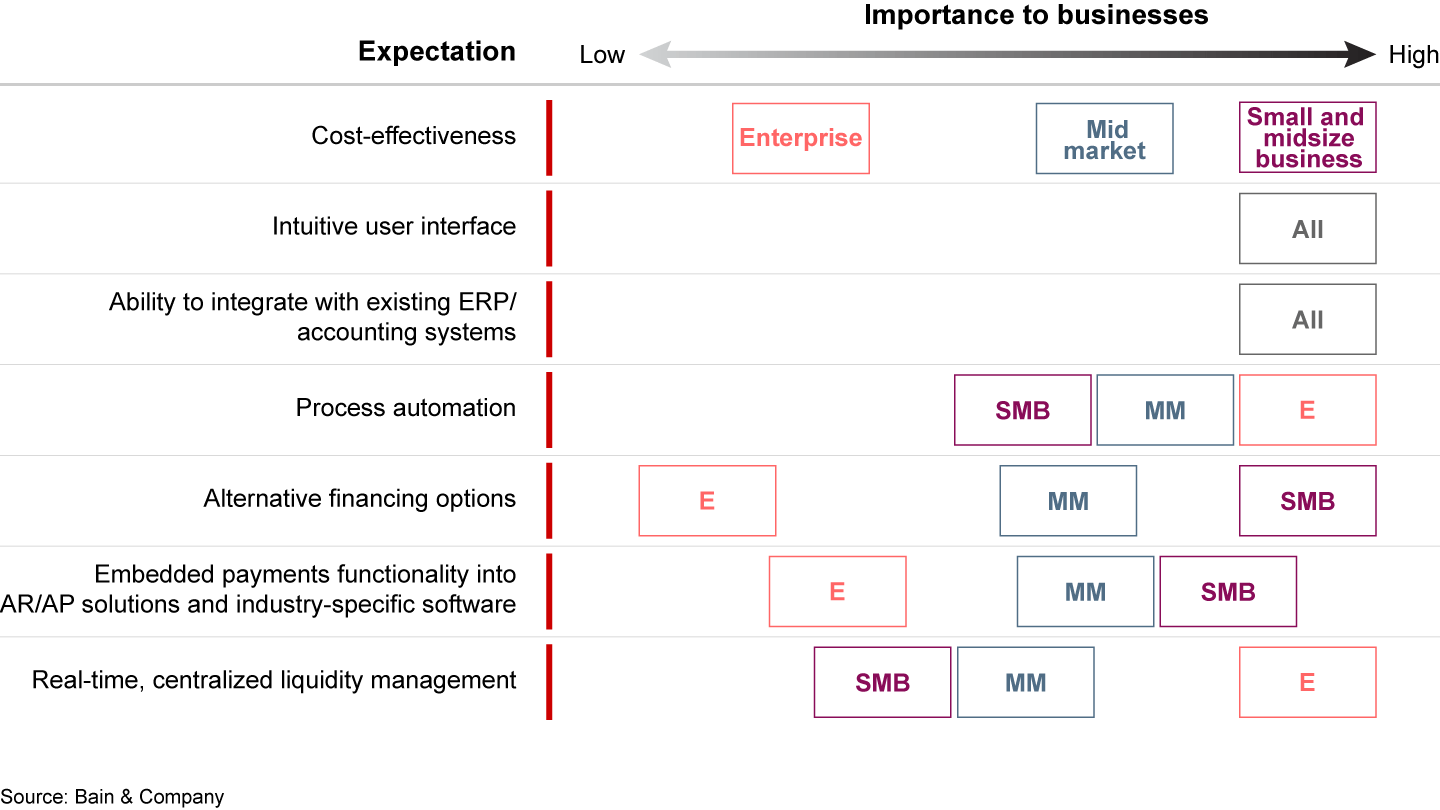
This major turning point arises from a combination of factors. The first is that digital payments are steadily gaining share in markets where businesses still rely on checks, notably in the US. Many geographies now have access to modern, data-rich, real-time payments infrastructure, and artificial intelligence accelerates automation. Companies of all sizes increasingly manage transactions and payments workflows through third-party digital order-to-cash and procure-to-pay platforms or industry-specific business management software. These solutions can be more convenient and more efficient, with a better user interface and tighter integration with the company’s own accounting systems (see Figure 2).
Figure 2

A second factor affecting the market is that more fintechs and software providers, acutely aware of clients’ higher expectations and often serving them well, are aggressively targeting high-margin client segments. For example, Shopify now offers business-to-business e-commerce support. SAP’s acquisition of Taulia delivers working capital solutions that make it easy for businesses to free up cash, accelerate payments, and improve supply chain financing. And in more and more geographies, nonbank firms such as Wise and Revolut can directly access payments infrastructure, eroding banks’ traditional advantage. Meanwhile, regulatory burdens and penalties continue to increase compliance costs for the banks.
Besides the direct risk of a shrinking share of payments revenues, another risk looms on the horizon: Banks could also cede valuable touchpoints with their clients. Familiarity with a business’s payments flows can provide a bank with valuable information regarding the client’s financial strength, growth ambitions, and needs that goes beyond the pure financials, such as streamlining for efficiency. Ceding that ground would dilute the strength of the overall relationship, and with it, banks’ ability to cross-sell lending and other banking services.
New strategy, new business model
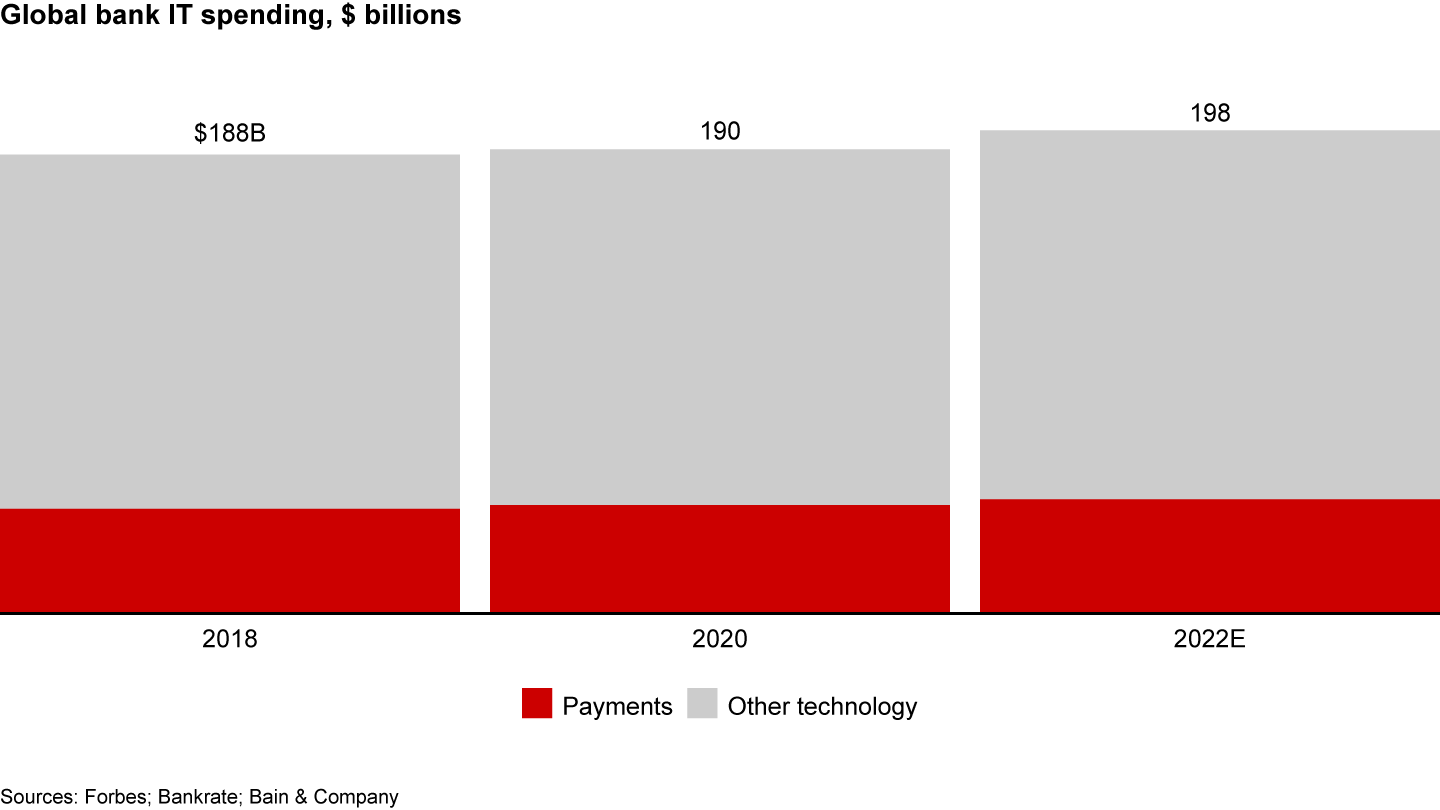
Banks’ traditional mindsets and ways of working may in some cases fail to address the new dynamics in wholesale payments. Legacy technology and the fragmented payments architecture that currently consumes banks’ IT spending make it difficult to launch new payments products and services (see Figure 3). Complex organizations at many banks lead to federated decision rights and responsibilities, which limits efforts to devise innovative solutions, improve client servicing, or coordinate go-to-market approaches. A traditional mix of roles and risk-averse culture at some banks inhibit responsiveness and the ability to partner with fintechs and other key technology firms.
Figure 3

Instead, most banks will need to revise their wholesale payments strategy and business model. And there’s some urgency to start planning now, given the long lead times to modernize payments, as well as the expected trajectory of lost market share in the interim. Based on our work with wholesale payments organizations, we see value in considering four potential postures.
Wholesale utility. Some banks may not have an explicit wholesale payments strategy. They tend to compete on the basis of reliability and client relationships. This model is characterized by limited payments product innovation, with the bank tending to pursue a fast-follower path to technical advances, often reliant on its core processor vendor. It may have a larger retail than wholesale payments business and rely heavily on loans rather than payments for differentiation with commercial customers.
Innovator. Taking the lead in a proposition for high-priority solutions, such as a new data-rich, real-time payments infrastructure, and highly profitable use cases, such as cross-border transactions, is an option for some global banks and large regionals. Wholesale innovators have differentiated offerings for payments, either homegrown or in partnership with specialist providers. These banks have mature partnership strategies and technical capabilities to facilitate integrations. For example, Citi has consistently invested in high-tech payments capabilities to support its global payments franchise, serving businesses as well as other banks. BNP Paribas has focused on fintech partnerships and acquisitions to become a leader in value-added services.
Universal provider. The largest banks could take a lead by competing in all client segments, from very small firms to major enterprises, and selectively investing in the highest-value use cases where they can stand out. For example, HSBC is a global leader in cross-border banking flows aligned to priority trade corridors for its mid-market corporates. Several UK banks have invested in, and use, BankiFi to extend integrated accounting, invoicing, and payments solutions to SMBs.
Embedded finance specialist. Certain banks, including neobanks, can choose to provide modernized payments infrastructure through a payments-as-a-service model. These banks offer modular payments solutions such as card issuing, pay in and pay out, virtual and for-benefit-of account structures distributed via high-caliber APIs to nonbank financial service providers, third-party platforms, and software solutions. Evolve, for instance, specializes in enabling fintechs that serve SMBs as well as consumers. Key Bank relies on building mutually beneficial partnerships with best-in-class innovators to provide differentiated capabilities to its clients.
Imminent decisions on four fronts
The appropriate strategic posture may vary by customer segment, geography, and use case. However, development of any posture will involve trade-offs across the areas of technology, operating model, go-to-market strategy, and partnerships (see Figure 4). Let’s review each in turn.
Figure 4
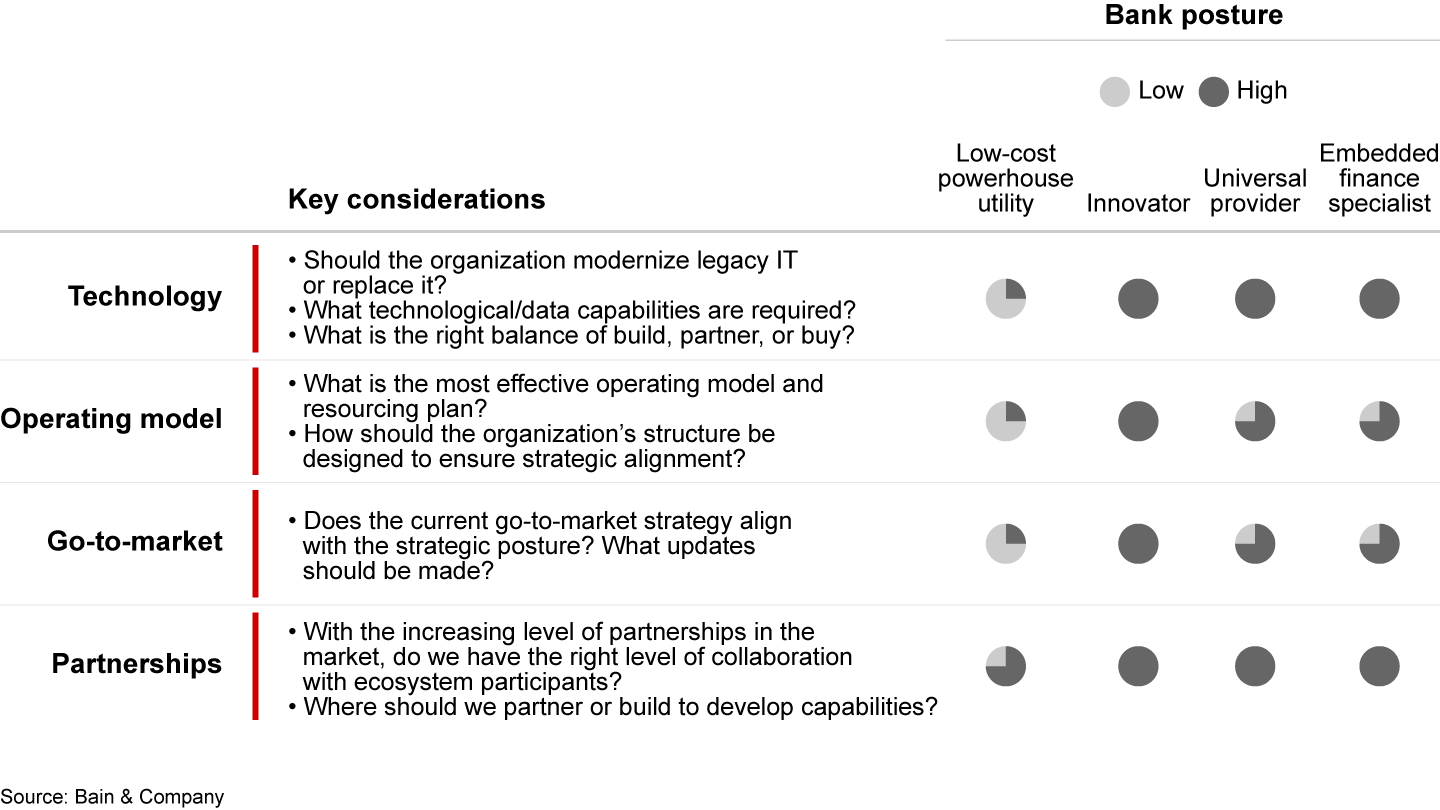

Technology. With many banks burdened by heavy technology spending just to run operations, it’s difficult to modernize the enterprise. Modernization of payments technology is often hampered by complex interdependent issues, because systems can be decades old, at the heart of a bank’s plumbing, with stringent requirements on availability and latency. The most successful banks have a clear vision for their wholesale payments architecture, build a strong payments technology engineering capability, and focus their investment first on areas that have the greatest effect, such as orchestration engines that manage and unify payments from diverse sources.
Operating model. A new approach should allow the organization to make the right decisions at the right levels. A bank may place payments within business lines, which can be effective when synergies are limited, and when the payments business is not the main driver of the business unit’s P&L. Alternatively, a payments council allows for sharing best practices across businesses and more efficient sharing of infrastructure. Having the payments business own all decisions is effective when the business has sufficient scale.
Go-to-market. One important decision entails whether existing payments bundles are effective for the most important customer segments, whether fee revenue is optimized for payments solutions sold on a stand-alone basis, and the extent to which relationship pricing works well. Banks will also need to refine their customer segmentation by, say, customizing their products by vertical industry, as J.P. Morgan does for commercial real estate. And they will need to evolve distribution to balance between proprietary interfaces, APIs, bank digital channels, and external software providers.
Partnerships. The most successful partnerships go beyond commercial agreements to exchange resources and commit to a shared purpose. Banks can partner for capabilities, investing in areas where they can differentiate from competitors; for distribution when solutions require new commercial models; or for enhanced data insights to inform cross-selling.
Since banks still hold a 95% share of wholesale payments, the market is theirs to lose. But dominance should not cause senior bankers to feel complacent or believe they can defer changes to their strategy or business model for at least a few years. Even though banks will remain central to the business of wholesale payments, innovative offerings and capabilities from fintechs and software firms can displace banks that don’t keep pace.
As that happens, banks would lose important touchpoints with their business customers and thus put lending and other services at risk. Laggards also run the risk of losing share to competitor banks that are early adopters of real-time payments infrastructure, data-rich ISO 20022 formats, and AI-driven risk management and analytics. Banks that start now to modernize their technology and overhaul their operating model, go-to-market approach, and partnerships stand a good chance of attracting and retaining valuable business customers.
First published in 2月 2024